
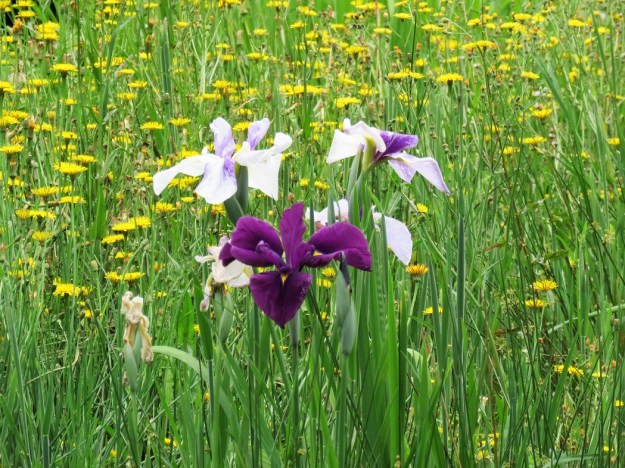
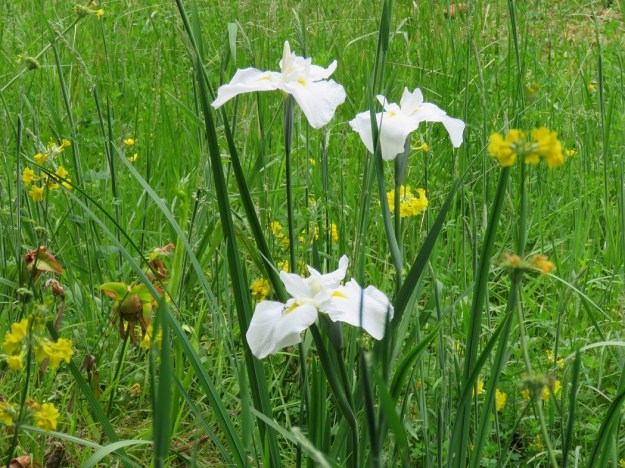
Higo iris float above a sea of dandelions in the Wild North Garden
I really like that the Japanese Higo iris are such a big feature of our December meadows yet they almost certainly descend from the Japanese quest for a perfect, single bloom as a focus for contemplation. It is such a wonderful contradiction – that quiet refinement, simplicity and elegance that the Japanese traditionally bring to flowers generally and the wild abandonment of our Tikorangi meadows.
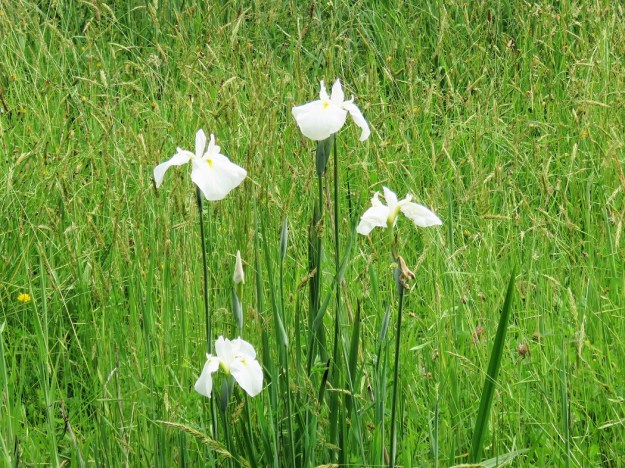
Smaller flowered, white Higo in the park meadow
Higo are not a separate species of Japanese iris. They are hybrids, bred over 500 years, originating from Iris ensata. There are three groups of iris from these breeding lines – Edo, Higo and Ise but the best known are the Higo. Our Higo were given to us by Auckland plantsman, Terry Hatch of Joy Plants, and apparently originated as wild collected seed. Mark had a discussion with Terry about wanting to try naturalising Higo by the stream but the finely bred, named cultivars were not sufficiently robust to survive in a situation of benign neglect. Terry offered up a tray of about 700 germinated seedlings which seemed a bit of overkill at the time. Now we bless him every year. Not all 700 survived, I hasten to say, but we had plenty to play with.

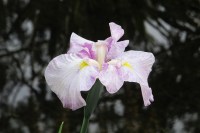
and a much larger flowered white Higo iris
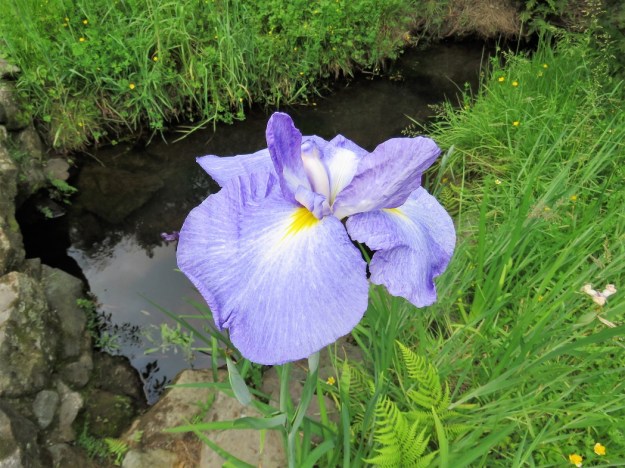
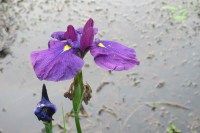
The blue is less dominant than the purple shades of Higo
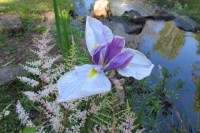
Because our plants are all seedlings, we have a fairly wide range and some clearly show their I. ensata heritage. Others are pure white, pink, almost pure blue and the whole range of violets, purples and lilac.
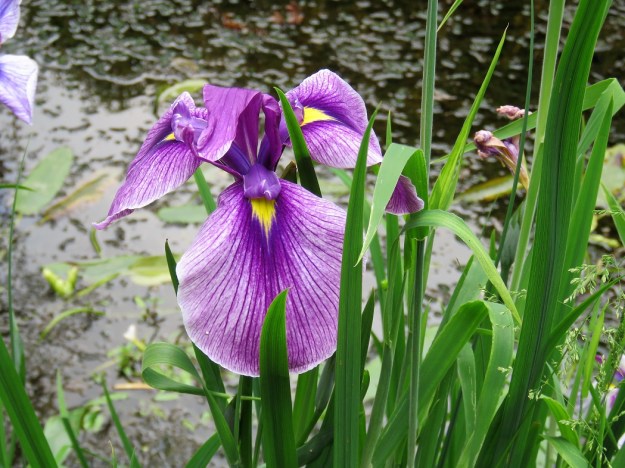
More Higo iris
I see the oldest plants are now in their ninth year or so of being planted on the banks by the stream and ponds and they perform reliably every year. Given they have stiff competition and receive absolutely no care or intervention, that makes them very robust plants. I tried some in a mixed border at one stage but they were too strong a grower with leafage that swamped out surrounding plants during summer and autumn so I removed them.
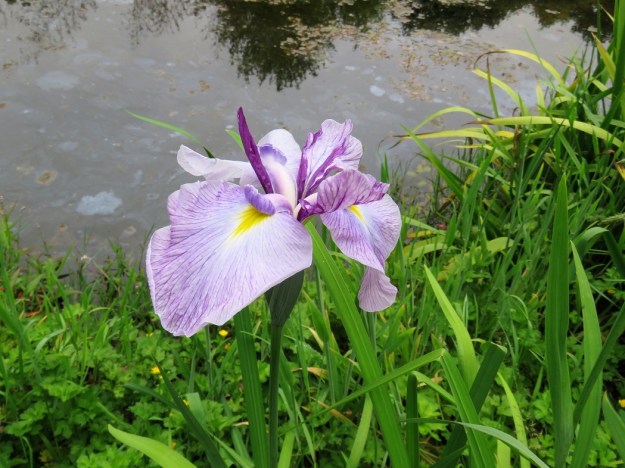
Can we have too many Higo iris?
A few years ago, I planted the last of the neglected pots from the nursery down in the area we call the Wild North Garden and this year, some are starting to bloom. They are much more rewarding than the Louisiana iris we grow where the leaf to bloom ratio is too high.
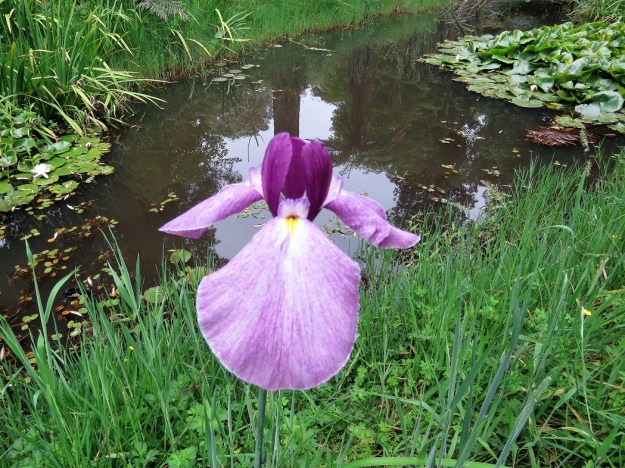
Seedling variation in the Higo iris
From mid to late November through until Christmas, the flowering of the water iris is such a delight. Like over the top butterflies, they float in the air above a sea of buttercups, dandelions, daisies and wild grasses and they truly make my heart sing.

In the park meadow. The Wachendorfia thyrsiflora with its tall yellow plumes has a death sentence on its head – too free with its seeds to keep it by a waterway

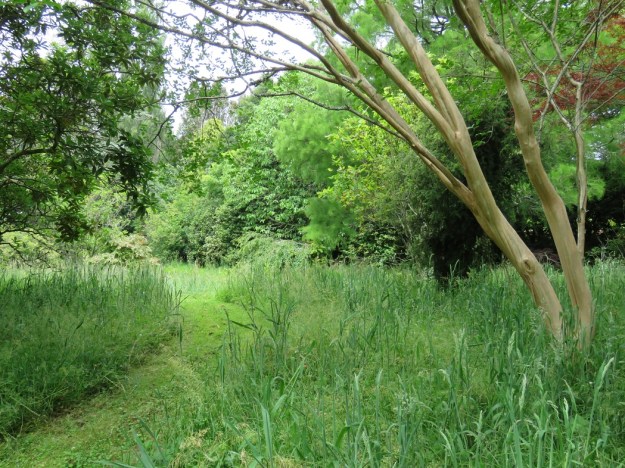
The Wild North Garden – I am waiting for more Higo iris to bloom
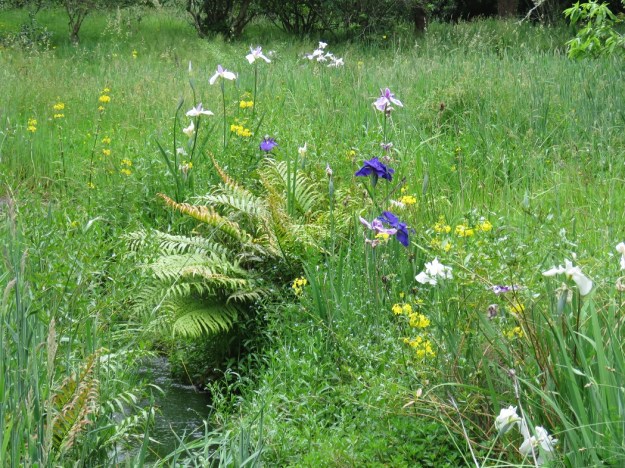 We are now entering our sixth year of managing our park as a meadow. Note the word ‘managing’. This is not just leaving it to its own devices but a much lighter touch than the previous mowing and weed control we used to practice. And in December, as in previous Decembers, my heart just fills with joy at the sight of the Higo iris in bloom. I love all times of the year in the garden – there is always something that delights me – but never more so than the iris meadow in the lead up to Christmas.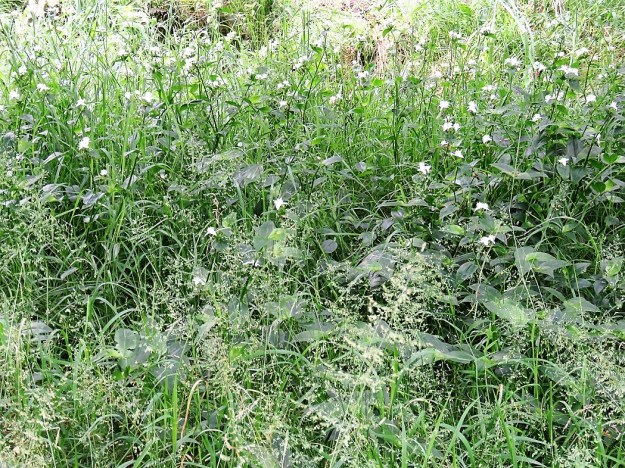
 Having a stream flowing through brings responsibilities and these are weighing somewhat upon us. We worry that we are likely to be blamed for every escaped ornamental plant that establishes downstream, even if at least some are washed down from further upstream. The shiny leafed angelica, Angelica pachycarpa, somewhat more prized in overseas gardens but seen more as a weed here, has introduced itself from an upstream property. Don’t believe the
  To be honest, we figure that if the beautiful Higo irises establish themselves downstream, that may not matter. They are no risk that we can see. We worry about the
 Currently, I can be found in the afternoons down by the water, digging out the weedy carex and docks that are shooting up into flower, thinning the primulas and battling the wachendorfias. It is heavy work, sometimes muddy, but the setting is one to gladden my heart.
 December was memorable last year. Finally, we achieved the water meadow effect we have been striving for in our park. This was thanks to the iris and to our learning how to manage long grass in ways other than cutting it.
 There are anything up to 300 different species of iris but the one that comes to mind most frequently is the bearded iris. These are ephemeral delights in our climate with its high rainfall, high humidity and fertile soils, so a joy in bloom in October but over all too soon. The so-called Dutch iris flower earlier in spring. These are hybrids of 3 lesser known species, often somewhat derided, seen as a little vulgar even, but they can look charming enough in the right setting and are easy to grow.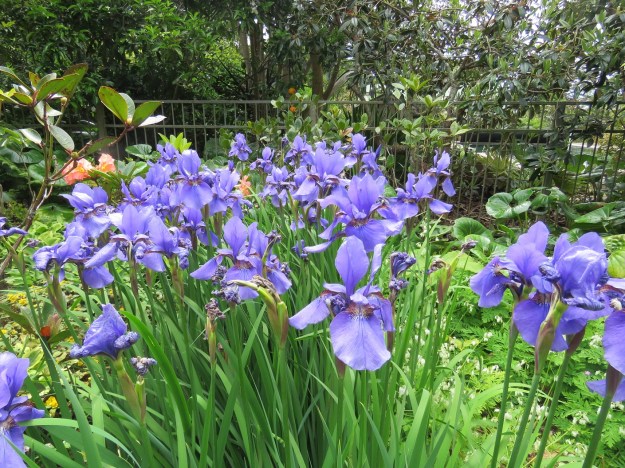
 In early spring this year, I spent a few muddy days down by our stream,
  potential to grow and we didn’t think that establishing mats of flag iris all the way to the ocean was a good reflection on us. In digging them out, I can tell you the dense mat they form is not unlike wild ginger. I replaced them with a mix of Higos and sibiricans which may spread by seed but don’t form the choking, solid mats.
 Every time the Higos bloom, we think most kindly of Auckland plantsman, Terry Hatch. Years ago, he gave Mark a tray of germinating seedlings which were reputedly from wild gathered seed. Mark had tried growing Higos earlier but without success. They are not a species, but a group of Japanese iris bred extensively over 500 years in the quest for the single perfect bloom to bring indoors, in that wonderful
  pared-back style perfected in Japan. The requirements of a garden plant are very different and those highly refined hybrids did not perform. The seedlings from Terry – about 700 of them in the end – gave us a huge range in colour, size and style and they have settled in most satisfyingly by the stream. By this I mean they are performing very well year after year, with no attention at all but without any indication of becoming a weed. I tried some in a perennial border and they grew and flowered well, but their leaves are very long and tend to swamp other plants in the months before they go dormant.
 What we love about the water iris is the contribution they make to a softer-edged, naturalistic style of gardening which we increasingly favour. A return to a more romantic garden style. It took my breath away last December. I am looking forward to a repeat this month.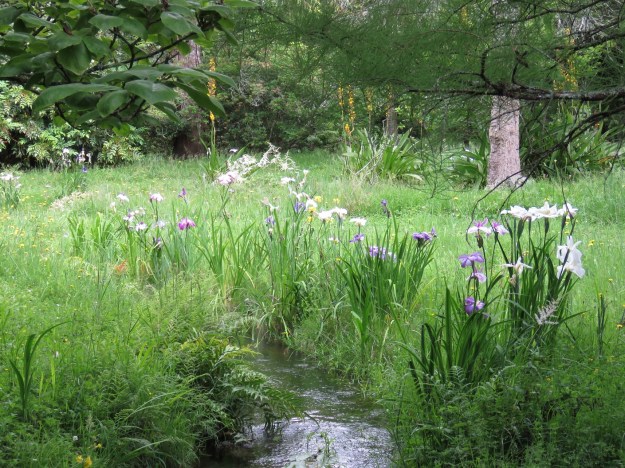
 First published in the December issue of New Zealand Gardener and reprinted here with their permission.
 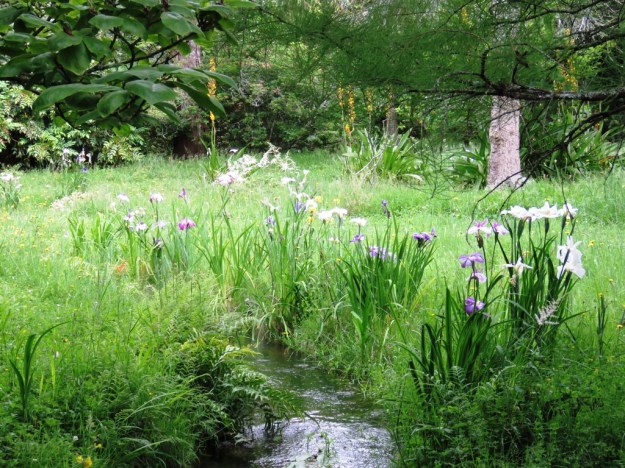 A water meadow! I was delighted at the sight in our park this afternoon. We stopped regular mowing of our park two years ago when we first closed our garden to the public. We were keen to see how far we could push the meadow effect in our climate and also concerned at our heavy dependence on internal combustion engines to maintain the garden. Long grass and flowers are far more ecologically friendly than mown grass.
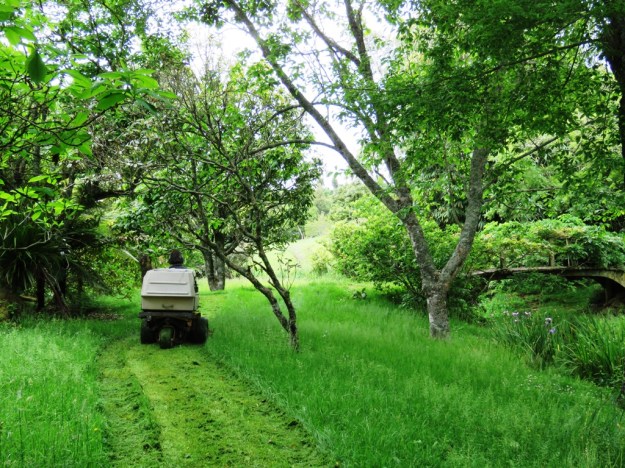 Mark took note of my request that we mow double width paths through the grass this year. A single mower width looked a bit mean to my eyes. I commented to him earlier this week that my only worry was the abundance of buttercup that we now have. He wryly pointed out that it has always been that way. His childhood memories are of the yellow buttercups and dandelions and white daisies throughout the park. We have just returned to that, though not to grazing with sheep.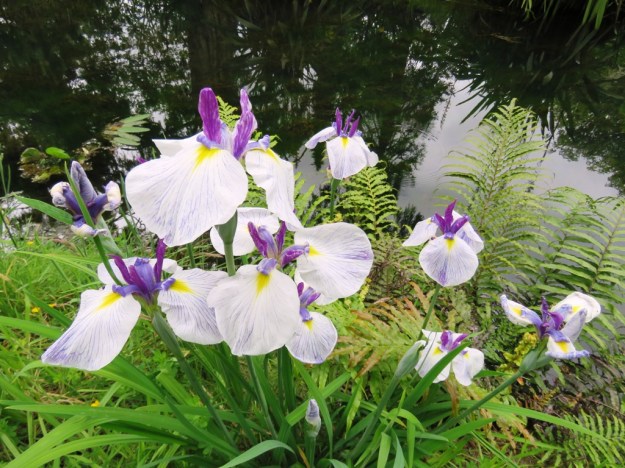
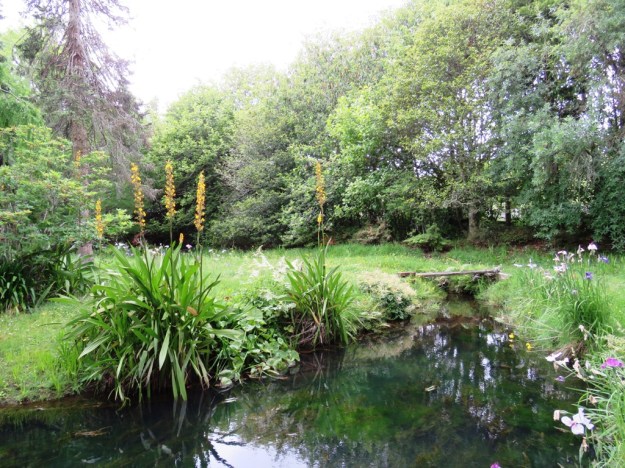
 Before the thunder storm hit this afternoon, the sheer size of the
  News from Australia that Mark’s new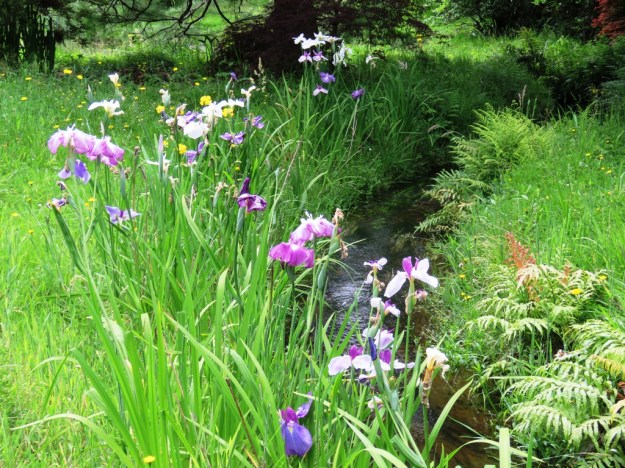
 Tikorangi The Jury Garden