Delighted by A. dahaiense
Not all flowers are beautiful, but my goodness arisaemas have curious flowers and equally peculiar propensities.
Arisaema ringens has been around New Zealand gardens for a long time – sometimes called Jack-in-the-pulpit though that is more correctly used for the American species, A. triphyllum. While A. ringens has handsome, glossy foliage, the flowers hide beneath in such seclusion that you are likely to miss them entirely.
The last twenty years have seen an influx of new Asian and Japanese species to the country, many of which have piqued the interest of collectors. Even now, the choicest ones are difficult to source – often more a case of who you know rather than where you can buy them. And if you get hold of them, some are very difficult to keep going, especially in garden conditions as opposed to nursery pots.
Arisaema tortuosum
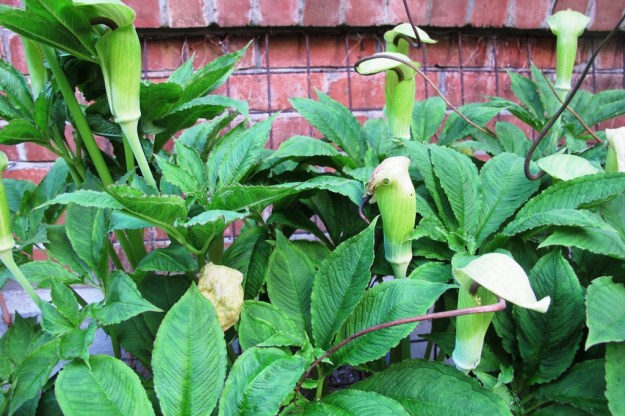
Not all are devilishly difficult. A. tortuosum is easy and will seed down freely, a bit too freely, we find. It makes a big patch, maybe 75cm tall, with the green hooded flowers sitting above the foliage. We find it is perfectly happy in the border right beside the house on the eastern side where the only water it gets is run off from the adjacent path.
Arisaema speciosum
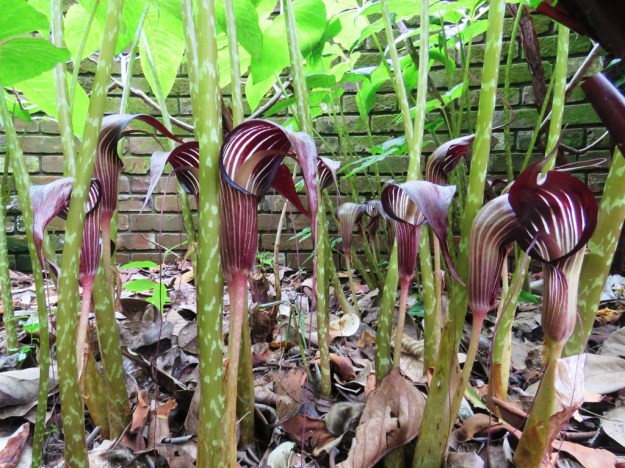
A. speciosum is another easy variety in semi shade. It has handsome foliage, lovely mottled stems and curious flowers in burgundy-brown that really do look like hooded cobras. But the issue is that the flowers are held beneath the foliage so unless they are planted on a slope or on a margin where you can see into the patch, you may miss the flowering season. The early summer blooming A. candidissimum is one of the prettiest forms and is not difficult to grow with its palest pink and white hooded blooms appearing before the foliage dominates. It also multiples well.
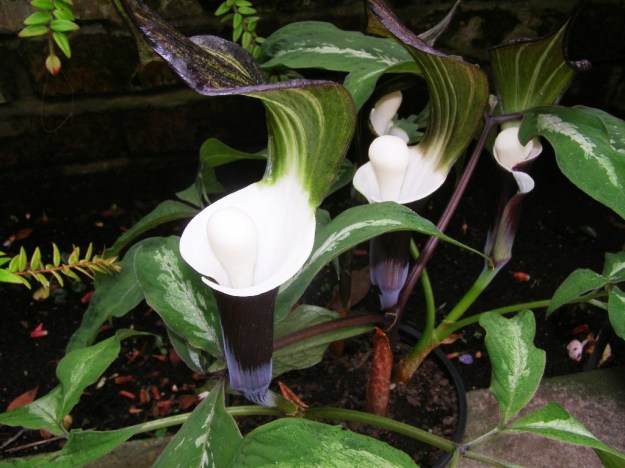
Mark’s A. sikkokianum hybrids
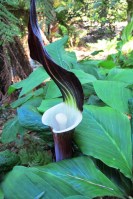 And then there are the tricksy ones, few more so than the Japanese A. sikokianum with its phallic spadix and hooded spathe rising prominently above the foliage. It is a show stopper in spring, though definitely curious rather than beautiful. After many years of growing it, I can tell you that it is difficult. We have never seen it increase from the corm. Growing well, it will set seed but these need to be raised in controlled conditions because it will not seed down naturally here. Even then, the patches tend to get smaller with time, rather than larger. It was for this reason that Mark experimented with hybridising it, to try and get increased vigour. This is known as hybrid vigour, in a similar way that the controlled breeding of designer dogs can make the offspring a stronger genetic strain than the highly refined parentage of pure breds. It has worked for us. The offspring carry all the best characteristics of A. sikokianum but they grow more strongly and are reliable as garden plants. Few would pick the difference to the lead species, but we know they are actually hybrids.

Arisaema dahaiense
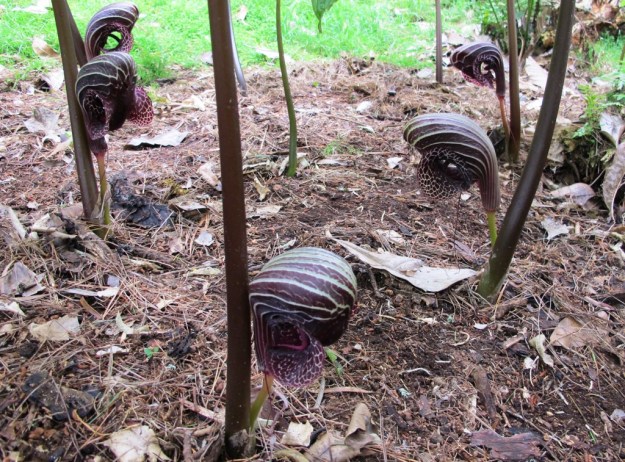
For sheer bizarre appearance, the more recent acquisition of A. dahaiense has to take the cake. It is very peculiar and not a carnivorous plant, though it looks as if it should be. The mottled, frilly flange is particularly striking. Because we are gardeners rather than plant collectors, the fact that this large-flowered curiosity has settled down quite happily in the leaf litter of open woodland conditions is a real bonus.
Peculiar propensities? Arisaemas are hermaphrodites. When they are young or growing weakly, they are male. Only when conditions are right and the plant is strong, do they become female and therefore capable of reproduction. Then if they need a wee rest, maybe after a season of prolific seed set or drought, they revert to male again. Is this a metaphor for the human condition, some may wonder. I could not possibly comment.

A. taiwanense seed
If you notice a vague visual similarity to the mouse plant (Arisarum proboscidium), the striped Arisarum vulgare or arum lilies you are correct. Though not close relatives, they are all aroids in the Araceae plant family. Arisaemas go dormant in late summer and grow from corms – often roundish balls or larger round discs, though speciosum corms can look more like something unfortunate that the dog has left behind. Some species set copious amounts of seed which can be attractive in itself in autumn, though it helps to know your species. I remove the tortuosum seed because it can spread too freely whereas the speciosum seed, while abundant, has not created problems for us.
If you really want to know more about this plant genus, the gold standard reference is currently still a book, a proper book, not the internet – “The Genus Arisaema” by Guy and Liliane Gusman.
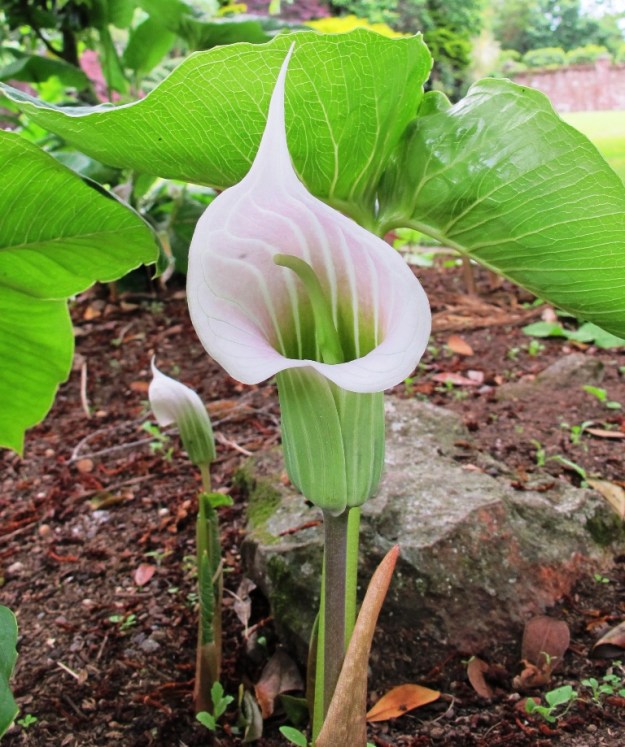
Arisaema candidissimum
 First published in the December issue of NZ Gardener and reprinted here with their permission.
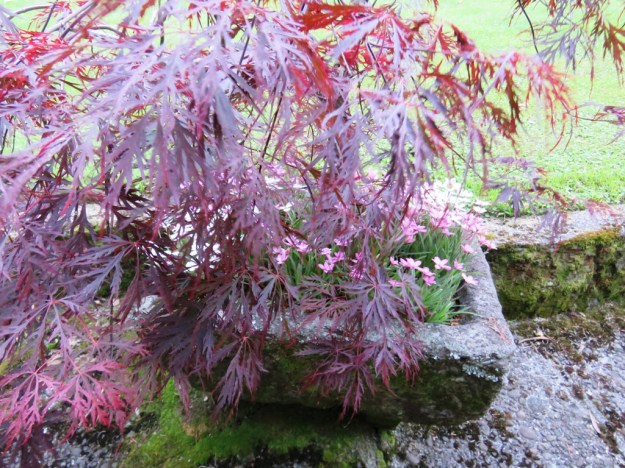
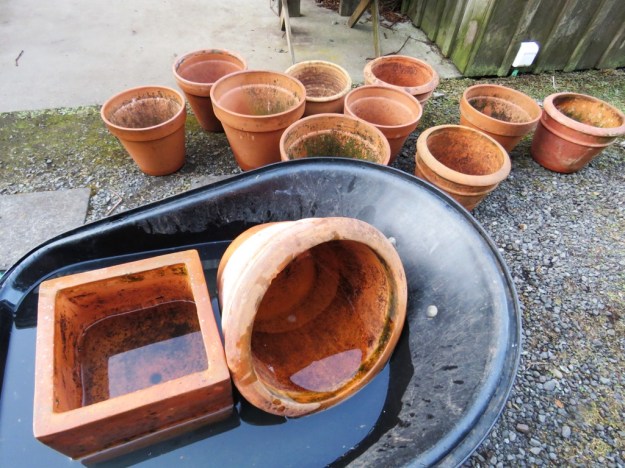
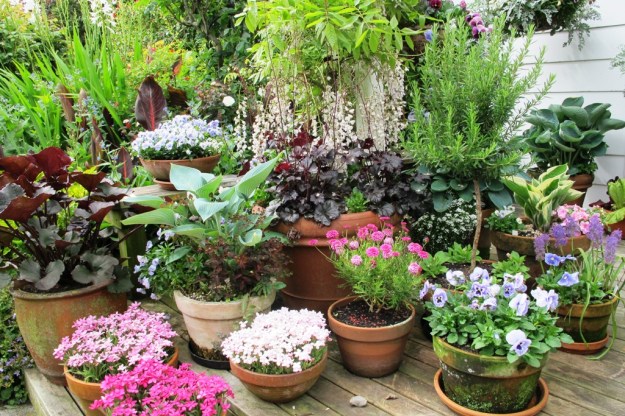
 I have witnessed many aberrations in good taste in containers and ancillary decoration over the years. Garish blue pots continue to infest the country – particularly Taranaki gardens, due to the high volume sold by a local importer some years ago. Having long rid myself of these lapses in good taste (planted up with burgundy plants, as I recall), close friends live in fear of my sniffy derision at their 1990s blue relics. I maintain a discreet silence unless they are good friends. Similarly, cheap pots adorned with glazed pictures of bamboo or sunflowers left these premises many years ago. I had it down to aged terracotta, neutral shades, hypertufa or stone.

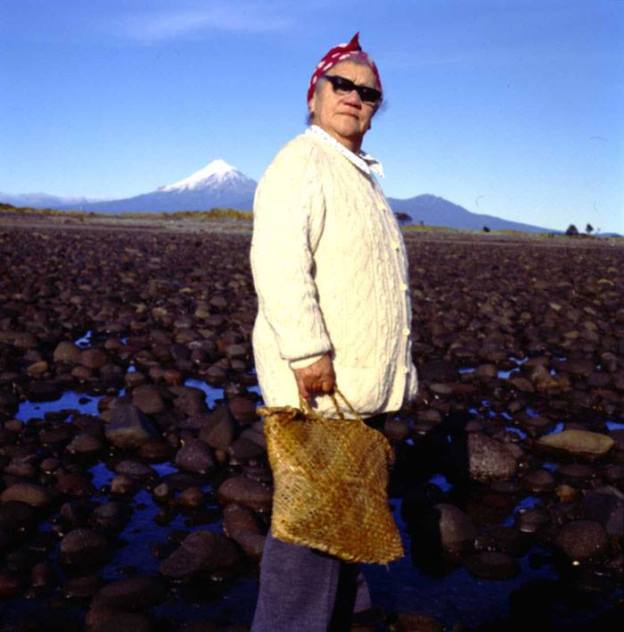
 Back in the early 1980s, Mark’s late mother Mimosa was an active supporter of the groups lobbying for clean water in this area of ours. At the time, there were extended hearings into the establishment of the gas to gasoline plant at Motonui – with plans to pipe waste out to sea – and a claim under the Waitangi Treaty regarding discharging of waste to water. In good country-woman style, she would bake food to share at these hearings and on many days she would pack her lunch to head down and sit in support of those speaking out to protect our water.


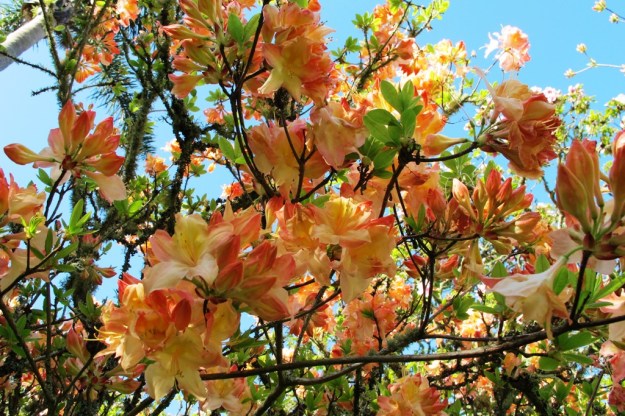 The deciduous azaleas certainly add vibrancy to the late spring garden as we enter November. They are not all so breathtakingly unsubtle. But I guess, were a plant to think like a human, if you are going to spend 11 months of the year being pretty insignificant, you might as well make a loud statement when it is your time to star.
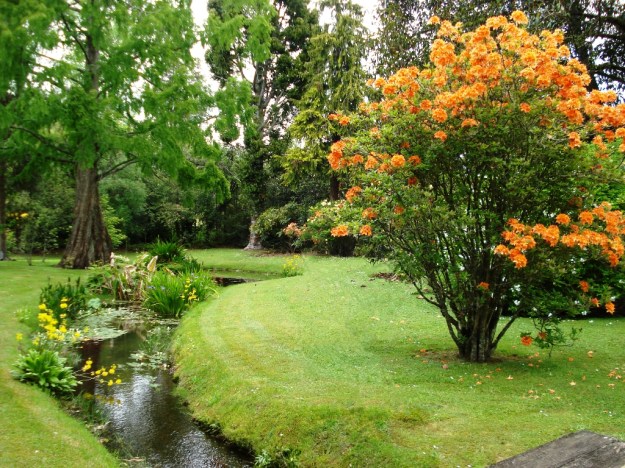 The area of our garden that we refer to as ‘the park’ was first planted in the early 1950s, in the style then promoted by the New Zealand Rhododendron Association. Plants stand in solitary splendour which gives them their own space, plenty of air movement and the ability to be viewed from all aspects. While it has changed and matured over the intervening six decades, the deciduous azaleas still thrive in this environment with minimal attention.

 Azaleas are all part of the wider rhododendron family. Evergreen ones originate from Japan while the deciduous azaleas are much more widespread in the temperate world, being found in China, Japan, Korea, southern Russia and North America. Most of what are grown now are hybrids with very mixed genetics.They are often inaccurately referred to as Ilam azaleas or azalea mollis in this country. “Mollis” refers to a particular cross deriving from A. molle and A. japonicum, originating from early plant breeders in Holland and Belgium. The Ilam azaleas came from the breeding done in Christchurch but have strong links to the Exbury azaleas, also referred to as the Knap Hill hybrids. Then there are the Ghent azaleas, which originated from that area in Belgium. Confused? It is really difficult to disentangle when in fact the most accurate description is simply to refer to them as “deciduous azaleas”.
 First published in the November issue of New Zealand Gardener and reprinted here with their permission.
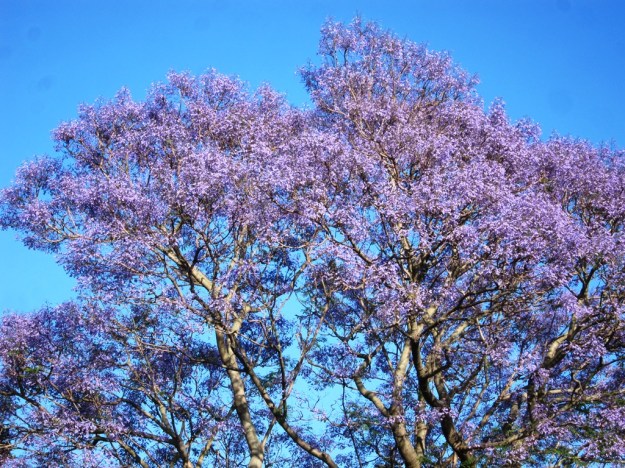
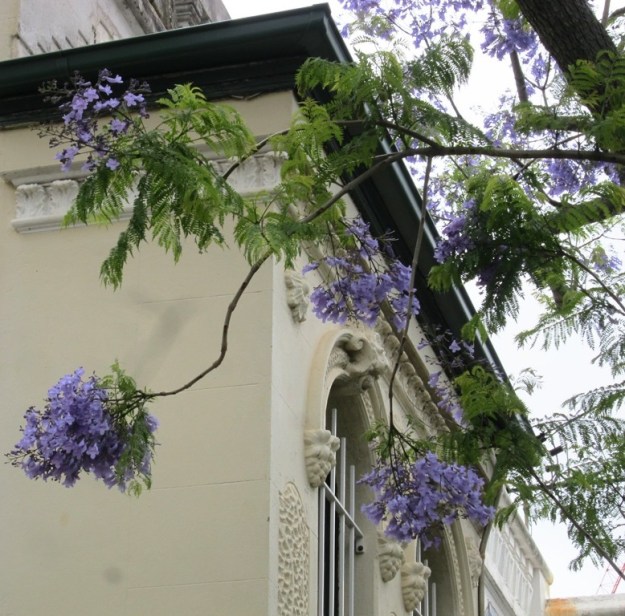 I spent the past week in Sydney, helping our second daughter move into her new apartment. This was a larger task than either she or I had anticipated so left little time for things horticultural. But oh the jacarandas were lovely, used widely as street trees and in front gardens in the eastern suburbs. Sydney is a great deal warmer than Tikorangi –
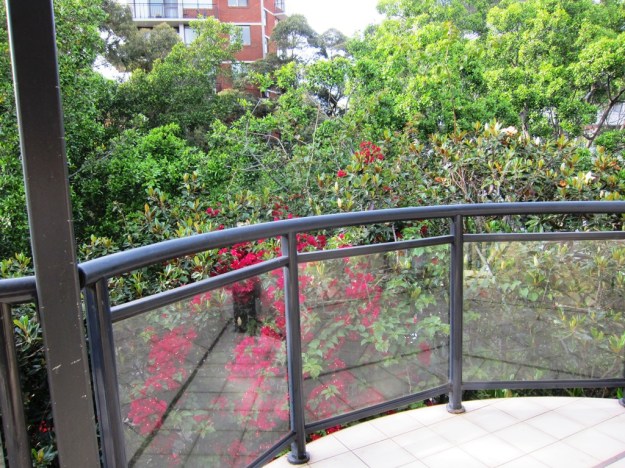 Daughter’s apartment is on the third floor. No lift. It’s not too bad – the stairs are well designed to make it easy. But I mention the third floor because that is several Magnolia Little Gems and a handsome red bougainvillea growing level with her apartment balcony. I have written about
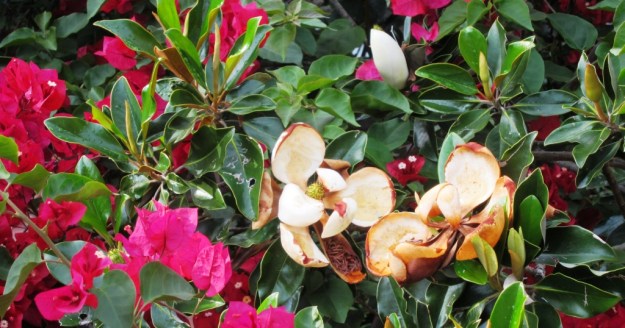
 Over the years I have seen a number of small English backyards where the only access way is via the house and thought that would be tricky. I can now say that these are eclipsed by apartments with no lift. ‘I will repot her container plants while I am here,’ I thought. Or at least the kentia palm and the tired peace lily which looked as if it was on the point of surrendering. I briefly toyed with carrying the plants down to the potting mix where there was a bit of communal garden so the mess wouldn’t matter, but decided it would be easier to carry the potting mix up and do it on the balcony. I wasn’t sure there was an outdoor tap and the rootballs needed a good soak. Logistically, it is harder than you think. Believe me. I was trying to contain the mess but even so some of the debris and the water went over the edge and I worried about alienating the lower apartment residents. The spent potting mix then had to be carried downstairs to spread. These were new challenges for me and I will look upon apartment gardeners with even greater respect. Undeterred, Daughter reclaimed her closed unit worm farm from a previous dwelling and located it discreetly at the back of the ‘landscaped’ communal area. Her kitchen scraps need to be carried downstairs anyway, so she figured she might as well keep them separate, feed the worms and use the liquid fertiliser they generate. It makes you proud to be the parent.
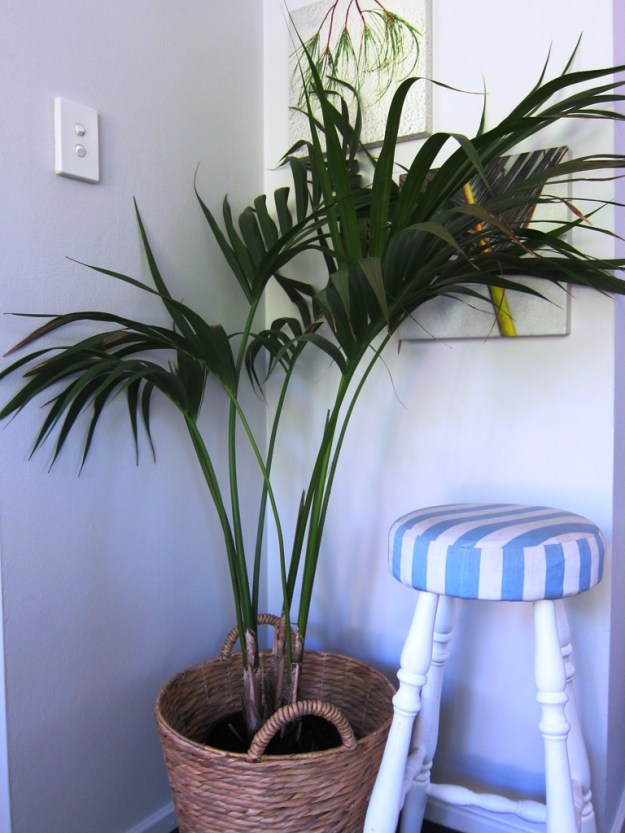 The kentia palm, I noted, is in fact three kentias (Howea forsteriana from Lord Howe Island) and there were at least five seeds sown in the original pot. That is a nursery technique to get a larger plant in a shorter space of time. Naturally I wondered about separating them but daughter needed one attractive kentia, not three smaller ones going into shock from such brutal treatment.
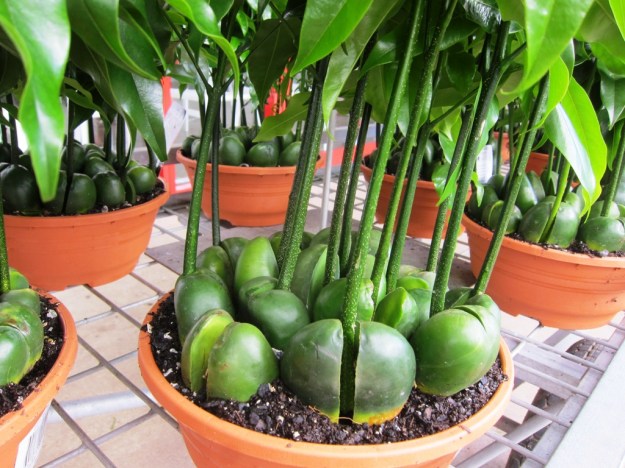 Greater love hath no mother than shopping for plastic items in Kmart but I did also get to wander through the plant section of a Bunnings store while we were doing a mission in search of home handyperson supplies. For $A26.90, you can buy a novelty houseplant of germinated “Black Bean” seeds. These are