Author Archives: Abbie Jury

Unknown's avatar

About Abbie Jury

jury.co.nz Tikorangi The Jury Garden Taranaki NZ

Countdown to Festival: October 29, 2010

Somebody has already sampled the Moroccan date and spice cake

Somebody has already sampled the Moroccan date and spice cake

• It is here. We have counted down and opening day has arrived. It is too late to do anything but titivate for garden openers who will be out waiting to meet and greet visitors from this morning onwards. Local support is enormously important so I would urge readers to take a leaf from the bridal book and go and see one garden that you have been to previously and enjoyed, one garden that is new to you, one garden that you think may have some really good ideas for you to borrow and presumably one garden that has wisterias for the blue element! Maybe blue Siberian irises or ceanothus would do instead.

• We are a bit worried about potential weight gain here at Tikorangi this week. For the first time we are offering food for sale on Fridays, Saturdays and Sundays – courtesy of our neighbour Chris Sorensen. Now, we know from experience that her Greek lemon cake is almost divine (cooked with coconut and almond meal and drowned in lemon syrup and glaced lemon slices) and that her carrot and pineapple cake with pecans is a tour de force. It is a source of some chagrin to me that our Chris is a hugely more talented baker than I am but garden visitors will be the lucky ones to sample her offerings menu this week. The menu includes both hot and cold savouries as well but Mark and I have yet to conduct our quality control survey on these items.

• Near Manaia, Jenny Oakley has had cause to be grateful that they don’t get passers-by or casual evening visitors or she might feel embarrassed to be seen out at night with miner’s lamps strapped to her head as she waters her containers and hanging baskets and ties up her broad beans. The family gave her one as a joke Christmas present one year so that she could continue to garden after dark but they didn’t expect her to actually wear it! Experience has shown her that she needs to wear two at once in order to get enough light, which she says is not a very flattering look.

• In Stratford at Merleswood, Erica Jago has been glorying in some welcome sunshine recently which has her plants making up for the slow and cold start to spring. Being inland, Erica’s wisterias flower a little later than coastal gardens so peak during Festival and she has enormous and well trained specimens. Her Venusta, she says, must be at least 65 years old and is very striking with its strong lemon scent and big, fat, stubby, creamy white racemes. Various other cultivars in blues, lavenders and pink tones festoon their way around her garden. Erica’s rugosa rose hedge is bursting into bloom. The major work she undertook on this hedge over winter, which she says was arduous (syn. a cow of a job!) has paid off with a much better display this year.

• The call is out for anybody interested in opening their garden for the 2011 Festival to contact festival manager (Lisa Haskell) at TAFT on 06 759 8412. While it is undeniably a lot of work to prepare one’s garden, the pleasures and rewards of opening outweigh the labours. It is really affirming to have many hundreds, sometimes thousands, of people come and enjoy your garden and tell you how wonderful it is, though some of us might hide a wry smile at suggestions that we are lucky to live in such a beautiful place. There is not a lot of luck involved.

• Events this weekend include the inimitable Lynda Hallinan (From Chelsea to Chooks – how to be self sufficient in style), floral artist and micro-greens devotee Fionna Hill and our very own Jenny Oakley giving a workshop on hanging baskets. There is, as many of us have found out, a little more to good hanging baskets than plonking in some potting mix and a few pansies. Events kick off this evening with jazz and wine at our garden here at Tikorangi where we are slightly nervous about the number of tickets sold – divide by two and it gives an estimate of the number of cars to expect. Where will we park them?

• And a final word on etiquette for garden visitors although the source wishes to remain anonymous. Even with the best intentions, saying to a garden owner: “I guess the garden looks after itself these days,” is not a compliment. Gardens by definition do not look after themselves (native reserves and national parks do that). Gardens need a lot of looking after and that relaxed and natural look, which has a debt to the English romantic tradition of gardening, takes work.

In the Garden this week: October 29, 2010

A remarkably useful square of high density foam packing

A remarkably useful square of high density foam packing

• Advice this week is out of the do- as- I-say school, rather than our usual efforts to lead by example. This is the only week of the year that there will be no gardening happening here as we, along with other garden openers, are completely committed to garden visitors. So the first suggestion for locals is to get out and visit a few of the many gardens open for your pleasure this week.

• Winter has at least gone once and for all and after a slow start, we are rushing headlong into warmer and drier weather. Start a watering routine now on baskets, pots and containers. They dry out really quickly and a little water often is always better than a flood when they start wilting or dropping leaves.

• It should be safe now in all areas to get the summer vegetables planted out – corn, capsicums, tomatoes, cucumbers, pumpkins, aubergine, basil, yams, lettuce, kumara and the rest. If you are a novice, this spring planting will give the quickest results to keep you motivated.

• Try and avoid compacting your garden by walking on it where possible. Quick maturing leafy crops, such as are being planted now, like light, friable, well tilled soil. Having a board to walk on is the traditional way of avoiding stomping the soils.

• Another warning about hormone sprays (commonly used on lawns) – earlier in the season we counselled against using them as deciduous trees, and particularly magnolias were coming into leaf. At this time we advise against them if you have grapevines or tomatoes, or indeed kiwifruit. All are very susceptible to the slightest hint of spray drift. Our overall advice is to manage your lawn in other ways if possible and only turn to hormone sprays as a last resort.

• The window of opportunity for planting melons with reasonable chance of success is narrow. Get them in asap because they need a long growing season. Watermelons are easier than rock melons but both need maximum heat and sun. Your chances of harvest will reduce greatly if you live inland where temperatures are cooler.

• Deadhead pieris (lily of the valley shrubs) to keep them flowering well next year.

• Some of the most useful pieces of equipment that we have were free – squares of thin, high density foam which came as packing around something. As convenient kneeling pads, they leave the expensive kneeling stools for dead. They cushion the knees, don’t let moisture through, repel dirt and are as light as a feather to carry around.

Outdoor Classroom – Rhododendrons: common problems and solutions

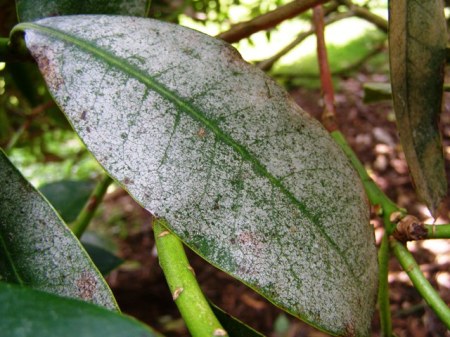
1) Silver leaves. By far the most common problem is thrips sucking the chlorophyll out of the leaves, turning them silver and weakening the plant. Turn the leaf over and you may find black, thread-like insects on the back. Replace heavily infested plants – some varieties are more susceptible than others. Open up around the plant for more air movement and light. You can use a systemic insecticide – spray November, early January and, for really bad cases, late February. Neem oil is recommended by some as an alternative to insecticides.

2) Leaves with dry brown patches and edges. This is usually a sign of stress. The plant may be too dry or too hot. Move it if necessary (sun for half the day or dappled light is best) and get a blanket of mulch over the roots. Some varieties prefer a much colder winter than we have and these tend to burn and crisp on the leaves. Replace them. Some plants get touched by mildew and lichen. Open up to allow more air movement.

3) No flower buds. This is usually a sign of too much shade. Move the plant or open up around it to allow more light.

4) Leggy, bare and stretched. Again, this is usually a sign of too much shade. Some varieties have a tendency to get rangy and open, others are naturally more compact and bushy. You can rejuvenate a leggy plant by cutting back very hard but it is really too late in the season now. It is best done in the middle of winter. You are more likely to kill the plant if you cut it back to bare wood now. This plant was cut back hard two months ago and has made its new growth already.

5) Plants which make only one new growth from each stem can be encouraged to make several growths by pinching out the single shoot. Do this as early as you can or you will be pinching out next year’s flower buds. In the right hand photo, you can see a plant making several new shoots instead of only one.

6) If not deadheaded, some rhododendrons set so much seed that it can weaken and even kill them. It can also reduce flowering the next season. This plant missed being deadheaded last year. Varieties that don’t set seed are generally deadheaded for aesthetic reasons, not because it is necessary.

Tikorangi Notes: Saturday 23 October, 2010

Latest Posts: 23 October, 2010

1) Rococo gardening in Portugal – the garden at the Pink Palace in Queluz.

2) A lilac that is happy in our mild climate with acid soils: Syriniga palibiniana from Korea.

3) Our hints for garden tasks for this week.

4) It is only one week out from the single biggest event on our garden visiting calendar in Taranaki – Counting Down to Festival.

The fluffy pink pompoms of Prunus Pearly Shadows
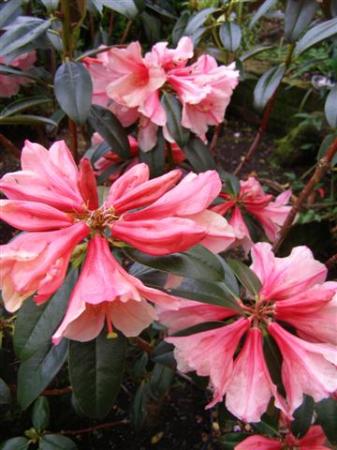
Rhododendron Bernice flowering this week

Rhododendron Bernice flowering this week

Tikorangi Notes: 23 October, 2010
With under a week to go until the start of the Taranaki Rhododendron and Garden Festival next Friday, the pressure is on to complete the garden preparation. Expectations are high when it comes to standards of presentation and grooming here. With various factors mitigating against meeting our deadlines this year (an appalling early spring of wind and rain, the odd bout of illness and injury, not to mention my disappearance overseas for three weeks), we have been grateful for extra assistance from some able friends this week. The plants are unconcerned by the flurry of activity – rhododendrons and azaleas opening every day, Prunus Pearly Shadows is a picture, the Scadoxus puniceus are eyecatching and everybody asks about the arisaemas (Mark’s hybrids). It promises to be as colourful and fragrant a display as ever.

Rococo Gardening in Portugal

Just one of the eclectic collection of water features

Just one of the eclectic collection of water features

I had been warned not to expect too much of Portuguese gardens. That is despite Portugal having a much more equable gardening climate than neighbouring Spain. But there are only so many castles, palaces, cathedrals, ruins and medieval towns one can absorb and I am happiest in a garden. So when I reached Lisbon, I had already planned a couple of days of garden visiting. Sintra is a small town in the hills 30 minutes beyond Lisbon and it seemed the place to be with no fewer than three gardens of note in my guidebook to European gardens.

Alas the day did not go to plan. The light rain in Lisbon translated to very heavy rain and wind in Sintra. With the best will in the world, my sodden footwear, lack of raincoat and a small umbrella which was giving up the ghost and blowing inside out were simply not equal to the task. The water was teeming down the roads and visibility greatly reduced by mist. The gardens of Sintra were destined to remain a mystery though I could see why they were lusher and greener than other areas.

With intermittent showers the following day, I was not going to make the mistake of returning to Sintra but opted instead for the gardens at the Palacio de Queluz, a mere 15 minutes by train from Lisbon and hailed, in my guidebook, as “the best rococo gardens in Portugal – perhaps even in Europe”. I vaguely recalled Elton John’s garden in the UK being described as rococo and, had I thought about it, I may have conjured up a mental image of gilded cherubs and heavy decoration in the Baroque style. That doesn’t even hint at the extent if it, although there was no gilding.

Borrowing from all styles of history

Borrowing from all styles of history

Up until my visit to Queluz, Britain’s Prince Regent, George, held the crown of naff in my books with his self-indulgent, OTT royal pavilion in Brighton. Restrained good taste is not synonymous with breeding and wealth. A penchant for flamboyance will triumph and the gardens at Queluz left the Royal Pavilion for dead. To be honest, the whole thing was a little down at heel but European countries have an abundance of historic places to maintain at vast expense, and I am guessing that the palace at Queluz may be rated as less important than other premier attractions in Portugal. The palace was pink. Yes, pink and palatial in proportions, though most of it was only double storey. The whole shebang dates back to the 1700s and the royal family of Portugal used it as a summer retreat, somewhat akin to Versailles in France. The exterior of the palace itself was heavily ornamented and the gardens, the work of a French jeweller of the time named Jean-Baptiste Robillon, were designed to spread out from the front of the palace.

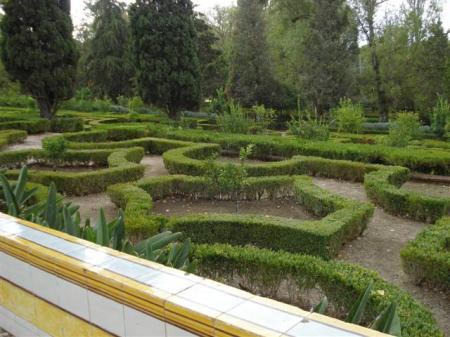
This rococo garden was all about simplicity of form overlaid with elaborate ornamentation. So there were long avenues radiating out and formal gardens, all defined by clipped buxus and pencil cypresses. Form is everything and I was struck by the importance of allowing sufficient space for wide paths. In New Zealand where we specialise in large gardens, too few demonstrate the courage of allowing generous paths, wide enough for maybe six people to walk abreast comfortably. It gives a sense of space and grace in a larger area.

More about style than plants

More about style than plants

Plants were just soft furnishing in this garden. There was nothing of botanical note – some Magnolia grandiflora from America (introduced to Europe around the 1730s but I don’t think these were original plantings), agapanthus, lindens, planes and eucalyptus. Waist high buxus hedges were of clipped sempervirens, shoulder height ones looked to be Buxus wallichiana. Formal gardens were defined by buxus hedges but often the compartments merely held a citrus tree or were left empty. In one area, clipped buxus was planted in a series of serpentine waves. It is all about form and shape, not about plant interest.

Add in the ornamentation. At every turn possible. The more elaborate and detailed the better. Goodness only knows how many statues and water features, scalloped pools, round pools, a large rock waterfall (with no water running on the day I visited and stuck in the middle of long vista so it made no logical sense and merely looked contrived), tiling, balustrades, urns – the more the better. Stylistically, the ornamentation is borrowed from pretty much every period in history. The exuberance was overwhelming.

A hint of mausoleum style in the canal garden

A hint of mausoleum style in the canal garden

Gild the lily further

Gild the lily further

The piece de resistance were the tiled canals at the end of the garden. A natural stream had been channelled through paved canals, designed with locks so that the water could be held back to raise the level, apparently to hold barges filled with musicians to entertain the royal family and their guests. Pity the poor peasants downstream whose water could be withheld at the royal whim and then possibly released in a wild woosh.
The canals were lined inside and out with glazed tiles predominantly in blue and white (though sometimes in yellow, blue and white), depicting murals of shipping scenes, courtly matters and still life representations. These have withstood the ravages of time over several hundred years and are still in good condition and quite bright. Apparently the Portuguese, like the Spanish, are happy to gild the lily even further- in a heavily decorated scene, add some more detail – so colourful urns adorn the plinths, statues stand guard and steps are constructed and tiled in a manner reminiscent of a mausoleum. The effect was quite astounding.

This is not a style of gardening that is intended to sit easily in the landscape with boundaries between garden and nature blurring, in the style of the English romantic tradition. Nor does it have anything to do with the Japanese gardening traditions of symbolism, restraint and control. It is a long way from the Moorish traditions next door in the south of Spain which are all about restfulness, shade, cool and controlled use of spaces. This is more akin to the historic version of Kath and Kim: “Look at me! Look at me!” It is an ostentatious show of wealth with a certain frivolity within its extravagance and flamboyance. Decoration and ornamentation are the dominant features. I am not surprised if indeed Elton John has the late twentieth century version of a rococo garden.

As a final thought, when our children were little, Para Rubber used to sell a blue, scalloped shell-like plastic affair for use a paddling pool. Possibly they are still around. I hadn’t realised that these had their derivation in the rococo style, along with the hinged clam-shell style of sandpit.