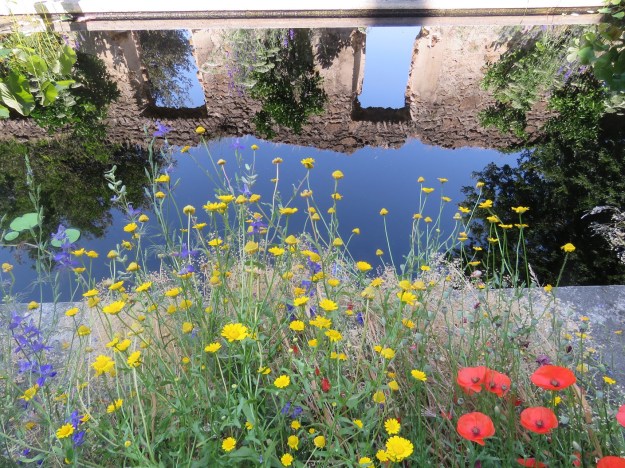
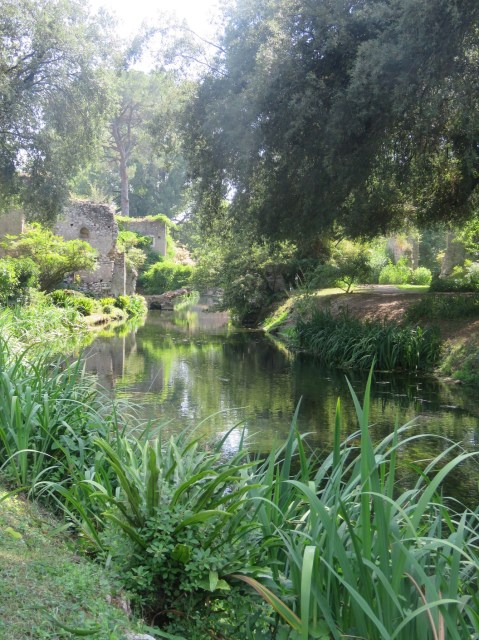
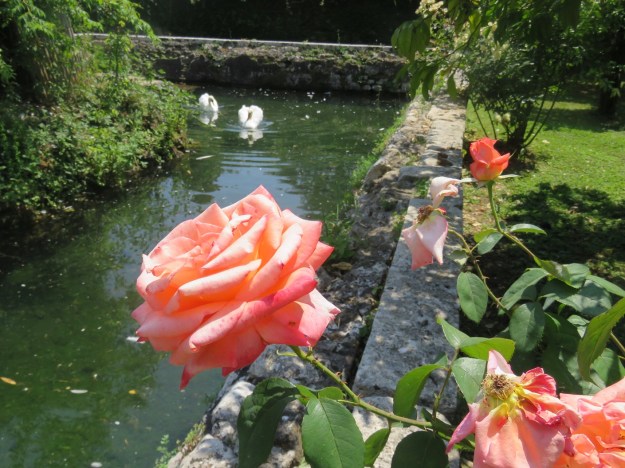
The reflecting pool at La Torrecchia
While the visit to Ninfa was the reason that took us to the area around Latina, south of Rome, we were also fortunate to get to the nearby garden of La Torrecchia. It, too, is created around the ruins of a medieval village, though a smaller one than Ninfa. It is a much more recent garden, dating back to 1991, and it remains gardening on a private, domestic scale. Much of the design can be attributed to the English landscaper, Dan Pearson, whose style interests us a great deal. While this is early Pearson (dating back almost 25 years now), the reflecting pool above is his work. Surrounded by a riot of self-sown seedlings, it was a delight.
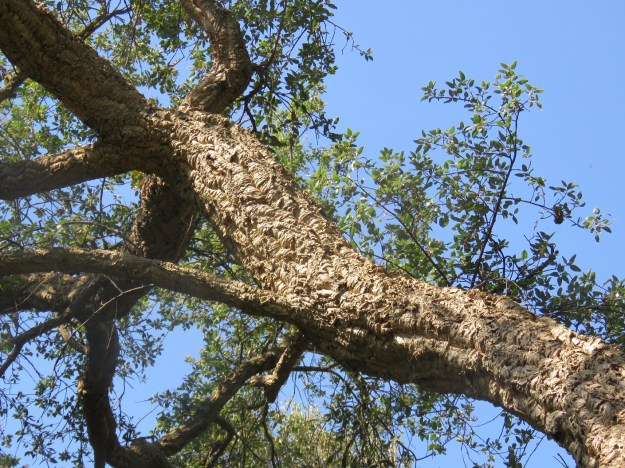
The cork oak, Quercus suber
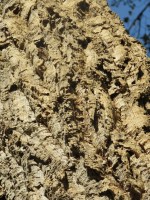 In New Zealand, it is rare to see a wine bottle with a cork these days and most of those will be plastic. This is the land of the stelvin screw top closure. But I give you the curious cork oak, Quercus suber. This fine specimen is in the garden of La Torrecchia. The switch to screw tops has done much to relieve the pressure on these trees which had, apparently resulted in too many inferior corks. It is a curious fact that many restaurants here still pour a mouthful of wine to be sampled by the patron when, as I understand it, this tradition came about because of wine being tainted by the original cork.
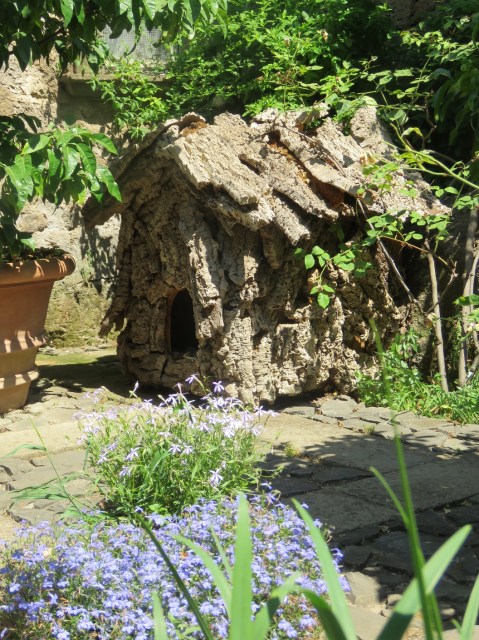
The cork dog kennel stood by the gardener’s cottage at La Torrecchia. Whether a resident dog lives in it remains a mystery but I can tell you that we saw a big as, bigly even, huge hornet fly into the cork. We don’t have hornets at home, let alone these scary specimens. If I was a dog, I would be refusing to share my quarters with a hornet like that.
It is always a slightly strange feeling to encounter one of our plants across the world so I made Mark pose by the specimen of Magnolia Atlas in La Torrecchia. This one was bred by his father, Felix, and it felt very personal that there was a little bit of Tikorangi even in an Italian garden.

Mark beside Atlas at La Torrecchia
Kiwi fruit (actinidia) may have originated in China but we pretty much claim them as our own in NZ. And the commercial product now bears little resemblance to the wild species in their native habitat. It is one of our horticultural stars and a linchpin of our economy. So we were more than a little surprised to see the extent of kiwifruit plantings in Italy. Apparently it is now greater than in this country and a fair acreage of it was in the area around Cisterna di Latina. It is all irrigated which may prove interesting in the future if water becomes an issue.
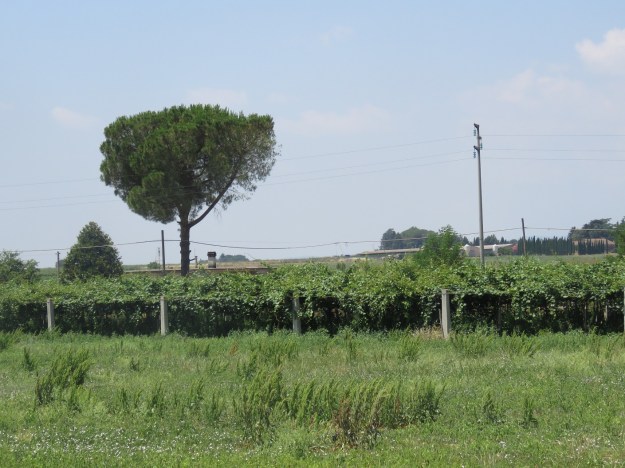
Vast kiwi fruit plantations in Italy
At the local supermarket in Tivoli, we saw fruit being sold. So I can tell you that the green kiwifruit imported from Chile retailed at 2.99 euros a kilo (Haywards variety). The Zespri Green variety grown in Italy retailed at 4.99 euros a kilo while Zespri Gold sourced from New Zealand was 5.99 euros a kilo (which is a little over $9NZ a kilo). We did not buy any, preferring the big beautiful cherries we could buy at the morning market in Tivoli for a little less than that price.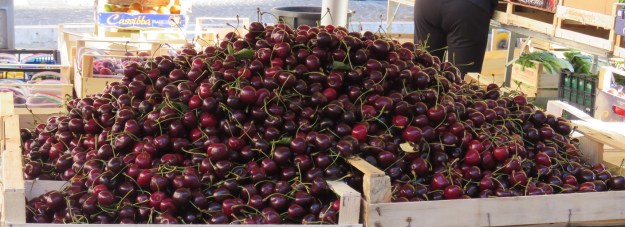
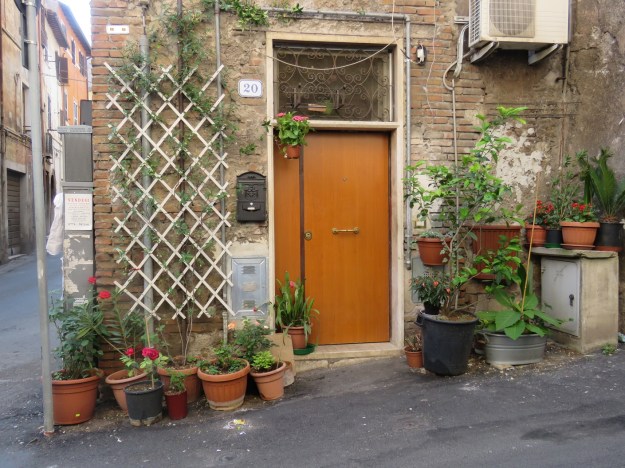
Gardening in the old town of Tivoli
We used Air BnB on line to book most of our accommodation and this proved a huge success for us. In Tivoli, we had a charming one bedroomed, full self-contained apartment with a large garden, right in the heart of the old town. All this for just over $70 a night which seemed astonishingly good value to us. Just down the road from us was this apartment which clearly lacked any outdoor space so the owner could only garden around her door. I always find the urge to grow plants in the most constrained circumstances affirming. At the same time, I felt a twinge of shame and sadness that I doubt such a publicly exposed private garden would even survive in the country I call home. It is more likely that the pots would be smashed and the plants vandalised within days. Or stolen. Sometimes I wonder how civilised we really are.
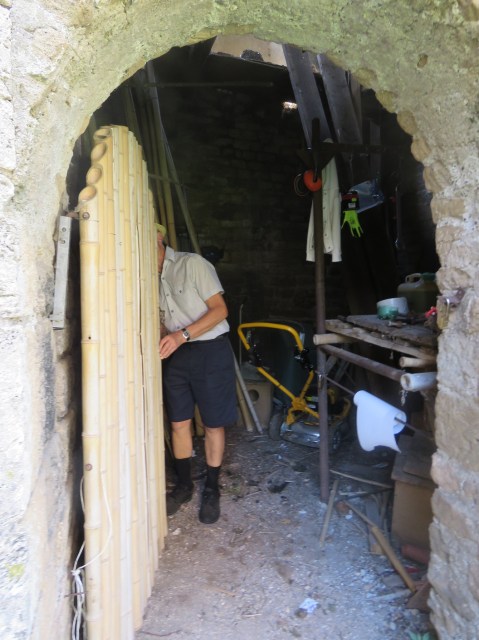 I give you the inquisitive man to whom I am married. He does like to look closely. In this case, he was interested in the construction of the bamboo door to the tool shed that he spotted at Ninfa. The bamboo will have been harvested from their own plantations in the garden and are a creative solution to crafting a door to fit a non-standard entry which likely dates back to the Middle Ages when the buildings of this town were largely constructed. I hasten to add, the door was left open. Mark may inspect but does not usually pry.
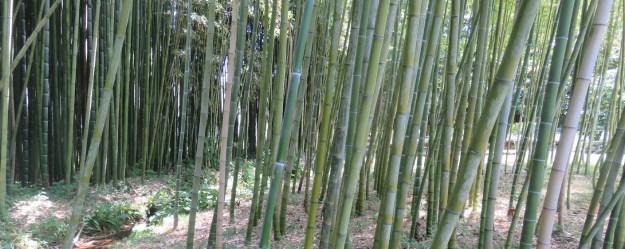
The bamboo grove at Ninfa, not unlike our own one.
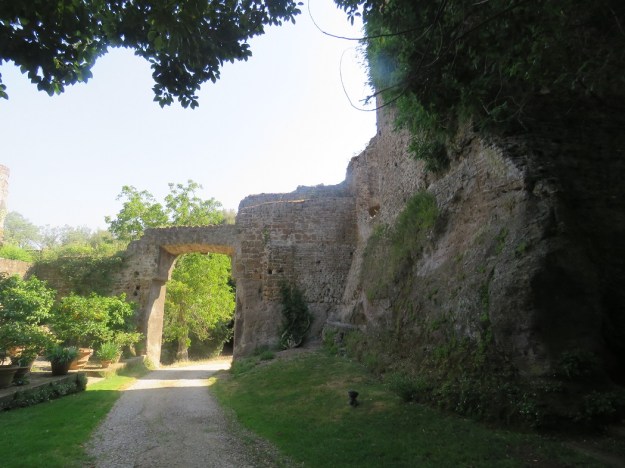
Looking back at the entrance way to La Torrecchia, also built around the ruins of a small medieval village
 “You must go to Ninfa if you are interested in romantic gardens,” I was told very firmly by One Who Knows. So I obeyed. That was the prime reason we went to Italy as part of our trip just concluded. And because Ninfa has very limited opening days, the entire itinerary was organised around one of those dates.
 It is not your classic Italian garden full of intersecting axis and formal spaces. Not at all. Indeed, it is described as being English in style – a descriptor I have met before in a northern Italian garden described to us as being in the “romantic English style”. By this is meant soft edged, informal design with more focus on plant variety, seasonal change and groupings of plants – more frou frou, as I call it, than the heavily clipped and controlled style of the usual Italian gardens of stature.
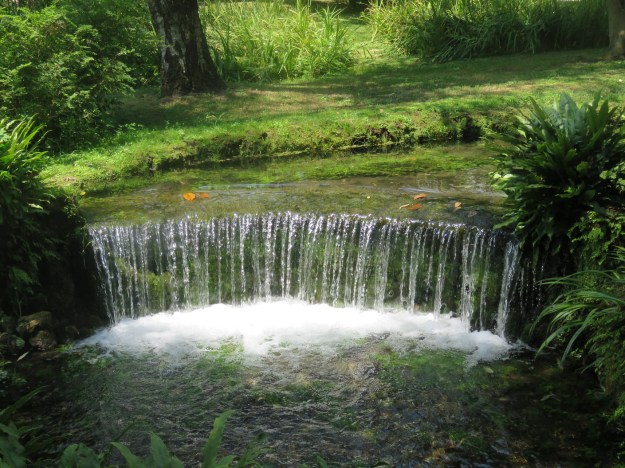 The garden of Ninfa is built around the ruins of an entire town that was sacked in 1370 after being occupied since Roman times. The scale of the ruins is nothing short of astonishing to a New Zealander unaccustomed to centuries of visible occupation. To create a garden around such imposing structures is a dream situation. In a hot dry climate, water is even more important and the abundance and sound of flowing water is integral to the magic of Ninfa, blessed as it is with the river of the same name flowing through the garden. Irrigation is necessary to achieve the lushness and growth in what is a harsh, dry environment.


 If you want to know more about Ninfa, the official website is


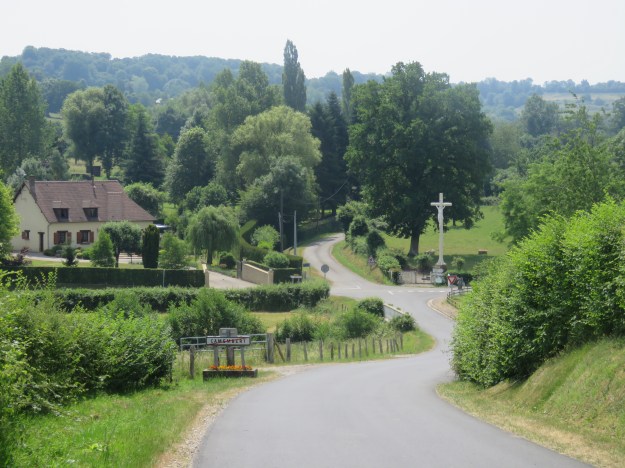 This! This really is the village of Camembert. It exists and it is the origin of the cheese. It is picturesque but small these days containing a church, a carpark with two charge stations for electric cars, a museum to honour Camembert cheese that has limited opening hours and a tourist shop. And some houses, but not many.

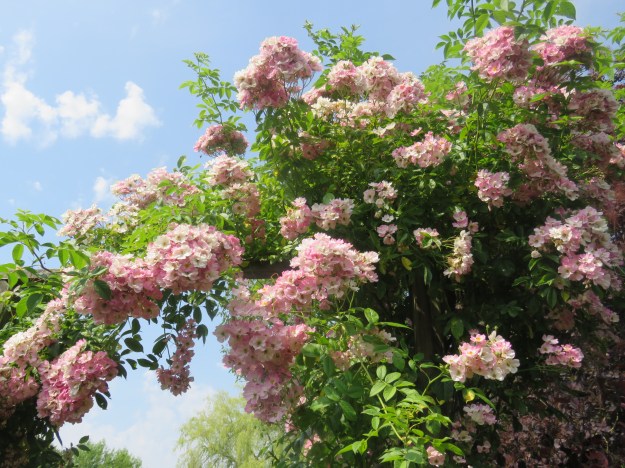

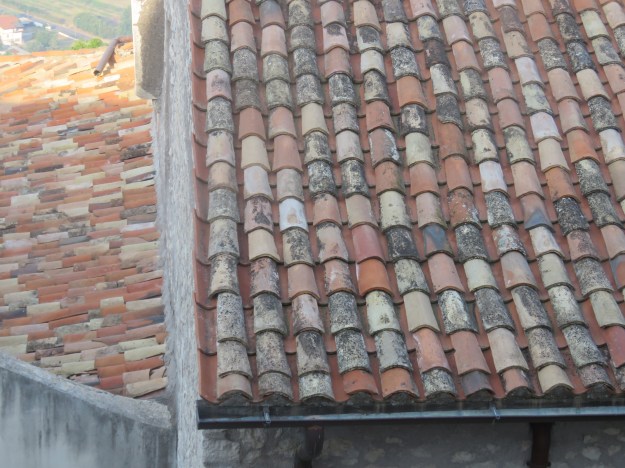
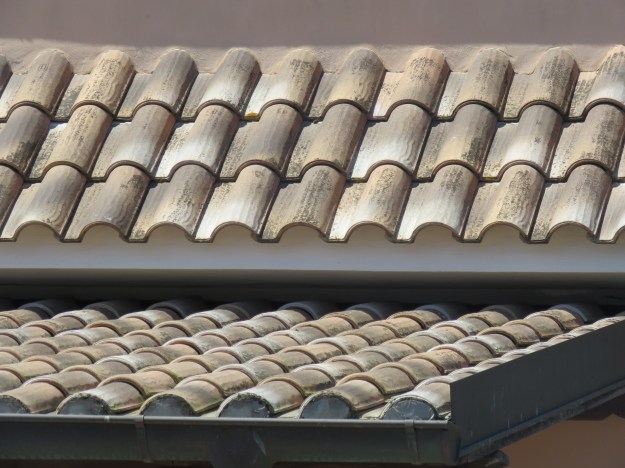
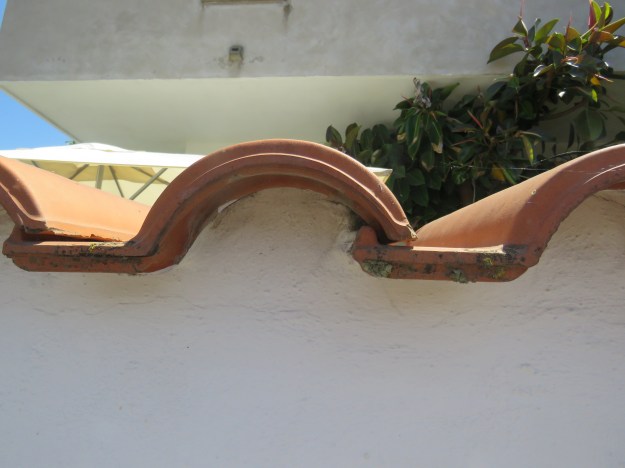
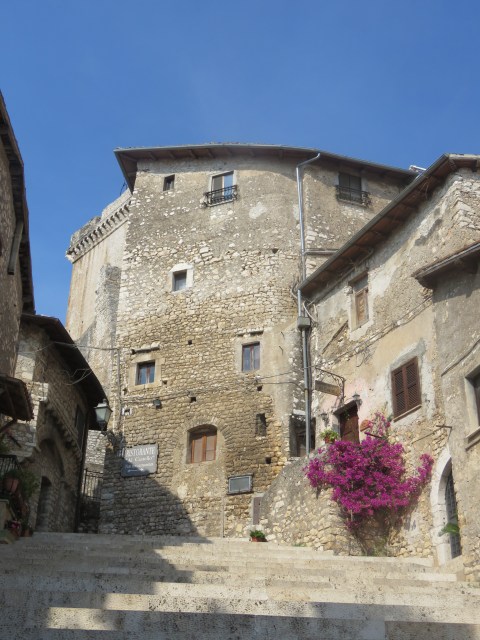
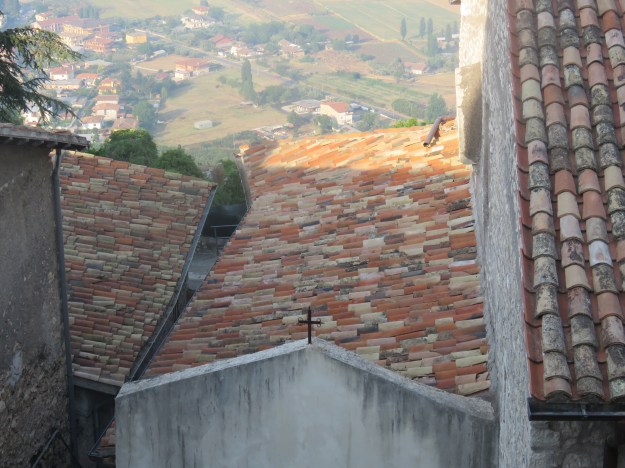 We have moved on from Italy and are now hanging out in Camembert in Normandy – and yes, Camembert is the original home of the cheese that bears its name. But that is another story still to come. Back in Italy, looking out over the mellow tones of the tiled roofs is part of the landscape.