Category Archives: Abbie’s column

For the sake of the birds

I love cats. But when our last cat was in her twilight years, Mark commented that he did not want another. I felt a twinge of sadness, resentment even. But I knew he was right and these days I make do with the cats of the internet.
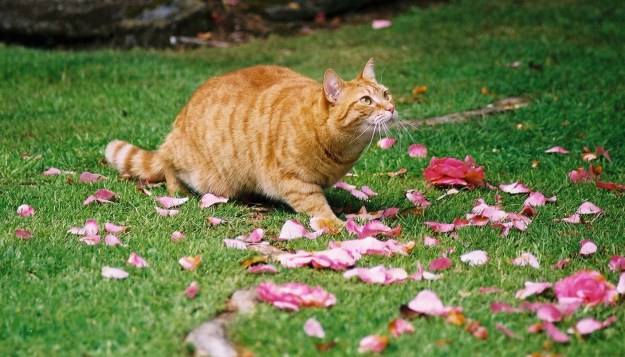
The late Buffy

The late Buffy

In our years together, we have had a succession of furry felines. Every one was both loved and ginger, male or female. To me, all cats should be ginger. Buffy, our final cat, was named by the children for the vampire slayer. She took her name seriously and slayed not vampires, but rodents, probably skinks, birds in abundance and she gave no quarter to visitors who thought they might stroke her without permission or – horrors – move her from a chair that they might sit there instead. Buffy met the world on her terms. And she was a killer.
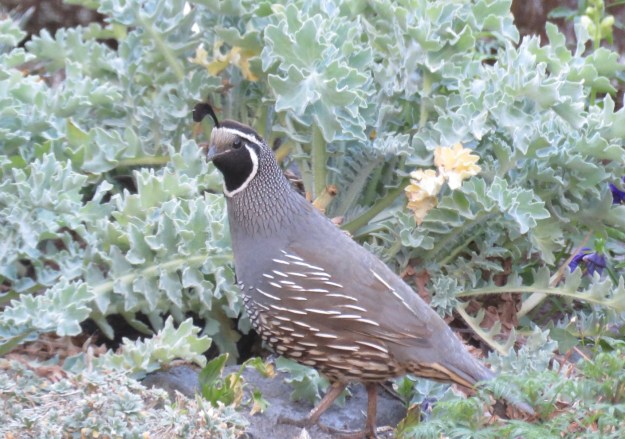
If we still had a cat, we would not have the ground-dwelling quail

If we still had a cat, we would not have the ground-dwelling quail

I believe Gareth Morgan when he says all cats are roaming killers, contrary to what their owners think. The hidden cameras prove him right. Urban cats may not achieve the same tally of bird kill but that is likely to be because of a lesser population of birds. We live rurally with no domestic cats in residence nearby. Mark maintains an ongoing rodent control programme, particularly against rats, and is on constant alert for other predators, including feral cats. We can never be predator free, but vigilance keeps the incidence lower than the norm.
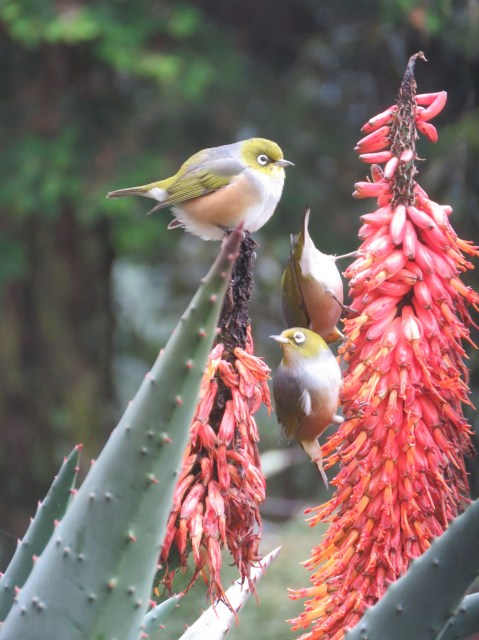
Waxeyes feeding from aloe

Waxeyes feeding from aloe

The rewards lie in the bird population. Everybody I know claims their garden is ‘full of birdsong’ and we are fortunate that there is a certain base-level bird population throughout most of the country. A friend who recently moved from a very large, cat-free country garden to a leafy town suburb commented how much she missed the birdsong. I bet if you asked her neighbours, they would be shocked and think this a gross misrepresentation. But the difference between that base-level population and an environment that is truly rich in bird numbers and variety is huge.  These days, our garden feels so alive. 
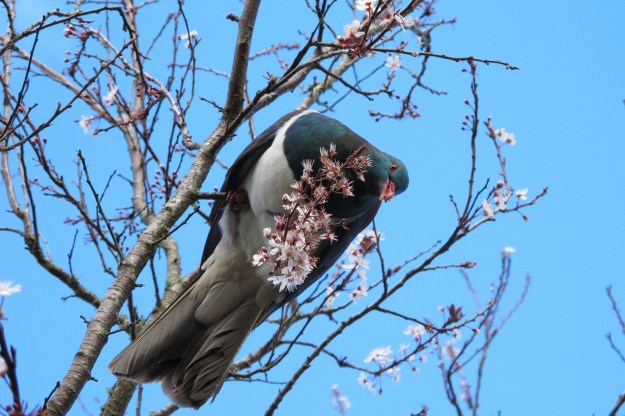
Our beautiful but lumbering native pigeon - the kereru

Our beautiful but lumbering native pigeon – the kereru

We have never set out to feed the birds. But on a property which is heavily planted in both natives and exotics with many different varieties, particularly flowering ones, across 25 acres, there is a succession of food all year round.

We have seen the kaka again recently so it appears to be resident in the area

We have seen the kaka again recently so it appears to be resident in the area

It is not that we have much in the way of rare birds, although the arrival of a kaka for two months in late winter was a thrill and we are on the feeding flight path of native falcons (karearea).  Mostly it is about the tui which we count by the score, the kereru that are permanent residents here, korimako (bellbirds), ruru (moreporks) at night, piwakawaka (fantails), white-faced herons, silvereyes, pukeko, shining cuckoos in season and all the formerly common birds of our bush and grasslands. Then are the introduced varieties. It is one of the delightful introductions that we know we would miss entirely if we had a cat. The Californian quail spend a lot of the time on the ground and nest at ground level so are extremely vulnerable to predation. These are charming additions to the garden, a gentle presence all the time. We do not eat them.
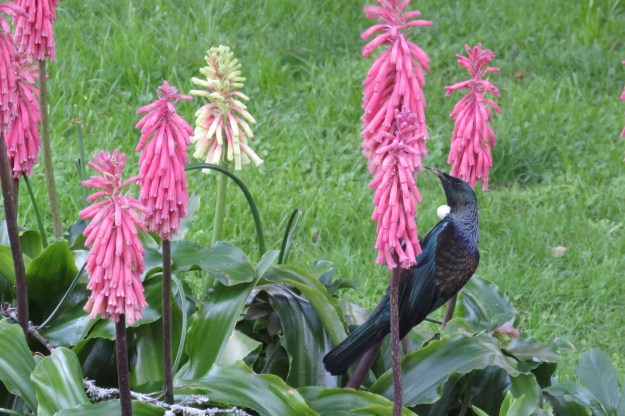
Tui feeding from veltheimia

Tui feeding from veltheimia

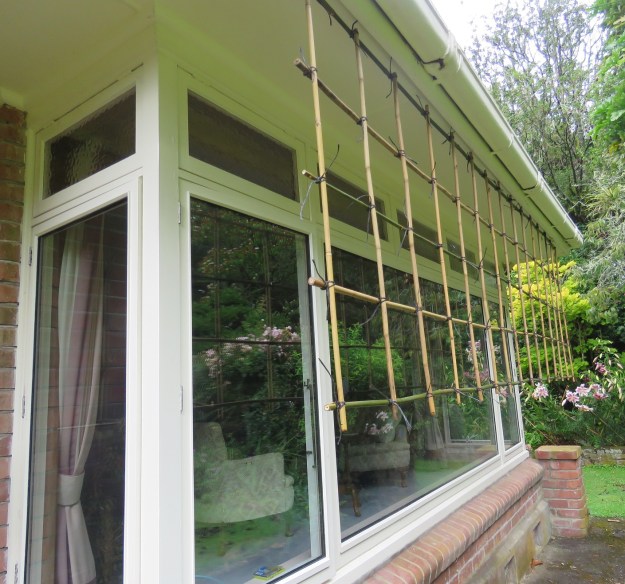
The one grief for us is the incidence of bird-strike on our windows, exacerbated by double glazing which turned the windows almost mirror-like. Because the reflection is all of sky and trees, too many birds think they can fly through. Window decals do not work. Believe me, I tried. A young kereru still died when it flew straight into one. Mark constructed an open bamboo grid that he suspended from the eaves in front of our very large picture window which claimed too many birds. It does not impede the view from indoors and we can still open the windows. Upstairs was more problematic because we lack eaves. Reluctantly – and I say reluctantly because we like the views – we have hung sheer curtains in the two worst affected rooms. These work – Mark has seen a young kereru take avoiding action when it registered the visual barrier.
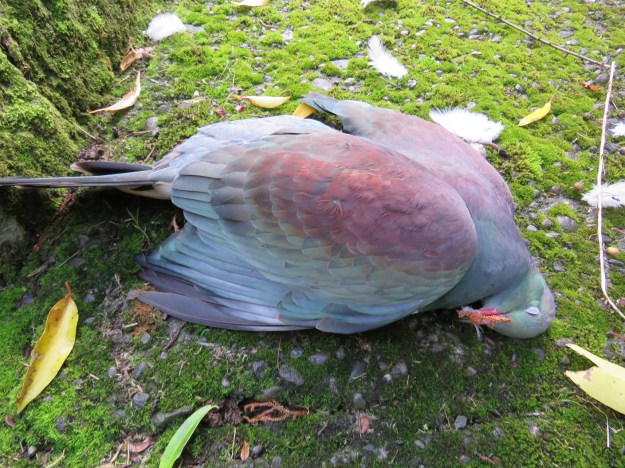
The grief of window-kill kereru
The grief of window-kill kereru

One solution to window-kill

One solution to window-kill

We place a high value on creating a sound eco system and the increasing bird population tells us we are succeeding. It is not just the birdsong. It is the movement, the interaction between the birds (we witness many a battle), the charm of different nests, even the falling feathers – all enrich our lives well above and beyond just having a garden. If the trade-off for us is forgoing the character and pleasure of a resident cat, then so be it. We would rather have the birds.

First published in the February issue of New Zealand Gardener and reprinted here with their permission. 
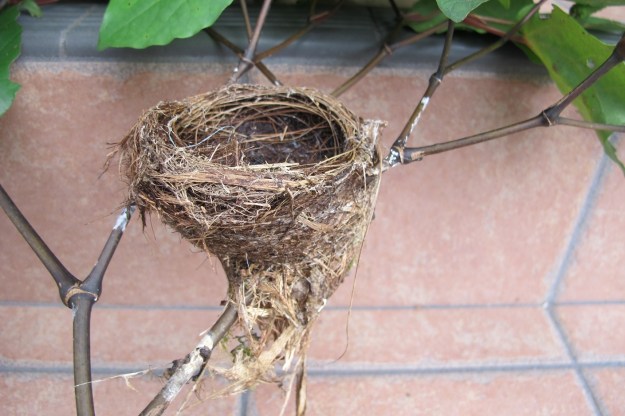
Fantail nest

Fantail nest

Weeding the stream. Again. An ongoing task.

“Believe me, my young friend, there is nothing – absolutely nothing – half so much worth doing as simply messing about in boats.”

Kenneth Grahame, The Wind in the Willows

I misremembered. I felt sure there was a Wind in the Willows quote about messing about in the muddy waters of a stream but I was wrong. Of course they were messing about in a boat, not mud. When I went searching, there were many other charming quotes from the same book which are gently affirming in a world seemingly gone mad, but I found another escape this week.
img_3982I have been weeding the stream. Yes, hand weeding the stream. I see it is five years since I last got down and dirty in the water, although Mark and Lloyd do a certain amount of ongoing maintenance with the long handled rake. I find it easier to climb right in and scoop by hand or sometimes with a rake. It is very muddy and Mark laughs when I stagger back up from the park but I am way too vain (or self conscious, maybe) to immortalise this by taking a selfie of Muddy Me.
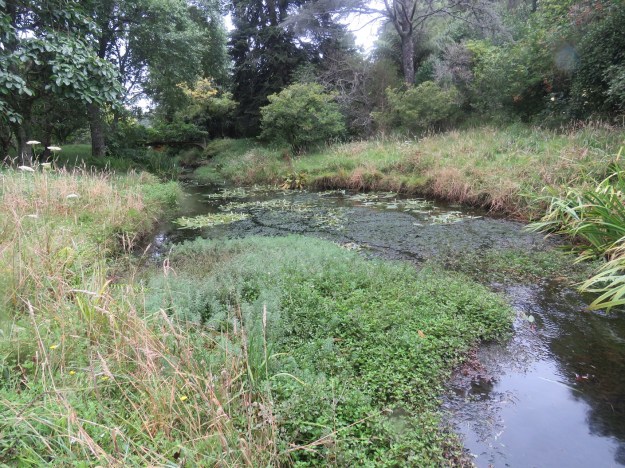
There are both eels and fish in the stream – small fish, mostly mud fish – and I find it deeply unnerving when something smooth and slippery brushes past my bare legs. I wouldn’t be quite so anxious were it not for Mark’s recent encounter with an eel. He was reaching into the water to pull out some blockage when an eel mistook his hand for something else and latched on. There was blood, quite a lot of blood and all of it was Mark’s. Eels are renowned for their backward facing teeth so it is not easy to dislodge them, though I think both the eel and Mark got such a fright that everything went flying. I console myself with the thought that eels are not known for aggressive attacks and it would be bad luck for one to follow up with me so soon after. Just in case, I wear both shoes and gloves as a precaution. I am hoping one will not attack my knees, calves or thighs.  Still, as I reviewed one cleaned area of the stream a few hours later, I was disquieted to see an eel gently swimming along the somewhat bare expanse. But it was a small one and I will not be intimidated.

Clockwise from top left: crocosmia, oxygen weed, wretched Cape Pond Weed, blanket weed and tradescantia

Clockwise from top left: crocosmia, oxygen weed, wretched Cape Pond Weed, blanket weed and tradescantia

But the weeds! We get up close and personal with the weeds that are carried down to us from properties further upstream but the major flood in 2015 has caused us a few more problems than before. Crocosmia, often referred to as montbretia but technically crocosmia x crocosmiiflora, have pretty summer flowers but the huge flood carried the corms far and wide and we are now working on restricting its spread. There is simply too much of it for us to be able to eradicate it and we would get reinfested during the next flood event.

Eradication, however, is the aim with the dreaded Wandering Jew (Tradescantia fluminensis). Mark has spent two decades battling this on our properties but still we get new outbreaks washed down to us. The problem is that every piece that is broken off is capable of growing and it is truly rampant once established. Both the tradescantia and the crocosmia grow alongside the water, rather than in it.

The goal is also to eradicate the oxygen weed and the Cape Pond Weed (Aponogetum distachyum). Mark has succeeded once in eradicating oxygen weed so he was most disappointed when he saw a larger form of it getting established on our place. His theory is that it comes from people emptying their little aquariums into fresh water ways, presumably because they do not wish to euthanise their goldfish and can’t find anyone to give them too. Don’t. Please don’t ever do this. Not only do we not need or want free range goldfish in our waterways, the oxygen weed becomes a choking blanket in slow moving fresh water. We have spent countless hours pulling it out but unless we get every bit, it will grow again. Ditto the Cape Pond Weed, about which I have written several times in the past.

What I call the blanket weed – a mass of very fine filaments – is here to stay but we try to keep it from getting too solid and impeding the flow of water. It is at least easy to rake out. Besides, the aquatic life needs some cover.

We are not perfect. Although we try and dead head our waterside irises and primulas, some of those may have washed downstream. I did at least go to a lot of effort to get rid of the noxious flag iris beside and in the water when we realised what an environmental hazard it is in this country.

In the meantime, there are worse ways to spend a pleasant, mild day than poddling about in the water. Our adult son is returning home from overseas next week and plans to stay for a few weeks. He spent many childhood hours playing with his mates in the ponds and the stream  – boogie boarding up and down and playing bike jumping games into the water. I am wondering at what stage I might suggest to him that it would be a huge help to his Aged Parents if he could turn his attention to scooping or raking the weeds from the deepest sections of the ponds which are beyond my reach. We shall see.

We have lowered the water level to enable major weed removal over the next week or two

We have lowered the water level to enable major weed removal over the next week or two

A melon mystery solved at the Otara markets

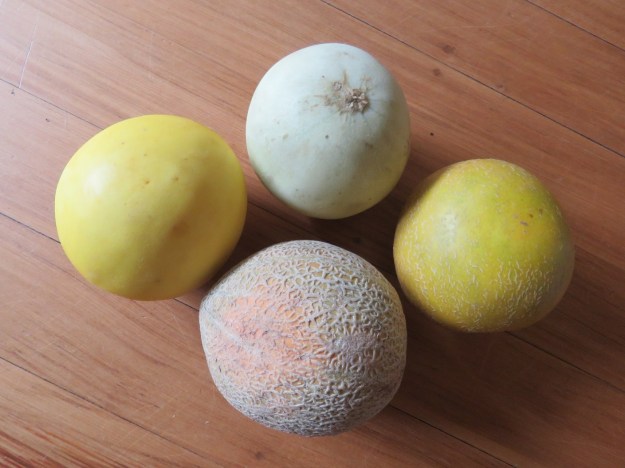
We are big melon fans here, though keener on rock melons than water melons. Every summer, Mark goes to a great deal of effort to grow melons and it is either feast or famine – a complete glut of rock melons or next to none – because they need a lot of summer heat to develop and then sweeten before the autumn rains and cooler night temperatures.  But the melons which are often included as part of airline meals on long haul flights were, both of us thought, a terrible disappointment, being served unripe. Not so!

Clockwise from the centre top, bought as honeydew, Galia, rock and Twist melons

Clockwise from the centre top, bought as honeydew, Galia, rock and Twist melons

At the Otara markets, I found a stand of melons which seemed a snip at a dollar each. I had never seen Galia and Twist melons before. The vendor explained to me that that these were firm fleshed variants on the rock and honey dew melons and he specifically mentioned the supply for airline meals. The Galia is a crisp version of the honeydew (green fleshed) while the Twist melon is the crisp version of the standard orange-fleshed rock melon. Crisp melons are varietal, quite possibly bred and selected specifically for markets where soft-textured melons are not easy to handle. So now you know.

img_3788The Otara Markets in South Auckland are held each Saturday morning. Because I come from rural New Zealand, I find the mix of cultures, different styles and colour fascinating. We don’t see much of this in Taranaki and New Plymouth. We also pay a great deal more for our fruit and vegetables and have a way more limited range from which to choose.

Selling quick-maturing Asian greens from the carpark Selling quick maturing Asian greens from the carpark. 

img_3792Preaching with a loud sound system but no visible congregation or audience.

A spot of faith healing going on beside the carpark, A spot of faith healing being carried out beside the carpark.

Colourful korowai - traditional Maori cloaks - made with dyed feathers
Colourful korowai – traditional Maori cloaks – made with dyed feathers

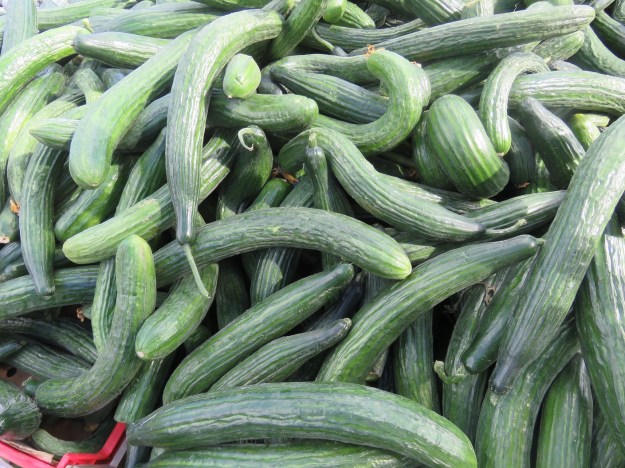
img_3796There is something so visually appealing about piles of fresh garden vegetables being sold on market stalls.

img_3800

img_3797

img_3798

The story of Theo’s ‘nake

img_3742

I was cleaning the dead wood and needles out of Pinus sylvestris ‘Beuvronensis’ and decided that Theo’s ‘nake could be moved to the back shed instead of lying coiled, menacingly, within this tree as it has for maybe two decades. It is still in very good condition, this rubber snake. I say “coiled menacingly” because it looks remarkably realistic as long as one doesn’t inspect too closely and spot the lichen encrustations.

Overseas readers may not be aware that we are one of few locations in the world without snakes. Not even in zoos do we have snakes, so keen are we to preserve our snake-free status. As a result, we probably have more of a morbid interest and fear of snakes than most people and it amused us over the years to have this rubber specimen discreetly perched in the branches, though not without a recoil and a shudder. I have never forgotten reading ‘The Poisonwood Bible’ by Barbara Kingsolver with the green tree snakes which, from memory, killed one of the children of the obsessed missionary to the Congo.  In my mind’s eye, Theo’s ‘nake is intertwined with those fearsome creatures.

Why is it Theo’s ‘nake? When our children were young, Mark used to combine speaking engagements with family holiday trips. I had a rule that the children were only to be subjected to one garden, nursery or plant shop a day. At most. While interesting for us, such places are not necessarily riveting for young children. But California Garden Centre in Wellington in the early 1990s was a hit. Back then, its founder, Keith Lowe, was still actively involved. Keith is well known in the garden centre scene of New Zealand and in bonsai circles and I am sure that anybody who has met him will nod in agreement when I say he is one of life’s special people. He was the first mainstream retailer to turn up to visit when Mark was starting to expand the nursery from its mailorder origins to wholesale and he remained one of our most loyal customers. Not only did he take an interest in us, that extended to our children. When we visited his garden centre – I think it was the first to move into having an expansive gift shop alongside – he was extremely generous. So generous in fact, that I had to quietly ask Theo, our youngest and still a pre-schooler, to stop admiring anything because Keith insisted on giving him any object of admiration.

img_3739That is how the snake entered our family. Theo admired it. He was still too little to pronounce his s’ss (or should that be esses, or maybe ‘isses?) and he always referred to it as “my ‘nake”. He had a great deal of fun with it for several years. Yes, you can harass New Zealand cats with fake snakes and even adults instinctively flinch when a snake’s head looms close. When he grew out of it, we relocated it to the Pinus ‘Beuvronensis’. I think it may be time to move it to the back shed and produce it with a flourish should our son, now in his late twenties, ever have offspring.
It may be our recent trip to Canberra (snake territory… shudder) that made me more squeamish than usual about a rubber snake. There was also a news item last week that California Garden Centre has been sold – to none other than film-maker Peter Jackson. I think it unlikely that Jackson intends to continue running it as a garden centre but none of our family will forget Keith Lowe.

Postscript: I mentioned cleaning out the debris from Pinus sylvestris ‘Beuvronensis’. We have assorted aged, dwarf conifers and I try and do a clean-up once a year. They look a great deal better if I dislodge all the debris that catches within their tight branch formations and I like to think it keeps them in better health.

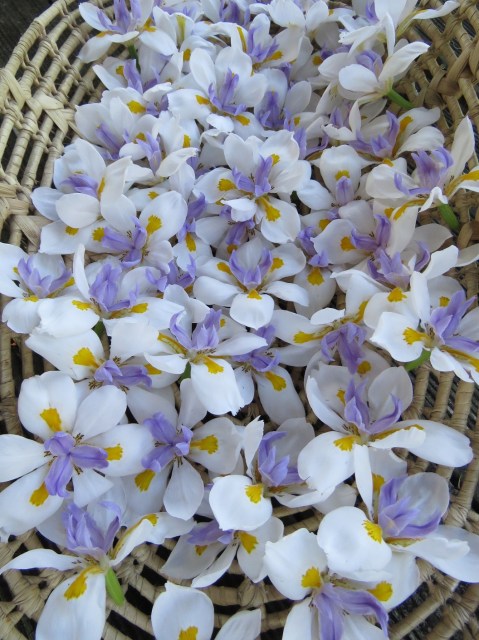
Summer iris

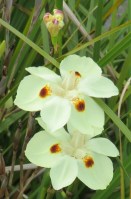
Dietes grandiflora

Dietes grandiflora

It took me a while to warm to Dietes grandiflora but now I love the pretty butterfly-like blooms that we get all summer. We have a large patch of it but as overhead shade grew, the incidence of flowers decreased year by year. It wasn’t until a big chunk of it was moved to a sunny spot – left to sit upon the ground, in fact, and never even planted – that I realised its flowering potential was much greater than we had been seeing in recent times.

Dark colocasia with dietes

Dark colocasia with dietes

Last summer, I looked at the somewhat neglected and misdirected state of the gardens around our swimming pool. Unlike most pool owners that I see, we did not locate ours in a prime garden position and turn it into a landscape feature. We knew from past experience that we would never maintain a pristine pool twelve months of the year and we did not want it in full view. Instead we found a side-line position which was still convenient and sunny but largely out of sight. In these circumstances, there is not much point in planting for year round appeal. We only want it looking good over summer. I removed all the bulbs and spring flowering material and opted for a combination of a dark-leafed ornamental taro (black colocasia) in combination with Dietes grandiflora. As I write this, it is too early to claim huge success but it is looking promising and will be easy to maintain. ***

Dietes bicolor

Dietes bicolor

There is nothing quite like becoming a staple of amenity landscapers to remove the mystique of a plant. And indeed I photographed the pale yellow Dietes bicolor in a shopping centre carpark where it grows in the harshest of conditions – windswept, foot trampled, bashed by cars, hot, dry and left to its own devices. And still it flowers for many months on end. We don’t have it in our garden, but I wouldn’t turn it away. Grown in slightly kinder conditions, I am guessing it may flower more prolifically and an annual groom of spent foliage would keep it looking tidier. It may be that D. bicolor is favoured in such plantings over its prettier relative, D. grandiflora, because it is more compact at about two thirds the height.

Cypella coelestris

Neomarica caerulea

Mark was sure the showy, tall iris that we have also planted by our swimming pool was a dietes. But no. When I went to look it up, I found there are only six different dietes. Five are from southern and eastern Africa and, oddly enough, one from Lord Howe Island. The  pool iris is very tall – stems maybe two metres high at times and generally capable of holding themselves up. I spend a bit of time on hot summer days floating around the pool on a lilo and those pretty flowers waving above me are a delight. Some detective work initially had me thinking it was a Cypella coelestris which comes from Brazil, Uruguay and Argentina. But it appears I was wrong, too, and it is in fact a Neomarica caerulea – the walking iris – from Central and South America.  It is pretty international, the iris family. After spending some time analysing photographs on line and looking at descriptions, it was a reader who gave me the simplest way to tell them apart. The cypella grows from a bulb and the neomarica from a rhizome. I rushed straight out to look and, sure enough, rhizomes. In my defence, they are closely related, along with the trimezia.

Each flower on the neomarica only lasts a day, but it continues to flower down the stem, a trait that can be seen in other irises and iris relatives. In our conditions, the neomarica is not fully deciduous, though it dies back to a neat clump of foliage through winter.

Tigridia pavona

Tigridia pavonia

A net search tells me that a number of American sites describe the cypella as being like a blue tigridia. We grow a fair number of Tigridia pavonia and all I can say is ‘oh really?’ To me, it is indubitably iris with its three upright blade petals and its fall of three sepals. While the tigridias are also members of the iris family, they are not as obviously iris-like. Maybe renaming them is just somebody’s idea of a marketing ploy to sell a plant which is not so well known.

Tigridias, however, share similar characteristics to both dietes and neomarica in that they are summer flowering, each bloom only lasting a day but continuing to open fresh flowers from the same stem, so easy to grow that they might be deemed to have weed potential and somewhat loose in form. Tidy gardeners may describe them as scruffy and they don’t fit so comfortably into a tightly maintained small space. But for those who like a certain summer abandon with lots of flowers, these are delightfully casual options for the summer garden.

abbie005

*** Postscript

Current update on the colocasia and dietes planting is that the former is doing brilliantly and out-competing the latter entirely on height. It may take another season to see if the dietes is able to rise to the required height to get enough sun to bloom.

First published in the January issue of New Zealand Gardener and reprinted here with their permission.