

Not an expensive brand and bought duty-free but we would still rather drink it than spray it on weeds
Christmas dinner conversation covered many topics but I wanted to test something I had read on the biochemist and the synthetic organic chemist at the table. The location was Canberra where we ate outdoors on a balmy evening and the temperature was still hovering in the late 20s Celsius as the night drew in.
Before leaving home, I had read the following passage in a new publication:
“You’re not trying to get your weeds drunk but the alcohol in cheap gin stops them in their tracks. Grab a bottle of spirits, mix with the juice of 2 lemons and spray on weeds.”
Discretion is the better part of valour so I won’t name the source of this advice but, as a gin drinker, it raised many questions. Where can I buy this cheap gin that is referenced? I wondered if it meant the diluted, flavoured gins that I see for about $15 at the bottle store but the Australian contingent tells me these are a New Zealand product and this advice seems more international, so maybe not. Why gin? Is it the juniper berries that are the magic ingredient or will any strong alcohol work as well? Is it really meant to be applied undiluted because around $30 to $35 for a litre of weed spray is extraordinarily expensive? What does the lemon juice do?
 The biochemist and the synthetic organic chemist were more amused than anything else. They could not see any reason why gin should be more efficacious than any other form of alcohol. But none of us really wanted to sacrifice the Christmas gin to carry out field trials. Mark recalled the routine use of kerosene for weed control on carrots in his father’s day. When we arrived home, he found me the reference in the McPherson book, “Vegetable Growing in New Zealand”. It is so old, it doesn’t even have a date on it but the publisher was Whitcombe and Tombs Limited and it is a few decades or more since I have seen that name.
In case you want to know more about kerosene as a weed spray, it is advised to use it at full strength (!) through a high pressure nozzle at a rate of 40-50 gallons of spray per acre. Now you know.
Back to the matter of the gin. Given the lack of field trials, I turned to the internet. There were plenty of sites advising the use of gin as a “natural” weedkiller though none I found particularly credible. I admit there are limits to my interest in this topic so I cannot claim to have done exhaustive research. But I did ascertain the following:
- It does not have to be gin. It is the alcohol that works – isopropyl alcohol (also referred to as rubbing alcohol) is likely to be the cheapest source of the active raw ingredient.
- The addition of lemon juice is for the desiccating (drying) effect.
- It is usual to dilute it quite heavily with water.
- Liquid detergent is often added as a surfactant (spreader and sticker).
- Vinegar (acetic acid) is the most popular base ingredient and appears to act in a similar manner to alcohol.
- The increasingly widespread advice to use salt is a problem in that it will contaminate your soils.
One of the better sites I came across was The Garden Counselor. I particularly liked the comment: “I am not opposed to using vinegar as a weed killer, only the cavalier promotion of the idea.” Substitute the word “gin” for “vinegar” in that quote and it pretty much sums up what I think.
If you want to be purist and shun liquid detergents – also referred to as ‘dish soap’ in American parlance – in your homemade spray, you may like to check the ingredients of your pure soap substitute. I was shocked, I tell you, genuinely shocked when I checked the ingredients of many soaps recently. Even expensive, luxury soaps usually contain sodium palmate as the main ingredient. That is palm oil. Think of the orangutans and the issues regarding palm oil production. I am not sure about the justification of “from sustainable plantations” either. It seems to me that this just means the land has already been clear felled for monoculture. It is so hard being an ethical consumer these days.
As far as we are concerned, the bottom line is that if you want to avoid manufactured chemical weed sprays, hand weeding or boiling water are the best alternative eco-options. Also, there is still a desperate need for sound, well-researched and tested advice on organic gardening.
We drank the gin with lime and soda instead.
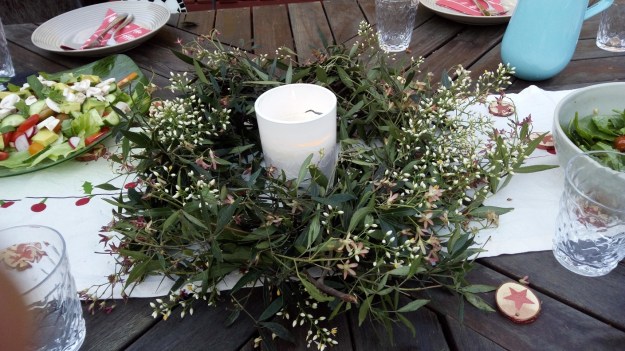
Setting the table for a summer Christmas in Canberra
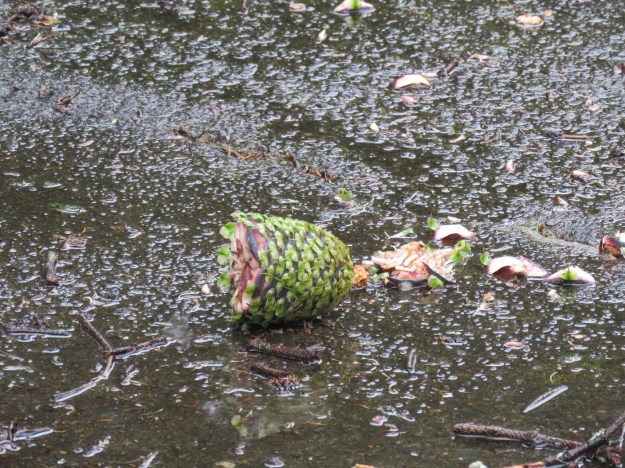
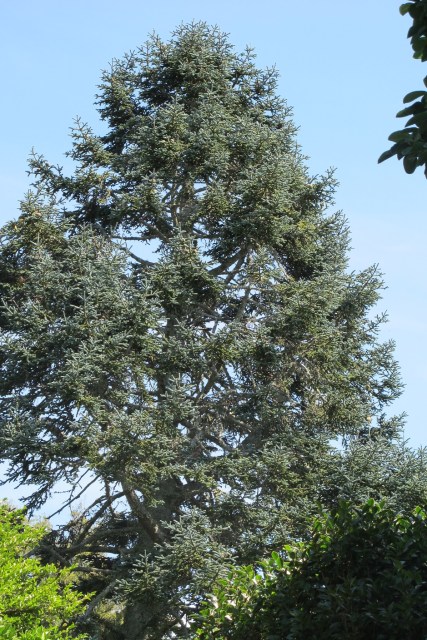
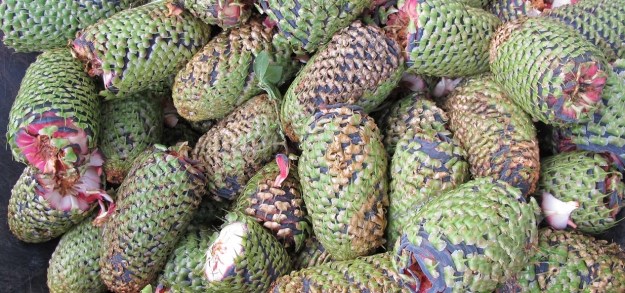
 While on the subject of falling plant material – and leaving aside our


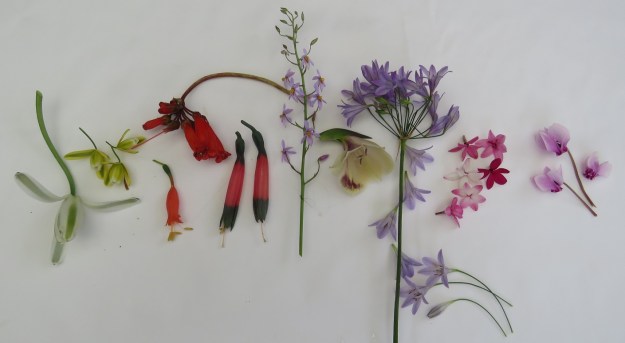 “Good thing we are not drying out too much,” Mark observed wryly as we faced another day of rain. This is a variant on his usual “Good news! The drought has broken”. While technically summer, our very wet spring continues. I entertained myself by doing a bit of a stocktake of bulbs in flower in mid-December and assembling one of my flower boards.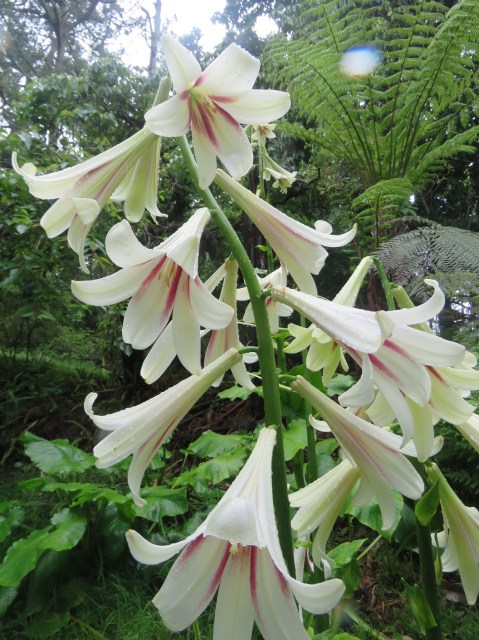
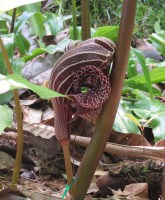

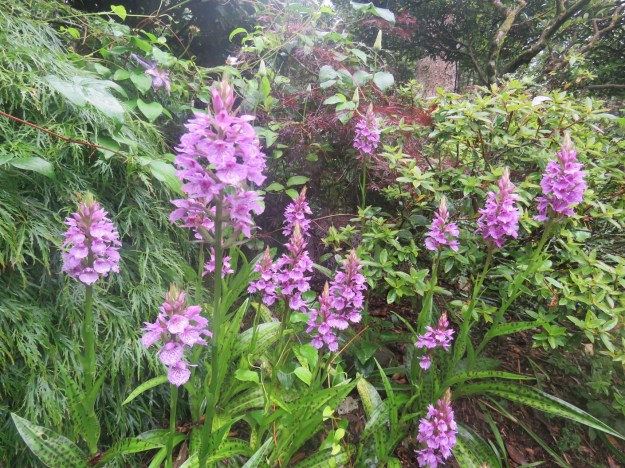

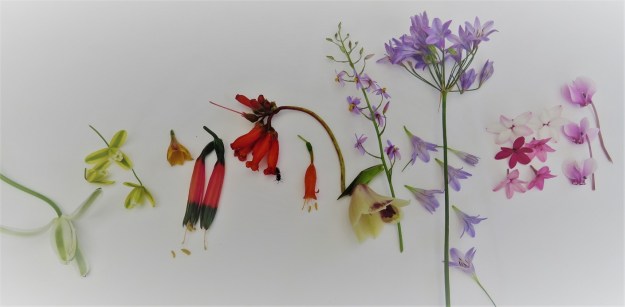 From left to right, we have two albucas (more shortly),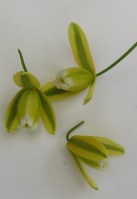
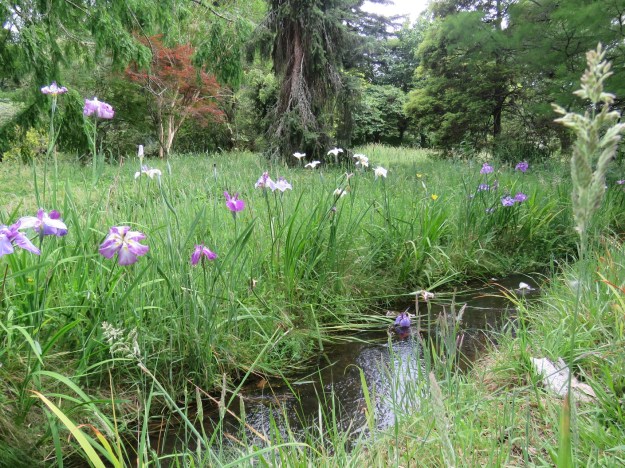
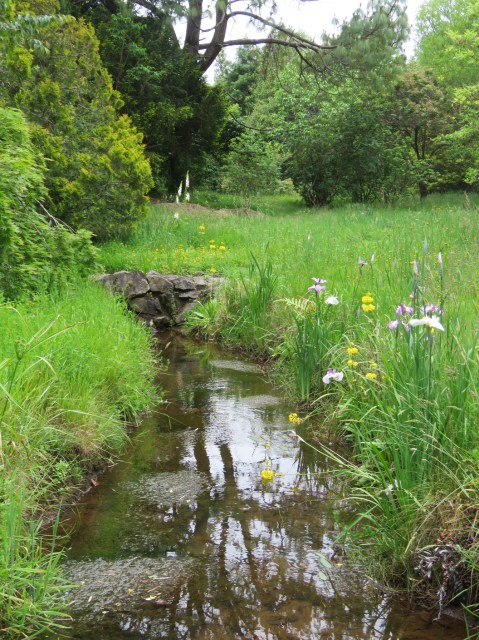
 December was memorable last year. Finally, we achieved the water meadow effect we have been striving for in our park. This was thanks to the iris and to our learning how to manage long grass in ways other than cutting it.
 There are anything up to 300 different species of iris but the one that comes to mind most frequently is the bearded iris. These are ephemeral delights in our climate with its high rainfall, high humidity and fertile soils, so a joy in bloom in October but over all too soon. The so-called Dutch iris flower earlier in spring. These are hybrids of 3 lesser known species, often somewhat derided, seen as a little vulgar even, but they can look charming enough in the right setting and are easy to grow.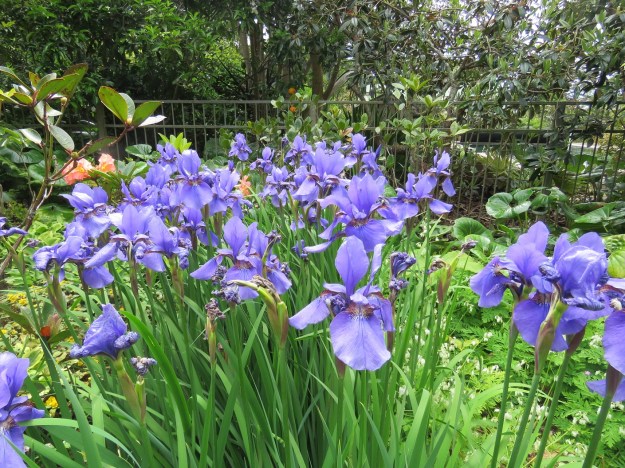
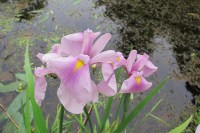 In early spring this year, I spent a few muddy days down by our stream,
  potential to grow and we didn’t think that establishing mats of flag iris all the way to the ocean was a good reflection on us. In digging them out, I can tell you the dense mat they form is not unlike wild ginger. I replaced them with a mix of Higos and sibiricans which may spread by seed but don’t form the choking, solid mats.
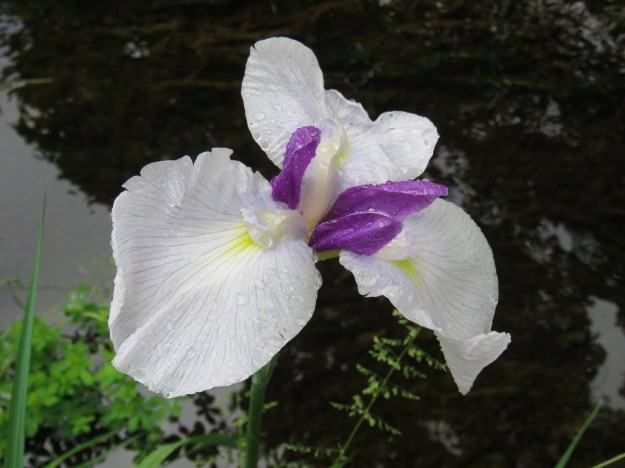
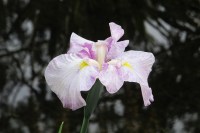
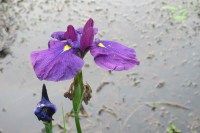 Every time the Higos bloom, we think most kindly of Auckland plantsman, Terry Hatch. Years ago, he gave Mark a tray of germinating seedlings which were reputedly from wild gathered seed. Mark had tried growing Higos earlier but without success. They are not a species, but a group of Japanese iris bred extensively over 500 years in the quest for the single perfect bloom to bring indoors, in that wonderful
 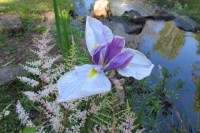 pared-back style perfected in Japan. The requirements of a garden plant are very different and those highly refined hybrids did not perform. The seedlings from Terry – about 700 of them in the end – gave us a huge range in colour, size and style and they have settled in most satisfyingly by the stream. By this I mean they are performing very well year after year, with no attention at all but without any indication of becoming a weed. I tried some in a perennial border and they grew and flowered well, but their leaves are very long and tend to swamp other plants in the months before they go dormant.
 What we love about the water iris is the contribution they make to a softer-edged, naturalistic style of gardening which we increasingly favour. A return to a more romantic garden style. It took my breath away last December. I am looking forward to a repeat this month.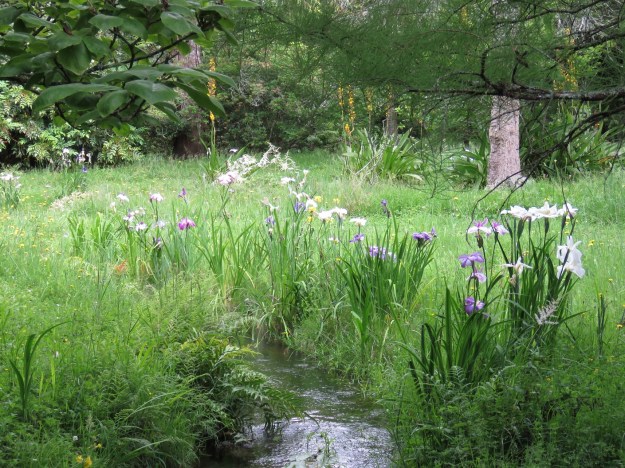
 First published in the December issue of New Zealand Gardener and reprinted here with their permission.
  Tikorangi The Jury Garden