Category Archives: Abbie’s column

Abbie’s newspaper columns

Garden adornment

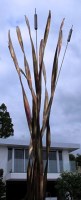
Soaring herons

Soaring herons

The owners of this garden admitted to me that they were very nervous about what I would think of their garden, given my strong opinions about over-ornamentation. This did not stop them from urging me to visiting. They are opening their garden to the public for the first time this spring and want all the input they can get because they are determined to do things properly and ensure they deliver an exceptional visitor experience.
026
The garden is still having a lot of work done on it but the garden sculpture and decoration were a revelation. They have some really lovely pieces. I even coveted some myself and ,from an under-ornamented gardener, that is something. What made me stop in my tracks was the exceptional skill shown in placing these pieces so that they enriched the scene without dominating and without the transparent connivance of creating the dreaded “focal points”. To place an eclectic collection of art works so that they enhance and belong in the location is a rare skill. It made me realise that it is not that I don’t like sculpture or decoration in a garden. It is that it is rarely placed well to benefit the garden and the location as much as the work itself.

I think both garden owners (and they are clearly a close team) have an exceptional eye. A working life spent in upper-end retail must have assisted in developing skills in display and design. They also give credit to their architect son and placing these decorative pieces is clearly a matter that warrants considerable thought.
016029
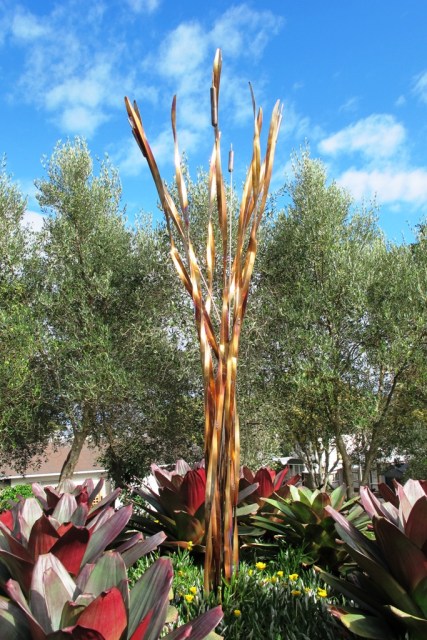
The one piece I really coveted was this structure from super-heated stainless steel. The reflections and colours were simply lovely. I would have this in my garden. I could also be be mighty tempted by the herons above. “Tell me you don’t have coloured ceramic balls,” I said. Over the years, I have developed considerable dislike for the use of these mass produced and thoroughly useless items from the villages of Asia which are widely sold in this country by purveyors of cheap ornaments. Blue has always been the most popular colour in the area where I live, but you can have red or orange, too, I found. I am unconvinced that these items justify the grandeur of a plinth but it all comes down to personal taste in the end. Yes, these people did have colour balls but they were not at all like this threesome I photographed in other people’s gardens


Hirst Cottage (3)042049

Theirs were considerably larger, hand crafted, detailed and placed discreetly.

019

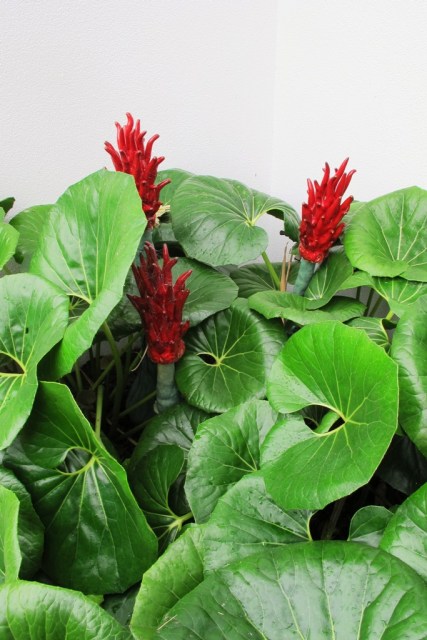
008The ceramic detail amongst the simple planting of Ligularia reniformis, set against a stark white wall, added an understated detail that enhanced an otherwise predictable scene.

021The large lego man was a pretty strong statement and not, I admit, one I could ever imagine in my own garden. But the owners love it. As parents of five children – all now adults – lego featured very large in their lives and this sculpture is placed in an intimate and enclosed section of garden which opens up from the family living area. Its placement was superb and it brought great delight to the owners.

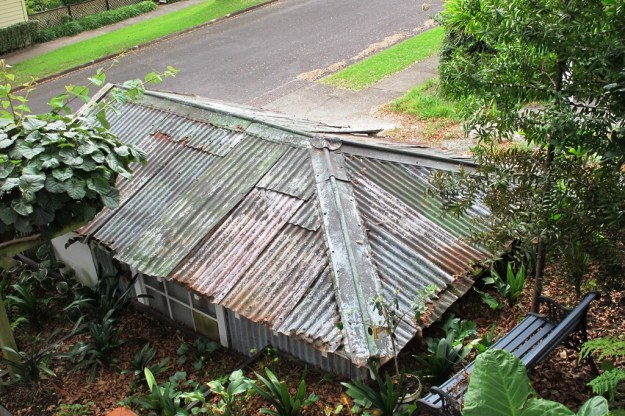
In a setting with a large, modern, sharp-edged, architecturally designed house and a heavily structured garden, the decision to leave the old rusted garage in place as an installation was simply inspirational. It gave a tension to the scene which anchored the modern into its past. The owners commented that people either responded with horror at them leaving something so old and scruffy or they were delighted as I was.
025
This garden is open for the Powerco Taranaki Garden Spectacular in the first week of November this year. Visitors might like to go and learn from their skills in integrating sculpture and ornamentation into the garden. It is done as well as I have ever seen and considerably better than most.
 

The April garden – vireya rhododendrons

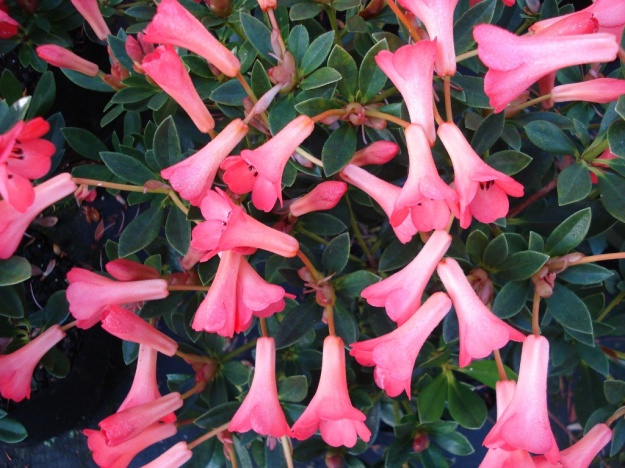
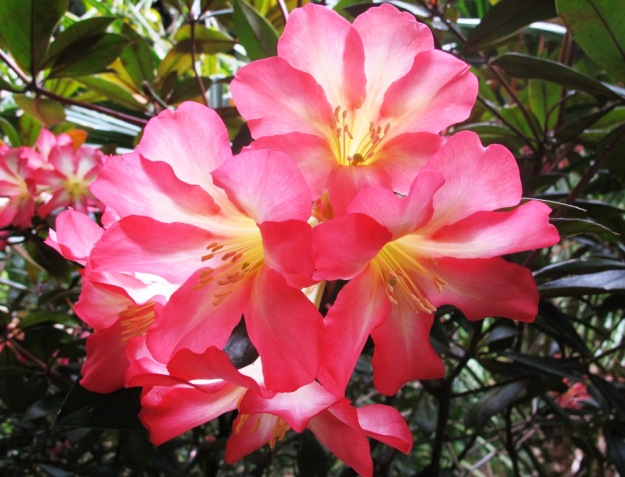
Pink Jazz, one of Mark’s hybrids that is standing the test of time here as a healthy garden plant. It was named for our elder daughter, Jasmine, who had a passion for hot pink in her teen years.

Pink Jazz, one of Mark’s hybrids that is standing the test of time here as a healthy garden plant. It was named for our elder daughter, Jasmine, who had a passion for hot pink in her teen years.

Gardening is as driven by fashion and trends as many other pursuits. It is vireya rhododendrons that brought this to mind. Back in the late 1980s and 90s, they were a seriously hot ticket item. Because they are really easy to propagate, the market was saturated with small plants surrounded by big hype and an endless stream of new varieties being unleashed on an eager buying public. The big luscious looking ones with heavy, felted foliage and big, fragrant trumpets were the most sought after. Here was tropicalia at home even though New Zealand does not have a tropical climate.

Back then, we had a commercial nursery and vireyas were one of our big lines. We produced thousands of them every year and Mark had a full scale breeding programme running on them, naming new cultivars at a cracking rate. I can tell you that they were one of the easiest lines to propagate with the highest success rate from cutting, taking half the time to get to a large grade than the hardy rhododendrons and camellias. It was all downhill from then on. They needed the most intensive spray programme of any plant we produced and even so, there was a high death rate before we ever got them to the market. They are vulnerable to almost every disease that is going, they have pathetically small root systems to support quite abundant top growth, they are frost tender and needed full-scale frost protection in commercial production – even under shade cloth – and they can die almost overnight.

I recall the odd visitor asking the names of certain plants and Mark would toss off that it was a Vireya wiltanddieonyou. Because so many did just that – wilt and die. The species were particularly touchy along the big luscious ones that everybody wanted.

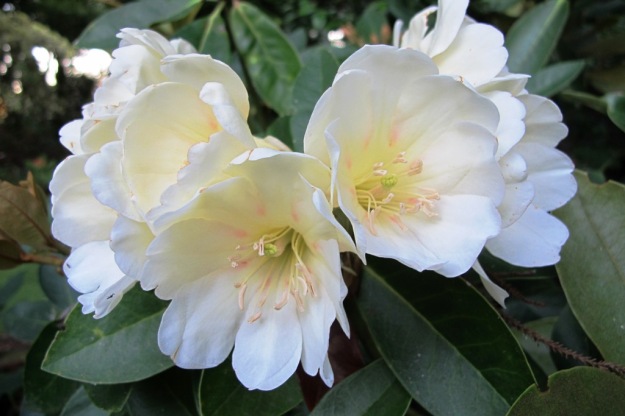
R. konorii is a species with the desirable traits of large flowers, strong fragrance and heavy foliage but the resulting hybrids are not always easy to keep growing well. This is an unnamed one of Mark’s that is still doing well in our garden.

R. konorii is a species with the desirable traits of large flowers, strong fragrance and heavy foliage but the resulting hybrids are not always easy to keep growing well. This is an unnamed one of Mark’s that is still doing well in our garden.

But we would not be without them in the garden. If you have enough of them, you can guarantee that there will be vireya rhododendrons in flower all year round. They don’t get large. They fit in well to subtropical woodland conditions and they don’t need a whole lot of attention. We accept that some will suddenly die, even after many years and we don’t expect every plant to thrive. Those that do, make a worthwhile contribution.

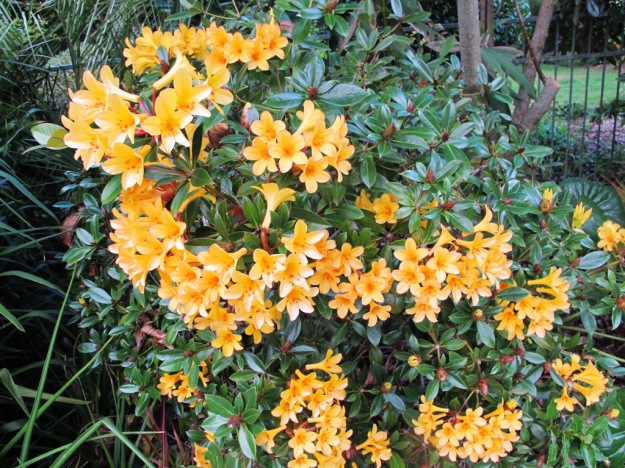
 The late Os Blumhardt had a major breeding programme on vireyas and gave us a number of his seedlings, including this good performing one in our swimming pool garden. It is reliable and healthy rather than outstandingly showy


The late Os Blumhardt had a major breeding programme on vireyas and gave us a number of his seedlings, including this good performing one in our swimming pool garden. It is reliable and healthy rather than outstandingly showy

Because vireyas originate from near the equator where day and night length remains pretty even all year round, their flowering is not triggered by changes in day length. This is why they tend to flower randomly and for extended periods, at times many months although we get the best blooming in autumn and spring and that will show up from this month on. With our free draining volcanic soils, we just grow them in the ground.

Common wisdom, particularly in Auckland, was that vireyas are epiphytic so best grown either as an epiphyte on established trees or in containers with their roots tightly confined. Ponga pots used to be rage, maybe still are in some circles. While it is true that in the wild, many species are ephiphytic, the vast majority that are sold are modern hybrids with a distant connection at best. What they want is excellent drainage without getting too dry. Only hard frost will kill a vireya faster than wet roots in a heavy, clay soil. But if you have the roots heavily confined, they can dry out too much and start to look hard done by and scruffy.

Jiminy Cricket is another of Os Blumhardt’s hybrids and is a sister plant to Saxon Glow and Saxon Blush which are widely available

Jiminy Cricket is another of Os Blumhardt’s hybrids and is a sister plant to Saxon Glow and Saxon Blush which are widely available

These days, we rank ongoing survival, good bushy growth and an abundance of bloom above other characteristics – often features of the smaller flowered, less extravagant looking cultivars. These are the ones that are standing the test of time as garden plants. The oldest vireya in our garden is the plant of R. macgregoriae that Mark’s father, Felix Jury, brought back from New Guinea in 1957, kickstarting the breeding programme. Astonishingly, it is still alive and healthy when many others have fallen by the wayside.

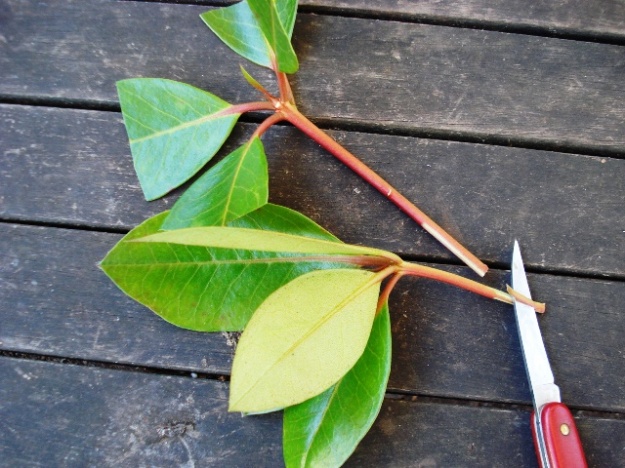
???????????????????????????????If you want to try growing plants from cuttings, vireyas can root without special facilities and equipment. You need to use green stems which are firm, not floppy. Cut off a sliver (called “wounding”) on two sides of the stem of the cutting, extending for 2 – 3 cm. Unlike most plants, the roots will form from the wound or callous, which is why you want two to get a balanced root system. Cut the leaves in half to reduce water loss and stick in potting mix. Keep the pot in shaded conditions until roots start to form – usually within about six weeks.
First published in the April issue of NZ Gardener and reprinted here with their permission.

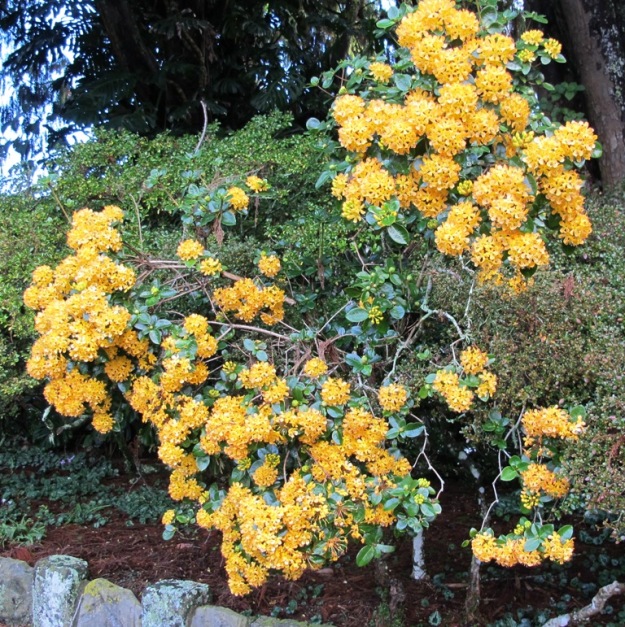
R. macgregoriae is still going strong in our garden after 60 years

R. macgregoriae is still going strong in our garden after 60 years

An understated beauty – autumn seed heads

Clematis at top, left to right  rhododendron, Schima khasiana, Hibiscus trionum, Schizophragma hydrangeoides

Clematis at top, left to right rhododendron, Schima khasiana, Hibiscus trionum, Schizophragma hydrangeoides

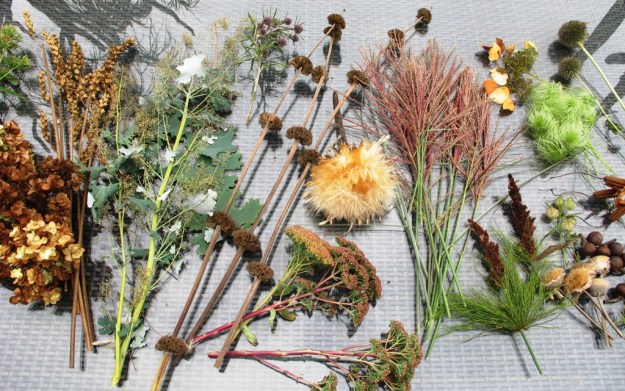
When I was doing my informal census on autumn flowering plants last week, my eye kept being drawn to equally attractive seed heads. I see I recorded some of these last year when I was still writing for the newspaper , but it has taken me quite a few years to get my eye in for these seasonal pictures of understated beauty.

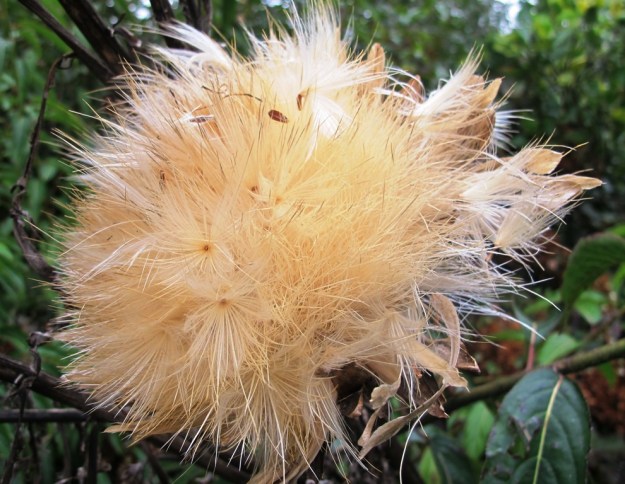
Cardoon!

Cardoon!

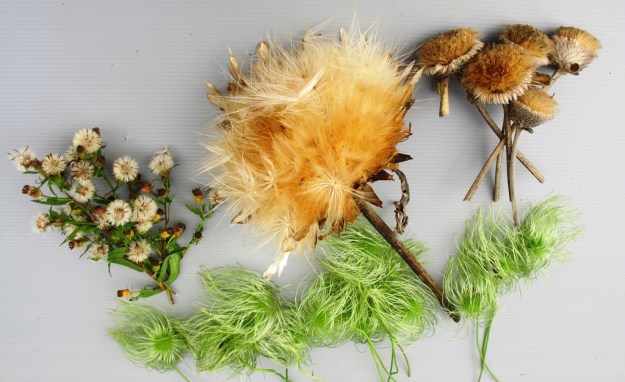
It is hard to beat the big fluffy heads of the cardoon. I don’t do dried flower and seed head arrangements for indoors, but if you are thinking that way, be warned that all that soft fluff is designed to detach easily and float away in the lightest breeze to disperse. Indoors this head will fall apart very quickly.
???????????????????????????????The aster to the left has a similar fluffy seed head, as does the pachystegia to the right. Along the bottom are the highly decorative clematis seed heads – in this case C. tangutica.
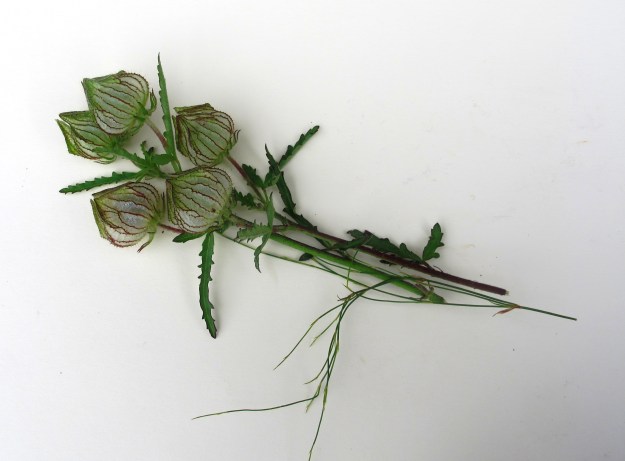
The lovely Hibiscus trionum seed heads

The lovely Hibiscus trionum seed heads

Rhododendron sino nuttallii seed head

Rhododendron sino nuttallii seed head

Phlomis russeliana at top, one of the echinops below

Phlomis russeliana at top, one of the echinops below


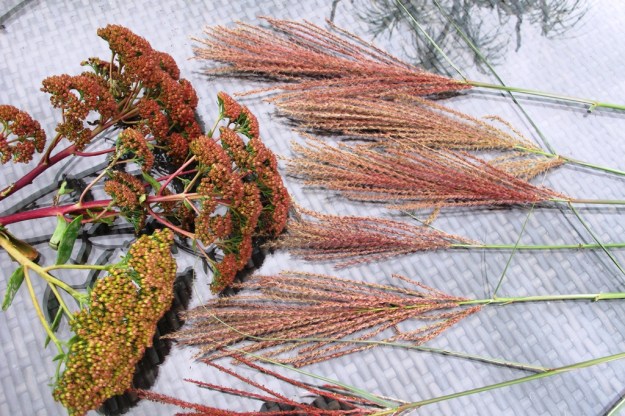
Sedum and miscanthus

Sedum and miscanthus

Francoa and Hydrangea quercifolia 'Snowflake'

Francoa and Hydrangea quercifolia ‘Snowflake’


I have often read advice to leave all seeding plants standing until early spring as they are a valuable food source for birds. This is cold climate advice that is much less of an issue in our temperate climate and our own situation which is rich in food sources all year round. However, we do get a great deal of pleasure watching the quail feeding from an assortment of seed sources. Pansies appear to be a particular favourite. We try and dead head problem plants that seed down far too freely but I am cultivating a more relaxed attitude to others. It is all about the cycle of nature and the change of season.
???????????????????????????????

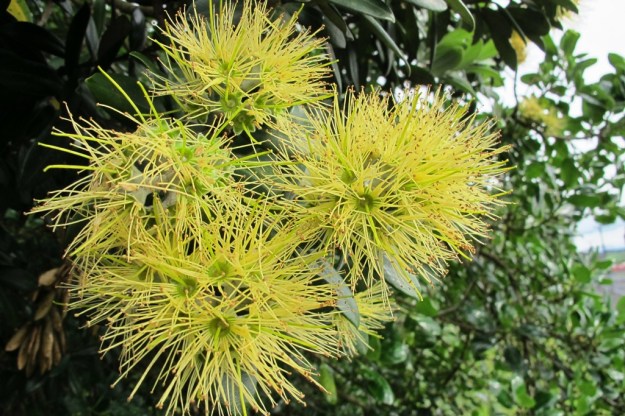
Taonga. The Yellow Pōhutukawa on the Waitara River Bank

Metrosideros excelsa 'Aurea" or pōhutukawa in Waitara

Metrosideros excelsa ‘Aurea” or pōhutukawa in Waitara


Taonga is a Maori word, enshrined in New Zealand law through the Treaty of Waitangi. At its loosest translation, it means a treasure but more than the European understanding of treasure. It can be tangible or intangible and the transfer of a taonga carries with it great responsibility. It is not to be taken lightly. Unless you are the Taranaki Regional Council in which case you can, apparently, dismiss it out of hand and deny its very existence.

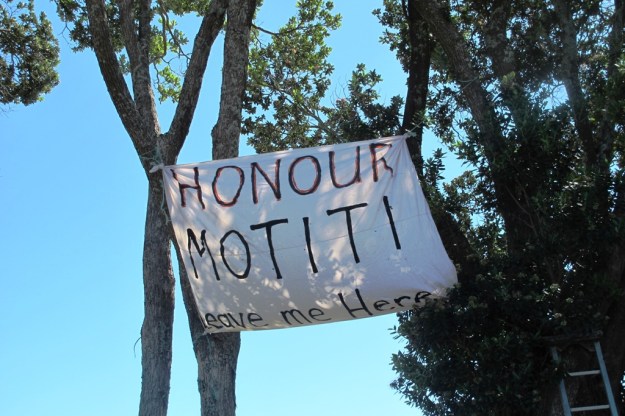
The battle to save the mature pōhutukawa on the bank of the Waitara River has been running for maybe 10 months now. True, the Council has altered its plans. To start with, their consulting engineer said no trees needed to be removed in order to get the flood protection in place. He then changed it to ALL the trees need to be removed – all 125 of the row. The plans changed yet again and the number to be removed was reduced to 23. Such a shame that they are the biggest and best 23 and the reasons for removal are less than clear to most. The Taranaki Regional Council (TRC) has dug their collective toes in, drawn lines not in sand but in concrete and refused all pleas to get a second expert opinion on ways to save the trees while getting effective flood protection in place.

Four of the trees to be removed are yellow – Metrosideros excelsa ‘Aurea’. Pōhutukawa is the Maori name for these trees and the most commonly used. Not only that, but it is widely recognised that these four yellows are of considerable note. Ask any Taranaki horticulturist over a certain age and the first comment they will make is along the lines of: “Aren’t the yellows in that stretch to be felled? Surely they can’t be going to fell those. They are historically very important.”

For it is widely known that the owner of Duncan and Davies (the powerhouse plant nursery of the southern hemisphere from the 1940s to the 1980s), Sir Victor Davies personally organised the planting of those pōhutukawa on the banks of the river and that included the first known planting on mainland New Zealand of the special yellow variety. He was told about the Motiti Island yellow variant in the 1940s. The vast majority are in shades of red and the yellows are a rare sport. His nursery subsequently went on to sell other plants of the yellow selections in later years but it was because they were so special and so unique that Sir Victor Davies approached Sir Thomas Borthwick to plant them in front of the latter’s huge industrial abattoirs (known as freezing works in New Zealand), in order to provide a visual screen to beautify the river and to retain the eroding river bank. That is the Pakeha (European New Zealander) history.
???????????????????????????????

The Maori history of those trees adds another dimension altogether. For the yellow pōhutukawa originated only on Motiti Island which is the turangawaewae (loosely translated to home territory) of Ngai Te Hapu. They knew those yellow flowered trees were special. The decision to allow Sir Victor Davies access to plant material from these trees was made with hapu (sub-tribe) blessing. This is what makes those yellow specimens a taonga – a valued treasure that was gifted. In so doing, it conferred prestige upon the receiver but also an obligation to respect that taonga down the generations. It is a concept that is part of our New Zealand history. Maori need no explanation of what is a strong and enduring cultural value. An increasing number of non Maori New Zealanders also understand and we have come a long way in the last 30 years incorporating that dual heritage of our country.

Some of us have. In fact many of our institutions recognise and acknowledge that dual heritage and the respect that comes with it. So it was a genuine shock to find that the Taranaki Regional Council does not, even in 2015.

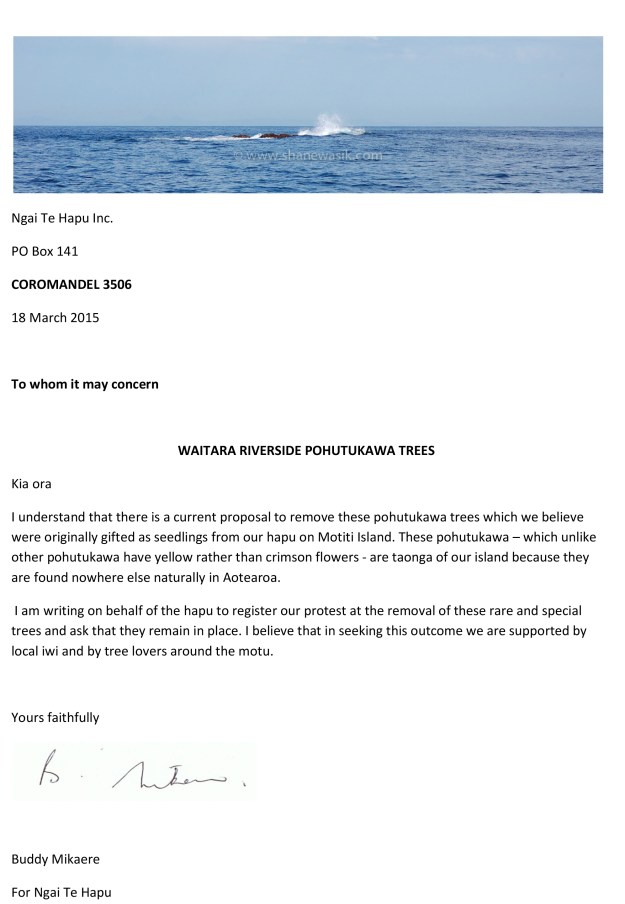
Ngai Te Hapu wrote a letter to support retaining those trees, pointing out the status of taonga. The letter was signed by hapu elder, Buddy Mikaere – a man of huge mana (prestige, authority, influence) widely recognised and respected throughout the country. The letter was hand delivered to the TRC with the request that it be tabled at the Executive Committee meeting in six days time. Not only did the CEO and the committee chair refuse to table the letter (it arrived “too late” for agenda inclusion, they claimed – six days in advance), but they felt it appropriate to have a staff member issue a statement denying the taonga status of the trees.

“However, the regional council remains unmoved by Mikaere’s request and removal of the trees will proceed as planned, according to operations director Stephen Hall. He confirmed the council had received the letter but disputed the significance of the Motiti Island link to the yellow-flowered pohutukawa in Waitara.
“There is clear evidence in Duncan and Davies catalogues that they were available commercially for more than a decade in the 1950s and 1960s.
“The tree has been planted at a number of other locations in Taranaki,” he said.”
(Taranaki Daily News March 31, 2013).

Pause for breath.
1) The letter has not at this time been received by elected councillors, let alone discussed.
2) Whether the yellow variety has been planted at other locations in Taranaki is a complete red herring, utterly irrelevant to the historical significance of the four river bank specimens.
3) To have a paid staff member speak to the media denying and refuting taonga status declared by a such a respected Maori leader shows a breathtaking lack of sensitivity and process, along with arrogance that is remarkable.

The final word, perhaps, rests with the Auckland person on Twitter who commented: “If Buddy Mikaere says they are taonga then they are taonga. What is wrong with these people?”

Plenty.
Pohutukawa letter

If you feel strongly about adding your support to this campaign, please go to Action Station and add your email of concern. It ain’t over til the 23rd tree is chainsawed down and chipped to mulch.
???????????????????????????????

More harvest than festival

???????????????????????????????After picking flowers, I couldn’t resist laying out some samples of the autumn harvest. I didn’t get too obsessive. There is much that I forgot to include – a good potato crop, sweet corn, another year’s supply of dried beans (not sure we have finished the 2013 bean harvest yet) and I forgot entirely about the show-off avocados which we have in such abundance that we are giving them away by the supermarket bag full.

What I can tell you, as we personally move more to a diet dominated by plant-based protein rather than one heavy on animal protein, is that anyone who says that you can be relatively self sufficient in food on a few metre square raised beds and an hour or two of work a week hasn’t actually done it themselves! With a lifetime of experience, it takes Mark a great deal of time and space to generate a wide range of food that we want to eat. Most of it is organic and we are also interested in the whole issue of nutrient density – more on this another time.

We are swapping surplus tomatoes and melons with a friend for eggs and pumpkin and appreciative friends also reciprocate with jars of preserves made from our surplus produce. It is a satisfyingly simple way of life that we followed in our twenties in our hippie days and we are enjoying rediscovering decades down the track.
The melons – both rock and water – take some effort here. Mark starts them early under a cloche in almost pure compost. The cold, wet spring meant that stone crops were sparse this year but the abundant melon crop is an indication of a good summer.

The yellow fruit by the melons are chaenomeles (japonica apples). I have boiled some down and strained off the liquid to use later for some conserve or jelly. The green fruit, for non New Zealanders – is the feijoa, a South American fruit we have almost made our own here. The oranges are one of our staple fruit here – we can harvest all year round, especially from the Lue Gim Gong tree.

Sadly, while we can grow sapotes, macadamia nuts and other marginal crops, mango and papaya are never going to grow here. We do still buy some extra fruit and vegetables.

I have even made Cape gooseberry jam again this year.

I have even made Cape gooseberry jam again this year.