
 I am firmly of the view that you can never have too much blue in the garden. While green is effectively colour neutral – every garden has green and usually in abundance – blue is the versatile colour that fits in with all others. The addition of a little blue can lift a pastel colour scheme, add complexity to a white garden, make orange zing or stand as an equal partner in a blue and yellow border. No matter what the dominant colour scheme is, blue will fit in.
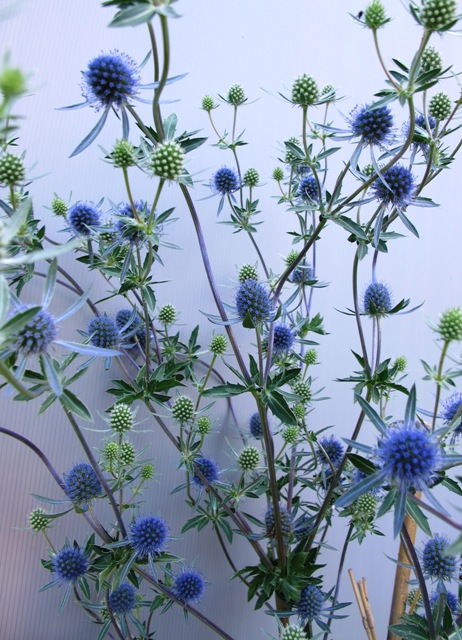
Eryngium planum
Eryngium planum
This summer flowering perennial has beautiful blooms which look like steel blue teasels and last for many weeks. Plants form tidy rosettes of foliage at ground level and the slightly prickly flower spikes can reach a metre high. Unfortunately, the plants need support – either staking individually or growing through taller plants, although the form sold as ‘Blue Hobbit’ is reputed to be lower growing, thereby avoiding the need to stake. Full sun and good drainage are the rules for growing eryngiums. While often referred to as sea holly, that is more correctly applied to E. maritimum which can be seen growing wild on the coast of Cornwall.
Grown from seed, plants will flower in their second season. Both Kings and Egmont Seeds have eryngiums or you can try your local garden centre.
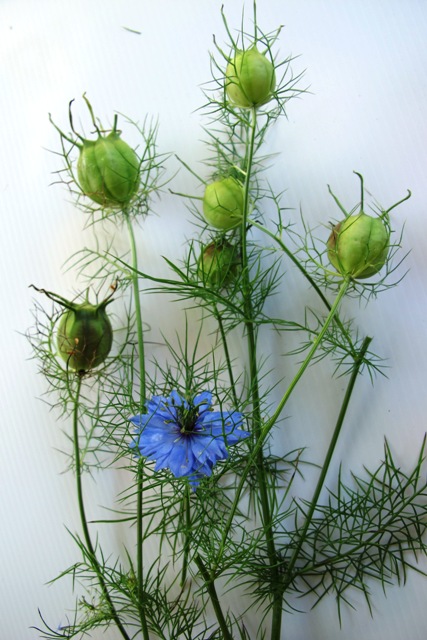
Nigella damascens
Nigella damascens
Love-in-a-mist, as this summer annual is oft referred, has an ethereal lightness which makes it appear to dance through the garden. The foliage is so fine that it can be described as lacy and it takes up next to no space in the sunny, summer garden, combining well with roses and perennials. It does come in pink, white and purple tones as well now, but nothing beats the more common, pure blues in my opinion. Once flowering has finished, even the seed pod is attractive – a bubble-like capsule not dissimilar to a swan plant. Seed is widely available and once you have established plants for the first season, leave one or two to go to seed and it will keep returning in subsequent summers.

Jacaranda mimosifolia
Jacaranda mimosifolia
There are not many blue flowering trees which may explain why large parts of the world have fallen in love with the summer jacaranda. It is native to Bolivia and Argentina and is fully deciduous. Unfortunately, this does not make it hardy and it is a tree for the warmer north or mild coastal areas of the mid north. It is usually regarded as subtropical but if you have excellent drainage and only the occasional light frost, you can extend its range. In return, it will reward you with a beautiful mass display of lilac-blue summer flowers and a carpet of blue petals below. Over time, it forms an open, airy tree reaching 8 to 10 metres in height.
If your local garden centre cannot find you a plant, Trees & More in Tauranga have it listed for sale.
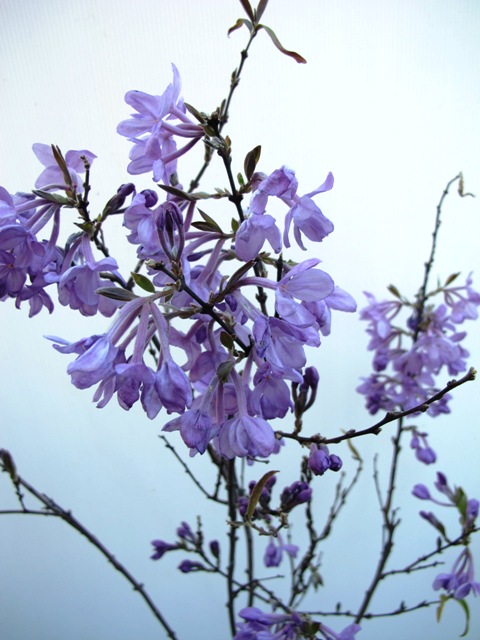
Daphne genkwa
Daphne genkwa
A lilac-blue daphne? Yes indeed. D. genkwa is as spectacular as any shrub when flowering, though rather anonymous at other times of the year. Unlike most daphnes we grow in the garden, it is fully deciduous with willow-like leaves and arching growth. While it is lightly scented, it is grown predominantly for its early spring floral display. This is not a plant that likes to be moved or trimmed so give it a permanent location with plenty of space to grow – at least 2 metres in diameter. The back of a border with lower growing plants in front will allow it to star when in bloom and remain unobtrusive at other times.
Genkwa is not rare, but it is difficult to propagate because it has to be done from root cuttings so it is not widely available. Ask a good garden centre to see if they can source it from one of the few growers producing it in New Zealand.

That is a true blue verbascum. (Photo: Thompson and Morgan)
Verbascum Blue Lagoon
You will have to hold your breath for this one. As far as I know it is not yet available in New Zealand but we are waiting in hope that it may be imported some time in the near future. It was first released at the 2012 Chelsea Flower Show in London and is a remarkable colour breakthrough in large-flowered verbascums. It appears that it is a genuine pure blue and, according to the renowned seed company Thompson and Morgan, whose plant breeder is responsible for this selection, it is perennial, albeit probably a shortlived perennial. Many of the verbascums are biennial, flowering in their second year, setting seed and dying. Blue Lagoon offers the promise of spires of pure blue in the late spring garden without the problems of the fussier delphiniums.
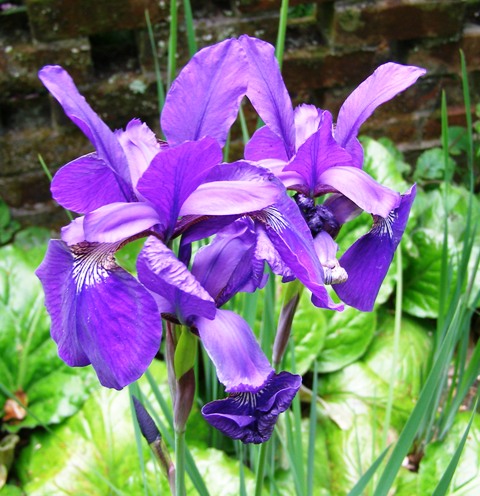
Iris sibirica
Iris sibirica
This clumping iris is one of the easiest to grow, flowering from mid spring onwards with rich blue flower heads held above grassy or spear-like foliage. Generally the foliage is about 50cm high and the flowers reach 70cm. It originates from central Europe, Turkey through to Russia so it is hardy to cold winters. It grows best in sun to partial shade with heavier soils which don’t dry out. This is a plant which can be left undisturbed for several years while the clump gently expands. Plant it with large leaved perennials like bergenia ciliata or ligularias to keep an attractive contrast in summer foliage, long after the flowering season is over. It is a little untidy when the foliage dies off in winter but that is its only disadvantage. Iris sibirica is widely available from nurseries and garden centres.
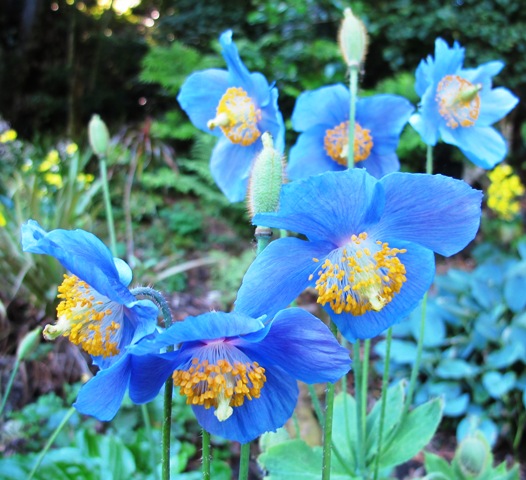
Meconopsis or Himalayan blue poppy
Meconopsis or Himalayan blue poppy
Nothing matches the electric blue that is sometimes found in meconopsis though, as these are seed grown, the shade can vary. There is something about the simplicity of a simple poppy flower in pure blue – a mere four petals surrounding golden stamens – that is completely beguiling. Unfortunately, they can be very difficult to grow and are usually a waste of time for gardeners at the warmer end of the islands. They are alpine meadow plants so are going to perform better in conditions with cold, drier winters. Plants available in New Zealand are often listed as M. X Sheldonii which is a cross between betonicifolia (which is biennial, flowering in its second year) and grandis (which is meant to be more perennial). These are deciduous plants and too often they fail to return in the second year, as many gardeners will attest. But if you can find the right conditions, they will enchant you in late spring. If you buy a plant, remove the flower head in the first year to allow it to put its energies into getting established, rather than weakening itself by flowering and setting seed. Seed is best collected and sown in trays rather than left to fall in the hope that plants will naturalise themselves.
Seed of M. betonicifolia is available from a number of sources, including Egmont Seeds. Plants are sometimes offered from southern nurseries, including Wake Robin Nursery in Balclutha.

Cordyline stricta
Cordyline stricta
New Zealand does not have exclusive claim to cabbage trees. The lovely blue flowered C. stricta hails from coastal New South Wales up into Queensland but is surprisingly hardy. It will take light to moderate frosts and coastal winds and can grow in full sun to shade. One of the big advantages as a garden plant is that the caterpillar which attacks our native cordylines is also native and appears to shun foreigners, so C. stricta does not get that chewed, motheaten look of our own cabbage trees. Stricta is clump forming and individual stems can reach about 3 metres in height. In summer, many panicles of lilac blue flowers appear, lasting for several weeks. Unlike our native varieties, they lack any scent.
Stricta is a versatile plant that can be used as a specimen or combined with a tropical, succulent or even a shaded woodland look. It also makes a handsome large container plant.
Cordyline stricta will be available in some northern garden centres but also sometimes on Trade Me and from Russell Fransham Subtropicals in Matapouri Bay.
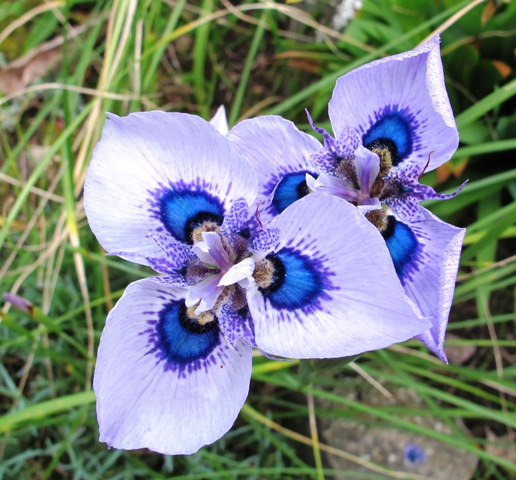
Moraea villosa or peacock iris
Moraea villosa
This South African plant is commonly known as the peacock iris as its three petalled flower resembles the eye of a peacock feather. While the colour is variable, the blue or blue and white forms are the most common. Individual flowers are short-lived but each stem produces a succession of blooms in early spring. Held up on wiry stems, they can appear to dance lightly above the garden. These plants grow from corms and will do best in free-draining or sandy soils in full sun. The foliage is long, fine and grassy but gets a little scruffy before it dies down in early summer. Once you have Moraea villosa, it multiplies readily both from seed and the corms but we have not found it to have weed potential.
While not rare, this is one of those odd bulbs that you are most likely to source through Trade Me rather than finding it offered for sale in garden centres.
First published in the New Zealand Gardener and reprinted here with their permission.
.

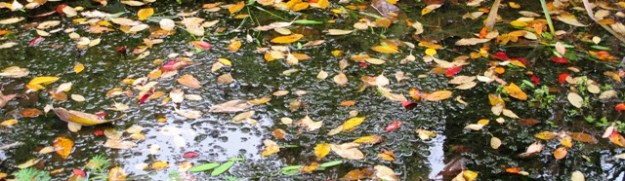 Autumn colour occurs when deciduous trees shut down the chlorophyll which is what makes most leaves green. It is chlorophyll which enables the plant to combine sunshine, water and carbon dioxide, making the simple sugars that sustain the plant (a process called photosynthesis). Once the green colouring disappears from the leaves, the other colours already in the leaf become obvious.
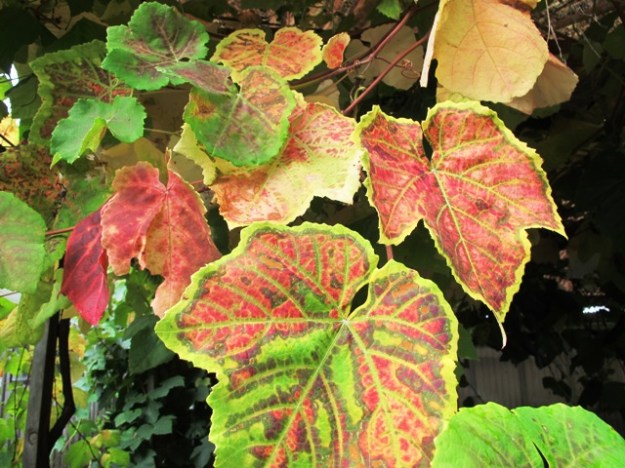 You can see in this grape leaf that the chlorophyll is still alive in parts, particularly the veins but other colours dominate in the body of the leaf. Not all grapes colour the same way. Our Albany Surprise grape becomes brilliant yellow, making it appear as if the sun is shining, even on a grey day.
 Some of our flowering cherries (prunus) turn yellow but this one is notable for its red colouring, caused apparently by anthocyanins which are what give the red and purple tones. Bright light in autumn helps the anthocyanins and bright sunlight is one thing we do well in most of this country.
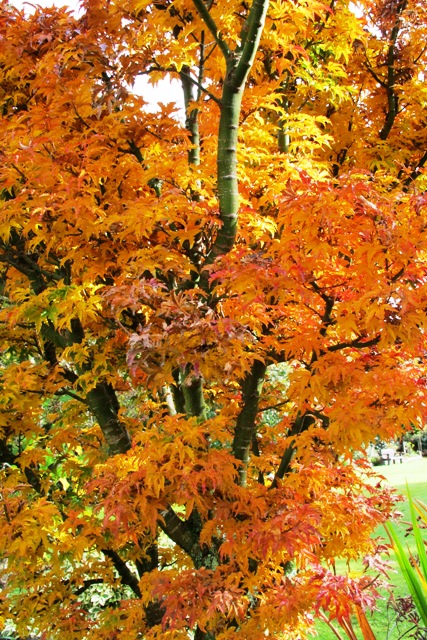 Maples, particularly the Japanese varieties, are one of the most reliable plants for autumn colour and the brilliant hues occur even in milder areas where some other plants will just skip the colouring step and turn brown. What is more, there are many petite maples (often sold as patio varieties) which will fit in even the smallest garden.
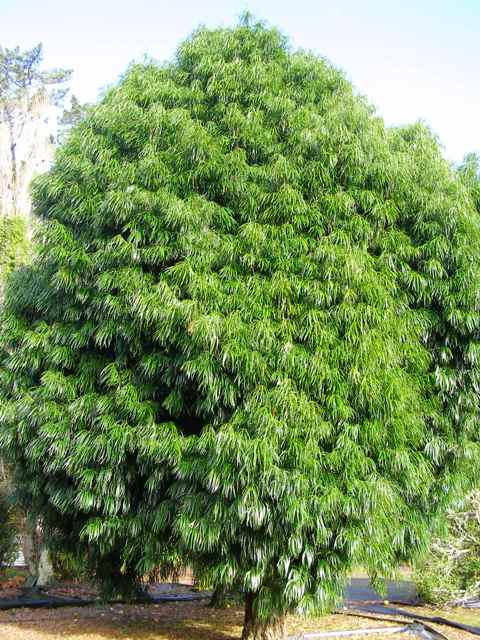
 We find the deciduous conifers colour well for us. This is a taxodium but the metasequoia and glyptostrobus are also good. However these are large trees, unsuitable for small urban sections. There are many smaller growing options like the koelreuteria or parrotia.
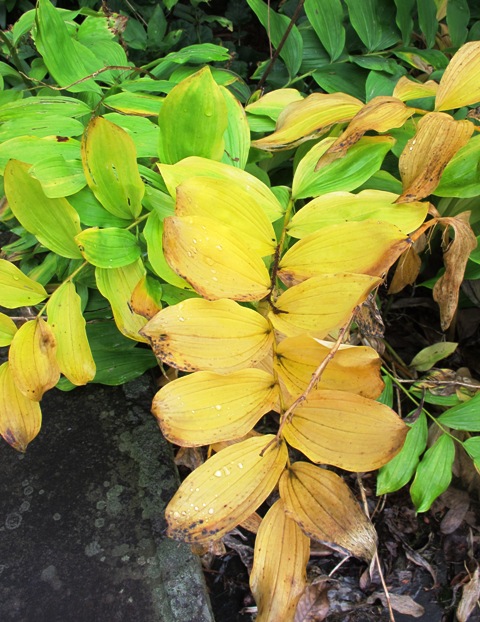 Just to prove it is not only the woody trees and shrubs that can flaunt their autumn raiment, Soloman Seal (Polygonatum multiflorum) grows from rhizomes below ground. A common enough plant which fills a role in semi shade conditions, it can startle with its golden foliage as it prepares to hibernate for winter.
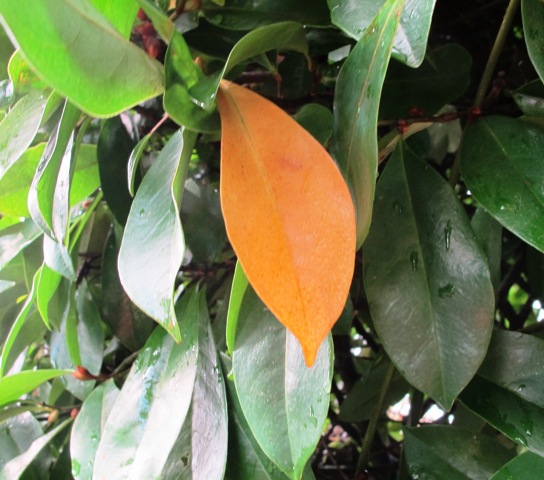 Many folk never consider that evergreen plants also drop leaves (do they think that foliage is permanently attached for the life of the plant?). All evergreens drop a full set of foliage every year. It is just that they don’t drop them all at once. However some plants, like this Fairy Magnolia Blush, have a tendency for some leaves to colour and then drop in autumn. It is not a bad sign, it is just part of the plant’s cycle.


 Tikorangi The Jury Garden