Category Archives: Abbie’s column

Abbie’s newspaper columns

Gardening crimes against nature

The banks of waterways should not be sprayed

The banks of waterways should not be sprayed

There is a wonderfully self-satisfied confidence in many gardeners that their hobby is good for the environment and that they are working with nature. On the contrary, too often gardening is in direct opposition to nature and many gardeners are guilty of environmental crimes. This has probably escalated considerably since the 1960s when all manner of nasties became available to the home gardener in order to control the excesses of nature.

Lawns are arguably the greatest gardening crime against the environment. Edwin Budding would have had no idea of what he was unleashing on the world in 1827 when he invented the lawnmower. It took until much later in the century before a motor mower appeared. Until then, all grass was cut by scythe and would have been grass, not lawn as we know it. Now we prize lawns that resemble lush bowling greens, but at what cost?

Take a demerit point if you remove all clippings from your lawn but then turn around and fertilise it regularly to compensate. At least buy a mulcher mower next time you replace your machine. If you mulch your clippings back into the lawn, you don’t need to buy fertiliser to give it a boost.

Take three demerit points if you put your lawn clippings out with the green waste or in your wheelie bin. There can be no justification for the public sector having to dispose of domestic lawn clippings.

More demerit points can be added if you insist on spraying your lawn with hormone sprays (which of course means you cannot remove the clippings to the compost heap but must find some other way of getting rid of them for the next six months). The most common spring time enquiry we receive about distorted leaf growth on deciduous trees, particular magnolias, is directly attributable to the use of hormone sprays on lawns. Quadruple your demerit points if you are one of the environmental vandals who insists on spraying your lawn to kill the earthworms beneath so they cannot spoil the effect with their worm casts. Shame.

Not taking responsibility for plants you may be growing which have the capacity to escape beyond your patch is a crime against nature. Too many of our weeds in this country are garden escapes – erigeron daisies, self seeding campanulata cherries, old man’s beard (Clematis vitalba), wild gingers, to name a few. Without ripping out every seeding or suckering exotic plant, gardeners have a moral responsibility to make sure they keep such things under control. Potting them up to sell at your local school gala or a car boot sale is not acceptable. Not at all. You are merely dispersing plants with weed potential.

Using plastic coated bubble slow release fertilisers in the garden warrants demerit points, no matter what your garden retailer may tell you. These were developed for container plant growing, not for general garden usage and, believe me, those plastic bubble coatings last for many years in the environment. If you are going to use bought fertilisers, then make sure you are using ones which are fully biodegradable. Better still, make your own compost.

Growing plants that you have to drench regularly with fungicide, insecticide or even simple copper sprays in order to keep them alive and healthy needs review. Get the message – these plants are not happy in your conditions. It is only a triumph to grow something difficult or different if you can give it conditions that make it relatively happy and healthy. Regular human intervention with a chemical arsenal is not good gardening practice. Once a year is neither here nor there but more often than that, and you should be asking yourself questions. I include copper in that list. While relatively benign, there is evidence that repeated applications over time kill earthworms, bacteria and other soil organisms which are part of the natural environment.
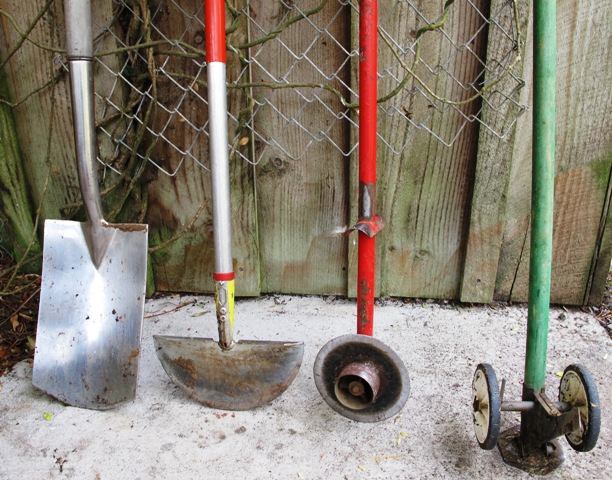
An array of edging tools - preferable to spraying garden edges

An array of edging tools – preferable to spraying garden edges

While on chemical sprays, I acknowledge we are growing increasingly conservative about their usage. In our gardening opinion, they are best as a last resort rather than a routine management tool. As such, I rail against the sight of sprayed edges. Invest in a repertoire of edging tools and get rid of the nasty brown sprayed look which is a crime against both nature and aesthetics. And when you routinely apply herbicide, you create a vacuum which nature will invade. In sunny areas, this will be with weeds and in shady areas, it is likely to be liverwort.

The same goes for banks on waterways. We should be avoiding all man-made chemical usage near waterways so err on the conservative side. A line trimmer or a scythe can be used to cut back and will leave cover rather than dead brown vegetation and then bare soil to erode. Pioneer farmers knew to plant trees along waterways to shade out weed growth.

Fortunately the horror that was the minimalist garden died out quickly after its heyday in the 1990s. That was the three large rocks, white pebble mulch with one sanseveria (unkindly known as mother-in-law’s tongue) and three green mounds of hummocky scleranthus. Contribution to nature? Less than zero. Demerit points? Top of the scale.

First published in the Waikato Times and reprinted here with their permission.
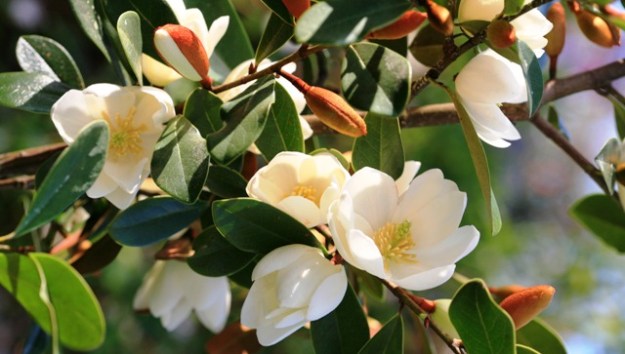
Magnolia – Michelia: the evergreens

Just another Magnolia laevifolia (syn Michelia yunnanensis) selection but in this case it is our selection which we called Honey Velvet

Just another Magnolia laevifolia (syn Michelia yunnanensis) selection but in this case it is our selection which we called Honey Velvet

I was surprised this week to have someone ask me what michelias are. I realised I have never written about them in a general sense. That is because I try and separate my published garden writing from our commercial interests and michelias are inextricably bound up with the latter.

Michelias are in fact a type of magnolia. They used to be seen as close relatives to magnolias, now they have been reclassified botanically as magnolias and this has involved a complete name change for some species.

Mention evergreen magnolias and most people think of the grandifloras from the southern states of USA. All readers will know these by sight, if not by name. They have big, tough, leathery leaves and they flower in summer with large creamy white blooms.

Personally, I am not a big fan of the grandifloras. They make big, chunky trees which are remarkably tolerant of harsh weather conditions. As such they have their place but I think that place is on golf courses and cemeteries. There is a row of them as you exit Huntly to the south and I am pretty sure they are on the edge of a cemetery.

Why am I not keen on them? They don’t mass flower, for one thing. In fact the flowering is generally random and intermittent. I find them a bit chunky in the landscape and if one is going to go chunky, I would rather have our native puka. The leaves are really tough and take forever to decompose.

That said, the varieties with deep velvety brown indumentums (the furry coating on the underneath of the leaf) can look attractive in the wind. Magnolia grandiflora “Little Gem” is a tough plant with exceptionally dark forest green leaves contrasting with cinnamon indumentum and is much favoured in modern gardens. Just be aware that it is only a little gem as opposed to an extremely giant gem. It will still get quite large over time and you will never get many flowers on it.

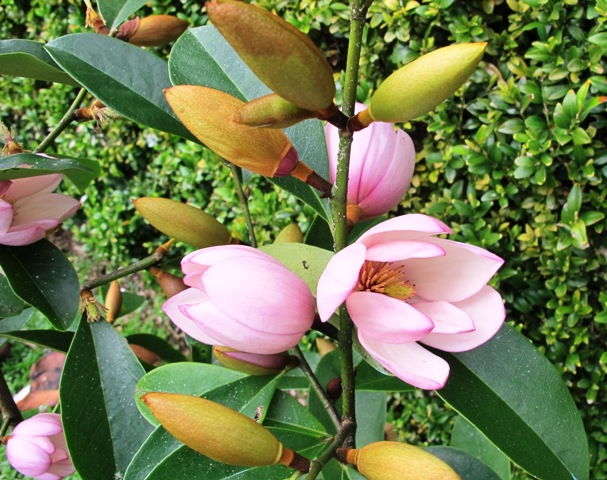
Fairy Magnolia Blush - bringing pink into the range

Fairy Magnolia Blush – bringing pink into the range

Michelias are very different. Their foliage is smaller and much lighter in substance so they are not an oppressive plant. And they can flower and flower because they set flower buds down the stem at nearly every leaf axel, not just on the tips. Most of them peak in spring but some keep on flowering for months on end and some will have a second blooming in summer.

There are a few michelias that are widely available here. M. figo has long been referred to as the port wine magnolia and many gardeners will know it. It has small leaves and is inclined to go a bit yellow in full sun. When it starts pushing out its scent in late afternoon, it smells remarkably like Juicy Fruit chewing gum.

There are various forms of doltsopa, the most common in this country being “Silver Cloud”. It has wonderfully large, pure cream blooms which are very fragrant. But, there are always buts, the flowers are floppy and often get frosted in colder areas, the tree tends to drop most of its leaves after flowering and it gets rather larger than most people expect. M. maudiae is a better bet as a garden tree but difficult to propagate so not generally available.

What we used to know as Michelia yunnanensis is certainly a popular addition to the garden plants of this country. It had a brief flirtation with being called Magnolia dianica before its current name was settled upon. It is now correctly known as Magnolia laevifolia but you are still more likely to find it sold as M. yunnanensis. It sets seed really freely so just about every nursery around the country has made a selection and named it (including us!). You can recognise it by its small leaves and creamy cup shaped blooms. You can hedge it and clip it but it is easier to start with a variety which is more generous in the leafage department.

Several decades ago, the late Northland plant breeder Os Blumhardt released Bubbles and Mixed Up Miss onto the market and these hybrids had many advantages over the species as garden plants. They are still tidy plants when juvenile, but nothing remarkable as they mature.

Now there is an explosion of new michelias on the market. Many are just the aforementioned M.laevifolia selections. Some are hybrids. I must declare an interest here. The ones you see being marketed as “Fairy Magnolias” are ours. For we are in the midst of a longstanding love affair with the michelias.

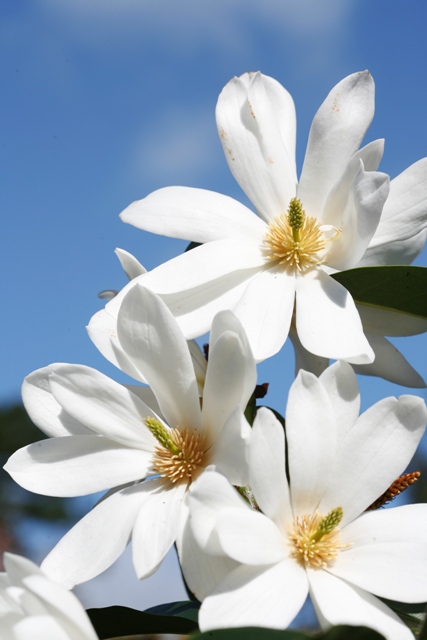
When camellia petal blight first showed up, my plant breeding husband immediately abandoned camellias and started on michelias. After about 17 years we have many, probably into the 1000s by now but we have never counted, as he has pursued breeding goals. They are in shelter belts, hedges, around the garden, through the nursery areas – anywhere there is space. Fairy Magnolia Blush was the first release a few years ago, bringing pink into the colour range. Cream and White are being released this year.

What we love about michelias is their versatility. They can be clipped tightly, even in topiaries. They make good hedges, even pleached into hedges on stilts. Some can become specimen trees without being forest giants. They give us masses of flowers, many are scented and they are pretty much free of all pests and diseases. They are an all round useful plant family.

We would not be without them.

Our new star - Fairy Magnolia White to be released this year

Our new star – Fairy Magnolia White to be released this year

First published in the Waikato Times and reprinted here with their permission.
Out of the box

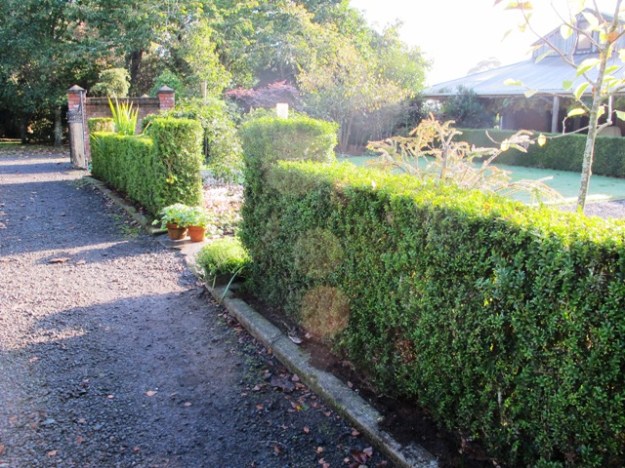
1While we like the odd bit of sharply clipped hedging – which is essentially a green wall – we have never been big fans of buxus. In fact we have both been known to scoff at it as possibly the world’s most boring and over-used plant. A few years ago when buxus blight first appeared in this country, we made plans and built up some camellia options for hedging instead.

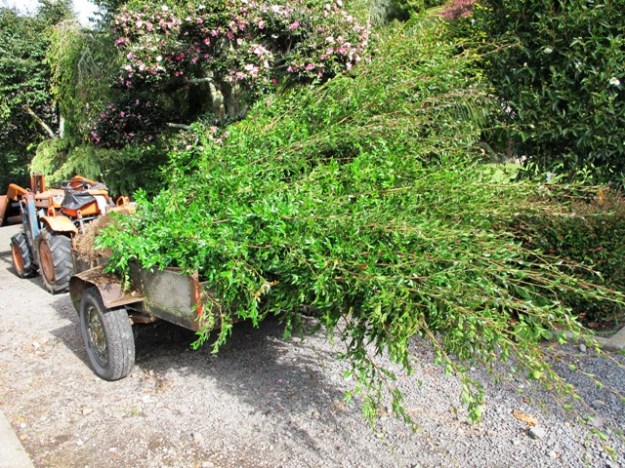
We only had four short lengths of box hedging last week. Now we have one and that is a low layer of a tiered hedge. The buxus blight had not struck but we weren’t that happy with two of the buxus hedges which did not keep good colour. Besides, the camellias were getting somewhat too large in the field and needed moving.
2The buxus was gone by lunchtime. That is our handy little tractor which was one of our better purchases 15 years ago.
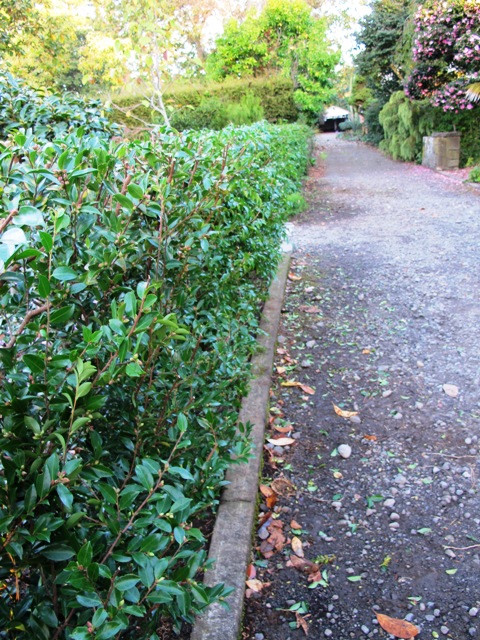
3Our choice for beside the driveway was Camellia transnokoensis which has very small leaves and a mass of tiny white flowers in season.
4
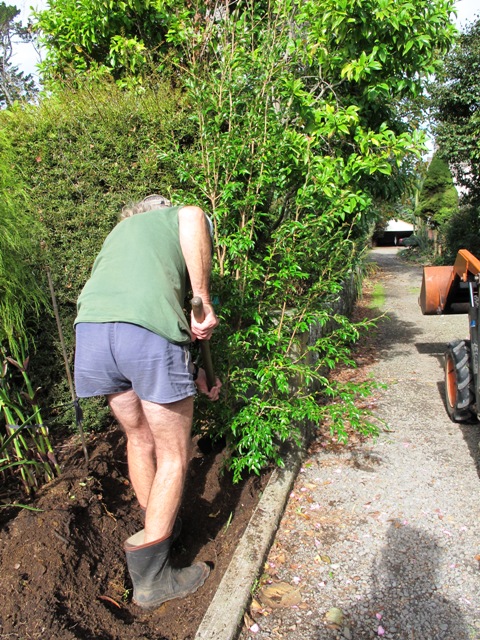
That is our Lloyd planting the new hedge this morning. He is hardier than both Mark and me. We do not go around with bare legs as autumn draws into winter. The plants went in at about 40cm spacings. We will keep the final height to around 120cm.
5We cut the new hedges back by close to half. This reduces stress on the plants which will have undergone quite a shock with their move and we want to encourage them to bush up and grow densely, rather than the taller, willowy growth. It should only take one or two fresh growths and the hedges should look as if they have been there from the start.

We think we will be much happier with camellia hedges than the boring old buxus.

Fruity facts (pragmatism over romance)

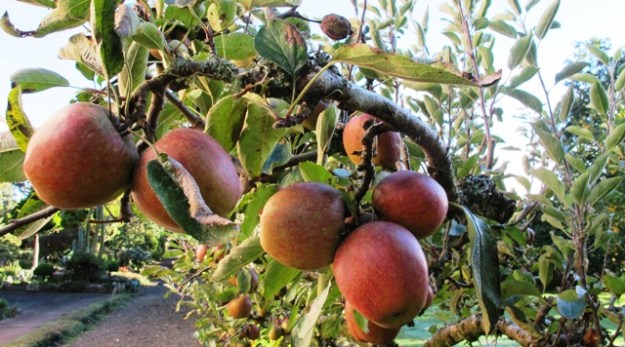
Apples are a reliable crop for us

Apples are a reliable crop for us

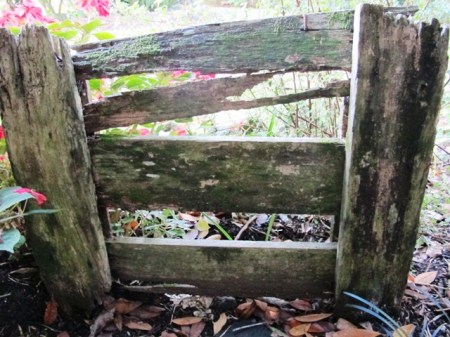
???????????????????????????????The whole concept of a home orchard seems to evoke romantic images, often based on childhood books. The swing hanging from the old apple tree, the lichen encrusted gate by which one enters, feasting on windfalls, maybe sitting on a tree branch munching sun warmed plums – you get the picture. Needless to say, it is always sunny and there are no wasps.

In recent years, with the explosion of interest in growing one’s own produce, I wonder how many trees have been sold to people with that soft focus romanticism. Just as I wonder how many dollars have been spent buying fruit trees which are entirely unsuited to our geographic areas. No matter how optimistic you are, I’m sorry we are just not going to produce good Black Dawson cherries in the mid north.

Most fruit trees need care. There aren’t many that you can just plant and leave. The reality is that if you want a crop, you are going to have to give the plants some attention. They are not like an easy care camellia that you can bung in the ground and then hack back a decade later when it has grown too large.

Orchards take space, more space than many people have. This is because fruiting trees need full sun, some protection from strong winds yet plenty of area around each tree to allow for good air circulation. That air movement is what helps to combat the build up of pests and diseases. Over-crowded plants will not crop well.

Mark’s mother planted an orchard here. She was not without romantic vision. Little of it remains now. However we do grow a lot of fruit and maintain a fresh supply all year round. Most of the crop is organic. Over time, the fruiting trees have been placed in appropriate positions around the garden rather than in a designated area. However, as we are stripping out our former nursery, Mark plans a return to the old orchard and he has been stockpiling trees in anticipation. But unlike most gardeners, we have space.

There is no doubt that fresh, tree-ripened fruit tastes better and to be able to wander out and gather a bucket of fruit is a simple activity that marks a quality of life beyond dollar value. Much of the fruit that is sold commercially has been sprayed to make it look good for the consumer (pock marked skins just won’t do), picked green and cool stored. It is never going to compare with home grown produce, except in the looks department.

You are probably not going to achieve self sufficiency in fruit on a small urban section. But you can have the delight of some crops. Just think, before you choose what trees to buy.

Feijoas - one of the few plant 'em and leave 'em fruit crops

Feijoas – one of the few plant ’em and leave ’em fruit crops

The only fruiting trees and shrubs I can think of that can be planted and then ignored except at harvest time are feijoas, passion fruit, what we tend to call the NZ cranberry (myrtus ugni), the Chilean guava (Psidium littorale) and avocados (but generally you need to live within 5km of the sea to grow avocados successfully in this country). Pretty much everything else needs work.

Some fruiting plants need quite a bit of work – vines like grapes, raspberries and kiwifruit are not worth giving garden space unless you are willing to actively manage them. Given the major disease issues with kiwifruit in the Bay of Plenty, they are probably best avoided for a few years anyway. Besides they are frost tender, so not suited to inland areas.

Some fruiting plants need a different climate altogether. Cherries and apricots, in particular, thrive in conditions where winters are dry and cold and summers are dry and hot. Nectarines and peaches are similar but a little more tolerant of humid, temperate climates. However, if you want consistent cropping from them, you are probably going to have to spray for disease. Plums are the easiest of that range, but we find they are intermittent croppers and will skip some years altogether.

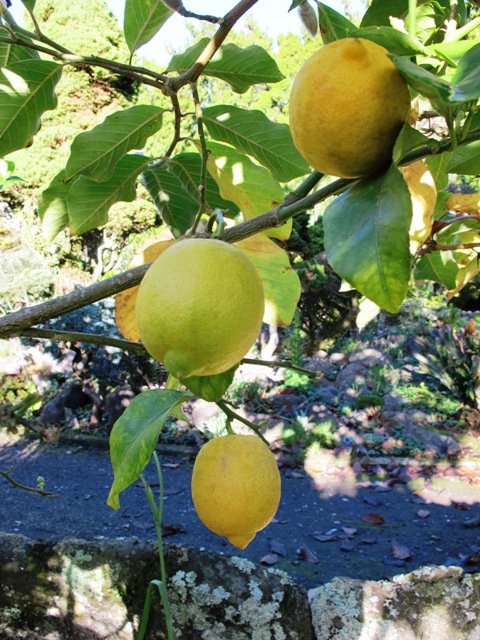
The modest lemon - common in many NZ gardens

The modest lemon – common in many NZ gardens

We grow a lot of citrus but we are coastal so don’t get much in the way of frosts. Oranges are our year-round staple fruit and we also have grapefruit, mandarins, limes, lemons and tangelos. Inland areas of the Waikato have summers that are plenty warm enough, but anything other than the ubiquitous lemon is going to be problematic without some frost protection. We get away with just one spray of copper in winter on the citrus.

The pears crop well, but not every year. As ours are not on dwarfing root stock, it takes an extension ladder to pick the crop but at least the trees survive on benign neglect. Apples really need annual pruning and some active management for pest and disease control. Our most successful ones are free standing espaliers on dwarfing stock, which allow plenty of air movement. Generally, they only get a copper spray once a year and occasional intervention when the codling moth gets going. Apples in our household are quartered, peeled and cored for eating because they are less than perfect. But they crop prolifically every year and taste good.

There is a whole range of lesser known fruit now on offer for sale – medlars, persimmons, pomegranates, kaffir lime, novelty citrus like Buddha’s Hand, to name just a few – but where space is limited, you are probably better to stick to the tried and true that will crop consistently.

First published in the Waikato Times and reprinted here with their permission.
A prickly tale – plants doubling as burglar deterrents

It would have saved a lot of effort had one of us looked up Yucca whipplei before we planted it 20 years ago

It would have saved a lot of effort had one of us looked up Yucca whipplei before we planted it 20 years ago

“I hate prickly plants”. I have said that often and indeed have consigned various prickly specimens to the incinerator. But when I thought about it, I realised we have a fair swag of spiny and spiky plants that we wouldn’t be without.

Many of the bromeliads have spiny points down their leaves and I often have somewhat shredded arms from delving in their midst to pull out dead foliage and to remove spent pups. The broms can make a mess from wrist to elbow but these lacerations heal very quickly, unlike roses.

Roses harbour so many fungal and bacterial diseases that their thorns can cause wounds which often become infected at an alarming speed. A nurse once told me she spent some time “specialing” a patient with acute cellulitis as a result of a rose injury – a thorn in her elbow – and some older gardeners have told me they have pulled out their roses rather than risk health issues from the inevitable scratches and splinters. I get tempted, every time one rips me as I pass but what is a garden without roses?

What amused me was when I looked around our house and realised that we have several large, very spiky plants around windows. Burglar deterrents! Not that we planted them for that reason. Nor indeed have we ever been burgled. Maybe our plants are doing their job? Generally, such plants have ended up in those locations because they are desert plants which need hot, dry conditions and the house borders are one of the few places to offer these.

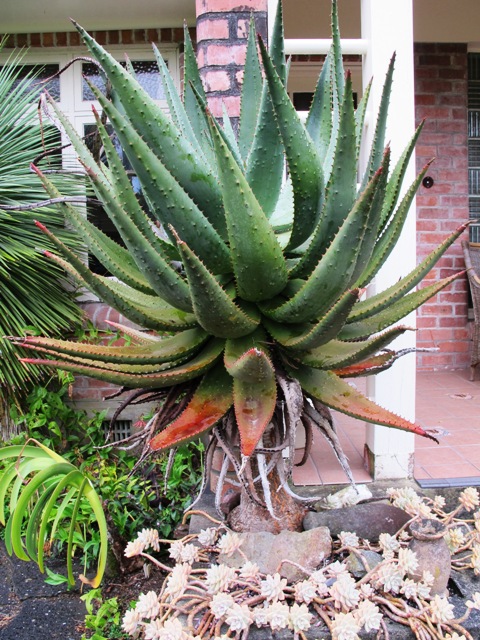
Aloe ferox - now a distinct hazard at the base of our fire escape

Aloe ferox – now a distinct hazard at the base of our fire escape

I doubt the wisdom of the rather large Aloe ferox with evil spikes at the base of our fire escape. Our only justification is that to get on to our fire escape, one needs the agility of an 11 year old and these days we would more than likely be found calling piteously for help from an upper storey window. The corollary is that at least burglars or intruders are unlikely to gain access up it.

Our biggest problem is the large yucca outside one window. We think it is Yucca whipplei. It was only a small, sculptural plant with attractive grey foliage when we planted it, maybe 30 cm high and 20 cm wide. That must be getting on for 20 years ago. At the point at which we decided we should be moving it, Mark thought it might be putting up a flower spike so wanted to leave it for another season. We are still expecting a spectacular flower spike at some point. Several years have passed and it still has not flowered. It is now well over two metres tall and a metre wide and that particular set of windows has not been cleaned in recent years. Nor can they be opened any longer. I gave the ultimatum last year that I wanted it moved.

Not for us, the quick and dirty solution of cutting it off and then digging out the roots. Oh no. This is a fine specimen and not particularly common, so it is waiting to be relocated. We have a sunny, north-facing bank where we have some of these larger desert style plants growing. It will take two men the better part of half a day. The problem is getting the two men on to the task at the same time. One man in my gardening life is more obliging than the other. That may be because he is paid, whereas I am married to the other one.

Last year, in preparation for the move, the concrete was cut. Oh yes, we have to remodel our paving to get this plant out. At the time of the concrete cutting exercise, our Lloyd commented to me that he was not going to be the one moving it because every leaf has a spiky tip. We are not talking seriously spiky like some yuccas of the major-risk-to-eyes or dangerously-hazardous-to-children variety. We had one of those and removed it from the rockery. This one is just a bit pointy on the tips, enough to cause discomfort rather than serious damage. “Easy,” said Mark. “We will just wrap the top in a blanket and tie the leaves upwards.”

Some yuccas can just be cut as lengths of stem and they will reshoot. This is how the very popular (and non-spiky) Yucca elephantipes used to brought in to this country and possibly still is. We are not willing to run the risk with this one which does not have much of a stem. We are trying to avoid butchering it. 20 years of growth deserves some respect.

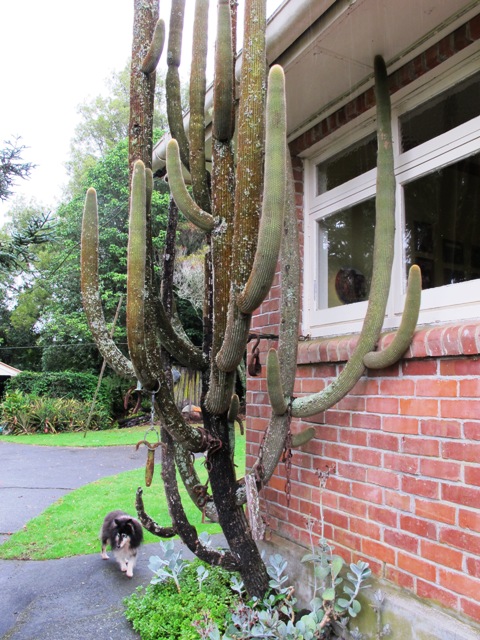
Vertical cacti now guarding the laundry window (and the inimitable Zephyr once again getting himself into a photograph)

Vertical cacti now guarding the laundry window (and the inimitable Zephyr once again getting himself into a photograph)

If you like the idea of using plants to give some protection against intruders, it may be wise to keep to more vertical plants. Some of the desert cacti such as we have outside our laundry window are good – this one has been gently co-existing with the house for maybe 60 years.

I have a gardening friend, an older woman living alone, who told me that she has trained a very prickly rose along her narrow, secluded boundary where she feels most vulnerable. I prefer something a little less rampant than a climbing rose but there is no doubt, we could have saved ourselves a major task had one of us looked up Yucca whipplei before we planted it.

First published in the Waikato Times and reprinted here with their permission.
If you are wondering how to set about moving large plants (similar to the Yucca whipplei mentioned above), there are step by step instructions in our Outdoor Classroom – Moving Large Plants.