Category Archives: Abbie’s column

Abbie’s newspaper columns

The curse of the narcissus fly

A selection of early flowering narcissi from the garden this week
A selection of early flowering narcissi from the garden this week

The offending narcissi fly larva to the right of the blade point

The offending narcissi fly larva to the right of the blade point

Behold, the narcissus fly larvae. This creamy brown grub is not your garden friend. In fact, in the world of insects, grubs and greeblies that would have been better kept out of this country, the narcissus fly ranks up the scale. It is European in origin – what they call a hoverfly though not a desirable species.

I had to look it up because I only knew it as the narcissus fly. It is Merodon equestris, in case you want to know. On the wing, the adult looks inoffensive – a bit like a cross between a lean, mean bumblebee and a blow fly boasting a yellow back. It is its reproductive habits which are the problem. The female adult zips around at great speed, laying its eggs, usually one by one, at the base of the bulb foliage. When the egg hatches, the juvenile larva burrows down and makes a cosy home for itself inside the bulb where it sustains itself by eating it from the inside out, in preparation for hatching the following spring.

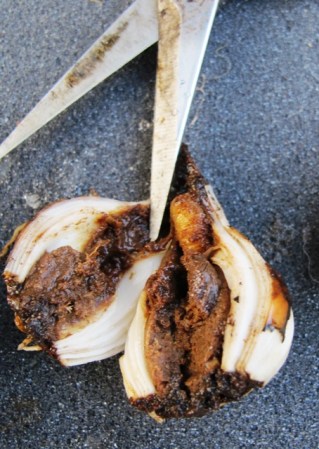
You can see the damage in the photograph. As I was redoing the rose garden, I was splitting clumps of bulbs in full growth (not generally recommended but I find it works out fine as long as I am replanting straight away into good conditions). Some of the bulbs were soft and sporting very few, if any, fresh roots. That is a sure sign of narcissus fly. There is something deeply compelling about squeezing the bulb and having the larva exude out the top, or splitting the bulb and digging it out. They are quite tough so difficult to squish between your fingers (I wear gardening gloves at all times, lest you recoil at the thought) but can emit a satisfying pop and explode in a very small way if you squish them below foot. Generally, there is only one per bulb.

The inoffensive adult fly (photo credit: Sandy Rae via Wiki Commons)

The inoffensive adult fly (photo credit: Sandy Rae via Wiki Commons)

While this critter is widely referred to as the narcissus fly, by no means does it limit its predations to daffodils. It attacks many members of the amaryllidaceae family. This is a fairly large family and includes snowdrops (galanthus), snowflakes (leucojum) and hippeastrums. According to bulb expert, Terry Hatch, it also attacks hyacinths but as we only have two hyacinths, we have never noticed. As an aside, hyacinths need a winter chill to flower well so are better in colder climates.

You can’t eradicate it. The fly is airborne and does not respect boundaries. A multi pronged defensive strategy is required. The fly does not like shade, so all our hippeastrums are now woodland plants because they were getting hammered by the larvae infestations. Now they are untouched.

We favour the early flowering narcissi because they are done, dusted and pretty much dormant by the time the fly is on the wing in late spring and summer. The galanthus are also back below ground by then, so it is never a major problem with them. It doesn’t seem to be a problem with the autumn flowering bulbs such as the nerines and the belladonnas, even though, sitting half in and half out of the ground, you would think they might be vulnerable.

Don’t let your daffodil bulbs become so congested they squeeze themselves above the ground and planting them in shallow bowls may be like a creche to a passing fly. Most of the advice is to leave the foliage on the bulb until it turns yellow and dies off naturally because this is how the bulb builds up strength to flower again next season. You are not meant to tie it in knots or plait it (as some tidy gardeners do) because that inhibits the photosynthesis process. However, a visiting daffodil breeder told us that in fact the bulbs only need 65 days to fortify themselves which is a great deal less than nature gives them. The daffies in our lawn are somewhere over 100 days. This is not universally acclaimed advice but if you have a problem with bulb fly, removing the foliage soon after two months and piling extra dirt or mulch on top of the bulbs may help to break the cycle. The worst that will happen is that your bulbs won’t flower well if you strip off the leaves too early.

Come spring, Mark can be found stalking narcissus fly in our rockery. They become active in the warmth of the day. They are very quick so it is hard to get them with a fly swat. He uses a little sprayer of Decis and squirts them. Decis is a synthetic pyrethroid (as is fly spray) so not a particularly nasty insecticide. Vigilance is what keeps the flies under some semblance of control here. Though he was a little wry on the day he told me he had been walking through the rockery minus his sprayer when he saw an offending fly. It was an open garden day so he looked around to check that no visitors were within view, took off his tee shirt and was stalking the offender to swat it when he noticed the woman at the side of the garden watching. “Eye candy,” I told him. “You are now officially eye candy.”


Left to right: a perfectly healthy bulb, an infested bulb which had already formed a healthy offset, the offending larva in front, and a second infested bulb with it’s larva still ensconced (but no longer – I squished it after its photo shoot).

First published in the Waikato Times and reprinted here with their permission.
Modern perennial plantings – more in the style of Braque than Mondrian

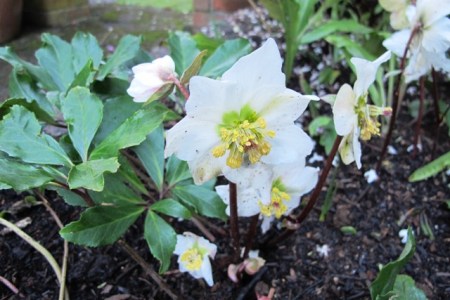
A simple but very pleasing combination of Helleborus niger for winter flowers, Calanthe arisarnensis for  spring, some random dwarf narcissi - and interesting foliage all summer

A simple but very pleasing combination of Helleborus niger for winter flowers, Calanthe arisarnensis for spring, some random dwarf narcissi – and interesting foliage all summer

Last week, I wrote about the major makeover in the rose garden and mentioned the fun I was having with the perennials. While the rains have interrupted progress (it is difficult to dig and divide in waterlogged conditions), we have spent a great deal of time discussing perennials and their use here. Indeed, we even dedicated a gardening trip to the UK to look at techniques.

Traditionally, English perennial gardening has been dominated by the herbaceous border organised on what I had been calling the mix and match approach but which I have just seen described as tapestry gardening. And that seems appropriate – it is like building up an entire picture but from a multitude of different plants instead of coloured threads. At its best, it is magnificent but it is also very labour intensive and takes a lot of skill to put together well. Too often both the ongoing labour and the skill levels are lacking and it just looks a mess.

In the nineties when we saw the gardening scene hijacked by the landscape fraternity in this country, that sort of detailed gardening was thrown out. “The Look” became the dominant feature. Gone was tapestry gardening and any value placed on plantsmanship or plant detail. Now perennial gardening became “underplanting” and just as patterned carpets have been shunned in favour of the same plain carpet throughout the entire house, so too was underplanting to be a utility carpet, usually comprising only one plant variety. So rose gardens were carpeted with nepeta (catmint), or maybe stachys (lamb’s ear). Liriope was fine as long as it was en masse, or any other utility perennial that could form a reliable carpet. It is an approach to gardening that we have shunned as deathly dull.

Piet Oudolf’s rivers of perennials at Wisley were a revelation to us. Here was a contemporary take on perennial planting on a large scale. Each river or stripe is composed of three or four different plants, often repeated in other combinations elsewhere in the border. Tom Stuart-Smith’s plantings in the same RHS garden were a reinterpretation of the type of block planting first espoused by Gertrude Jekyll, especially with her later work when her eyesight was failing and she needed more defined form. When I use the word “blocky”, we are talking more freeform shapes than geometric, more Braque than Mondrian.

The upshot of this thinking was that when Neil Ross suggested I look to reorganising the perennial plantings in our rose garden to more contemporary blocky plantings with simple combinations, I had a mental framework to fit it into. While the area is hard landscaped into a formal design, I didn’t want formal geometric plantings. We strive for a spring and summer froth of pretties – roses and perennials – with touches of plant interest to extend the seasons into autumn and winter. So my blocks are random but nothing less than a square metre and nothing more than three square metres. And each block has three, sometimes four different plants in it. The fun has been in deciding the combinations block by block. It is a bit like creating a multitude of mini gardens and linking them together.

I have bought no new plants. All I have done is to lift, divide and recompose what I had in the garden. So they are just arranged differently. In each block, I have tried to combine plants which I think will be compatible in close company with each other – in other words nothing that is going to overwhelm its companions above ground by smothering them or underground by over-competing. I have considered the time of the season that each plant peaks to try and cover a good span of the year and also to get interesting combinations of foliage and flowers within each block.

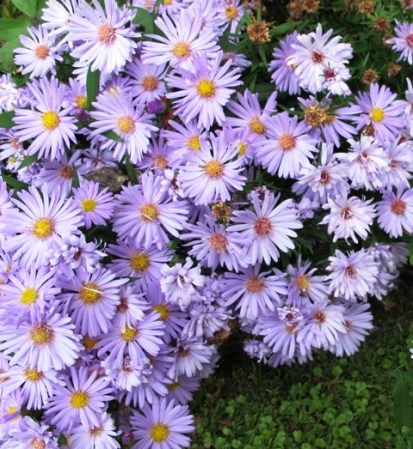
A carpet of blue asters in late summer and autumn

A carpet of blue asters in late summer and autumn

Nothing is more boring than endless plant lists so I will just give a couple of examples. One block is the common liriope (grassy foliage and blue flowers in summer) with a taller, pure white Siberian iris (for spring flowers) and one of the strong growing, mat-forming Kippenberg asters with lovely blue daisy flowers in autumn. Elsewhere, I have another block which repeats the white iris but this time combining it with a compact bright blue campanula and a little pure white scuttelaria which flowers most of the time.

If one block doesn’t work, then it will be easy to address the problems in that section. Some will need lifting and dividing more often than others. The whole area has been dug over thoroughly so the plants are in friable and fluffy soil which most perennials appreciate and I have laid a mulch of compost on top. These are optimal conditions and, while the area is very new right now, I have planted divisions and plants close together so I expect rapid results as soil temperatures rise in spring. If it doesn’t close up and fill the beds with a riotous froth in time for our peak garden visitor season, I may have to be in there with emergency plugging of gaps but I hope that is not going to be required. I am also expecting that the self seeded annuals will also come away quickly and fill gaps. The pretty nigella (love in a mist), linaria pink and lilac, blue poelmonium (Jacob’s Ladder) and common old blue pansies are all welcome to stage a return wherever they wish, to soften the divisions between the blocks.

Now it is just a question of waiting to see the results.

First published in the Waikato Times and reprinted here with their permission.
Planted - patience is now required as I wait for soil temperatures to rise

Planted – patience is now required as I wait for soil temperatures to rise

Renovating the rose garden

At its best, the rose garden looked good...

At its best, the rose garden looked good…

Don’t ask us for garden advice. We hand out endless plant advice and I write regularly about many gardening matters but we do not dispense personal on site advice. This is not for want of requests but oft-times, all the person asking wants is for you to affirm that they are right. Besides, advice carries an implicit suggestion that you think the gardener is not doing it as well as you could. And that doesn’t always go down well.

But there are times when an outside view can be extremely helpful. We have a garden which we loosely call the rose garden or the “sunken garden area”. It is a formal area, laid out in the early fifties and planted by Mark’s mother with her beloved old fashioned roses. These days it would be called a garden room. Over the years, it has had a lot of work done on it including several major renovations. And still it didn’t work as well as I wanted. Sure it looked pretty in spring but it didn’t look pretty enough for long enough. Worse, I just didn’t like working in the garden. I would avoid it until it could no longer be ignored. Clearly something wasn’t right but we were failing to come up with a diagnosis.

Enter a house guest last spring. It was Neil Ross, whom some readers will know from his writing in NZ Gardener. He used to be head gardener at Ayrlies in Auckland but since then, has been working in gardening and design in England. I asked for his thoughts but in busy schedules, it came down to grabbing a few minutes at dusk. To my surprise, that was all we needed. We stood in the garden, wine glasses in hand and Neil nailed it for me.

“Gosh,” he said, “that really is a deep sunken garden.” (This had never even occurred to me. I just knew it had been dug by hand by Mark’s dad, aided by a draught horse). “And that is accentuated by the height of the standard roses. They’re really high. I’ve never seen such tall standards.”

In the following 90 seconds, he fired out suggestions. Get rid of the tallest standard roses. Remove the far border “which merely creates yet another path that I bet nobody ever walks down” (true, Neil). Make the borders wider on the main bed to compensate and lift all the perennials and reorganise them. Instead of the classic mix and match of perennials and bulbs, he suggested I opt for “more blocky plantings” and simple combinations of two or three plants in each block.

That was it. I knew instantly that he was right on the mark but I left it to percolate in my brain until a couple of weeks ago. Besides, such drastic changes needed to be done in winter. It clearly involved moving a lot of plants. Besides, while the advice may have been given in 90 seconds of inspiration, there was quite a lot of solid work in implementation. The garden beds are all hard edged – with footed concrete. Getting rid of one bed entirely is a major operation in itself, especially as we wanted to salvage the 15 year old maples and handsome weeping camellia. There are a lot of plants in just one bed. That said, roses are easy to move – at least compared to other shrubs.

Recycling the turf from the extended borders to the defunct garden bed

Recycling the turf from the extended borders to the defunct garden bed

I admit I have had help. The concrete garden edgings have been cut into manageable lengths and recycled where needed. This means that once completed and in full growth again, the garden will look as if it has been in place forever. Nothing shouts recent renovation more than pristine fresh concrete. And I am not the one who is recycling the squares of turf from the enlarged borders over to the area where the surplus bed has gone. But my job involves digging the entire garden, lifting all the perennials and bulbs, dividing them and replanting in new combinations. That has been Serious Fun. I speak in gardening terms and while gardening is many things, Serious Fun is not usually one of them. More on new perennial plantings next week.

We have been blessed with wonderful weather. A very wet winter would not have made this easy at all and I am hoping to finish this week before we get the wet, cold rains that will arrive, without doubt, sometime soon.

The upshot of all this, is that I would counsel readers that if you have an area of your garden that you do not enjoy working in, this may be an indication that there is something inherently wrong with it. I was lucky that the right person happened along eventually and gave me a rapid fire diagnosis. The best people to give advice are those who know at least as much as you do about gardening and design and who do not have an emotional investment in you acting on their advice. If you can find a really good garden designer (not just any old one), who gives on-site consultations, they should be able to assess the situation quickly and decisively but they are not easy to find. You may end up having to listen to a lot of ideas from different people before someone hits the mark for you. Just, don’t ask us, please.

A major makeover in mid flight

A major makeover in mid flight

As it was - the borders are too narrow and proportions wrong

As it was – the borders are too narrow and proportions wrong


First published in the Waikato Times and reproduced here with their permission.
Fragrant rhododendrons

This is my final feature written for the Weekend Gardener. However, I would urge readers to respond to their readership survey in this latest issue. They want feedback – give them your comments. Tell them what you think of the new directions they are taking. Do. Please.

First published in the Weekend Gardener and reproduced here with their permission.
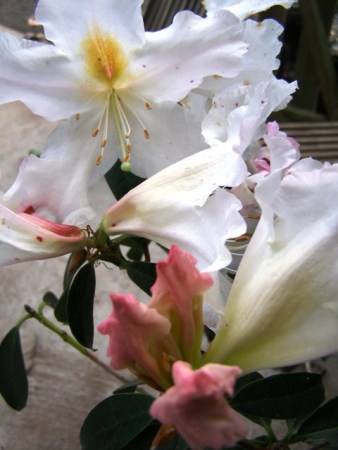
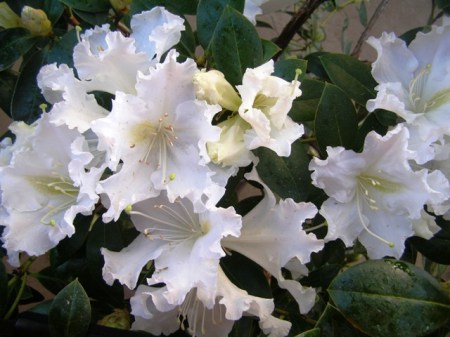
Floral Dance gets its scent from R. sino nuttallii but is a very different flower and plant.

Floral Dance gets its scent from R. sino nuttallii but is a very different flower and plant.

Loderi Venus is one of the fragrant Loderi series but hard to find for sale and more of a small tree.

Loderi Venus is one of the fragrant Loderi series but hard to find for sale and more of a small tree.

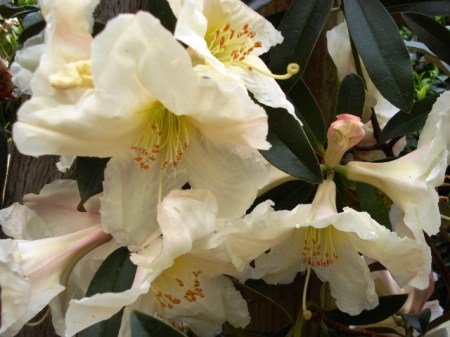
Many people don’t realise that there are more scented rhododendrons beyond the well known Fragrantissimum or the Loderis, though these cultivars have certainly stood the test of time.

The early Loderi series were bred at England’s Leonardslee Gardens at the turn of last century and Fragrantissium has been around even longer. There is little to rival the Loderis even now for big, full trusses, but they are more akin to small trees than to shrubs. Added to that, they have to be grafted and there aren’t many specialist rhododendron nurseries continuing with grafting so they are not generally available on the market.

Most gardeners need plants which are more compact.

FRAGRANTISSIMUM

In the smaller growing, very fragrant white flushed pink class, Floral Gift is our preference

In the smaller growing, very fragrant white flushed pink class, Floral Gift is our preference

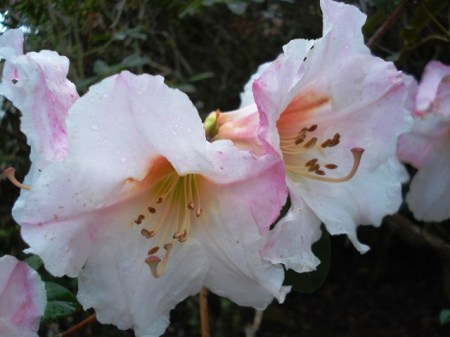
In the smaller growing, very fragrant white flushed pink class, Floral Gift is our preference. Fragrantissimum has been around since 1868 and is the best known fragrant rhododendron. It has a wonderful scent but it is a bit leggy and open and you don’t get many flowers to the truss. Its blooms are also rather soft, so it is inclined to weather mark. There are quite a few different options in this type with their scented blooms in white with a pink flush. Princess Alice, Elsie Frye and Harry Tag are all more or less similar. All are smaller growing (around a metre high) and have good scent but you need to encourage them to form a good shape by pruning and pinching out leggy growths at the right times. Our preference in that colour range is our own Floral Gift. It has a sturdier habit of growth and its large flowers are so heavily textured that it endures most bad weather without damaging the blooms.

R. polyandrum is one of the most fragrant species with its huge blooms, but it is a larger grower with a very open habit.

R. polyandrum is one of the most fragrant species with its huge blooms, but it is a larger grower with a very open habit.

FRAGRANT SPECIES

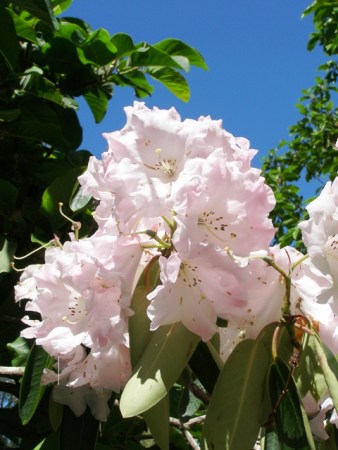
R. cubitti is a fragrant species which is easy to grow but because it flowers very early, it is not suitable for cold climate areas.

R. cubitti is a fragrant species which is easy to grow but because it flowers very early, it is not suitable for cold climate areas.

Most of those we grow as garden plants are hybrids – crosses between different varieties of rhododendrons. There are a number of fragrant species but these are not always easy to grow. In fact many are downright difficult. But the ones which have proven their worth as garden plants for us include the following:

R. polyandrum is the fragrant parent of many hybrids and is so strongly perfumed it will stop you as you walk past with its scent hanging heavy in the air. It has enormous cream flowers with each bloom measuring at least 12cm across. The flowers are soft so weather mark easily and the plant is rather leggy and open in growth, but where space allows, it is a wonderful garden addition.

R. maddenii is hardy for New Zealand conditions and has very heavy textured flowers which feel as if they have been cast out of wax. It is usually white with a pink flush and it flowers late in the season which makes it a good choice for colder areas. It is another relatively large grower in the two metre range.

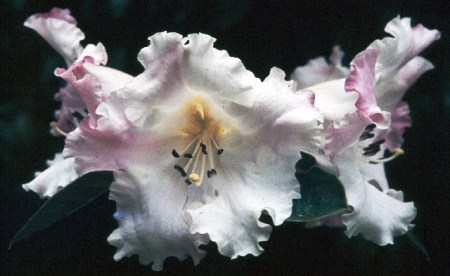
For frost-free areas, R. veitchianum is a gem with its pure white, frilly, scented flowers.

For frost-free areas, R. veitchianum is a gem with its pure white, frilly, scented flowers.

R. cubittii is a pretty, frilly pink and white with good scent. It is an excellent smaller grower to around 1.5m and will even take full sun but the downside is that it flowers early in the season. This means that in cooler areas, it needs some protection from frosts or the flower buds will freeze and fall off and it won’t be happy at all in really cold, inland areas.

R. veitchianum is even more tender. In fact it is has about the same hardiness as a vireya rhododendron which means that any frosts more than a degree or two will not only destroy the flowering but also burn the foliage. But it is a great option for warm areas of the country and it will reward you with pristine white, frilled flowers smothering the bush in early spring and good fragrance. It also has a tidy, compact habit of growth on a smaller growing plant.

FRAGRANCE AND COLOUR

While we all love the fragrance of flowers, the plants are not producing this scent to please humans. Generally it is linked to attracting the right insects for pollination. While the rhododendron relatives of deciduous azaleas and some vireyas will use both colour and scent, fragrance in rhododendrons is generally linked to white and pale colours. You won’t find big bold, full trusses of red, blue or purple rhododendrons with scent. Part of the hybridist’s quest is to try and get new varieties with combinations of desirable characteristics.

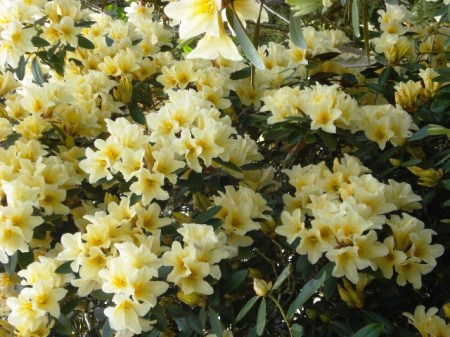
Felix Jury’s series of R. polyandrum hybrids brought a greater colour range to scented rhododendrons in New Zealand - Barbara Jury

Felix Jury’s series of R. polyandrum hybrids brought a greater colour range to scented rhododendrons in New Zealand – Barbara Jury

SCENTED HYBRIDS

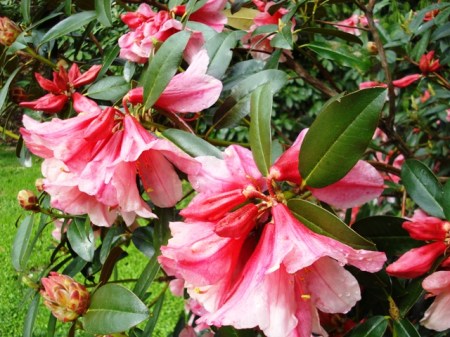
Bernice

Bernice

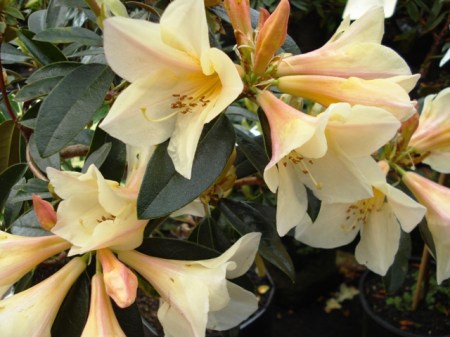
The late Felix Jury (yes, he was my father in law) set out to try and combine fragrance, colour and healthy foliage and named a series of new rhododendrons. Many of these are still available on the market today. None of them have the big full trusses of the traditional rhododendron, but they have many other aspects in their favour, including performing well in warmer climates. His R. polyandrum hybrids all have scent, though not as strong as their scented parent. They do, however, make tidier garden plants and bring more colour. These include Bernice (crimson tones), Barbara Jury (pure yellow fluted blooms), Moon Orchid (frilly apricot and yellow) and Felicity Fair (more pastel honey colours).

Felicity Fair

Felicity Fair

R. sino nuttallii (the sino just means it comes from China) is a magnificent rhododendron species with fragrant white trumpets but it is rarely available for sale. It has, however, given birth to two colourful offspring which are compact growers and much easier to produce so more widely available. Floral Dance (above) has very frilly, very fragrant, large trumpet flowers in white with a yellow throat and deep carmine blush and tips. The heavy textured dark foliage is a bonus. Floral Sun is a half sister with pretty soft golden flowers. Its fragrance is not as strong (which means getting close enough to put your nose by the flower to smell it) but the mass of pretty flowers and the tidy, compact growth make for an excellent garden plant.

Whether we ever get a big red Rubicon or a big blue Bumblebee with strong fragrance is unknown territory but it will be by the hand of the plant hybridiser, not nature, if it happens.

Moon Orchid

Moon Orchid

Floral Sun is the soft yellow half sister of Floral Dance and becomes a very tidy, compact garden plant with masses of blooms.

Floral Sun is the soft yellow half sister of Floral Dance and becomes a very tidy, compact garden plant with masses of blooms.

Reviewing the role of container plants here

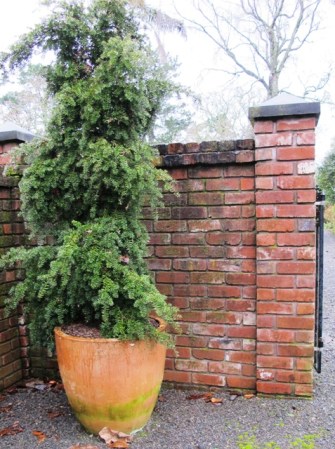
Large gardens need large pots - a weeping totara at our entranceway

Large gardens need large pots – a weeping totara at our entranceway

I am reviewing my container plants, one by one. I am a bit fed up with them and unless they have a strong case, they will be history.

Generally plants in containers become featured plants so it matters that they look in the peak of health. Unhealthy, starving specimens are a sad sight. This means regular repotting and therein lies the main disadvantage, though the bulbs are no problem. I redo those every year as a rule, using a basic composted bark mix and slow release fertiliser. It is a good wet weather occupation.

No, it is the shrubs or trees that I have in pots that are the issue. This is compounded by the fact that we have a large garden. Large gardens need large pots with large plants. Otherwise they just look out of proportion. And while I can spin most of the trees and shrubs out to a two year repotting cycle, it still has to be done. It is a heavy, dirty occupation and not one I enjoy. It is a two person job to wrestle the root bound plants out of their pots and into the wheelbarrow. I hose off all the old mix, trim the roots, shape the plant, and battle it back into the pot with enough fresh mix to sustain growth.

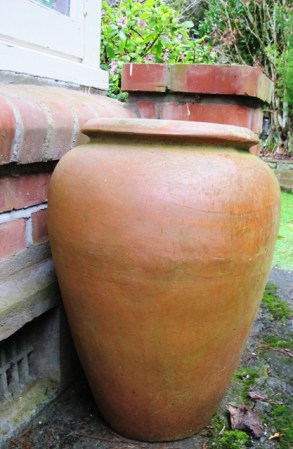
At least I will never again make the mistake of buying containers which are narrower at the top, no matter how attractive they look. You only do that once before realising that such pots are better as an ornament without the plant. It tends to be a case of destroying either the pot or the plant when it comes to getting them apart. It is all right. You do not have to put a plant into a pot. If it is an attractive pot worth displaying, it can be used on its own as a piece of garden decoration.

There was a time BC – Before Containers. They are a relatively recent garden fashion, aided and abetted by the explosion of plant pots from Asia. Believe it or not, these used to be quite expensive. Now they are cheap as chips and, as far as I am concerned, correspondingly expendable. I have long since dispensed with almost all the glazed, coloured pots I had bought as fashion items. All that remain are those in earth tones or good old fashioned terracotta. It is a matter of taste but I don’t want coloured pots, let alone ones decorated with bamboo shoots, dragons, butterflies, sunflowers or anything else for that matter. Hanging baskets are not for me, either.

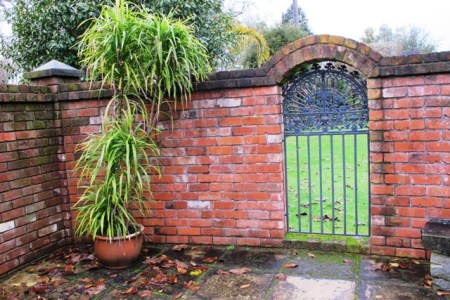
Softening the scene but Cordyline stricta has to be repotted every year

Softening the scene but Cordyline stricta has to be repotted every year

My review of the containers has led me to the conclusion that there has to be a good reason for their existence. Either they exist to soften a harsh view – in our case, the entrance way and a small paved courtyard. Or they may be a means to keep treasures or to curtail invasive plants. That accounts for plenty of smaller pots, mostly of bulbs. Or they are bonsais that we keep as feature plants. That is it. There can be no other reason for containerised plants in my garden. I just don’t think they add very much except work.

It is different in a small garden. If I ever find myself with one, I am sure I will end up with lots of containers for various reasons (though there will not be any in shiny blue). In a small garden, you can usually get the hose to most points for the constant watering required in dry spells. I might even go for growing annuals in pots – these days elevated to the term of “potted colour” in order to sell readymade but short lived flowering options to the customer.

If you are potting quick impact, low value plants, any cheap mix is going to be fine. You can even use garden soil, though this tends to compact and hold too much water. Potting mix was designed for pots and is free draining. But not all potting mixes are equal.

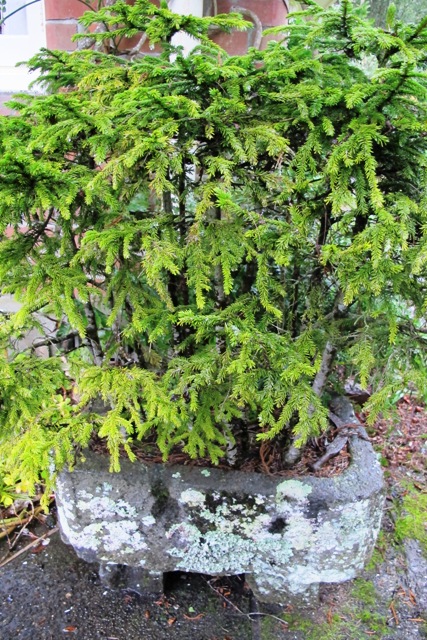
Mark calls it his Forest of Tane though these are Picea orientalis bonsai style in a small stone trough

Mark calls it his Forest of Tane though these are Picea orientalis bonsai style in a small stone trough

When it comes to longer term plants, it is worth the money to buy better quality mixes. The bagged stuff comes with everything added already so all you need to do is to fill around the plants in the pot and note how long the life of the slow release fertiliser is. The information on the bag should tell you. Slow release can be active for anything from three months to a year. Once it has been used up, there is nothing in the mix to feed the plant so you will need to start top dressing. It helps to know when because if the plant turns yellow due to starvation, it can take a while to respond.

The few bonsai type plants we keep in comparatively small containers to restrict growth and dwarf them. They need a mix with a bit more grunt and better water retention than straight granulated bark mix. In this case, we make up our own of 1/3 compost, 1/3 garden soil and 1/3 potting mix.

The other container plants are history. Either they are worth planting out to grow in the garden or they are goners. I do not have time for them any longer.

First published in the Waikato Times and reproduced here with their permission.