Category Archives: Abbie’s column

Abbie’s newspaper columns

More mid winter delight than harbinger of spring – galanthus (snowdrops)

Galanthus S Arnott is a wonderful performer here

Galanthus S Arnott is a wonderful performer here

It’s snowdrop time. Proper snowdrops which are galanthus. These are widely referred to as English snowdrops, though they are not. In fact they occur naturally throughout Europe and down through the Mediterranean. It is just that the English have made them their own and who can blame them? Snowdrops rank right up there beside daffodils for that feeling of seasonal wonder.

We lack the snow of course, so we don’t get the simple picture of the flowers appearing through melting snow. I assume this is why they are called snowdrops in common parlance.

We will never be galanthophiles here, though that has more to do with climate than anything else. We have a number of different types of snowdrops but most are very marginal in our mild conditions and we struggle to keep them going here so there is no point whatever in collecting as many different ones as we can and keeping them separate, as galanthophiles will. While there are only about twenty species, there are hundreds of named varieties. Most of these are species selections. In other words, while snowdrops will seed down in the wild, particular variations have been selected out and then propagated from that original bulb (as opposed to raised from seed which won’t keep the variation stable – most will revert immediately to the usual form). We could only look in awe at the fabulous prices paid for a very good new white and yellow snowdrop in the UK last year. It was knocking on the door of past times when the wealthy paid vast amounts for a new tulip bulb. While we have the old double variety, G. nivalis Flore Pleno, we have not sought the many variants on doubles. Flore Pleno is not flowering yet so I can’t photograph it but it looks a bit of a mutant and lacks the charm of the simpler, more natural forms in my eyes.

In this country, if you want to see snowdrops in all their glory, the place to go to is Maple Glen where Muriel Davison has built up extensive plantings in her large garden. Unfortunately for northerners, it is sited at Wyndham between Gore and Invercargill so few of us are likely to make it at the right time. Or time a late winter trip to the UK. For years I had a photo a reader sent me of a carpet of snowdrops (and we are talking bulbs in the magnitude of five to six figures all in bloom at the same time) beneath white barked birches somewhere in England.

So I know that our snowdrop efforts here are modest by those standards. But we have snowdrops, and quite a few of them now. The one variety that performs consistently well in our conditions, flowering reliably every year and building up readily, is Galanthus S. Arnott. Apparently it is equally good in the UK because it has been given an Award of Garden Merit from the Royal Horticultural Society.

The peak flowering season is not a long one. It is just enchanting while it lasts and snowdrops lend themselves to drifts in garden borders, on woodland margins, in our growing bulb hillside (coming through the grass) as well as being featured in rockery pockets. They flower at a time when there is not a lot else out. While typically regarded as harbingers of spring, they are more mid winter. We keep gently spreading them further afield in the garden. Many British gardens open in February for what is often called a snowdrop weekend. That is the aim here. It may take us another decade to get sufficient carpets of snowdrops to warrant declaring snowdrop weekend, but we could never be accused of taking the short term view of gardening. And we are well on the way.

Curiously with snowdrops, the practice is to lift, divide and replant soon after flowering. There aren’t many bulbs where you are advised to move them in full growth. In England they are often sold as “green bundles” when still in growth. I have taken from this that they are not fussy so I move them any time now – whether dormant or at any stage of growth. Typical of all bulbs, they need good drainage and reasonable light levels. Woodlands overseas are largely deciduous which means they have more light. Our dominance of evergreens in this country leans us more towards forest than woodland. That is why we go for planting the margins rather than the depths.

Finally, just for clarification, what is often referred to as a snowdrop in New Zealand is an entirely different family. The leucojum is much stronger growing, often found in old homestead paddocks, associating with daffodils. It has the little cup without the surrounding skirt of petals and is less refined than a proper snowdrop. Notwithstanding that, it is an under-rated garden plant with a very long flowering season. But it is a snowflake not a snowdrop.

Snowflake (leucojum) to the left and snowdrop (galanthus) to the right

Snowflake (leucojum) to the left and snowdrop (galanthus) to the right

First published in the Waikato Times and reprinted here with their permission.
Early flowering camellias

First published in the Weekend Gardener and reproduced here with their permission.

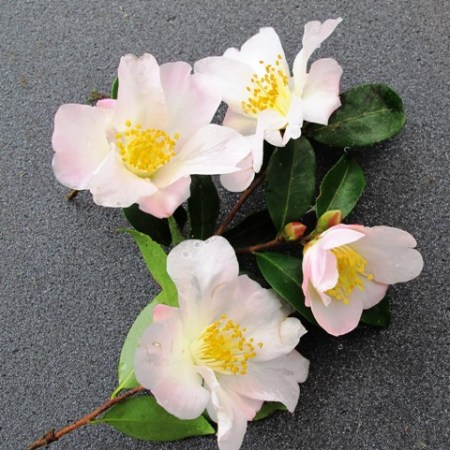
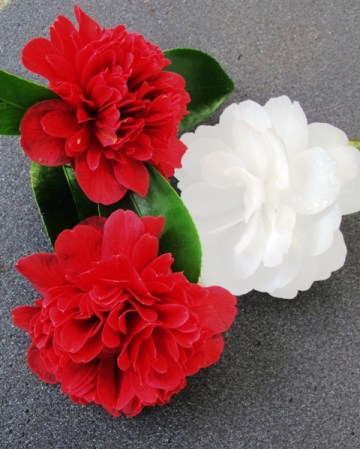
White ‘Early Pearly’ is one of the most beautiful of the sasanquas, while red ‘Takanini’ is a japonica which flowers from early to late in the season.

White ‘Early Pearly’ is one of the most beautiful of the sasanquas, while red ‘Takanini’ is a japonica which flowers from early to late in the season.

There is always something magical about the first flowers and camellias are no exception. They seem fresh and new, heralding the progression of seasons. While the main camellia season is from late winter to mid spring, the earlier varieties bring colour to the late autumn and early winter garden. Early flowers also escape the curse of camellia petal blight which affects mid and later season varieties.

Early camellias fall into three groups: the sasanquas, early flowering species and a few japonica types and hybrid camellias which have an exceptionally long flowering season, continuing from early to late.

We particularly enjoy the charming sasanqua ‘Crimson King’, seen here as a mature shrub with a graceful, arching form.

We particularly enjoy the charming sasanqua ‘Crimson King’, seen here as a mature shrub with a graceful, arching form.


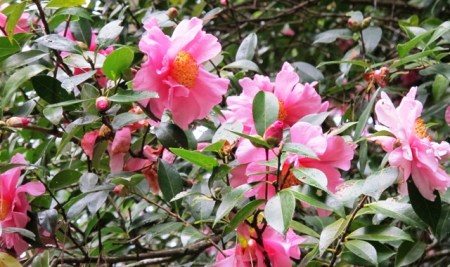
Camellia sasanqua ‘Bonanza’ is a bright spot of colour on a grey day

Camellia sasanqua ‘Bonanza’ is a bright spot of colour on a grey day

The sasanqua camellias originate in Japan and are renowned for being sun tolerant, having smaller leaves and being suitable for clipping to hedges. While some are slow to get going as garden plants, over time they can make graceful, airy, large shrubs. They mass flower and most are scented, in a mossy, slightly sweet sort of way. Their blooms are softer and lack the defined form and substance of most later flowering camellia types. This is an advantage when the flowers fall and break up quickly, rather than leaving a sludge of brown at the base of the plant. While white sasanquas have been particularly popular for some years, they also come in a whole range of pinks to red tones and bi-colours. We prefer the coloured ones for a splash of winter cheer in the garden when there is not a lot else in flower.

‘Fairy Blush’ is a scented hybrid with a very long flowering season.

‘Fairy Blush’ is a scented hybrid with a very long flowering season.

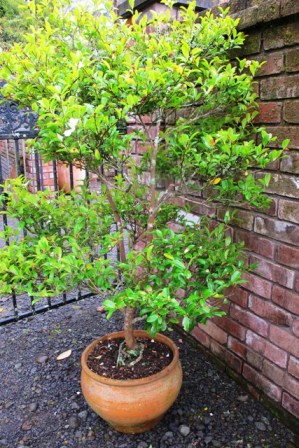
There are a range of early flowering species but these are unlikely to be found for sale these days. The most useful of them for us, are dainty little C. brevistyla and C. microphylla which offer potential as replacements for buxus hedging and are a great deal prettier than box when in flower.

There are some japonica and hybrid camellias which have remarkably long flowering seasons. In the reds, ‘Takanini’ flowers early, middle and late and should be readily available. Later season blooms develop an unusual purple hue. ‘Roma Red’ is a new release and not as widely available, with its formal flowers in mid red. ‘Mimosa Jury’ is a perfect formal in pretty pink and shows good weather hardiness. ‘Fairy Blush’ is a scented, small flowered pale pink and white miniature bloom with an exceptionally long season. These varieties open their first flowers with the sasanquas but continue long after they have finished and will still have flowers when the late season varieties are on show.

For perfection in a bloom, it is hard to go past the formal shape of Camellia ‘Mimosa Jury’ which has the added benefit of showing good weather tolerance without marking badly.

For perfection in a bloom, it is hard to go past the formal shape of Camellia ‘Mimosa Jury’ which has the added benefit of showing good weather tolerance without marking badly.

GROWING CAMELLIAS IN CONTAINERS

Camellia ‘Itty Bit’ is a dwarf variety that has been kept in a pot here for 20 years

Camellia ‘Itty Bit’ is a dwarf variety that has been kept in a pot here for 20 years

All camellias can be grown for a year or two in a pot but you are fighting nature if you want to keep a larger growing variety long term. Plants need repotting every two years to keep them healthy and lush. Unless you are root pruning and shaping the plant regularly, larger growing varieties will soon get too big to handle.

Do not make the mistake of thinking that small flowers mean the plant is small growing and vice versa. You are better to start with varieties with words like “compact”, “dense growth”, “dwarf”, or “slow growing” in their description. Where heights are given, pick those of 100cm or under (and remember that heights are almost always understated on plant labels).

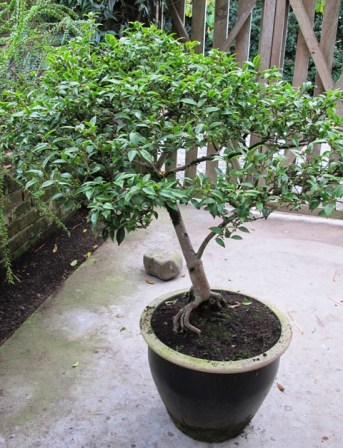
We have had Camellia minutiflora in a succession of containers for about twelve years. We have a miniature “Itty Bit” which has been featured in a container for at least twenty years. On the other hand, it is clear that “Spring Festival” is going to be too large after only three years.

Rules of thumb are not to drown a small plant in an over large pot, to ensure that the pot has plenty of drainage holes at the base and to use a good quality potting mix with slow release fertiliser. Feed by top dressing after the first year and repot with fresh mix after two years.

WHITE SASANQUA CAMELLIAS

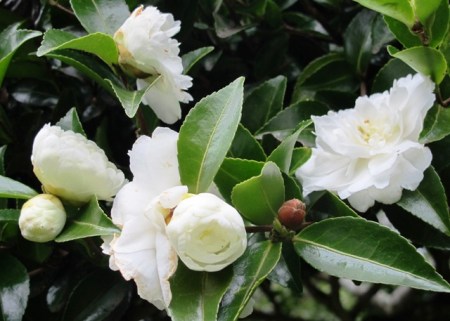
There is a range of sasanqua camellias in white. ‘Silver Dollar’ has a long flowering season and is an excellent option for a more compact hedge.

There is a range of sasanqua camellias in white. ‘Silver Dollar’ has a long flowering season and is an excellent option for a more compact hedge.

While ‘Setsugekka’ is the best known white sasanqua in this country, it is not the only one. For perfection in a sasanqua bloom, it is hard to go past ‘Early Pearly’ with its formality in that shape that resembles a water lily. It is unusual to see a formal flower in sasanquas. ‘Silver Dollar’ is a smaller, bushier growing white with a mass of pompom flowers over a long season. It makes an ideal lower hedge option, able to be clipped to about a metre high. ‘Mine No Yuki’ is a slow growing variety, though will ultimately get large if it is not clipped (ours is at least 3 metres high and spans 4 metres wide, though that is after about 50 years). ‘Weeping Maiden’ grows rapidly to give a quick result with its arching growth and masses of large, single white blooms with golden stamens.

CAMELLIA PETAL BLIGHT

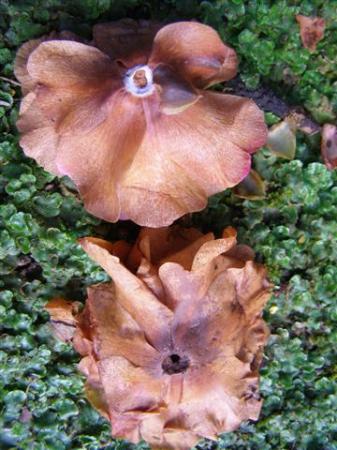
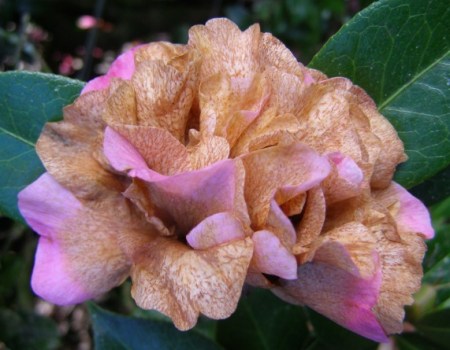
Camellia petal blight shows in the top flower as a distinctive white ring whereas the lower flower has been spoiled by botrytis.

Camellia petal blight shows in the top flower as a distinctive white ring whereas the lower flower has been spoiled by botrytis.

If you have been thinking that your mid season camellia display is not what it used to be, you will be right. Camellia petal blight has taken firm hold and cut the display to a fraction of what it used to be.

We have always had botrytis in New Zealand. It is the fungus that turns camellia flowers dark brown and mushy, especially in long periods of damp weather. Petal blight is different. It turns the flowers to a paler coloured mush, spreading through each bloom rapidly. A brown mark one day can cover most of the flower the following day. If you turn the affected bloom over and remove the calyx (the small cap holding the petals together at the end of the stem), you will see a white fluffy ring, indicating camellia petal blight. If it is dark and greyish, it is botrytis. Unfortunately, blighted flowers often hang on the bush rather than falling cleanly. Petal blight is a great deal more rampant than botrytis.

There is no cure and it will take many years before we see resistant varieties on the market. It does not usually take hold before late June or July, so the early flowering camellias can get through with their mass display unaffected.

The ugly face of camellia petal blight which affects mid and later season blooms.

The ugly face of camellia petal blight which affects mid and later season blooms.

Camellia species can be grown from seed. There will be some seedling variation in the plants but they are usually close enough on appearance for hedging purposes. These are last year’s red seed pods on C. microphylla.

Camellia species can be grown from seed. There will be some seedling variation in the plants but they are usually close enough on appearance for hedging purposes. These are last year’s red seed pods on C. microphylla.

COMPACT CAMELLIA HEDGING

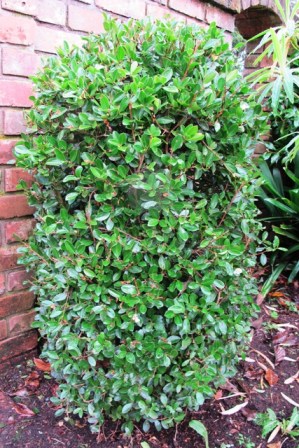
Camellia species brevistyla and microphylla offer an option as buxus hedging replacement and can be grown from seed. This plant is C. brevistyla.

Camellia species brevistyla and microphylla offer an option as buxus hedging replacement and can be grown from seed. This plant is C. brevistyla.

Simply the best camellias we have found as a potential replacement for buxus hedging are C. brevistyla and C. microphylla. These two species are very hard to tell apart and must be closely related. Their leaves are a little larger than buxus but they clip very tidily and are a good dark green. Both species have pure white single flowers very early in the season. C. brevistyla is a little slower growing and smaller but its flowering is over quickly. We have built up C. microphylla as replacement hedging for our own garden.

These species may be hard to source but if you can find a parent plant, they can be raised easily from seed. Both set seed freely. Ask at your botanic gardens. Both species were sold in the past by Camellia Haven in Papakura.

There is nothing special about the individual blooms on Camellia sasanqua ‘Showgirl’, but at the time when it flowers, there is nothing to rival its showiness.

There is nothing special about the individual blooms on Camellia sasanqua ‘Showgirl’, but at the time when it flowers, there is nothing to rival its showiness.

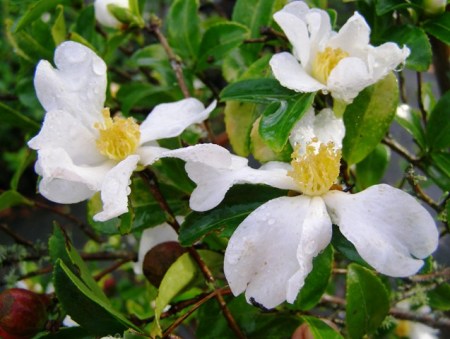
The dainty flowers on both C. microphylla and C. brevistyla are almost identical but last longer on the former, seen here.

The dainty flowers on both C. microphylla and C. brevistyla are almost identical but last longer on the former, seen here.

C. microphylla has been kept clipped and shaped in containers for at least 12 years.

C. microphylla has been kept clipped and shaped in containers for at least 12 years.

The garden identity crisis

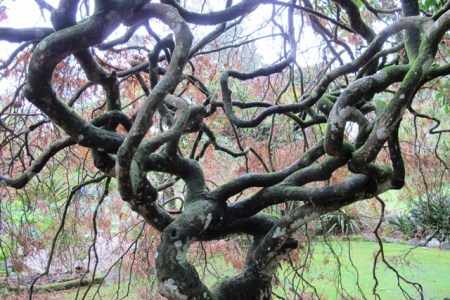
Finding the shapes within the plants, in this case a maple

Finding the shapes within the plants, in this case a maple

“People don’t know what to do with the garden when they get to year fifteen,” commented the retired gardener who was visiting us last week. “You need to do quite big things.” I grabbed a pen and paper to record his words because he is so right. We know exactly what to do with young gardens in this country, but too few know what to do as they mature and change.

The general age of crisis was set at fifteen years but that is a reflection of the rapid growth rates we have. It could be twice that in colder climates. The point is that at some stage, you wake up to the realisation that your garden is not how it used to be. The trees that you planted too closely in order to get a quick effect have now grown too large for their allotted space. Similarly, shrubs have outgrown their area and you are either madly hacking them back every year or you have stopped walking round the house on the path and have been forced sideways to avoid the dripping foliage. Your hedges seem to have grown wider than you intended and nearby plants appear to be suffering. The bulbs aren’t flowering as well as they used to. In fact a fair number seem to have disappeared altogether, as have the choicest perennials. It is the thugs that are left and even they are struggling in some areas which are now heavily shaded. The clumping perennials have become enmeshed together with bald areas showing and weeds popping up throughout which you can’t spray or pull out because they are so intertwined. The garden looks tired, lacking the freshness you remember from earlier days.

You are not alone. It is a natural part of the ageing process of the garden. In this country, most people leave the problem behind by selling up and moving on and the new owner is likely to cut it down and start again. The problem comes if you don’t want to move. That is when you need to do some quite big things.

Most people try and regain the earlier freshness and juvenility in the garden because they can’t see beyond that option. It used to be so pretty, you know. So poor plants are either slaughtered and removed, to be replaced by younger, smaller models. Or they are brutally cut off in their prime and reduced to ground level in order to “come again”. I have seen it done repeatedly.

The alternative is to learn a whole new set of skills. These are not skills that you often see demonstrated in this country because we still lack a heritage of long term gardens. First off, do not make the mistake of thinking that your garden is mature at 15 years. It isn’t. It is really just a gangly adolescent relying on your guidance to take it through to adulthood. On more than one occasion, we have had garden owners gushing that it is just wonderful having mature trees when there is not one single specimen that is older than 20 years. Fast growth we may have, but maturity in trees takes somewhat longer than that.

Leaving tree stumps to rot out in their own time is not without risk though many of us do it.

Leaving tree stumps to rot out in their own time is not without risk though many of us do it.

But it is a common fault to overplant gardens, both large and small, in the early days. At some point, you need to reassess and work out which are the key long term plants worth saving and which are expendable. You may need advice. The ones that are staying are the foundations to take the garden through to maturity. Be ruthless about the expendable plants in between. If you just cut woody plants off at ground level and leave them to rot out over time, you run the risk of opening up the whole area to armillaria (honey fungus) which starts in decaying wood but can then romp through killing healthy plants as well. Best practice is to get rid of the stump and many of the roots, especially willows, but that does not come without money or effort. Convenience and economy means that we often just take our chances.

An example of lifting and limbing over many years.

An example of lifting and limbing over many years.

Then lift and limb and let light back in. Plants need light to grow, even in shade gardens or woodland. Make tree loppers and a pruning saw your friend. But you don’t have to have the light beaming straight down from above. If you lift the lower branches and thin the plants, you allow light in sideways. It also creates views through and brings welcome changes of light and shade.

Now is the time to develop skills in shaping plants. This is not beating them into submission. It is negotiating to make the most of the plant’s best features by highlighting its good form and shape. By now you are working in an environment which has height as well as width and depth. It is a lot more fun than weeding – and on the bright side, weeds are fewer in shaded gardens.

It is just a different way of gardening and these are but the first steps. If you are floundering a little, take heart. It takes time to learn new skills (and some never do). But if you have a garden which is now in that mid adolescent phase, take a hard look because you will need to do something quite major with it sooner or later.

First published in the Waikato Times and reproduced here with their permission.

The sweet smell of daphne in winter

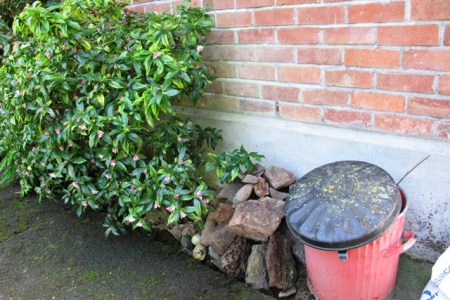
Daphne odora - happy around the back by the rubbish tin.

Daphne odora – happy around the back by the rubbish tin.

We have never forgotten the nursery colleagues who told us that their range included lemon trees and daphnes “because you can sell a lemon tree to pretty much every household and everybody has to replace their daphne every five years or so”. I had never thought about it before, but they were right. Most New Zealand gardens have at least one of each and daphnes do not rank up there as long lived plants. But we wouldn’t be without them in the winter garden.

While there are upwards of 60 different species in the wild, in terms of garden plants in this country, generally you have a choice of odora, odora or odora with occasional breaks for D. bholua and if you are really lucky, you might spot the little ground hugging D. cneorum (with its silent c), the dainty D. x burkwoodii, or the remarkable blue D. genkwa. You may buy your odora by many other names, but if it has typical daphne foliage and flowers, it is just an odora selection. The flowers are generally small and a mix of lilac pink and white with a range of subtle variations. Some are darker, pinker or even pure white. I bought one that was reputedly apricot but that was wishful thinking with the description.

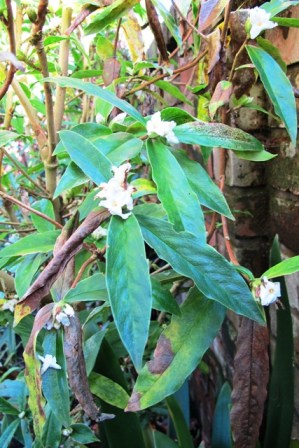
The good and the bad of the Himalayan Daphne bholua

The good and the bad of the Himalayan Daphne bholua

We have a bit of a love-hate relationship with the Himalayan Daphne bholua. In our opinion it has the best and strongest fragrance of all and it has a long flowering season. Its upright habit of growth means it fits into borders and beside paths well. That is the good side. On the down side it suckers (spreads underground), seeds much too freely and is dispersed by birds so has weed potential. It also becomes very scruffy with time. It is semi deciduous which means it is neither one thing nor the other – it drops some leaves and those that hang on often look messy. The form is ugly and it can get quite large after a few years if you don’t stay on top of the pruning. So it is not a plant of great beauty at all, but its scent is superb. Hide it at the back of the border in behind more attractive plants so that it can wow you with its fragrance.

The blue flowered Daphne genkwa from China is remarkable. For most of the year it is just an anonymous willowy shrub. It is fully deciduous, so drops all its leaves in autumn. Then in late August, all those whippy growths burst into lilac blue flowers down their length. It is a wondrous sight. Some claim a light perfume, but I think that is imagination. It is just one of the loveliest shrubs you will ever see in flower. Alas, it is difficult to propagate (it is generally done from root cuttings) and can be difficult to get established so it is not common. However, it is still produced commercially and a good garden centre may be able to order it in for you. Plant it where it has good light, good drainage and plenty of space so it won’t need trimming. I killed a well established plant by cutting it back and I wasn’t that brutal. I loved it so much I bought three replacements and these will be planted with plenty of space so they should never need pruning.

Deciduous, lacking scent and blue lilac but it is probably the most spectacular - Daphne genkwa

Deciduous, lacking scent and blue lilac but it is probably the most spectacular – Daphne genkwa

Growing tips: daphnes are not suitable plants to grow in containers. Mostly they look unhealthy and straggly because it is hard to get the potting mix right. It is much easier to keep them lush and healthy planted in the garden, even more so if you pick a position out of full sun. The odoras and bholua are often a good choice for the more shaded house borders. While they need good light levels, they are quite happy with little or no direct sun.

Daphnes prefer rich loamy conditions, neither acid nor alkaline. They won’t love you if you put them in waterlogged conditions either so look for spots with good drainage which never get bone dry either. Keep them mulched with compost or leaf litter.

While Daphne bholua will accept hard pruning, most other types won’t. You are better to take a bit more care and think more about pinching out new growth to encourage bushiness and shaping with secateurs, rather than hacking bark hard all over.

Because they are winter flowering, finding locations near to where you walk in winter means you will get more benefit. This is one of the few plants with such strong scent that you will pause and look for the source so plant it where that can happen. Only D. genkwa is spectacular in flower, so they are wasted in more removed locations. Round the back of house near the rubbish bin is a handy location for us though we have quite a few other plants all over the place.

First published in the Waikato Times and reprinted here with their permission.

In praise of ornamental oxalis (or wood sorrel, if you prefer)

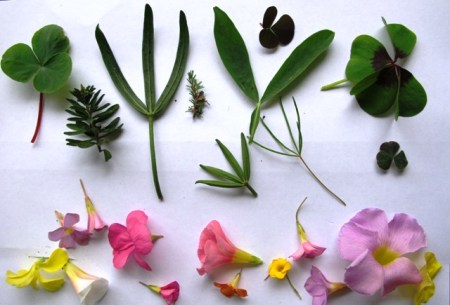
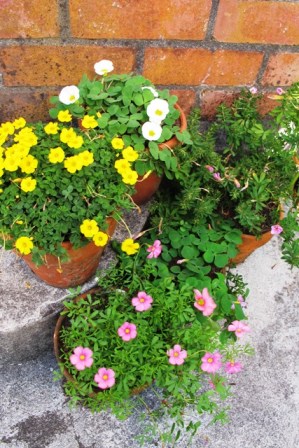
Oxalis show considerable variation in leaf form (and in flower colour)

Oxalis show considerable variation in leaf form (and in flower colour)

Most people shudder at the mere mention of oxalis. The bad reputation of a few has tarnished the entire population. We would not be without the cheerful sight of them blooming from early autumn through winter, but the most common reaction from others is complete dismissal. I have even resorted to their colloquial name overseas – wood sorrel. It sounds so much prettier and more acceptable than oxalis.

Over the years, we have gathered up around 30 different ornamental varieties but these are a mere drop in the bucket. The oxalis family is huge. In the wild, the number of different species is into the late hundreds. That is not to say that they are all of great merit. Nor are they all bulbs. Equally, not all are invasive.

O. deppei "Iron Cross" grows and flowers in the opposite seasons to most ornamental varieties

O. deppei "Iron Cross" grows and flowers in the opposite seasons to most ornamental varieties

Most oxalis are native to either South Africa or South America, though it is the former that gives us the majority of varieties which have garden merit. Most are triggered into growth by late summer rain, so they come into flower around this time of year. The two notable exceptions we have in our collection are both from South America. Oxalis deppei “Iron Cross” (named for the markings on its leaves) is from Mexico and going dormant now, to return to growth at the start of November. O. triangularis, with its triangle shaped leaves in deep burgundy, is Brazilian and also flowers in summer. I bought this one at a car boot sale where I commented that it was an oxalis that I did not have. “No,” protested the vendors. “It is not an oxalis. It is a triangularus.” I didn’t argue.

Some of these oxalis are perfectly safe in the garden. I can vouch for this after decades of growing them in the rockery where they have never threatened to become a weed. Others are downright dangerous. Turn your back and they will invade at alarming speed. Such wayward habits don’t mean you have to shun them. Keep them in pots. You can either plunge the pot into the garden (which reduces the need to water it), or have a collection on a sunny doorstep. Oxalis only open their flowers in the sunshine. When they have ceased being attractive, you can move the pots out of sight for the rest of the year. We have not had problems with them setting seed so as long as the bulbs are confined, they rarely escape.

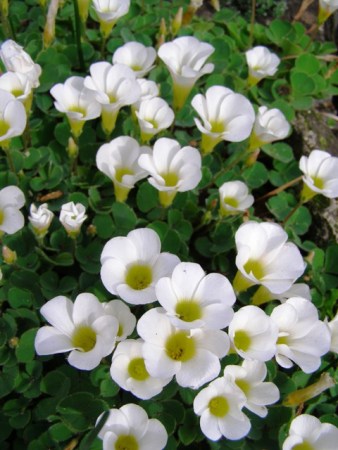
My all time favourite - O. purpurea alba

My all time favourite - O. purpurea alba

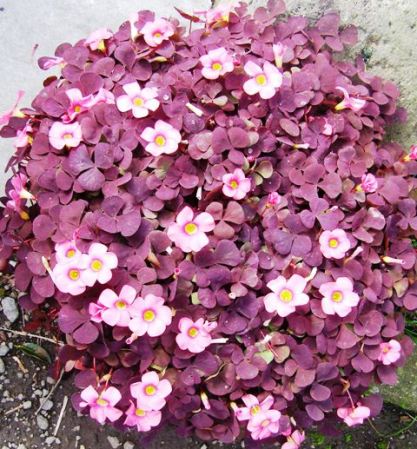
Same species but different form and very different behaviour. Keep O. purpurea "Nigrescens" confined to a pot

Same species but different form and very different behaviour. Keep O. purpurea "Nigrescens" confined to a pot

My all time favourite is the pristine white O. purpurea alba. It has an exceptionally long flowering season and is extremely well behaved in the garden. A mat of this plant opening up its large blooms to the sunshine is a delightful sight. Each flower has a golden eye. Purpurea is a variable species. The green form (same clover-like leaves but with large pink flowers) also has an excellent length of flowering but I haven’t had it long enough to know whether it is garden safe or not so I still keep it in pots. The reason for my caution is that O. purpurea ‘Nigrescens’, highly desirable for its deep burgundy foliage and big pink flowers, is dangerous. I have seen it invade an Auckland garden on heavy clay. It was as bad as the weedy varieties, just more ornamental. Keep it confined at all times.

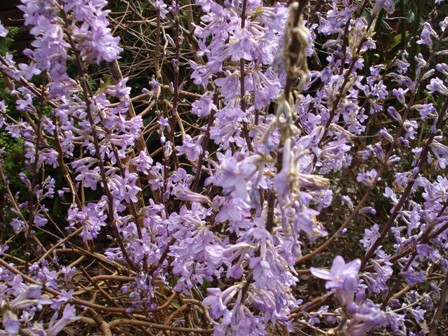
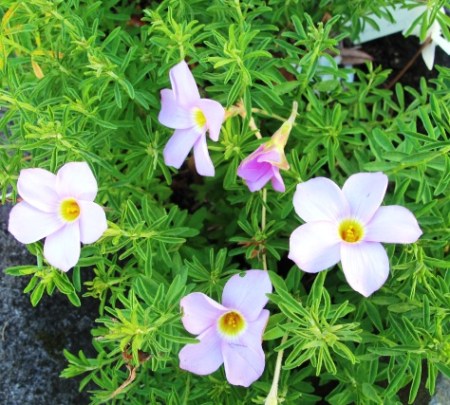
My second place favourite is the lavender O. hirta. We also have a bright pink form of it, but the pastel lavender is prettier. This has very different foliage – trailing clusters of leaves. The range in leaf form is surprising. O. fabaefolia is often called the rabbits’ ear oxalis because its leaves look like pointed rabbits’ ears. It has a big yellow flower but a very short season.

O. luteola - an excellent garden variety

O. luteola - an excellent garden variety

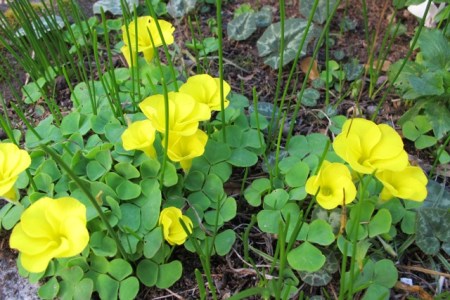
Oxalis luteola, with its neat mat of clover-like leaves and masses of sunshine yellow blooms over many weeks, is another tried and true garden plant here. It has never been a problem in the rockery and gently grows amid other plants without ranging far afield. O. lobata is like a miniature form of O. luteola and equally garden safe.

Oxalis flower in colours from white, through the full gamut of pinks and lavenders to the crimson red of O. braziliensis, yellow, and apricot-orange tones. The well known O. versicolour has a pointed bud which is candy striped pink and white, like a traditional barber’s pole, though in the sun the flowers open to white. It is the only one I know which is showier when it is not open.
Oxalis (or wood sorrel, if that sounds better) are easy and fun to grow for a bit of cheer as the autumn draws in.

We keep O. eckloniana in a pot plunged into the garden

We keep O. eckloniana in a pot plunged into the garden

Growing oxalis in containers:

If in doubt, keep oxalis confined to pots in sunny positions.
• Pots can be plunged in the garden to reduce watering.
• Repot every year or two.
• Empty the pot onto newspaper and choose only the best looking bulbs. You will see which varieties have dangerous tendencies – either masses of tiny bulbs or long runners with too many bulbils attached. Throw the rest out with household rubbish to prevent any escaping.
• Free draining potting mix is recommended.
• If you have used a commercial potting mix, it will have fertiliser already added. If you are not repotting every year, the time to feed is as the bulbs are coming in to growth.
• Wide, shallow pots give the best display.
• Keep pots dry when bulbs are dormant to stop them from rotting out.

Perfect for sunny doorsteps

Perfect for sunny doorsteps

Dealing to the weedy ones:

There are no easy answers when it comes to getting rid of the weedy oxalis in gardens and lawns. O. corniculata is a creeping plant which doesn’t have a bulb so it can be weeded out. It spreads rapidly from seed and matures quickly so it pays to be vigilant and to dispose of plants in the household rubbish to avoid dispersing the seed. It can be green or red-brown in leaf and has tiny yellow flowers.
The pink or yellow flowered weedy bulb forms are more problematic, especially if they are growing through other plants. Glyphosate will kill them eventually, if you keep applying it every time you see leaves reappearing. I have never tried Death to Oxalis but it appears to need frequent reapplications as well. If you can lift all the other plants out of the garden border, you can sieve the soil or even replace it all. If you cover the area in black plastic and let it bake throughout a hot summer, it will sterilise the soil to some extent. Failing that, you just have to be persistent and vigilant, getting rid of every little bit you see.
First published in the Weekend Gardener and reproduced here with their permission.
O.hirta lavender - second place favourite

O.hirta lavender - second place favourite


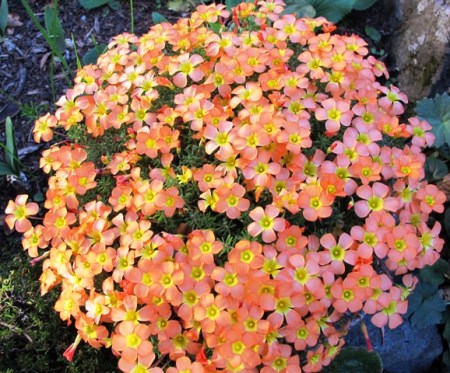
O.massoniana - massed in a wide, shallow container in full sun

O.massoniana - massed in a wide, shallow container in full sun


O. polyphylla shows very different foliage

O. polyphylla shows very different foliage


O. bowiei - bold and showy very early in the season

O. bowiei - bold and showy very early in the season