Category Archives: Abbie’s column

Abbie’s newspaper columns

Garden design – a starting point

First published in the Waikato Times and reproduced here with their permission.
A sense of arrival - but keep it in proportion to the size of the property and the house

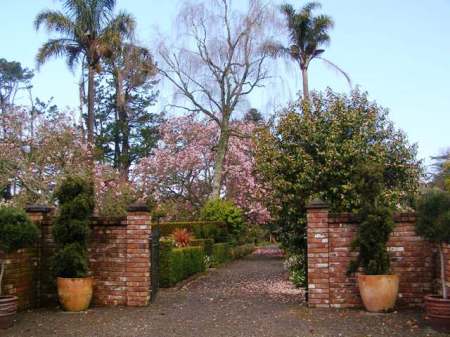
A sense of arrival - but keep it in proportion to the size of the property and the house

Garden design is certainly all the rage these days, but if you can’t afford or don’t want to pay a professional designer, where do you start? Without for one minute pretending that a brief column can do justice to design, I would suggest three principles as a starting point.

  1. A sense of arrival.
  2. A sense of journey.
  3. An underpinning principle of logic (with some common sense).

Stand back and look critically at your property from the point of entry or roadside. If you look at good gardens or handsome properties, most will convey a sense of arrival. You know you are in the right place and you can see clearly where you are to enter the property and which direction to follow. This is usually achieved by way of hard landscaping or structures – a fence or hedge (which rates as a green structure), maybe gateways, a driveway and paths. But those arrival features should be in keeping and appropriate to both your house and to the scale of the property. If your lot in life is a tiny, town section with in-fill housing, putting up an imposing gateway and fencing is more likely to make your place look like a prison. And if you own a little wooden cottage, tall brick or plastered walls will just look incongruous. So keep the scale appropriate. Materials used should relate to the house and outbuildings, though if yours is a corrugated iron garage, a hedge may be more pleasing.

Set about softening the entrance with plants. Whether you use formal, matched pairs, an avenue or a froth of pretty flowers is entirely a matter of taste. It is the structures and paving that give form, but it is the plantings which make it appear welcoming and give the interesting detail.

The promise of a journey is possible even on very small sites like in the town garden of Thorveton

The promise of a journey is possible even on very small sites like in the town garden of Thorveton

Creating a sense of anticipation, maybe even mystery, is dependent on making sure that the whole garden is not visible at first glance. It sounds simple, but if you walk along any city street, you will see many gardens where all is revealed from the frontage. There is no invitation to explore or sense of journey. What you see is what you get.

The larger your garden, the easier it is to achieve that promise of journey, to hold back discoveries until you venture further. You may think it is impossible to do on a small, flat section. Not so. It takes a bit more skill and thought, but it can be achieved with a mix of strategically placed plantings and maybe some structures.

But it is the underpinning principle of logical sense which we always keep at the forefront of our minds whenever we plan developments in our garden. Too often have we seen design mistakes where people have dropped in a feature because they feel they need a focal point without thinking about whether it has logic to its selection and placement, beyond being a contrived focal point. The most common and reasonably expensive mistake is summerhouses and gazebos. These structures are all about entertaining and socialising which involves food and drink. If you site it more than 20 metres from your kitchen, odds on you will rarely use it. It just becomes a redundant structure with little purpose. Unless of course you have servants to do the fetching and carrying.

The same goes for garden seats though you may carry your coffee mug 30 metres in this case. A seat is for sitting upon – make sure seating is located where you want to sit, not just to look good from afar.

One pet dislike here is contrived water features where the use of a pump has cascading water flowing from a dry hill or mound, magnified by the sound of the pump and the installation of a fake waterfall. Water does not flow from dry mounds and the installation of such a feature is more often unsubtle fakery which lacks any logic. It is a lot of trouble to go to when you are probably better off with a simple pond, whether it be formal (imposed upon the landscape) or natural in appearance. But if you are going for a natural looking pond, logic says it should be at a lower point of your property.

If you have a large garden, it makes sense to have your intensively gardened and detailed areas closest to the house and living areas. As you move further away, a more natural, loosely maintained style is entirely appropriate. It can look very odd to drop in a formal or highly structured feature in the outer reaches of the property. And common sense says you will never maintain it as tightly as you should, simply because you don’t pass it every day.

How you choose to garden within the design framework is entirely up to personal taste, as is the choice on going with straight lines to give formality or looser curves to evoke a more romantic naturalism. But essentially, good design will mean your garden is an extension of your living space and not just a matter of keeping up appearances.


Simple Ideas to Import (from Spain and Portugal)

First published in the Weekend Gardener and reproduced here with their permission.


Tiles
Both Spain and Portugal have long histories of bright tiling which can look garish and out of place in different cultural and geographic contexts. However, the more restrained use of tiling, seen here at the Royal Palace in Seville, may fit the bill in more humble abodes in New Zealand. Setting a small tile into a predominantly brick paved area reduces the problems of a slippery surface when wet. Clay bricks (which grow moss too readily in many parts of this country) could be replaced with concrete for a safer walking surface.

Using bright tiles on the risers of the steps with very plain treads adds detail without being too dominant.

Mosaics

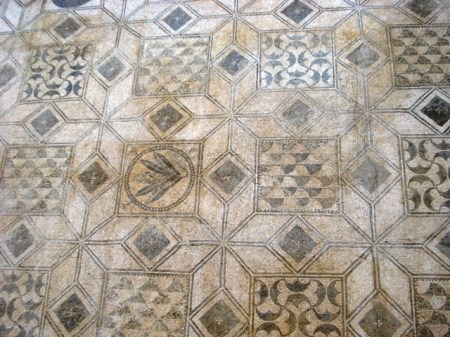
Personally, I am not a huge fan of the modern fashion for colourful and often rough mosaics and I suspect it may go down in history as an aberration in good taste on a par with macramé. The mosaics of antiquity in Spain were wonderfully detailed and executed with precision and go to show that good design and craftsmanship are timeless.

Mixed modern paving

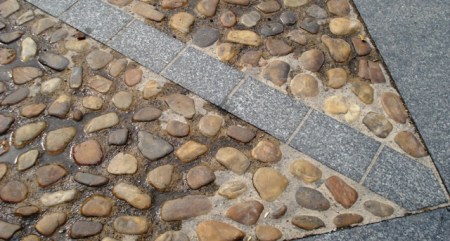
We can certainly learn from the detail of modern paving, these examples are from Madrid. Bold, geometric designs, variations in texture and a subtle mix of muted colour can make an expanse of paved or sealed area a great deal more interesting. A mix of different sized pavers, flint, and flattish pebbles of a fairly small grade set in concrete make a pleasing surface.

Mixed paving and tiling

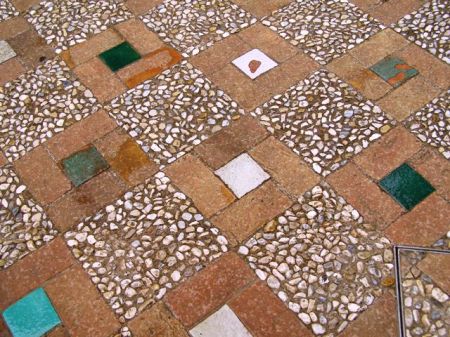
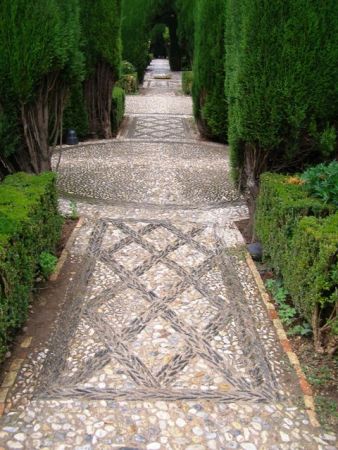
These two examples are from the famous Alhambra in Granada and may appeal to those who are looking for more detail in their paving. The small coloured tiles set in the brick squares are probably very old but recycled in a much more modern construction. The long view down the avenue is also a recent reconstruction and the detail is used to accentuate design features. These details have been picked out in black pebbles placed on their side which gives a relatively uneven surface which must be impossible to sweep. A blower vac would be needed to keep this area free of garden litter and debris.

Blue tree
Clearly one tree died in this avenue in Queluz, Portugal but that did not deter the local authorities from turning it into an eyecatching feature. It was painted well. Twiggy growth and loose bark must have been removed and it was given more than one coat of paint. Choosing a colour other than bright blue might make it a more subtle option for a home garden. A muted rusty red would be less visually dominant, while a cream could light up a dark area.

Bring back plants! Please.

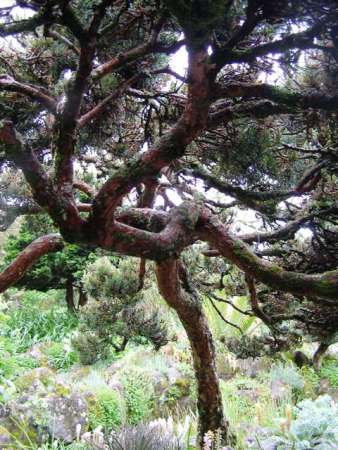
Even after 60 years, Pinus sylvestris Beauvronensis keeps getting better and maturing well, even though it remains under 2 metres tall

Even after 60 years, Pinus sylvestris Beauvronensis keeps getting better and maturing well, even though it remains under 2 metres tall

Until recent times, maybe only a decade or so, New Zealand gardens used to be all about plants. Sophisticated design concepts were rarely seen and terms like spatial relationships referred to Cape Canaveral. These days garden design is cock of the roost and plants are very much a secondary consideration for many people.

Good design is ageless and not to be derided in any way, but I mourn the devaluing of the role of plants in a garden. Frankly, you can only get so far with clipped hedging (usually buxus, sometimes lonicera or teucrium), renga renga lilies, mondo grass (be it black or green), catmint groundcover (nepeta) and white standard roses (be they Iceberg or Margaret Merrill). Maybe kumquat or mandarin trees in planter boxes or large containers. You can achieve a perfectly nice, tidy garden using those run of the mill plants which are in everybody else’s garden as well, but it is never going to be anything special, no matter how good the design framework.

To lift a garden above the ordinary, good design needs to be complemented by interesting plants combined in interesting ways. Mind you, I would say that. I have always believed that mass plantings of a single variety are best in public parks and on traffic islands. I find it exceedingly dull in home gardens. It takes more gardening skill to marry together a whole range of different plants but that is the fun part of gardening.

Start with trees. You can not magic up instant trees. You can buy advanced grade specimens but they are still going to be juvenile and take years to reach maturity. There is simply no shortcut with trees so the sooner you get them planted in the right positions, the sooner you will see some results. And make at least some of those trees good long term specimens. Some trees just get better with age, others look better in youth and get scruffy and past it too soon. Learn to tell the difference so when you cut out the short term filler trees, you are left with some good specimens. Pretty trees such as many flowering cherries, Albizia julibrissin, the blue flowered paulownias and some of the pillar conifers are great for quick impact but rarely age gracefully. Really good trees will take future generations into the next century so they need to be chosen carefully for the right position and given time to grow. They don’t have to be forest giants but you may need to do some research to make good choices. Not a day goes by here when we don’t mentally thank Mark’s great grandfather who left us a legacy of fine trees planted in 1880, and his father who added to it with many rare specimens in the 1950s. Trees give stature and backbone to a garden, be it large or small.

Search out treasures. If you have ever been on a garden safari where you visit many gardens in quick succession, you may have noticed how they can start to look very similar and meld in the memory because they use the same palette of plants. With an ever diminishing range of plants being offered for sale in this country, this scenario is going to get worse, not better. It clearly doesn’t matter if you don’t mind having a garden that looks the same as everybody else’s, but as a nation we tend to favour an element of uniqueness. We don’t want to live in a street where every house is identical, even to the floor plan, but we are leaning in that direction when it comes to our gardens. Good gardeners regard the sourcing of rare or unusual plants as being like a treasure hunt.

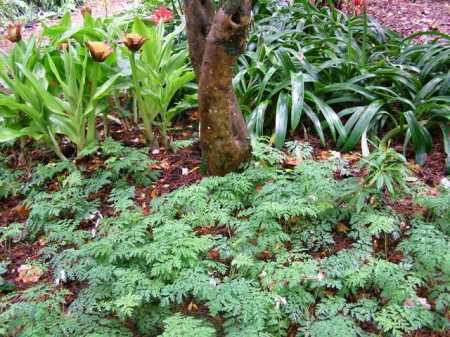
It is plant combinations, mixing and matching, that gives interesting detail to a garden

It is plant combinations, mixing and matching, that gives interesting detail to a garden

Experiment with plant combinations. While it is easy and quick to plant a swathe of the same plant, putting together a mix of different foliages and flowers that please the eye is more satisfying. Done well, there is an overall harmony which is pleasing at first glance while the detail invites you to linger and look more closely. Done badly, of course, it looks a hodge podge but you can always learn from that. If you are mass planting using only one or two different varieties, there is no reason to linger and look – you are just after the first glance impression.

In brief, the two rules of thumb in creating good combinations are to think of layering so that not everything is the same height and to get contrasts in foliage. Grasses are never going to look dramatic planted alongside other grasses but combined with a big leafed plant like a canna lily, a Chatham Island forget-me-not or pachystegia, they will have a great deal more zing. Plant combinations are about more than trendy colour toning.

There are a fair number of good designers around whom you can pay to give you a well planned garden in terms of the use of space but good designers who are passionate and knowledgeable about plants are as scarce as hens’ teeth. Good gardens are usually owned by good gardeners who know a great deal about plants themselves. And it is the plants which give the dynamic aspect to a garden and so bring life to the space.

The latest take on living sustainably

First published in the Waikato Times and reproduced here with their permission.

Ah, the romance of picture book chookies in your back yard

Ah, the romance of picture book chookies in your back yard

The Good Life has come to Havelock North, but it has been renamed Green Urban Living and it is all absolutely simple and easy to manage, requiring very little time. That is according to author, Janet Luke, who has written a book of encyclopaedic spread (but not encyclopaedic detail) based on her own personal experience. The book is backed up by 32 You Tube clips and many website references.

Topics covered include setting up a green urban garden, compost, sustainable water use, growing vegetables, fruit, herbs, flowers (an eclectic mix ranging from paeonies to sunflowers to globe thistles), keeping chickens, beekeeping, worm farms, gardening with kids – all peppered with Top Tips, recipes, and hints. Plus photos – all in 172 pages. It is a very busy book.

On the positive side, the author is passionate about her topic and comes to it from practical and personal experience. If you are into the new age, trendy urban living which wants to be green but is not too purist, then you may well find the enthusiasm and simplified advice in this book is a wonderful motivator. I looked at some of the You Tube clips and there is an engaging naivety and brevity about them. Janet Luke has worked extremely hard to put together a comprehensive but user-friendly package.

If you are a crusty, hardened old cynic who has been through all this (going green is hardly a new concept – many of us chose that way back in the mists of the post Woodstock era of the 1970s), then the newfound zeal, sweeping statements and sometimes very woolly thinking of the latest converts can seem a little like reinventing the wheel.

Green? Hmm. I don’t see buying grow bags filled with potting mix as being green. Nor do I think wheeling your barrow around your neighbourhood as soon as you hear a lawnmower start up is particularly green. For starters, you have no idea what chemicals your neighbours may have used on their lawns (some lawn clippings are too toxic to use in a compost heap). Added to that, you are taking away their organic material to your site – which hardly follows permaculture principles.

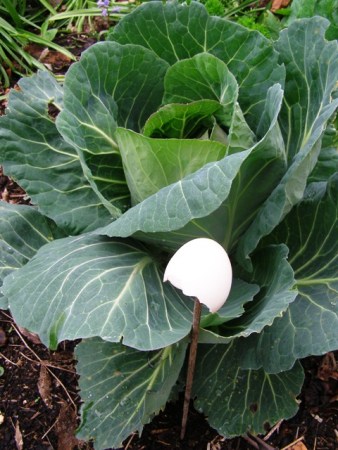
Do we really believe that cabbage whites have large enough brains to be duped?

Do we really believe that cabbage whites have large enough brains to be duped?

We are deeply suspicious of the claim that white butterflies are territorial. The current received wisdom is that you can deter incoming cabbage whites by putting half eggshells on sticks amongst your brassicas, fooling them into thinking that another cabbage white is already in residence. This is not the first time I have seen this claim so I did a quick Google search to see if I could find a credible source to confirm it. The key word here is credible. I failed. We are storing our eggshells and when the first cabbage whites of the season show up here, Mark will be out testing this theory. Having observed clouds of cabbage whites on crops such as swedes, we lean to the view that this piece of advice is more wishful thinking than actual fact.

But it is not doubt that we feel regarding the claims that commercial corn is mostly genetically modified and controlled by the terminator gene so it makes sense to keep to heirloom varieties. The author clearly has not got to grips with the differences between F1 hybrids, line breeding, selection, genetic modification and the terminator gene. And seed companies in NZ like Kings and Yates might be a little annoyed to see the suggestion that their product is GM. Internationally, many commercial crops of maize have undergone genetic modification (in which case, it can equally be argued that the dreaded terminator gene is a good thing because it will stop the escape of some GM material into the wider environment), but what is sold in this country, certainly for home gardeners, is not GM. It is either the result of controlled crosses (which is an F1 hybrid) or of line breeding (selecting out the best performing cobs and continuing with them). That is what has brought us the new generation, sweet and tender corn that we all expect now. By all means go back to the heirloom varieties if you wish. Just don’t expect to be eating the tender and super sweet product because those old varieties are tougher and starchier and more akin to maize. Sweetcorn has improved in taste and texture in recent times, which cannot be said of all vegetables.

The retired beekeeper we had staying last week was critical of the chapter on beekeeping. He was surprised to find that top-bar hives, as promoted by the author with near religious zeal, are even legal in this country and he pointed out numerous reasons why they are inferior to the Langstroth hive. Of course Langstroths don’t look cute. He also felt that, given the author’s brief experience of beekeeping, she has been very lucky so far and she makes it look too easy altogether. I just thought that the advice that you could have your beehive on an apartment balcony or the shed roof came more from the Do As I Say school of advice, rather than the Do As I Do school. How on earth are you going to monitor and look after your hive if it is on a shed roof? That said, it is interspersed with some sound advice with regard to legal requirements and she recommends you join a local beekeeping club. I could not understand, either, why apartment dwellers would want to have a worm farm on their balcony. Move to ground level, I say.

It is great to see interest in topics related to sustainability, reducing one’s carbon footprint and organics. I would just prefer to see a little more rigour along with the joyous fervour.

Green Urban Living by Janet Luke. (New Holland; ISBN:978 1 86966 322 3).

Tikorangi Diary Thursday 13 October, 2011

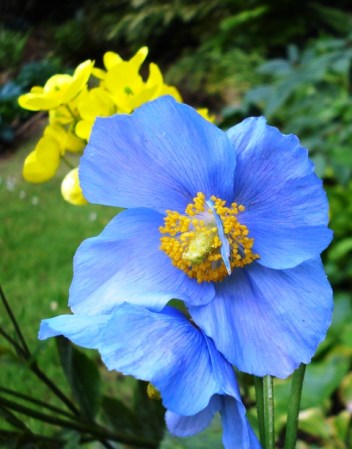
Mark's meconopsis available again

Mark's meconopsis available again

As we hurtle into spring, the pressure is on to get the garden all groomed up and ready for our annual garden festival at the end of the month. This means we are around most of the time so plant sales are not restricted to just Fridays and Saturdays. If you come in and can’t find anyone, please sound your car horn. We have Eftpos available (but not credit cards).

Half price on most magnolias (while stocks last). This includes Vulcan, Burgundy Star and Black Tulip but not Felix Jury (which is in short supply). It is nearing the end of the season – the plants would be happier in your garden than in our nursery. There are about a dozen Magnolia grandiflora “Little Gem” left at the bargain basement price of $12 (but the Camellia Jury’s Yellow have gone). Magnolias are listed under Plant Sales on our website but not with sale prices – halve them. This offer includes good plants of Fairy Magnolia Blush – if you have been planning a hedge of them, now is your chance to do it at a very reasonable price.

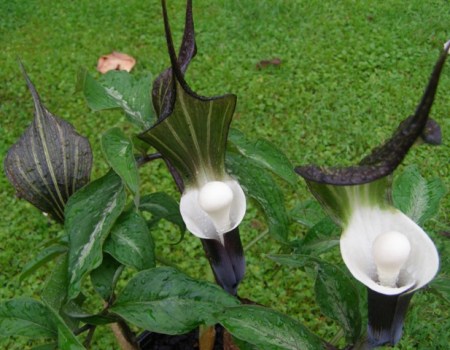
The very curious Arisaema sikkokianum

The very curious Arisaema sikkokianum

In the treasures line, we have some of Mark’s meconopis for sale – blue Himalayan poppies. These plants are already in their second year and show more perennial tendencies than usual in our climate (though not guaranteed perennial – it would pay to gather the seed this year as well). And we have good plants of Arisaema speciosum (great for woodland carpets) and the curious, showy but more difficult Arisaema sikkokianum.

No mail order, sorry. Personal customers only.