

Judge not a garden upon the daisies in its lawn
There is nothing like preparing a presentation to focus the thinking. So most of our discussions here recently have been clarifying thoughts on what makes a good garden. The ever-so-brief outline is that good gardening is a combination of good design, good plants and plantsmanship over time, maintenance and sustainability all served up with more than a dash of panache, style or flair. If you want the full details along with all the accompanying examples, you will just have to come to the Waikato Home and Garden Show today at 12.30 or tomorrow at 2.30 (find the Weekend Gardener Stage).
Because we garden on a large scale here and The Significant Other had a deeply disturbing Significant Milestone Birthday recently (“It is all downhill from here,” he keeps reminding me), sustainability is a gardening principle we are spending a lot of time thinking about. But it wasn’t until I was working through my presentation that I came up with the hypothesis:
“We spend far too much time worrying about garden maintenance in this country and not enough time worrying about sustainability. In fact, so-called maintenance is in danger of being accorded a status way beyond its importance. What compounds this is that what is frequently seen as garden maintenance is in fact garden grooming – edges, hedges and lawns.”
Garden grooming is what presents a garden well and it is just as important as housekeeping indoors. But while the initial design and fit out of a house is a highly skilled exercise, often employing the services of an architect and an interior designer, the routine cleaning is a low skilled task at best and can be carried out perfectly adequately by someone with little thought and no understanding of the skill level that went into creating the interior. So too in the garden. When we still employed staff in the nursery, we would despatch them into the garden with leaf rakes and edging tools when we had to spruce up in a hurry. Generally they weren’t gardeners and they needed clear boundaries set lest they do real damage, but they were fantastic garden groomers. They could whip through and titivate in next to no time, partly because they didn’t get distracted by plants. At the end of it, the garden looked fantastic. It was a bit of a revelation to us that if the underpinning garden is in good shape, it doesn’t take particular skill to add the icing to the cake. Yet it is that sharp finish that is often judged as garden maintenance.
People who open their garden to the public will know all about this final grooming round and just how smart it makes the garden look. Most garden visitors now expect that high level of finish, especially for festivals and events. It is a great deal easier to manage if your patch is a small town garden and I have seen some splendid examples of immaculate presentation. Alas, as many have come to consider that this elevated level of garden grooming is the measure by which a good garden is judged, large gardens encompassing several acres have come under pressure to achieve the same, immaculate, sharp appearance. We do it here once a year for our annual garden festival and I love how smart the garden looks and vow every year to maintain it at that level. But it is completely unsustainable across seven acres. Without an army of gardeners (about one to an acre, perhaps), it just is not possible to keep it that spic and span for 52 weeks of the year. Besides, battling nature takes all the fun out of gardening.
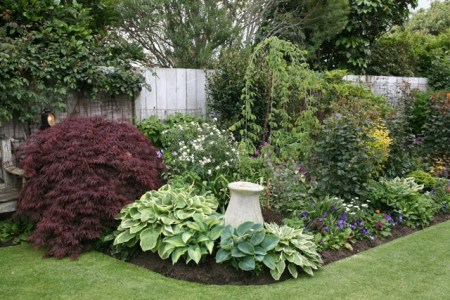
Immaculate garden grooming is not the same as maintenance (photo: Jane Dove Juneau)
I call that finish garden grooming. Garden maintenance should be considerably more extensive and require much greater skills. It is, or should be, all about managing your garden in sustainable ways so that it is a source of pleasure and not a burden. It is about keeping control of weeds so they never get beyond you, about keeping plants and soils healthy and about eliminating gardening practices which are all round bad for the environment. It is about adapting to changing environments within the garden over time. As trees and shrubs grow, they start to cast shade and their roots spread further. The gardener needs to change some plantings and practices as the growing environment changes. Maintenance is about keeping trees a good shape, avoiding forked trunks, lifting and limbing, and about knowing how and when to prune. It is about lifting and dividing choked perennials, deciding which plants are precious and which are expendable, restricting or eliminating plant thugs, rescuing bulbs which have become so overcrowded they no longer flower.
That is what garden maintenance should be about. To me, it is not about whether there is the odd flat weed in the lawn. Goodness knows, we have a park full of pretty white daisies though we do try and keep flat weeds out of the house lawns. At least our lawn clippings are not toxic and can safely be put on the compost heap or indeed used in the vegetable garden except that we never gather the clippings. We mulch them back in and that means we never have to add fertiliser to the lawn.
I appreciate the immaculate presentation of a garden but only when it is the final touch to one which is actively and positively gardened, not when it substitutes for an underlying lack of quality management. Look beyond edges, hedges and lawns.
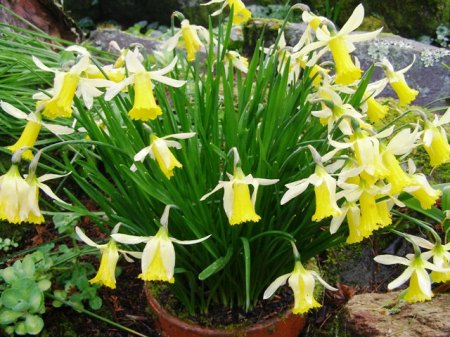
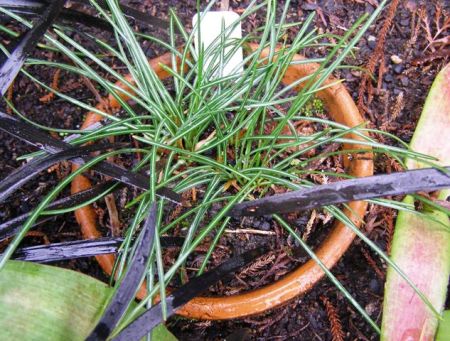 Plunging is a gardening technique that has been around for a long time but is not often seen in New Zealand. It is simply burying a porous pot in the ground so that only the lip is visible. Traditionally, in the United Kingdom, it was often done to stop the roots of the plants from freezing in cold winters. It also stopped terracotta pots from shattering in severe frosts. It is also done to equalise moisture and to stop plants getting either waterlogged or too dry. If you visit the alpine houses at the RHS Wisley Gardens, you will see that all the alpine treasures are grown in pots which are plunged into beds of compacted sand.
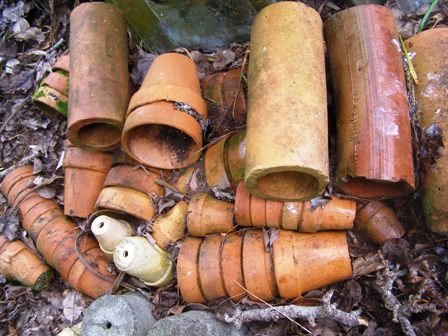 Plunging is a technique I have been using around our garden for a variety of purposes. It is important to note that it only works with porous pots. Fortunately, I inherited a collection of aged terracotta pots and drainage pipes in various sizes which fit the bill. If you use glazed or plastic pots, the water cannot move between the surrounding soils and the plant’s roots in the pot.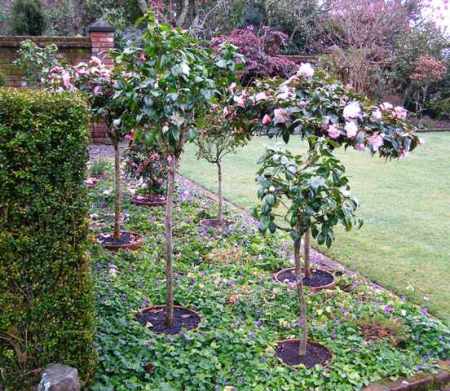

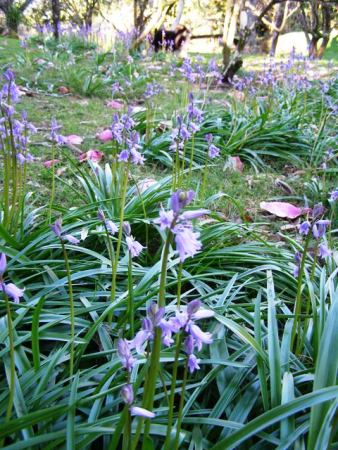
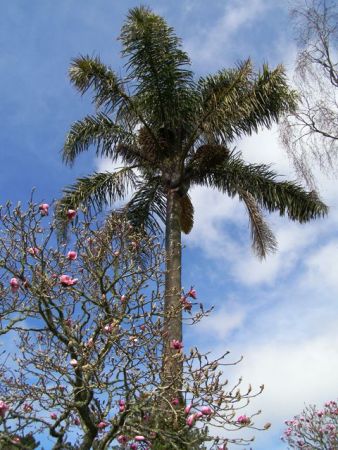

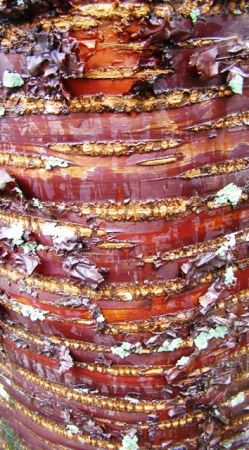
 If you can find a tree with lovely bark or a seasonal flower display, then it is so much more interesting. Apropos of this, I came across a wonderful book recently by Waikato authors and tree-lovers, John and Bunny Mortimer. “Trees and their Bark” was published in 2003 but, being self published, I don’t think it received the attention it deserved. It is a delightful book, very readable with plenty of colour photos, by authors who know the topic inside out. It is still available and what is more, it is being remaindered at a ridiculously low price. I would not pass it by – it is worth having in the bookcase even if you are not in a position to plant trees. You will find the Mortimers listed in the Hamilton phone book or the white pages on line – there can only be one Bunny Mortimer.
 Tikorangi The Jury Garden