
-39.041391
174.299984
Category Archives: Abbie’s column
There is life beyond buxus hedging
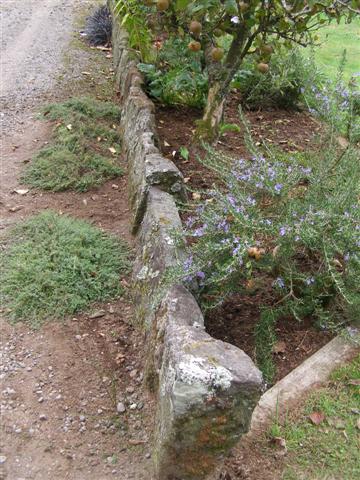
It is more about the lines and shapes, not the materials used.
Last week in Outdoor Classroom, I looked at some of the alternatives to buxus and came to the conclusion that there is nothing that really fits the bill when it comes to low growing hedges. And it is the low and slow Buxus suffruticosa that is the worst hit by the dreaded buxus blight and the hardest for which to find a suitable substitute. Sempervirens is the common buxus and it will make a large shrub or even small tree if you don’t clip it. Handy little suffruticosa is a dwarf form of sempervirens and the option that is commonly used when you want a little hedge around 30cm high.
Clipped hedges are essentially walls, usually green walls. Sometimes they are low walls, sometimes they are high walls but what they do is give some shape in a garden. The low, clipped box hedge is not about wind protection. It is largely about definition, formal lines and tidiness. The advent of buxus blight and the lack of an easy and cheap alternative to buxus may be a signal that it is time to look at alternative means of getting that definition. Maybe it is time to review the whole concept of tidy edgings and that is no bad thing where buxus hedging has become over-used and clichéd.
Tarting up the vegetable garden and turning it into a potager was all the rage coming up to twenty years ago and I, too, fell into the fashion trap. It took a lecture by garden historian, Helen Leach, to wake me up. She pointed out in no uncertain terms that it was completely impractical to vegetable garden surrounding by little buxus hedges. Vegetable gardens rely on constant cultivation of the ground and invading buxus roots make that impossible. Besides, the hedge provides nice, sheltered conditions for snails and slugs to set up residence and she is not wrong there. I got rid of the hedging I had inflicted on Mark and Felix and would suggest that gardeners worrying about the buxus hedging in their vegetable patch (potagers are so passé these days; the least you can do is refer to it as the kitchen garden) just rip it out and pretty up the area in other ways. Pavers, possibly used as stepping stones, are a great deal more practical to get defined lines. Raised beds can be used to define space if you want to go down that path. A spot of clipped topiary or matched vertical accents, even a pair of urns can give definition without compromising the prime purpose of the productive garden.
In the ornamental garden, it is a little different. Though after battling congested root systems to renovate mixed borders, I wouldn’t be wanting to use hedging as an edge- line for any gardens where I grow perennials or annuals which prefer not to compete for root space. Our preference is for more permanent materials which serve the same purpose without the maintenance and the problem of roots – in other words, low brick or stone walls about the height of a little buxus suffriticosa hedge, around 20 to 30cm. They take a bit to put in with poured footings and a mowing strip where laid beside lawn, but they are pleasingly permanent and they give the lineal definition that a low hedge also gives. Personally I prefer stone to brick, especially when it is a narrow, faced stone wall. I think it weathers better and looks wonderfully timeless without the slight garish aspect that even recycled brick can give but it is also the most expensive option in terms of time and requires a much higher level of skill to construct.
We have been laying a low brick edging this week to formalise a previously casual, rather wayward area. It is a situation where it would have been common for many to go in with a low buxus hedge but it all serves the same purpose – to channel the eye straight down to a longer view, to give definition and form to that particular border and to stop the birds from dispersing the soil and mulch as they scratch around. When we lay any concrete here, be it path or mowing strip, we tint it so that it does not dry out that stark white in the initial stages. Sometimes we will go to exposed aggregate also so the new area looks instantly weathered.
Concrete blocks laid and then plastered will serve the same function as brick or stone edging in getting the sharpest definition of line. If you are thinking to yourself that you like the softer effect of a hedge, that is what you achieve in the garden inside the edging where you can allow plants to froth over and blur the rigidity.
In less formal areas, edgings can be done with natural wood. At Te Popo Gardens near Stratford, Lorri Ellis has used the device of stacking narrow lengths of branch not much thicker than 10cm in diameter, all cut to the same length and laid with the cut end visible, modelled on a tidy wood pile. It creates a visual barrier in the same way as a hedge and Lorri has planted against it to soften the view. Even ponga logs can define an edge and last for years, ageing gracefully.
At Wisley in the United Kingdom, the long borders of classic herbaceous plantings are not edged in hedging to contain them. Instead big square pavers have been used. These guide the eye down the length of these parallel borders and protect the lawn because the exuberant plants just froth and flop on the pavers. If you are going to try the paver approach, experiment with different sizes. I suspect bigger is better unless your space is narrow.
You can edge with rows of some clumping perennial. Grasses are often used, though it is not to my personal taste. I think it looks a bit suburban in mondo grass or lirope but if we all liked the same thing, our gardens would all be very much the same.
In the end, it is not your buxus hedging that makes your garden look sharp and smart. It is the lines drawn with the hedging. So if buxus blight is forcing a re-think on you, maybe you don’t need another hedge at all. Having commented previously about the suffering from DEBBO (that is Death by Bloody Buxus Overload), I would welcome seeing some more creative and individual solutions to creating formal shapes and design in New Zealand gardens.
As a postscript to last week’s Outdoor Classroom, I would reiterate what I have said before about other forms of buxus. Overseas research says that while suffruticosa is the worst hit by buxus blight, followed by the other forms of sempervirens (which is very evident now in Taranaki), no buxus variety is resistant. So while anecdotally there are reports locally that the Japanese and Korean forms (microphylla, microphylla var. koreana and sinica) are not affected, this may be more related to individual conditions. I certainly would not be recommending spending much time or money on replacing affected hedges with Japanese or Korean buxus. The picture will be clearer in five years time but at the moment it appears you run the risk of replacing one infected hedge with another which will become infected in due course.
No bletting the chaenomeles in our climate

More ornamental than useful - chaenomeles or japonica apples
I have been harvesting the chaenomeles though harvesting is perhaps too much like hyperbole. I have been picking up a bowl of their golden yellow fruit. Most will look at the fruit and say quinces but they are not. If you said japonica apples, you would be closer to the mark. Quinces – or cydonia – are small trees from central and south eastern Europe and are closely related to apples and pears. The fruits look like golden pears. The chaenomeles are from east Asia, including Japan, and are shrubs referred to inaccurately in the past as japonicas. In fact we associate the flowering sprays of japonica strongly with Japan where the simplicity of single flowers on bare wood is evocative of that wonderful, sometimes stark, simple beauty so prized in Japanese gardening and floral art.
Back to my chaenomele fruits which are not only very decorative and long lasting, they also exude a perfume which I find pleasant. It is such a shame you have to work hard to transform the crop into something edible. The usual approach is to turn them into japonica jelly though I admit I have never tried this. My jam making efforts are limited to the raspberries these days and as it takes us about three months to get through one jar, there is a not a big incentive to be more adventurous. I did try making chaenomeles brandy one year, wooed by the delightful aroma of the fruit. I figured that I would follow the recipe for damson gin though this fruit clearly needed slicing. So I layered the slices of chaenomeles alternately with sugar in the mandatory stoneware crock, of which I happen to own several. Then I poured a bottle of brandy over it all and put it in a dark place for a year to gently steep. Yes, a whole year. Now, the damson gin recipe says that after a year, you should strain off the liquid, dilute it with another bottle of gin and leave it to mature for a second year. In my forays into damson gin, we waited the first year but never made it to the second bottle of gin and a further twelve month wait. Neither did we get past the mid stage with the chaenomeles brandy which we strained off and drank after twelve months. It was pleasant if a little underwhelming. But this is not a household where we ever drink liqueurs or indeed any sweet drinks, so perhaps our palates were just not accustomed to sweet, high octane alcohol. I prefer my brandy with lime and soda.
These days I just bring a bowl of chaenomeles into the house for aesthetic reasons. They sit for weeks without going off, golden orbs with an odd waxy coating, exuding a natural tropical perfume. So much nicer than those synthetic air fresheners marketed by Glade, I feel. The remainder of the crop hang on to the bush until their weight pulls them off and they lie below. Although the bushes are rangy, scrubby things of no merit or form out of season, in early spring the dark pink flowers are eye-catching and in autumn the fruit is a feature for a good couple of months.
In case you are wondering what a chaenomeles tastes like, I can assure you that the taste and texture does not match the fragrance. They are astringent – will pucker your mouth – but apparently in colder climates, the first frosts reduce the astringency. This is a condition referred to as bletting (there is a piece of information which you may need one day for Trivial Pursuits or quiz nights) and bletting is a key to growing good Brussels sprouts, swedes and turnips. Personally I prefer to live in a climate where we can grow oranges and avocadoes even if that means we can not have bletted crops since we never get a run of heavy frosts, or much frost at all.
Some years the chaenomeles pass me by because the good fruiting bushes (and by no means all of them fruit as spectacularly as this one) are in an area of the garden which has been a bit of a wasteland. Probably every large garden, and quite a few smaller ones, have areas where you hurry past with eyes averted because you really don’t want to address the problems there and if you ignore them, perhaps other people won’t notice them either. There comes a day when you can no longer pretend that the area does not really matter. You have to get in there. In our case, it is an area where the ever growing trees and shrubs had turned a formerly sunny position into overgrown shade forever making incursions outwards. It certainly helps to have somebody at your behest with a chainsaw and mulcher but you can get a long way with strong loppers and a sharp pruning saw. These jobs always escalate beyond what was originally envisaged as you keep penetrating onwards and inwards. We have trimmed and removed a prodigious amount of material. We have allowed sunlight into areas which haven’t seen light for nigh on a decade. We have rediscovered plants which only Mark ever knew were there. We have dug out sizeable nikau palms. It is possible to have too many self-seeded nikaus and we have more than enough. In fact we have turned dense forest or jungle into woodland.
Woodland means keeping a lighter canopy of larger plants but sufficiently open to allow reasonable growing conditions below. I haven’t finished yet but I have reached the fun stage where finally I have had the chance to try the traditional method of establishing a drift of spring bulbs. That is broadcasting handfuls of bulbs and planting them more or less where they fall. It avoids the natural tendency to plant in rows or as edgings on the margins. In this case, I have been scattering English snowdrops and interplanting with Cyclamen repandum, the last of the dwarf species to flower in spring. I have removed all the herbaceous leafy plants and relocated them. In this one patch, I don’t mind if the ground is bare for periods of the year. All I want is the higher canopy and a natural build up of leaf litter with small bulbs popping up in season.
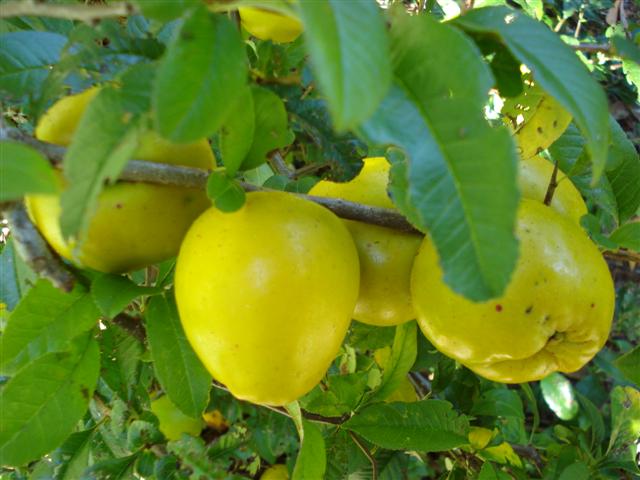
Attractive in season but prickly and nondescript at other times
As I moved futher outwards to the sunny area again, I reached the chaenomeles and that is a bit of a challenge. Not only is it battling quite creditably with the competing growth, it seems to be attaining mammoth proportions. A mere two metres high, but it arches and layers over an area more than four metres long. I didn’t mention it is somewhat spiny and prickly, did I? It is just as well it has pretty flowers and very decorative fruit or it might have gone the way of other prickly plants – into the waiting mulcher.
The myth of the mixed border

A typical type of mixed border with boundary hedge behind
Just at the moment I am somewhat fed up with mixed borders, or mixed beds for that matter. I am of the opinion that it is a myth that the mixed border is easier to maintain than the herbaceous border. It is easier to leave alone, but not to maintain.
The mixed border is a term coined to describe plantings which are typically a blend of small shrubs, perennials and annuals all frothing together to create a picture of flowers and foliage. It is pretty much how most people garden, certainly in freshly planted situations. The woody shrubs give year round structure often with the bonus of seasonal flowering while the clumping perennials and showy annuals fill in the spaces between and give a well furnished look, usually with the attribute of prolonged flowering. The calibre of the plant combinations speaks volumes about the skill and experience of the gardener.
This is also the face of the modern rose garden. Gone are the designated rose beds where there were only roses planted in well cultivated but bare soil with plenty of air movement – utility, lacking in aesthetics but a practical approach to growing these thorny, disease prone plants with fantastic flowers. Nowadays we generally integrate roses into mixed plantings which have a fair debt in history to the chocolate box English cottage garden. Most rose plants are not attractive in their own right so the mixed plantings mask the ugly bushes and, commonly, the diseased foliage while allowing the flowers to star.
So you plant a mixed border or bed and it looks perhaps a little new and bare in its first year, good in its second year, possibly even fantastic in its third year and then, imperceptibly, season by season, it changes over the subsequent years to the point it all becomes a little blah. The woody plants grow and start to dominate while at the lower level, it is survival of the fittest amongst the perennials. Anything rare or choice is by definition not a plant thug so will give up the fight and disappear quickly. Besides, the establishment of the woody plants is likely to have changed the micro climate and that will be compounded exponentially if you also enclosed your bed or border in a nice little hedge. Soon the well cultivated, freshly dug soil and open, airy, sunny conditions that your perennials loved has become compacted and congested with competing root masses from the woody plants, not to mention growing areas of shade.
This is the voice of experience here. I have been micro gardening the area we loosely refer to as the rose garden. By micro gardening, I mean taking apart as much as I can of the whole area and reassessing the role of every single plant. Because we also garden extensively with bulbs, there are limited times of the year when we can take apart a garden to recultivate and replant in this manner. As well as the roses, I had planted dwarf camellias for winter interest and all year round form and the site demanded a carpet of low growing perennials and annuals below. Said carpet had been looking a little moth eaten for some time – too many holes I had attempted to plug (or darn). In fact it all looked rather tired and messy. Successive applications of mulch had raised the soil levels above the surrounding edgings, compounded by the escalating invasion of masses of fine roots from an avenue of huge trees some distance away.
I am so over roses. Every time I turn around or move, I seem to get snagged on their thorns. There are times this week when I have contemplated pulling out and burning all but the standard roses. It is only the memory of their stunning November display that has given them a stay of execution. That, and the feeling that a complete garden includes at least some roses. I certainly will not be wanting to use roses extensively in any future mixed plantings.
Painful irritant though the roses are, they are not the major problem of the mixed border. It is what goes on below the ground that is the inherent structural weakness of the concept. We only view what happens above the ground but that is entirely contingent on the roots below. And the problem is that perennials and annuals are not particularly compatible with many woody plants. The latter determinedly extend their roots and prefer to be left undisturbed. In fact they can get downright touchy if you do too much poking around in their root zone. Whereas clumping plants like perennials and indeed all annuals much prefer extremely well cultivated, friable soil along frequent lifting and dividing of the former. Long term they are mutually exclusive plant families and it is the permanent roots of the woody plants which will dominate. In fact, the mixed border concept is a garden solution for the short to mid term only. In the long term, the bottom story planting of perennials goes into decline, only the tough thugs survive and it gets increasingly difficult to maintain suitable conditions even for them.
The classic herbaceous border is seen as extremely labour intensive and accordingly admired but shunned by most gardeners in this day and age when we lack legions of loyal, hardworking, devoted minions to do our bidding in the garden. Herbaceous plants are those leafy, clumping plants without woody stems and trunks and they tend to be seasonal. In fact many, such as hostas and asters, go dormant and disappear over winter. As I micro garden our mixed plantings in the rose garden area, I am thinking to myself that the digging, dividing and replanting that is the key to a good herbaceous border is not necessarily to be feared and it would be a great deal easier if there were no woody plants (and definitely no roses) in amongst them. No bulbs either. There are other places in the garden for bulbs but they don’t exist that happily in areas where you are forever plunging the spade into the soil to keep it friable and to lift plants for dividing. I have stumbled on rather too many by severing them in half.
Using hedges as a backdrop or as an edging is also problematic. At Great Dixter in the south east of England, Christopher Lloyd paid tribute to his father’s foresight in establishing a solid barrier below ground at the time when he planted the yews which are now major topiary features and hedging in that garden. It is more likely that Lloyd Senior had a man in to do it, but such long term vision stops the problem of competing roots. This sort of below ground barrier is recommended when planting invasive bamboos but I have not seen it done as a matter of course in this country with hedges. It makes sense if you garden with a long term view in mind even if it requires considerable effort in the establishment stages. You need to make sure that the barrier is far enough away to allow the hedge roots sufficient space or you will end up with poor, stunted and yellowed specimens.
If you want to reduce the amount of maintenance your garden requires to keep it looking good, turn to the shrubbery concept in preference to the mixed border and reconsider the role played by dinky little edging hedges beloved by gardeners throughout the country. What these do is give a sharp line, a definition which can also be achieved by the use of pavers, hard edges or even a low wall. None of these alternatives will cause problems with their roots, require clipping or suffer from the dreaded buxus blight.
A tale of the future of Pukeiti Rhododendron Trust and ratepayer money.
“So what do you think about Taranaki Regional Council taking over Pukeiti?” is a question we have been asked by a number of people recently. Speaking initially out of complete self interest, we have to say that we think it is a good thing. We are deeply involved with the open garden sector, particularly our annual festival, because that makes it worthwhile for us to maintain our own garden to opening standard. For Taranaki to retain a pre-eminent position in the open garden scene, we need a solid core of professional gardens with a secure future and the public garden sector has a big role to play in that. We have a proud tradition here of splendid private gardens but over the past two decades we have seen quite a few come and go. Ageing owners, sales of properties, ill health and, alas, deaths can see a first rate private garden closed overnight. I could reel off a list of a dozen excellent gardens which no longer open or have simply gone. So the public gardens give a level of stability for the rest of us.
That is not to say that we don’t have reservations about ratepayers picking up the tab for Pukeiti. We certainly don’t blame the trustees of that garden for trying to sell their dream to Regional Council to ensure preservation in one form or another, even if Mark has been quipping that he would like to place a death notice for demise of the original vision of founder Douglas Cook and his colleagues. There always have been some issues with Pukeiti, particularly a degree of cargo cult mentality (build the facilities and the crowds will come) and a level of grandiose vision which was overly optimistic. The remarkable achievement in establishing an international reputation rests on a few key individuals over time backed up by great support from volunteers. Pukeiti was particularly lucky to attract and retain the services of its now retired director, Graham Smith, who more than anyone fronted at an international level and established the credentials of the rhododendron collection here. But times change and an organisation which always had trouble living within its means, failed entirely to keep a lid on the budget to the point where its very existence is threatened. So what to do? Transfer it to the ratepayer.
I imagine that every single elected councillor and senior officer of the three district councils in our area are heaving a collective sigh of relief that the problem that is Pukeiti has landed on Regional Council, not at district council level. But they are also probably wondering just how Regional Council can ease this whole situation in under the ratepayer radar. When every dollar the district councils spend is scrutinised closely, even to the provision of public toilets, somehow the TRC can get away with massive new spending and little is said.
TRC claim that the decision to take over the management and ownership of Pukeiti is currently out for consultation but I have yet to hear from anyone who is being consulted. And as the latest Pukeiti newsletter tells us that the CEO has been made redundant and gone already, it all looks like a done deal to us. Rather it appears as if the lid is being kept tightly pressed down to discourage any public debate and consultation is probably limited to those who are going to give the right answers. As I say, a done deal.
It is a slight mystery to us as to why the TRC are so hellbent on owning and running gardens. District Councils run parks (Pukekura Park in New Plymouth and Stratford and Hawera have their own established city parks) but TRC has taken on extremely labour intensive gardens, by no means in the best locations or with the most friendly terrain and with no record of being financially viable. What is more, TRC policy is that these gardens have free entry, not even raising money through gate charges or added value experiences. So moving against the national tide of change where there is a trend to more and more user-pays, TRC is determined to provide these facilities with free entry. Except that there is no such thing as free. It is merely a case of transferring who pays and spreading it across the total ratepayer base. This is interesting when the target visitors go well beyond locals to include both international and domestic tourists. Why would you Qualmark a garden unless you wanted to attract tourists?
The TRC has gone beyond providing quality gardens. The add-on now to justify the spending is swelling the numbers tracked in the garden gates with free entertainment. Except it is not free. It is ratepayer funded. In saying that, I do not denigrate the efforts by the TRC staff and the regional gardens’ manager who are working hard to attract the punters and clearly there is some considerable success in the numbers game. All credit to them for their gardening workshops and tours. I question a little how farmers markets fit in with the vision of Bernie and Rose Hollard which is meant to drive the ethos of Hollard Gardens. But more incongruous is the cheap cuts cooking workshop at Tupare (Relive the Splendour, I think was how the vision of Tupare was encapsulated by TRC). I am not sure that the style and panache of Sir Russell and Lady Matthews sits easily alongside cheap meat cuts. But all is fair when you measure gardens’ success by numbers through the gate. Except that people who go to farmers markets or to cooking demonstrations are not bona fide garden visitors. It is one thing to count people who go to garden workshops run by the garden staff, it is quite another to count people who go to free entertainment or unrelated activities which could just as well be hosted in any number of other more convenient locations.
Some might be wondering what lies in store for Pukeiti. What hoops will the garden managers be expected to leap through in order to attract bigger visitor numbers to that somewhat out of the way location with its relatively inhospitable climate? I for one don’t envy them though I would suggest that if they could just negotiate with John Rae to get Americana based at Pukeiti next time, they might reach their targets without having to stage jelly wrestling, big time wrestling or other crowd pleasers.
Personally, we don’t mind paying a little extra in our rates to see these gardens managed well but we would like to see some wider debate about TRC’s activities. The justification of preserving our heritage has a whiff of empire building about it. Now that we have the gardens, are they going to be looking at other heritage places and activities. Chaddy’s Charters has a sense of heritage. When Chaddy wants to retire, will TRC take over the lifeboat and offer it free to all comers? If the Mokau cream boat run would just move to the south side of the river, would it be eligible as Taranaki heritage? Maybe we should just be grateful that it is too late for the regional ratepayers to pick up the tab for the Patea chimney preservation.

