

Starting on the left – the annual clip
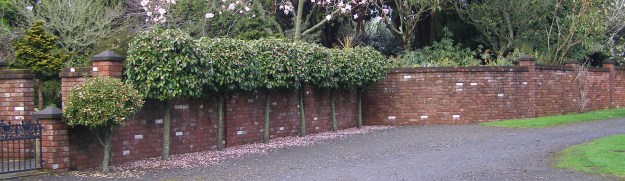
This is what it will like when done – freezing the size of the plants in time with an annual clip
We have a row of lollipop michelias at our entranceway and it is time for their annual clip. Yes, one annual clip is all they get and we are maybe three weeks late on doing them this year. I did not intend to start yesterday, having other things planned. Besides, clipping the michelias feels like a Big Job. Well, it does involve a ladder for the taller ones.
I timed myself yesterday. It takes me 30 minutes a plant to clip with secateurs and to rake up the clippings. That is not long for annual maintenance on what are significant feature plants. You could do it faster with a powered hedge trimmer or even hand clippers but you lose the precision. Besides, I don’t like using the hand clippers because each time they snap shut it jars my wrists and the residual carpel tunnel syndrome I nurse in those joints.
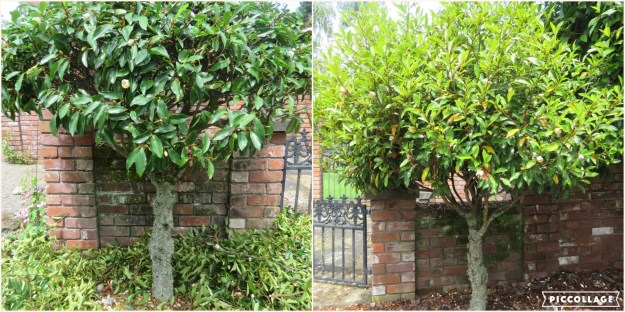 Aesthetically speaking, cutting with secateurs means there is no leaf damage whereas the speedier clippers or hedge trimmer will cut almost every external leaf which will then discolour on the damaged edges. It is also easy to reach in at the time and remove dead wood and do a clean-up of the interior of the ball using secateurs and the finished result is less… brutally shorn, shall I say?
Most michelias can be clipped hard, especially these hybrids of Mark’s. The two smaller ones here are an unnamed hybrid from his breeding programme while the taller ones are Fairy Magnolia Blush. I have planted two Fairy Magnolia Cream in the vehicle entranceway to the left which will, over the next few years, be trained to lollipop standards.
Michelias are magnolias, just a grouping within that wider family. That is why Michelia yunnanensis has been renamed Magnolia laevifolia by the experts. Our position of continuing to refer to them as michelias is on shaky ground botanically but we find it a useful differentiation in common parlance. It is a handy point of difference to the big leather-leafed Magnolia grandiflora types which are what most people think of when evergreen magnolias are mentioned. Our agents chose to brand Mark’s hybrids as “fairy magnolias” to mark out that difference.

Magnolia laevifolia (aka Michelia yunnanensis) defoliating in wet, cold climate
The aforementioned species, Magnolia laevifolia, is a lovely plant in bloom but not always the best garden plant. It has a tendency to defoliate in a wet spring and we have certainly had that this year. This plant is not in our garden. I photographed it at Pukeiti. It is neither dead nor dying. Nor is it deciduous. It has defoliated in the wet and that is a characteristic of this particular species that is not to its credit. Not far along the same track is a fine specimen of Mark’s Fairy Magnolia ‘Blush’ which, we were pleased to see, shows no tendency whatever to defoliate, even in the hard growing conditions of Pukeiti Gardens.

This is what Magnolia laevifolia looks like at its best, seen here in my friend Lorri’s garden
As a piece of advice for local gardeners, if you into clipping camellias – and we clip a few now as feature plants as well as camellia hedging – the time to do it is right now. If you leave it much longer, you will be cutting off all next year’s flower buds.
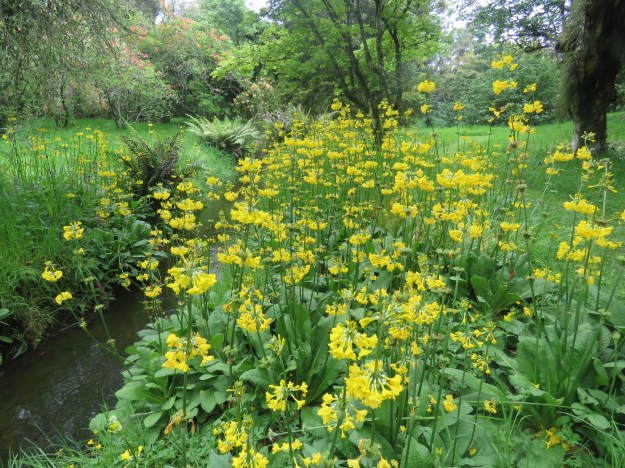
We have renamed the area of our garden we used to refer to as “the park’. It is now The Meadow
Finally, for a spot of colour, may I give you a host of golden primulas (not daffodils) in our meadow garden by the stream. It is just common old Primula helodoxa but so very pretty in its season.

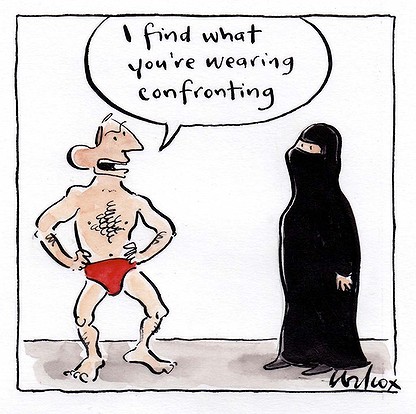 Australia continues to embrace the briefest of brief swim attire for men, usually referred to as budgie smugglers. For recreational wear, New Zealand men long ago moved to the more modest baggy attire of surf shorts. I am fairly sure that only competitive swimmers and the occasional embarrassing older dad wear such brief togs in NZ these days. But then I do not think we have ever had an onion-munching prime minister who took some pride in being photographed publicly in these budgie smuggler togs. If you google Tony Abbott, you will find plenty of evidence and if you are not Australian, it is near incomprehensible.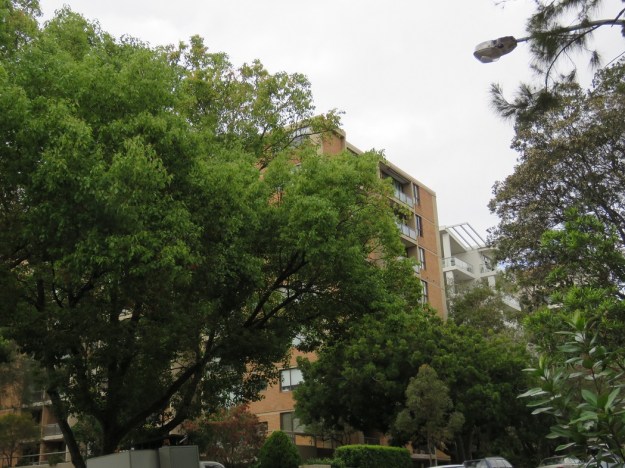
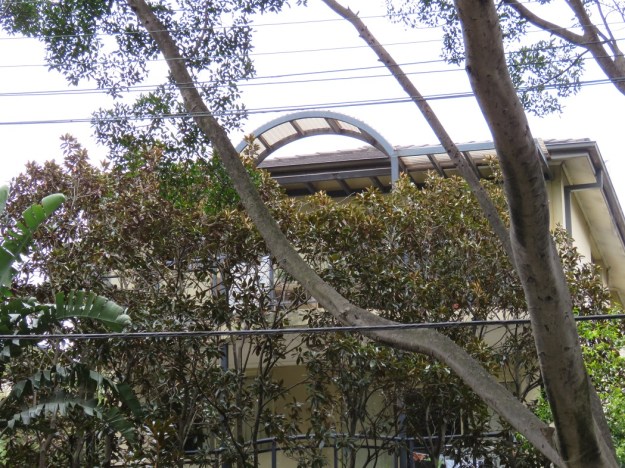
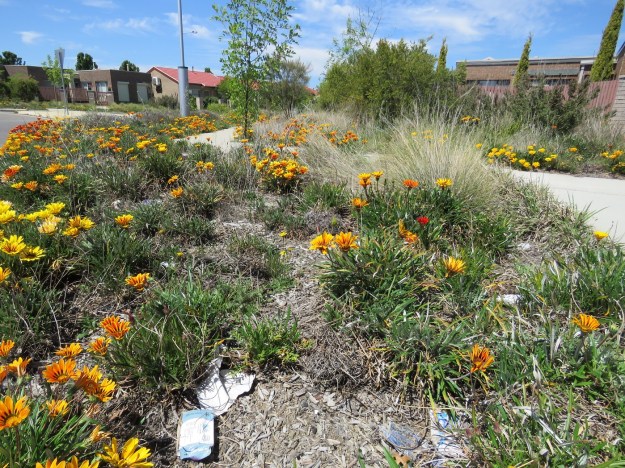
 I photographed this sign in Canberra but ringing in my ears were the cries I often hear in our local city of New Plymouth to fell trees where the roots are starting to lift the seal. It is a curious fact that as soon as this occurs, legions of people suddenly speak up for the welfare of the elderly who, in our local area at least, are allegedly incapable of coping with an uneven surface. Having travelled in Asia, Australia, Europe and the UK, I can assure you that a bit of lifting or cracking of seal is NOT seen as a reason for removing trees in those places.




 People can be so CARELESS about the environment. While in Melbourne, I went to the botanic gardens and clearly people feel it is appropriate to graffiti plants. Why would anybody think it is okay to carve names and messages into this beautiful silver agave? And in the stand of giant bamboo, I could not see any stems that had not been claimed by autographs and marks. It is a form of territory marking, like dogs, but this is not their territory to mark. I just don’t get it. I really don’t.
 I have just returned from ten days across the Tasman. A mother’s tour of three state capitals, I describe it. Mark and I have three children all of whom are now living in different Australian cities. So to visit them involves a tour from Sydney to Canberra to Melbourne.
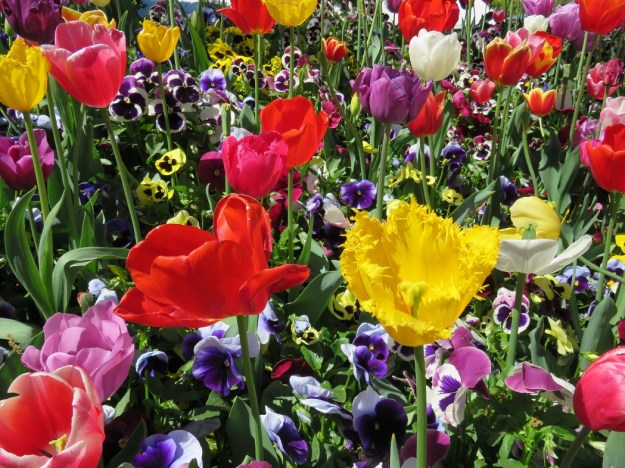
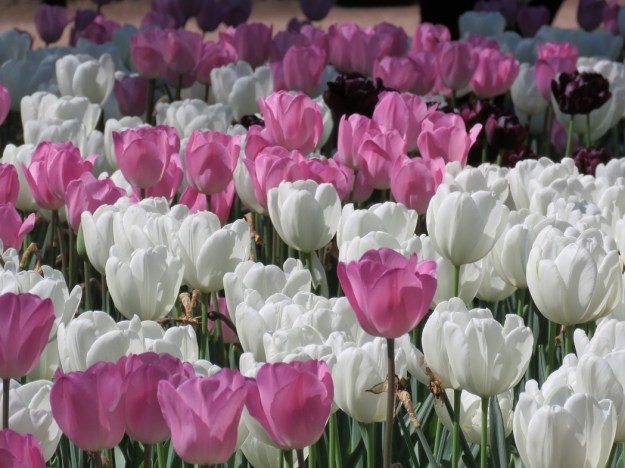 I admit I am not the world’s greatest fan of the tulip, let alone massed displays of them. They are just a little … stiff, maybe overbred for my personal taste. But I am quite happy to acknowledge that I am a minority in this opinion and that others have great fondness for the genus. Or at least for the OTT displays often created using massed bulbs of the genus. And it would take a churlish disposition to find fault with this very pretty pink and white display.
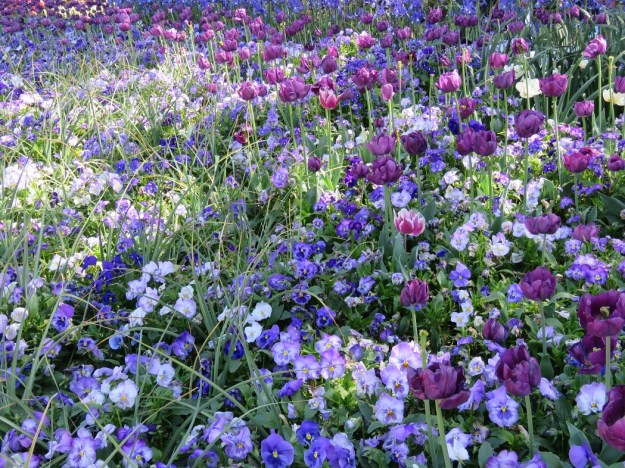 However, it is a great place to see colour theory in action – how hues of similar tones create a visual carpet of colour while certain combinations will make the colour pop. I was particularly taken by the blue bed and realised how much I respond to those shades.
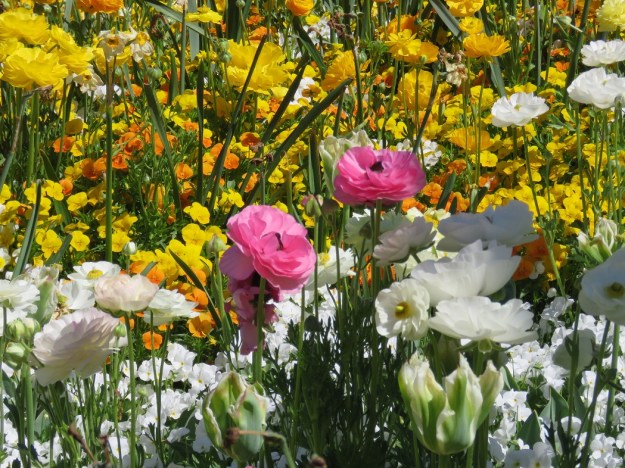 I liked the occasional incident of a colour rogue – a plant that is quite clearly the wrong colour. I liked even more that these rogues had not been rooted out for ‘spoiling’ the display. My late mother used to make large rugs by hand. She was not a perfectionist but would often say that any errors were following tradition – that perfection was seen as a challenge to either the gods or God, and that the traditional rug-makers always put at least one deliberate mistake into their work. I have no idea now whether this is true let alone which religion she was referencing – possibly Islam, given the geographic location of rug-makers? The rogue pink ranunculus made me smile and think of her.
 I took this photo to try and convey the flat, anticlimactic nature of black (or very dark) flowers. Mark has always been offhand about black or indeed green flowers which he sees as novelty blooms sold on the strength of individual flowers when viewed close up, not on visual impact in the garden. And he is right. All these very, very dark flowers just looked lifeless and dull en masse. They are black pansies and dark to black tulips.
 Elder Daughter is clearly our offspring. She was considering the disappointing waste of wrapping up the show when the beds are all stripped out and the bulbs and plants presumably become compost. She felt that if they could delay the exercise of reinstating this inner city parkland for a further six weeks or so, then they could sell tickets for $10 each and allow locals to come and dig up the bulbs to take home. She felt she would be photographing the bulbs she really liked so she could locate them when they were starting to go dormant. At least the flowers are all picked at the end of the show, to be delivered to hospitals and care homes around the area, I was told.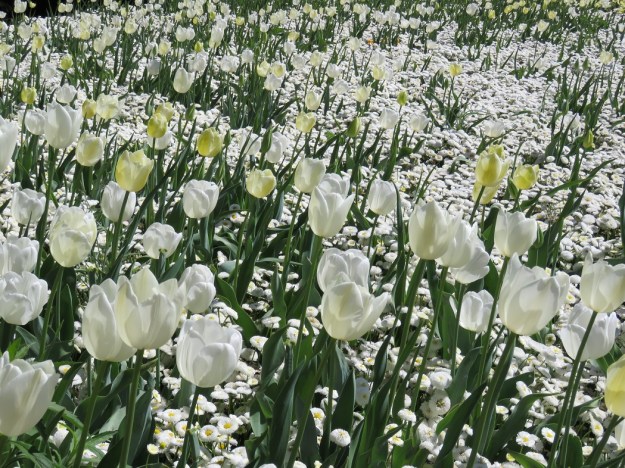
 Tikorangi The Jury Garden