Category Archives: Plant collector

flowering this week, tried and true plants

Flowering this week – Magnolia Iolanthe

Iolanthe - unsurpassed this week

Iolanthe – unsurpassed this week

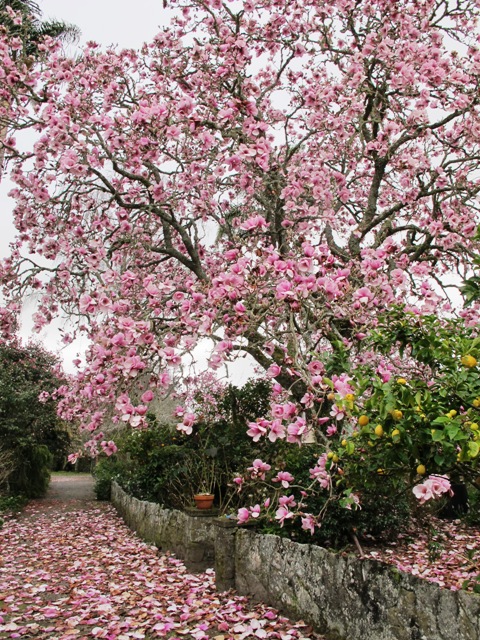
Yes, I admit it we are rather dominated by magnolias at the moment but at this time of the year we live and breathe them and the current all-round-simply-astounding plant has to be the original Magnolia Iolanthe. It is a tree of grand proportions after nearly fifty years and in full flower, it really can take your breath away. We describe it as the original Iolanthe because it really-o truly-o is the first plant, grown from a seed of a controlled cross by Felix Jury. A controlled cross is a deliberately managed hybrid, as opposed to a chance seedling. He heeled a number of the resulting seedlings into his vegetable garden, intending to plant them out to beautify Waitara but Iolanthe popped open a flower. And even that first flower indicated it was pretty special. So special in fact that the plant remained where it was heeled in and these days Mark is moving the vegetable garden rather than attacking the tree. All other Iolanthes around New Zealand and the world have been propagated in the first instance from the tree that graces our driveway.

We still rate Iolanthe as a top variety in the soft lilac-pink and cream colour range. It has a very large flower and because it sets flower buds down the stem, the flowering season is long. If one set of blooms is damaged (the hail storm on Tuesday last week wasn’t great and nor was the follow up last Sunday), within a week a fresh set of buds opens. And there is a second flowering in summer. We did once see Iolanthe plants being sold in a garden centre with labels describing it as a small tree to two metres. I don’t think so, but if you have sufficient space, Iolanthe is unlikely to disappoint..

The inspiration for the name came from the late Iolanthe Small, the dedicated plantswoman who spent the better part of her lifetime working in the Fernery at Pukekura Park.

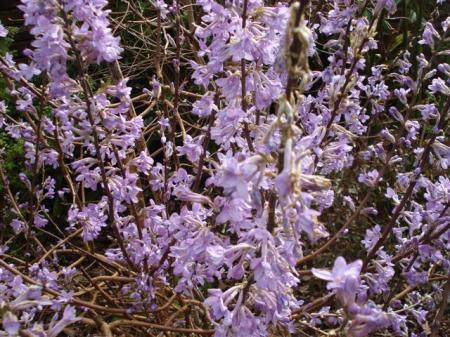
Daphne genkwa – flowering this week

Click to see recent Flowering the week entries

Click on the logo above to see all Flowering the week entries

Daphne genkwa - a vision in lilac blue

Daphne genkwa - a vision in lilac blue

A daphne with no scent? What sort of plant is that? So asked a weekend visitor but we all agreed here that any plant that can look like this is worth its weight in gold. It is completely deciduous so flowers with no leaves at all and every arching branch is smothered in pure lilac blue flowers and has been for a good couple of weeks now. There are not many relatively compact shrubs that mass flower in late winter, let alone in blue. It makes such a statement in the garden that we are resolved to propagate more to use.

Genkwa is an oriental species, native to China and long prized in Japanese gardens. It can be a touchy character to get established. This specimen is our third effort but it is worth persevering. It is available on the New Zealand market though you may need to find an obliging garden centre to order it in for you if they do not have it in stock.

Edgeworthia papyrifera and the monarch butterfly

Click to see recent Flowering the week entries

Click on the logo above to see all Flowering the week entries

Wintering over in the neighbourhood - the monarch butterfly

Wintering over in the neighbourhood - the monarch butterfly

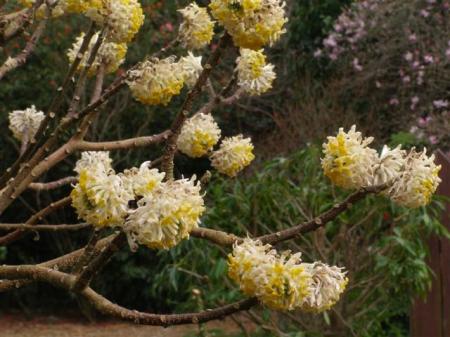
The flower is Edgeworthia papyrifera (syn: chrysantha), often referred to as the yellow daphne. Botanically they are related although papyrifera makes a large deciduous clump and the very long leaves appear after flowering. While scented, it lacks the knock-out fragrance of most daphnes but it makes a stand-out shrub at this time of the year. We have seen the red-orange flowered form in Europe but as far as we know it is not yet available in this country. The bark of this edgeworthia is used to make a high quality paper.

Edgeworthia papyrifera, often called the yellow daphne

Edgeworthia papyrifera, often called the yellow daphne

The monarch butterfly is a minor personal triumph for Mark and we are delighted to see so many feeding on the edgeworthia. For some years, Mark has been sowing swan plants and managing them to encourage late crop monarch butterflies which are more likely to winter over here. Such is his determination that he sowed in excess of 1.1 km of swan plant seed last summer (that is 1100 metres if you measure out each single row end on end) to add to his other established swan plantations. In fact, for once the feed supply exceeded the demand of the caterpillars. This is one of the advantages of winding down the open ground production in the nursery – having well cultivated ground to sow straight into. Now he is increasingly targeting feed plants for the butterflies and we are hoping that surrounding neighbours who are also graced by our monarchs will do the same. This season’s first crop of monarch eggs are being laid and Mark even found a large caterpillar which had wintered over. We expect a bumper number of monarchs this year.

New Zealand has an abundance of interesting moths but they tend to be beautiful in a very understated manner. We are rather short on butterflies here, so the international monarch (which arrived here naturally so can be classed as native) is highly prized.

Rhododendron spinuliferum

Rhododendron spinuliferum

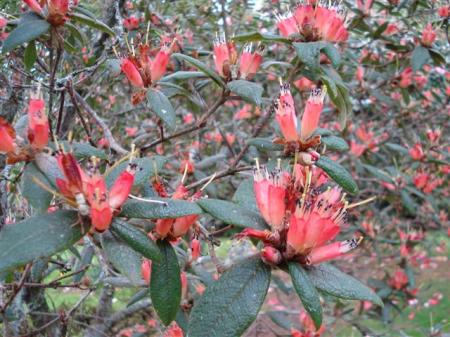
Spinuliferum is a most unusual rhododendron which doesn’t even look like one although it is a species which occurs naturally in the wild, in this case the highlands of Yunnan in China. Its blooms are curious clusters of stamens, protruding from narrow tubular flowers in brick red and apparently full of nectar. Its common name is the Firecracker Rhododendron and it does resemble an old fashioned Double Happy. We like it because it flowers for a very long time in late winter, it has a light almost floating look to a mature plant and it stays healthy in our climate. In fact it is right at home here and might as well be a native plant. Above all, it feeds the waxeyes and tuis and its branches can almost dance with the birds flitting through it.

Prunus campanulata

campanulata (Small)
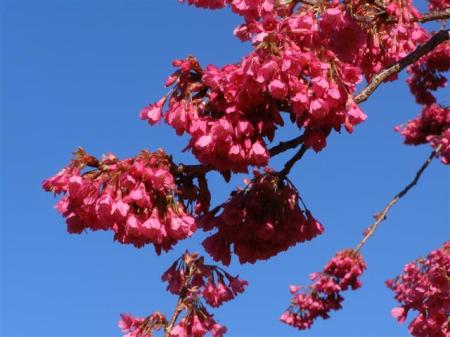
Most people call these flowering cherries and locals tend to take them for granted, unlike those people who live in colder parts of the world where they can not be grown. The ones flowering now are the Taiwanese or Formosan cherry (although only readers over about sixty will recall when the island of Taiwan was still Formosa). They range in colour from mid pink through bright sugar pinks to cerise or carmine and almost red. The reddest form on the market just happens to be called Prunus Felix Jury. We have a series which come into flower over a period of weeks and at times it can seem as if the trees are erupting with feeding tui. While it is hard to take a census (the birds won’t stay still long enough), it is common to find about 20 in one tree at any hour of the day. We think we must currently have at least 50 resident tui.

The downside to campanulatas is that some forms can seed down badly. If you are within a few kilometres of the national park or a nature reserve, make sure you search out forms advertised as sterile (in other words they don’t set seed). These late winter flowering cherries combine well with the early magnolias and because they are not a heavy looking tree, you can often tuck them in nearby so their mass of small flowers contrasts with the over the top magnolia blooms of campbellii or Vulcan. Campanulatas appear to be more disease resistant and healthier in our climate and are not susceptible to witches broom.