
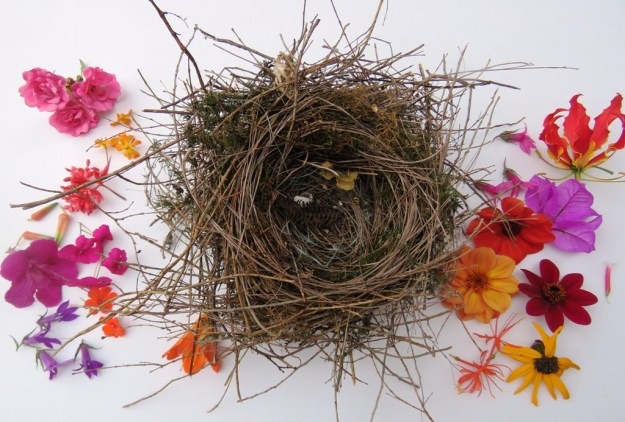
A random tui nest found yesterday
Many of the plants we grow originate from these areas of China. We are hoping to see the yellow camellias in flower. Five years on from when I wrote about C. chrysantha, the other yellow species we have here still have not bloomed. But we may also catch some of the deciduous magnolias, wild azaleas and michelias in bloom. With our closed borders in New Zealand, the new species of michelias that have been discovered in the wild are not in the country and may never be admitted so it will be interesting to see what we are missing.
Being old enough to remember when China was closed to most of the world, I am not totally surprised to find that they still have in place the electronic equivalent of the Great Wall or the more recent Berlin Wall. I may only be taking my tablet as a back-up for photos because I see my most-used sites are all blocked – Twitter, Facebook, Gmail and Google. It is likely that there will be on-line silence until we return at the end of the first week in March.
While on the subject of China, I checked back for the piece I wrote in 2010 about Rewi Alley. It gave me cause to ponder how quickly our modern print and electronic media both moved away from longer-form writing to snappy short pieces with photos. I can’t imagine a NZ newspaper publishing a piece of that length any longer. But there are some interesting quotes from a personal letter from Alley to my late mother-in-law.
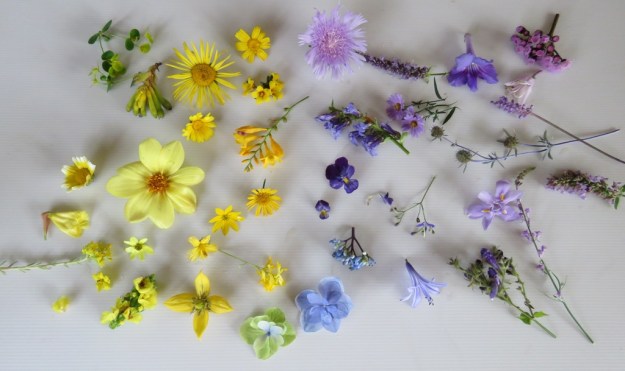
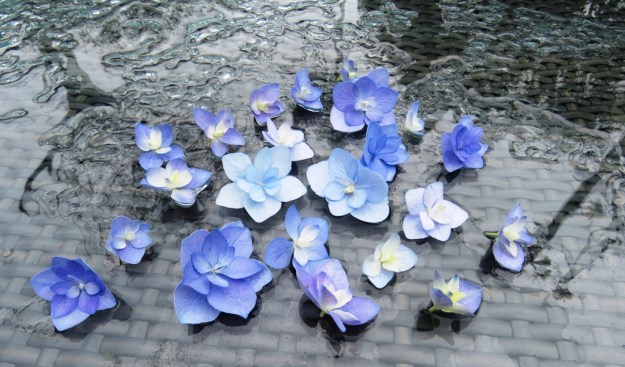
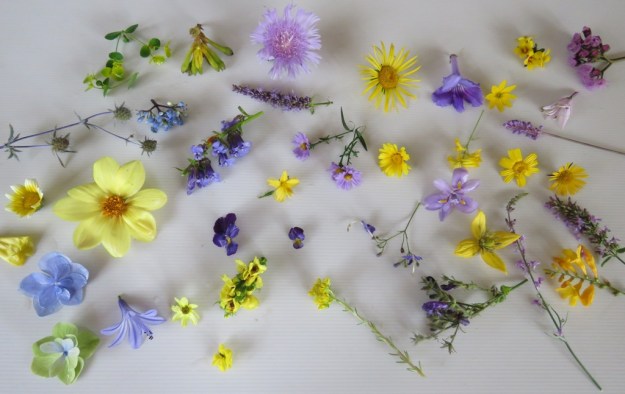 The photos today are the start of a little exercise in colour combinations, which we have spent some time discussing as we plan our new summer garden plantings. I am a big fan of blue and yellow in interior colour schemes (our dining and TV rooms are indeed soft yellow and French blue). I have long wanted to try a blue and yellow border in the garden, but now think it will look too contrived for what we want.

Yellow can be a difficult colour so I gathered a separate selection of cerise, magenta and orange blooms. Mark keeps pointing out to me the problems of adding yellow to this sort of colour mix – bright yellow at least. It is the one that can upset the apple cart of harmonious colour combinations. We may be quarantining our yellows to one area or at least using with extreme restraint.
Finally, as I was montying in the rockery, I was pondering how much modern gardening expectation has been shaped by two factors – the motor mower and glyphosate. Back in the days when grass was scythed and weeding was all done by hand, the current standards of the perfect lawn and the weed-free garden would have been inconceivable. It seems… unfortunate, shall I say… that the commonly held measuring stick for judging gardens today is predicated on two inventions, both of which are really bad for the environment.
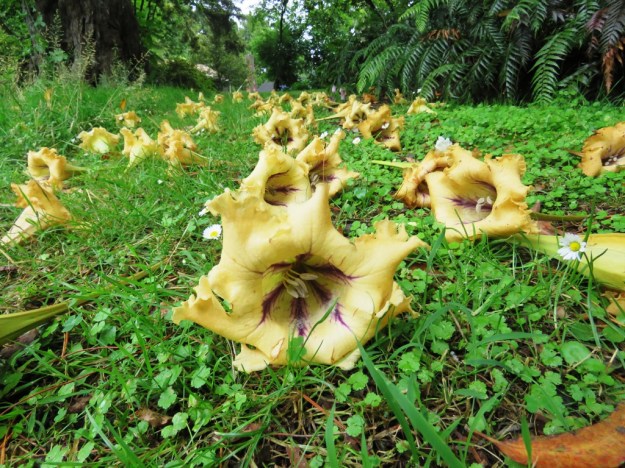 Petal carpets! I take great delight in petal carpets. I even have a folder in my photo files designated ‘petal carpets’ and may go through and collate the best for a post later. It is beyond my comprehension that some gardeners try and remove every petal from their lawns. I first read this in a profile of a garden open to the public at a time when Prunus Awanui is in full bloom. The owner proudly proclaimed that he had to rake beneath it twice a day and mow the lawns every day to keep the pristine appearance. All I could think was “why?”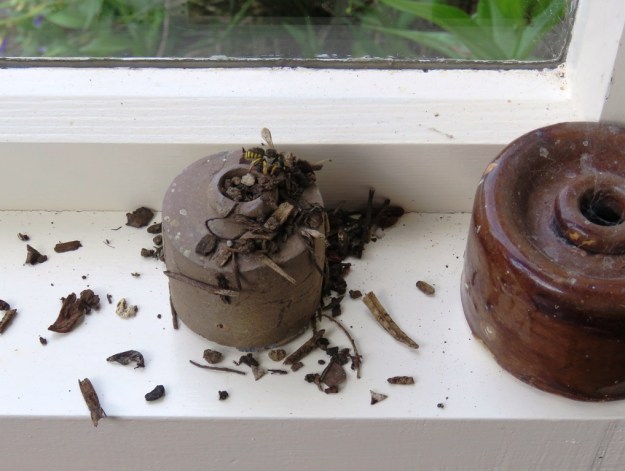


 Having just posted the pensive message above, I walked into the kitchen to find Mark arranging flowers. Umbellifers! Which one, I asked. “Manchester Table, to be precise,” he replied. Daucus carota subsp. sativus – in other words carrot that was bolting to flower and seed. It did strike me that there was a certain symmetry between my words and Mark arranging his floral display of Manchester Table, Yorkshire fog, Lotus major and linaria.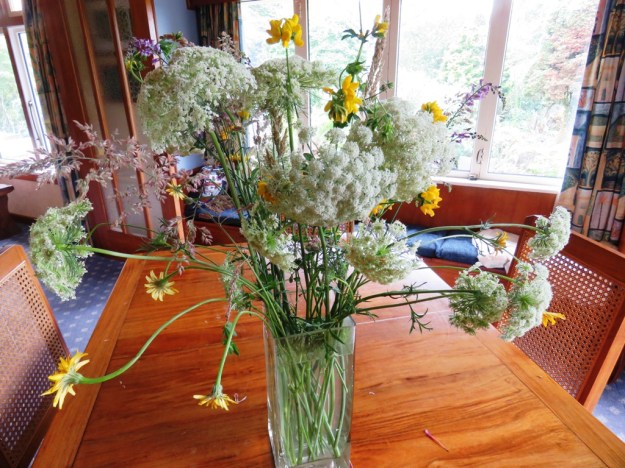

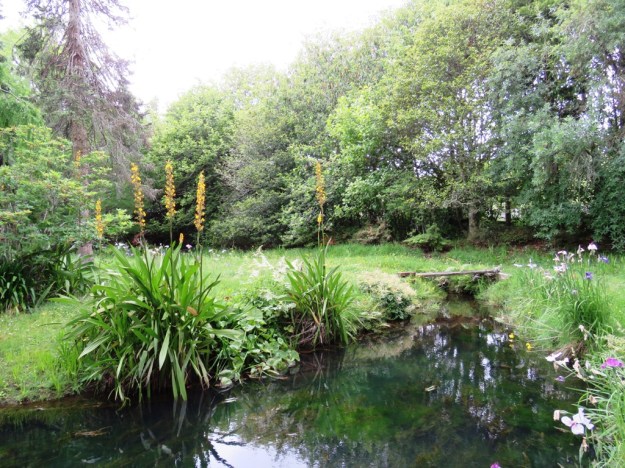
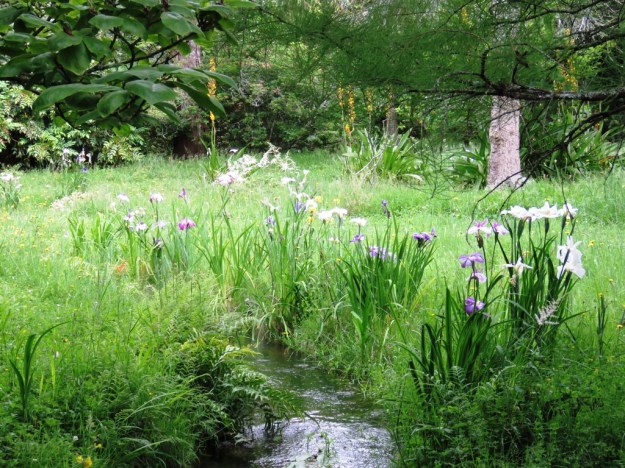 A water meadow! I was delighted at the sight in our park this afternoon. We stopped regular mowing of our park two years ago when we first closed our garden to the public. We were keen to see how far we could push the meadow effect in our climate and also concerned at our heavy dependence on internal combustion engines to maintain the garden. Long grass and flowers are far more ecologically friendly than mown grass.
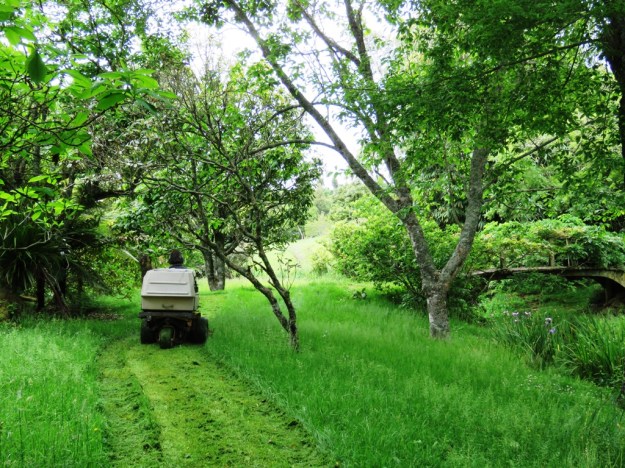 Mark took note of my request that we mow double width paths through the grass this year. A single mower width looked a bit mean to my eyes. I commented to him earlier this week that my only worry was the abundance of buttercup that we now have. He wryly pointed out that it has always been that way. His childhood memories are of the yellow buttercups and dandelions and white daisies throughout the park. We have just returned to that, though not to grazing with sheep.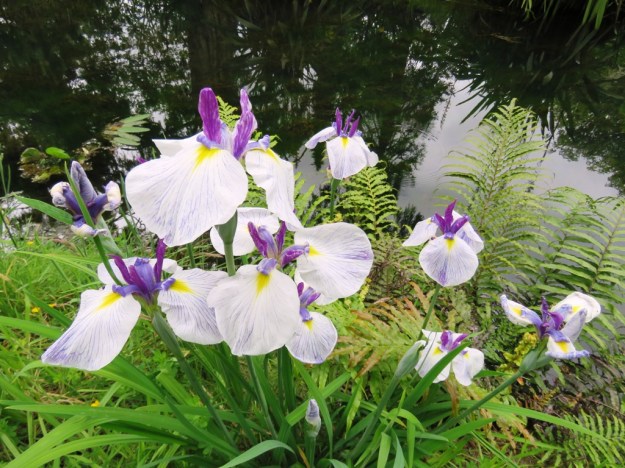
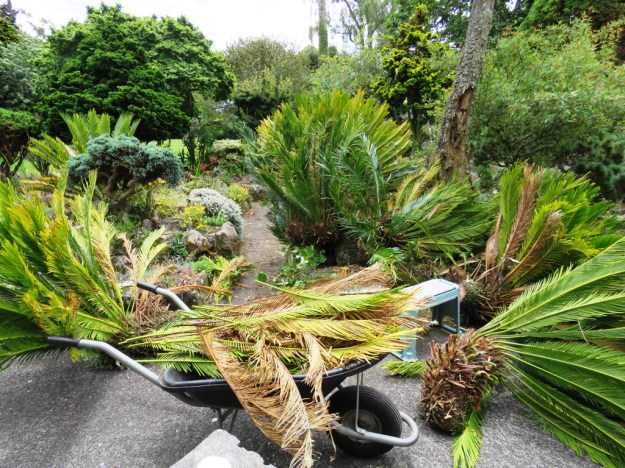 Before the thunder storm hit this afternoon, the sheer size of the
  News from Australia that Mark’s new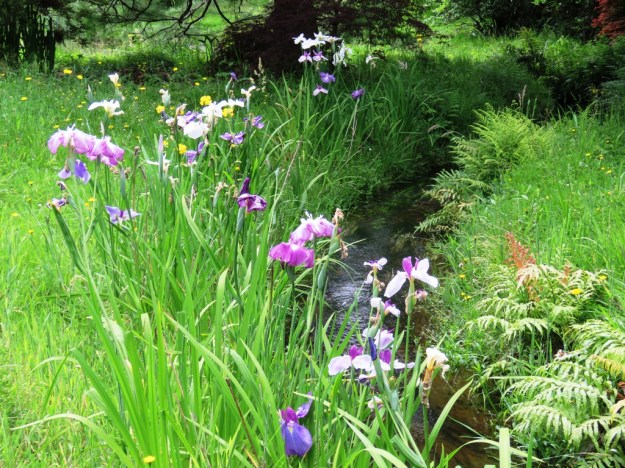
 Tikorangi The Jury Garden