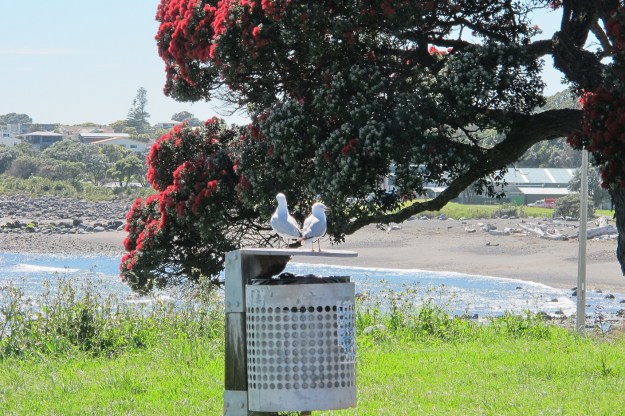
It seems highly unlikely that we will see the end of our coastal pohutukawa to myrtle rust
Myrtle rust – words to strike terror to the heart? We are erring more on the side of a watchful eye at this stage. There is no doubt it is a worry but we have yet to see that it will be a catastrophe that will change our landscape forever, as predicted by some.
The catastrophic predictions are not been helped by the media referring to it as “deadly myrtle rust” and from there, hypothesizing that we could see the manuka honey industry under threat, the loss of our defining landscape pohutukawa trees and, horrors, the ubiquitous home fruit tree, our beloved feijoa. The deadly bit has yet to be proven. But the tone is one of unrelenting high drama. Indeed, the old warhorse, New Zealand First leader Winston Peters wants heads to roll. He has called for the resignation of the Minister of Primary Industries for failing to stop the arrival and spread of myrtle rust.
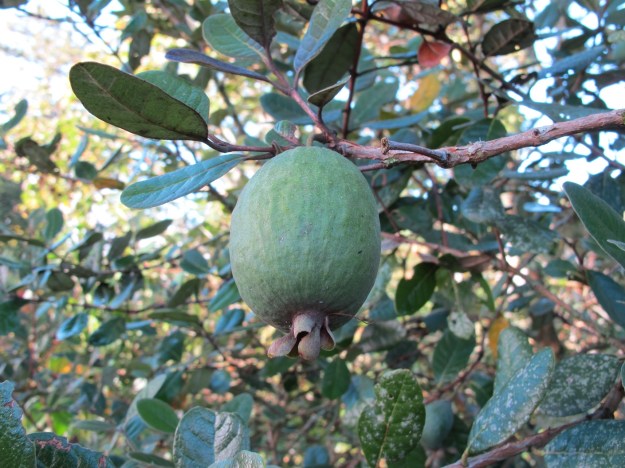
A future without feijoas seems far-fetched
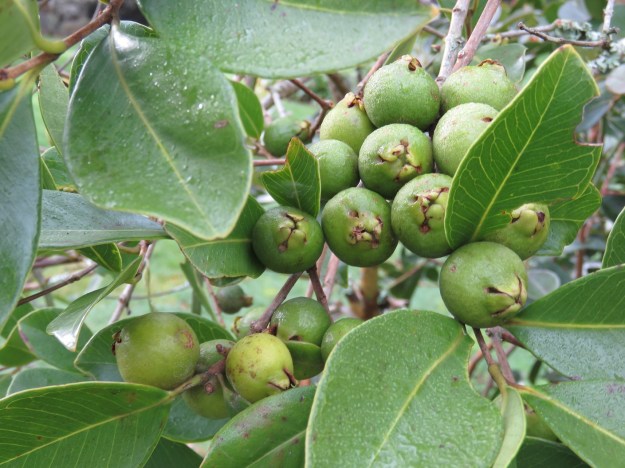
The hardy Chilean guava, Psidium littorale, is another myrtle
A single isolated outbreak in Keri Keri (which is heading up to the most northerly part of New Zealand, for overseas readers) could possibly have been contained. As soon as it was found in nurseries and a garden centre in Taranaki, it raised every red flag for the Ministry for Primary Industries (MPI) and indeed for us. That brings the rust to within 5km of our place. I am sure the first thing MPI did was to find out whether there was any link between the Keri Keri and Taranaki outbreaks. Had any plant material been shared or anybody visited? It appears not.
The discovery of rust at another three locations in Taranaki, including private gardens, changes the picture entirely. There is a lot to find out yet, but odds are that it is widespread and established here already so the possibility of eradication has passed.
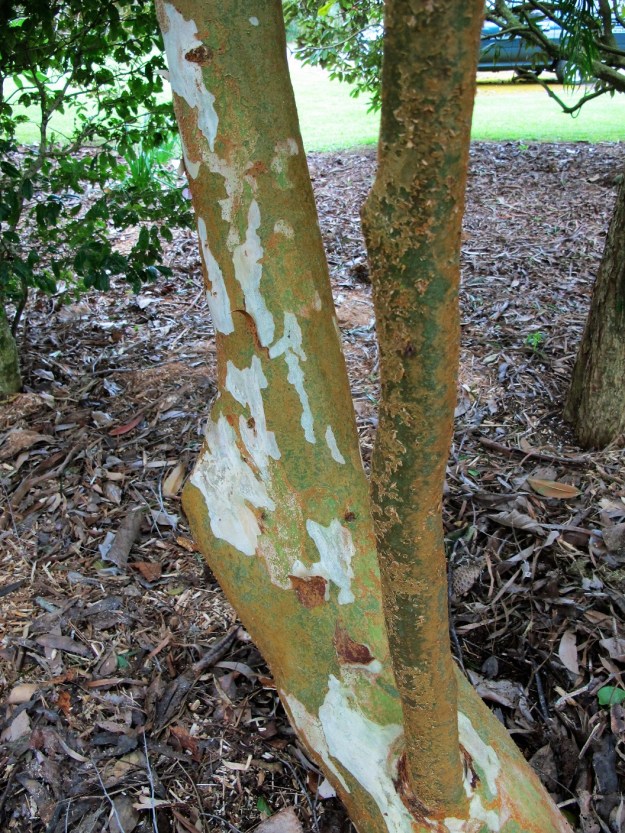
Myrtus luma, often grown for its attractive bark, is another member of the large myrtacae family
The fact that the locations include four nurseries and a garden centre has given rise to some downright stupid comments that I have read. It is not the nursery industry spreading the disease. The rust affects juvenile plants with fresh foliage and that is what nursery plants are. It is also a great deal easier for a vigilant nurseryperson to spot the tell-tale signs on plants in tidy rows.
There are equally stupid comments about our border control and not just from the aforementioned political opportunist. Myrtle rust is carried by light-as-air fungal spores. As soon as it got to the eastern seaboard of Australia, New Caledonia and Raoul Island, it was only a matter of time before it reached here. It could presumably be transferred on a traveller’s clothes as well as being blown across. It started in Central and South America but it is also in the Caribbean, Florida and Hawaii so it is not some deadly new phenomenon – just new to this country.
It is early days, but we think it is likely that it is something we will have to learn to live with.
The ever-handy Wikipedia tells me there are nearly 6000 different species spread across over 130 different genera in the myrtacae botanical family. It is really unfortunate that it includes our beloved pōhutukawa and rata and the economically important crop of mānuka along with feijoas and guavas. But all is not lost. The rust does not affect all myrtle family members equally. Nobody has had time to research which of our myrtle members could be badly affected.
There are many variables at stake – whether there are different strains of the rust known as Austropuccinia psidii, which of our core plants it will affect badly enough to impact their growth, flowering and seed set, how it will behave in the range of our climatic conditions here and more.
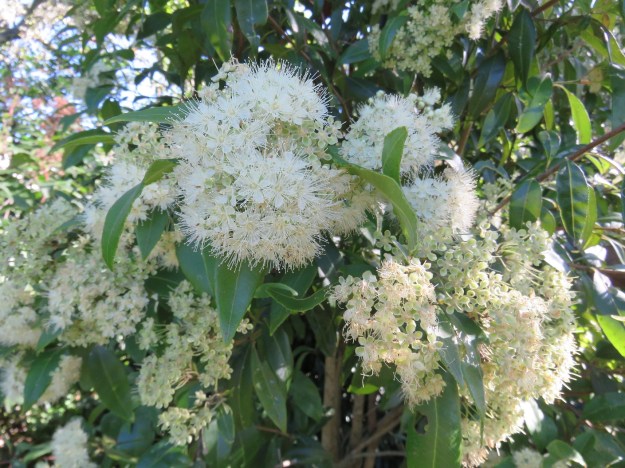
Backhousia citriodora – the fragrant lemon myrtle
What is known from the Australian experience (and they have a seven year jump-start on us with this unwanted organism) is that it does not appear to have a major impact on mature trees. We are not likely to see the wholesale death of established trees before our very eyes. The impact is on young plants (but only of some myrtle species, as already stated, not all of them) so the long term effect may be the failure of plantings in the wild to regenerate. If this is the case, then there is hope that over time more resistant specimens can be selected for propagation because there will be variation in how individual plants respond, even within the same species.
The Ministry of Primary Industries is posting information almost daily on myrtle rust and the Department of Conservation is also keeping their website current on this issue. If you want to know more, there is information from Australia. I just scanned the NSW biosecurity site which also points out that “myrtle rust spores require darkness, moisture and temperatures of 15–25°C to germinate. The first symptoms become visible within 3−5 days of initial infection. The new pustules can mature to release spores in 10–12 days. Spores can remain viable for up to three months.” I am no scientist but if that applies in NZ, I would have thought that was a fairly short life expectancy for the spore, especially when combined with a relatively high germination temperature. I note that no country has ever managed to eradicate it.
Of course we could have done without myrtle rust in New Zealand. But maybe it is time to take the finger off the panic button and stop mourning the impending mass death of huge pōhutukawa trees and the end of feijoas in this country. It is way too early to catastrophise and point fingers of blame.
*Having just listened to yet another anxious news story about it all, I wonder whether MPI should take responsibility for the tone. In trying to impress upon us all how important it is to identify possible myrtle rust so they can track its spread, have they fed the paranoia and angst? Maybe their comms people could tone it down a little?

We think it likely that history will prove that these Waitara riverside pohutukawa are at far greater risk from the chainsaws of the Taranaki Regional Council than myrtle rust (a reference to earlier stories).


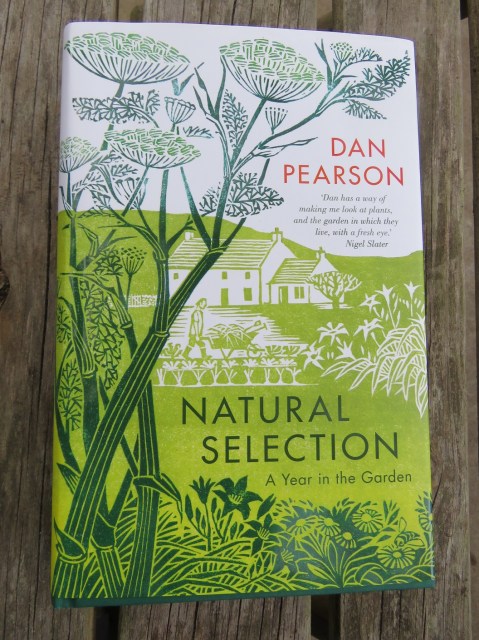 My latest gardening book purchase has arrived – ‘Natural Selection’ by Dan Pearson. It is a collection of writings again, Pearson’s columns from the Observer over a ten-year span. I thought it would be excellent long-haul reading for we are off again in a fortnight. As New Zealanders, we fly longer and further than any other country in the world that I know of (except maybe Russia?). But it is too heavy to be wanting to cart around the world so I dipped into the month of June. Indulge me while I quote the first paragraph I read: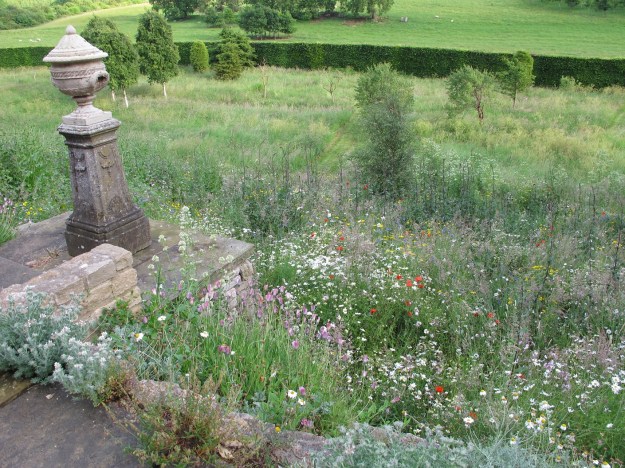
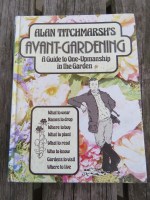 Alas, this week saw a fall from our grace for another British gardening celeb. This is old news – but only three years old so the transmission of information is getting faster. Alan Titchmarsh supports UKIP. You could have knocked us down with a feather. And fox-hunting and the politics of envy along with Britain for the British but Scotland must remain united with England no matter what the Scots think. Oh that’s right, and women whinge and of course there is no injustice in the way older women are discriminated against in key presenting roles on television.
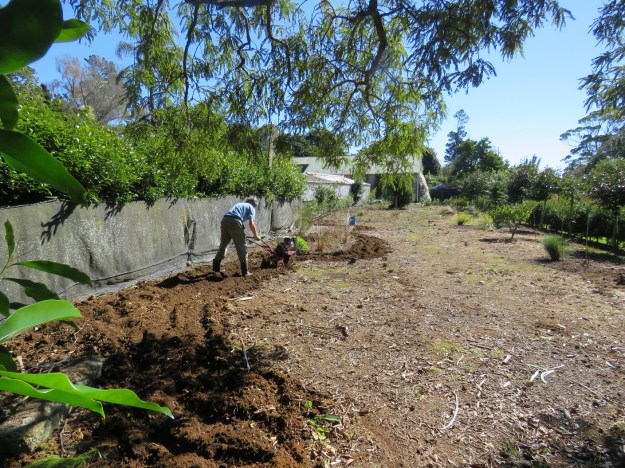
 My patch is like passage-way to the side of all this, albeit a passage-way in full sun that is about 10 metres wide by 30 metres long; at around 300sqm it is larger than some urban dwellers get in life. The idea of a “grass garden” has somewhat morphed into “grasses and other plants with long, narrow foliage and spear-shaped foliage”. The plant palette is broadening substantially as I go but still restrained overall, by our standards. “You are not copying the Bury Court garden, are you?” asked friend and colleague, designer Tony Murrell. Well, no.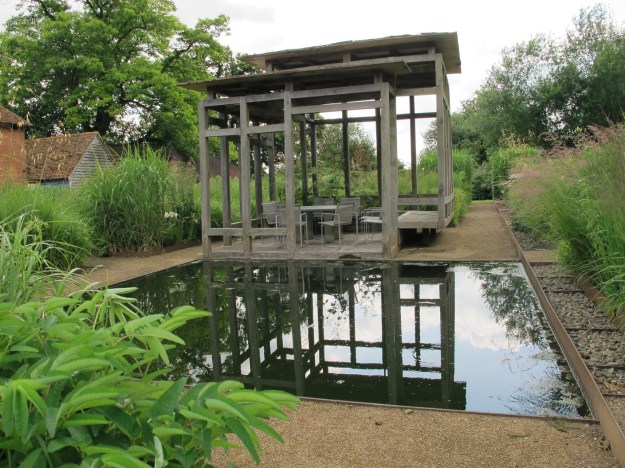
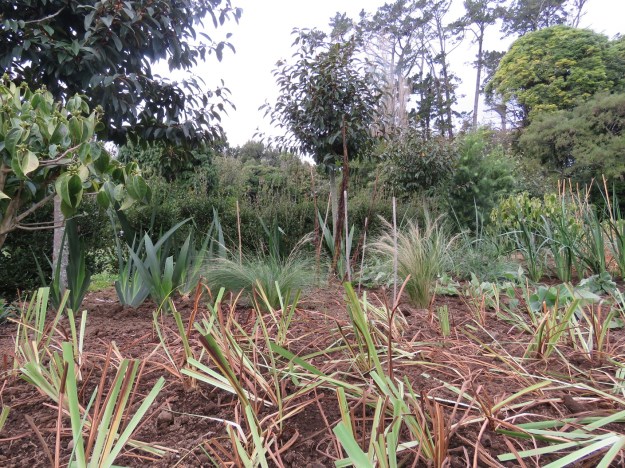

 Tikorangi The Jury Garden