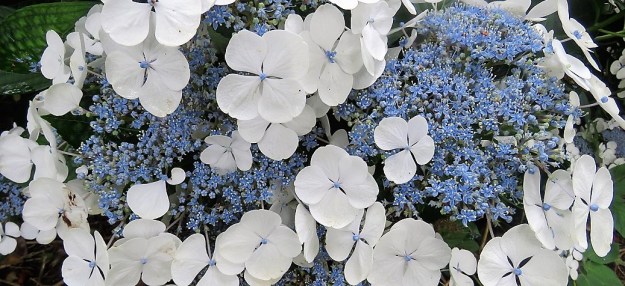
Hydrangea Libelle
It is hydrangeas looking gorgeous here this week. If you are on Facebook, I posted an album of last week’s hydrangea images. We regard them as really easy here but it has been pointed out to me that in other climates they are nurtured treasures. Try telling a Taranaki person that when they are a roadside wildflower here.
The decidedly indifferent summer weather continues and we start to worry about whether Mark cleaned the swimming pool for no purpose this season. Neither of us have even been tempted to get in so far. The water temperature has reached a level I find acceptable (anything 24C or over is suitable, in my book) but the air temperature is hardly conducive to swimming. At least it is pleasant gardening weather and on the worst rainy day, I finally made myself sit down and rewrite the Garden section of this site. I am as guilty as many others of leaving background material untouched and not updated. The next area that needs an upgrade is the one on Jury plant hybrids but if the summer continues in this manner, that may happen sooner rather than later.
I may, however, get diverted. I read the feature by Lynda Hallinan in the January issue of NZ Gardener magazine – ‘With the benefit of hindsight… 40 lessons learned in five years of country gardening’. There is a format I could purloin, I thought. 40 lessons from a country garden after 65 years of intensive gardening. Sure, not all those 65 years were by Mark and me (though if you combined our totals, we are getting close to that), but I could bring you the collective experience from Mark’s great grandfather – who goes back to 1870 and the first plantings here, his parents and now us. So 145 years in total but only 65 of those represent intensive gardening. I need to locate and scan in some of the early slides which, if my memory serves me right, show the development of parts of the garden at five and ten year intervals. Our 40 lessons may be closer to a book than a single article, however.
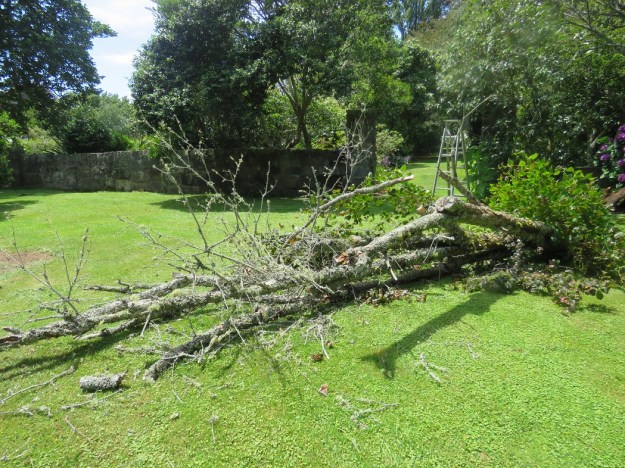
Cornus kousa proved to be a pushover
It has been a week of felling trees. The first, Cornus kousa, was a push-over. Literally. Formerly a fine specimen, over the years it had started to die back and I asked Lloyd to cut it back to live growth. He reported that it was very shaky and that he reckoned he could push it over by hand. So he did. Mark can no longer make the only slightly suggestive quip in his repertoire – inviting people to admire his large kousa. The main trunks were rotten to the core so they didn’t even provide firewood.
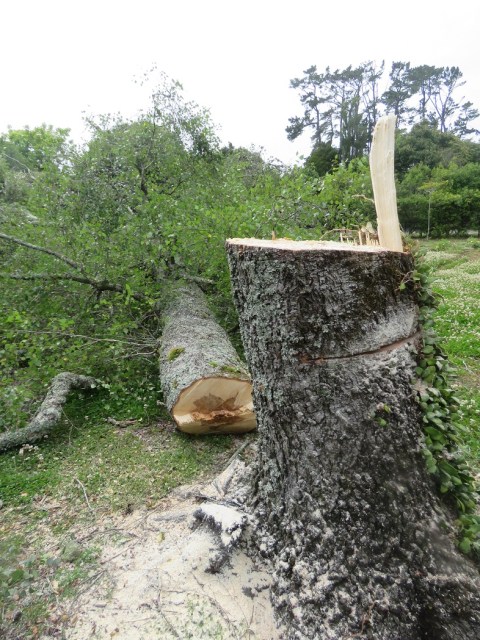
Betula pendula is to be winter firewood
The second tree gave Mark a few pangs as he felled it – a large silver birch. We don’t regard Betula pendula as a quality, long term tree in our climate, though they can be graceful and attractive in their time. This one paid the price for casting too much shade in the area where Mark is developing his long term vegetable garden and orchard. It will provide a lot of good firewood so will be appreciated in the burning but Mark couldn’t help but muse upon all the decades it had lived and the changes that have occurred all around it in that time. It is one thing when a tree falls of its own volition because it has given up its grip on life, quite another to fell it because it has simply become expedient. Though, it must be said that we do have plenty of other very large trees here.
On the vegetable front, I sourced three punnets of Brussels sprouts for Mark to plant yesterday – ‘Maxim’ variety, which is his preference. He rarely buys punnets of plants, raising almost all crops from seed but his Brussels are an exception. They are also one of the few brassicas he grows, along with some of the quick-maturing Chinese greens. I particularly dislike broccoli – a controversial opinion, I know. Neither of us are keen on cauliflower and we are terribly sniffy about the merits of cabbage. But both of us enjoy Brussels sprouts freshly harvested from the garden. Though last season, our Californian quail beat us to the crop. We had the first pick of the season’s green beans for dinner last night.
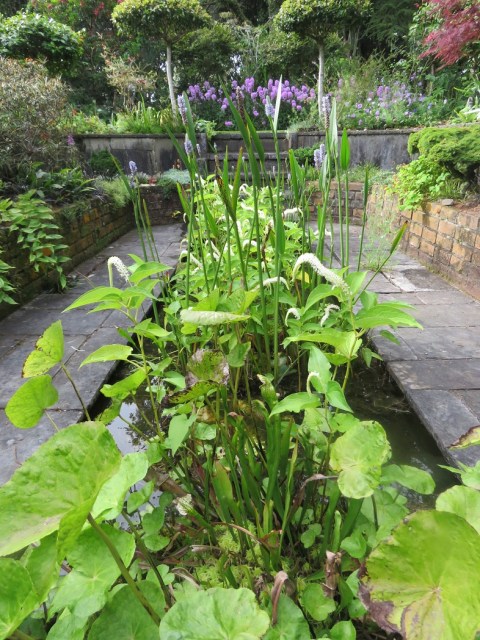 I spent a happy afternoon puddling in the goldfish pond. Every few years – well, maybe once a decade – Mark catches all the goldfish and drains the pond entirely to start again. In the interim, it needs a bit of ongoing maintenance and the pondweeds and plants were building up too densely. I try and keep the plants to a central strip. The goldfish need cover from circling kingfishers. The weed is problematic but it can be kept from reaching choking proportions by scooping with an old kitchen sieve. There are worse ways to spend a quiet summer’s day when the temperatures are not warm enough to warrant swimming.
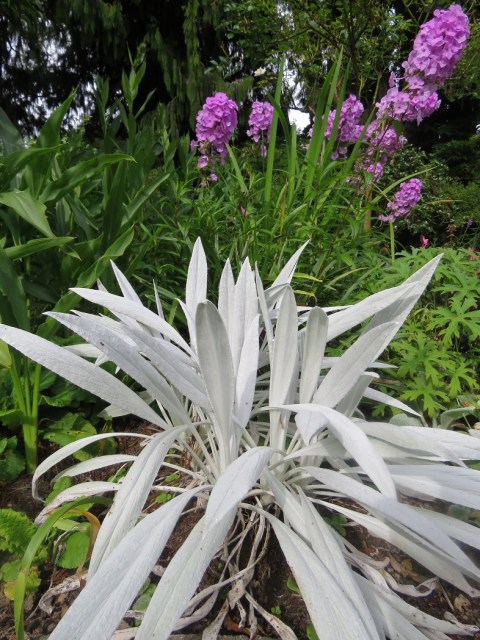
Stachys Bella Grigio
Sometimes good plants can be difficult to place. Take this Stachys ‘Bella Grigio’, new to the NZ market. It is very good – healthy, grows well, keeps its silver white colour, distinctive – so why does it stick out like a sore thumb in the garden? I saw it used extensively in somebody else’s garden a month or two ago and it didn’t look any better there, either. I just have not found the right place for it. The contrast with everything else around it is too stark and I do not think a stachys (otherwise known as lambs’ ears) should be shouting “look at me! Look at me!”. I will have to lift it soon or it will continue to annoy me. I am not convinced I am going to be able to place it here. Maybe it would just be happier in a much more contemporary, simpler garden of sharp contrasts, defined lines and limited colour range, rather than in our softer-edged, more fulsome, romantic style. The jury is still out on this plant, even though it is very good.
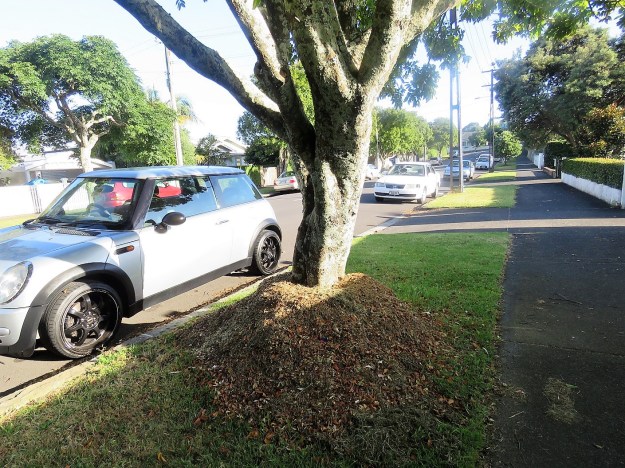 Well lookee here. When I was submitting three new articles a week to the Waikato Times – that was in the days before syndicated features and the resulting copy that became the newspaper equivalent of elevator muzak – I used to be on constant alert for subject matter. Old habits die hard and I reached for my camera to bring you this example of what not to do, photographed on a street in Auckland’s upmarket Mount Eden.
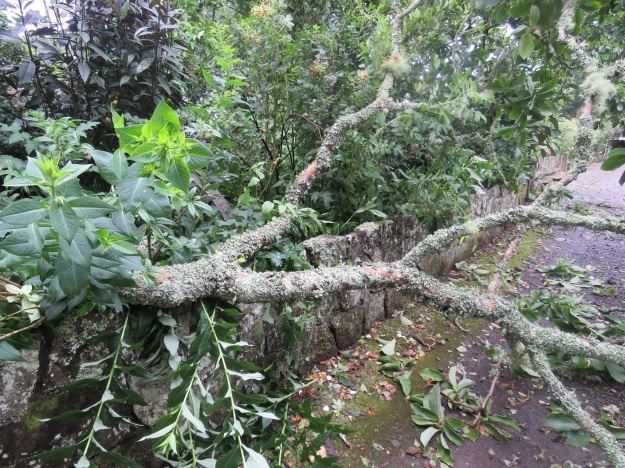 We had the next three days planned for a concerted swoop through the garden in preparation for a small UK gardening tour due on Thursday. While the garden is generally closed, this tour is coming through the Royal Horticultural Society – an organisation to which we have a few personal links and which has resulted in some really interesting and enjoyable garden visitors in the past. We maintain the garden at all times, but there are final grooming tweaks that make all the difference in presenting it well to paying visitors. We may be scrambling for the next few days with the added storm damage. Unless we get some of the elusive commodity this summer – uninterrupted sun – the lilies may not open in time to wow the visitors.
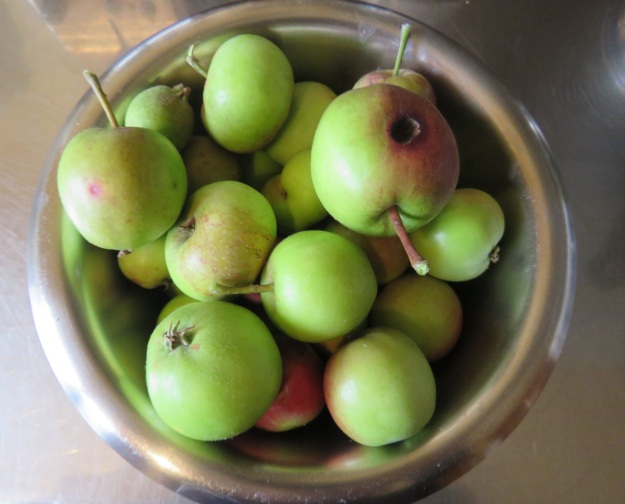 Yesterday was so miserable that I retreated to the kitchen, in part to deal with a surplus of Sultan plums. The tree is cropping very heavily this year but is not particularly flavourful. Mark put this down to his failure to thin the crop earlier in the season but I am sure the shortage of hot sun hasn’t helped, either. Jam, I thought. I shall make some Sultan plum jam, channelling my late mother-in-law who was the best jam-maker ever. These days I only make small batches – we are not great consumers of jam and a few jars for gifts are all I really need. I have learned that reducing the boiling time to set is what makes all the difference. Sometimes I resort to using the jam setting sugar which is, presumably, so heavily laced with pectin that it only takes 4 minutes of boiling to reach setting point. But I didn’t have any in the cupboard and it seems excessive to get in the car to drive to the supermarket for just one item. But fear not. I now know that one can make one’s own pectin by boiling up little green apples and those we have in abundance. I thinned some of the apple crops and chopped and boiled the fruit, using that liquid instead of water in the jam.
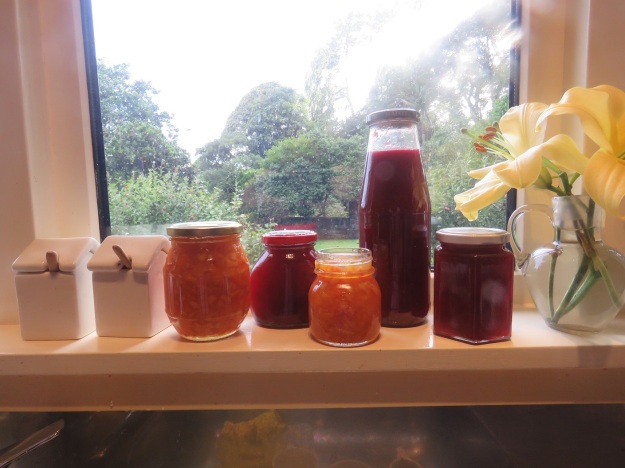 The result was a few jars of brandied Sultan plum jam though the brandy was a bit of a waste. I am not sure it is discernible except, maybe, to those with the most refined jammy palates. I then went onto fresh orange and ginger marmalade and finished up making some plum sauce. After all that, I felt so virtuous I opened a bottle of wine.
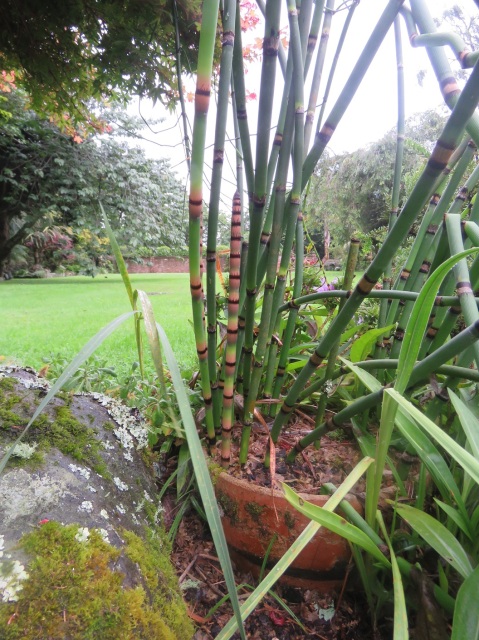 At least we knew the showy equisetum was invasive. I planted it in a pot because it was an interesting looking plant. It succeeded in breaking the first terracotta pot and making a bid for freedom but I was quick enough to nip that in the bud. This week, I will lift this second pot and get rid of it altogether. It is not good enough to keep sacrificing pots to the cause and it is a high risk plant. I asked Mark if he knew which species it was and he shrugged, saying he has zero interest in equisetums except he does know that it can be dried and used as a polishing agent, though we are talking about fine sandpaper polishing rather than furniture oil. We have another little equisetum that his father planted in the rockery and we have been attempting to eradicate ever since – for decades. We will not be inviting any more members of this ancient plant family into our garden.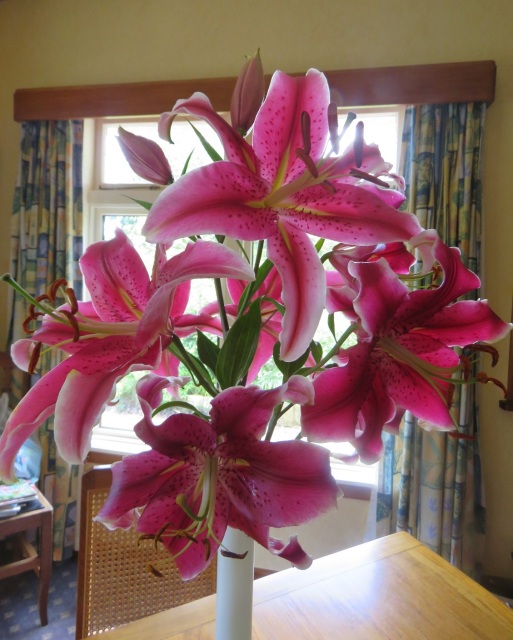

 That is how the snake entered our family. Theo admired it. He was still too little to pronounce his s’ss (or should that be esses, or maybe ‘isses?) and he always referred to it as “my ‘nake”. He had a great deal of fun with it for several years. Yes, you can harass New Zealand cats with fake snakes and even adults instinctively flinch when a snake’s head looms close. When he grew out of it, we relocated it to the Pinus ‘Beuvronensis’. I think it may be time to move it to the back shed and produce it with a flourish should our son, now in his late twenties, ever have offspring.
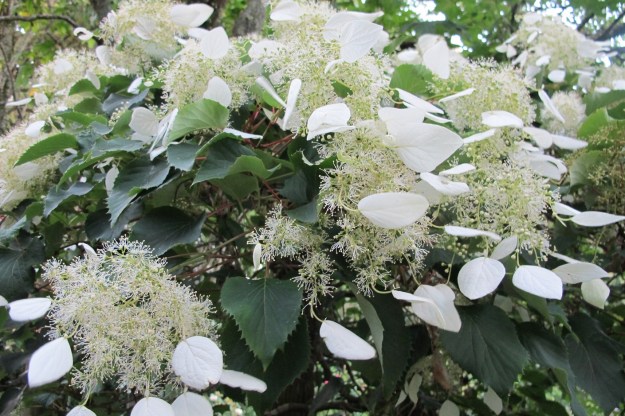 Yes, Schizophragma hydrangeoides looks like a climbing hydrangea but it is not the common climber which is Hydrangea petiolaris. This one comes from Japan and we prefer it to the usual form despite its difficult name. It is a close relative and a member of the same family but one step further back on the plant hierarchy from species to genus to family. Planted side by side, the schizophragma (pronounced skitsofragma or shyzofragma, whichever you prefer) is more floriferous and has significantly larger flower heads which seem to dance on the vine. This may be because its larger, winged petals (technically bracts, not petals) are held singly whereas H. petiolaris has its smaller bracts grouped in four, like a little flower all on its own. The schizophrama is self-clinging and relatively slow growing so it doesn’t take over and swamp neighbouring plants. It needs something to climb up, however. If left to ramble at ground level, it doesn’t seem to flower though it does layer its way along so you can get more plants from it by this strategy.
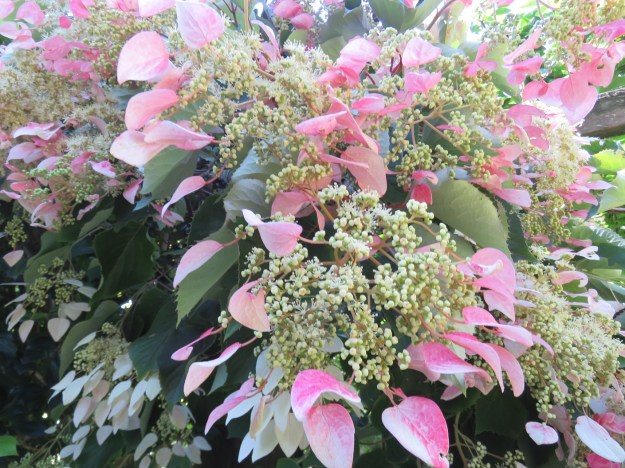 The pink form is even more unusual. This fact was often not appreciated in the days when we used to sell plants. I recall too many customers who were at best ABP – Anything But Pink, at worst IOBW – I Only Buy White (flowers). Such self-imposed rules can certainly limit appreciation.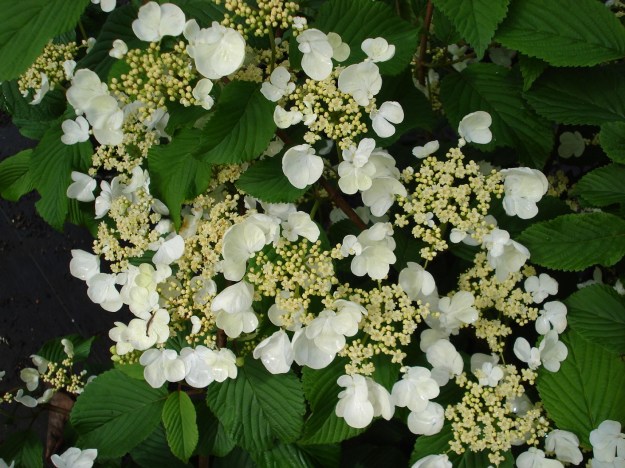
 Tikorangi The Jury Garden