
Hostas planted with Ranunculus cortusifolius, Chatham Island forget-me-not and meconopsis
November sees hostas looking their very best. We used to grow hostas when we were still running the nursery. From memory, it was in the vicinity of four or five thousand every year, year in and year out, across maybe 35 different varieties. There is not much we don’t know about propagating and growing this plant family in containers. We always sold plants raised by division – not from tissue culture – and earned a reputation for a large and luscious grade.
Growing plants in a garden is different and now that we are gardening full time, we have taken a great deal more interest in their long term performance. Not all hostas are equal. Nor are they quite the low maintenance plant that is often claimed. Once the ground around them starts to compact, it is not uncommon to suddenly realise that a well-established clump has reached the point where it is getting smaller not larger. Smaller clumps which are not thriving may disappear altogether, even though they are in the recommended humus-rich shade. They like cultivated soil and will do better if given better conditions, especially the touchier varieties.

One of Mark’s reliable blue seedling hostas
The one exception has been a run of big blue hostas that Mark raised from seed. These are still handsome, large and fine after maybe two decades with absolutely no attention at all. The same cannot be said of all varieties. Alas, a number of the fancy newer ones are better in pots than the garden.
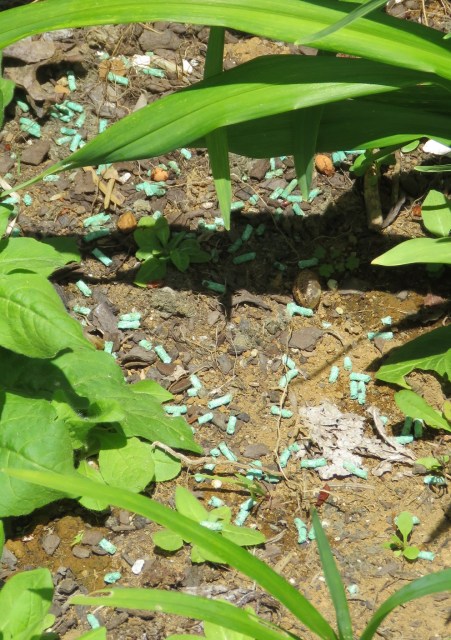
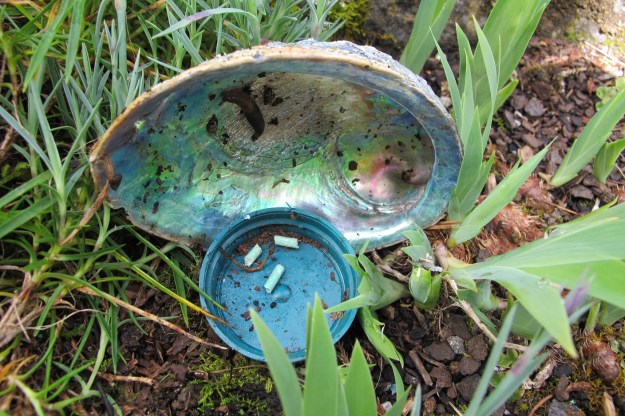
There is no doubt that hostas are a highly desirable dish on the smorgasbord of slug and snail food. I have seen plants eaten away to almost nothing, particularly in UK gardens where they seem to have a much worse problem than here, though I have been told Auckland snails may rival them. Should I therefore whisper that we don’t seem to have a big problem here? We so rarely use snail bait that neither of us can ever remember where the packet may be. Instead, we have reached an accord with the birds and they carry out constant pest patrols to keep the critters at bay. But if you are resorting to baits, remember that they are a poison, not a fertiliser. You only need two or three pellets per plant and more is not better. If you are not a slug bait fan, I did try the technique of baker’s bran and found that worked. Circle the plant generously with bran. I don’t think it actually kills the slugs and snails but they find it so irresistible they can’t stop eating it. Once in the gut, it swells and they lie around in a bloated fashion til the morning when the birds find them. Think of it as adding protein and fibre to the ornithological diet rather than subjecting them to toxins.
Softer leaves are more vulnerable to critter damage, so if you have an issue, go for the varieties with tough, almost leathery leaves.
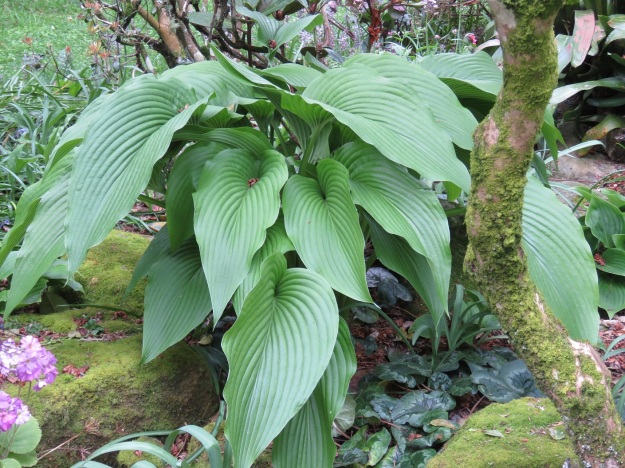
Hosta Jade Cascade
When it comes to locating them in the garden, it will be no surprise that we go for mix and match. Hostas love similar conditions to clivias, ferns, some of the primulas, meconopsis, Chatham Island forget-me-not and other plants which we use in damper, cooler situations of semi shade. They are not so keen on deep shade and will turn all green if they don’t get sufficient light. Gardeners in colder climates have more leeway in terms of sunnier positions but the yellows and pale variegations burn in the summer sun here.
 Many gardeners seem to prefer to group their hostas together in a hosta bed. It is not compulsory to plant them this way but if you prefer this look, I will repeat my advice given often to customers back in the days. Don’t be wooed into buying only the showy, variegated ones and bunging them all in together. It is the plainer hostas in single colours, and the variety in leaf form, shape and size that set off the fancy ones and avoid a mishmash. One fancy one to at least three plainer ones is my rule of thumb. These days, our preference lies with the solid coloured ones rather than variegated varieties.
Hands-on gardeners know that big clumps of hostas can be dug and divided in the same way as any other perennial plant. In terms of timing, it is best to do this in winter or early spring in our climate.
Running a mailorder business taught me never to take anything for granted. Hostas are deciduous, a fact that eluded one customer. “I am not happy with my order,” she wrote. “It looks as if there has been a rabbit in the box, eating the foliage. Or if they are deciduous, I don’t want them.”
It is the fresh foliage in spring that is the highlight for this plant family and some varieties will follow up with a showy floral display in shades of white, blue or, most commonly, lilac-purple shades in summer.

Hosta Regal Splendour (front) and Fragrant Blue
First published in the November issue of New Zealand Gardener and reprinted here with their permission.
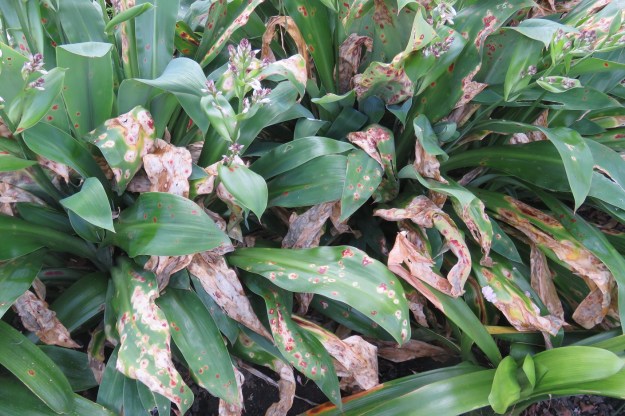 Our native renga renga lilies are an immensely handy, low maintenance plant for semi shade. However Arthropodium, most commonly A. cirratum, can run into problems. This is particularly evident this spring which may have something to do with the dreary, cool and wet conditions. I saw it out and about while garden visiting around the region last week, most commonly in well established clumps. The unsightly spotting and markings on the foliage looks as if it is a rust but apparently it is not.
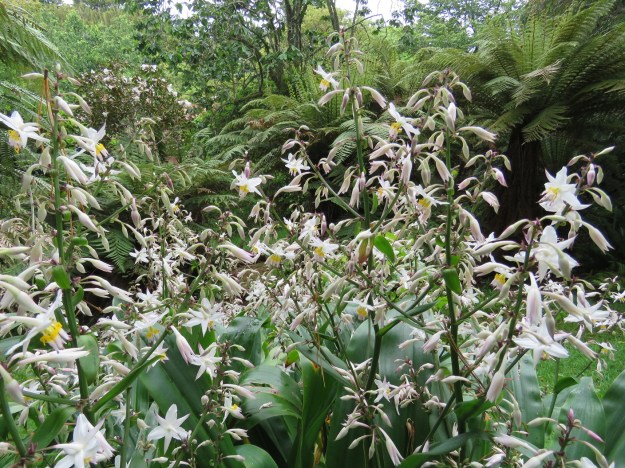 Because the nematode apparently lives in the leaf, not the soil, it seems unlikely that badly infested plants will grow out of it on their own accord. Firstly, look at the infected plants and note whether they are the oldest, best established clumps in your garden. Also take stock of any plants showing clean foliage or very little damage. Our course would be dig out and dump the worst affected plants. Clean up and dig over the ground and either replant with clean renga renga lilies or an alternative. If you have clean plants in your garden, these can be lifted and divided. It may be that they are not showing damage because they have developed some resistance. Given optimum growing conditions and increased air movement, the plants are likely to respond with vigorous new growth. If you only have a few affected leaves, then cut them off but you can only compost them if you make compost that is hot enough to kill bugs and diseases. Otherwise, you are going to have to remove the foliage well away from the site to prevent re-infecting your new plants.



 Tikorangi The Jury Garden