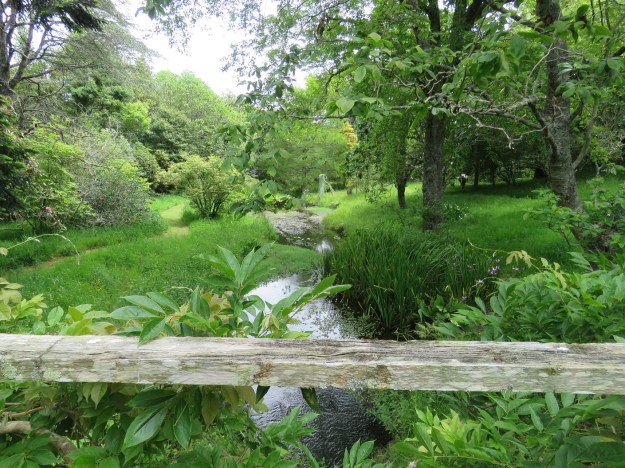
The new meadow look in our park – long grass and mown paths
Wildflower meadows sound so delightfully romantic and evocative. And they can be in practice, but there is not just one way of achieving this.
When we talk about ‘wildflowers’ in New Zealand gardening, we are not talking about our own native wildflowers. They are native to somewhere but not here. Most people think of mixes of cornflowers, simple poppies, nigella, cosmos, maybe Queen Anne’s lace and the like. What are sold as wildflowers here are generally a mix of flowering annuals, though not the highly-bred ones that are used for potted colour and bedding plants. You can call it gardening because it is generally necessary to cultivate the soil, eliminate at least some of weed regrowth which will swamp the chosen annuals, plant the seeds and water them in. Merely broadcasting them on poor ground is rarely successful. These sowings of mixed annuals are usually disappointing in the second year because the influx of weeds and grass will swamp out most of the plants that have managed to seed down and the effect is very different. So it is gardening with annual flowering plants in its simplest form with next to no hard landscaping. It is also best suited to drier climates without the strong grass growth we get here and not prone to torrential downpours which will flatten these gentle, elongated plants. Charming though areas of mixed annuals sown in this way can be, it is not for us. And I would describe it as gardening with annuals, not a wildflower meadow or a wildflower garden.
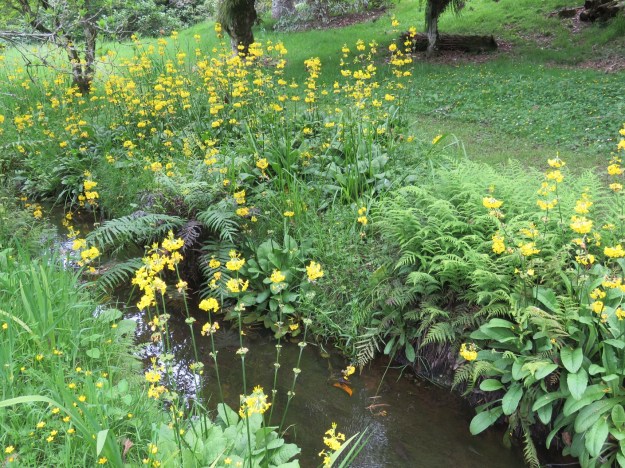
Lots of Primula helodoxa in our meadow at this time of year
Our interest starts with meadows now. This presupposes a heavy presence of grass and many plants that are deemed weeds in more cultivated areas. Why meadows? Four reasons:
- Meadows make a hugely greater contribution to natural ecosystems than mown grass. They provide food for bees, butterflies and other insects while offering cover to the smaller creatures of the natural world.
- We are seriously discussing and experimenting with techniques of lower input gardening where possible. Mark has become increasingly concerned at our heavy reliance on the internal combustion engine to maintain our garden – the lawnmower, weed-eater, leaf blower, hedge trimmer, rotary hoe and more. We have already phased out most spraying and fertiliser use – preferring to use our own compost – so the run-off from our property will be neither toxic nor high in nitrogen. Next up was to consider ways to significantly reduce our usage of petrol powered engines.
- We are mindful that we have a large garden managed by just three of us. Because we have no plans to retire off the property, we need to ensure that we can maintain the garden to the standard we want into the future as we age. This is another reason for finding ways that are more sustainable in the long term.
- We like the simplicity of meadows, the romanticism and the natural feel. We wanted to see if we could manage it in our garden.

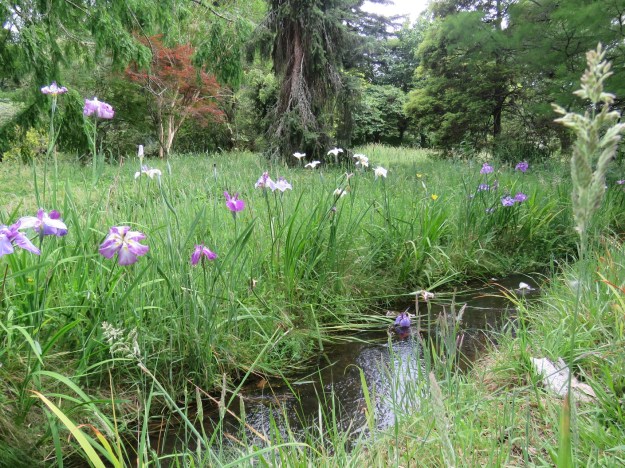
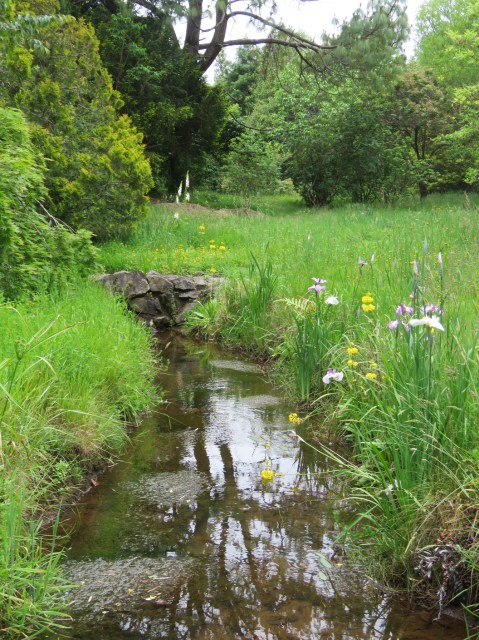
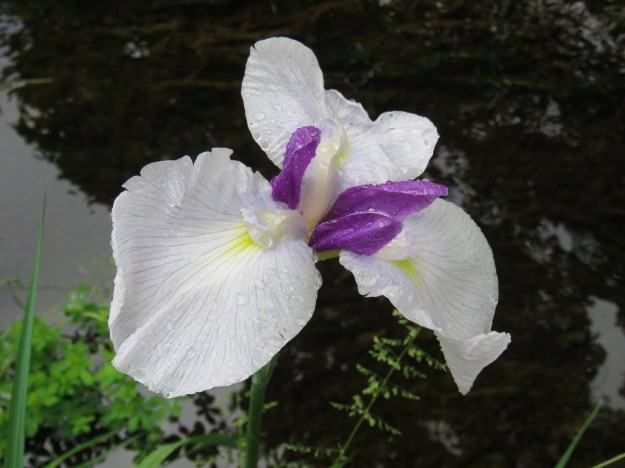
Higo iris and primula are looking pretty this week
We closed the garden to the public three years ago and immediately started experimenting in the area we call the park. With its variable terrain and a stream flowing through, this area was originally planted by Mark’s father, solely in trees and shrubs, and it covers about 4 acres. A small flock of sheep kept the grass down and most weeds at bay. When we bought the Rolls Royce of lawnmowers (a Walker mower) that could cope with all the steep slopes, we banished the sheep, removed the fencing and started mowing the park on a regular basis. The areas that couldn’t be mown were kept down with the weed-eater. Finally, Mark could start some underplanting.
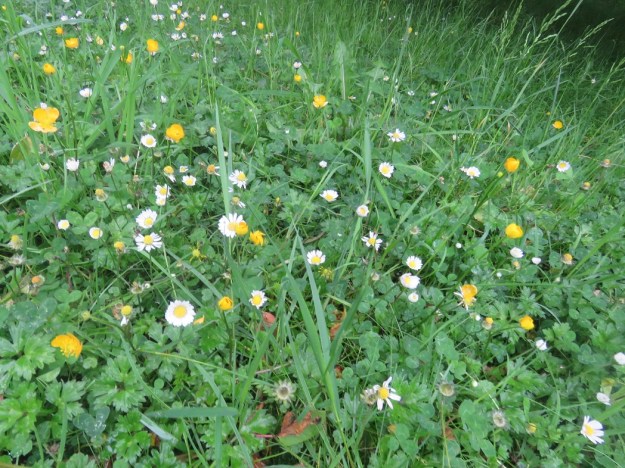
 Now we have long grass with mown paths through it. After three years, there is increasing diversity in the plants moving in. Many are commonly seen as weeds and the whole debate about weeds needs more attention another time. Not just buttercups, daisies and dandelions, though we have those in abundance. We also have Herb Robert moving in (Geranium robertianum), clover pink and clover white, foxgloves, self-heal (Prunella vulgaris), Mark’s stinking billy-goat weed (a stachys), montbretia and more. I am not keen on the docks or thistles, so I try and dig those out. Mark is particularly pleased that we had a lot more brown top in the existing grass mix than he had thought because it has beautiful silky seedheads that wave in the lightest of breezes.
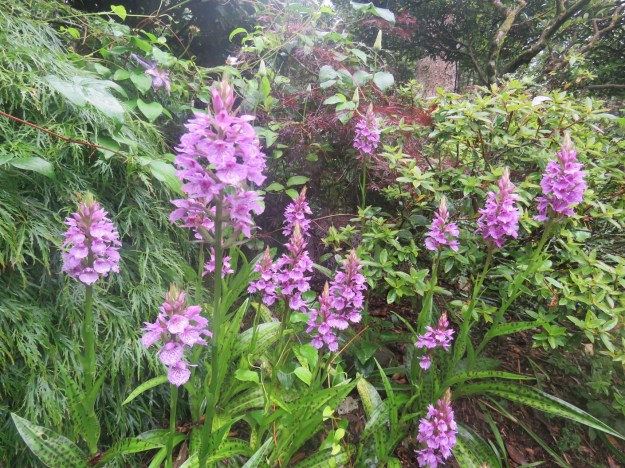
To these ‘volunteers’ (or genuine wildflowers that have made their way of their own accord), we add our own enhancements – primulas beside the stream, along with a range of other marginal plants and irises. Even sarracenia and a few orchids (the dactylorhiza orchids work though most of the disas died out). The Higo iris are coming into bloom and what a delight they are. In autumn and spring we have bulbs and we no longer have to worry about mowing off the foliage too early.
The placing of mown paths throughout has been successful, giving a contrast between the walking areas and the natural meadow, though it helps to have Mark’s good visual instinct to get the form of the paths sorted from early on so that they meander gracefully. At my request, these were widened to be two mower widths across – a single width looked a bit mean and perfunctory.

The Walker mower
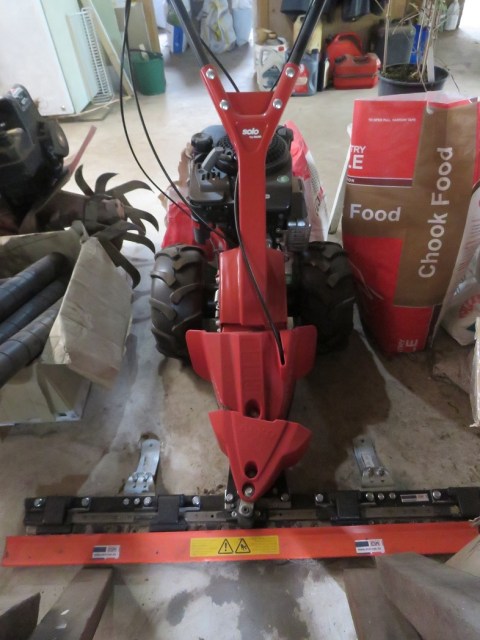
New sickle bar mower
We mow everything once a year in autumn and I have to admit this involved the purchase of a new internal combustion engine – the sickle bar mower. The lovely ride-on Walker was never designed for the mowing of the meadow, being better on grass that is kept consistently shorter. The sickle bar emulates the motion of an old-fashioned sickle and is designed to cope with this sort of situation. We do not follow the British wisdom of removing all the hay to keep fertility low. It is not practical in our situation and our meadow is a year-round affair because of our mild climate where plants keep growing even through winter.
Going into our fourth year, we are saying ‘so far, so good’. It is not for everyone, but we love the look. If we are still continuing the park as a managed meadow in another five years, we will then be willing to announce that it has been successful for us. The mid-term report is that we have achieved a meadow and it is certainly meeting our four reasons for starting the experiment.

A treasured memory – our second daughter in a dry climate flowery field in the Nelson area around 1994
Postscript: Ken Thompson in The Sceptical Gardener writes about real meadows and I quote just a brief excerpt there: “it actually is a meadow in the sense of an area of perennial grass and wildflowers, managed by annual cutting.” He goes on to discuss what he calls the ‘annual meadow’ – drifts of annuals. “The problem is that ‘annual meadows’, whatever they are, are not meadows; they don’t look like meadows, and nor are they managed by meadows.”
He draws on a British garden writer and TV presenter about poppies. “Nigel Colborn reports that a visitor to his garden asked why his meadow had not wild poppies in it. Nigel had to explain, kindly and tactfully I’m sure, that no meadow since the dawn of time has had poppies in it, and that poppies belong in cornfields.”
Thompson also has an interesting chapter about the common lore that wildflowers do better in areas of low fertility. This is a book to put on Christmas present lists, as I said in my review earlier.



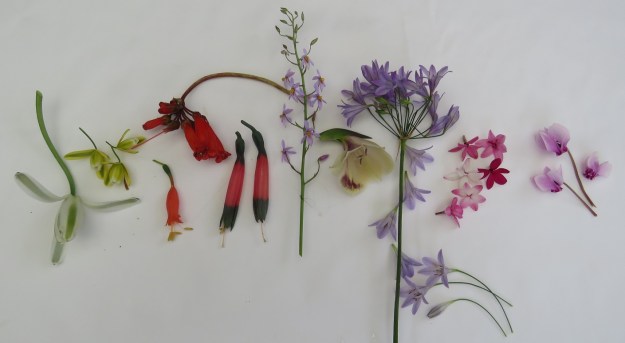 “Good thing we are not drying out too much,” Mark observed wryly as we faced another day of rain. This is a variant on his usual “Good news! The drought has broken”. While technically summer, our very wet spring continues. I entertained myself by doing a bit of a stocktake of bulbs in flower in mid-December and assembling one of my flower boards.


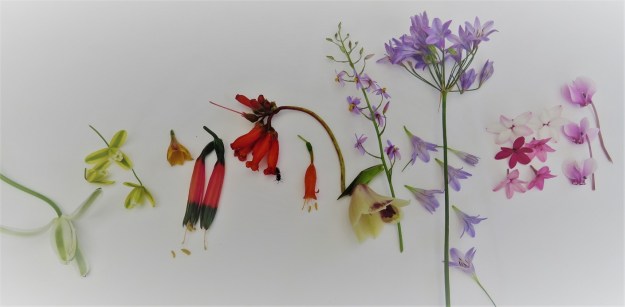 From left to right, we have two albucas (more shortly),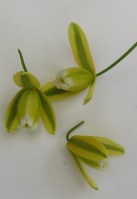
 December was memorable last year. Finally, we achieved the water meadow effect we have been striving for in our park. This was thanks to the iris and to our learning how to manage long grass in ways other than cutting it.
 There are anything up to 300 different species of iris but the one that comes to mind most frequently is the bearded iris. These are ephemeral delights in our climate with its high rainfall, high humidity and fertile soils, so a joy in bloom in October but over all too soon. The so-called Dutch iris flower earlier in spring. These are hybrids of 3 lesser known species, often somewhat derided, seen as a little vulgar even, but they can look charming enough in the right setting and are easy to grow.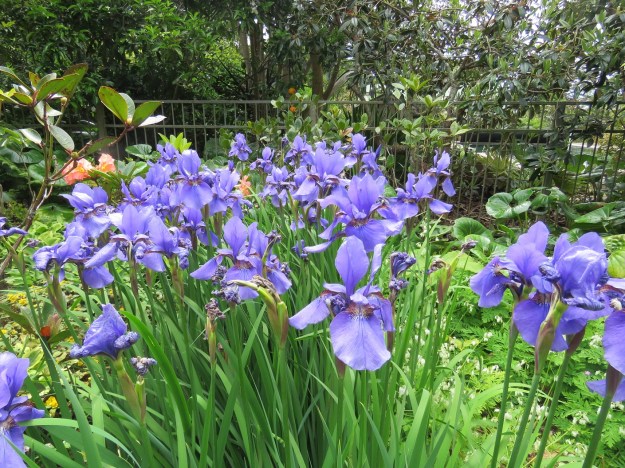
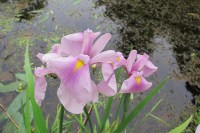 In early spring this year, I spent a few muddy days down by our stream,
 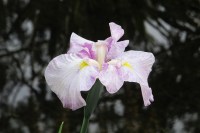 potential to grow and we didn’t think that establishing mats of flag iris all the way to the ocean was a good reflection on us. In digging them out, I can tell you the dense mat they form is not unlike wild ginger. I replaced them with a mix of Higos and sibiricans which may spread by seed but don’t form the choking, solid mats.
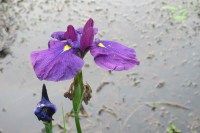 Every time the Higos bloom, we think most kindly of Auckland plantsman, Terry Hatch. Years ago, he gave Mark a tray of germinating seedlings which were reputedly from wild gathered seed. Mark had tried growing Higos earlier but without success. They are not a species, but a group of Japanese iris bred extensively over 500 years in the quest for the single perfect bloom to bring indoors, in that wonderful
 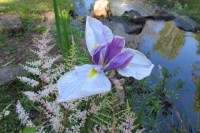 pared-back style perfected in Japan. The requirements of a garden plant are very different and those highly refined hybrids did not perform. The seedlings from Terry – about 700 of them in the end – gave us a huge range in colour, size and style and they have settled in most satisfyingly by the stream. By this I mean they are performing very well year after year, with no attention at all but without any indication of becoming a weed. I tried some in a perennial border and they grew and flowered well, but their leaves are very long and tend to swamp other plants in the months before they go dormant.
 What we love about the water iris is the contribution they make to a softer-edged, naturalistic style of gardening which we increasingly favour. A return to a more romantic garden style. It took my breath away last December. I am looking forward to a repeat this month.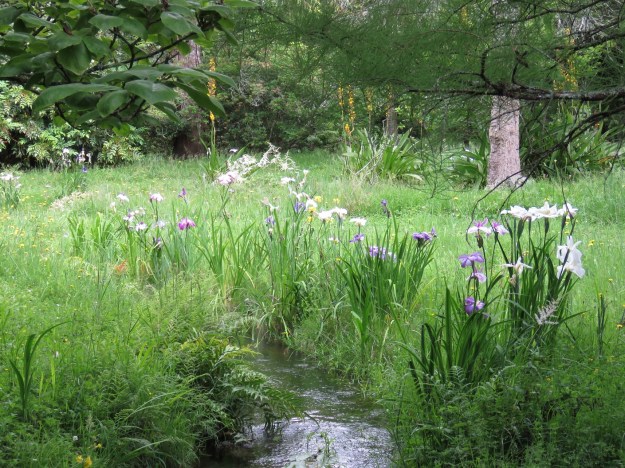
 First published in the December issue of New Zealand Gardener and reprinted here with their permission.

 Tikorangi The Jury Garden