
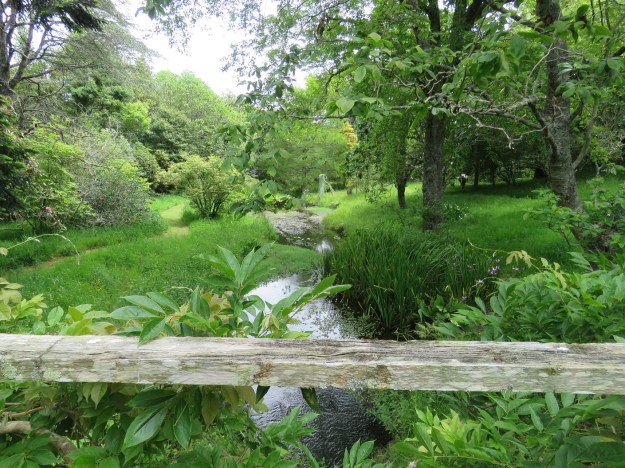
 December was memorable last year. Finally, we achieved the water meadow effect we have been striving for in our park. This was thanks to the iris and to our learning how to manage long grass in ways other than cutting it.
 There are anything up to 300 different species of iris but the one that comes to mind most frequently is the bearded iris. These are ephemeral delights in our climate with its high rainfall, high humidity and fertile soils, so a joy in bloom in October but over all too soon. The so-called Dutch iris flower earlier in spring. These are hybrids of 3 lesser known species, often somewhat derided, seen as a little vulgar even, but they can look charming enough in the right setting and are easy to grow.
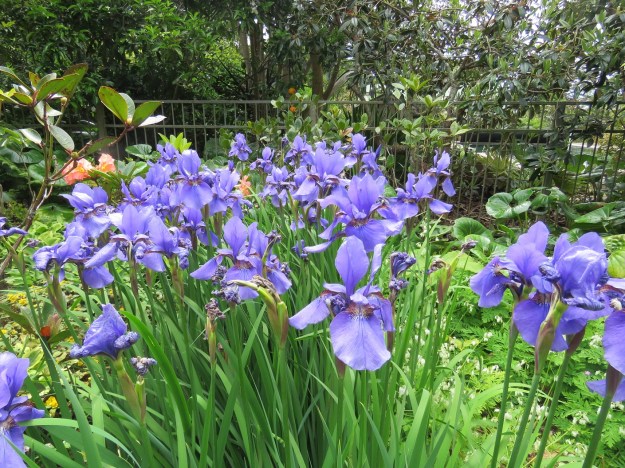
Iris sibirica
November is the month of the sibirican iris which are happier in our wet conditions. The most common bright blue form is ‘Caesar’s Brother’ but there are other selections around which flower at slightly different times and extend the season well into December. The common name of Siberian iris suggests that they originate in Siberia – which they do, but they are not limited to that area in the wild, growing instead right across Northern Europe as far east as Central Asia. Unlike the bearded iris which prefer sandy, lighter soils where their rhizomes can bake in the sun, the sibiricans thrive in heavy soils and on the margins of wetland areas.
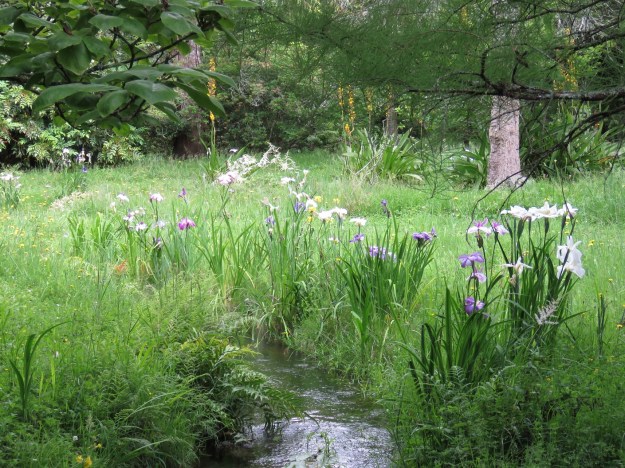
 In early spring this year, I spent a few muddy days down by our stream, digging out the yellow flag iris. We had several large clumps of these and they flowered well every year. Alas, they are a recognised weed in this country and we felt we needed to take an ethical stand and remove them because they were planted by and in running water. Every piece of rhizome that breaks off or gets washed downstream has the
  potential to grow and we didn’t think that establishing mats of flag iris all the way to the ocean was a good reflection on us. In digging them out, I can tell you the dense mat they form is not unlike wild ginger. I replaced them with a mix of Higos and sibiricans which may spread by seed but don’t form the choking, solid mats.
 Every time the Higos bloom, we think most kindly of Auckland plantsman, Terry Hatch. Years ago, he gave Mark a tray of germinating seedlings which were reputedly from wild gathered seed. Mark had tried growing Higos earlier but without success. They are not a species, but a group of Japanese iris bred extensively over 500 years in the quest for the single perfect bloom to bring indoors, in that wonderful
 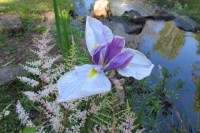 pared-back style perfected in Japan. The requirements of a garden plant are very different and those highly refined hybrids did not perform. The seedlings from Terry – about 700 of them in the end – gave us a huge range in colour, size and style and they have settled in most satisfyingly by the stream. By this I mean they are performing very well year after year, with no attention at all but without any indication of becoming a weed. I tried some in a perennial border and they grew and flowered well, but their leaves are very long and tend to swamp other plants in the months before they go dormant.

Mark’s Louisiana seedlings
Our water iris are something of a United Nations when we add in the Louisianas. Indeed, these do originate from that American state though, like the Higos, they are not a pure species but a group. There are at least five different species of iris native to Louisiana and it is likely that what we are growing are hybrids. They have been settled in down by the stream for many years now but we only have a few different ones. Inspired by the success of the Higo seedlings we got from Terry Hatch, Mark has been experimenting with raising Louisianas from seed to extend the range of flower colour and size and the results have given us more to plant out in the ponds on the other side of our garden, in the area we call the North Garden.
 What we love about the water iris is the contribution they make to a softer-edged, naturalistic style of gardening which we increasingly favour. A return to a more romantic garden style. It took my breath away last December. I am looking forward to a repeat this month.
 First published in the December issue of New Zealand Gardener and reprinted here with their permission.
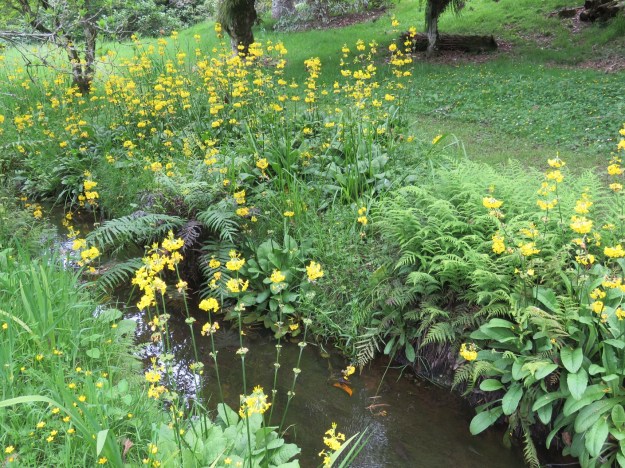

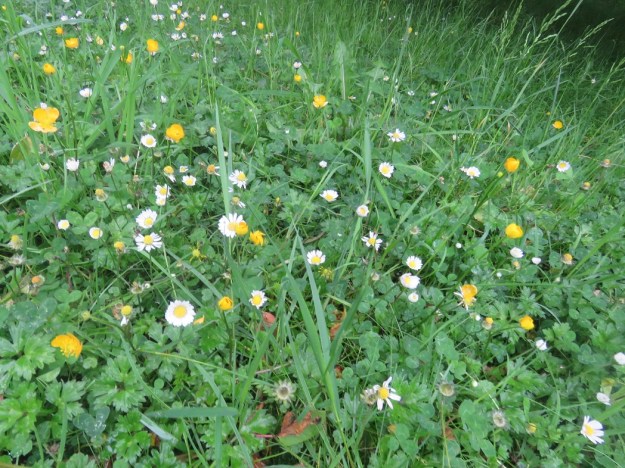
 Now we have long grass with mown paths through it. After three years, there is increasing diversity in the plants moving in. Many are commonly seen as weeds and the whole debate about weeds needs more attention another time. Not just buttercups, daisies and dandelions, though we have those in abundance. We also have Herb Robert moving in (Geranium robertianum), clover pink and clover white, foxgloves, self-heal (Prunella vulgaris), Mark’s stinking billy-goat weed (a stachys), montbretia and more. I am not keen on the docks or thistles, so I try and dig those out. Mark is particularly pleased that we had a lot more brown top in the existing grass mix than he had thought because it has beautiful silky seedheads that wave in the lightest of breezes.





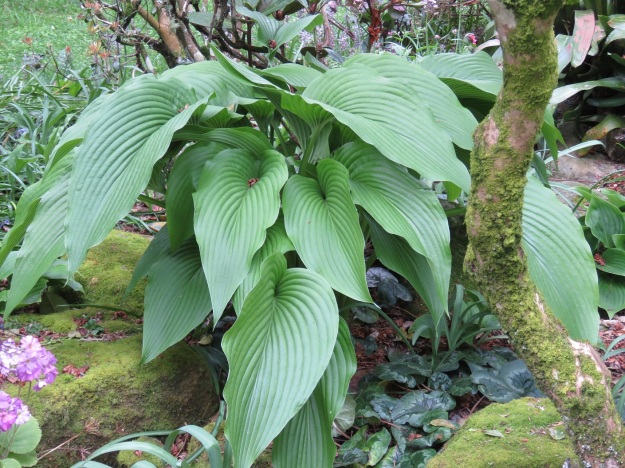
 Many gardeners seem to prefer to group their hostas together in a hosta bed. It is not compulsory to plant them this way but if you prefer this look, I will repeat my advice given often to customers back in the days. Don’t be wooed into buying only the showy, variegated ones and bunging them all in together. It is the plainer hostas in single colours, and the variety in leaf form, shape and size that set off the fancy ones and avoid a mishmash. One fancy one to at least three plainer ones is my rule of thumb. These days, our preference lies with the solid coloured ones rather than variegated varieties.
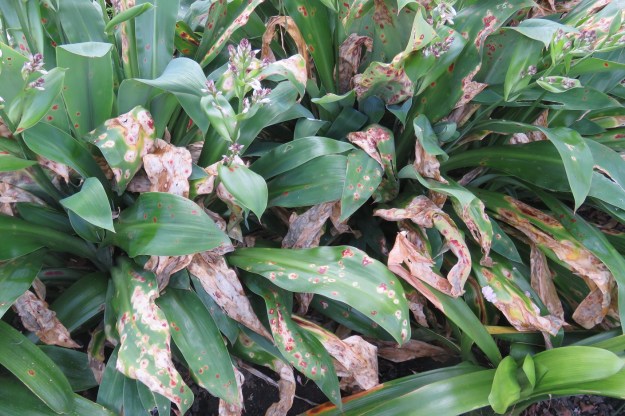 Our native renga renga lilies are an immensely handy, low maintenance plant for semi shade. However Arthropodium, most commonly A. cirratum, can run into problems. This is particularly evident this spring which may have something to do with the dreary, cool and wet conditions. I saw it out and about while garden visiting around the region last week, most commonly in well established clumps. The unsightly spotting and markings on the foliage looks as if it is a rust but apparently it is not.
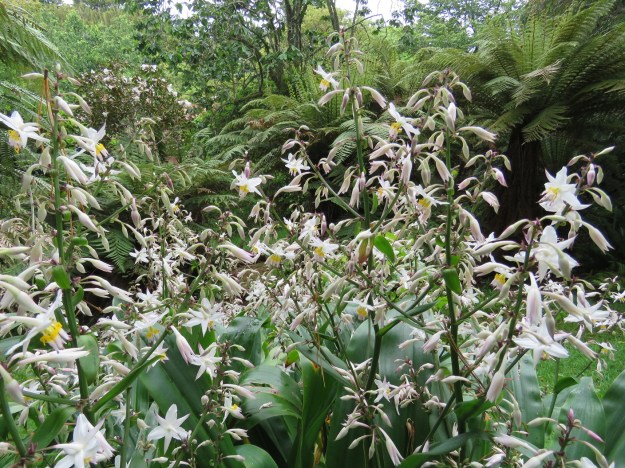 Because the nematode apparently lives in the leaf, not the soil, it seems unlikely that badly infested plants will grow out of it on their own accord. Firstly, look at the infected plants and note whether they are the oldest, best established clumps in your garden. Also take stock of any plants showing clean foliage or very little damage. Our course would be dig out and dump the worst affected plants. Clean up and dig over the ground and either replant with clean renga renga lilies or an alternative. If you have clean plants in your garden, these can be lifted and divided. It may be that they are not showing damage because they have developed some resistance. Given optimum growing conditions and increased air movement, the plants are likely to respond with vigorous new growth. If you only have a few affected leaves, then cut them off but you can only compost them if you make compost that is hot enough to kill bugs and diseases. Otherwise, you are going to have to remove the foliage well away from the site to prevent re-infecting your new plants.
 Tikorangi The Jury Garden