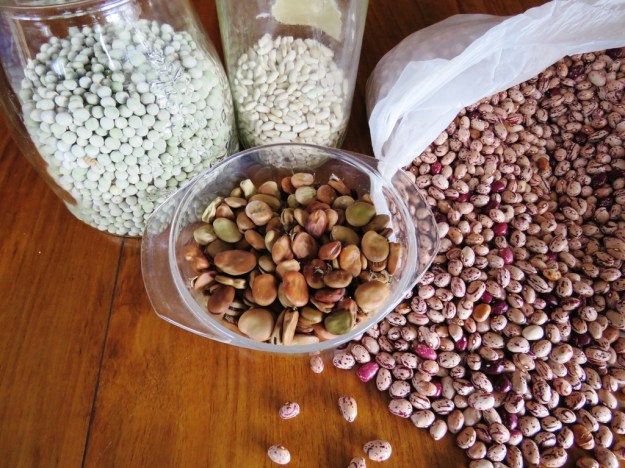
 The bean mountain started modestly enough. It was just the surplus from the summer crops that Mark didn’t want to waste a few years ago. Dried beans had not featured large in our diet. Homemade hummus yes, but always with bought chickpeas. At least I started with dried peas and not the instant tinned version. Beyond that, we had never really moved on from the trendy mixed bean salads of the late 1970s. But the beans started to mount up at a faster rate than we were eating them.
At the same time, we made a conscious decision to reduce our meat intake. That started as one vegetarian meal a week, growing to be alternate evening meals of meat and vegetarian. Soon we found that the vegetable content dominated and meat-centred meals became rare. We are not vegetarian by any manner of means – I still use meat flavourings – but the meat content has become minor and often entirely absent. This change in eating habits has been driven both by environmental concerns and also evidence that as we age, a vegetable-centred diet is a great deal healthier. Bring on the beans!
Our beans have zero food miles and a very low environmental impact when it comes to production. I have nothing to do with the growing of them. That is entirely Mark’s domain. Fortunately he does the cleaning too. Sometimes I catch him sitting on a stool in the shed podding the dried beans while he listens to music. The compressor blows the detritus away from the beans in the 2015 take on winnowing. Having time for such simple activities is surely a sign of quality of life.
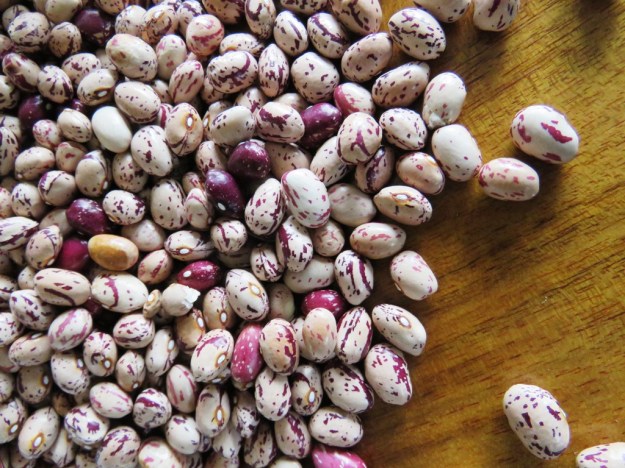
Borlottis are both decorative and excellent croppers
The one key element to increasing our bean consumption has been the discovery that soaking beans for a long time improves digestibility considerably. Our normal pattern is to soak for three days, changing the water twice daily. We took to adding the whey from yoghurt, acting on advice read from a moderately reputable source. It was only recently that I did a net search and found that whey is simply an acid and that vinegar or lemon juice can also be used. It is all about breaking down the troublesome oligosaccharides – complex sugars that the body can have trouble digesting.
I had NO IDEA that soaking beans was such a controversial topic until I did that net search. The internet is full of experts – hot soaks, cold soaks, soaking too long, not soaking at all, adding whey and/or other acids, adding baking soda, soaking on the bench or in the fridge, distilled water, rain water, soft water, added kombu. You can find whatever opinion you want. Alas, the one site I have failed to find again is the one I failed to bookmark – a scientific explanation in simple language, minus the woowoo and snake oil, explaining why soaking in several changes of water works.
All I will say is that we have found long soaking works for us. It also means that the cooking time is very short.
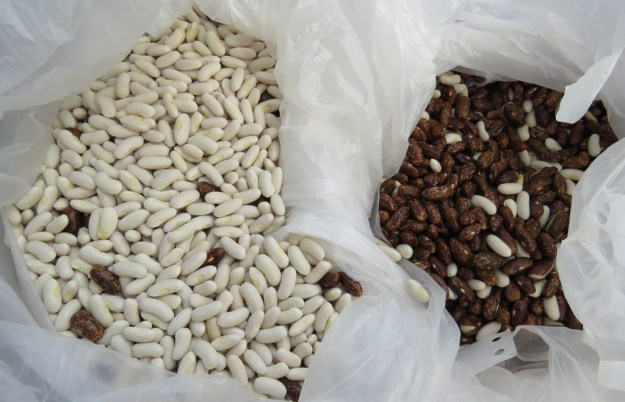
Variations on Phaseolus vulgaris with a little cross contamination
We have fava beans (broad beans), white beans, brown beans, an abundance of Borlotti beans and peas. For flavour, we favour the fava but without the addition of Chianti and body parts. They are also the most bother because each bean has to be individually de-husked. Generally, I cook them lightly (after the long soak) and then peel while warm. You get a feel for the timing and it is much easier if you get this right. Undercooked and the bean doesn’t pop out, overcooked and it breaks up. I am still trying to perfect the snack fava beans I tried in Malaysia – cooked then baked in the oven with a light spray of oil and a few flavourings. Bar snack style. I have reached the “these are quite nice” stage but not the “yum, these are delicious” goal. More often I use the fava beans for baked falafel.
There are a gazillion recipes out there but the other two standbys that I will mention are hummus and bean bread. Hummus does not have to be chick peas. Any bean will do. White bean hummus is probably my favourite. These beans can be a little bland in other dishes but are creamy and as tasty as any in hummus. Cornbread has become a favourite here, especially to accompany soup in winter, but required buying tins of creamed corn. Creamed beans, I found, are a perfectly acceptable substitute. I just whizz the cooked beans in the food processor with a little of the cooking liquid.
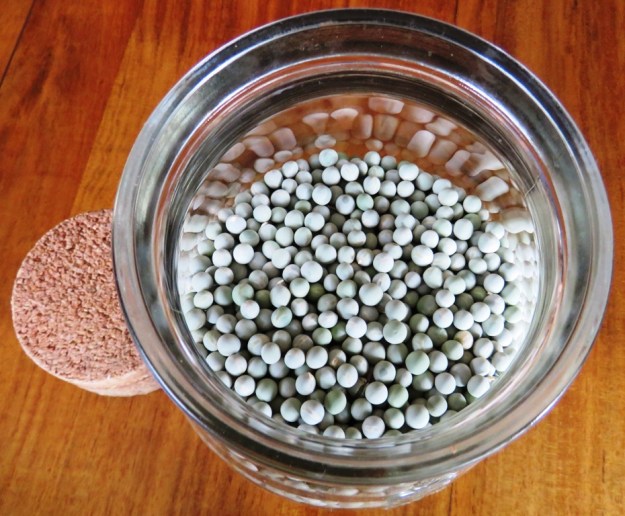
This is the blue pea but Mark is unconvinced by either crop yield or flavour so will keep to more traditional green varieties this season
Peas are somewhat less versatile and a quick look on the internet tells me that most dried pea recipes are of the pea and ham soup genre or Indian curries. That said, apparently hummus from dried peas is just as successful as from beans but with a different taste. Once the soup season has finished, I will try that.
Botanically speaking, most beans are phaseolus and the largest number of beans grown by the home gardener are Phaseolus vulgaris. They are just variants within the same species although runner beans are P. coccineus. Soy beans are Glycine max (not such a productive crop here) and broad beans are Vica faba. Mark is planning to up the lima bean crop this year – these are P. lunatus. When beans become a staple in your diet, it is nice to have a variety of different types.

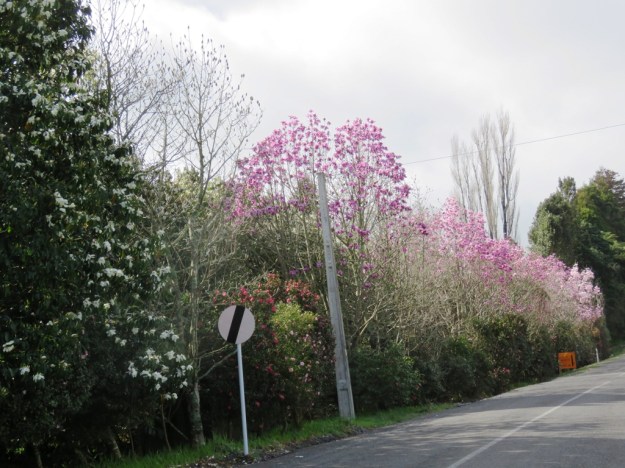

 Generally speaking, people talk to us about our boundaries full of flower and scent because they really like them. Indeed we often hear vehicles slowing down to get a better view at this time of year.

 Sunday was wet and gloomy so I picked hellebores to photograph indoors. And what a wonderful subject for photography they are. All I did was collect one representative bloom from a number of plants. This was more illustrative in intention than artistic endeavour.

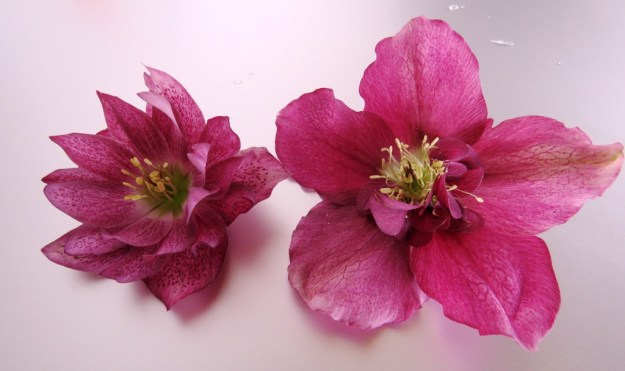 Mark has been raising hellebores in the nursery, in preparation for the upgrade. And he is interested in whether he can get better performing selections for our conditions. Generally, hellebores like a colder climate and the best ones we have seen are in areas with much more winter chill. The very dark flowered ones with bluish tones – referred to as slate – are not exactly booming here. Similarly, the doubles that we, and every other keen gardener at the time, rushed to purchase don’t seem to get much larger and showier than they were when we bought them over a decade ago. Mark’s seedlings may perform better though the wonderfully large pink with petaloids is probably blown up by nursery conditions. In the garden, the flowers may scale down.
 We have worked out that the desirable dark colours display far better as garden plants with the contrast of white flowers alongside. We will also banish all the murky ones to the compost heap. While clean pastel pink and green can be a charming combination, in hellebores these often lean to muted shades which are frankly of no merit. We also want plants that will fade gracefully and not to that dirty greenish brown which does not lift the soul.



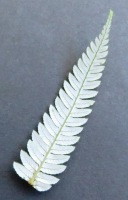 All New Zealanders know the silver fern, but usually as the logo or motif, not the real thing. Sure it is closely associated with our national rugby and netball teams, but how many realise it is a ponga? A native tree fern.

 Tikorangi The Jury Garden