Plant Collector: Narcissus bulbocodium citrinus “Pandora”

The first narcissus of the season - N. bulbocodium citrinus 'Pandora'

The first narcissus of the season – N. bulbocodium citrinus ‘Pandora’

Always the first little narcissi to flower in winter, these lemon hoop petticoats are pretty as a picture at the moment. I guess they gained their common name because they resemble those wired underskirts from times past. The bright yellow bulbocodiums flower later in the season. In contrast, the citrinus are very early, coming out with the snowdrops. These are easy bulbs to grow. In fact this clump is naturalised in hard conditions where our gravel driveway meets an elevated concrete path – which is why the flowers show some splash and wear. There is no mollycoddling involved with them but they do need good drainage and full sun. N. bulbocodium is native to the south of France, Portugal and Spain so will occur naturally in relatively hard conditions. Given that the foliage is distinctly grassy in appearance, you just need to make sure you are not mowing it off in the early stages.

Daffodils go far beyond the common big King Alfred types and we like a range of them so we can have them in flower for many months. We prefer earlier flowering ones overall because they are generally finished by the time the dreaded narcissi fly is on the wing. It lays its eggs in the crown of the foliage and each bulb becomes home to one fly larvae (big, fat creamy grub) which spends a year sustaining itself by eating the bulb from the inside out, only to metamorphose and repeat the cycle. A breeder told me that narcissi only need 65 days of growth to build up strength in the bulb for next year’s flowering so you can remove foliage early if you need to beat the fly. We also favour the littlies, the dwarf varieties, which are much more compact and showy in the garden.

Bulbocodiums increase readily by division and some will set viable seed.

First published in the Waikato Times and reprinted here with their permission.

Grow it Yourself: tamarillos

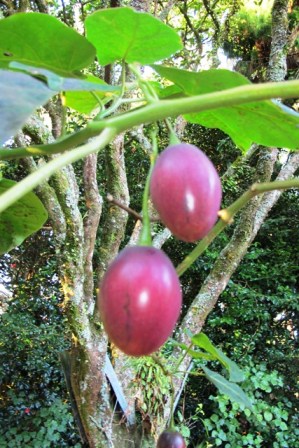
This is not a crop for inland or southern residents unless you have a holiday house on the coast. Even then, it is becoming an endangered species but ours still staggers on. This is another South American fruit which we have made our own in this country (along with the feijoa). In fact, it was NZ that conferred the name tamarillo. Older readers may remember when it was still called a tree tomato, though botanically it is Solanum betaceum.

Problem number one for inland gardeners is that it is very frost tender. It is a solanum so think same family as the potato and tomato (and nightshade but we can ignore that). It has to be completely frost free in its first year or so and will only take the lightest hints of frost once established. With its big, soft leaves and brittle growth, it doesn’t take kindly to wind, either. But readers, probably coastal, who can give protected and warm conditions, should have more success. It is not at all difficult to grow if you can find the right position.

Problem number two is more recent – the dreaded potato psyllid which is a fairly new arrival. It weakens the plant so badly that it usually dies. It takes up to two years for a plant to get large enough to crop, so it is relatively fast growing for a fruiting shrub. If you are really keen on tamarillos, it is probably advisable to keep raising replacements from cuttings, to ensure continued supply. They are not too bad from seed, either, though plants you buy will be superior selections. Because the psyllid is airborne, you can replant in the same area. Being a solanum, it is a gross feeder and will respond to rich soils full of compost and well rotted manure. Plants are self fertile meaning you only need one to get fruit though they do seem to crop more heavily in company.

First published in the Waikato Times and reproduced here with their permission.

Fragrant rhododendrons

This is my final feature written for the Weekend Gardener. However, I would urge readers to respond to their readership survey in this latest issue. They want feedback – give them your comments. Tell them what you think of the new directions they are taking. Do. Please.

First published in the Weekend Gardener and reproduced here with their permission.
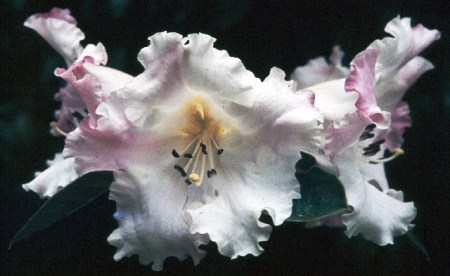
Floral Dance gets its scent from R. sino nuttallii but is a very different flower and plant.
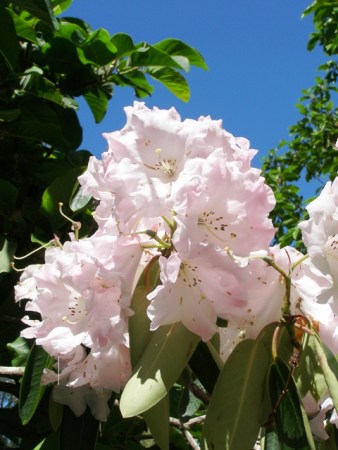
Floral Dance gets its scent from R. sino nuttallii but is a very different flower and plant.

Loderi Venus is one of the fragrant Loderi series but hard to find for sale and more of a small tree.

Loderi Venus is one of the fragrant Loderi series but hard to find for sale and more of a small tree.

Many people don’t realise that there are more scented rhododendrons beyond the well known Fragrantissimum or the Loderis, though these cultivars have certainly stood the test of time.

The early Loderi series were bred at England’s Leonardslee Gardens at the turn of last century and Fragrantissium has been around even longer. There is little to rival the Loderis even now for big, full trusses, but they are more akin to small trees than to shrubs. Added to that, they have to be grafted and there aren’t many specialist rhododendron nurseries continuing with grafting so they are not generally available on the market.

Most gardeners need plants which are more compact.

FRAGRANTISSIMUM
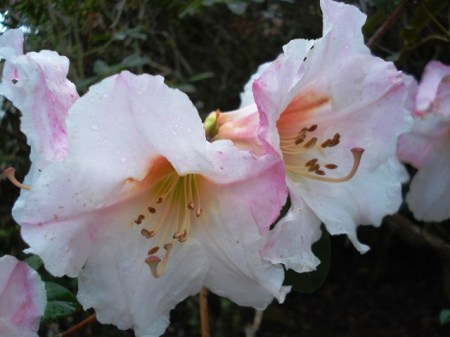
In the smaller growing, very fragrant white flushed pink class, Floral Gift is our preference

In the smaller growing, very fragrant white flushed pink class, Floral Gift is our preference

In the smaller growing, very fragrant white flushed pink class, Floral Gift is our preference. Fragrantissimum has been around since 1868 and is the best known fragrant rhododendron. It has a wonderful scent but it is a bit leggy and open and you don’t get many flowers to the truss. Its blooms are also rather soft, so it is inclined to weather mark. There are quite a few different options in this type with their scented blooms in white with a pink flush. Princess Alice, Elsie Frye and Harry Tag are all more or less similar. All are smaller growing (around a metre high) and have good scent but you need to encourage them to form a good shape by pruning and pinching out leggy growths at the right times. Our preference in that colour range is our own Floral Gift. It has a sturdier habit of growth and its large flowers are so heavily textured that it endures most bad weather without damaging the blooms.
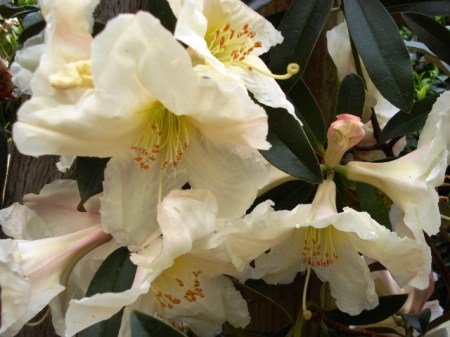
R. polyandrum is one of the most fragrant species with its huge blooms, but it is a larger grower with a very open habit.

R. polyandrum is one of the most fragrant species with its huge blooms, but it is a larger grower with a very open habit.

FRAGRANT SPECIES
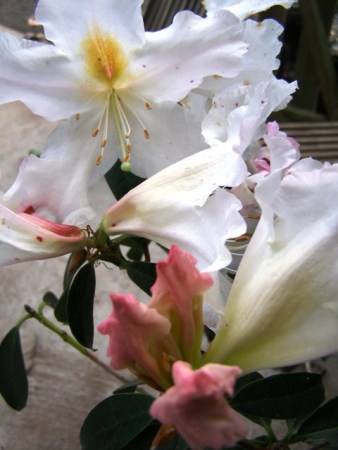
R. cubitti is a fragrant species which is easy to grow but because it flowers very early, it is not suitable for cold climate areas.

R. cubitti is a fragrant species which is easy to grow but because it flowers very early, it is not suitable for cold climate areas.

Most of those we grow as garden plants are hybrids – crosses between different varieties of rhododendrons. There are a number of fragrant species but these are not always easy to grow. In fact many are downright difficult. But the ones which have proven their worth as garden plants for us include the following:

R. polyandrum is the fragrant parent of many hybrids and is so strongly perfumed it will stop you as you walk past with its scent hanging heavy in the air. It has enormous cream flowers with each bloom measuring at least 12cm across. The flowers are soft so weather mark easily and the plant is rather leggy and open in growth, but where space allows, it is a wonderful garden addition.

R. maddenii is hardy for New Zealand conditions and has very heavy textured flowers which feel as if they have been cast out of wax. It is usually white with a pink flush and it flowers late in the season which makes it a good choice for colder areas. It is another relatively large grower in the two metre range.
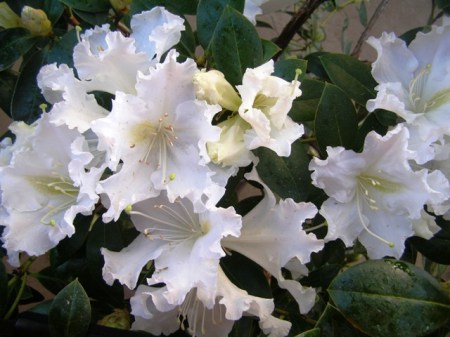
For frost-free areas, R. veitchianum is a gem with its pure white, frilly, scented flowers.

For frost-free areas, R. veitchianum is a gem with its pure white, frilly, scented flowers.

R. cubittii is a pretty, frilly pink and white with good scent. It is an excellent smaller grower to around 1.5m and will even take full sun but the downside is that it flowers early in the season. This means that in cooler areas, it needs some protection from frosts or the flower buds will freeze and fall off and it won’t be happy at all in really cold, inland areas.

R. veitchianum is even more tender. In fact it is has about the same hardiness as a vireya rhododendron which means that any frosts more than a degree or two will not only destroy the flowering but also burn the foliage. But it is a great option for warm areas of the country and it will reward you with pristine white, frilled flowers smothering the bush in early spring and good fragrance. It also has a tidy, compact habit of growth on a smaller growing plant.

FRAGRANCE AND COLOUR

While we all love the fragrance of flowers, the plants are not producing this scent to please humans. Generally it is linked to attracting the right insects for pollination. While the rhododendron relatives of deciduous azaleas and some vireyas will use both colour and scent, fragrance in rhododendrons is generally linked to white and pale colours. You won’t find big bold, full trusses of red, blue or purple rhododendrons with scent. Part of the hybridist’s quest is to try and get new varieties with combinations of desirable characteristics.
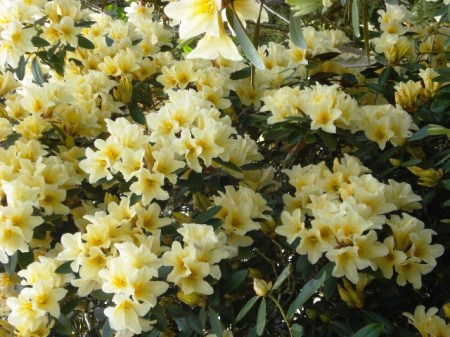
Felix Jury’s series of R. polyandrum hybrids brought a greater colour range to scented rhododendrons in New Zealand - Barbara Jury

Felix Jury’s series of R. polyandrum hybrids brought a greater colour range to scented rhododendrons in New Zealand – Barbara Jury

SCENTED HYBRIDS
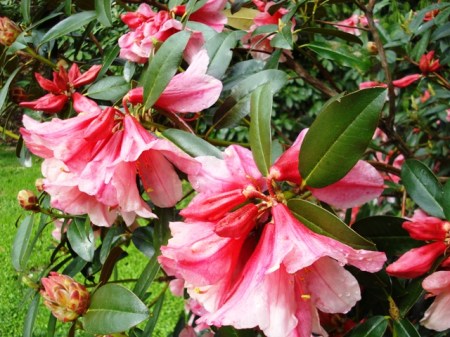
Bernice

Bernice

The late Felix Jury (yes, he was my father in law) set out to try and combine fragrance, colour and healthy foliage and named a series of new rhododendrons. Many of these are still available on the market today. None of them have the big full trusses of the traditional rhododendron, but they have many other aspects in their favour, including performing well in warmer climates. His R. polyandrum hybrids all have scent, though not as strong as their scented parent. They do, however, make tidier garden plants and bring more colour. These include Bernice (crimson tones), Barbara Jury (pure yellow fluted blooms), Moon Orchid (frilly apricot and yellow) and Felicity Fair (more pastel honey colours).
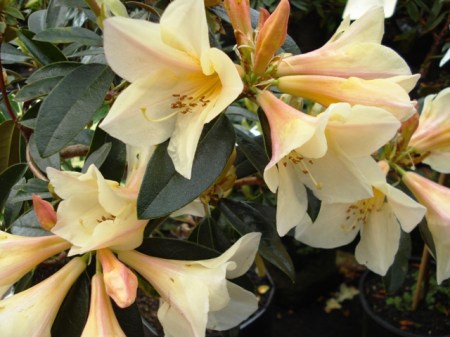
Felicity Fair

Felicity Fair

R. sino nuttallii (the sino just means it comes from China) is a magnificent rhododendron species with fragrant white trumpets but it is rarely available for sale. It has, however, given birth to two colourful offspring which are compact growers and much easier to produce so more widely available. Floral Dance (above) has very frilly, very fragrant, large trumpet flowers in white with a yellow throat and deep carmine blush and tips. The heavy textured dark foliage is a bonus. Floral Sun is a half sister with pretty soft golden flowers. Its fragrance is not as strong (which means getting close enough to put your nose by the flower to smell it) but the mass of pretty flowers and the tidy, compact growth make for an excellent garden plant.

Whether we ever get a big red Rubicon or a big blue Bumblebee with strong fragrance is unknown territory but it will be by the hand of the plant hybridiser, not nature, if it happens.

Moon Orchid

Moon Orchid

Floral Sun is the soft yellow half sister of Floral Dance and becomes a very tidy, compact garden plant with masses of blooms.

Floral Sun is the soft yellow half sister of Floral Dance and becomes a very tidy, compact garden plant with masses of blooms.
Tikorangi Notes: Friday July 6, 2012

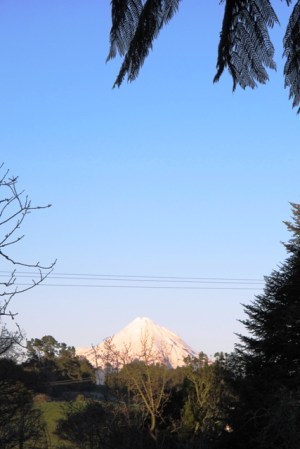
Our maunga, Mount Taranaki

Our maunga, Mount Taranaki

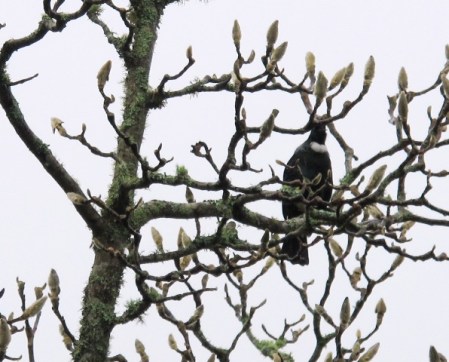
The tui are back

The tui are back

Latest posts: Friday July 6, 2012

1) Fragrant rhododendrons – the final feature article I have written for the Weekend Gardener. So you only want scented plants in the garden? There are fragrant rhododendrons to choose from.

2) The understated elegance of Helleborus orientalis in Plant Collector this week.

3) Reviewing the role of container plants. Do they add anything to the garden other than work?

4) Grow it yourself – celery. We don’t because Mark won’t, so I buy it but you can if you wish. The word from Mark is that it is not that easy to grow well and the one year he got it absolutely right, we only hate about two complete heads of celery and the rest went to waste.

5) In the Garden this fortnight. The final in this series I wrote for Weekend Gardener. It’s on gloriosas this week.

6) Outdoor Classroom revisited – sharpening garden tools. Everybody says do it but nobody says how.

Tikorangi Notes: Friday July 6, 2012

As you may gather from above, I have resigned as a contributor to the Weekend Gardener so the pieces first published there will cease after today. But do not let that stop you – please take the time to fill out their survey and let them know what you think of the changes they have made with their new management.

The three new posts a week from the Waikato Times will continue uninterrupted. Though if anyone has any ideas for replacing Grow Your Own, I would appreciate hearing. There are a finite number of vegetables and I am nearing the end of all available options, even allowing for extensions into some herbs and soft fruits.

In the meantime, great winter weather has seen plenty of sun, mild days (15 degrees yesterday) and very little wind. The mountain has a good covering of snow and is looking its most spectacular. More camellias are opening flowers and the tui and kereru are here in good numbers. It won’t be long before the magnolia season starts.

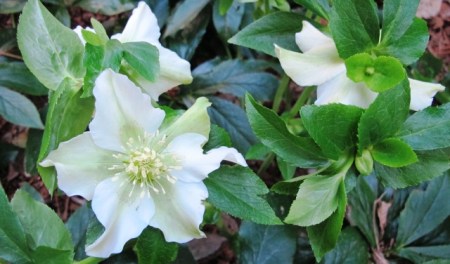
Plant Collector – Helleborus orientalis

Helleborus orientalis - quiet and undemanding stars of winter

Helleborus orientalis – quiet and undemanding stars of winter

Hellebores are quiet heroes in the winter garden. I have never seen a strident one. By far the most common hellebore is H. orientalis – though it is not from the Orient, being native to northern Turkey and Greece. It is a perennial which keeps its leaves all year round but in our experience it is not one that appreciates being dug and divided. Plants subjected to this routine can sulk for a long time afterwards. You are better to salvage some of the many seedlings you get around plants if you want more.

Given their origins, it is not surprising that these plants are happy to lead their quiet existence in fairly tough conditions, coping with root competition and shallow soils. This makes them ideal for semi shaded, dry areas beneath trees where it is not always easy to find suitable plants. However, they won’t appreciate dense shade. Lift the canopy of overhanging trees and shrubs to get more light.

Most hellebores come in shades of dusky pinks, reds, greens and white – or sometimes in blends of these colours and they often change colour with age. There are some highly desirable deep red and slate colours – the latter bringing blue-purple tones. However the performance of these appears to be temperature related. The colder your conditions (and these are cold hardy plants), the better colour you will get. The best ones we have seen were in Taupo and the UK where winters are considerably chillier.

If you have prized cultivars, keep them separate if you are hoping to raise seedlings. They are promiscuous plants and will cross readily. That said, to my mind, hellebores look best in big patches or drifts. Interplant with winter and early spring bulbs (bluebells, snowdrops, smaller growing daffodils are our preferences) to add interest.

First published in the Waikato Times and reprinted here with their permission.