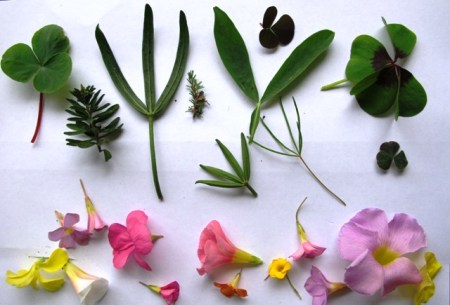
Oxalis show considerable variation in leaf form (and in flower colour)
Most people shudder at the mere mention of oxalis. The bad reputation of a few has tarnished the entire population. We would not be without the cheerful sight of them blooming from early autumn through winter, but the most common reaction from others is complete dismissal. I have even resorted to their colloquial name overseas – wood sorrel. It sounds so much prettier and more acceptable than oxalis.
Over the years, we have gathered up around 30 different ornamental varieties but these are a mere drop in the bucket. The oxalis family is huge. In the wild, the number of different species is into the late hundreds. That is not to say that they are all of great merit. Nor are they all bulbs. Equally, not all are invasive.

O. deppei "Iron Cross" grows and flowers in the opposite seasons to most ornamental varieties
Most oxalis are native to either South Africa or South America, though it is the former that gives us the majority of varieties which have garden merit. Most are triggered into growth by late summer rain, so they come into flower around this time of year. The two notable exceptions we have in our collection are both from South America. Oxalis deppei “Iron Cross” (named for the markings on its leaves) is from Mexico and going dormant now, to return to growth at the start of November. O. triangularis, with its triangle shaped leaves in deep burgundy, is Brazilian and also flowers in summer. I bought this one at a car boot sale where I commented that it was an oxalis that I did not have. “No,” protested the vendors. “It is not an oxalis. It is a triangularus.” I didn’t argue.
Some of these oxalis are perfectly safe in the garden. I can vouch for this after decades of growing them in the rockery where they have never threatened to become a weed. Others are downright dangerous. Turn your back and they will invade at alarming speed. Such wayward habits don’t mean you have to shun them. Keep them in pots. You can either plunge the pot into the garden (which reduces the need to water it), or have a collection on a sunny doorstep. Oxalis only open their flowers in the sunshine. When they have ceased being attractive, you can move the pots out of sight for the rest of the year. We have not had problems with them setting seed so as long as the bulbs are confined, they rarely escape.
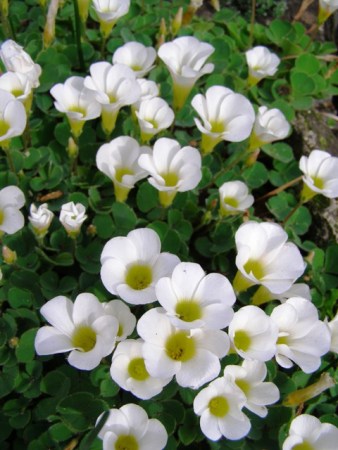
My all time favourite - O. purpurea alba
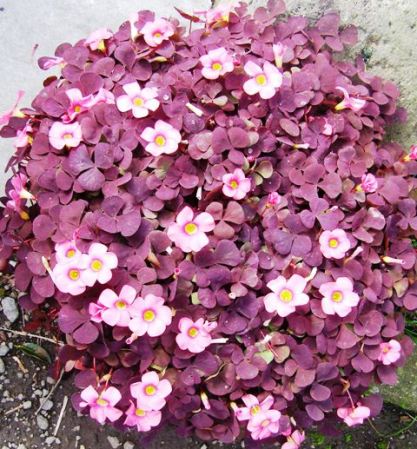
Same species but different form and very different behaviour. Keep O. purpurea "Nigrescens" confined to a pot
My all time favourite is the pristine white O. purpurea alba. It has an exceptionally long flowering season and is extremely well behaved in the garden. A mat of this plant opening up its large blooms to the sunshine is a delightful sight. Each flower has a golden eye. Purpurea is a variable species. The green form (same clover-like leaves but with large pink flowers) also has an excellent length of flowering but I haven’t had it long enough to know whether it is garden safe or not so I still keep it in pots. The reason for my caution is that O. purpurea ‘Nigrescens’, highly desirable for its deep burgundy foliage and big pink flowers, is dangerous. I have seen it invade an Auckland garden on heavy clay. It was as bad as the weedy varieties, just more ornamental. Keep it confined at all times.
My second place favourite is the lavender O. hirta. We also have a bright pink form of it, but the pastel lavender is prettier. This has very different foliage – trailing clusters of leaves. The range in leaf form is surprising. O. fabaefolia is often called the rabbits’ ear oxalis because its leaves look like pointed rabbits’ ears. It has a big yellow flower but a very short season.
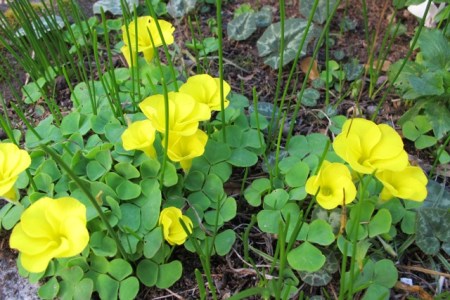
O. luteola - an excellent garden variety
Oxalis luteola, with its neat mat of clover-like leaves and masses of sunshine yellow blooms over many weeks, is another tried and true garden plant here. It has never been a problem in the rockery and gently grows amid other plants without ranging far afield. O. lobata is like a miniature form of O. luteola and equally garden safe.
Oxalis flower in colours from white, through the full gamut of pinks and lavenders to the crimson red of O. braziliensis, yellow, and apricot-orange tones. The well known O. versicolour has a pointed bud which is candy striped pink and white, like a traditional barber’s pole, though in the sun the flowers open to white. It is the only one I know which is showier when it is not open.
Oxalis (or wood sorrel, if that sounds better) are easy and fun to grow for a bit of cheer as the autumn draws in.

We keep O. eckloniana in a pot plunged into the garden
Growing oxalis in containers:
If in doubt, keep oxalis confined to pots in sunny positions.
• Pots can be plunged in the garden to reduce watering.
• Repot every year or two.
• Empty the pot onto newspaper and choose only the best looking bulbs. You will see which varieties have dangerous tendencies – either masses of tiny bulbs or long runners with too many bulbils attached. Throw the rest out with household rubbish to prevent any escaping.
• Free draining potting mix is recommended.
• If you have used a commercial potting mix, it will have fertiliser already added. If you are not repotting every year, the time to feed is as the bulbs are coming in to growth.
• Wide, shallow pots give the best display.
• Keep pots dry when bulbs are dormant to stop them from rotting out.
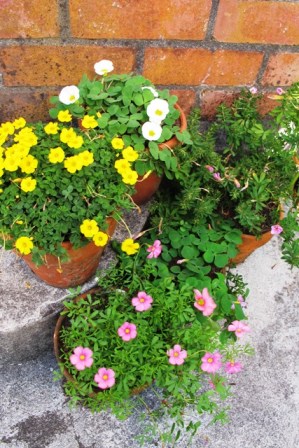
Perfect for sunny doorsteps
Dealing to the weedy ones:
There are no easy answers when it comes to getting rid of the weedy oxalis in gardens and lawns. O. corniculata is a creeping plant which doesn’t have a bulb so it can be weeded out. It spreads rapidly from seed and matures quickly so it pays to be vigilant and to dispose of plants in the household rubbish to avoid dispersing the seed. It can be green or red-brown in leaf and has tiny yellow flowers.
The pink or yellow flowered weedy bulb forms are more problematic, especially if they are growing through other plants. Glyphosate will kill them eventually, if you keep applying it every time you see leaves reappearing. I have never tried Death to Oxalis but it appears to need frequent reapplications as well. If you can lift all the other plants out of the garden border, you can sieve the soil or even replace it all. If you cover the area in black plastic and let it bake throughout a hot summer, it will sterilise the soil to some extent. Failing that, you just have to be persistent and vigilant, getting rid of every little bit you see.
First published in the Weekend Gardener and reproduced here with their permission.
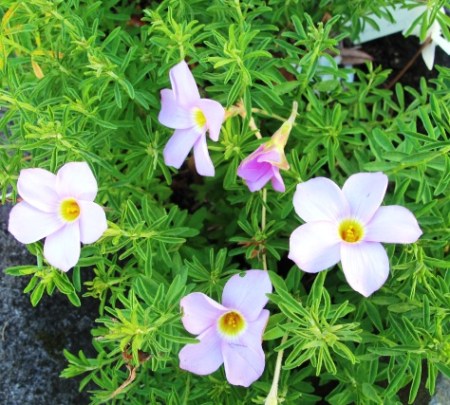
O.hirta lavender - second place favourite
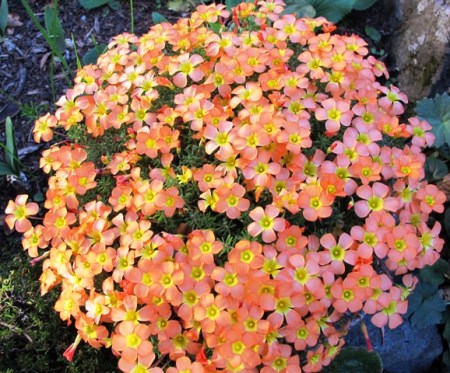
O.massoniana - massed in a wide, shallow container in full sun

O. polyphylla shows very different foliage
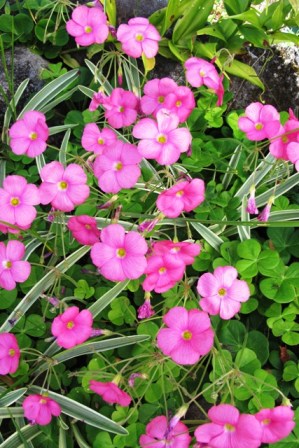
O. bowiei - bold and showy very early in the season



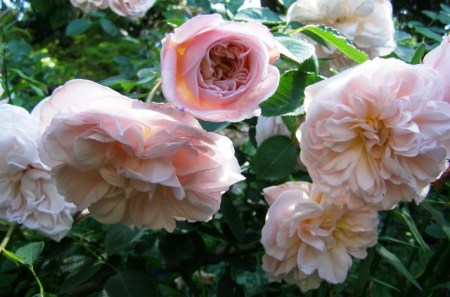
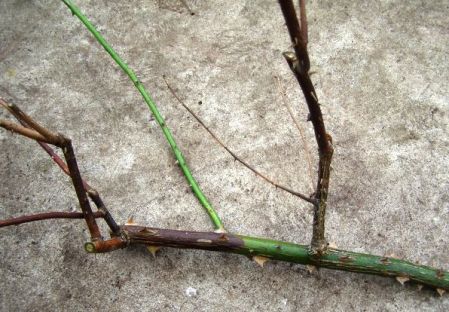
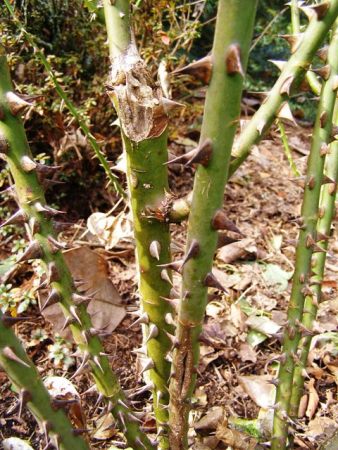
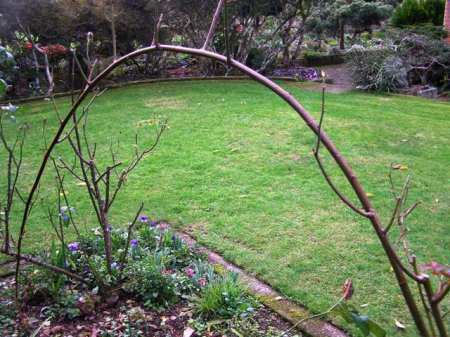
 4) Some roses put on very long, whippy growths. Where space allows, arching these growths over and tying them down (I use hoops of wire and a soft tie) forces all the buds along the stem into growth and greatly increases the floral display. Similarly, tying a climbing rose to a horizontal line, encourages that stem to flower all the way along rather than just on top.