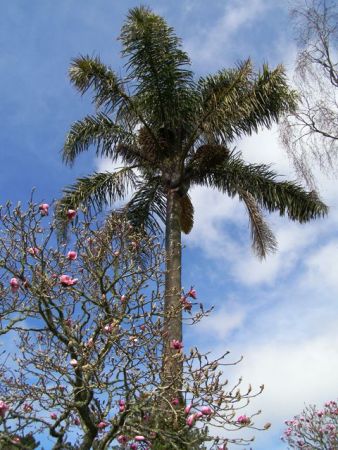
The handsome Queen Palm (Syragus romanzoffiana) comes with a warning
While I am a big garden specialist, gardening across hectares, not square metres, I have spent enough of my life selling plants and dispensing advice to understand that trees are problematic on the tiny urban sections that have become the lot in life for most people. I still think trees can be an option in small gardens or courtyards where a bit of height and form can give stature to an otherwise closed in space.
Worry about width, not height. I call it the footprint – how much space it takes up. Many people think that Magnolia Leonard Messell is a good option for small gardens because it only grows about 3 metres high. True, we have a specimen that is coming up to 30 years old and it isn’t much more than that – but man alive, it must be getting on for 5 or 6 metres wide. That is a lot of space. In fact it is about the same footprint as our large specimen Magnolia Iolanthe and nobody in their right minds would plant that in a tiny garden.

Magnolia Burgundy Star - a good choice where space is very limited
By contrast, Magnolia Burgundy Star is very narrow and upright. After fifteen years, the original tree here is about 5 metres tall but it is not much more than a metre wide. This means it can give height and presence without casting deep shadows and taking up room.
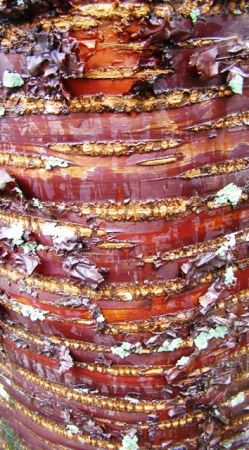
Prunus serrula - exquisite bark and narrow, upright growth
Flowering cherries tell a similar story. If you only look at the projected height so keep to lower growers like Prunus Shimidsu Zakura or sweet little weepers like Falling Snow, you are highly likely to get caught out by the width of the canopy over time and end up either brutally hacking into it or facing removal. Prunus serrula won’t give you the mass of fluffy flowers but it has wonderful bark and an obliging habit.
Palms, you may be wondering. Some upright, single trunked varieties like the bangalow (Archontophoenix cunninghamiana) or the more desirable Queen Palm (Syragus romanzoffiana) grow splendidly tall while taking minimal space. They are much favoured by landscapers for confined areas. However, they should come with a warning. They become too tall to groom so you have to let the spent fronds fall naturally and the sheath at the base of the frond is so heavy that it will break anything in its path, potentially ripping the spouting off your neighbour’s roof or causing panel damage to any vehicle in its path.
Conifers are often favoured – the narrow pencil cypress is the traditional look. Personally, I think they are a bit funereal and sombre, but others disagree. Conifers are not an area in which I have any expertise but you need to make sure that you have a variety which is not prone to red spider mite and be cautious if you think you will trim – many conifers don’t appreciate trimming and you can end up with unsightly bare patches.
Key pointers for choosing trees for small gardens:
1) Choose one that grows from a single trunk. Multi trunked and branched specimens take up a lot more room.
2) Keep to very narrow, upright growth. Shun anything with danger words like spreading, cascading, weeping or arching in the description. Think pillar-shaped (known as fastigiate).
3) Be cautious about a specimen you will have to prune regularly to keep under control. Anything over 2 metres high means you need a ladder and probably a pruning saw and loppers. It is better to plant the right sort of tree in the first place so that trimming requirements are minimal. By my definition, if it is under 3 metres, it is a shrub, not a tree.
4) Remember that it is not in the nature of trees to grow rapidly to the height you want and then to stop getting any taller. Trees that grow quickly will usually keep growing well beyond that. Small tree usually means slower grower. If it matters to you, pay the extra and buy an advanced grade specimen.
 If you can find a tree with lovely bark or a seasonal flower display, then it is so much more interesting. Apropos of this, I came across a wonderful book recently by Waikato authors and tree-lovers, John and Bunny Mortimer. “Trees and their Bark” was published in 2003 but, being self published, I don’t think it received the attention it deserved. It is a delightful book, very readable with plenty of colour photos, by authors who know the topic inside out. It is still available and what is more, it is being remaindered at a ridiculously low price. I would not pass it by – it is worth having in the bookcase even if you are not in a position to plant trees. You will find the Mortimers listed in the Hamilton phone book or the white pages on line – there can only be one Bunny Mortimer.
Bunny’s pick for a small tree which can be grown on tiny sections is psuedocydonia which she feels ticks all the right boxes. You may have to get a copy of their book to find out more about it – it certainly has very striking bark as well as quince-like, fragrant fruit following on from japonica flowers. The only problem is finding it. You will probably have to grow it from seed.
First published in the Waikato Times and reproduced here with their permission.
-39.042098
174.300314

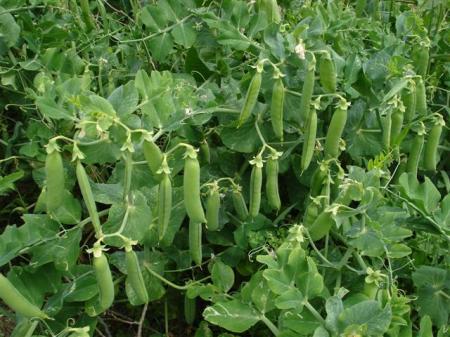 Peas are a marginal crop in mild climates. They tend to be much more reliable and productive in cooler areas. The frozen products in the supermarkets are ridiculously cheap to buy and of very high quality. So the reasons to grow peas at home are less related to quality and volume and more related to life’s simple pleasures. The satisfaction of picking fresh peas to serve with Christmas dinner is an adult pleasure. The opportunity to browse fresh peas in the garden, popping them from the pod straight into the mouth is a delight that every child should experience and one that does not wane with age. Raw, fresh peas don’t last well so are rarely nice if you buy them. You need them straight from the plant.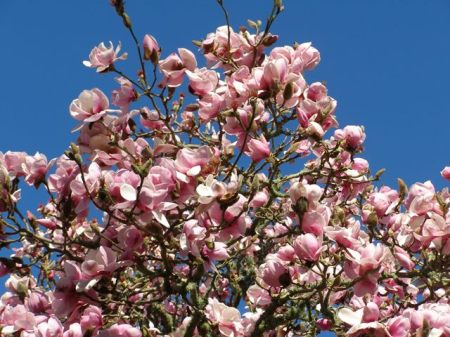


 Tikorangi The Jury Garden