Tikorangi Notes: June 18, 2010

LATEST POSTS:

1) June 18, 2010 Camellia Diplomacy to breach closed doors in China in 1970 didn’t work, but the correspondence from Rewi Alley to Mark’s parents is pretty interesting forty years later – Abbie’s column.

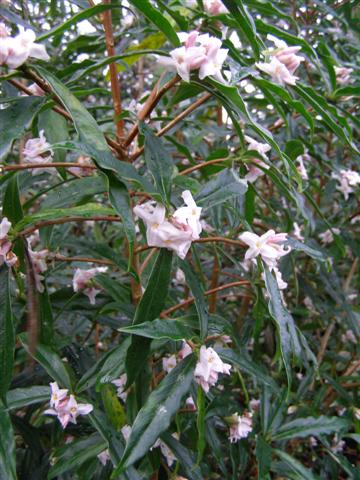
2) June 18, 2010 The flowers of Dombeya burgessiae make a change to the more common camellias putting on a mid-winter show.

3) June 18, 2010 In the garden this week – recommended tasks from winter pruning, cleaning up pleione bulbs to the short directions on preparing an asparagus bed. Don’t forget to plant only NZ grown garlic.

4) Our annual garden festival at the end of October is still four months off, but gardeners around the province have preparations in hand and are counting down to Festival.

Mandarins - fetching winter colour in the garden

TIKORANGI NOTES:
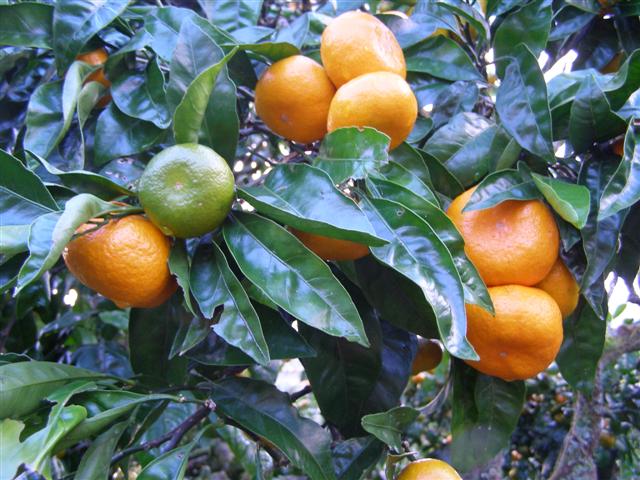
The winter sight of mandarins ripening in the garden here at Tikorangi never fails to delight me. My memories of my Dunedin childhood in the relatively deep south are of mandarins as a fleeting seasonal luxury to be treasured and savoured. I couldn’t believe the sight of entire trees dripping in the little orange orbs when Mark first brought me to his family home. This particular one is easy peel and productive but not the best flavour. However, it puts on a splendid visual display and combines well with the ferns, orange and yellow Lachenalia aloides beneath.

Rescuing the lawnmower from a watery slide

We are sodden here and entire days without rain are a rare treat, or so it seems after the last couple of weeks. Mowing the park yesterday, Lloyd managed to put our prized Walker mower in a slide which saw it in imminent danger of gently slipping into the stream. A chain and the tractor were called for. Roll on spring.

Correspondence from Rewi Alley and holding back the encroaching deserts in China's northwest in the early 1950s

My late mother-in-law’s archives came home recently. Very late mother-in-law, to be honest. She died about 1985 but the local museum decided recently her archives were of no interest and returned them. After the slight chagrin at being told this, we are very pleased to have them back because we found all sorts of interesting material. The detailed instructions on how to wax your camellia blooms can wait (that is for those devotees who are absolutely dying to learn the lost art of waxing camellias). One of the historical gems from the collection was the correspondence from Rewi Alley.

If you are much under the age of 50, you may have to google Rewi Alley. He is certainly one of our most interesting and colourful ex-pats having upped sticks and gone to live in China in 1927, there to stay for the rest of his long life which he dedicated to improving the lot of the Chinese peasant. He saw out civil war, acute famine, the Japanese invasion, the rise to power of Chairman Mao and communism, the Cultural Revolution and China’s isolationist policy, achieving venerated status by the time he died in the late 1980s.

Do not ask me how Mark’s mother, Mimosa Jury, ever found an address for Rewi Alley in Peking, as it was still known back then. But find one she did and that can not have been easy, given that she was writing to Alley in 1970 when the Cultural Revolution and the rabid ideology of the Gang of Four saw his position as a foreigner in a closed country more precarious than at any other time of his life. Knowing the late parents in law as I did, I would guess that Felix was trying to get access to some of the special plant material which, even then, was known to be native to China but still not introduced to the west. Mimosa was a thwarted researcher by nature so she would have taken on the task of ferreting out the information. Together, they were going to bring Camellia Diplomacy to China and open doors.

Rewi Alley’s reply is dated October 11th, 1970. His first paragraph speaks volumes about the good nature and resignation of somebody already in his seventies with strong humanitarian principles, politically left wing and taking the long view.

“Dear Mimosa and Felix Jury:
Thank you for your letter about Camellias. I do not think that it is of use trying to contact cadres of institutes now. Most are away for re-training, re-moulding, and politics, so I do not know how long this stage will take, or when such contacts as you propose will be possible again.”

He follows this with a paragraph professing to share their interest in camellias, though it is pretty clear that this is more courtesy than fact because he really doesn’t know anything about them, except for one interesting observation: “… it’s seeds are valuable for food oil. Many counties, especially in the South Kiangsi, are completely dependent on the seeds for their food oil supply. Possibly the olive would give more oil seeds per mou than Cha Shu (the camellia), but then Cha Shu grow wild all over the hills and can be helped to spread.” Best guess is that he is talking about Camellia oleifera, although you can also extract edible oils from other camellia species. This was news to me. Should the end of the world as we know it arrive, we may be self sufficient here in cooking oil between the camellias and our solitary olive tree.

But Alley’s heart lay in reafforestation long before we in the west started to worry about global warming and conservation. He writes with conviction of the pressing need to reclaim deserts, like those of Sinkiang and he enclosed a typed copy of an article about a 1950s reclamation project in the north western area of Liangchow or Wuwei. The article is not attributed but I would guess that it is one of Alley’s own (he was a prolific writer). Globally, it would be hard to find areas with more inhospitable and harsher conditions than the northwest of China. Think of the well known Gobi Desert, though it is in fact the Tengri Desert he writes about – dry, windswept and bitter cold in winter while summers are dry, windswept and hot.

I would assume that the deforestation of China, which is referred to as having taken place over centuries, happened because the population depended on timber for both building and cooking but gradually population growth led to greater demand which outstripped the ability of forests to regenerate. Once denuded of its former cover, the land loses its top soil, floods become more frequent and there is nothing to stop the desert sands from blowing in. From time to time we hear about the spreading of the deserts in Africa but in terms of land mass degraded by encroaching desert, China has the worst problem.

Reference is made to “a low bushy tree, the sand date, locally called the ‘hero of the desert’ because it grows almost everywhere”. The sand date may be hardy but it took three attempts to get it growing, involving digging holes three feet deep (a metre deep is a huge hole to dig for every tree), carting in top soil and watering regularly – all done manually in the early 1950s. Water of course had to be carried with buckets on poles, presumably quite some distance. I tried to find out what the sand date was because it didn’t sound like the date palm which grows in marginal areas of North Africa. It is more likely to be the Chinese date or Ziziphus jujuba.

Aside from the details of this early and apparently successful small effort to hold back the desert, the political context is equally fascinating. Reading between the lines, the original letter sent from Mimosa to Rewi Alley must have mentioned something to do with forestry and described it as being beyond politics. New Zealanders, in those days, tended to see politics as a separate entity altogether with little impact on daily lives (how often did we used to hear the cry that sport has nothing to do with politics?). Rewi Alley was not having a bar of that. Not for nothing had he spent his life working for change in China. He was very much a mouthpiece for the new order of Maoist communism.

“Politics teaches why and for whom a thing is done. If the people can best be served by forests which will prevent floods and drought, then we have forests allright. And national effort is spent in getting them. Which means that it must be a mass movement, and to generate a mass movement, we must have politics. Which is seen here as the task of the government – to so raise the consciousness of people that they activate their minds and hands to carry through the job in hand.”

Consider yourself told. It may be that totalitarianism is a more effective means of countering deforestation and global warming than unfettered free enterprise and market forces. And we should continue to remind ourselves that in New Zealand we have just as a poor a record of deforestation. We are just lucky we don’t have deserts moving in.

Flowering this week: Dombeya burgessiae

Dombeya burgessiae is more autumn flowering in its homelands but here it is blooming in mid winter

Dombeya burgessiae is more autumn flowering in its homelands but here it is blooming in mid winter

In the mid winter world of June, it is a little difficult to find flowering shrubs in the garden which are not camellias. Mind you, some parts of the gardening world don’t expect any foliage, let alone flowers, in their gardens in winter so we mustn’t complain. But our dombeya is looking very fetching this week. It has full heads of soft pink bells, each with a deep pink starburst in the centre and pure white stamens along with lovely velvety foliage. Apparently the common name for D. burgessiae is the pink wild pear but as we have never seen any fruit or seed pod that resembles a pear, wild or otherwise, this is a slight mystery to us. There are quite few different dombeyas, mostly from Madagascar, but not that many different ones in cultivation. Burgessiae occurs naturally in the Natal area up through Tanzania and is a plant for forest margins, much favoured as a food crop by black rhinos but we have been unable to test this claim in our garden with rhinos, black, white or any other colour.

The origin gives a clue: this genus is generally used to hotter, drier conditions and not suited to frost. We grow our pink dombeya in reasonably open conditions on a warm hillside but the hedge behind gives it some protection. Where frosts are heavier than a few degrees, it would need to be a conservatory plant. While not common in this country, the dombeya is easy enough to strike from cutting for the keen home gardener if you can find somebody with a plant.

In the Garden: June 18, 2010

Pleione bulbs

Pleione bulbs - discard the mushy, dark ones like the specimen to the left

  • The winter solstice or shortest day of the year is nigh – this coming Monday in fact. Alas the worst of the winter weather hits after the shortest day but at least you can console yourself with the thought that the days are lengthening again.
  • Traditionalists will be out planting their garlic (ours is in already). If you don’t have big fat cloves saved from last season, then make sure you only buy New Zealand garlic for planting. The cheap Chinese garlic comes from the wrong hemisphere so is out of its seasonal cycle and is reputedly riddled with virus which threatens our local garlic industry. You also have no idea what it has been treated with so it is all round bad practice to buy cheap imported garlic for planting.
  • Asparagus is a luxury crop for the home gardener because it is a permanent plant which takes up space all year for a harvest lasting only six weeks or so. It also takes a few years to start cropping well so is unsuitable unless you are planning on staying in the same place. But for those with space and the long term commitment, heading out to pick some spears in spring is a gourmet experience. If you have a patch, now is the time to clean it up and spread a blanket of compost to feed the crowns below the ground and to suppress weeds. If you have plans to plant an asparagus patch this spring, then get in now and dig the area. Then double dig it. Add as much compost and manure as you can and dig it yet again. Then let it rest and mature before planting in a couple of months time.
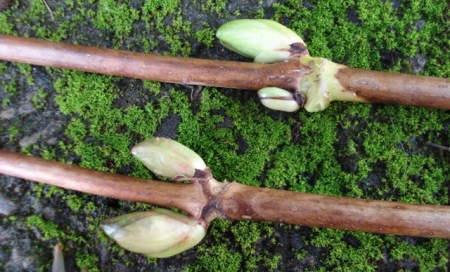
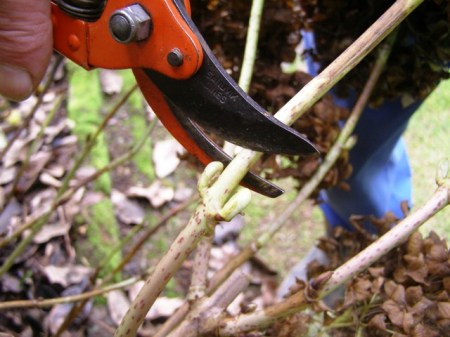
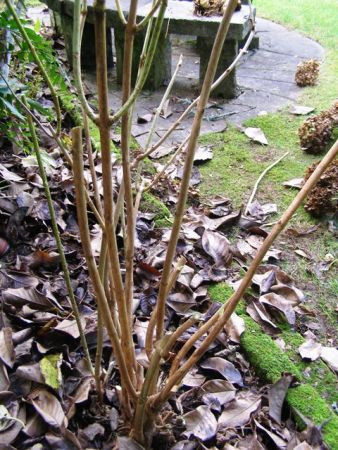
  • Winter is the time for pruning all deciduous plants except for cherries (both ornamental and edible) and plums which are summer pruned to prevent silver blight getting in. Gardeners in cold, frost-prone areas are best to leave their hydrangeas until last (pruning encourages growth which can then get burned by frost). But wisterias, roses, apples, grapevines and the rest can all be tackled over the next six weeks.
  • We did Outdoor Classrooms last year on pruning wisterias and grapevines (these are on http://www.abbiejury.co.nz and on Stuff (Deb, are these still accessible on the Fairfax site?) We will be looking at pruning roses and hydrangeas shortly. Don’t cut your wisteria off at ground level if you want flowers this spring.
  • Most spring bulbs are in growth already so it is time to look at planting or lifting and dividing the summer bulbs – particularly lilies.
  • Pleione orchids are spring flowering but now is the time to clean up clumps and repot because they are still dormant. These are a most attractive and hardy ground orchid, often called the teacup orchid. If you look after them, they build up quite quickly and we find them useful for carpeting woodland margins where conditions are open. The prized yellow ones like a winter chill so will do better inland and in the south but we find the pinks, lilacs and whites are equally at home in milder areas. It pays to clean them up now (discard the soft, mushy black bulbs and keep the fresh green or red ones, trimming off last season’s dead roots) because root disturbance on pleiones once they are in growth is a no-no.

Countdown to Festival – June update

In Stratford, June and Colin Lees at Cairnhill Garden have battened down the hatches for winter. Given the severity of inland frosts, they have moved their stoneware birds in under cover. Last winter one of the herons suffered a severe head injury, literally splitting in two. Fortunately potter and fellow garden opener, Joyce Young, put it back together in time for Festival. June is learning how to handle the blue Himalayan poppies. She bought a couple of plants a few years ago from a Wanaka grower and one has achieved perennial status (even the Lingholm strain can be short-lived) impressing garden visitors and setting prolific amounts of seed. There are few garden plants to equal the pure blue of these poppies so June is determined to nurture the many seedlings to flowering size.

Havenview vegetable gardener supreme, Maree Rowe on Kent Road has all her garlic planted and fed with copious amounts of compost to keep this gross feeding crop happy. She reports that her Queensland Blue pumpkin harvest this year was huge and weighty after growing them in one of the compost bins. She has completed the annual review to maintain her certification as a member of Organic Farm NZ, a process which is both rigorous yet supportive and encouraging. And Maree claims that her building skills are improving and she gained some practice extending the chook pens and runs for her new chicken additions. Now she is waiting in anticipation of plenty of fresh eggs being laid every day in spring.

In Kakaramea, Jacq Dwyer at Te Rata has been planting more fruit trees in the orchard, including a damson plum to encourage sister Michelle’s efforts making her Dam Fine Damson Gin. Michelle brought back a bottle of sloe gin (sloes are a small bitter fruit, actually a member of the prunus family, often found in hedgerows) from the UK but her efforts with damsons eclipse that liquor. With a six week turnaround, her recipe is considerably faster than the minimum twelve months required by the recipe I have tried. Jacq has also been lifting big clumps of native grasses, grooming out the dead strands and replanting divisions.

On Heta Road at Thorveton, Mary and Barry Vinnicomb are delighted with their new family member – a little silver blue kitten. Mary felt she deserved a special name such as Penelope, but really she is named as much for the memory of the honesty seed heads referred to as silver pennies in Mary’s childhood. Alas Mary is struggling to keep her roadside beautification efforts going in the face of drunken vandals. It is just a little garden around a concrete power pole with a colourful pelargonium and orange Californian poppies but even that proved too tempting to late night revellers who had to destroy it, along with smashing a pair of pots from inside the Vinnicomb. driveway. However, they tangle with Mary at their peril. Not one to give up easily, she now plans to plant the power pole in the prickliest rugosa rose she can find. Rugosas are known for being both high health and incredibly prickly.

Also in town, Coleen Peri of La Rosaleda complains that she is dying to get onto her rose pruning (an enormous task in her garden where she grows a large number of them) but by the time she kits up to go outside, the rain has started again. It was with triumph that she managed the feat of getting her new 170kg statue of Diana the Huntress and a concrete bench seat of similar weight into position in the garden. She did have to hire in some brawn, grease a hand or two and supply a couple of bottles of wine to carry out the task. It is likely that Diana has found her permanent home amongst the trees..

At Festival HQ, work on this year’s programme is well down the track and it will be available at the official launch which takes place at the TSB Showplace on July 8. The inimitable Ruud Kleinpaste will be the guest at the launch. While he is best known as the Bugman, we can vouch for the fact that he is no slug when it comes to gardening either.