Golden orbs

This image has an empty alt attribute; its file name is img_7832.jpg

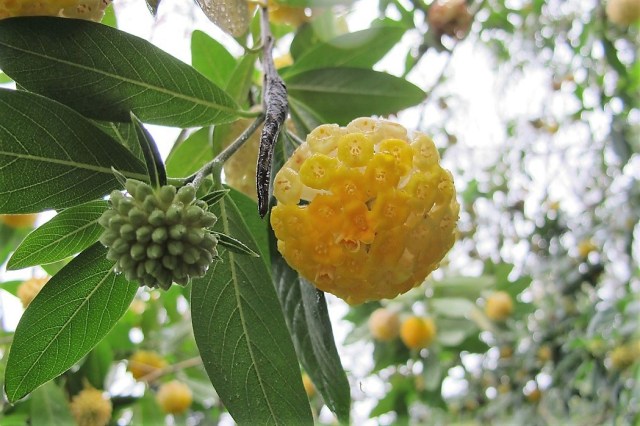
Every time Edgeworthia gardneri blooms and I sniff the waxy, golden orbs of fragrance, I remember a customer from our mail order days. One who put the cuss into customer, as Mark is wont to say.

New Zealand Gardener magazine carried a full-page photo of a single golden orb and the accompanying text named us as one of very few suppliers of this plant. It is not common in NZ gardens and not that easy to propagate. A full-page photo should give a hint as to the problem. It was considerably enlarged in the image.

A reader rang, desperate to order one of the few remaining plants we had. One of the staff took the call and didn’t check to make sure she knew what she was buying. I am not saying Mark or I would have checked, but we might have. The staffer instead sold her an additional random plant as well to meet our minimum order of $35 and her plants were packed and despatched.

I have no idea what the woman’s name was but I can remember she lived in Palmerston North (here’s looking at you Palmerstonians – she was yours, all yours). On receipt of the plant, she rang to express her extreme disappointment. The flower, you see. She had no idea the flower would be so small. It looked much larger in the photo. I mentally sighed and agreed to take the plants back if she returned them in good condition. She had clearly destroyed our packing because in due course, the plants arrived back in a carefully constructed cardboard cage, with windows and air vents, even. As I recall, it cost her $27.50 to send us back $35 worth of plants. I deleted her from our data base.

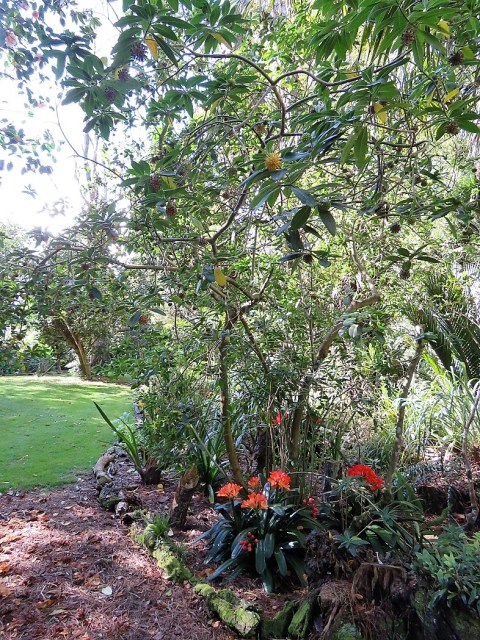
Edgeworthia gardneri is the tall, willowy, multi-stemmed shrub behind the orange clivia

But every year, as I enjoy the plant in bloom, I smile wryly at the thought of what she missed out on because it is lovely. It is willowy in its growth so light and graceful, adorned by many golden orbs with good scent in late winter and early spring. It is evergreen and hails from the forests in the Himalayan foothills and is, I have just discovered, just as good if not better for the making of high quality paper as its better known, deciduous, shrubby cousin, Edgeworthia papyrifera syn chrysantha (which bears the common, though inaccurate, name of the yellow daphne).

It is just that the flower heads are the size of pingpong balls, not tennis balls, or maybe even the larger ball size used in softball and baseball.

Spring pinks

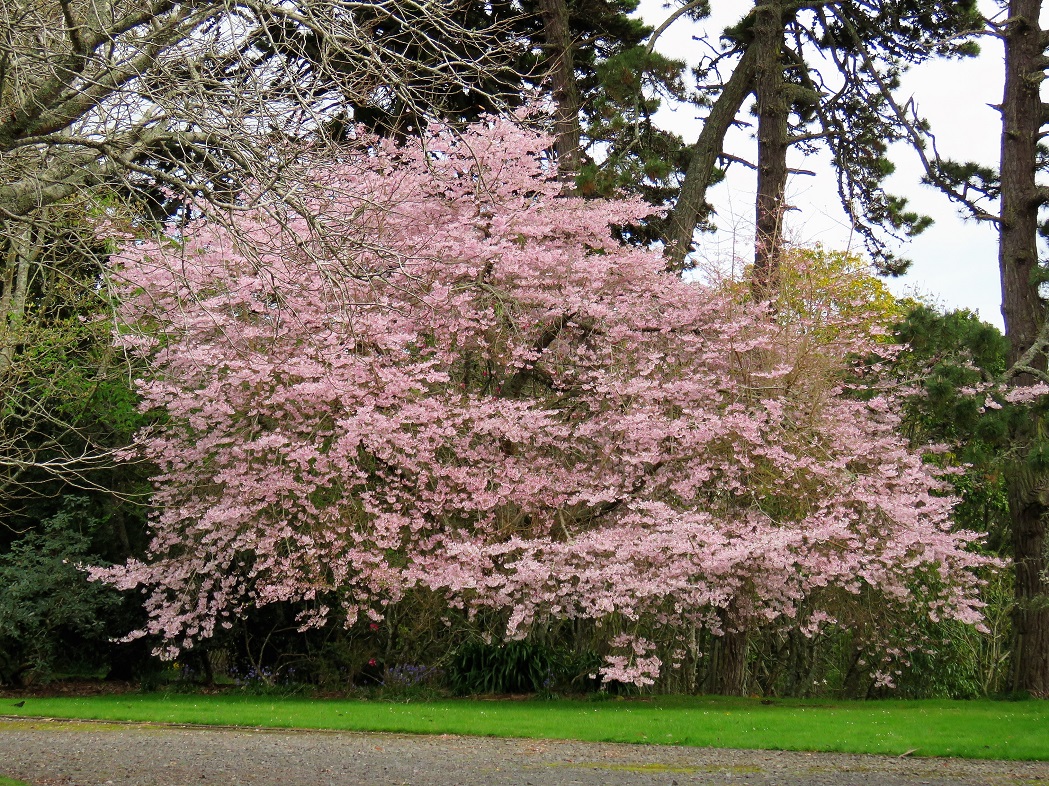
Pink froth of Prunus Awanui  currently at its peak

I am a big fan of pink and not just in flowers, but my theme this week came because of two pink plants in bloom.

The balls of viburnum are at the front of the vase

The first is one of the Virburnum × burkwoodii cultivars. I am not sure which one it is but we have it planted beside the drive where it is largely anonymous for 51 weeks of the year. In the 52nd week, it opens its flowers to rounded balls of exquisite fragrance – strong enough to hang in the air several metres away. We would be lucky to get a full 7 days out of it but I am sure it does better in other climates – it probably wants it drier and colder. I picked a few balls to put in a vase with pink bluebells and late flowers of Mark’s Daphne ‘Perfume Princess’ (which still has flowers and has had since late March). It was lovely but the viburnum flowers promptly died overnight. They last longer than that on the bush, though not by much.

The view with our morning cuppa

Magnolia Serene

A prodigious carpet of petals beneath

The second pink to give me daily delight is Magnolia ‘Serene’ – bred by Felix and the marker of the end of the deciduous magnolia season for us. As we sit having our morning cup of tea, it is framed in the corner window of our bedroom. Not this morning, though. With daylight saving, it was a bit dark at 7am to see it so that may herald the end of that particular seasonal pleasure, too.

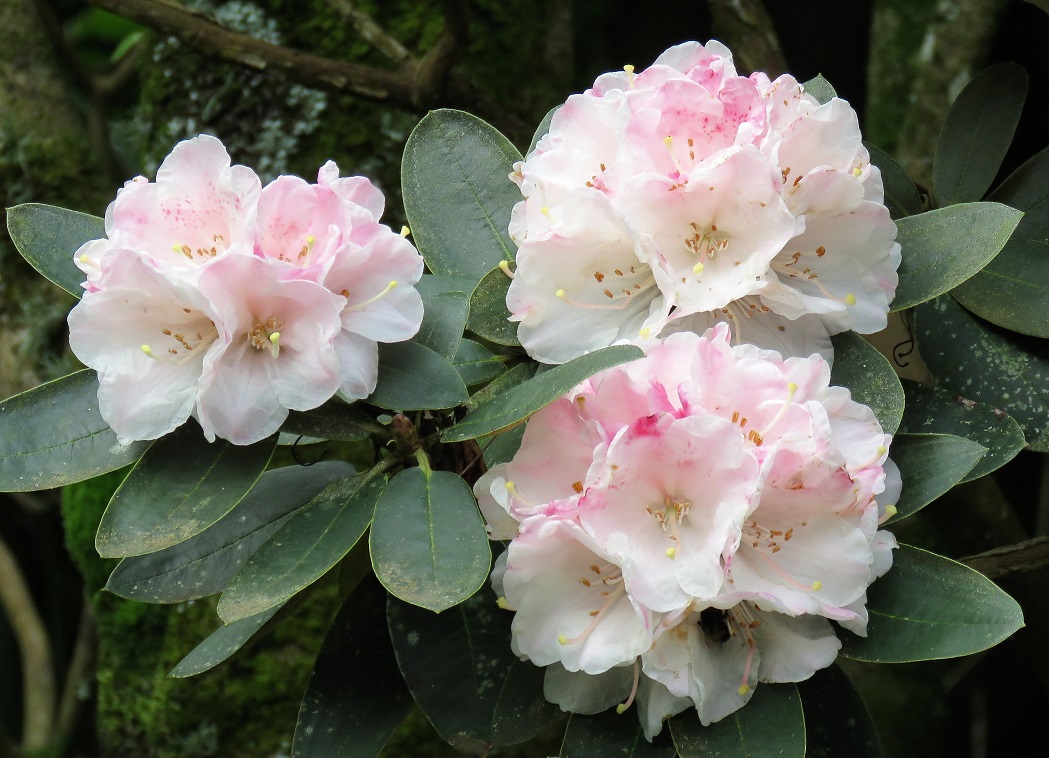
Rhododendron Coconut Ice

I am not the world’s biggest fan of the ball truss type of rhododendron but ‘Coconut Ice’ was looking particularly pretty earlier this week. Sadly, it is browning off already. Flowering is an ephemeral pleasure. Mark observes that the delight of rhododendrons lies in watching the buds for a long period of time before finally opening over a period of a couple of weeks. There is then a week, maybe 10 days, of full glory – sometimes cut shorter by an ill-timed storm – and then it is time to dead head it. In practice, we don’t dead head all our rhododendrons – just those that set large amounts of seed which can weaken the plant over time.

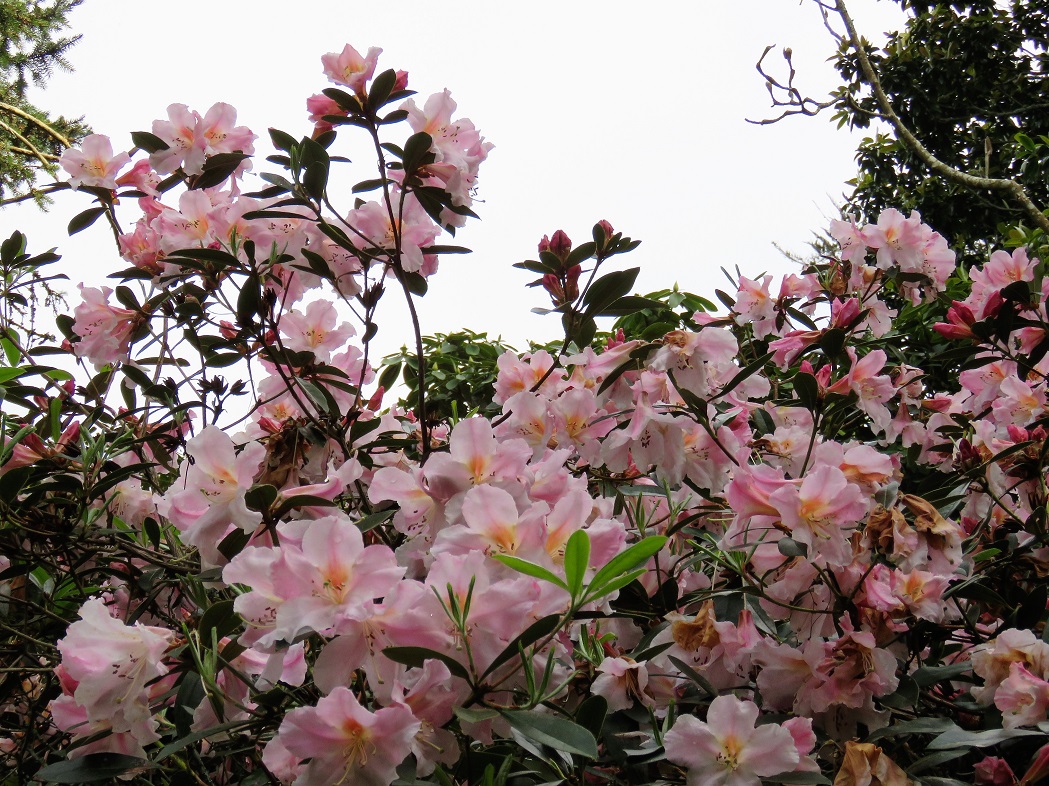
My rhododendron preference is for those with looser trusses that are sometimes so abundant that they can cover the plant.

Rhododendron Anne Teese

It took a couple of goes for Mark to remember the name of this beauty – Rhododendron Anne Teese. It is an Australian-bred hybrid coming from the Teese family (in this case the father, Arnold) who are well known through their nursery, Yamina Rare Plants in Monbulk, Victoria. Mark thinks it was named for the mother, presumably married to Arnold. Whatever, it is very lovely and I would be happy to have it named for me. It is a Maddenia hybrid (R.ciliicalyx x R.formosum) so scented and with a heavier petal, more weather resistant than ‘Charisma’, a similar R.ciliicalyx selection that used to be widely available here.

Rhododendron Floral Gift in a swathe of bluebells

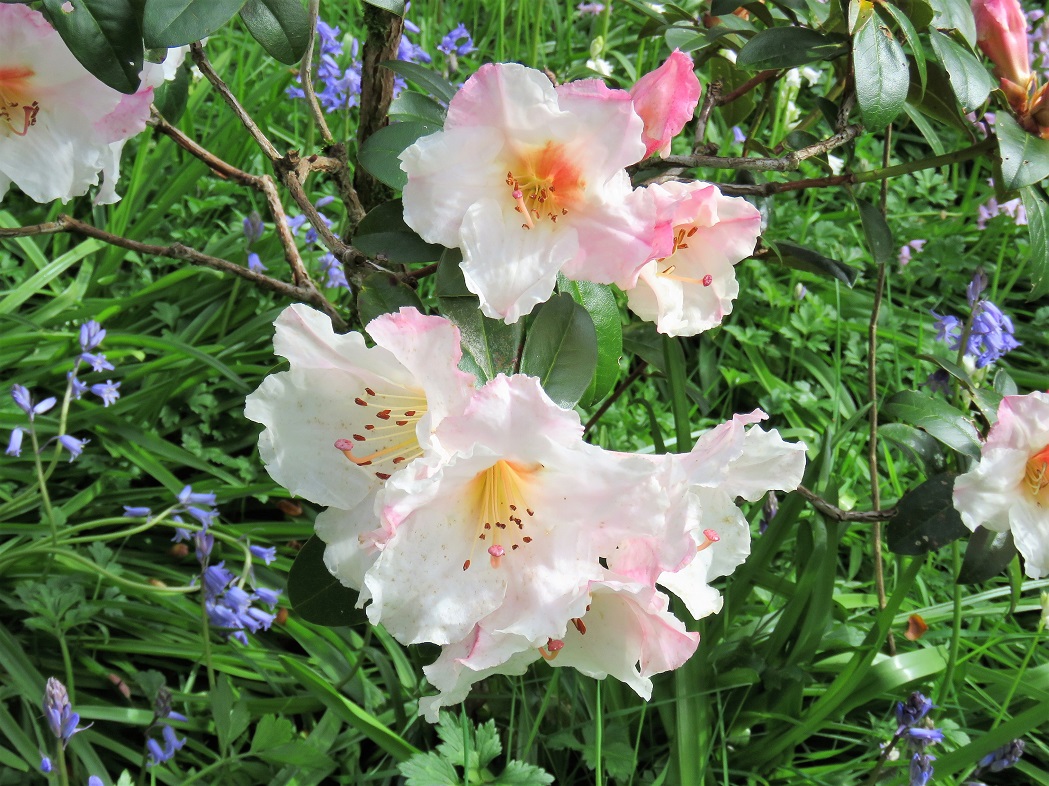
With one notable exception – Magnolia ‘Felix Jury’ – Mark doesn’t name his cultivars for people. Or when he does, it is by oblique reference at best so an in-house tribute only. So this, his most fragrant rhododendron is ‘Floral Gift’, not ‘Abbie Jury’. It takes a while to get established but it is lovely and can be seen performing really well at Pukeiti Rhododendron Gardens. There are a whole lot of hybrids in this genre of scented, white flushed pink loose trusses; the best known is ‘Fragrantissimum’.  What sets ‘Floral Gift’ apart is the large flower and the very heavy petal texture giving it good weather resistance.

The reason I often reference weather resistance is because our spring flowering coincides with the spring equinox when we get the most unsettled weather, as evidenced this weekend – which, for us, means very heavy rain and wind which can wipe out fragile flowers in a matter of hours. And a few more pinks to finish off – this is one of the Dendrobium ‘Bardo Rose’ group of orchids which thrive in our open woodland areas. They flower for a long time and the scale is right for detailed woodland plantings – by which I mean, not as big and dominant as the cymbidiums.

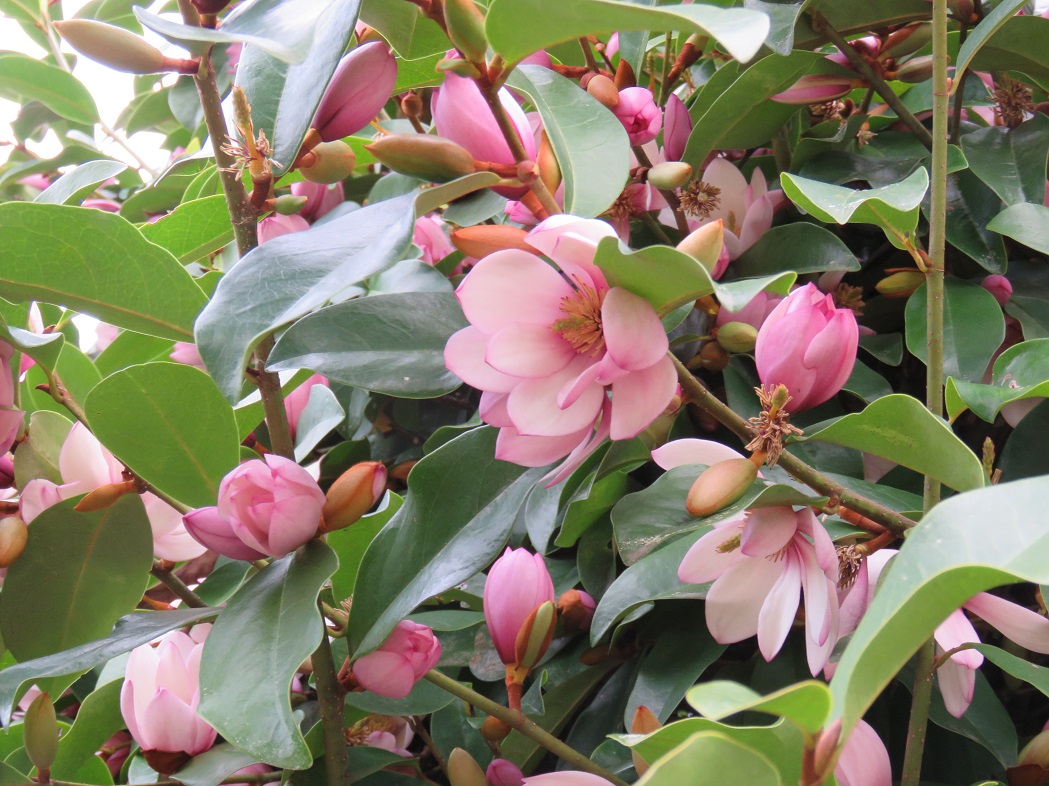
Fairy Magnolia Blush

Fairy Magnolia Blush has a good, long flowering season, currently at its most charming stage of peak bloom. More lilac than pink, it is pleione orchid time. This is another group from the orchid family that thrives in pretty laissez-faire woodland conditions (in other words, benign neglect) but the flowering season is much shorter than the dendrobium ‘Bardo Roses’.

And the final bar of pink can be left to the evergreen azaleas. We have so many different ones that we get many months in flower but they are currently at their showiest.

Counting down to festival in the new world of Covid

Prunus Awanui in flower this week as we pass peak magnolia and go into the next phase of spring

As a nation, we are collectively holding our breath to see if we are indeed safely back to the status of zero Covid cases, except those caught and isolated in border quarantine. Just one community case in five days and counting now, this second time round. Our team of five million that saw us achieve this status the first time round has had some defections. Hopefully, the mob of doubters, conspiracists and anti-vaxxers is small, though very noisy. Obsessed only with their own *rights*, they have no concern for the safety and well-being of others and are swallowed up by their own crusade that Covid doesn’t exist, that it is no worse than the common flu, that it is a man-made virus being used by Bill Gates and his cohorts to take over the world (never mind that these positions are contradictory), that our government is lying to us, that it is somehow tied up with the 5G network and probably chem trails, that the Covid vaccine will be mandatory (it won’t) – all because they don’t want to wear masks on public transport and maintain physical distancing while we stamp out the latest flare-up. Sigh.
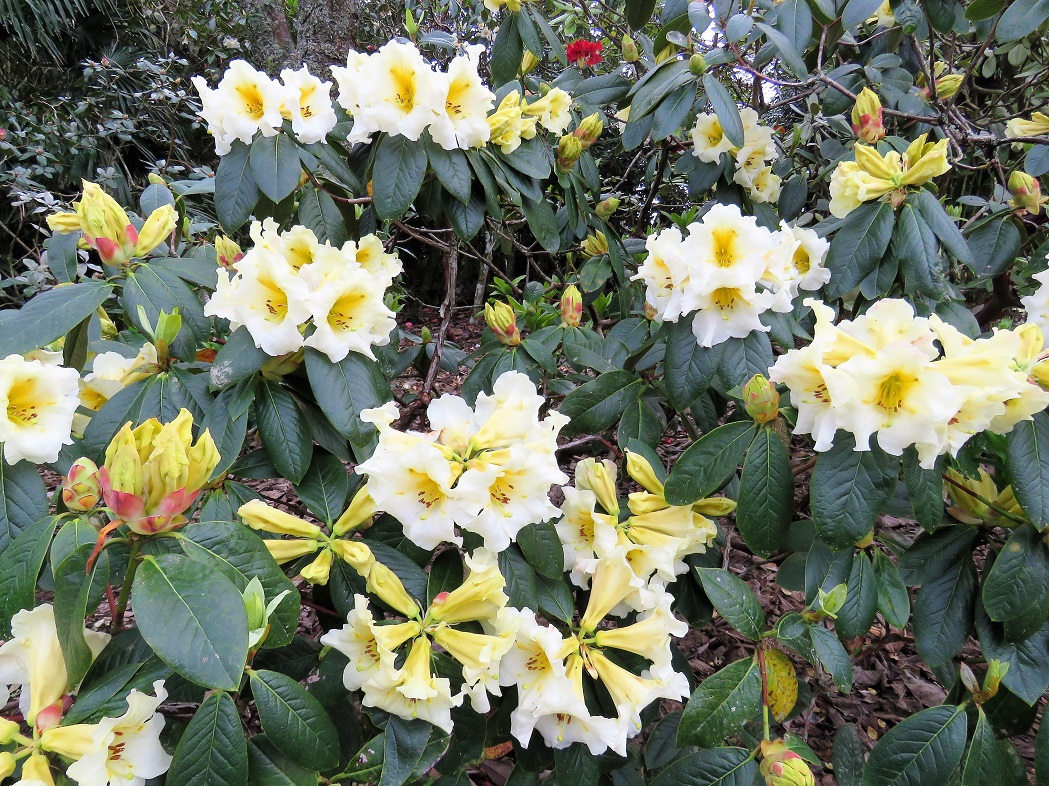
Mark’s Rhododendron Floral Sun never fails to lift my spirits, even more so this week in such uncertain times

It is not helped by a prolonged election campaign where some of the opposition parties are hellbent on undermining confidence in the government and community response to Covid. Let not the fact that NZ is a shining star internationally with its Covid response and that we have fewer restrictions and a safer environment than almost every other country in the world at this time get in the way of their narrative that  it is a ‘shambles’, ‘incompetent’, a ‘failure’, an example of ‘gross mismanagement’ and all the rest. Some even advocate opening the borders and ‘learning to live with Covid’, though they seem to be unable to come up with international examples of countries managing to live comfortably with Covid on the loose in the community.

New Zealand – we done good. We are on track to eliminate this latest outbreak. The election will be over in a month. Our lives will return to the comfort of level one freedoms in this new reality that Covid has brought to our world.

‘Back in the day’, as is said, I used to write a regular piece for the local paper called ‘Countdown to Festival’ and I still look back at that series with some fond memories. It was just an assemblage of snippets from local gardeners describing their preparations for the annual garden festival and, from memory, the paper paid me the grand sum of $35 a week for it. It comprised garden hints from gardeners all around the district, some quirky anecdotes and painting small word pictures of the characters who were beavering away to get their gardens to opening standard.  I think it had a quirky charm as well as some handy advice but it all stopped when I left the Taranaki Daily News and went to write for the Waikato Times instead.
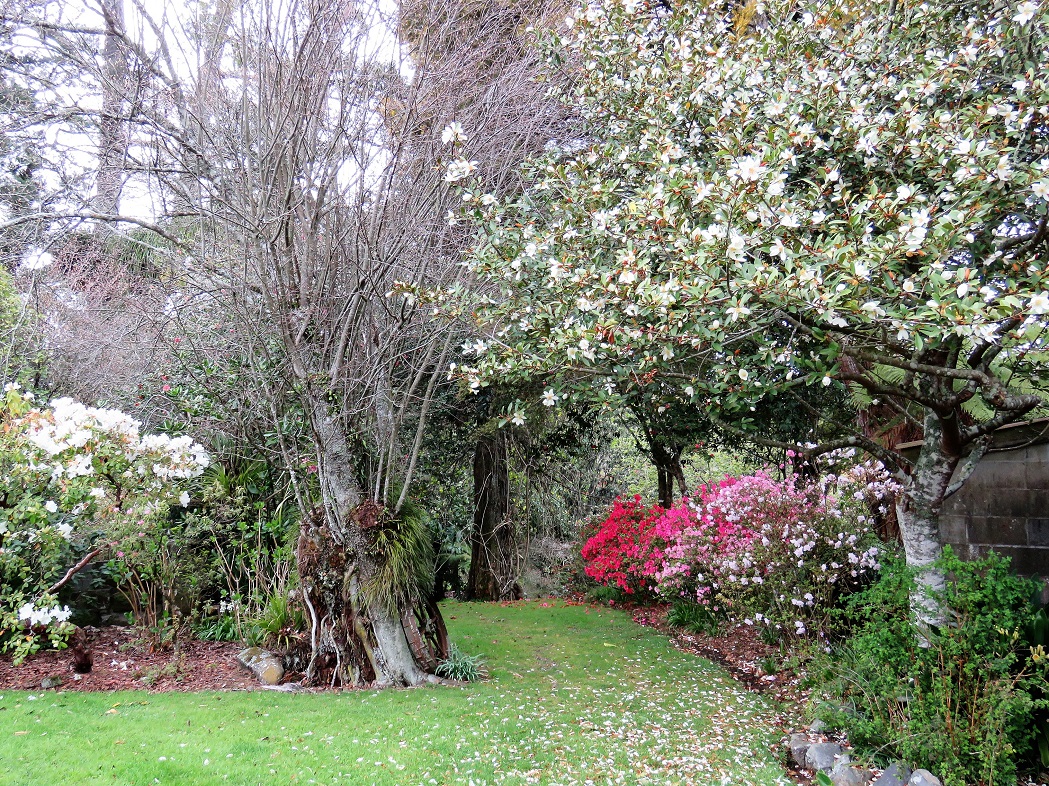
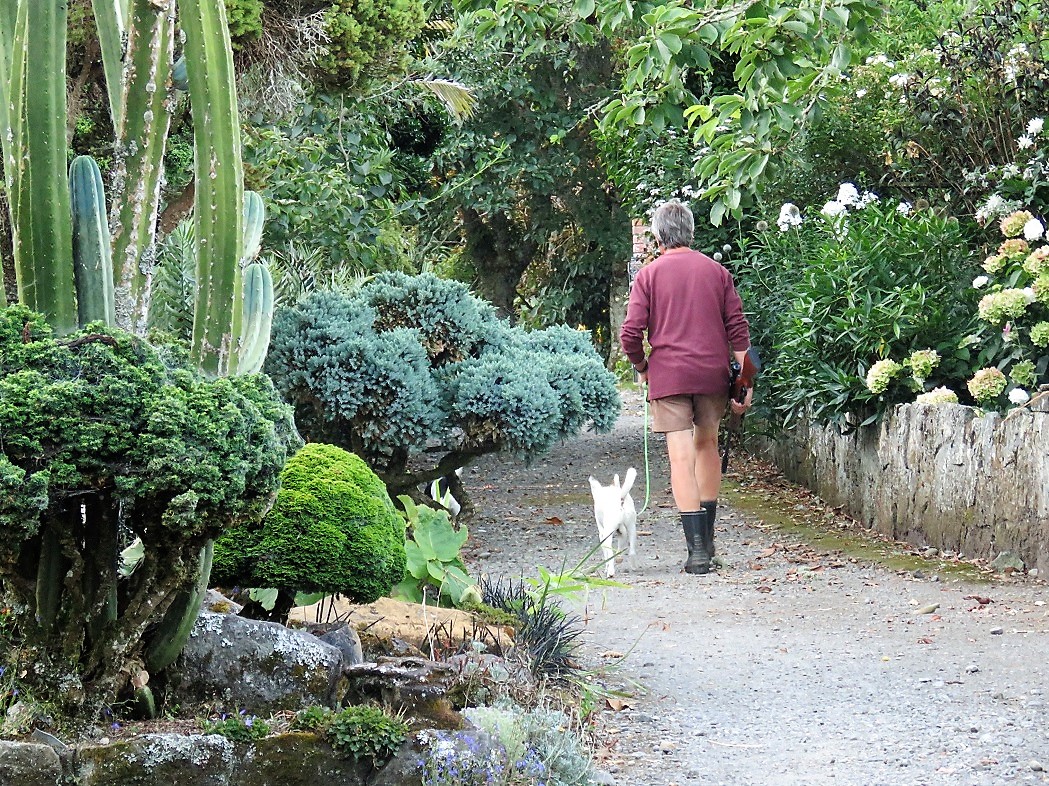
The pretty path down to the park by my washing line, The white on the left is fragrant Rhododendron veitchianum, colourful azaleas in the centre and pretty Magnolia laevifolia ‘Velvet and Cream’ on the right

My mind went back to that series because we are now totally focused on getting the garden ready for opening on October30. Hopefully, we will be in level one which, in NZ, means no restrictions at all (life as usual but with no overseas tourists) but I am assuming we can still go ahead at level two, if need be. Mostly that means physical distancing and some controls on numbers, but presumably without coach tours owing to distancing not being possible on most coaches. Note to self: buy hand sanitiser – that public health symbol of Covid – and investigate registering for QR code. Even I, an occasional mobile phone-user at best, use the Covid app to scan into all shops and businesses. It is much easier than manually signing in. Frankly, it feels weird to be contemplating getting all visitors to the property to scan or sign in but this is our world now.
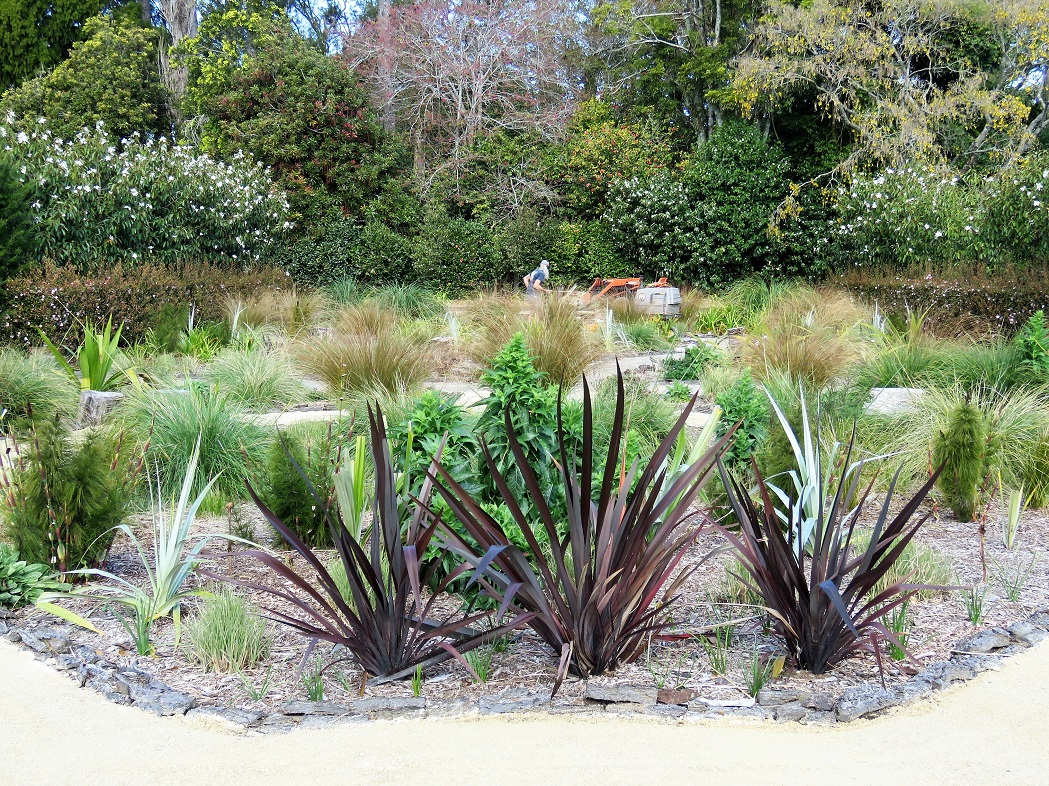
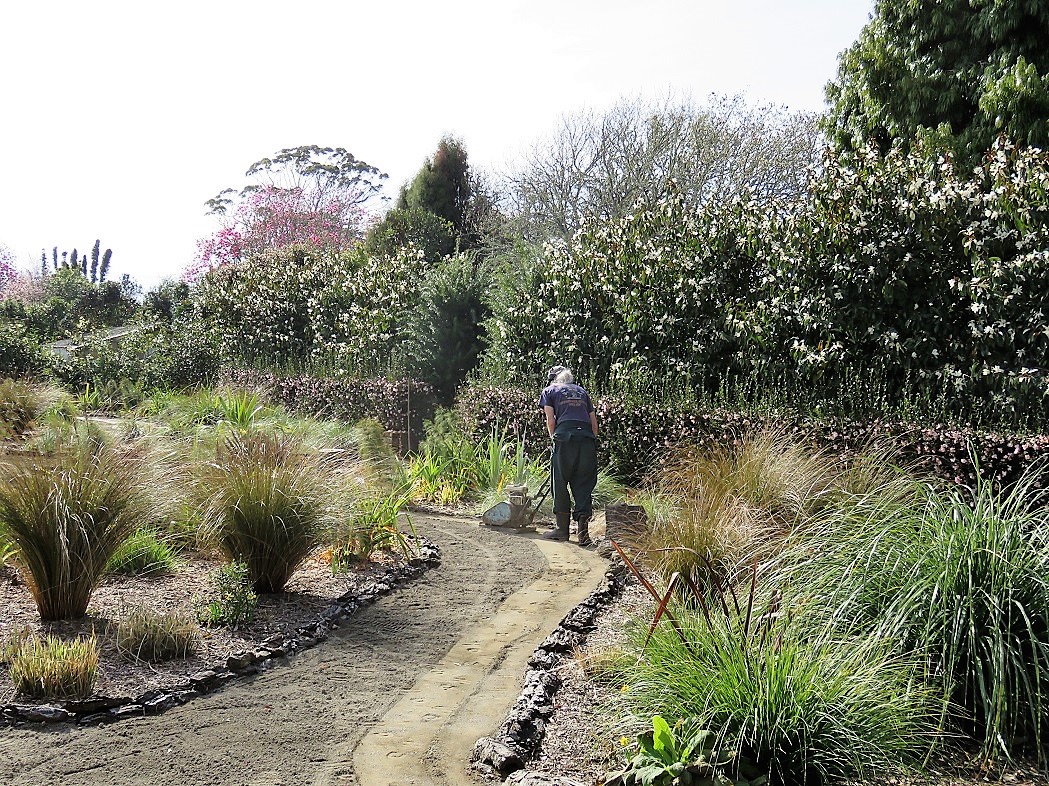
Lloyd can be spotted at the back of the photo with the tractor, our fancy lawnmower towing a large trolley, screeding tool, shovel, rake, barrow and plate compactor. This is not a job for the fainthearted.

The compacted ‘terrazzo’ look

With our lives becoming so much more home-based, local and smaller – holding the chaos of the world at bay – the garden has become even more important. This week, I ordered the first truckload of the top layer for the paths in our new summer gardens. Ten cubic metres or fourteen ton to start with and we will need at least as much again. It is not cheap so there was some nervousness but we are pretty excited at the effect of this crushed limestone and shell mix (I did say our world had grown smaller!). Lloyd is spreading it by barrow, shovel and rake,  screeding it and then using the plate compressor to compact it as he goes. A torrential downpour was a good test. It compacts suffciently firmly that the torrent of ground water did not wash it away and the surface is so smooth that it can be swept or cleaned with the leaf blower. The rain brought the whiter fines to the surface so the finished effect looks more like the terrazzo kitchen benches of long ago. After building up to this for so long, it is positively thrilling, I tell you.
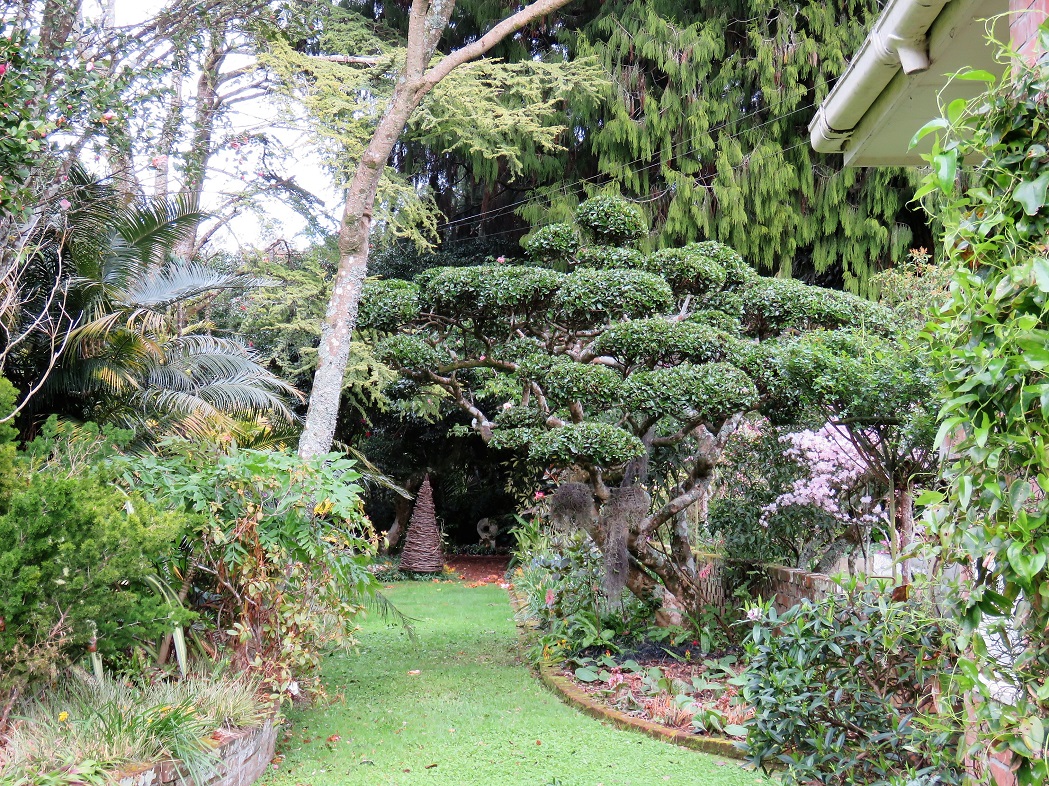
I think the uppermost two topknots on Mine No Yuki need to removed entirely but that can wait if we run out of time

Lloyd has also been clipping our shaped and cloud pruned camellias this week and will start on the hedges soon. In the meantime, Mark rather defies my work schedule but has been painstakingly giving the geriatric apple trees a major and considered prune. Next up, the two avenues of Fairy Magnolia White and the punctuation points of Podocarpus parlatorei in the new gardens are awaiting their annual trim. Mark is by far the most skilled pruner here.
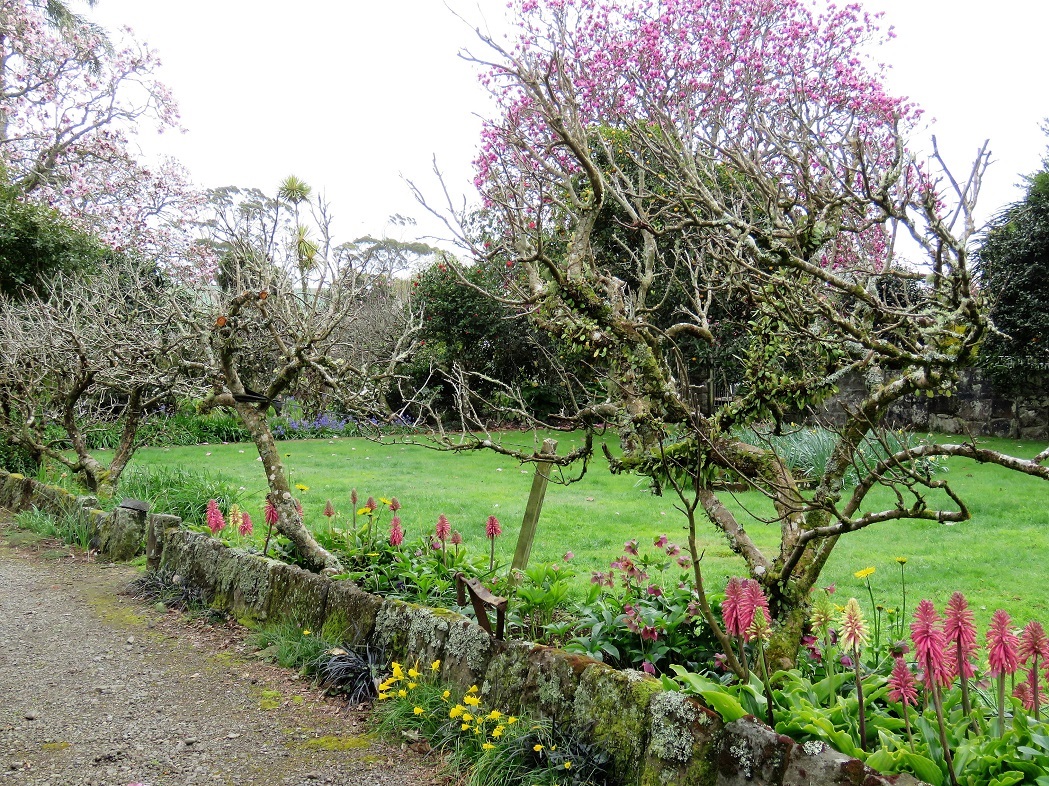
Mark has done the first four geriatric apple trees but there is a whole lot more pruning waiting to be done and I am not yet seeing him show the signs of urgency I am hoping for

I am here, there and everywhere. Garden grooming is my strength. Attention to detail. At least it gets me all round the place. We have passed peak magnolia, the snowdrops have long finished and the dwarf narcissi are all but over. Now it is bluebell time, Japanese cherries, rhododendrons, evergreen azaleas and mid spring bulbs. The plants and the seasons are not disturbed by Covid.
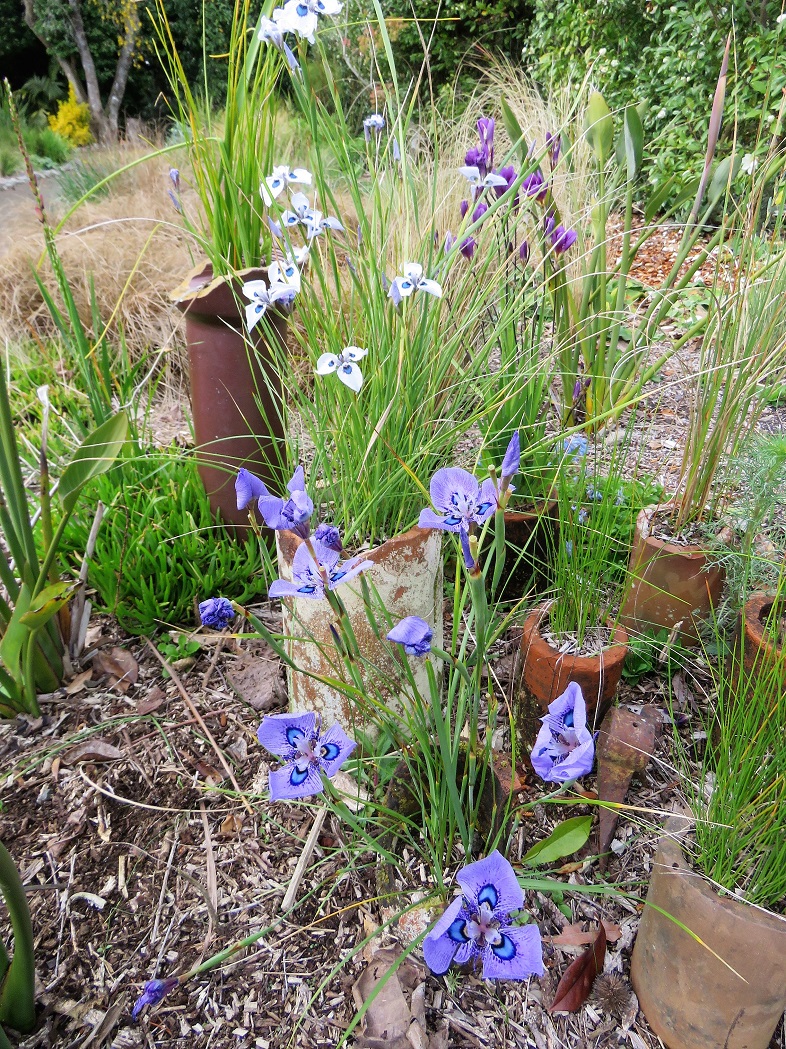
The mid spring bulbs are starting – Moraea villosa and sparaxis
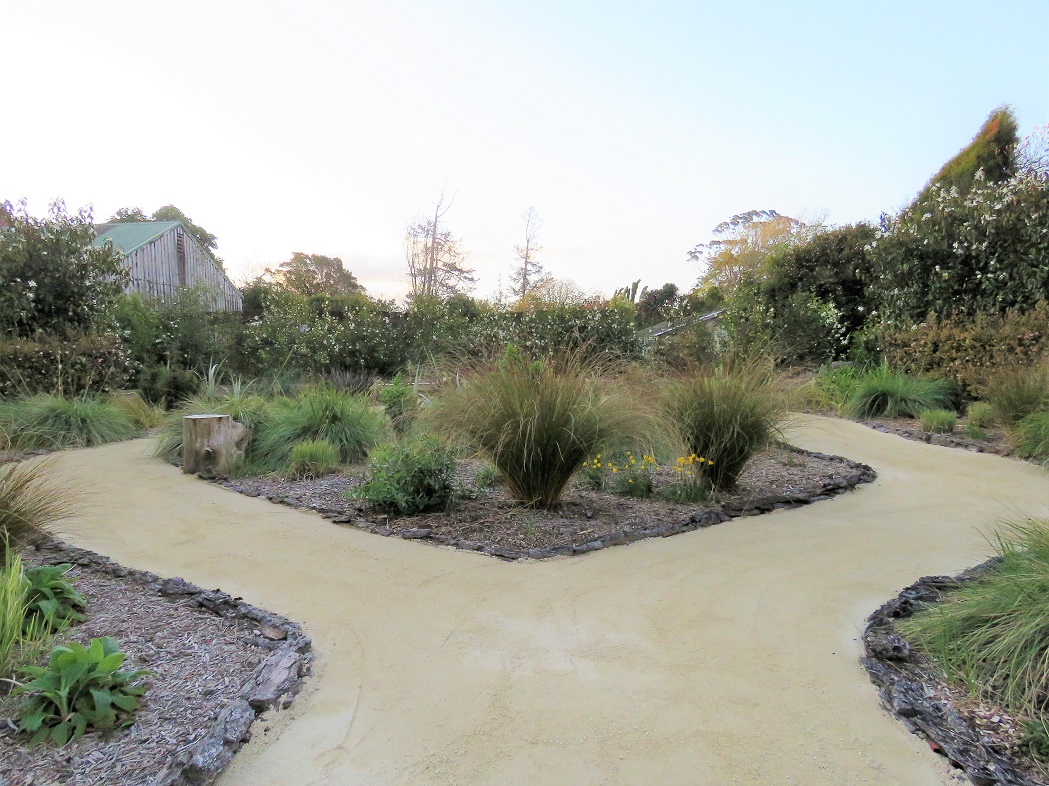
The freshly laid paths in the Court Garden look a little stark but we are confident they will mellow and soften quickly. The initial stage is preternaturally tidy.

Notes from the Garden of Jury – September 13

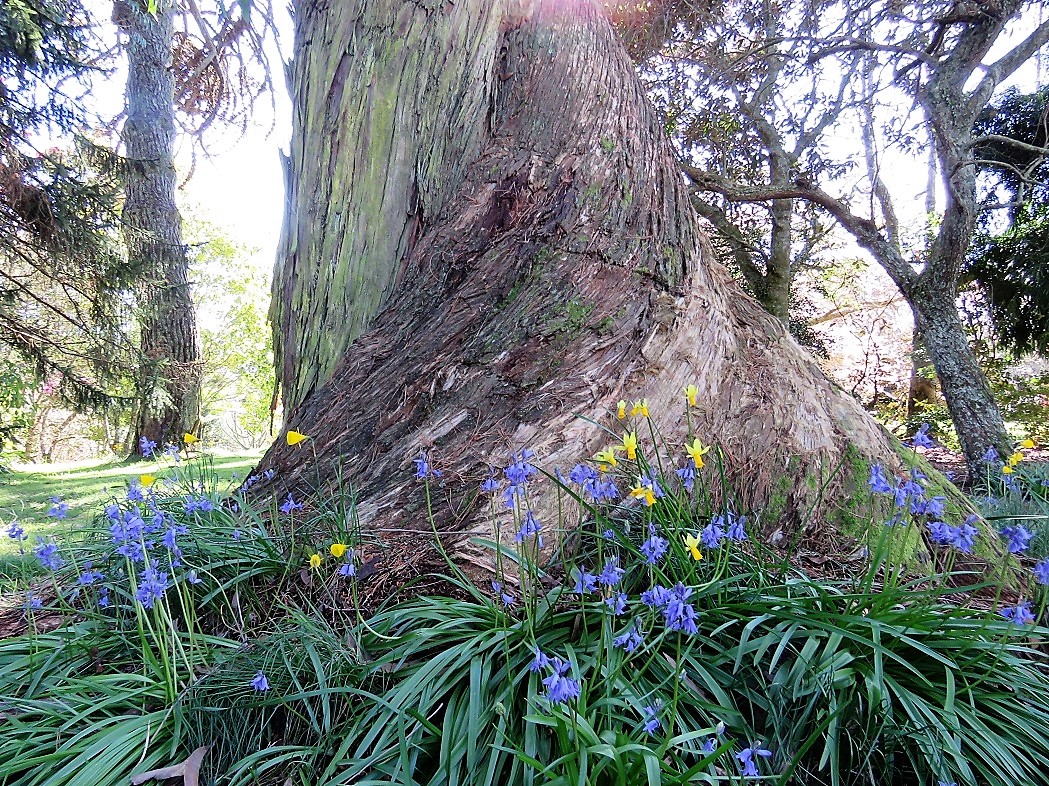
The little sights in the garden can bring me delight – bluebells and narcissi against the twisted trunk of a giant eucalyptus

I am feeling the pressure of opening the garden again after seven years. All I can say is that if you want to see it, you had better come this year to the Taranaki Garden Festival (October 30 to November 8) because they way I am feeling, we may not open again.

We maintain the garden all the time to a level that keeps us happy but that is not the same as the level needed to reopen after such a long time closed. With seven weeks to go, there seems to be so much to do. We will get there – we are experienced at this – but it does take away some of the pleasure of early spring.

Spring has long been associated with anxiety in my mind. For seven years, from the age of 15 to 22, it was the time of major exams that could change the course of my life. I had nightmares about it all for at least two decades after that. Then spring became a pressure time for us when we were in business with the garden open, retailing plants and the never-ending demands of nursery production work. The last seven years have been bliss. Bliss, I tell you. With no external pressures or expectations of us, we have been free to take all the time we want to enjoy the daily sights of spring abundance and beauty. Whether we continue to reopen after this year will depend on how much we enjoy the festival and sharing the garden with visitors. It will have to be quite a lot to reward me for all the effort going into it right now.

A daily routine here but I admit that the photo was taken earlier when temperatures were warmer. Mark is not one of those hardy men who wears shorts all year round.

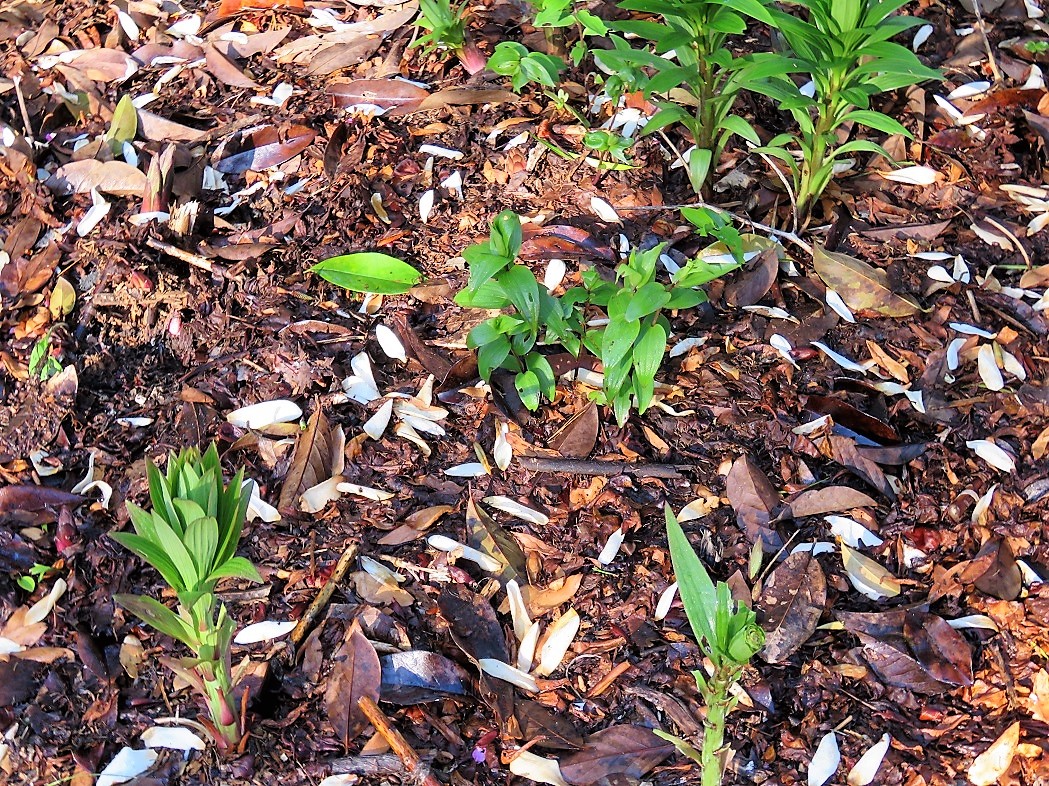
Emerging lilies. You won’t see the detail if you are reading this on your phone, but front right is the one rabbit-chewed shoot. In the past two years, all would have been attacked by now.

Regular readers may recall my despair at the rabbit predations this time last year. Mark and I were out sprinkling blood and bone after every rain to try and deter them. The auratum lilies are all coming through again and I am checking every morning. So far only one has been chewed off. This is testimony to Mark’s ongoing efforts with the gun. He has shot nearly 50 so far this year and that in a limited area of barely 2 acres. There are still a few around that need to be cleaned out and we dare not take our eyes off the ball – or the fluffy tails – because those few can increase exponentially (not unlike Covid, really) but man with .22 rifle appears to have the upper hand at this stage. In case you are wondering what we do with 49 dead rabbits, there is not much that the dogs enjoy more than fresh rabbit for breakfast.

I have tried cooking rabbit before – both casserole and pie but the only recipe I have really enjoyed is for rabbit and pistachio terrine (a recipe courtesy of Alistair Boyce) and it takes a bit of effort and pre-planning so I don’t make it often.

Lloyd in the process of compacting the base layer of pit metal. We borrowed the compactor from an obliging man up the road but they can also be hired. 

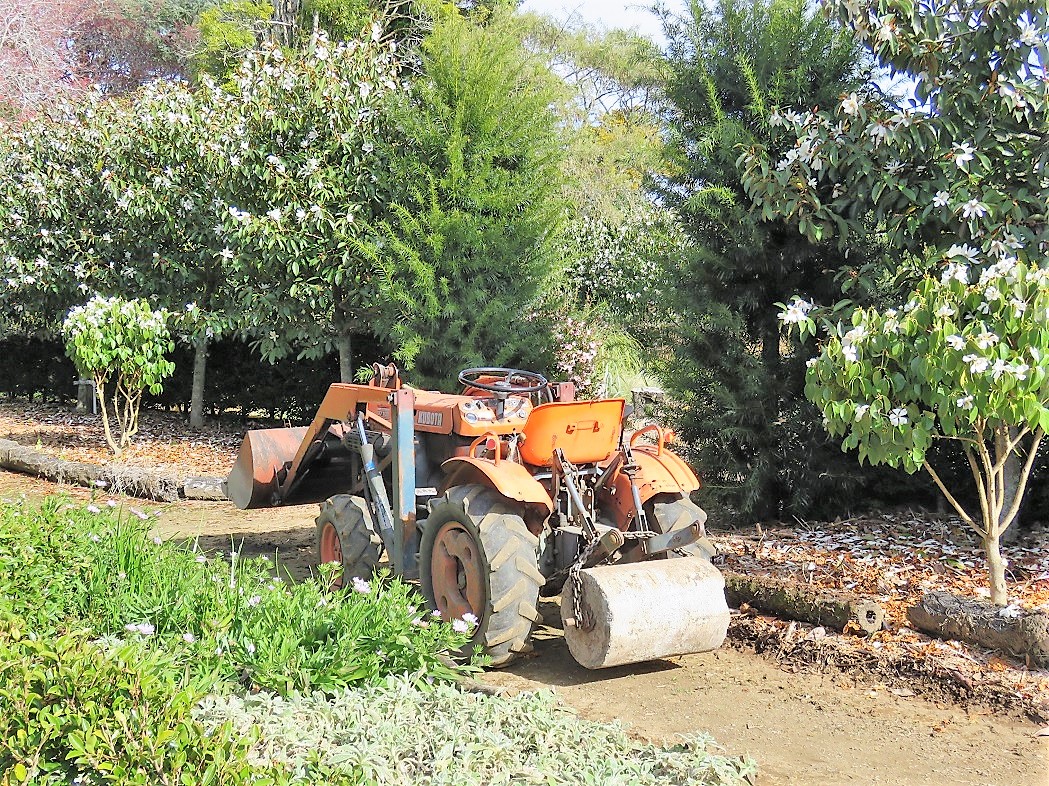
We bought this little orchard tractor over 20 years ago and it was already old then. It has done a lot of work in the years since.

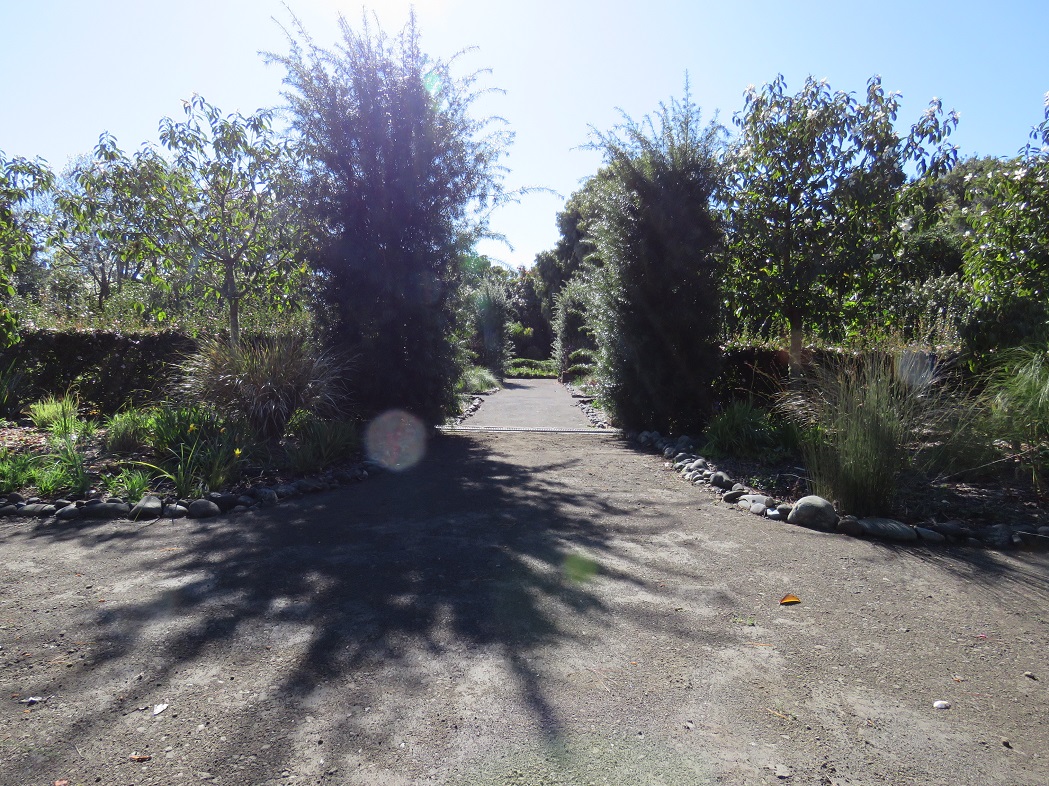
We have laid the base course of pit metal for the paths in the new summer gardens. I say ‘we’, but that is in the royal sense. This has been Lloyd’s project. It took about 19 cubic metres and he did it with our baby tractor and wheelbarrow. We had thought we would get a bobcat in but Lloyd pointed out that the paths, though appearing generous, were just too narrow for the bobcat and some of the turns too tight so he thought it better to take the time to do it himself with minimal disturbance.

When it rains heavily, this path becomes the natural water course

An off the shelf solution but it needs precise installation to make it work for the best outcome

He is only half way there. There is still the top layer of crushed limestone and shell to be laid but we are letting the base layer settle first. Heavy rains highlighted a problem: in one area, the run-off from downpours naturally flowed down one path and scoured out the newest set of steps every time. We can get away with quite a bit because our volcanic soils are very free draining and surface water is absorbed quickly (this never happens in clay soils). But our rains can be torrential and when that happens, the run-off will find its natural path. Lloyd is, by nature, a problem solver. He decided we needed a drainage channel in front of the steps, one that is safe to be walked on. Fortunately, this is an off-the-shelf solution. He has laid it with an imperceptible drop to one side (this is a man who makes a spirit level his friend) and then connected it to a length of holey, plastic drainage tubing hidden just below the mulch to disperse the water more widely. We are waiting for the next downpour but we expect the problem to be solved.

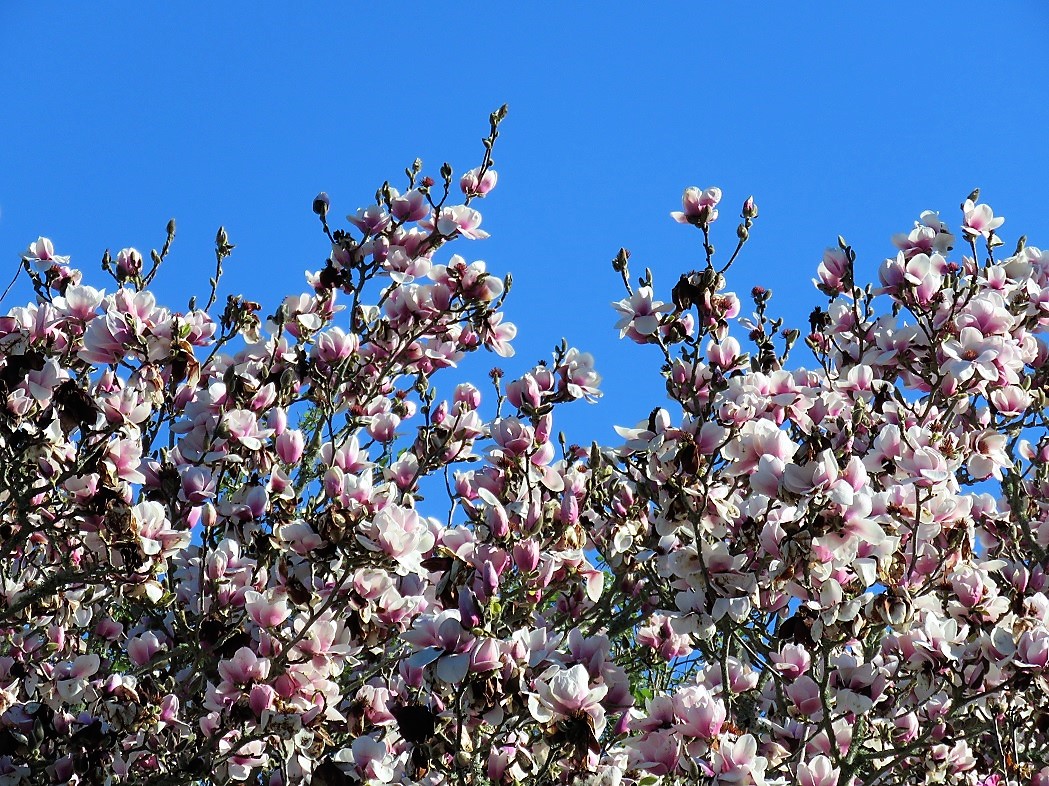
Magnolia Athene against the bright blue sky yesterday

When 1+1 equal more that 2. Magnolia parents and offspring.

I added a postscript to last week’s post about blind pruning camellias. After comments on that post, I added in chainsaw pruning tips (cutting back overgrown camellias to ground level or just above) and a word of caution about hygiene with cutting tools. You can find it at the end of the post if you are contemplating more extreme, less refined pruning.

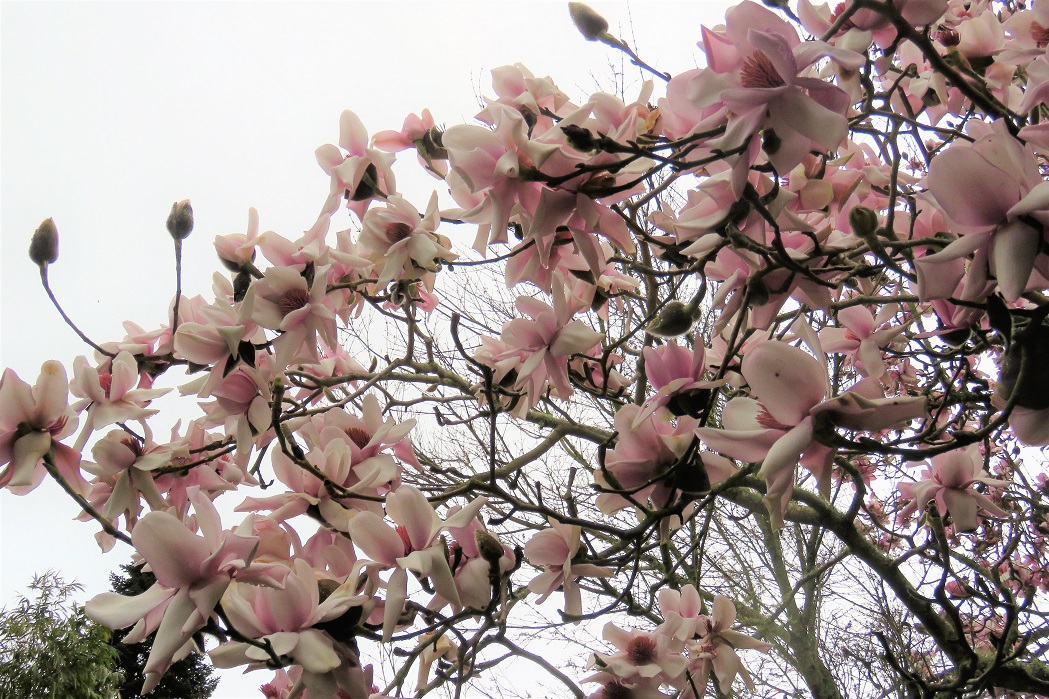
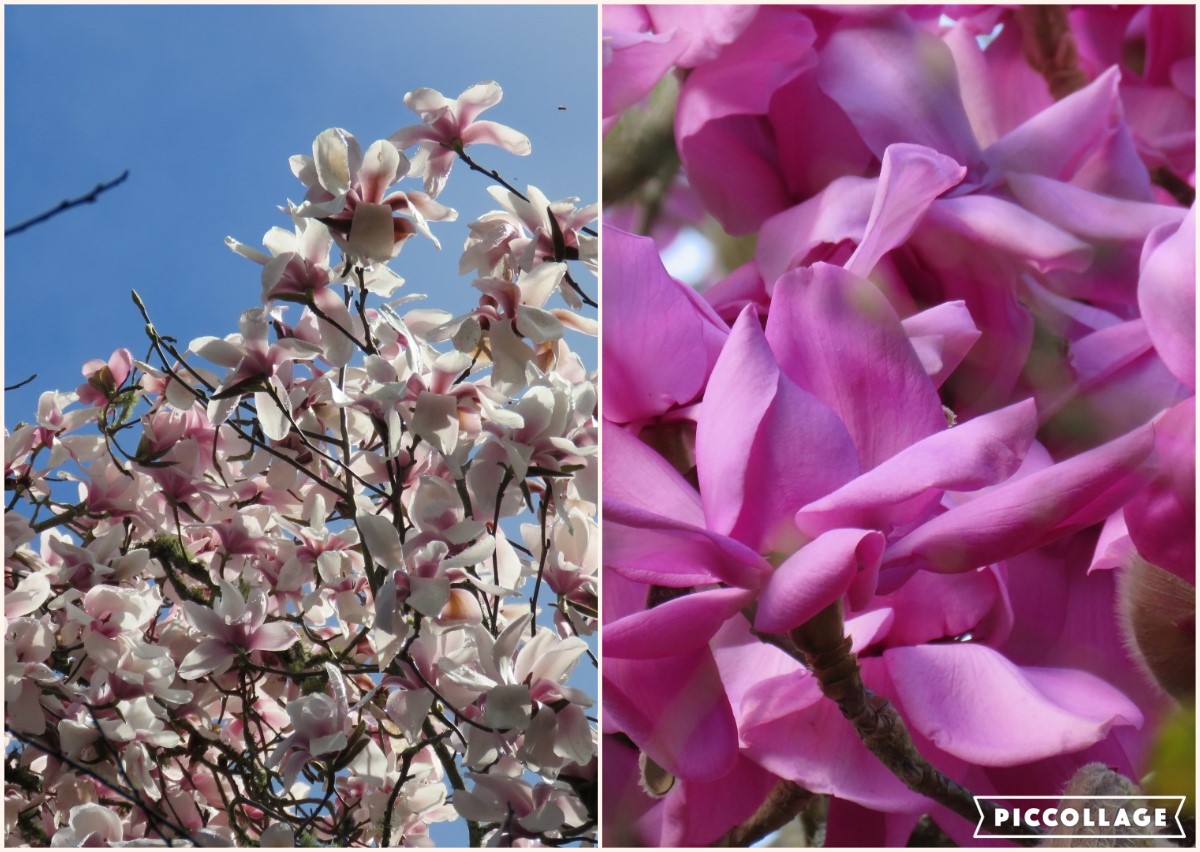
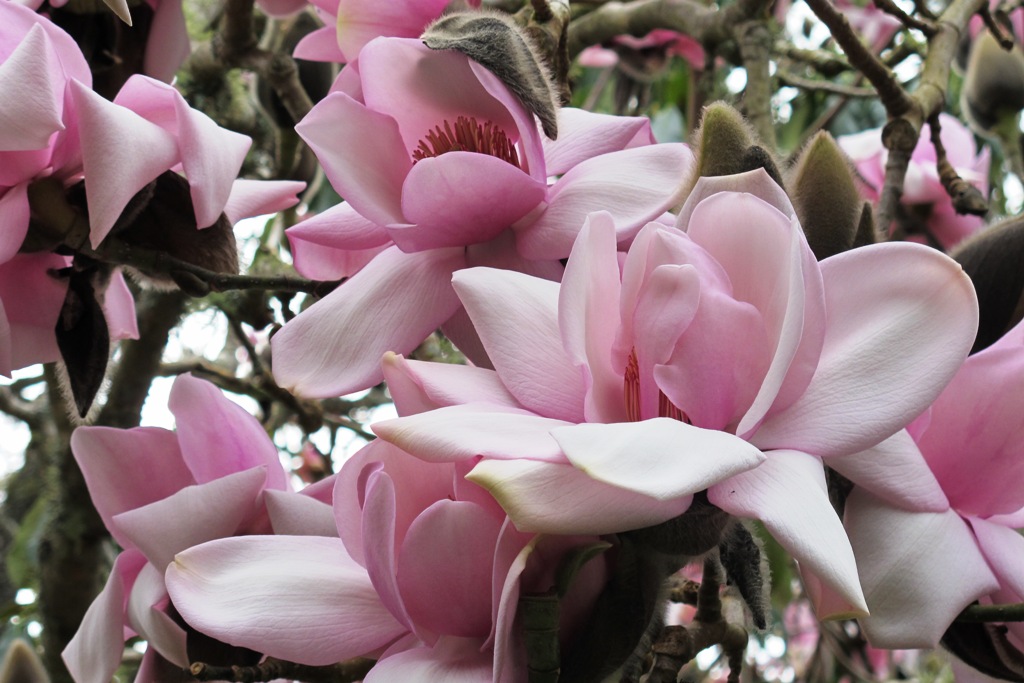
Today’s post is heavy on photos. Magnolia photos to celebrate the season. I haven’t sat down before and collated images to show the parents of our named cultivars, lined up alongside their progeny. When Felix started crossing magnolias back in the early 1960s, he wanted to see if he could get the cup and saucer flower form of M. campbellii, that would flower from a younger age, on plants that would stay smaller and with more colours.

Magnolia Mark Jury  with a larger, more robust flower and longer flowering season than either of its parents.

He didn’t start with many options. There were not many different magnolias available in NZ at the time – nothing like today’s range – but he had a unique tool in his kit. That was the magnolia he named for his youngest son, Mark Jury.

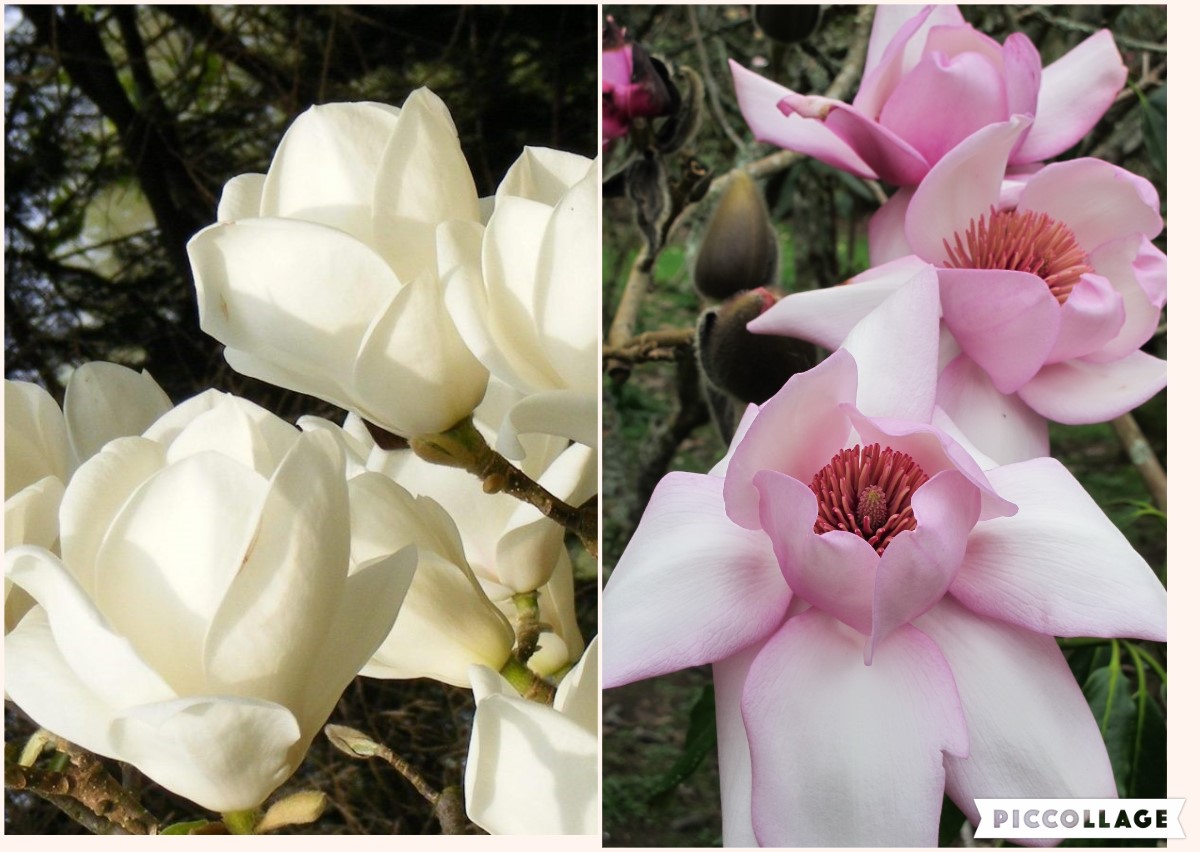
Magnolia sargentiana robusta on the left, ‘Lanarth’ on the right, the parents of ‘Mark Jury’

More Mark

‘Mark Jury’ came to him from Hillier Nurseries as a seedling of ‘Lanarth’ (M.campbellii var mollicomata ‘Lanarth’, to be precise), costing 18 shillings which was quite a lot back in the 1950s. When it flowered, it was not ‘Lanarth’. Discussions with Hilliers – slow discussions by hand-written letters as was the way back then – determined that it was most likely to be a cross between ‘Lanarth’ and M. sargentiana robusta. It proved to be an important breeder parent for him.

Magnolia ‘Lennei’ alba crossed onto ‘Mark Jury’ was one of his first efforts. (For the technically minded, ‘Lennei’ is more correctly M. X soulangeana ‘Lennei’, itself a cross of M.denudata and M.liliiflora).
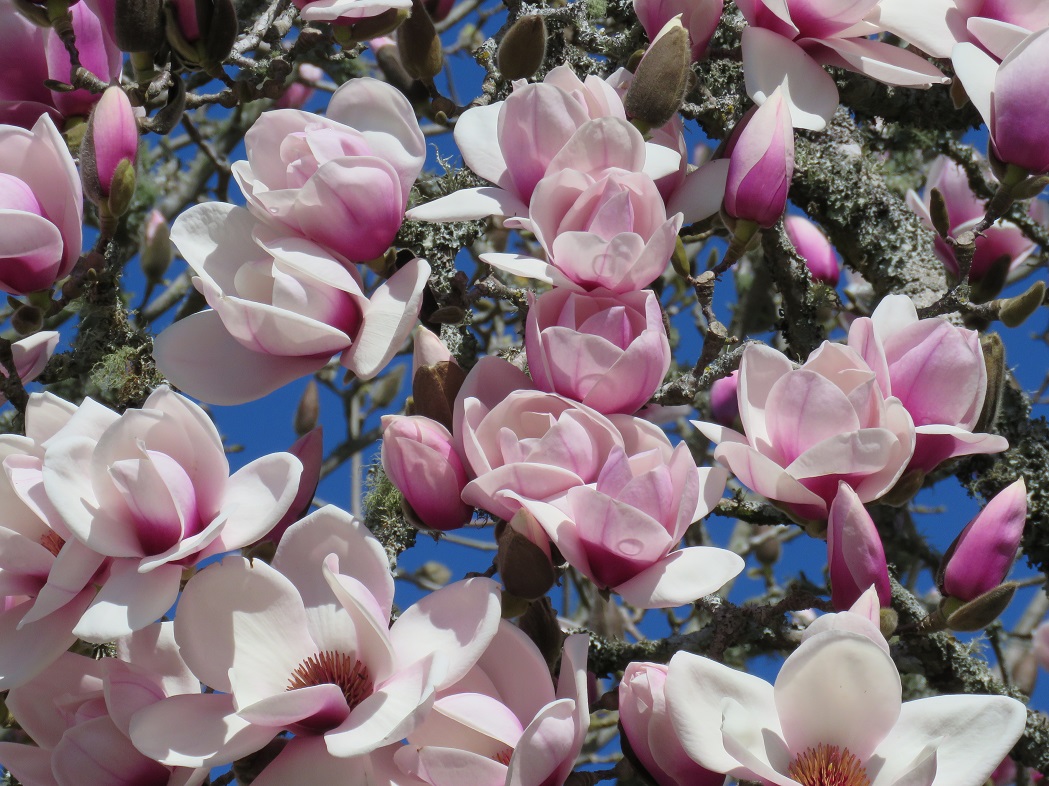
It resulted in the beautiful ‘Athene’
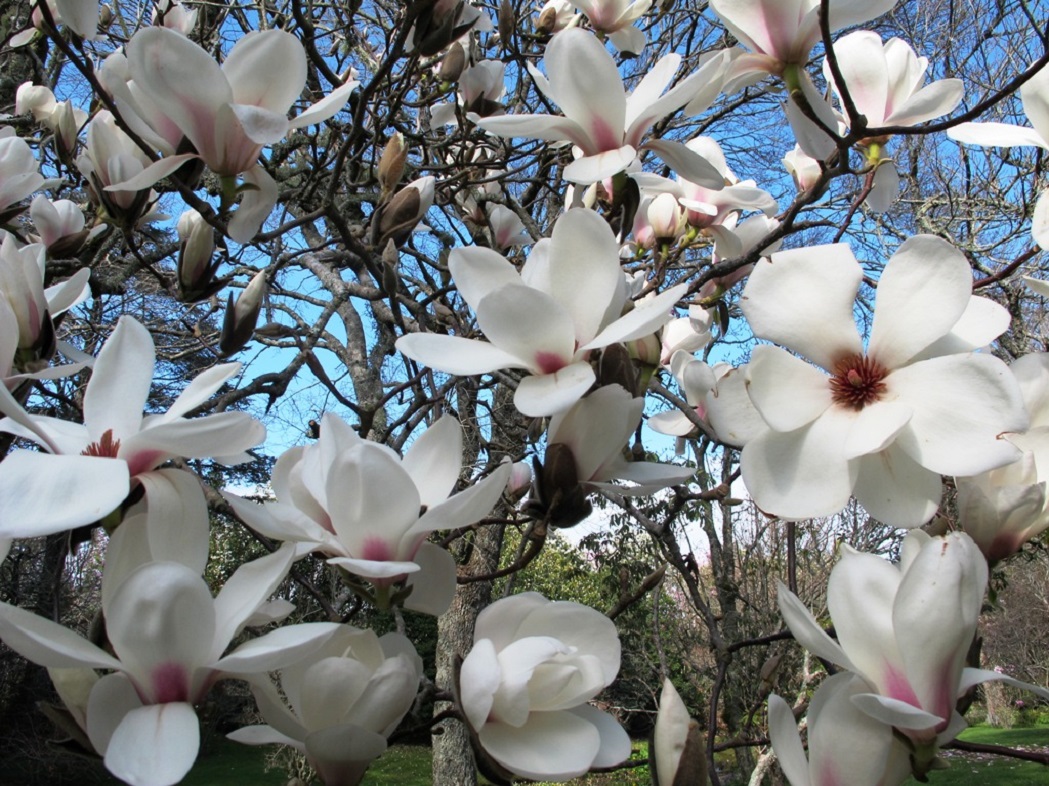
‘Lotus’

and ‘Milky Way’.
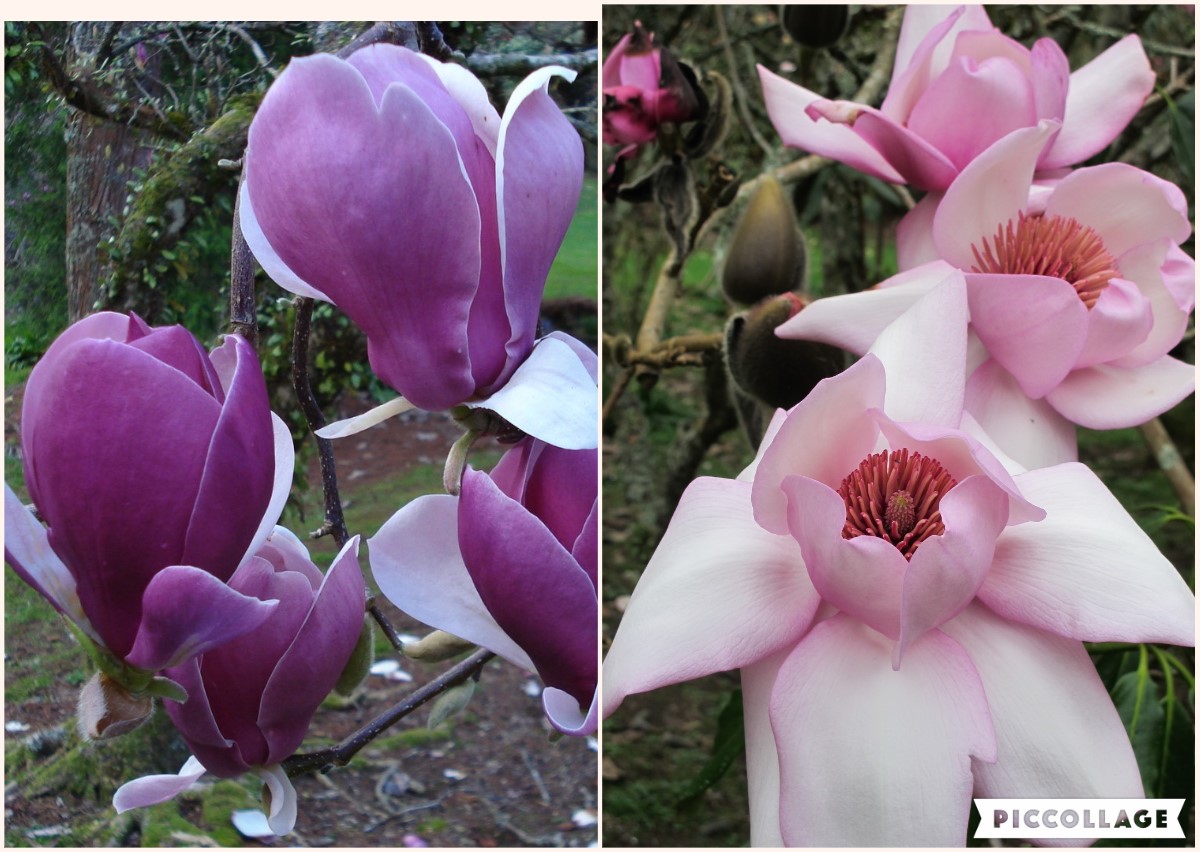
Swapping to the pink form of ‘Lennei’ crossed on to ‘Mark Jury’, he raised and named
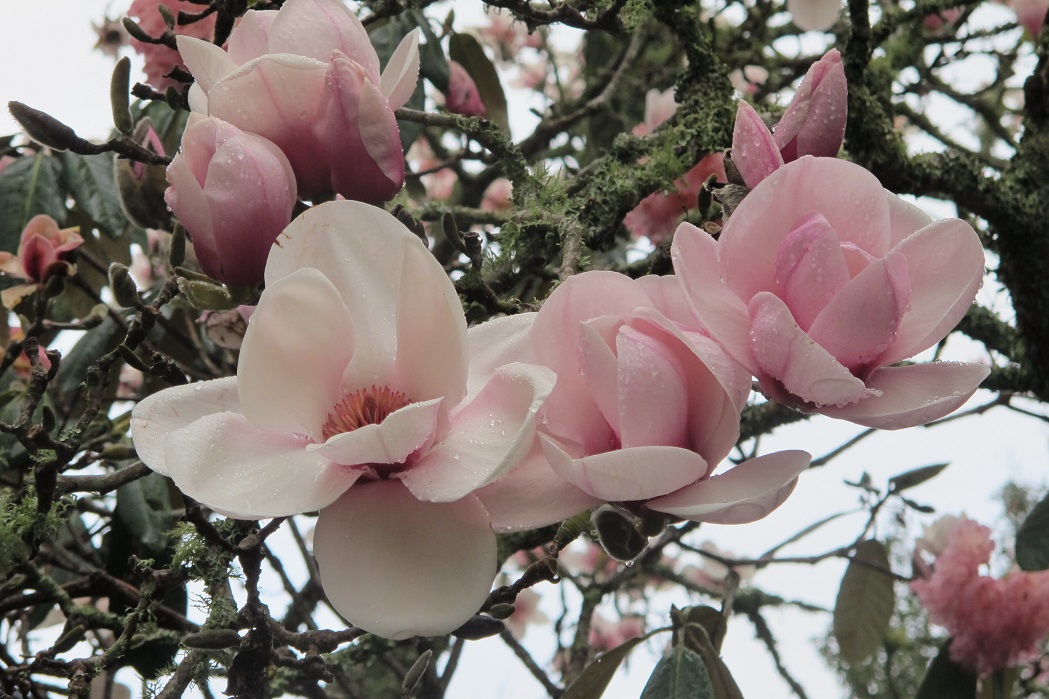
Atlas
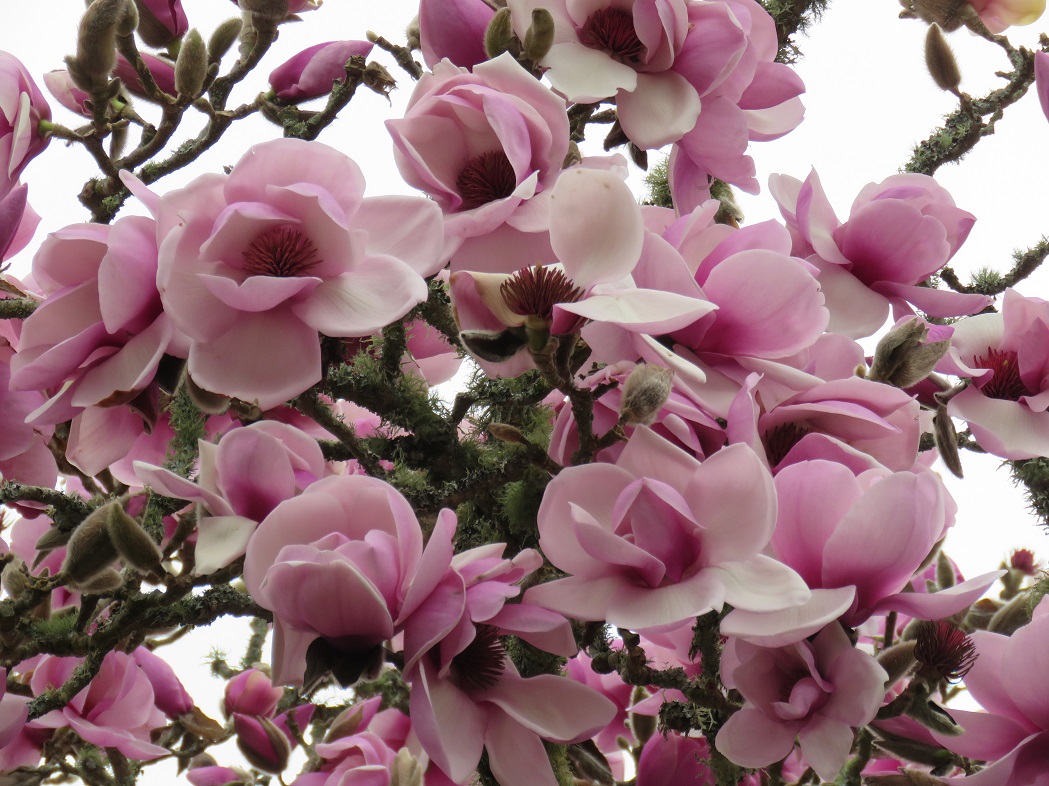
and Iolanthe. This particular cultivar is one of the enduring stars in Felix’s collection.
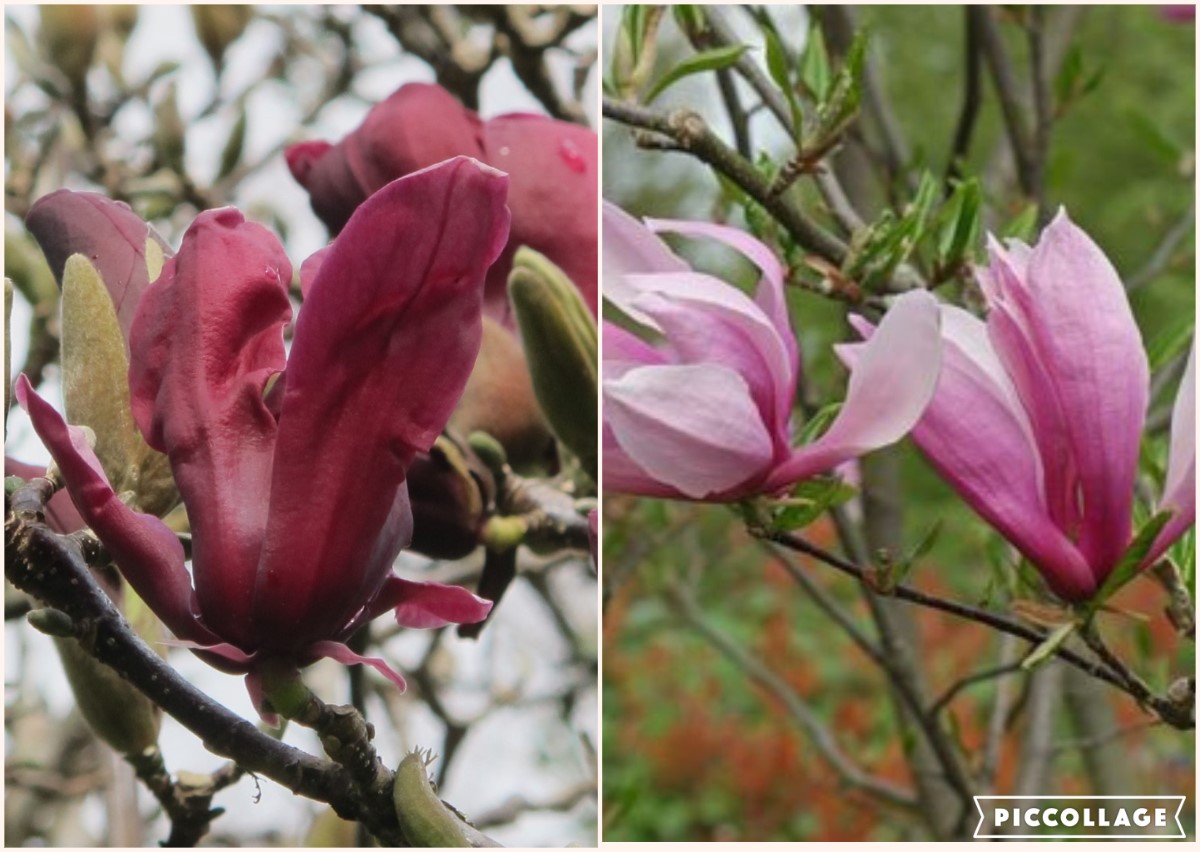
The picture on his use of M.liliiflora is not as clear. He had the dark form of M. liliiflora ‘Nigra’, a paler pink form of the same species and, it seems, a liliiflora hybrid in the garden and over time, he grew somewhat hazy in his recollections of which plant in the garden he used for which cross. One or other form of M liliiflora crossed with ‘Lanarth’ gave two notable results.
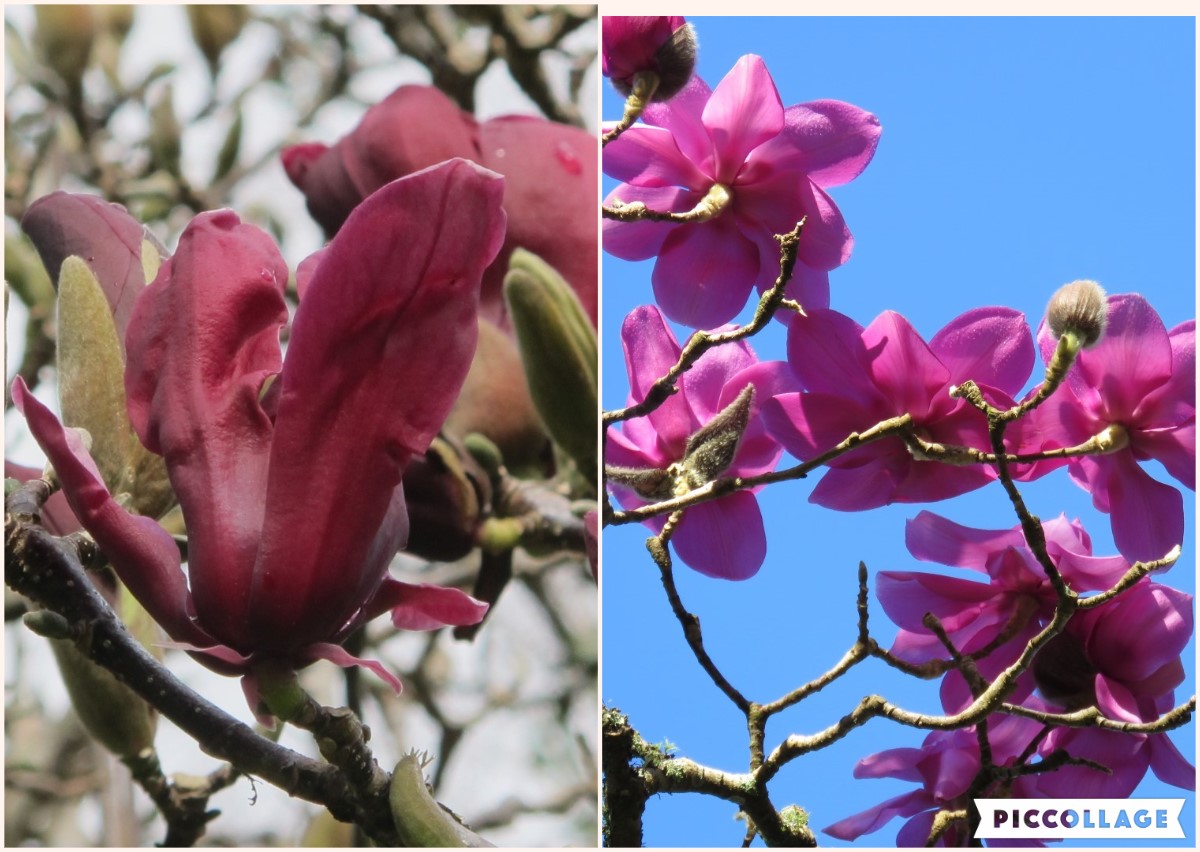
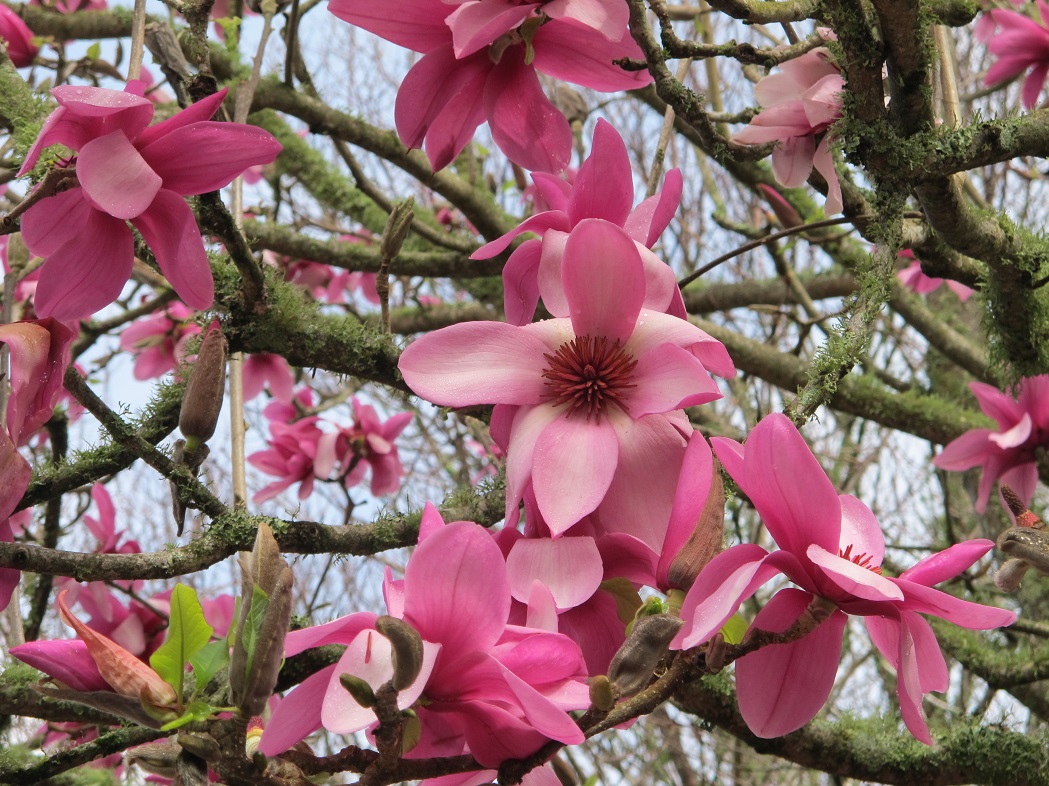
The first was ‘Apollo’.

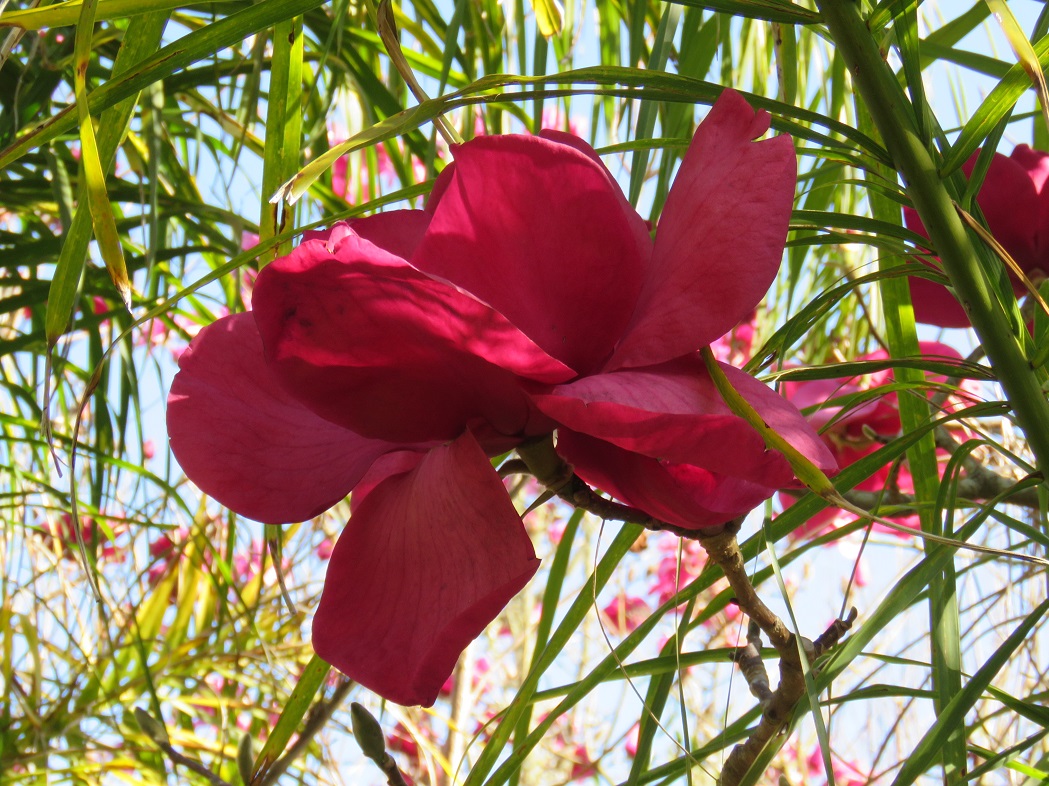
The second was the colour breakthrough in ‘Vulcan’ that paved the way for a multitude of magnolias into the future, getting to the red tones.
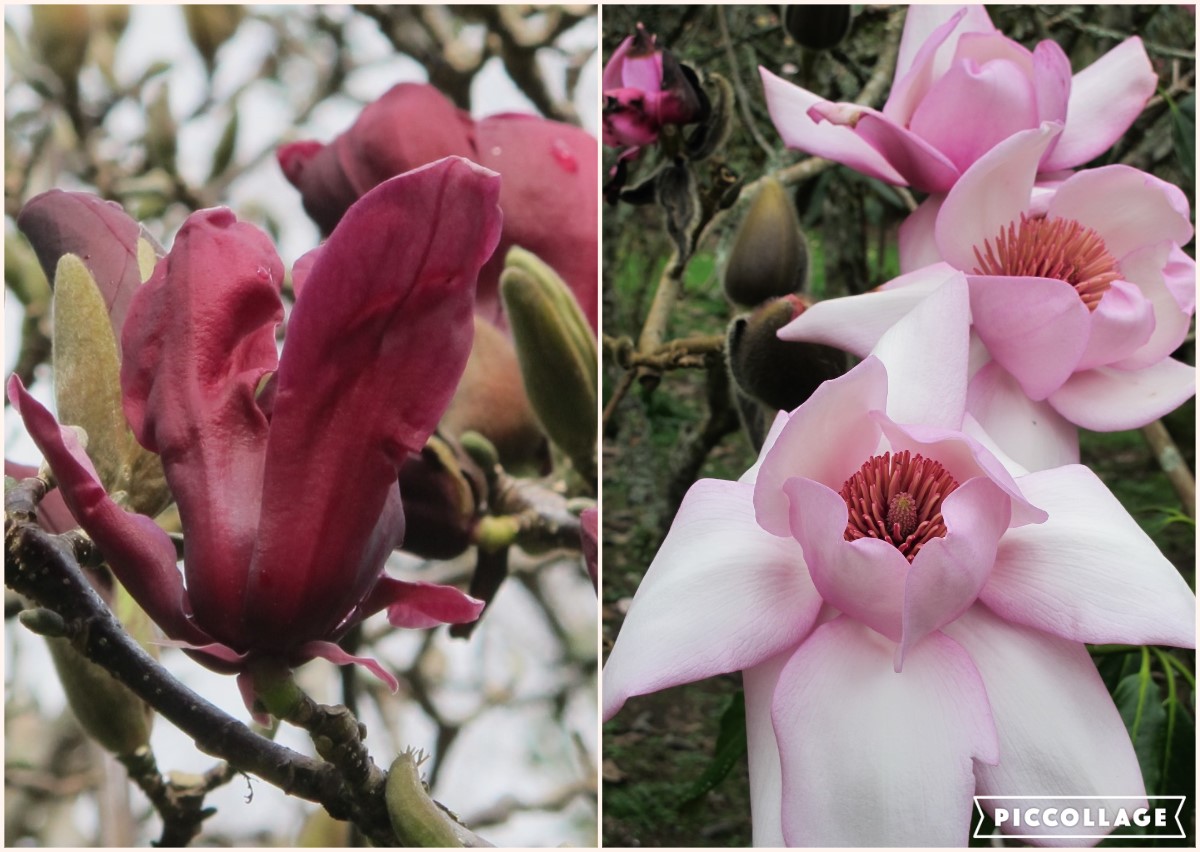
Again, an unspecified form of M.liliifora but crossed this time on his old favourite ‘Mark Jury’ resulted in one named cultivar of note.
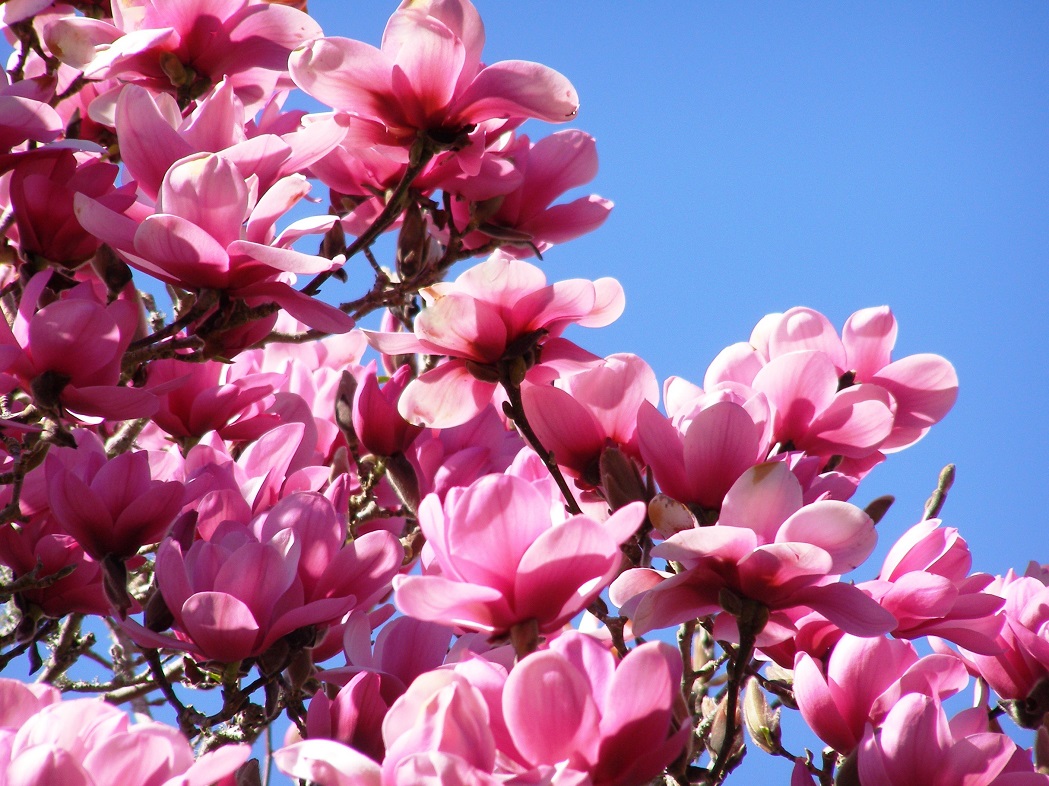
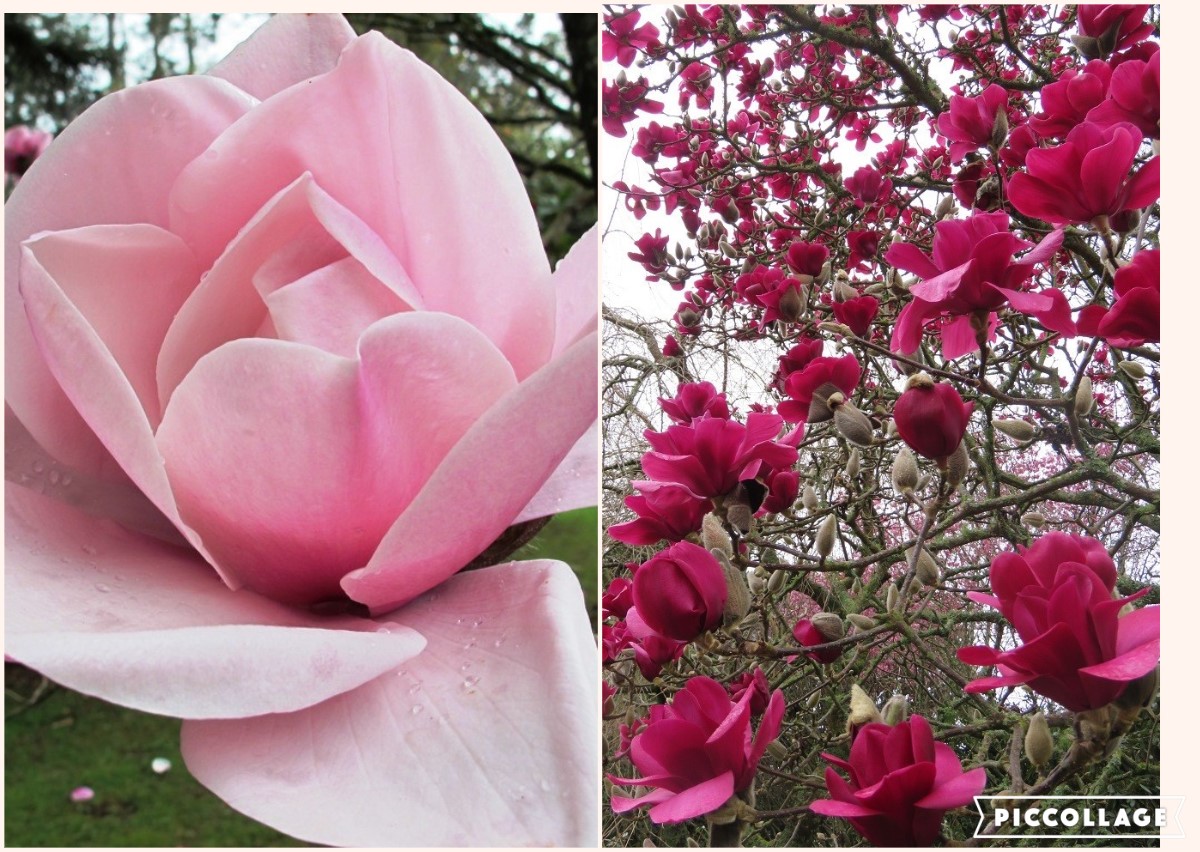
Magnolia ‘Serene’.

When Mark moved in to the next generation, starting by using Felix’s hybrids, it was his cross between ‘Atlas’ and ‘Vulcan’ that closed the circle his father started.

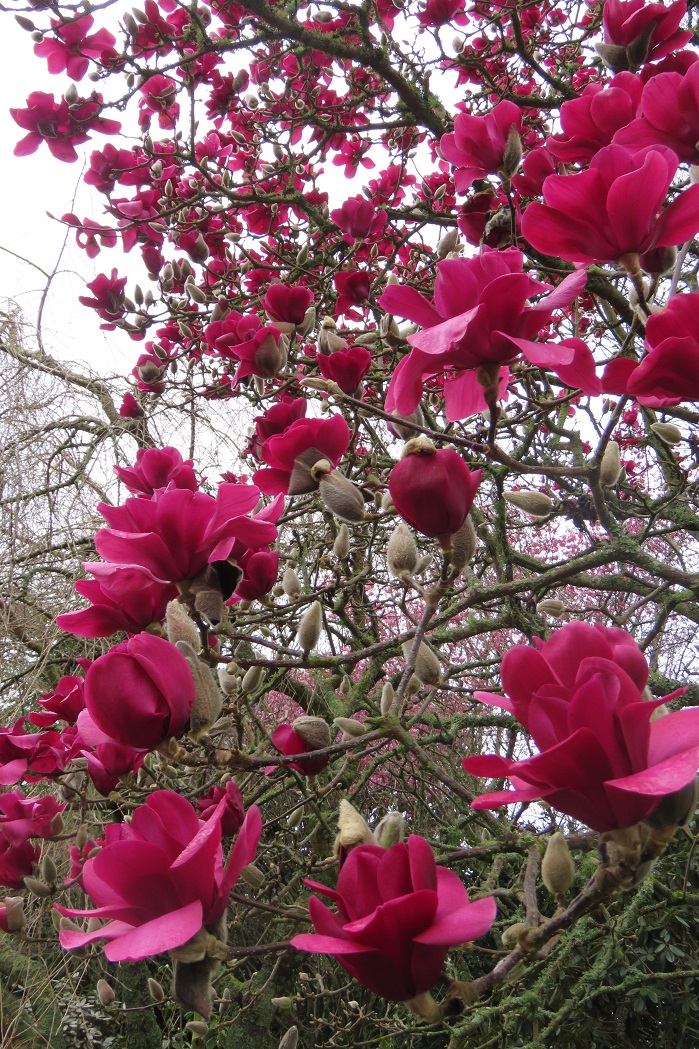
Magnolia ‘Felix Jury’ was what Felix had been wanting to see if he could reach and he lived long enough to see it happen. It does of course have ‘Mark Jury’ in its parentage through ‘Atlas’. To be honest, the flowers do not always look this red. I took this photo last week and we admit that it is ‘Felix’ at its most sublime.

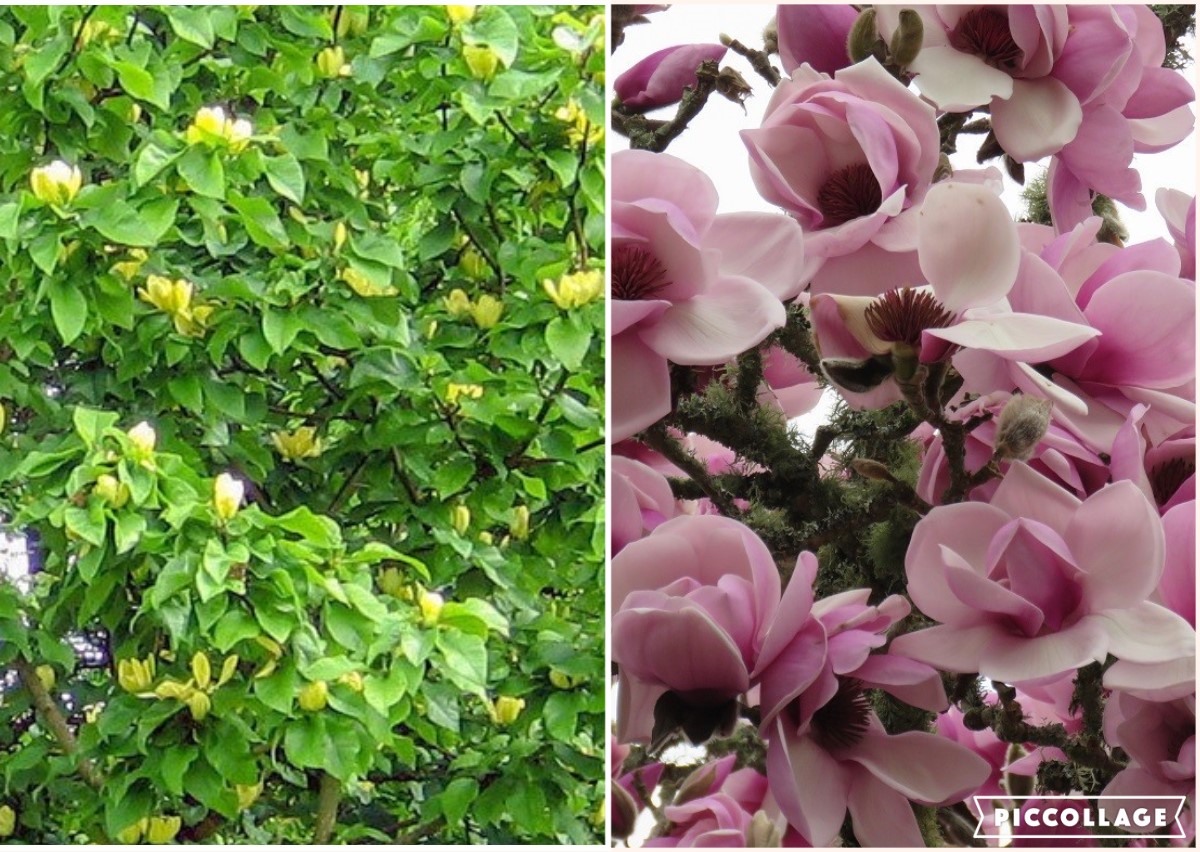
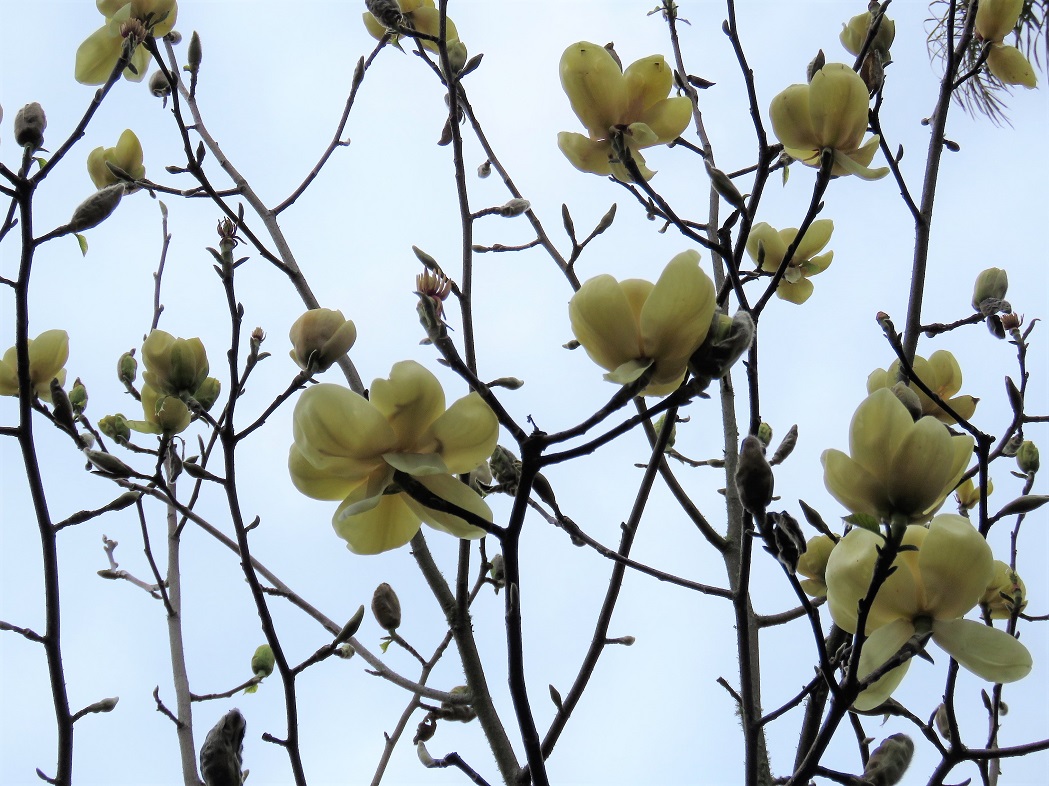
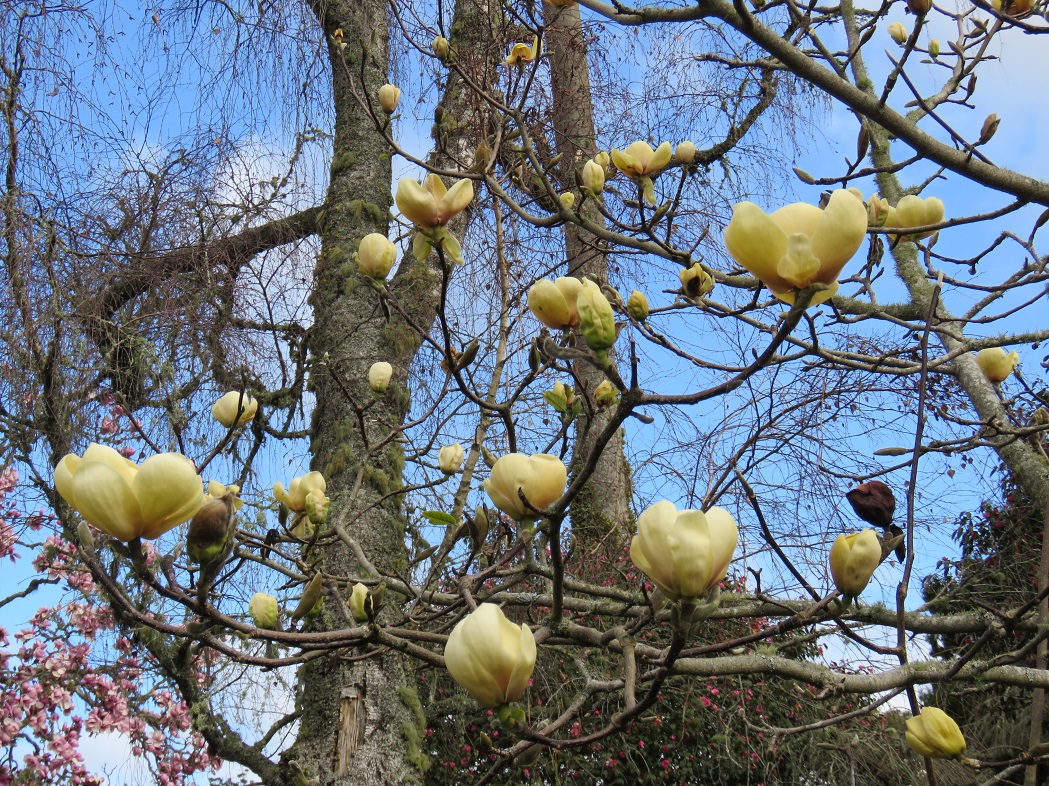
Mark has had one notable success with his yellow crosses – ‘Yellow Bird’ with ‘Iolanthe’. ‘Yellow Bird’ is not evergreen – it just flowers at the same time as its new leaves appear in our climate and its flowers are small but a good colour. He was pleased to get a smaller growing tree that flowers on bare wood and that has been named ‘Honey Tulip.

‘Honey Tulip’ is a good stepping stone. Mark’s dream is to get the equivalent of ‘Iolanthe’ – a large cup and saucer bloom in pure yellow. Whether he has enough years left to achieve this is as yet unknown. It may fall to the next generation of hybridists to realise that vision.