To dead head or not to dead head, that is the question

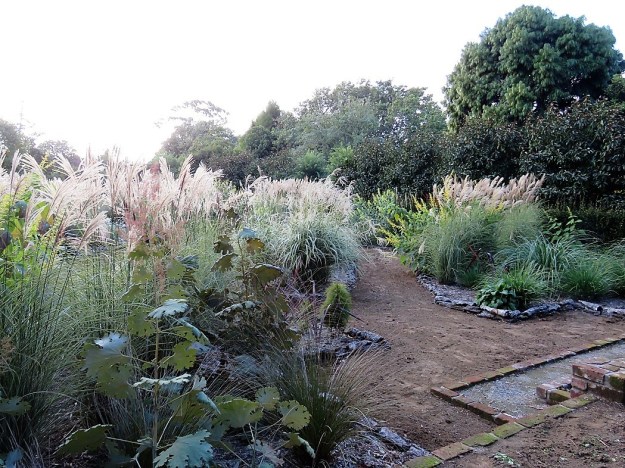
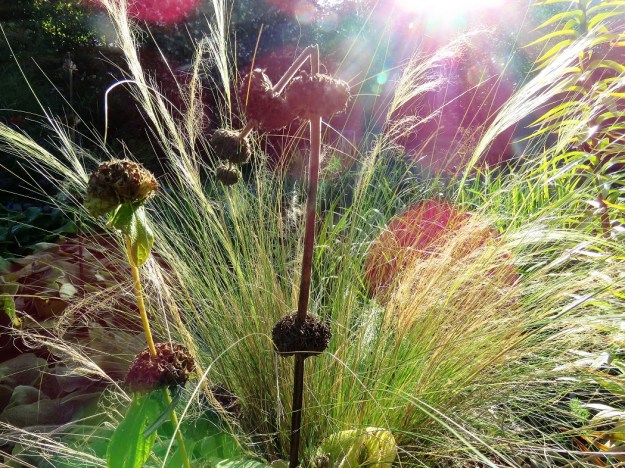
Phlomis and Stipa tenuissima in the morning light of autumn

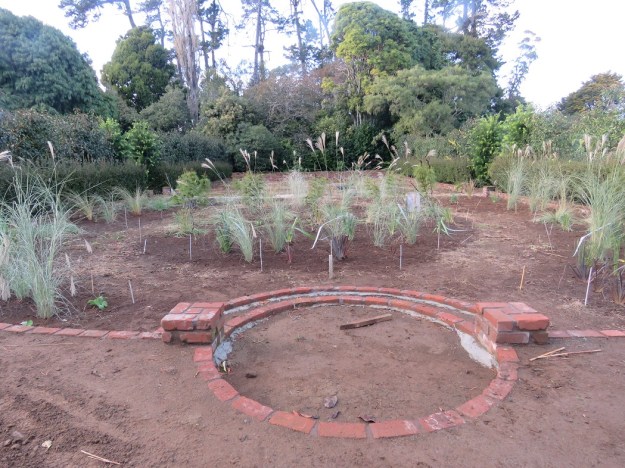
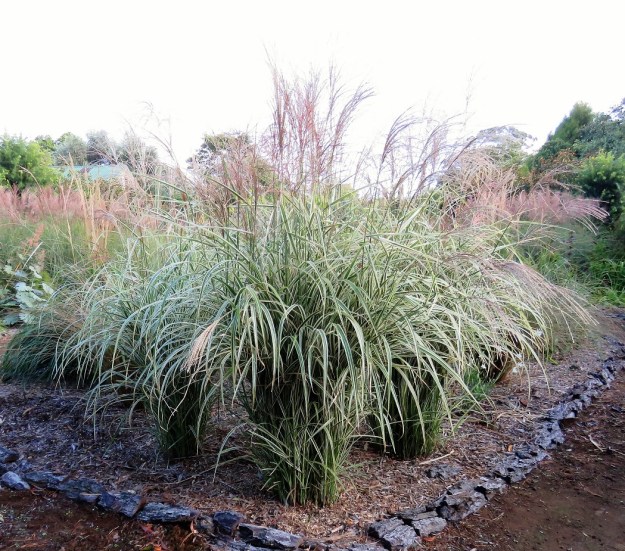
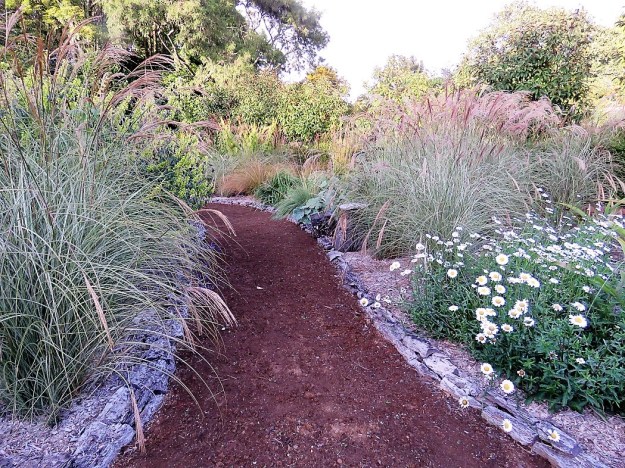
I have never done so much dead heading in my life before. Not that I mind it, you understand, more that I am surprised to find it becoming part of my routine. The need was not anticipated. But neither have we ever had extensive areas of summer perennials before. This week, I achieved what was a milestone for me – the completion of the revamped Iolanthe Garden as a perennial meadow (I use the word ‘meadow’ loosely, here.) That gives us close to an acre (0.4 hectare) of new summer gardens finished.

It has been heavily influenced by the New Perennials movement, led by its uncrowned monarch, Dutch designer, plantsman and gardener, Piet Oudolf. Anything and everything you read about this modern approach to perennial gardening will refer to its lower maintenance requirements and leaving the plants and all the seed heads to stand well into winter, that there is beauty in that black and brown decay of autumn and winter until everything is cut down to the ground – usually in February, so very late northern winter. Besides, all those seed heads feed the birds and save them from starving when food supplies are desperately short. Oudolf has coined the term ‘fifth season’ to describe that period in late autumn when low light levels, frost, dew and sometimes snow light the blackened tips of plants to make them sparkle. There are many beautiful photographs on line capturing this phenomenon.

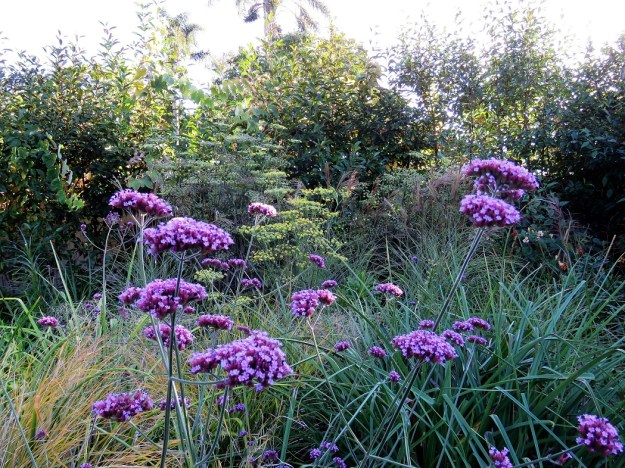
You can have too much of a good thing – Verbena bonariensis and fennel

It is different in New Zealand. Boy is it different. Only the coldest parts of the country have that winter hiatus. Most of us have flowers and seasonal interest all year round. A large proportion of the plants we use are evergreen so never die down to ground level. There is food for the birds all year round and they are not in danger of starving. Besides, most of those seed and grain eating birds are the introduced ones (sparrows!). Our native birds tend to favour fruit or partaking of nectar. Our light levels don’t drop in winter. A midwinter’s day can be as clear and bright as midsummer.

And we have a problem with garden escapes becoming weeds. That is the big issue that has me out there dead heading. Much and all as I love Verbena bonariensis, I don’t want mountains of it everywhere. The same goes for crocosmia be it yellow, orange or red, kniphofia (red hot pokers), some of the asters, tigridia (jockey caps), eryngium, dietes, fennel, nicotiana, verbascums and quite a few other plants we are growing. Even Gloriosa superba sets so much seed it is threatening to become a weed. There is nothing for it but to get out there with my snips and bucket to reduce the seed heads.

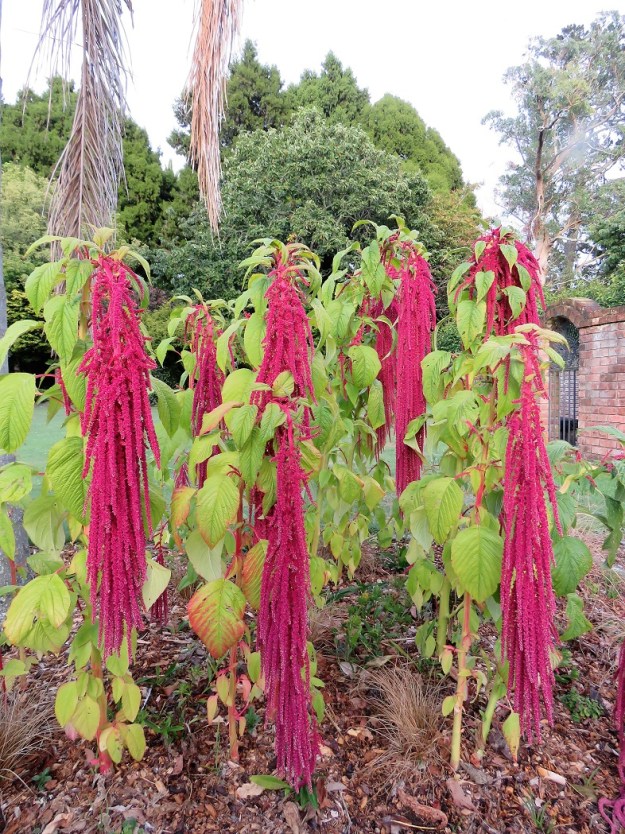
Amaranthus caudatus – not unwelcome in this situation but a surprise arrival in the compost

There is a slight problem with disposing of the seed heads. Even though we make hot compost, too many seeds come out the other end of the process and live to germinate and grow another day in another place around the garden. This unexpected display of amaranthus arrived in the compost I spread in this area. I have learned my lesson. Now I stow the seed heads in deep shade on the wilder margins of the property where few will germinate because they don’t see the sun.

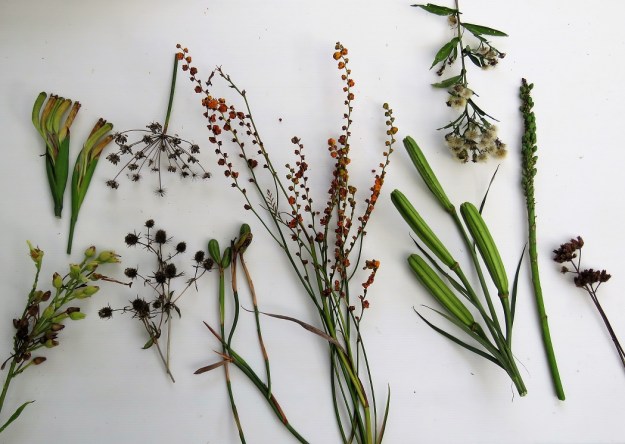
A sampling of seeds that need removing. I contemplating setting it up as one of those quizzes for bored readers to identify but I would rather be out gardening. Top left tigridia and fennel, bottom left nicotiana, eryngium and dietes, centre crocosmia, top left aster, bottom right Lilium formasanu,. kniphofia and Verbena bonariensis.

The skills come in knowing which plants need total removal of seed heads (kniphofia and tigridias, for example), which plants need the removal of most seed heads to restrict their self-seeding (such as eryngiums, fennel, crocosmia, verbascums and Verbena bonariensis) and which plants don’t need to be dead headed because they are either welcome to seed down (I am not sure than I will ever have too many echinaceas) or because they don’t seem to cause a seeding problem (phlomis and the grasses). Then there are a few plants that I will dead head because that encourages them to flower again (roses, though I don’t grow many of those these days, and some of the daisies).

There is no substitution for observation and experience. We can not just take gardening practices from other climates and assume it will be the same here. If I have another 20 years, I may be able to come up with plant lists that are specifically designed for our conditions. For anyone thinking that maybe it would be better to concentrate on using our native plants, consider the fact that most of our sunny perennials are alpine. In our lowland conditions, native perennials are shade loving foliage plants with a heavy emphasis on ferns.

I want some eryngiums to self seed but not all of them

Two footnotes: the acclaimed film about Piet Oudolf, called ‘Five Seasons: The Gardens of Piet Oudolf’ is available free to stream this weekend only. We plan on watching it this evening, as long as I can work out again how to get Chromecast working. Where is a teenager or young person when you need one? It is being streamed from https://www.hauserwirth.com/?fbclid=IwAR2YXqr5-VDT2TwThnzWxVF2lzS4HXMVCV-l9166HQsVlTqqktF-QYsMTm4

And we are opening the garden and unveiling the new summer gardens for ten days this spring during the annual Taranaki Garden Festival, October 30 to November 8. As part of that, I am considering offering workshops on new directions with sunny perennials and managing meadows in our climate. Numbers will be strictly limited so look for details when the programme comes out.

May your lockdowns go well, or at least harmoniously. The end is in sight for us in NZ, with the strong possibility that we can eliminate the virus and return to some sort of Covid-free normality – as long as our border stays closed. Just don’t try injecting, drinking or otherwise consuming disinfectant – you may then be Covid-free but actual scientists tell us you will also be dead.

Farewell poor Felix. We knew thee well.

The Prunus campanulata, that is. We farewelled the person – Mark’s Dad – back in 1997. The magnolia named by Mark for him continues to thrive here and we have several specimens planted around the property, including the original plant. The prunus – we have just the one and it may not pull through.

A definite lean. In fact it has fallen over, though the root system is still in the ground.

I noticed two days ago that the tree had a major lean. On closer inspection, it became clear that only the brick wall was holding it up and I was a bit worried about whether it could bring down the wall. Mark set about removing the weight that was pulling it to one side. He will cut the tree back hard and we will look at putting a prop in place but we doubt it will survive.

Prunus ‘Felix Jury’ is the reddest campanulata that we know of

Prunus campanulata ‘Felix Jury’ was named by the nursery Duncan and Davies for Felix, because he was the originator of this selection. It is simply not done to name a plant after oneself. It is still the deepest carmine red bloom on the NZ market and is much beloved by our native tui. Being a smaller growing, upright form, it has been popular as a garden plant. Unfortunately, it is not sterile so it sets seed which makes it problematic in areas where campanulata has become a noxious weed. We do a lot of weeding out of seedling cherries here because the birds spread the seed far and wide.

We will try and keep a plant going as part of the Jury collection. Hopefully this tree will stay alive until late spring so Mark can take some cuttings off it. The optimum time for taking cuttings from deciduous plants in our conditions is December.

Native tui feeding from a campanulata cherry but it looks too pink to be ‘Felix Jury”

I do not think I have ever told the story of the naming of Camellia ‘Julie Felix’. It would have been very poor form for Felix to name it for himself but he really liked it. Enter Julie Felix, the American-born folk singer who made her name in Britain in the late 1960s and early 1970s. She was touring NZ and doing a concert in New Plymouth. Felix thought that naming the camellia Julie Felix was a subtle play on names that would suit his purposes. Besides, though he took no interest in music, he liked her songs.

“You can’t do that without her permission,” protested his wife, Mimosa. She was a great woman for the telephone was Mimosa, so she tracked down that Julie Felix was staying at the Devon Hotel in New Plymouth and tried to call her. Whoever took the call – almost certainly the Devon receptionist – wouldn’t put her through to the singer’s phone so Mimosa explained (no doubt at great length) that she was trying to contact her for permission to name a camellia after her. “I am sure that will be fine,” said the person at the other end, very kindly.

So there we are. Permission was sought for this name and consent was give – by the receptionist at the Devon Hotel. I doubt that the singer ever knew there was a camellia bearing her name although it never was named for her. In a typically convoluted fashion, Felix was naming it for himself.

Ironically, I can’t even find a photograph of it, even though we have a big plant close to the house. I must set that right this winter when it comes into bloom again. It never achieved the status of his better known camellia cultivars like ‘Water Lily’ and ‘Dreamboat’ and ‘Mimosa Jury’. But Felix clearly rated it highly.

Meet Albert

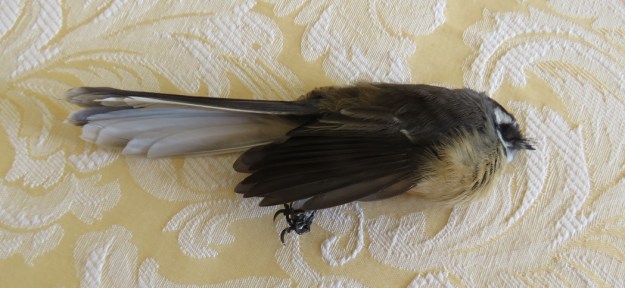
Albert the piwakawaka

May I introduce you to Albert – about 8 grams of chattering, feathered confidence? Albert has learned that the laundry door is left open during the day (in order to allow easy passage in and out of the house for our increasingly geriatric dog, Spike) and he has taken to popping in and out of our isolation bubble during the day. So confident has he become that I no longer have to open windows and shut doors to enable him to get out. He knows the way in and out and comes and goes at will.

It is hard to photograph them with their fan tails fully extended because they are such active flibbertygibbets

Albert may of course be Albertina. I tried searching how to tell a male piwakawaka from a female but failed to find anything definitive. The common name for these little native birds is fantail, on account of their tails which they hold out as full fanned fannies, really. They are notoriously difficult to photograph, being hyperactive, so these photos show just how chilled out Albert is indoors.

He likes to announce his arrival by chirruping noisily. Rating the decibels generated in proportion to extremely slight body weight, this must be one of the noisiest birds on the planet. Piwakawaka are insect eaters and I think Albert finds random reinforcement from his house visits in the form of raiding small flies from the occasional spiders’ webs that have escaped my notice.

Albert contemplating cooking lessons

We have fantails in the garden all year round but at this time of the year as the autumn fruit fall and we are gathering in the harvest (grapes this week), they will often come into covered areas in search of fruit flies. It is a good thing we are not superstitious. It is common lore in NZ that a piwakawaka coming indoors is a harbinger of death, attributed to Maori mythology. In fact, if you look into it, it may be a sign of an impending death OR a messenger from the gods. In a country where the ancient myths and legends are based entirely on oral tradition, there is a fair amount of regional variation. We are going with the theory that Albert is either an opportunist or a benign messenger. We have grown quite fond of him and the feeling appears to be mutual, as much as 8 grams of feathered determination can demonstrate bonding.

For scale, this is Albert in the the TV room. 

And a fantail nest from my files

When is a wild garden too wild to be comfortable?

I have never written about Waltham Place in Berkshire that we visited in 2014. To a large extent that is because there was a total ban on taking photos there – I have no idea why. But also, we weren’t at all sure when we walked out of the garden if we had just seen something cutting-edge as claimed by some or whether it was a case of the emperor’s new clothes. The fact that we are still talking about six years later suggests the former – that it was indeed sufficiently cutting-edge to challenge our preconceived notions.

Resorting to photographing photos in a book….

I couldn’t find photographs on line that were available for reuse though you may wish to google the name and see more for yourself. I had to resort to photographing pages from ‘The New English Garden’ by Tim Richardson. These images are a fine example of how structure photographs well and gives form and solid shape to a scene that may not look quite the same to the naked eye. Make that ‘does not look the same to the naked eye’. This garden pushed the concept of naturalism further than we were comfortable with and it was considerably wilder, or rougher, than it appears in photos.

Thinking about it again recently, I figure it took the conventions of what I call the pictorial English manor style of garden design and turned them on their head. Most, if not all of the structure pre-dated the current garden and that suited the style of Dutch designer, Henk Gerritsen. He was heavily influenced by the famous Dutch landscape designer from the preceding generation, Mien Ruys with the philosophy of ‘a wild planting in a strong design’. Gerritsen was attracted to wild plants and his approach was to utilise many wild plants – what are often referred to as weeds. Memorably, his willingness to use plants like burdock, docks, teasels and bindweed (common convolvulus) in decorative situations is disconcerting. He was good friends with Piet Oudolf – these days crowned the undisputed king of the New Perennials movement – and drew on at least of the garden plants that Oudolf had picked out as excellent options but pushed his gardens right to the wild, most naturalistic end of the spectrum. Oudolf is far more controlled and painterly in his use of plants.

From ‘The New English Garden’ by Tim Richardson

The twin borders also use strong design which looks far more effective viewed from above than at ground level – and indeed the main upstairs rooms in the house look down at them. At ground level, I remember them being very brown. This was not a pretty garden.

Although Gerritsen’s interest in plants started with looking at wild flowers in their natural habitats all over Europe over a period of quite a few years, his palette of plants had far more to do with wild plants naturalised at Waltham Place. I can not say that we recall much botanical depth in terms of drawing on many of the remarkable wild flowers especially bulbs, that occur in those parts of the world. It was more of an intellectual exercise looking at the plants used within that garden situation where it becomes survival of the fittest with a very light hand indeed on garden maintenance. So, as a garden, it lacked two of the elements we value highly – botanical curiosity and some level of prettiness and beauty in plant combinations. It is a garden that needs to be viewed through a different set of glasses altogether and we only partially succeeded at that. We did at least leave with an open mind.

Sunset Garden near New Plymouth

As New Zealanders, these wild plants are introduced and often invasive weeds in our country. It is a bit different when they are in fact native to your land. Maybe we would feel more comfortable with this style of gardening were the emphasis on our indigenous plants. In fact, I have seen it done locally in Sunset Garden, I think it was called, on a chilly site set with some elevation on the flanks of our local mountain. I believe the site was once the home of the local naturist club before they moved to a warmer location down by the sea. That garden certainly had a charm of its own, albeit with zero hard landscaping and a light hand on maintenance but some may struggle to view it as a garden in the usual understanding of the word.

Sunset Garden again

It is all food for thought when we consider how our garden practices fit in to the wider environment, what we value visually and our relationship with nature.

Finally two quotes from Henk Gerritsen which, I think, come from his renowned Essay on Gardening, published just before his premature death in 2008. I haven’t bought it yet (it is a book length essay) because I haven’t psyched myself up to spend $120 on a book with black and white photos:

‘What is straight, should be curved, what is curved, should be straight. Meaning: in a garden where everything is straight, the walls or hedges around it and the path through it, the secondary landscaping should be curved: sloping or freakish paths, hedges, lawns or borders and the other way around: in a freakish or shapeless garden the secondary landscaping should be straight, in order to obtain a harmonious image.’

‘Plants that can’t live without the use of chemical fertilizers or pesticides don’t belong in my garden.’

Sunset Garden may not be sufficiently gardenesque for some tastes


Green breathing space

Informal green space at Pettifers in Oxfordshire, a private garden created by Gina Price

Have you ever walked around a garden that is so full, hectic even, that you come out feeling exhausted? I have. Several in fact, but one in particular. I don’t like to show a photo of it because while I think he may have died, I am pretty sure a number of his friends will read this. It is an affliction more commonly seen in small urban gardens where the owner is so keen that they want to use every bit of available space. And uncultivated space is seen as wasted space.

I am sure that trained garden designers are taught the value of incorporating open space – part of what is often referred to as ‘negative space’, I think. I call it breathing space – a restful area which gives respite in a particularly busy garden. But not many of us use skilled garden designers and the notion that quiet areas need as much attention in planning as actively maintained areas filled with plants and colour may be a foreign idea.

Wild green space at Hestercomb

In practice, most of us use mown grass to achieve this. When I first wrote about green breathing spaces in 2010, I clearly had not looked past the garden lawn as an option. And we still have extensive grass lawns and pathways that we mow to fill this function. Mark is missing Lloyd during lockdown here as the mowing of the grass is his role. Yesterday, Mark hopped on the new lawnmower and headed over to mow our tenants’ lawns across the road. He came back somewhat stunned at how fast the new Walker mower goes. Slightly unnerved, he was, by its top speed, comparing it to a race the mower would win if competing against a sprinting human.

Mondo grass instead of lawn

I was recently asked about using mondo grass instead of lawn grass which had me finding a piece I published in 2015, showing the use Auckland gardener and photographer, Gil Hanly has made of mondo grass to give a green breathing space in her very busy and full city garden.

Lawns have a purpose if you have children who like to play cricket or any ball games outside. We used to play family badminton on our front lawn way back when we still undertook such wholesome family fun. It is a better home option than tennis when you don’t have a fully netted court. And lawns have a function if you entertain larger numbers of people outdoors. Beyond that, they are basically green space, framing garden and landscape views, or keeping the amount of garden space to a manageable level. It is easier to mow grass than to maintain most garden areas.

Pictorial green space as perfect circle at Sissinghurst 

Green space at Wildside 

Wildside again

But what if you have a wilder or more naturalistic garden and don’t want to mow green spaces? I found a few examples when I was going through photos for my last post. While Sissinghurst and Hidcote have very clearly constructed green breathing spaces integral to the garden, the modern gardens we have visited have their own take on the same need.

This area could have been all mown lawn but how lovely is that combination of mown grass and molinia meadow? Piet Oudolf at Bury Court

The combination of both lawns and green space in the molinia meadow at Bury Court may strike a chord with many, as it did with me. Definitely less wild, more designer-led and immaculate in its own way, it still fills the function of giving a calming experience in a complex garden.

Green space doesn’t have to be mown lawn.

I find Piet Oudolf’s molinia meadows a great deal more pleasing as green space 

… than his more formal green breathing space at Scampston that was altogether too redolent of a graveyard for my liking

Easter greetings from my corner of a locked down world to all of you in your lock down locations.