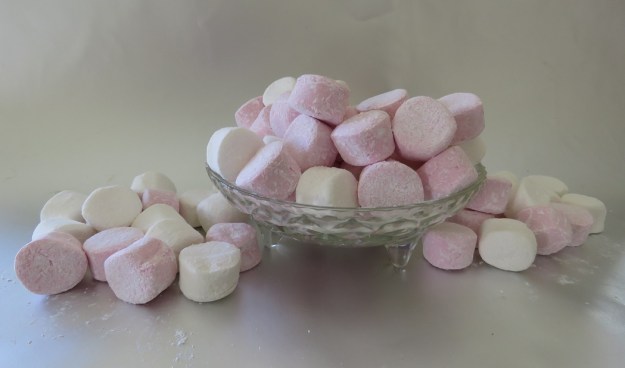
 Following on from my post last week on the rainbow colours of midwinter, I did indeed buy a packet of marshmallows. To focus my thoughts on the pretty pale pinks and whites, you understand.
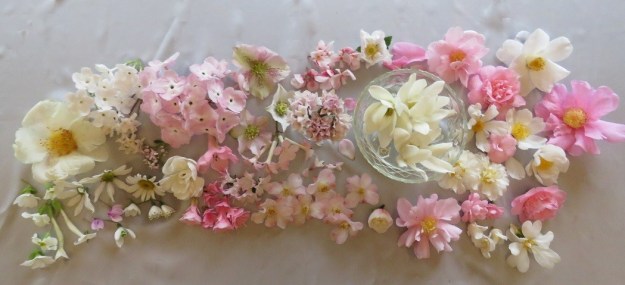
Flowers listed in the footnote below
A bleak day on Thursday had me out picking flowers in marshmallow hues. I was going to aim for a comprehensive representation of all candidates but decided part way through that this was unnecessary. Suffice to say, there was plenty to choose from and that right on mid-winter.
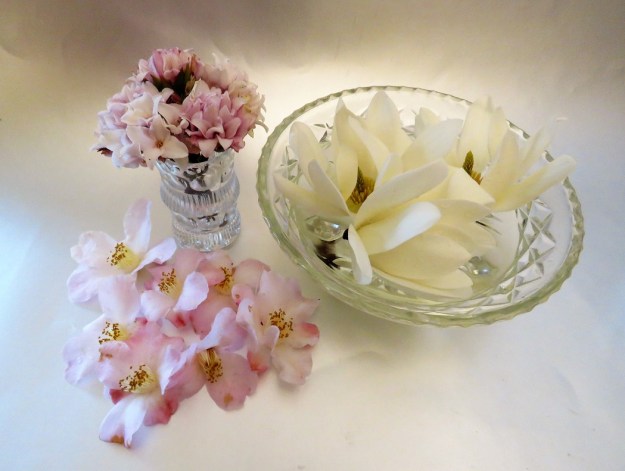 The centrepiece, I decided should be three of Mark’s cultivars. Fairy Magnolia White is well into bloom and a delight to us. We are proud of this one. Daphne Perfume Princess is in its full glory and the scent as we walk along our driveway is a pleasure. Camellia Fairy Blush never fails to please us, even after many years. It was one of the earliest plants Mark selected, named and released, if not the very first.
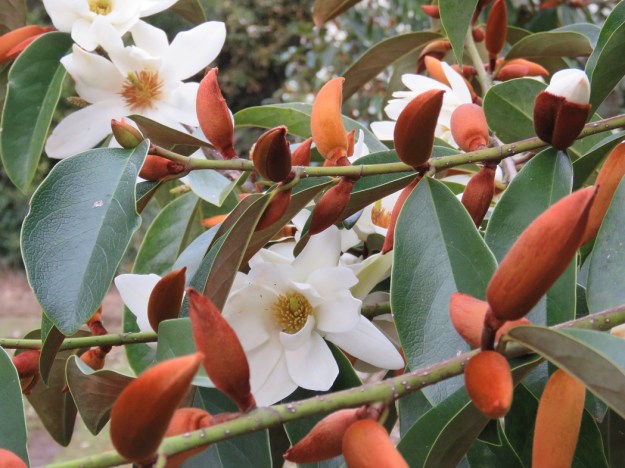
Fairy Magnolia White
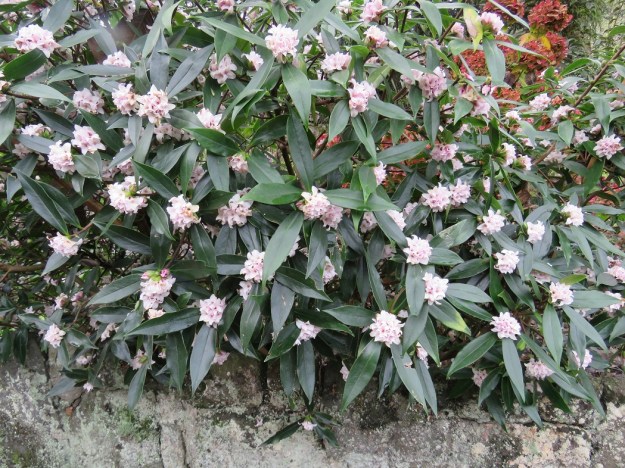
Daphne Perfume Princess
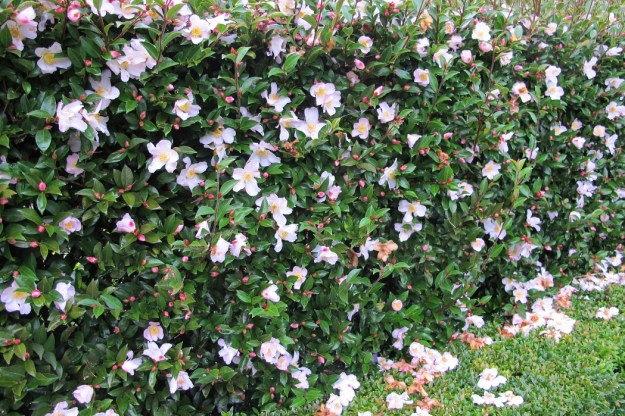
Camellia Fairy Blush
I separated the named camellias from the seedlings. We use many unnamed seedlings in the garden because we raise most of our own plant material here and always have done. It is how we can afford to garden on the scale we do.
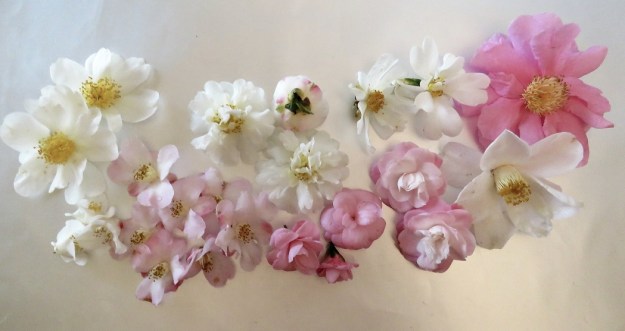 The named ones from left to right are C. gauchowensis, C. transnokoensis, Fairy Blush, Silver Dollar, Tiny Star, C. yuhsienensis Sweet Jane, Superstar and Showgirl.
The bloom shown face down is from Silver Dollar – one of the best, compact white sasanquas we know. Sometimes, both Mark and I get assailed by memories of our years retailing plants from here. Anybody who knows camellias will also know that many of the excellent white camellias open from a pink bud. Back in the days when ‘ladies who lunch’ (better known these days as ‘Karens’) were all madly planting their clichéd white gardens, I met more than I care to remember who wanted white camellias. Pretty much any white camellia would do but woe betide a pink bud. In vain would I assure them that the display was totally white, there was not to be a hint of pink in their pristine white garden.
We do not miss retail. In hindsight, I am somewhat surprised at the courtesy and politeness we maintained in the face of severe provocation.
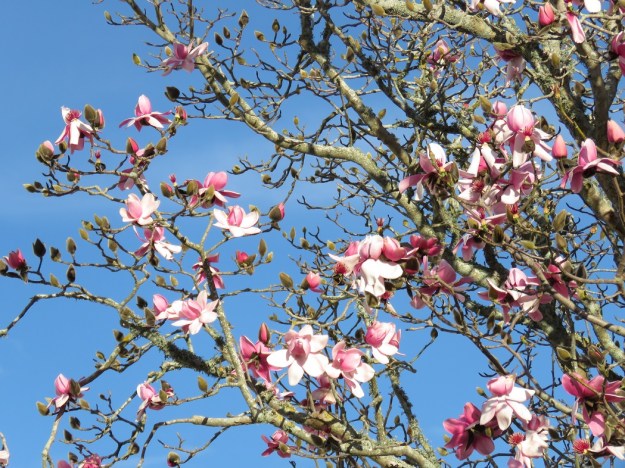
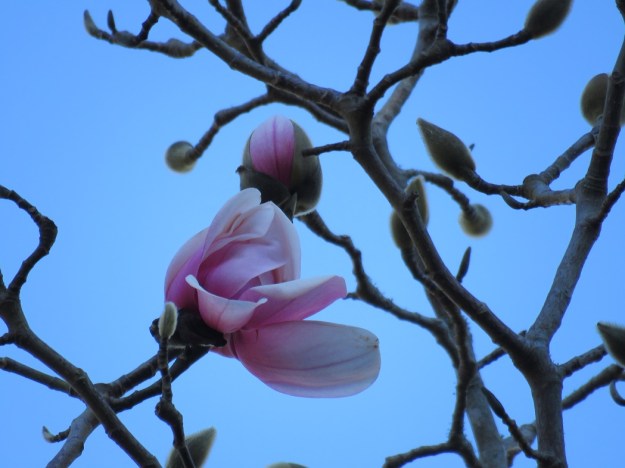
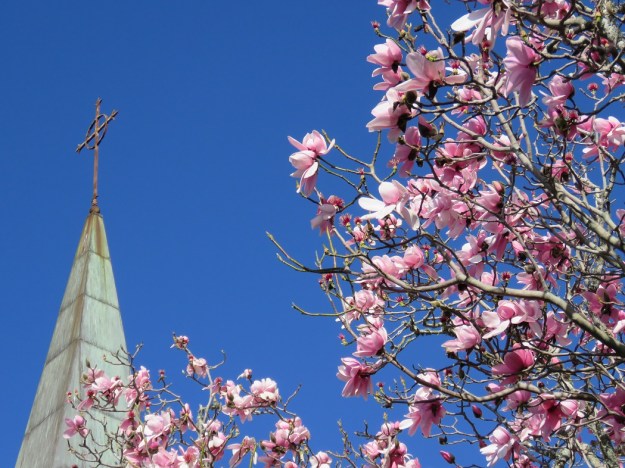
Magnolia campbellii
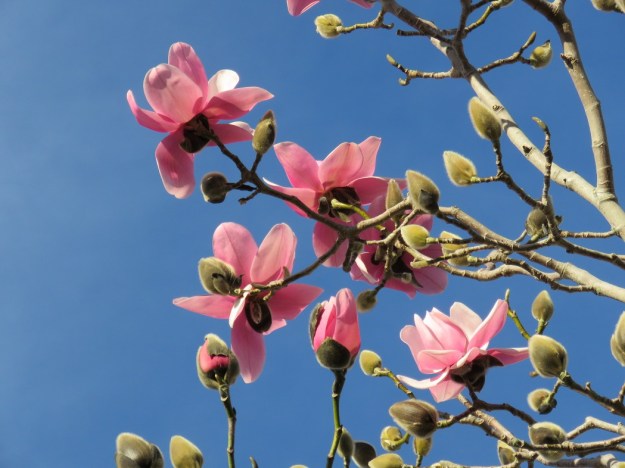
Thinking marshmallow hues, I photographed the Magnolia campbellii by St John the Baptist Anglican Church in Waitara. Is there anything more pink and white than this sight? Our plant here has yet to open its first bloom for the season.
That starter pack of marshmallows is going rather a long way. Mark and I are still eating our way through them a week later, even though they are sitting in glass jar on the bench tempting us each time we pass. I can report that marshmallows last longer than chocolate in this house. 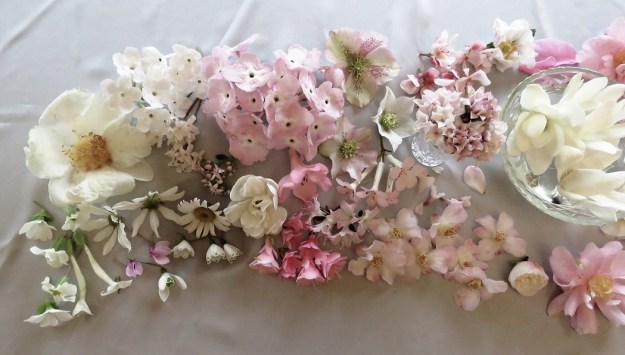
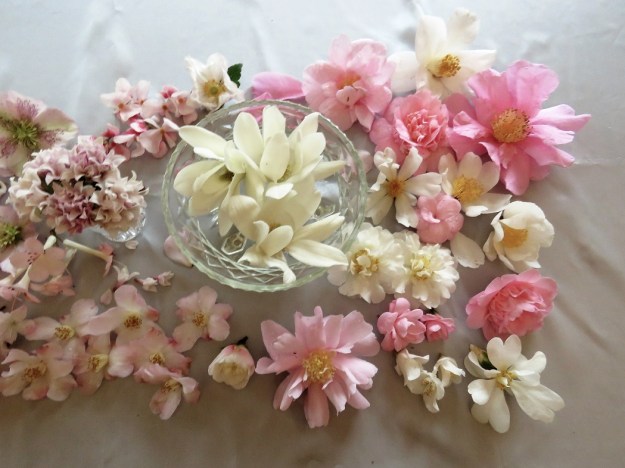
Footnote: The plant list in paler pinks and whites shown above includes the following: luculia pink and white, Primula obconica, polyanthus, gordonia, Crassula ovata, daphnes, montanoa, ox-eye daisy, Cyclamen hederafolium, galanthus (snowdrop), leucojum (snowflake), rose, nicotiana, vireya rhododendrons, azaleas, hellebores, begonia, Japanese anemone, michelia and camellias.

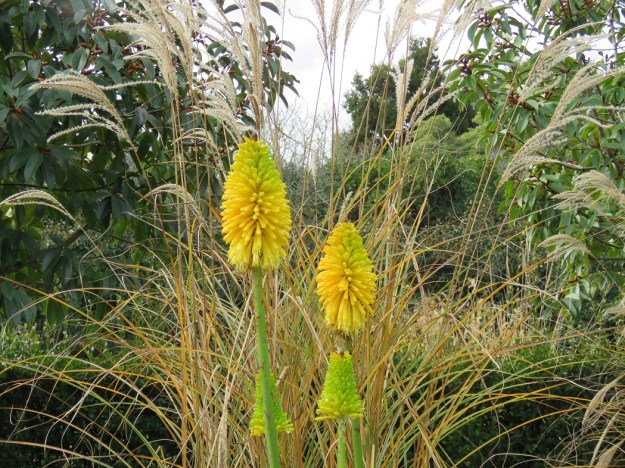 Yellow I will give to the kniphofia. This one, Mark retrieved from one of our fenced shelter belts where a neighbour had been dumping his garden rubbish so that was a find. I like the clarity of the yellow as a garden plant, maybe even more than the orange forms.
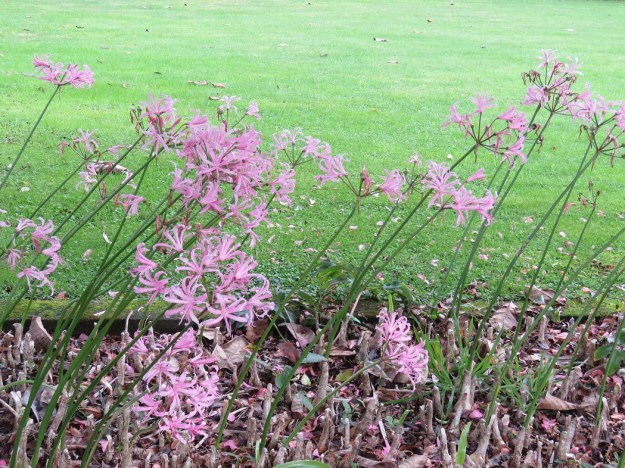 Green. Where to start? In our climate we are green all year round. Not for us the white of snowbound winters, nor the unrelenting grey of climates where the sunshine hours plummet in winter and the sun barely rises over the horizon. Nor the soft beige-golden tones of
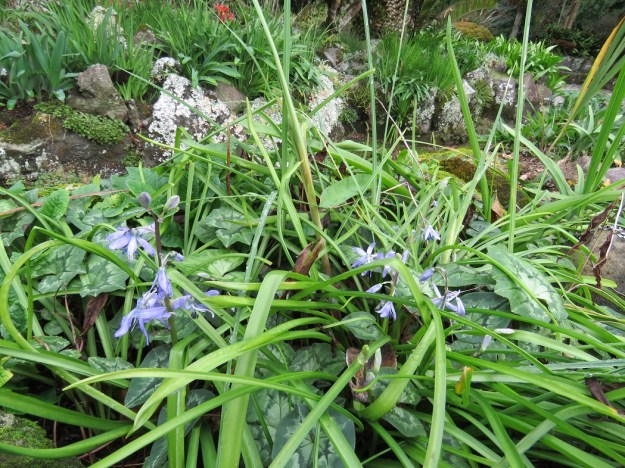
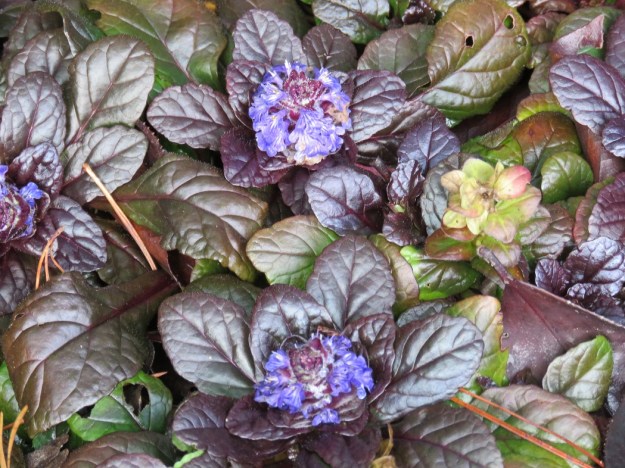 Indigo – just the ajuga which is perhaps an under-rated groundcover for woodland areas. The deep blue is a bonus with the dark burgundy foliage. What is indigo even doing as a colour of the rainbow when you think about it?
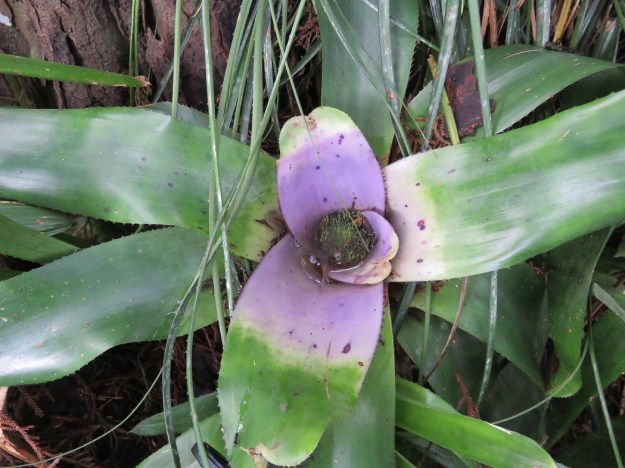 And finally to violet and while I entertained the violet hues of the stokesia that flowers all year round for us, I settled on a bromeliad with an indubitably lilac centre at this time of the season. Is it a neoreglia? Feel free to correct me. Bromeliads are not my forte.
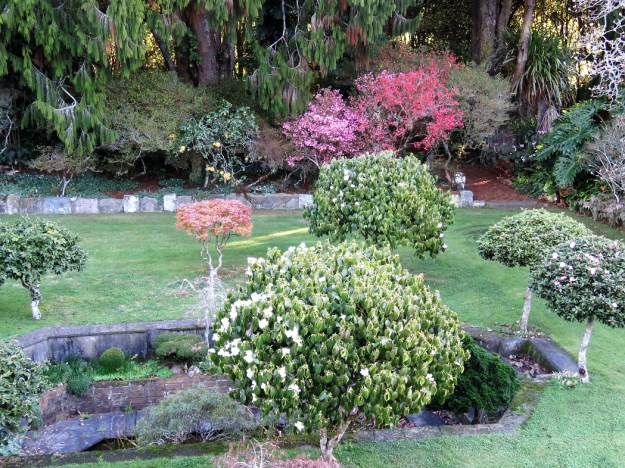
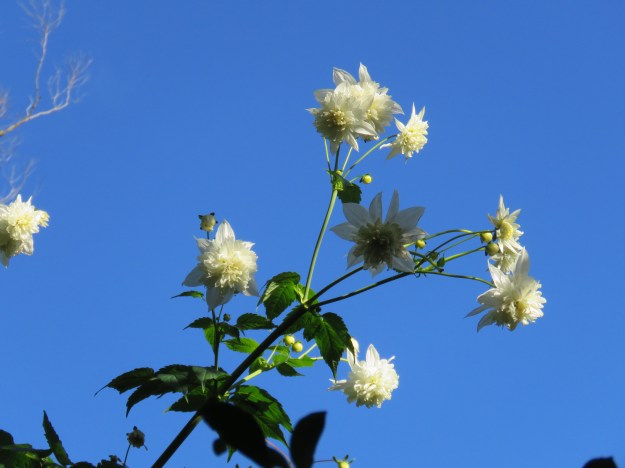
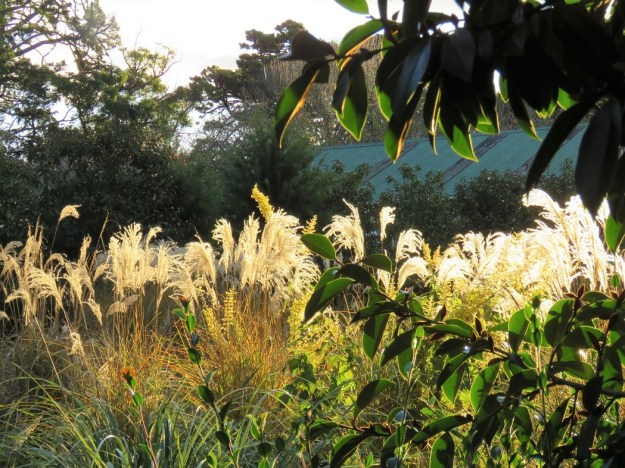
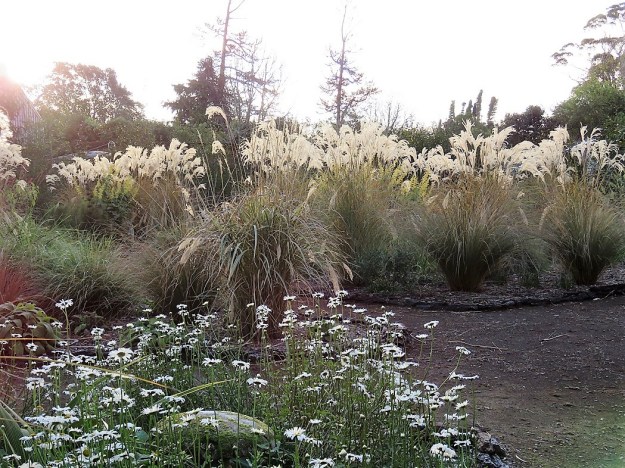 We are now well into what
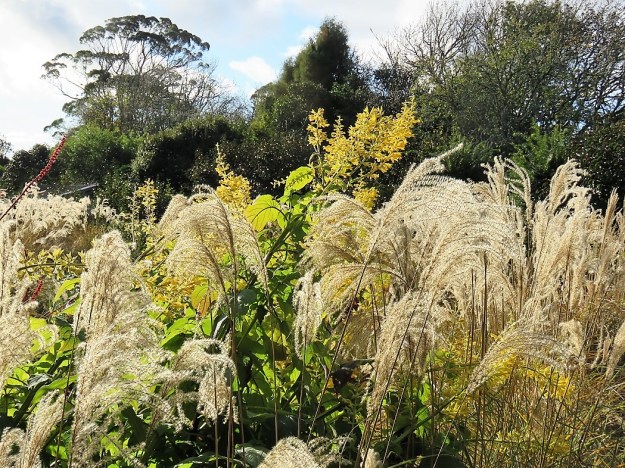
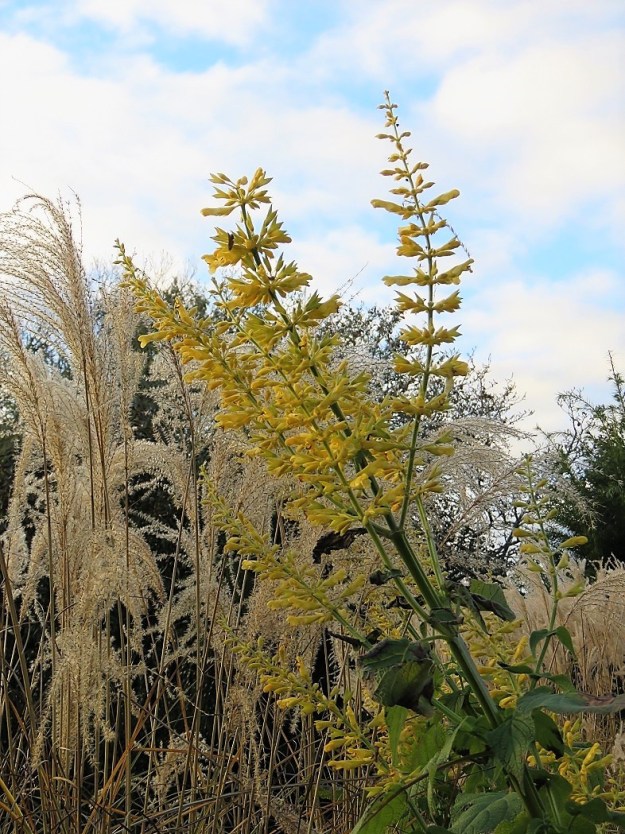 I have finally found a place where this large yellow salvia can grow with sufficient space and it is a late autumn – early winter highlight. We have never had a name on this variety so if any readers can identify it for me, I would be grateful. It stands a good two metres tall so it is a large plant to accommodate. *** Now identified as Salvia madrensis, thanks readers.
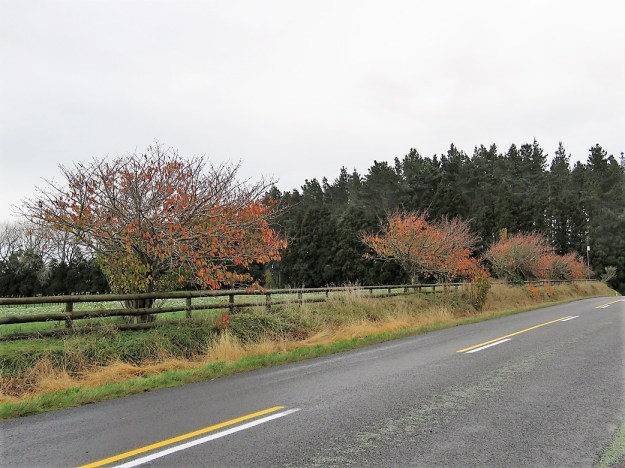 Many years ago, neighbours planted a row of flowering cherry trees on their roadside. Mark and I were discussing how long ago and he thought somewhere over 30 years, maybe even more. I recall when they first went in and they struggled for at least the first decade. There used to be quite a few more but these are the survivors.