A forgotten resource

Auricularia polytricha, hakekakeka, or wood-ear fungus

It is a fungus, Auricularia polytricha, and it played a very important role in the European settlement of Taranaki 150 years ago. Mark was raised knowing it as ‘pigs’ ear fungus’. I shall call it wood-ear fungus if I can not commit the Maori name – hakekakeka – to immediate memory. Most of the common names appear to have an ear reference in them, though the unfortunately named ‘Jew’s ear fungus’ is a different species of auricularia. The Chinese call it mu-er.

I thought I should try cooking some if I planned to write about it but when I looked up how to use it, I found the comment:

Auricularia polytricha is usually sold in dried form, and needs to be soaked in water before use. While almost tasteless, it is prized for its slippery but slightly crunchy texture, and its potential nutritional benefits. The slight crunchiness persists despite most cooking processes.” (1)

It didn’t sound sufficiently appealing to me. Our son has friends whose parents were new migrants from China and occasionally they used to collect it here for their father, but he has moved on from Taranaki now. 

This fungus is by no means unique to Taranaki. It grows widely through South East Asia and parts of China and it was the Chinese connection that proved to be the salvation of the early settlers. When they arrived in this area, commonly expecting rolling grass fields, they found instead the daunting sight of dense native forest. They set about clearing the land and indeed, Mark’s settler great-great grandfather was killed by a falling tree, as was often the case in those days. Hakekakeka found the environment of felled and decaying native trees and stumps particularly hospitable and grew in abundance. I am sure these early settlers, most of whom hailed from South Devon and Cornwall, had no idea what this odd fungus was so it was their good fortune that a local merchant did.

Enter Chew Chong, though this is the anglicised version of his name which was actually Chau Tseung. Like so many Chinese, he left his homeland in the mid 1800s for the goldrushes, first in Australia and then New Zealand. The hardship, contempt, extreme discrimination and prejudice these early Chinese settlers endured has only been highlighted in recent years and there is real irony to new colonisers from Britain being so harsh on new settlers from China.

But Chew Chong carved out his own space in history. Gold mining was not for him. He became a merchant and found his way to Taranaki. He was an extraordinarily successful and entrepreneurial businessman. He saw the resource in hakekakeka and brought together an abundant supply in Taranaki with a market in China. In a period of 30 years, he is credited with exporting 8400 tons of dried fungus. If you convert imperial tons, that makes it over 8.5 million kilos of it, which is beyond comprehension, really. What was more critical to the development of Taranaki, is that he paid out in cash at a time when cash was in very short supply. I do not know how the recorded pay-out sum of £309,343 converts to modern monetary values but Chew Chong is credited with keeping the new settlements in Taranaki viable, laying the economic foundations for the dairy industry. Mostly based on this fungus.

I photographed it growing on one of the lengths of branch that we use to edge a garden. The decaying branch is whiteywood, (mahoe or botanically Melicytus ramiflorus) which is one of the main hosts, along with tawa and pukatea. Mark commented that people still sold the fungus when he was a child but he has no idea who was buying it. However, it might be time for a revival given the search for alternative protein, in addition to its many other valued qualities.

“It contains carbohydrates, calcium, potassium, iron, the same percentage of protein as meat, including eight kinds of amino acids, and is low in fat. The Chinese used it to lower cholesterol, coagulate and purify blood, improve circulation and aid wellbeing, and as an antiseptic mouthwash, an aphrodisiac and an ingredient in wood glue.” (2)

Maybe a hakekakeka revival could replace the highly polluting, intrusive Methanex plants locally that turn gas into methanol which is then used, amongst other things, to manufacture builders’ glue. I would call that a win all around. And all the clichés about our province of Taranaki being built on dairy, oil and gas (‘white gold’ and ‘black gold’, the defenders of those two industries like to declare) entirely ignores the pivotal role of Chew Chong and the flabby fungus.

  1. https://en.wikipedia.org/wiki/Cloud_ear_fungus
  2. https://www.nzgeo.com/stories/chew-chong/

Postscript: Mark is sure we should be trying it after I pointed out its claimed protein content and all round goodness. This cluster of it has turned black now. When I find a fresher batch, we may try it after all. I shall report further as to whether it is neutral to eat or an acquired taste.

Botanical art for beginners in the garden here

copyright T.Forbes 2006 

Do you dream of being able to paint and draw plants and flowers? Mark does and that is how we came to meet Tabatha Forbes. Dr Tabatha Forbes, thank you. She has a PhD in fine arts from Elam Art School at Auckland University.

Tabatha tutors botanical art for beginners. This is a very specific branch of art combining both accurate botanical depiction with the skills and aesthetics of painting and drawing. Mark says that he just wants to be able to paint pretty flower pictures while realising that some level of skill in both close observation and translating that to paper is required to achieve that goal. He is hoping that his time with Tabatha at an August workshop will get him started (again) on drawing and painting.

Rangiora. copyright T.Forbes 2006

Later in November, Tabatha is offering two small-group workshops in our garden during this year’s garden festival. Our garden isn’t open for the festival this year but participants will have the run of the place while here. The first workshop is on the first weekend of the festival – Saturday 2 and Sunday 3 November from 10am -3pm each day. She starts beginners with leaves – observing and drawing in detail on the first day, moving onto acrylic painting on the second day.

The second workshop on the weekend of November 9 and 10 is a follow-up – progressing onto painting berries and fruit, so more colour and added detail.

If you want to know more, Tabatha has a comprehensive website which showcases her own work, her interests and experience and current projects.

The Taranaki Daily News recently published a profile on her here: The soothing art of retreating into nature. 

For more information and bookings, please email Tabatha at drtab72@gmail.com. We will be delighted to meet you should you attend either or both of her workshops here.

Toxic tutu (Coriaria arborea) copyright T.Forbes 2006

When your lawnmower is worth more – a lot more – than your car

Out with the old… 

and in with the new. I see Lloyd left it air-drying after its first wash on Friday. He likes to keep a clean machine.

We bought a new lawnmower. This may not seem particularly momentous, unless you have met Walker mowers. We have been a Walker mower establishment for maybe 30 years now and this is our third new machine. Walkers, you understand, are like the Rolls Royce of lawnmowers – with a price tag to match. As the person who pays the bills, I was less than enthusiastic about the move to this brand of lawnmower but I have come to accept that ours is a life where having a lawnmower that costs more than our car is a perfectly logical position.

Walker is an American brand, an evangelical company which fully integrates its faith with its business. We are Walker fans because these machines are much safer, more stable and manoeuvrable than most ride-on mowers. It is capable of turning in its own space and of mowing steep slopes without tipping. It also gives us the option of mulching or catching and gives a good result on the house lawns as well as coping with our rough road verges, grassy slopes and the variety of terrain across our acreage. That is why we have a fancy-pants lawnmower despite its price tag and ongoing maintenance requirements. We have never seen another mower that is capable of doing what a Walker does.

Over the years, the Walker has brought us much amusement. It comes with a certain amount of merchandising – caps, coffee mugs, pads and the like – and every few months we receive a copy of their magazine, Walker Talk. It appears that we became members of the ‘Walker Family’ when we bought the first mower. Were we in USA, we could even attend annual get-togethers of the Walker Family. We used to get a copy of the Walker calendar and we thought maybe we should submit a photo of Lloyd mowing here to see if we could get him as a Walker pin-up boy. The calendars featured photos of garden and park settings, all with somebody on a Walker mower in the foreground. Lloyd has long hair and a bushy beard so he may have looked more Amish than Bible Belt, even had we dressed him in the mandatory white, long sleeved shirt that all these Walker mower operators appear to wear in the US. We never got around to staging a photo shoot and the calendars stopped coming.

When the bank gave way beneath Mark on the machine (22 years ago)

I did find a photo – as in a print photo from pre-digital era – of Lloyd mowing the lawns on the Walker, wearing a Santa hat. But I need his permission before posting his photograph and he does not work on Sunday. He may, after all, be less than enthusiastic about having a photo of himself wearing a Santa hat sitting on the internet. I give you instead a photo of an upside down mower. Very stable, the Walker may be, but even it can not stay upright when the stream bank caves in. I think Mark was responsible for this mishap 22 years ago, cutting in too close to the bank.

What to do with the old machine? We were not going to get a good trade-in price on it so decided that we would try and sell it privately. The lawnmowing here is entirely Lloyd’s domain so he gave the old machine a final wash and clean and I listed it on two local Facebook buy and sell pages. Overall it was in good nick, well maintained but with very high hours on it so we set a price accordingly at $2900, leaving a little room to negotiate.

Well, who would have thought that an old Walker is so very desirable? They are a specialised machine with exacting maintenance requirements and there are much cheaper ride-ons for home gardeners. It had only been on line for a few minutes when the messages started pouring in. I am not exaggerating when I say that in the three hours that followed, I could have sold six of them at that price. Four were people willing to pay immediately, sight unseen, based on the photos. But we only had one to sell and it had been paid for and left the property within three hours. Yes, it is tempting to think that we set the price too low and we could have got more for it. But we set that price at what we thought it was worth and we are fine with that.

Oh look. We are valued customers.

Lloyd is very happy with his new Walker mower. Mark and I are happy that Lloyd is happy, though we hope this machine may see us out. And then we received this little hamper by courier from the salesman. Apparently, Walker mower owners are more craft beer drinkers than wine drinkers. Mark was most delighted by the two little bags of potato crisps which says something about the lack of such taste treats in our household. I could calculate how many bags of potato chips we could have bought for the price of the mower but then they would no longer be a treat. Mark instead calculated what sort of luxury vehicle we could be driving for the price of our three, brand new Walker mowers.

Tikorangi Notes: a top-knot hedge, magnolia time, soy milk and tofu (because we are multi-faceted gardeners here)

“Just add some googly eyes”, a friend suggested

This hedge in my local town of Waitara makes me smile every time I pass it. I think it is just Cupressus leylandii, often referred to as Leighton’s Green. Was that as high as the owner could reach to trim, do we think? Or did they like the top-knot look which makes me think of Kim Jong-Un? This may remain a mystery. I rather hope it is deliberate.

The Kim Yong-Un of hedge design? 

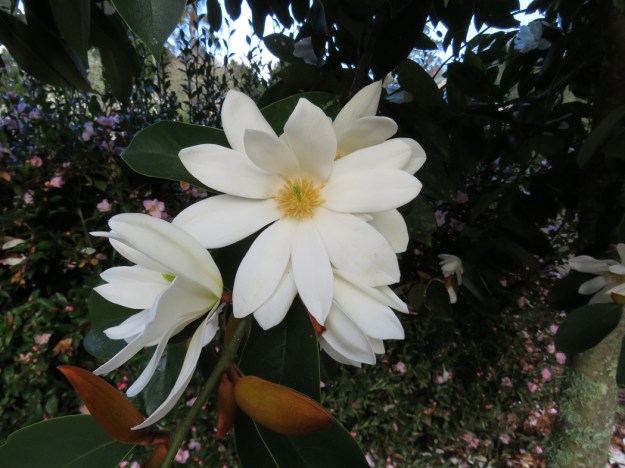
First flowers of the season on Magnolia ‘Lanarth’

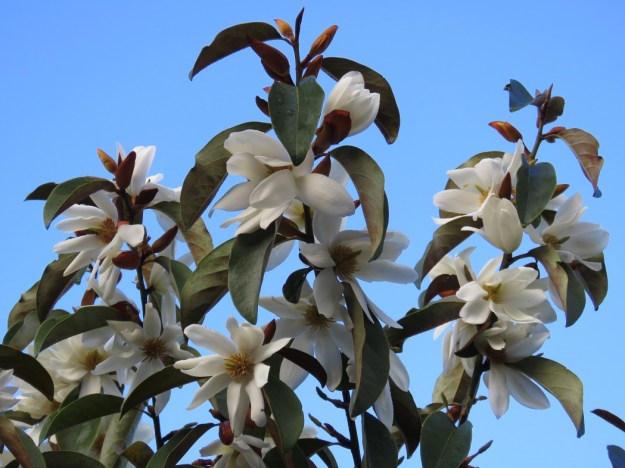
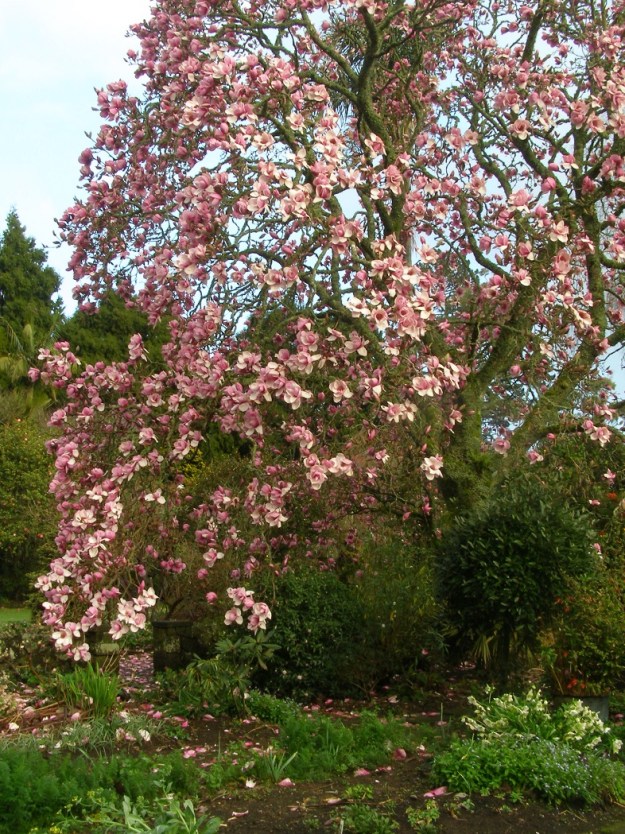
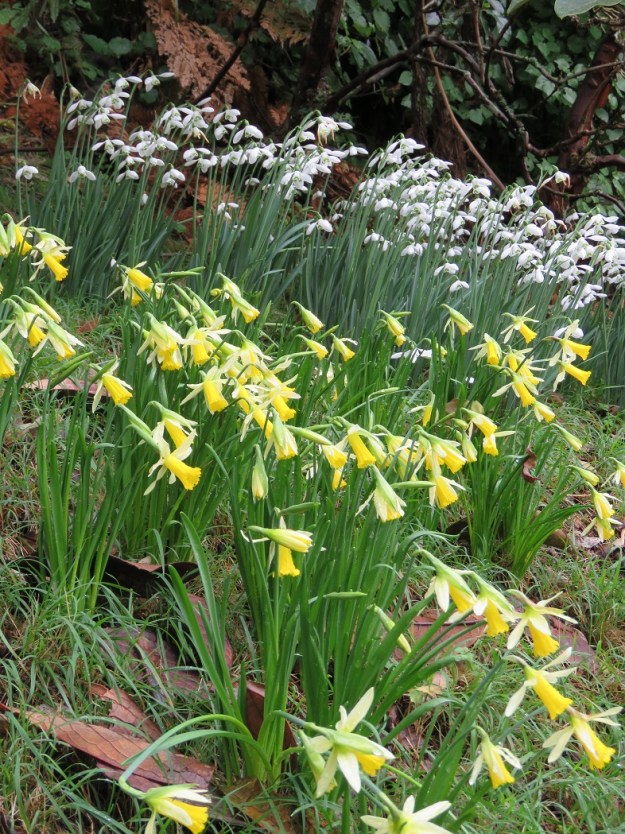
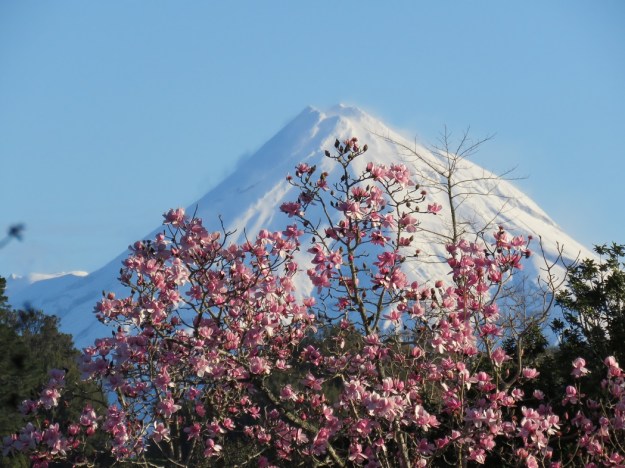
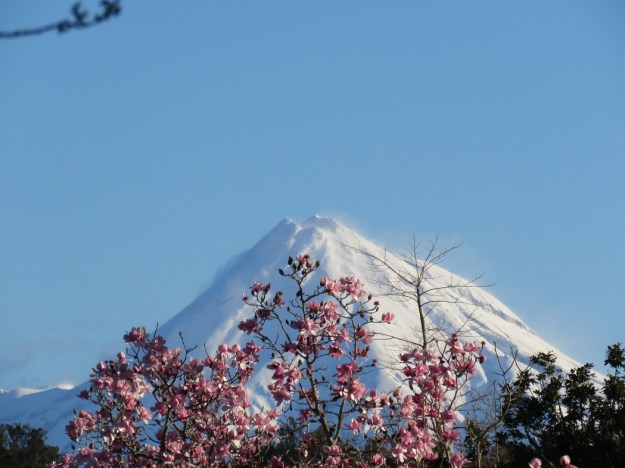
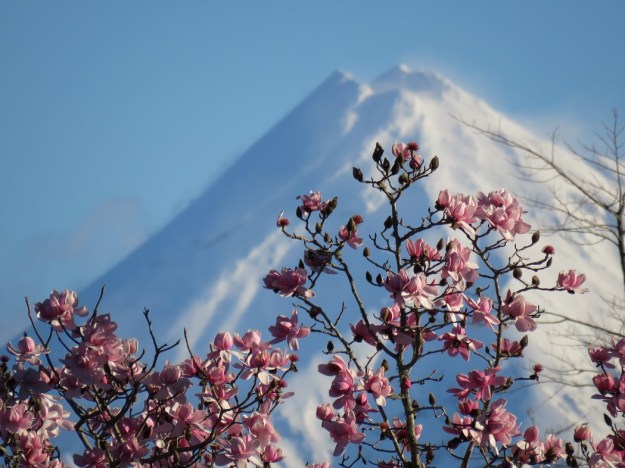
I have been so busy looking down at the early snowdrops, Cyclamen coum and the first of the spring narcissi, or looking over in the hopes of the mountain being free from cloud so I can start my seasonal photos of Magnolia campbellii in our park framed against the distant snowy mountain flanks, that I have forgotten to look up. It is not just M. campbellii in flower. ‘Lanarth’ is opening now (technically M. campbellii var mollicomata ‘Lanarth’) and the season for this magnolia is short but spectacular. ‘Lanarth’ came from southernmost China via Cornwall. We have two plants of it growing in the garden. This is the one behind our house and it flowers first because it is a warmer location than the first and larger plant of it down in our park. These early flowers lack the colour intensity that sets it apart from many other magnolias.

Magnolia ‘Vulcan’, the first of the new generation of reds

And ‘Vulcan’ has opened its first flowers. It is still a very special magnolia for us, even though there is now a plethora of red magnolia hybrids on the market. This magnolia from Mark’s father, Felix Jury, was the breakthrough to the new generation of reds.

Magnolia Vulcan, showing some kereru damage to the petals

I didn’t notice the somewhat raggedy petals until I looked at my photos on the computer screen. That is pigeon damage – our native kereru – as opposed to rat or possum damage which looks different. Soon there will be so many blooms open, that the petal-nibbling kereru efforts will not be obvious. We have plenty to share.

With the early blossom opening (mostly Prunus campanulata or Taiwanese cherries), the tui population is increasing rapidly as they return for this favourite feast. We have some tui who stick around all year but scores of others flock in over this period of early spring. “When trees dance” is how Mark describes it.

Mark is drying and winnowing his crop of soy beans 

I wrote about the bean mountain back in 2015 and since then the soy bean harvest has assumed daunting proportions. Mark’s home production of organic soy beans is apparently somewhat unusual. Aficionados tell me that it is now impossible to buy organic soy beans in this country that have not been irradiated as a condition of their importation. I don’t think we have a local soy bean industry. Apparently the soy bean mountain here is more of a valued resource than I had realised.

Soy beans are not my favourite bean to eat whole. I will reach for the kidney beans and fava beans first, or even the borlottis which are also not my favourite. I swapped a few kilos with a local person found on Facebook who makes a variety of different miso pastes which proved delicious. But what to do with the rest? I started making soy milk about a year ago in an attempt to reduce our intake of dairy. We are not so enamoured of soy milk that we use it all the time. I still prefer cow’s milk in tea and coffee but I use the soy milk in many other situations when I would formerly have reached for cow’s milk and I find it more than acceptable in the breakfast muesli and porridge.

The amazing Soyabella!

The recent gift of a Soyabella machine has revolutionised my life. It was a bit tedious and messy making soy milk with the food processor, strainer, muslin cloth and a big preserving pan on the stove. This handy little Chinese machine, not much larger than an electric jug, makes a litre of fresh, hot soy milk in about 15 minutes with close to zero human effort. It is a wonder, my Soyabella. And it has opened up the world of home-made tofu. Why home-made tofu? For us it is both a way of using our home-grown soy beans but also about drastically reducing the plastic that comes into the house. With the arrival of nigari this week, I made the first block of tofu and, between Soyabella and I, the hardest part of was finding the right-shaped weight to fit on top of the tofu block to press it. It was perfect, just like a bought block. Nigari is just a coagulant – mostly magnesium chloride – which separates the soy milk into curds and whey.

A small but perfectly formed block of tofu

It was our trip to China three years ago that really converted us to tofu as a food staple. The crispy tofu was delicious so I searched the net for instructions. It isn’t difficult. Press the block of tofu for an hour or more to squeeze out excess water (I just use an inverted plate on top of it with a weight on that). Slice or dice the tofu and marinade for a few minutes only so it doesn’t take in more liquid. Dust it with cornflour and shallow fry. Voilà! Crispy tofu.

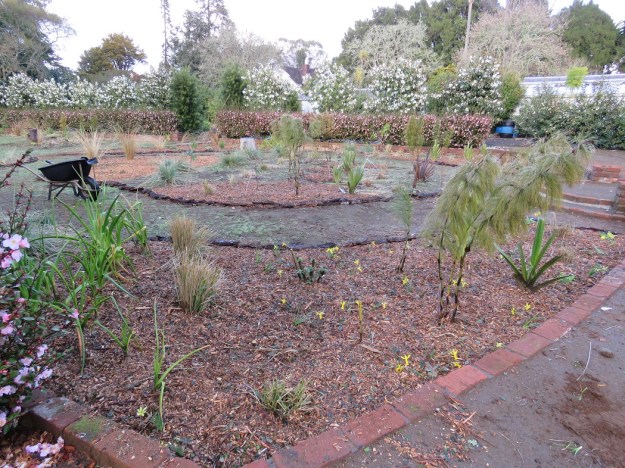
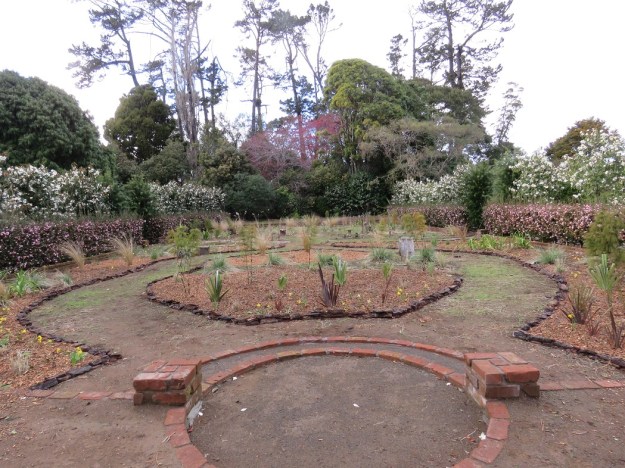
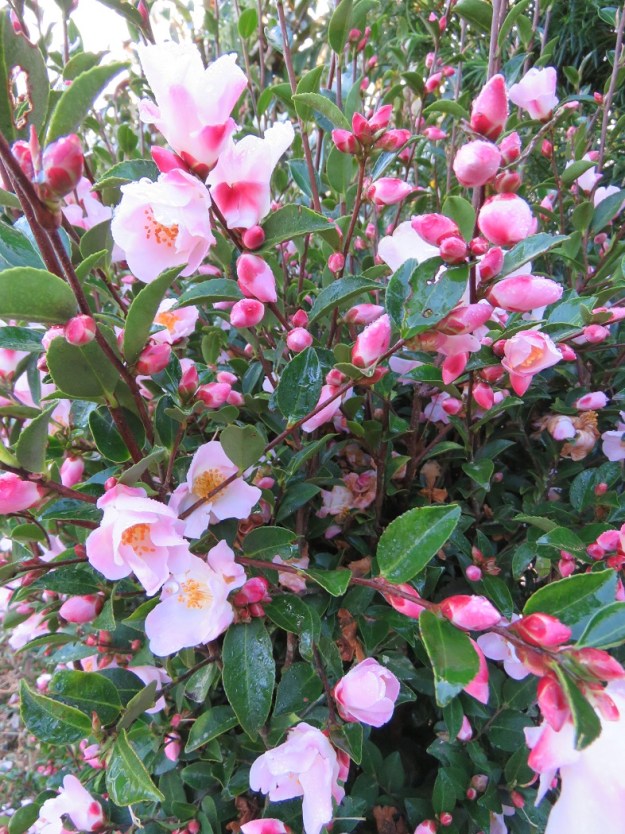
The lily border (currently empty bar Camellia yuhsienensis), backed by a clipped hedge of Camellia Fairy Blush punctuated with shaped Fairy Magnolia White all coming into bloom. Queen palms in the distance. 

Rabbit onslaught

I lack live rabbit photos but ours was a Peter Rabbit household on account of our second born being a huge fan

The rabbits have come to Tikorangi. Not just our garden but the whole area, Cute though Peter, Mopsy and Flopsy may be in Beatrix Potter books, this is one animal the early settlers introduced that this country did not need. That is equally true of rats, possums, mice, stoats, goats, wild pigs and deer but it is the rabbits that I am thinking about today. I guess we should be grateful that we didn’t get moles, squirrels or snakes in that early drive to Englify New Zealand. And would we really have appreciated beavers if they had been introduced?

Every morning, I do a patrol of my new gardens to kick over the rabbit scrapes and to check what the family that appear to live somewhere under the boundary hedge have been eating now. The swimming-pool-deck family like to eat the liriope, but that doesn’t worry me. They do not touch mondo grass so if I really wanted that coarse grass look, I could just replace the lirope with mondo.

I have a block around 4 square metres of this campanula but it did not look like this last spring. In fact it never got past being chewed rosettes of foliage trimmed to the ground.

The hedge family are more problematic. I have put cages made from wire hoops over the perovskia when it looked as though they might eat all the plants to the ground. Their love of campanulas is more problematic. I can garden without the ground-hugging campanula with its mounds of blue flowers. I would prefer to be able to garden with it in that area, but it is not a key plant. The other three I use, I want to keep and I shall be seriously annoyed if they persist with their onslaught. Those areas are too large to cage so I am trying the blood and bone deterrent.

The austroderia and Chionocloa flavicans look even more similar in the juvenile stage when both are heavily chewed by rabbits. Now dusted in blood and bone as deterrent. 

Meantime, Chionochloa rubra is unscathed

In the newly planted grass garden, it appears that native Chionochloa flavicans (often described as dwarf toe toe) is irresistible. Every plant is under siege from the rabbits. So too do they appreciate the proper toe toe – austroderia. It is going to take vigilance and determination to get these plants sufficiently established to withstand the attack. However, they leave C. flavicans relative, Chionochloa rubra alone. I guess wiry red tussock is not as yummy.

I may yet to have cut my losses, move the desirable campanulas to safer areas of the garden, cage the austoderia and find a replacement for C. flavicans but I am not quite at that point yet. In the meantime, I can be found outside after each rain with my bucket of blood and bone and a measuring spoon, sprinkling the lightest layer over the vulnerable plants. It works but it does require vigilance.

Dudley and Spike are line up waiting for breakfast – homekill possum

Rabbits are not easy to eliminate. Mark does a nightly possum round with the dogs and keeps the possum population under control with high velocity lead, as he describes it (shooting, in common parlance). The dogs find this part of their daily routine positively thrilling and hover around in anticipation for a good hour or two before this evening ritual. He maintains some level of rat control all the time. With a stream, bush and a macadamia orchard next door, rats are a part of country life. When the population is small, he uses cage traps but when it explodes, as it has this season, he resorts to bait stations. He is amazed at the amount of bait that has been eaten in recent months. It is really important to secure the baits, as a pest control officer once told me, because if they are loose, the rats will just remove them and store them up against possible future famine.

But rabbits…. They are hard to shoot in heavily planted areas like a garden, being skittery animals who run rather than freeze when they sense danger. They are not a suitable candidate for trapping and they are hard to poison. Despite our dogs being fox terriers, they only catch the occasional one, usually a baby.

So besotted with Peter Rabbit was our second-born that I bought her the Wedgewood teaset

In desperation, I bought some rabbit bait. We are not poison fans here at all and avoid it when we can. We lost our dear little Wilfred dog to secondary poisoning from cholecalciferol (the active ingredient in an over the counter possum poison to which there is no antidote) used by somebody else. Zephyr the sheltie (now deceased from other causes) had to be taken to the vet for a Vitamin K injection when he got into rat bait. So Mark was cautious about the rabbit bait, even laid carefully, following the instructions. It has to be accessible to the rabbits which means it is also accessible to the dogs. He headed out first thing the next morning to gather up the baits so the dogs wouldn’t get them and as he scooped them up, Dudley dog was in like a flash eating one. It put Mark off using poison because we could so easily lose another dog to slow and irreversible poisoning.

We may just have to learn to live with the rabbits, especially as other neighbours in the district are complaining about the rabbit population. When there appeared to be a dip in the population last year, we found ourselves hoping that a feral cat or stoat had moved into the area and that is a real compromise of principles.

How much easier life would be in NZ had it only been colonised with domestic and farm animals. It is really unusual to live in a country with absolutely zero native animals of the furred or hairy variety. When it comes to mammals, we only have two, very small, native bats that almost nobody has seen. In the short space of time since the arrival of all the introduced animals, we are nowhere near achieving any balance within nature to keep numbers in check.

When I looked, we still seem to have quite a lot of Beatrix Potter memorabilia, waiting to be reclaimed by our second-born.