
 The story of a New Zealand Christmas is inextricably bound up with the annual blooming of our native pohutukawa trees – Metrosideros excelsa. Truth be told, they only occur naturally as far south as northern Taranaki where we live and Gisborne across the island, (but not in the middle where it is too cold for them). Fortunately, most of the country is happy to go with descriptor of the New Zealand Christmas tree.

The Legacy of the the Lazy Nurseryman. The flowers are more brown than red.
But not all pohutukawa are born equal. No sirree. As we drove to town a few days ago, Mark looked at the trees planted by a local farmer along the roadside and dubbed them the legacy of a lazy nurseryman. They were planted well and are growing well and the farmer has taken care of them, fencing them off from grazing stock and keeping them an attractive shape. The pity is that he (or she) was supplied with plants that flower more brown than red so they will never mature to the glory that could have been. The problem, Mark explains, is that some nurserymen are just too careless about where they gather seed and fail to select the best performing plants with the showiest colour.
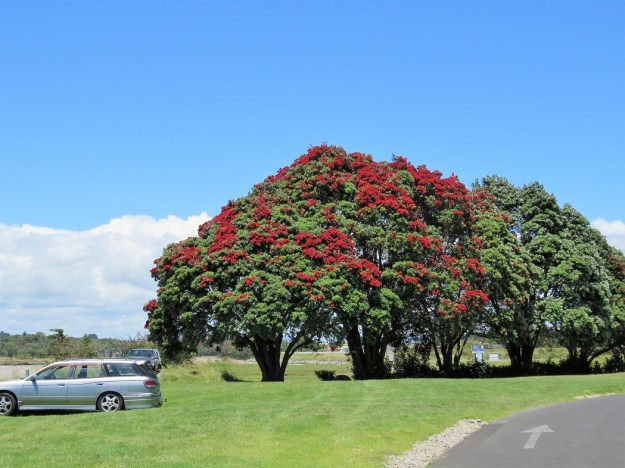
Some flower abundantly but without great colour and some just don’t flower at all
Our local town of Waitara is like Pohutukawa Central – there are many (many, many) trees planted, at least in part because there aren’t a lot of options for trees that will grow in windy, exposed coastal conditions and be fairly bullet-proof (vandal-proof, really) as unprotected street trees. But not all those trees flower well. Some don’t flower at all, really, and some that do are patchy with undistinguished colours. It is called seedling variation. When you come across a tree that is covered in bloom and a clear red in colour, it just leaps out at you, visually speaking.
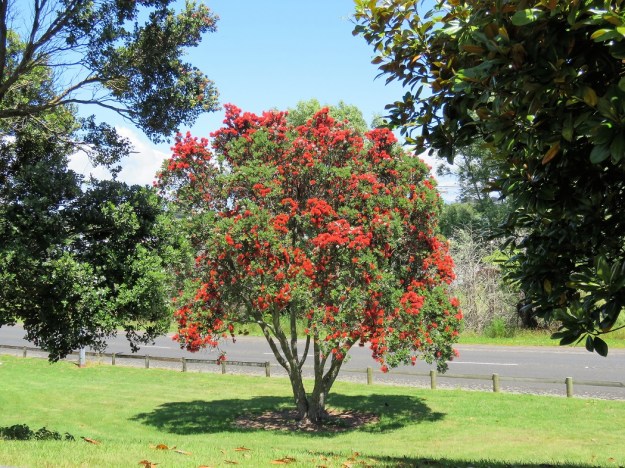
The vibrant tones of this specimen stood out from a considerable distance away
I felt I was channelling my late parents-in-law as I drove around Waitara yesterday, looking at different trees. Back in the late 1970s and early 1980s, they systematically evaluated many of the trees around the river bank and surrounding streets, noting which were the best bloomers year after year and the best colours. At least three went on to be introduced commercially by Duncan and Davies Nursery. Somewhere in the family archives, I have some of Mark’s mother’s diary notes of those observations. They read something along the lines of: “Good bright red to the left of Mrs Markham’s house, 18 xxxxx Street”. I am not sure if they also measured the length of the flowering season though they did record which ones flowered well every year, rather than every second or random years. There are so many handsome trees in the wider area here that it had not really occurred to me until very recently that the flowering season is but short – probably only ten days at peak. Ephemeral, I saw it described as recently. It is just that those ten days are in the lead-up to Christmas and a good tree is a show-stopper for that time. Not unlike the Japanese cherries, when you think about it. They too have a very brief peak season but an entire festival celebration has evolved around those days.

I took this photo out of the car window (Mark was driving) as we went through a busy intersection in New Plymouth. It is clearly a named selection and superior from the start
The lesson to all this is that if you are only going to buy one or a few pohutukawa, buy named varieties which will have been produced by cuttings so they will be identical to the parent. If you are going to buy quite a few, at least select a reputable nursery who can tell you what the seed source was. If they can’t tell you that, forget it. If you are going to raise your own from seed, start with the best flowering specimens. Pohutukawa don’t grow true from seed so you will get seedling variation in the offspring but if you start with the best parent, the proportion of good offspring you raise will be much higher.
If you are wondering about raising your own plants from cuttings, it isn’t at all easy to get them to root unless you start with juvenile material (from a young tree or one that has been kept pruned hard, not big old established specimens with lots of woody growth). If you are going to go down the route of raising your own material, get out and record now which trees have flowered all over the plant and in a good, clear red shade. It takes a commitment of time and effort to raise your own plants and it just seems a waste if you end up with murky, brownish flowers or worse, one that doesn’t flower at all.
Personally, we are not convinced by the Kermadec pohutukawa (Metrosideros kermadecensis). It is a different species and rather smaller growing and often sold as more desirable because of that compact habit and its extended flowering season. Yes, you will get flowers over months, but you only get a few flowers at any one time and the whole thing about the pohutukawa is that beautiful mass of bloom around Christmas. Ditto the yellow forms of M. excelsa. Yes, they are really pretty and they have an interesting botanical history of their own but they won’t give you the wham-bang mass display of the New Zealand Christmas tree.
Just choose good ones if you plan to plant any.
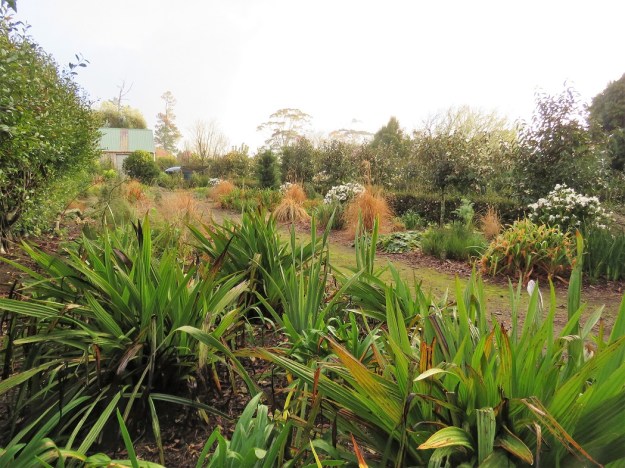
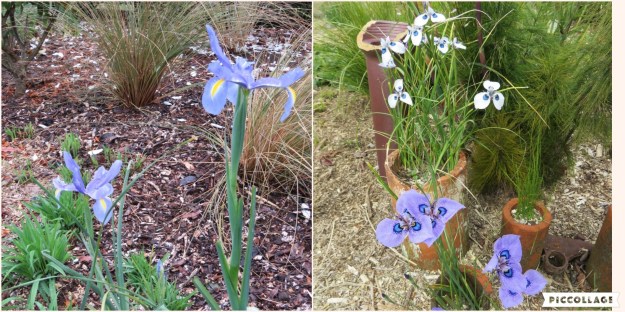
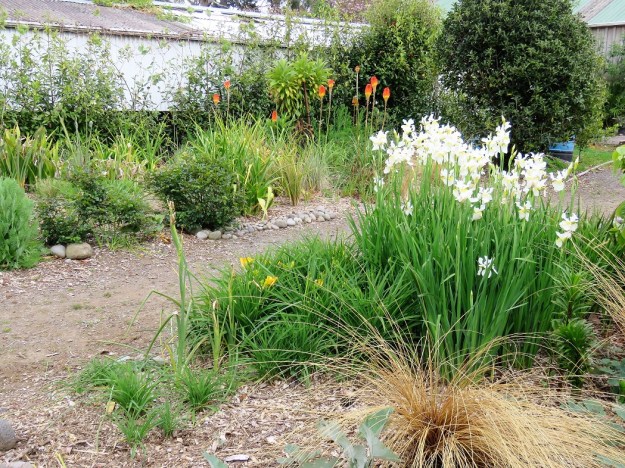
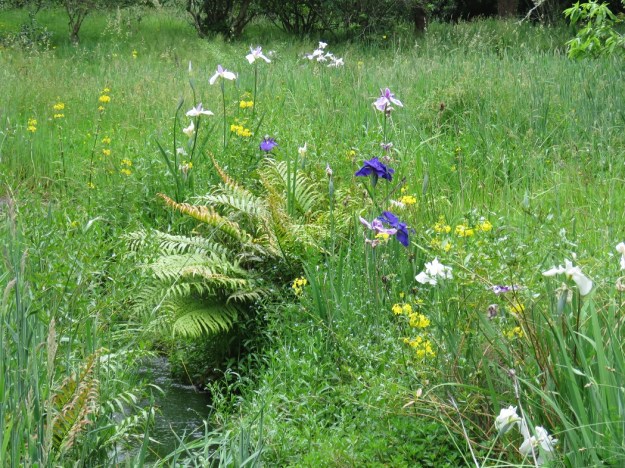 We are now entering our sixth year of managing our park as a meadow. Note the word ‘managing’. This is not just leaving it to its own devices but a much lighter touch than the previous mowing and weed control we used to practice. And in December, as in previous Decembers, my heart just fills with joy at the sight of the Higo iris in bloom. I love all times of the year in the garden – there is always something that delights me – but never more so than the iris meadow in the lead up to Christmas.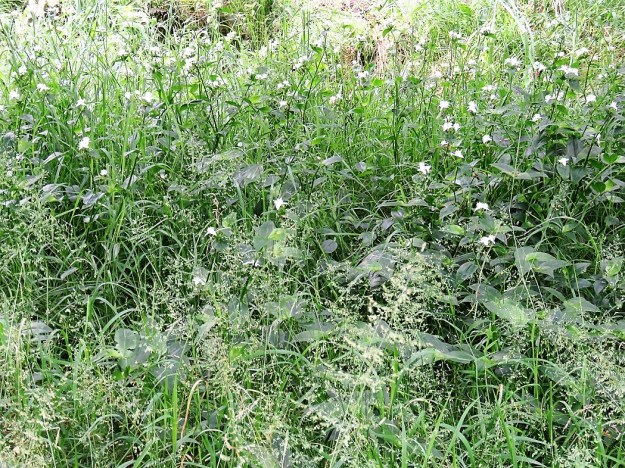
 Having a stream flowing through brings responsibilities and these are weighing somewhat upon us. We worry that we are likely to be blamed for every escaped ornamental plant that establishes downstream, even if at least some are washed down from further upstream. The shiny leafed angelica, Angelica pachycarpa, somewhat more prized in overseas gardens but seen more as a weed here, has introduced itself from an upstream property. Don’t believe the
 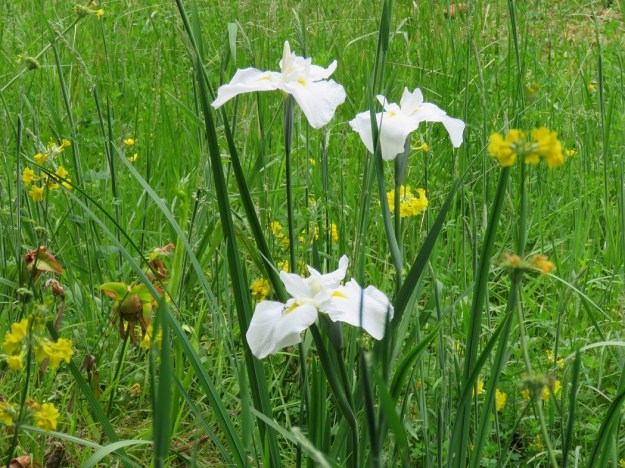 To be honest, we figure that if the beautiful Higo irises establish themselves downstream, that may not matter. They are no risk that we can see. We worry about the
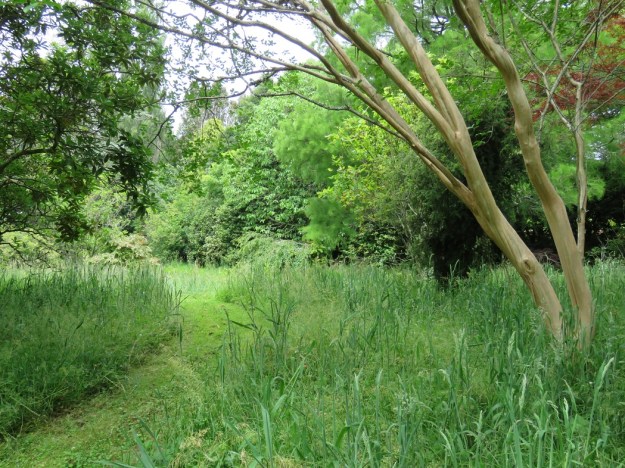
 Currently, I can be found in the afternoons down by the water, digging out the weedy carex and docks that are shooting up into flower, thinning the primulas and battling the wachendorfias. It is heavy work, sometimes muddy, but the setting is one to gladden my heart.
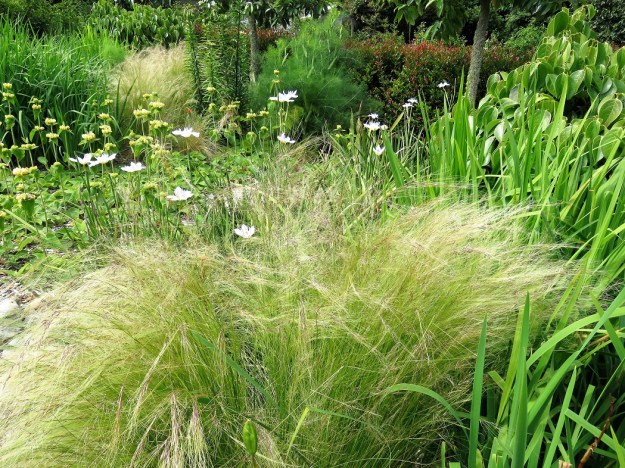 I was shocked. Really shocked. There I was in the supermarket and I picked up a gardening magazine I had no intention of buying. But as I skimmed it, I came across an article that told us to rip out all our grasses. The ‘Oudolf prairies’ and the entire New Perennials movement were out. Shrubberies are back.
 It did at least get me thinking on the difference between fashion in gardening and major gardening movements.
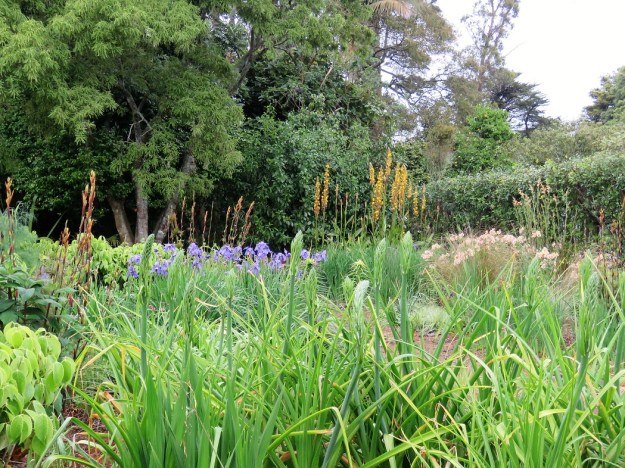 The idea of garden rooms has its most recent roots at Hidcote and then Sissinghurst. It made design – in this case, the design of a series of linked but separate spaces – applicable to the home gardener. Many people are still working to the garden rooms principles today.
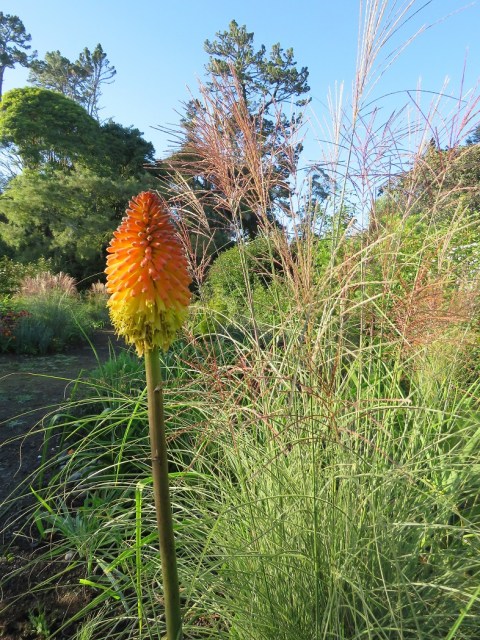 Crystal ball gazing, I would suggest that the contemporary tropical garden in more northerly areas of this country – the Balinese hotel style, as I have sniffily dubbed it, may turn out to be more movement than transient fashion. It fits the climate, the lifestyle, the aesthetic and the maintenance regime of many gardeners, particularly in Auckland city. Not so good down south, though, so it is quite localised.
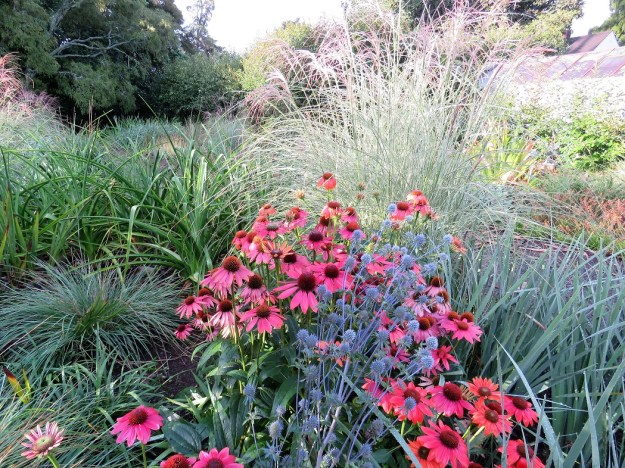
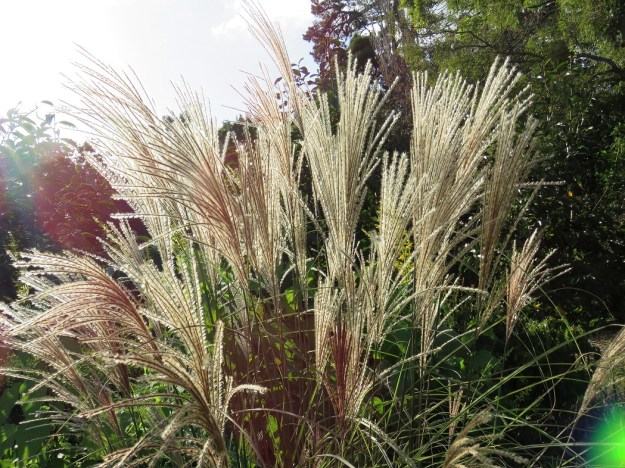
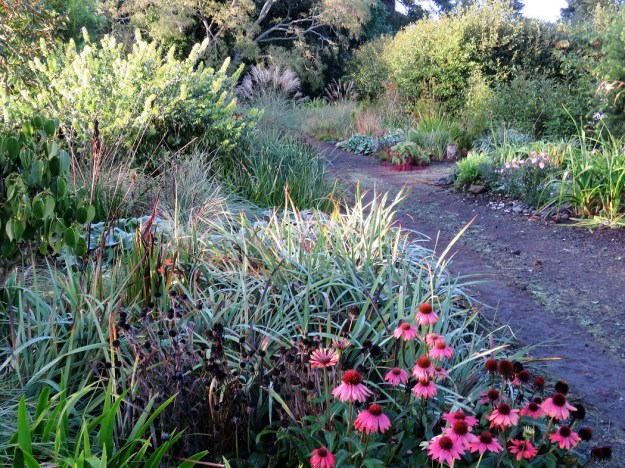
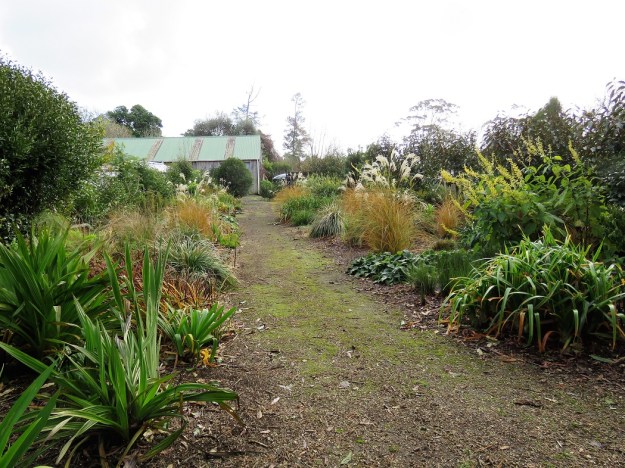
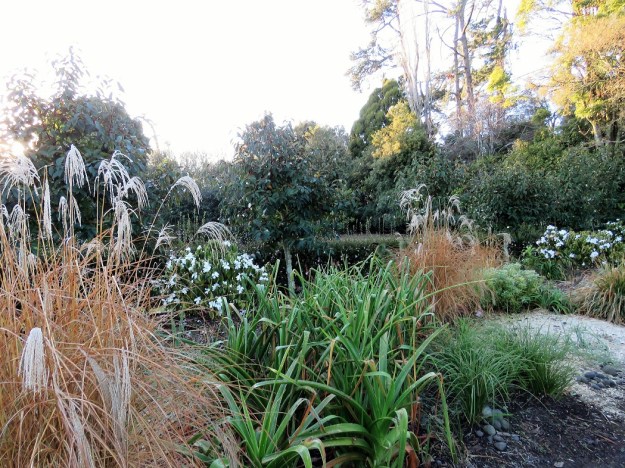
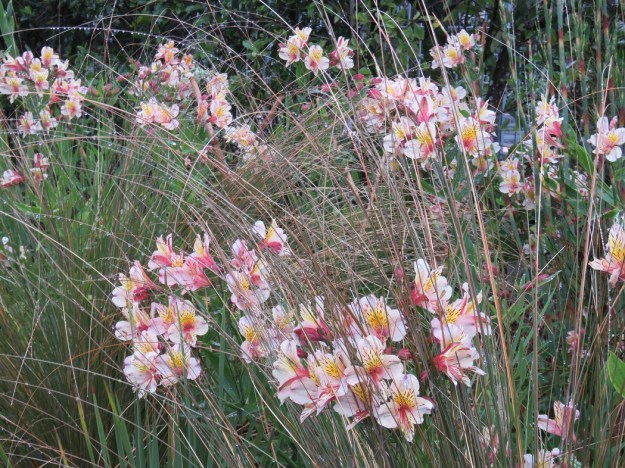 Which brings me to the ‘Oudolf prairies’ (he has done many things but never prairies) and the current fashion for plantings incorporating a fair swag of grasses. Movement, not fashion, I say. These are but one part of a major swing in gardening style towards a more naturalistic and sustainable approach. It is part of a whole spectrum which takes in meadows, even prairies if you have the right climate, the Sheffield School, environmentally friendly and sustainable gardening as practiced by a large swag of British, European and American designers and leading gardeners. It is soft-edged, should be lower maintenance, sitting comfortably with Nature as opposed to being imposed upon it, sustaining a healthy eco-system and a harmonious balance between the natural world and the aesthetic many humans crave. Enhanced nature, romantic gardening, naturalistic gardening – call it what you will. It is a movement, not a transient fashion because it is underpinned by a philosophy that goes well beyond the marketing of plants and landscaping accoutrements.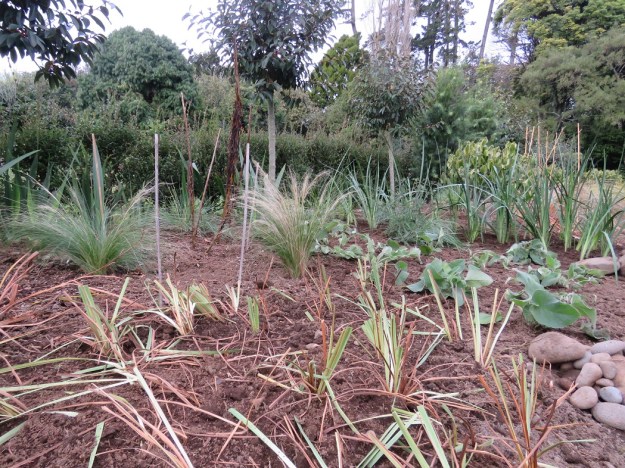




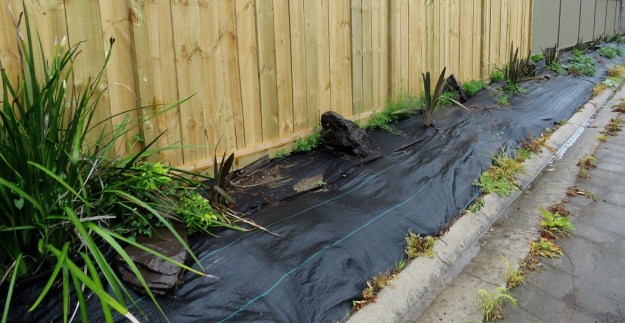 Starting with the public frontage (or maybe sideage), we have the sight of weed mat. I am sure I have railed against weed mat in domestic situations before. It is a commercial product for a commercial application – plant nurseries – and it has zero aesthetic appeal. All that can be said for it is that it is marginally better than the earlier habit of laying heavy duty black plastic which soured the soil over time. Weed mat is permeable so it allows moisture through. The soil beneath will compact over time, but it won’t become dead soil, bereft of all microbial and insect activity. It possibly has some application to use as a weed barrier that is then covered (entirely, please, entirely so that none is in view) with some pebble or lime chip but that means it can only be used on a flat surface. What could they have done? It was a rough slope so unsuitable for grass. I would be wanting to stain the fence dark and maybe plant the area solidly in something like mondo grass, perhaps with some marguerite daisies to bring pleasure to passers-by.
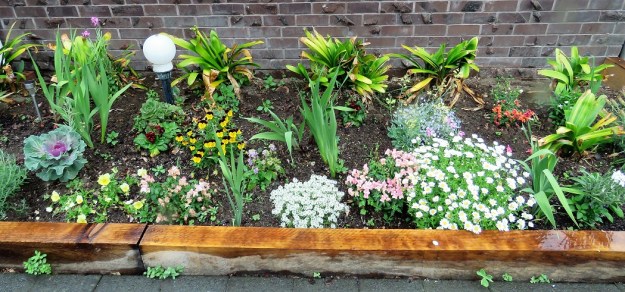 It was the borders inside that made me smile. They were recently planted and into heavy soil. One of this and one of that, randomly distributed. A lavender, a gerbera, a bromeliad, a patio rose, a cineraria, a kale, a paper daisy, a polyanthus and much, much more. In singles, bar the five clivias. I immediately conjured up the mental vision of this couple heading to the garden centre, determined to plant up the beds. They must have wheeled at least two trolleys around, loading up with one of everything which had flowers on it on the day. There were a lot of plants and I don’t imagine it was cheap at all. A garden centre owner’s delight. This is, by the way, a rental property and let me at least give credit that the enthusiastic landlords were attempting to make the outdoors attractive.
 If I still had a paid gig writing for the print media, I would be heading out with my camera to find some of the best examples of low maintenance, outdoor planting and design for non-gardeners that I could find. But I don’t, so that idea was short-lived.
 Tikorangi The Jury Garden