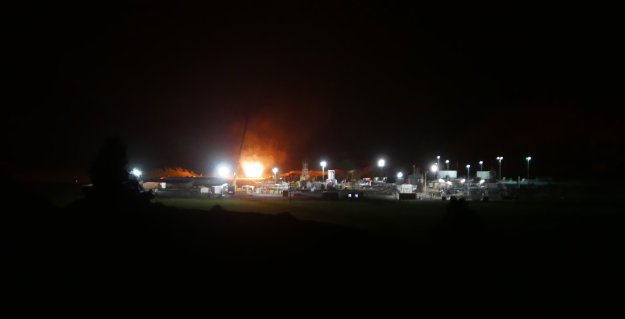
Todd Energy’s Mangahewa D site, April 15 this year. Photo credit: Fiona Clarke
I have not written much about the oil and gas industry all around us in the last few years. This does not mean it has gone away. Not at all. It is a sign of me deciding to take better care of my mental health and to look inwards to our own patch of earth where we can largely control what happens. Continually banging one’s head against a brick wall takes its toll. And the global decline in prices slowed the intense activity which had reached intolerable levels by 2013.
The recent announcement by our new government flags change for the fossil fuel extraction industry. For us, personally, it changed both everything and nothing.
It changed nothing in that the government announced an end to new permits for offshore drilling and to new land permits for everywhere else in the country, except Taranaki. So it changes nothing for Taranaki – all permits will be allowed to run their course and some new ones will be offered even though company interest in new areas had waned long before this change in policy. Essentially, it is a message to Taranaki that it has 30 years max to transition away from its economic dependence on fossil fuel extraction.
The reaction locally was instant and entirely predictable. Headless chooks or Chicken Licken come to mind. “The sky is falling!” “This is the end for Taranaki. Will the last person to leave please turn out the lights.” “This move will increase our emissions and accelerate climate change.” Yes, the conservative Opposition really do claim this. Do not let the facts get in the way of a good bit of fearmongering to political advantage. “We didn’t see this coming,” bleated Tag Oil. And our local mayor expressed similar, surprised outrage. They must have had their eyes shut for the indicators have been flashing red, warning lights all around the world in recent times. Our government is not acting in isolation.
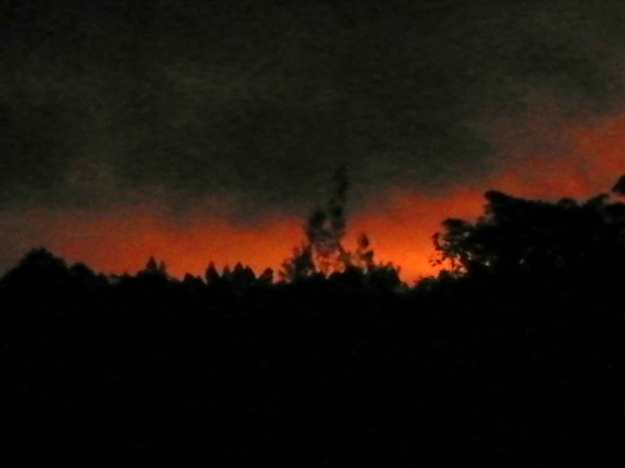
Global warming, anyone? Flaring gas is commonplace here. This is MHW D site again, in March this year. Photo credit: Fiona Clark
And in some ways, the announcement has made things worse for us in the short term. Todd Energy, the company that has the highest impact on us personally, has dramatically lifted their level of activity around here. It is not quite as bad as it was in the horror years of 2010 to about 2013 but some days it feels as though it is getting back up there. It is difficult not to believe that Todd Energy are going for it as hard as they can, while they still can in order to extract as much of the profitable gas as quickly as they can. We may be in for another rough spell in the next few years.
But also, everything has changed. The oil and gas industry is no longer the glamour boy of the economy. Now its very social license to operate* is moving from being set in concrete, to wobbling about in jelly and on a definite trajectory towards going up in a puff of its own smoke. Excuse the mixed metaphor. Time is running out for it, for the times they are a-changin’.
At last, I feel we are on the right side of history and not just an outlier on the fringes. While any move to put the brakes on fossil fuels and to foster changes to more sustainable practices will continue to get a hostile response from many in Taranaki, the move against maximising the dollar at the expense of the environment and the very future of the planet is gaining strength. New York City is suing the big petrochemical companies over climate change. Much of Europe is setting tight time limits on fossil-fuelled vehicles. The world’s largest fund managers are quitting their investments in fossil fuels at an accelerating rate. Other countries are also banning new fossil fuels exploration – France, Denmark, Costa Brava, Ireland, Belize. Our world is changing at an extraordinarily rapid rate.
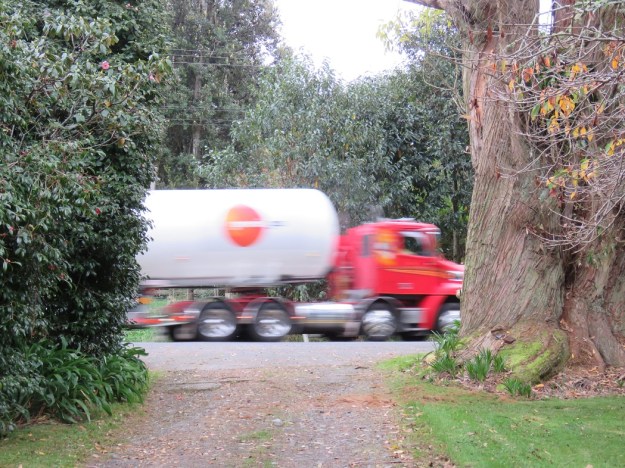
Just another LPG tanker flashing past our gateway. The high volumes of heavy transport have a huge impact.
Occasionally, in moments of self-flagellation, I dip into the local social media comments on this recent change in government position. I usually back out very quickly. It is generally old men who declare our dynamic, young woman prime minister as “an air-head with no policy who will be booted out next election”. The transfer of power to a new generation is clearly a challenge. I have no patience with the person who was greatly concerned with the future of the gas-powered barbecue. Also those sneering types who think it is up to ‘the Greenies’ to come up with viable energy options which are a like-for-like substitute before they will decide if they, personally, will make a transition. It will not come down to personal choice in the end. My greatest scorn is for the nitwits who like to target anybody who cares about the environment and belittle us as ‘hypocrites’ because we still use vehicles and phones and wear some synthetic clothing. The subtext is: “you are hypocrites so I do not need to do anything at all to change my ways”. I will derive some personal satisfaction from seeing these nay-sayers dragged into the 21st century. Maybe at some point they will make the connections between their beloved fossil fuels and increasing severe weather events and climate change, rising sea levels and the escalating erosion of our coastline, insurance companies refusing to cover vulnerable properties and all the rest of the related effects. Maybe it will dawn upon them that the degradation of our fresh waterways as a result of excessive nitrogen leaching can also be traced to a large extent to our use of gas to make cheap fertiliser from the 1980s on.
I am proud of a government that has been brave enough to set new policy that recognises the need to change. I appeared as a witness in a case before the Environment Court recently. Taranaki Energy Watch are challenging the loose rules set by a local body in managing oil and gas development. It was an oddly empowering experience, telling the three Commissioners what the impact of the development has been on us personally. I realised it was the first forum I have spoken in where attitudes were not already entrenched.
“What would you like to say to Todd Energy?” asked one of the commissioners. I had to think for a few moments before replying. “Goodbye,” I said.
I hope I live long enough to see that happen. With the recent change in government policy, I think it is now a matter of how soon it will happen.
*What Is the Social License? The Social License has been defined as existing when a project has the ongoing approval within the local community and other stakeholders, ongoing approval or broad social acceptance and, most frequently, as ongoing acceptance.
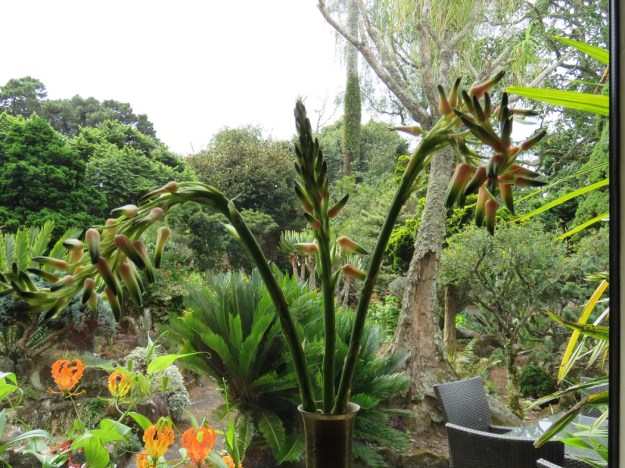
I keep my eyes looking inwards to our own space as much as possible

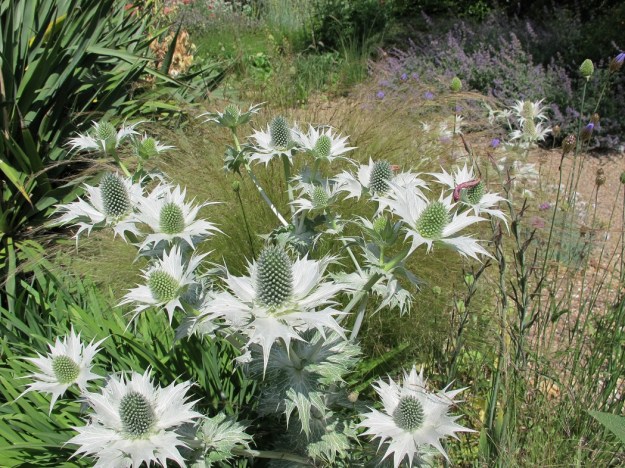 Beth Chatto dead? This should not be a surprise. She was 94 but she seemed to have an air of gentle immortality about her. We were privileged to meet her in 2009 and to have her take us around part of her garden in Essex. Despite a large staff, a thriving nursery, extensive café and many garden visitors, she still lived in her fairly modest house in the centre of it all and the garden remained her very personal creation. The privilege was to be given a glimpse of the garden through her eyes. At 85, she wasn’t doing a lot of hands-on gardening herself, but she was in total control of managing it on a daily basis. It was gratifying to have her contact us after that visit, through our mutual friend, the late Charles Notcutt. She wanted the name and details of a plant remedy Mark had mentioned in conversation.
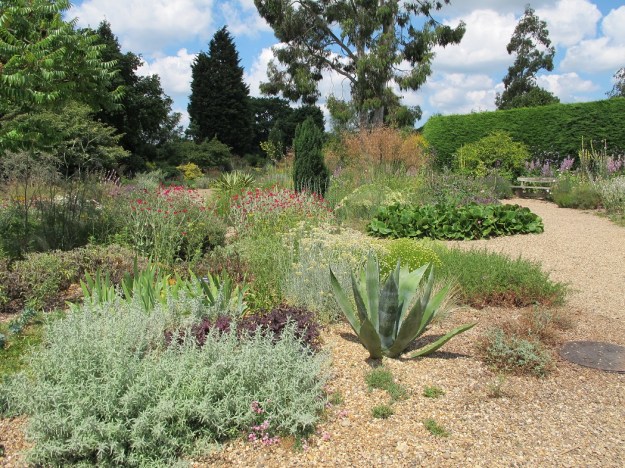 We returned to her garden with Charles in 2014 but she was too frail that day to join us. It was a bright, sunny day and I have since regretted that I did not get good enough photos of her dry garden in the glaring light.
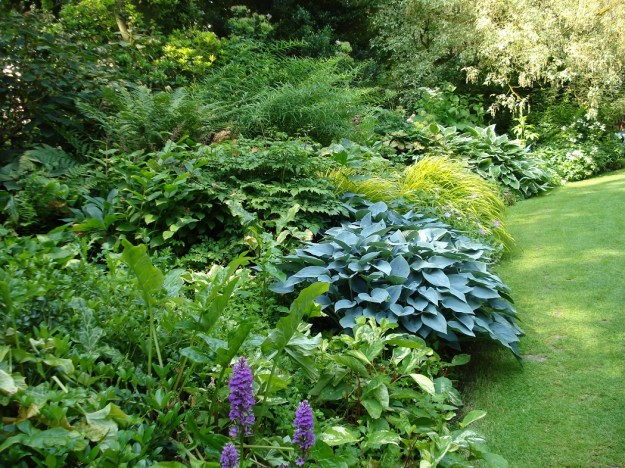 The original garden is perhaps a little dated by modern standards – rather a lot of curvy, hose-pipe borders – but always managed to the highest horticultural standards and underpinned by that knowledge of which plants will perform in those conditions and co-exist well with each other. I would love to see the woodland area in early spring when it must be magical but the UK in early spring is a bit cold for us these days. It is the dry garden that lifts a visit to another level altogether.
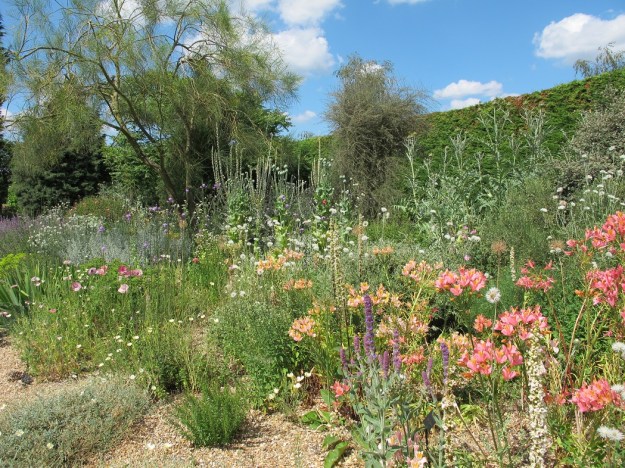 We have spent quite a bit of time making sense in our own minds of contemporary European and UK gardening trends – New Perennials (where Piet Oudolf’s work is still the gold standard), the New Naturalism, meadows, prairies, ecological gardening, matrix planting, sustainable plant communities and what we call the romantic revival or, simply, romantic gardens. And in Beth Chatto’s garden, thirty years ago, she was creating the precursor to all these modern trends in her new dry garden. In a very dry climate, nothing is irrigated in this garden built on a compacted carpark and river gravel. The skills lie in plant selection and the light-handed but deft management which allows plants to have their own space and follow their own natural inclinations. She had a rare combination of exceptional plantsmanship and top-level gardening skills.
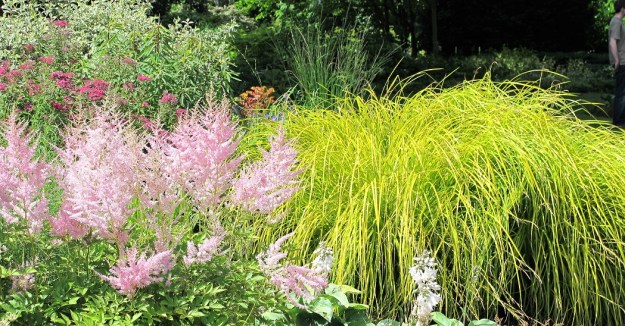 I did not so much appreciate her combinations of pink and yellow but that is a matter of taste, not skill.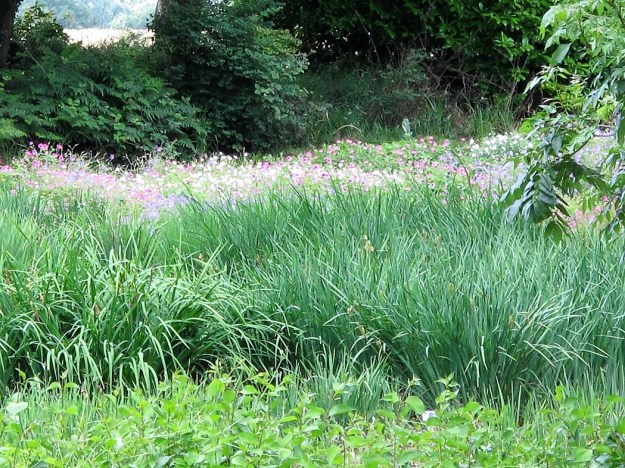


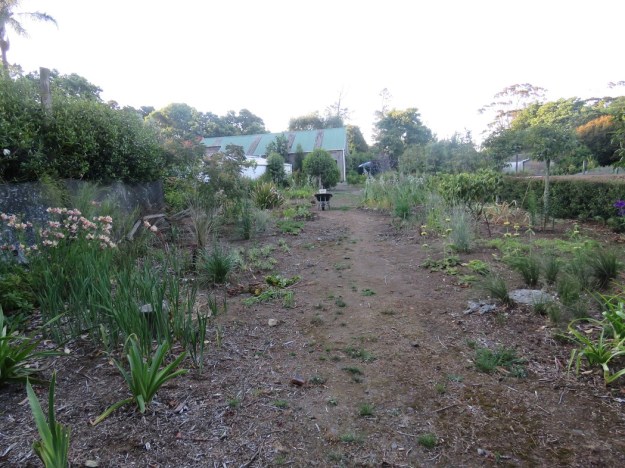
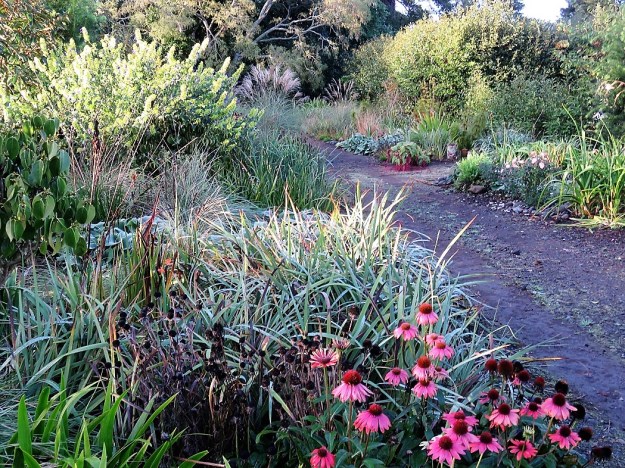
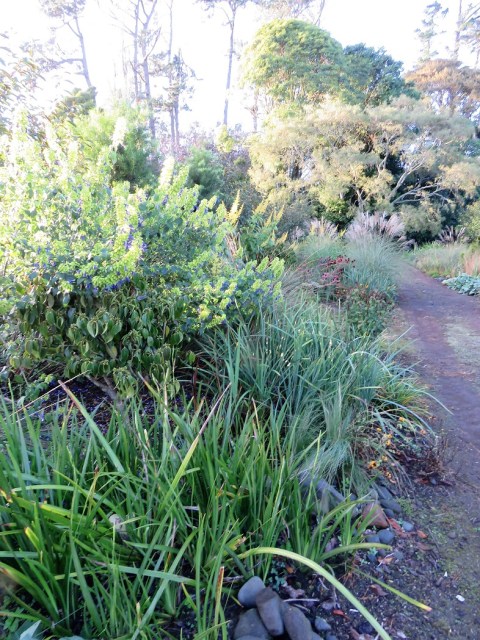
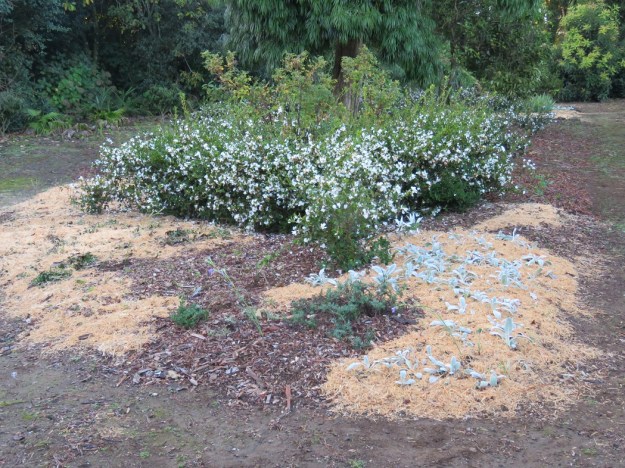
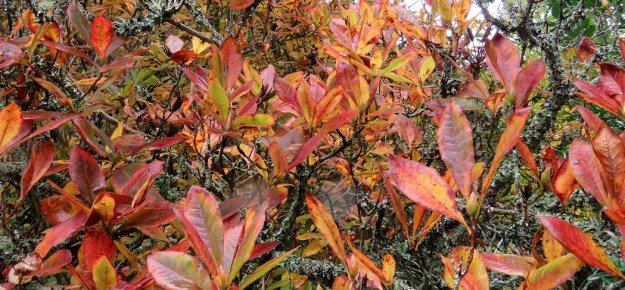 I do not know whether it was the rainy Saturday that made me pensive or whether it was my somewhat melancholy state of mind. Either way, I took a damp walk around the area we call the park. While the autumn colours seem quite striking this year and relatively early considering we have only had two cold days so far, I am not sure that damp autumn days are uplifting to my soul.
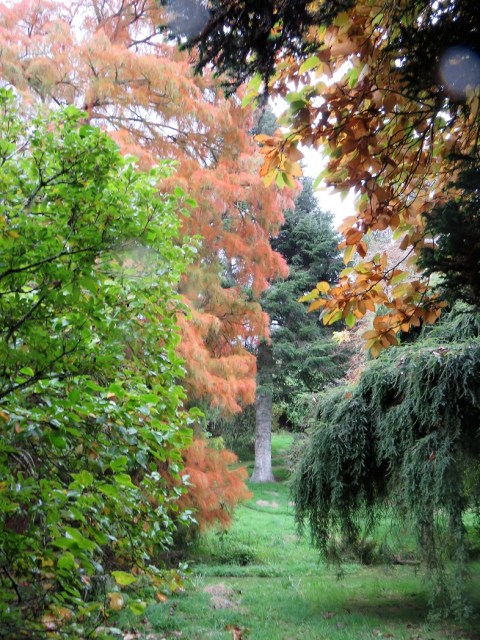 But I have been pondering the differences between those of us who see gardening as a process and those who see it as a product. I am happier in the company of the former – those who enjoy the act of gardening and see it as a journey where there may be a destination in mind but experience says that such a goal will be but transient and fleeting and not an end point at all. For a garden can never be static and frozen in time so will never be finished or full. I suspect these are the characteristics of a gardener.
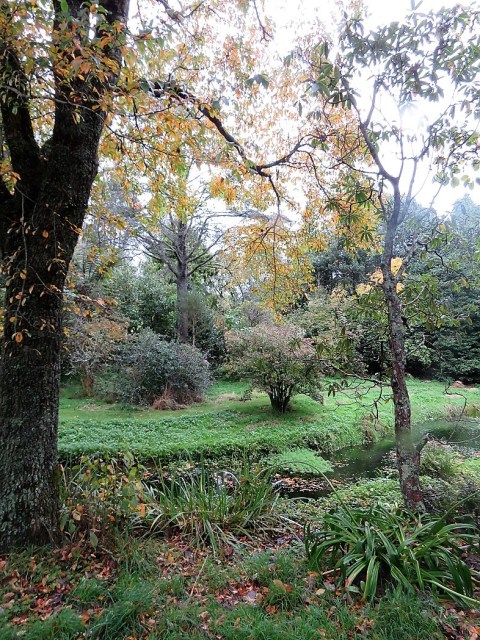 There are many who see a garden as a product – a particular destination or point of achievement in a creation that can then be frozen in time. This, I think, is probably a viewpoint of a garden owner who is not a gardener by nature. I felt a passing pang of sympathy for landscape designers. I would guess the majority of their paying clients fall into this category. Some may come to understand the whims of nature but many more make a rod for their backs, requiring that a garden be preserved in pristine condition at a certain point of its development.
 But Sunday dawned fine and dry which meant my usual cheerful disposition was restored. We cannot complain about an autumn which delivers us a daytime temperature of 24 degrees Celsius and night time temperature still well into double figures. Behold Mark’s pride and joy – his luverly bunches o’ bananas. Several lovely bunches. We are super marginal when it comes to growing bananas for tropical we are not. These are the only plants we cover for winter – festooned in protective shade cloth suspended on a giant bamboo frame.
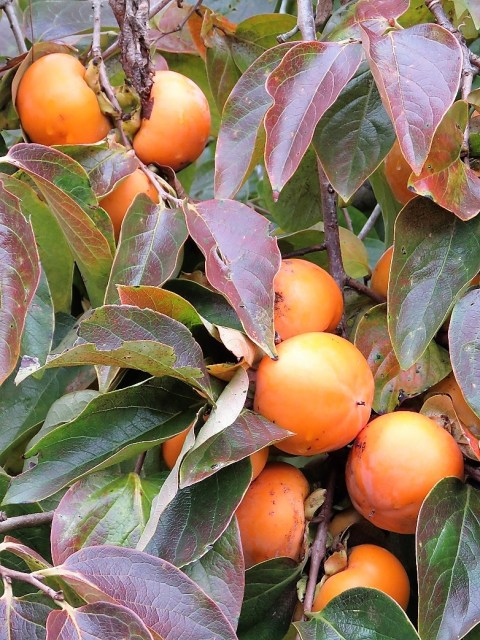
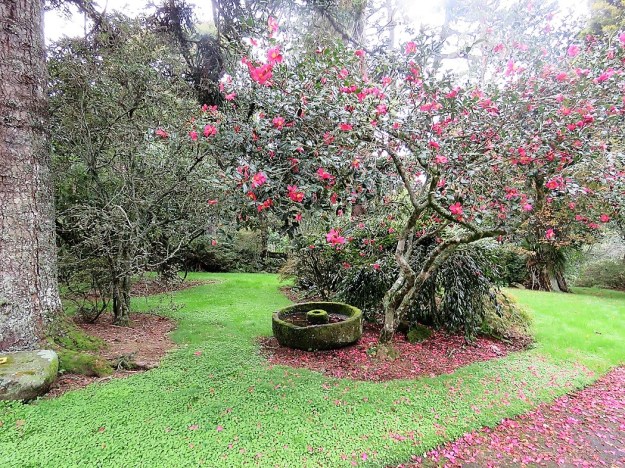
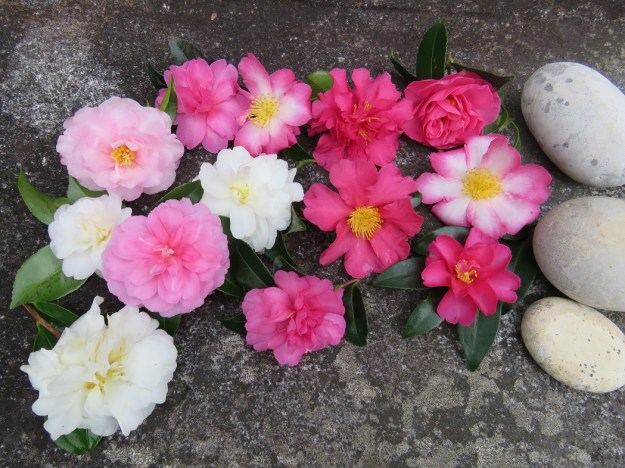
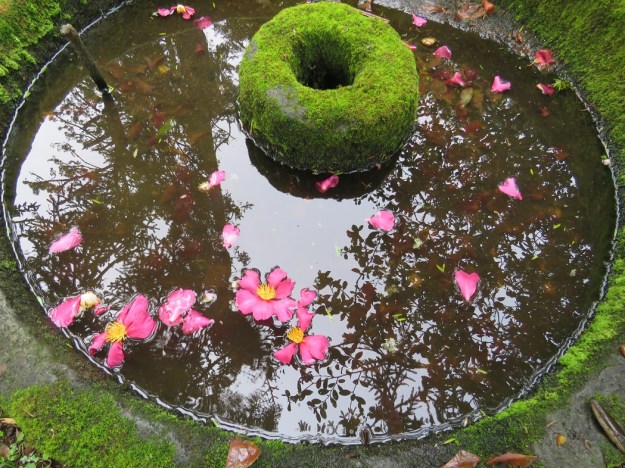 But every autumn, as the sasanquas come into flower we both derive huge delight, particularly from the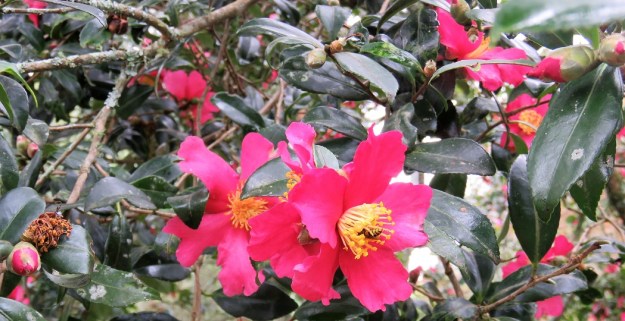

 Tikorangi The Jury Garden