The two colour garden (plus green)

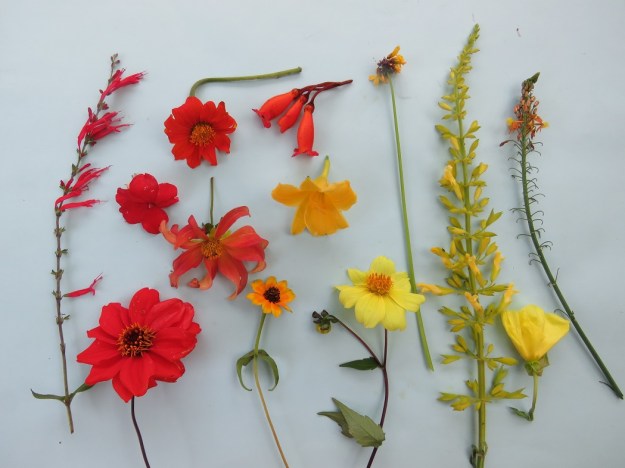
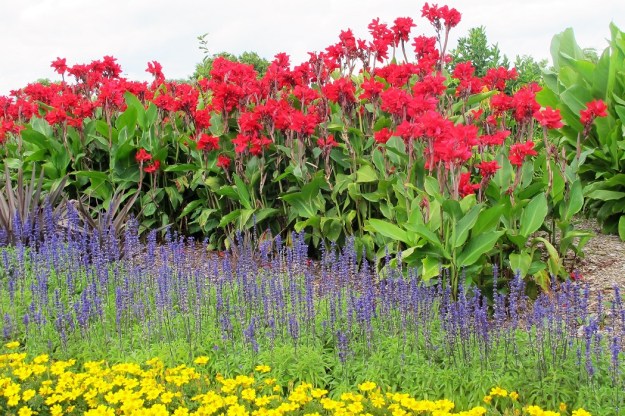
Red and yellow flower board

Red and yellow tulips in a massed bedding display at Floriade in Canberra

When I put my thinking cap on about garden colours, it was clear that a two-colour garden is much more flexible than trying for the monochromatic look. Technically, a two colour garden is  three colours but we continue to regard green as colour neutral in a gardening situation. Truth be told, unless you are into massed bedding plants, the vast majority of gardens end up being predominantly green so whatever colours you add in – whether by way of flowers or coloured foliage – are highlights, not the dominant colour by mass.
Blue and yellow is a classic combination

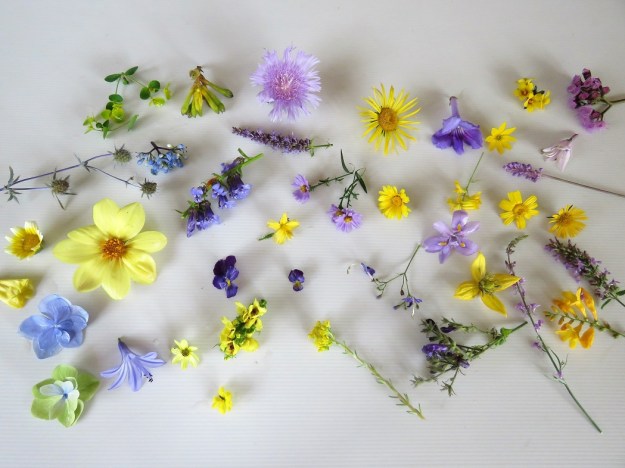
A two-colour scheme gives so many more choices while allowing the streamlined look of restraint that some people favour. When I have played with flower boards, it is a lot more fun mixing and matching with two colours and the results are often more atmospheric. For a long time, I wanted to theme a garden on blue and yellow. It still remains one of my favourite colour combos and is one I have used on several occasions when it comes to interior decoration. It started when our eldest daughter chose a strong sunshine yellow for her bedroom and we teamed it with navy blue soft furnishings. In our current house, I chose a more subdued yellow – more like cornfield yellow teamed with French blue and I have never tired of that combination. In a garden, we can put together ALL the yellows and lemons with the whole range of blues. It is what I would call a classic combination.
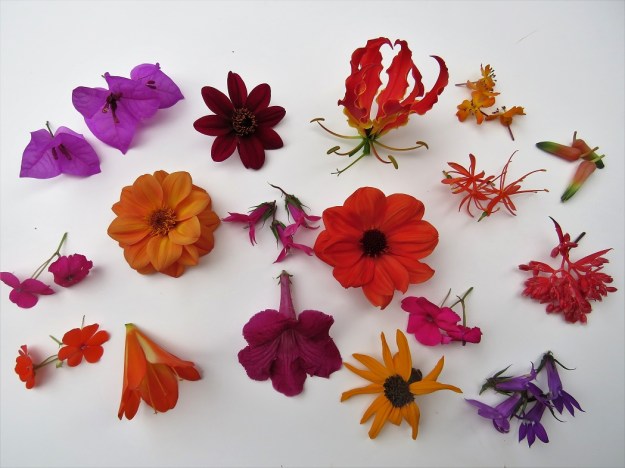
Purple and orange for a tropical look
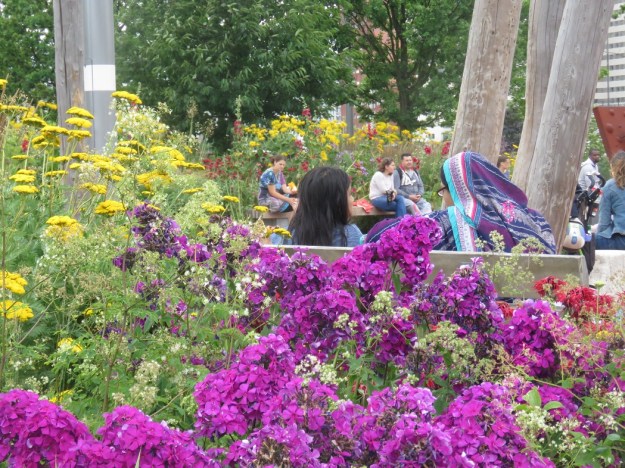
Purple and yellow with colour-toned visitors at Olympic Park in London

If you choose orange and purple, the look becomes very different – far more tropical and contemporary rather than the classic. It all comes down to personal colour preference in the end. I once contemplated the practicality of a garden in buff and pale blue – inspired by a gorgeous buff coloured rose. I wondered about using it with soft blues like the pretty nigella and the buff-brown grasses that seed down here. I realise in retrospect that my mental image did not incorporate green which would have altered the look entirely. Clearly the rose was already defoliated in my mind’s eye so that only the flowers were visible and I abandoned that idea altogether when I found that the rose was disease-prone and would need regular spraying to keep it looking anywhere near acceptable.

I recall a startling street scene in Rome, somewhere near the Vatican but I can’t find my photos of it. The buildings were all sandy gold in colour and the street trees were all burgundy (maybe copper beeches or one of the red-foliaged plum trees). It was very uniform – the buildings were all very similar and the trees were identical. There was no green. The combination of deep burgundy and sandy gold was strong and certainly had the wow factor.
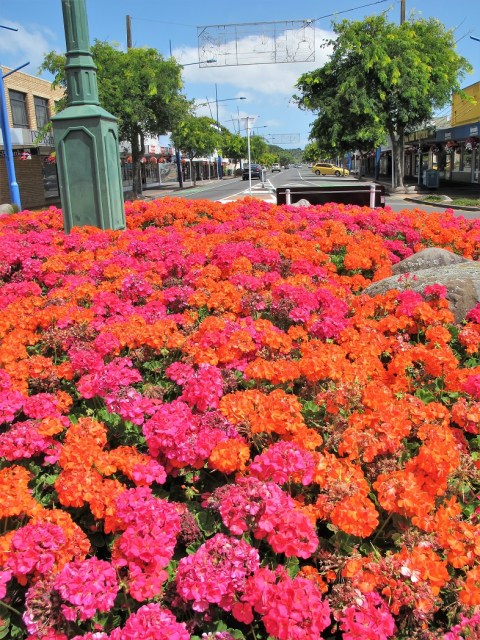
Orange and bright pink on a traffic island in our local town of Waitara. Bedding plants give a massed display that are rarely seen in a home garden but can give ideas for colour combinations

Maybe look at bedding plant displays in public gardens and on traffic islands, not for the plants used, but to see the different colour combinations. Because if you are going to try the two-colour route, it is entirely personal taste as to which colours you like. There are no rules to this. Just pick a colour and move across the range of hues in that colour, rather than limiting yourself to just one shade of the colour. Gardens are never static so it is a more dynamic medium than interior design.
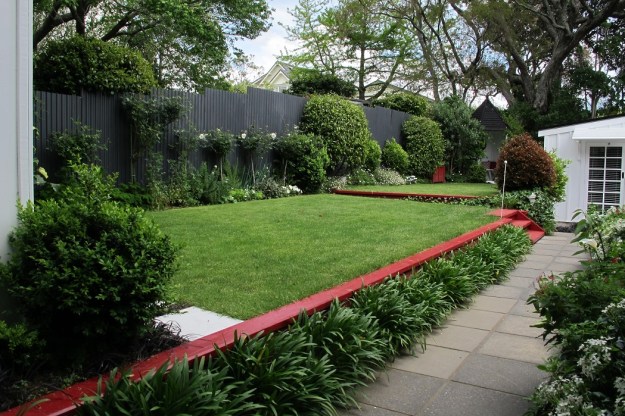
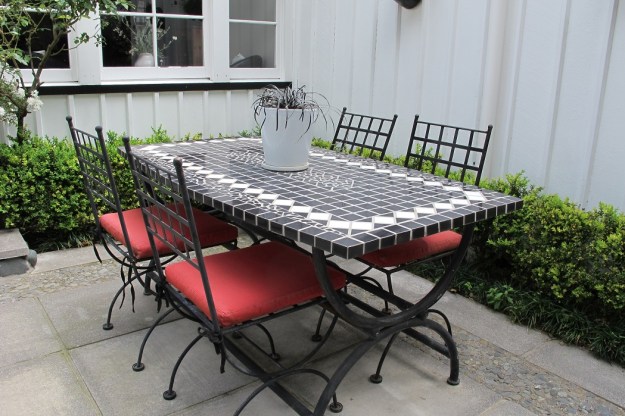
Hirst Cottage – the garden is a unified theme of white on green with red highlights (and black)

In New Plymouth, Judy Gopperth, opens her garden called Hirst Cottage for the annual garden festival at the beginning of November each year. Hers is one of the few places I have seen that has a totally disciplined approach to colour management in a smaller town garden. Basically, it is themed on red and white. Except it is more a case of theming on white and green (as she describes it herself) with red highlights and black as a background. The red appears mainly in small touches in the hard landscaping and the soft furnishing and it creates a bold contrast to the dominant white and green. It is a completely controlled use of colour which unites the outdoor space with the house (in her case, a very early historic cottage).

This style may appeal to people living in urban situations where outdoor space is very limited and is solely there as an extension of indoor living space. The designer look, I guess. It is unified, crisp and uncluttered. In theory, you could change the look relatively easily by swapping out all the red for another single colour.
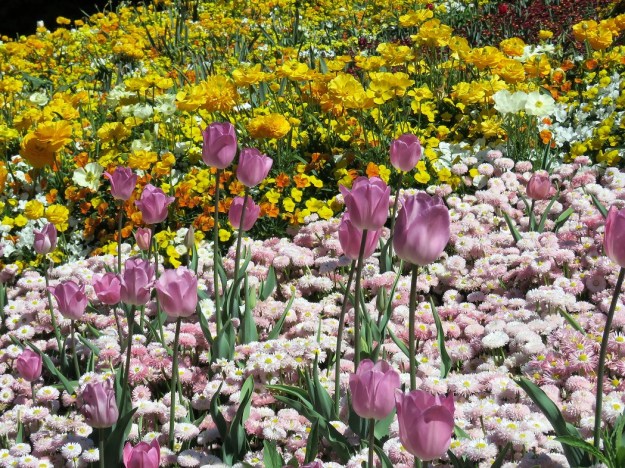
Pink and yellow at Floriade in Canberra

The one colour combination that I personally dislike intensely is pink and yellow. I have seen it looking pretty in clear pastel pink and lemon in a tulip display in Eden Gardens in Auckland, but hideous in a display at Floriade in Canberra. It is so easy to get wrong. There are many murky shades of pink – pinks with brown or purple tones within them – which can look lovely in combination with other colours. But put them with hard yellows and I shudder. There are plenty of plants to choose from. I have seen many a murky pink with yellow variegated foliage which have managed to achieve the combination in a single plant. I am not at all keen the combination of a bright yellow kowhai and the cerise pink of a cercis that I drive by each spring in a nearby garden. Nor do I like bright yellow grasses combined with pale pink flowers. But that is entirely personal taste. If a carefully colour controlled garden is what you want and pink and yellow pleases your eye, go for it. Don’t let me put you off.

There are times in my life when I have tried using a hugely restricted colour palette but I always seem to add in another colour to give some visual oomph. Over time, it has become more a matter of deciding what colours to leave out – so a process of exclusion rather than starting with just a two or three colour palette. But that is a different approach altogether.
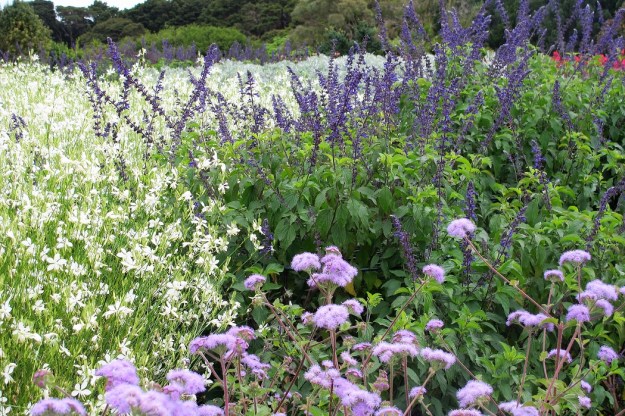
Blue and white at Auckland Regional Botanic Gardens

My final suggestion is that if you want to try a two-colour garden and you lack confidence, try any colour plus white. That is the safe option.
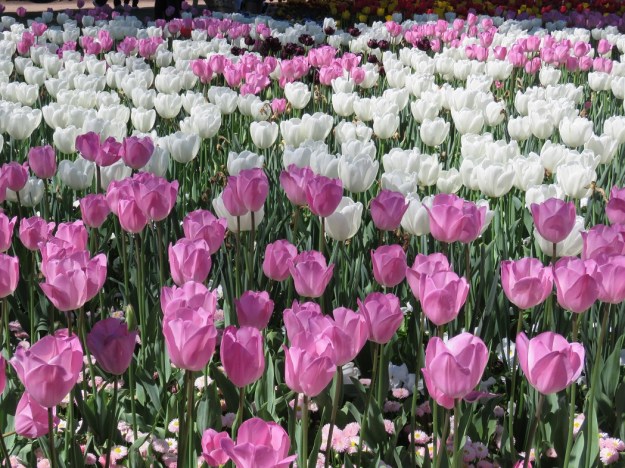
Pretty in pinks and white at Floriade
Colour themes for gardens – the single colour choice

The primary colours, planted in stripes at Auckland Botanic Gardens

We are still talking colour theory at great length here. In great detail. In part this is driven by the start of the new year of gardening conversation with Tony Murrell on Radio Live’s Home and Garden Show. Tune in around 7.45am on Sunday if you want to listen live. Both Tony and I like to clarify our thoughts before we go on air and for me, that often means extended conversations with Mark, whom I have been known to call my in-house advisor or expert. This week’s conversations have been around the relatively modern idea of gardens themed on a single colour.

If you think of colours, basically a monochromatic garden is either reds, yellows or blues, whites or maybe green or black. What they all have in common is that green is regarded as colour neutral in a tightly colour-controlled garden. So whichever colour you choose, it is plus green. White, however, is not colour neutral in a colour-themed garden.

I have nothing more to say about white gardens that I have not said already. Except to reiterate that the most effective white gardens that I have seen are comprised of heavy flowering white perennials, sometimes mixed with annuals or biennials – so summer gardens at their peak. For a list of previous posts on white gardens, skip to the end.

The ‘black’ garden in the village of Giverny. Need I say more?

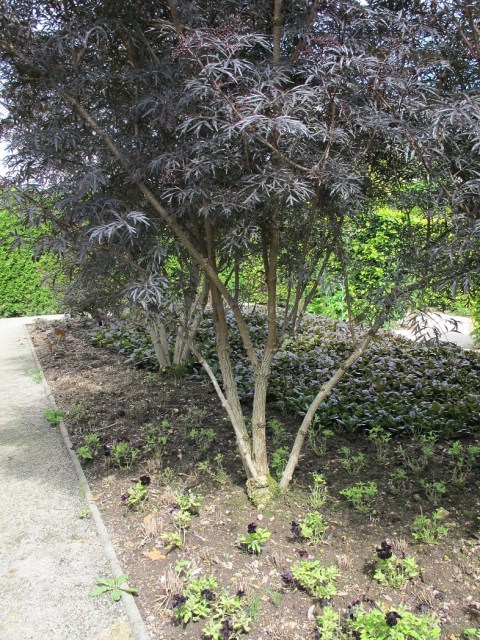
Black gardens? Way better in theory than in practice and even then it will still be a novelty garden (you should be able to hear the disdain in my voice). I have only ever seen one and that was a public planting in the village of Giverny. It was underwhelming. I wonder if they just didn’t have the black ophiopogon (mondo grass) because it was all black pansies, dark ajuga and dark foliaged shrubs. Besides the fact that it seems extremely unlikely that black ever lifted anybody’s spirits or brought joy to their day, most plants that are described as black are in fact very deep burgundy. Leave it at the theory stage, is my advice.

I recently read an opinion that it is easier to manage a red garden than either blue or yellow. I beg to differ. And I think that comes back to the colour wheel and the role of white.

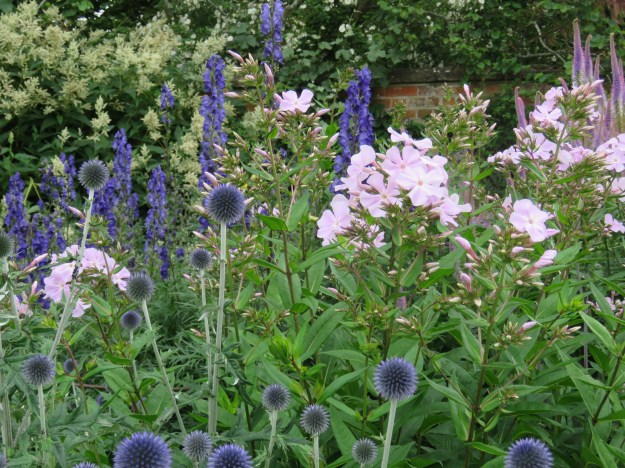
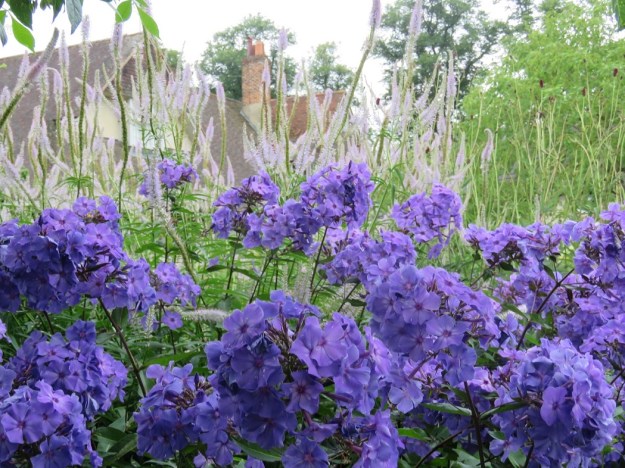
If you do a blue garden, the blues on the yellow side of the spectrum will be green-toned and therefore fit into the blue and green colour range. Those closer to red will throw to purple which sits perfectly happily alongside the blue and green tones. Add some white and you get pastel shades – pale blues, lilacs and lavenders and they all sit harmoniously in that blue colour palette.

The blue border at Sissingurst some years ago

I have seen two blue borders. The first was at Sissinghurst where we liked it much more than the famous white garden. The second was at Parham House in Sussex and it had been freshly renovated and was lovely. I am of the view that you can never have too much blue in a garden but that is personal taste.

The blue and yellow borders at Parham House

A similar scenario sits with a yellow garden. Head to the blue side and it is in the green shades. Head to the red side and it introduces orange. Add white and it is simply a paler hue of the same colour. I have only seen one example of an all yellow garden which may be a reflection on the unfashionable status of yellow and orange at this time in history. It was okay. Not stunning but fine and done well at Parham House again.

A random sampling of red foliage and blooms

Red is different. Pure reds are rare. Most lean either to the blue side which gives the purple and burgundy hues or to yellow which gives orange. Add white and you get a totally different colour – pink. There is no way I can see pinks as ‘pale red’. Then there are the many reds that are really closer to brown. I am not a fan of brown flowers, personally.

The red borders at Hidcote Manor Garden

I have seen two red borders – the classic red border at Hidcote and Alan Trott’s red border at his garden near Ashburton. Both were mixed borders and red foliaged shrubs mostly lean to the burgundy shades. That dominance of burgundy, even with splashes of scarlet, can seem quite sombre to my eyes. It comes down to taste.

Similarly, all green gardens can seem a bit gloomy to me, but I am writing this on a grey, rainy day. I can’t complain because we need the rain. Our rain deficit this summer is such that we are still an official drought area, but when I look out the window, the green does not look restful so much as sombre. To me, it is bold colour that lifts such scenes.

I am not convinced that it is as easy as some folks think to plant a monochromatic garden. At least not one of a high standard horticulturally and visually. I think it is easier to go to a two-colour garden (+ green, of course) but more of that next time. However, should you still hanker for a single coloured garden, I have one bit advice gleaned from looking at gardens created by some excellent horticulturists and skilled gardeners. Don’t be too slavish in your dedication to a single colour. Sometimes a flash of another colour can lift the whole scene. A splash of bright pink in a blue border maybe. Or a spire of blue blooms in a yellow garden. How  about the bright orange bloom of a canna lily with burgundy foliage in a red border?

Earlier posts on white gardens:

White gardens for the new age

Shades of white in the world of flower gardens 

White frou frou

The perils of the monochromatic colour scheme in gardening 


More than fifty shades of grey

I find it difficult to believe that flat planes of grey ever lift anybody’s spirits

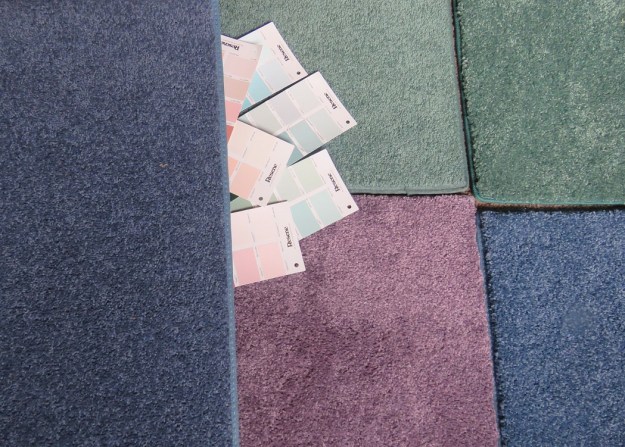
I have been looking at carpets and truly, there is an endless choice as long as you want grey. Real estate grey, somebody commented when I posted my piece about colour in southern Italy. We had this idealistic thought that we would only buy wool which gave a choice of one blue and one green, given we have ruled out grey and shades of porridge and mud. For variation, I added another three samples of blue, green and muted aubergine in one of the new fibres which is, apparently, corn sugar mixed with synthetic but not actually nylon.

I have a theory now on New Zealand’s obsession with real estate grey both indoors and out. Colour fashions change over time. We know this. Some of us are old enough to remember the turquoise, ginger, oranges and purples of the late seventies. It was not the country’s subtlest moment in home décor. The eighties brought the muted shades of Paris pink, sage green, burgundy and dove grey.

So how did we get to plain grey?

We have always been an itinerant nation, moving house often. I found a story from 2008 which started, ‘More than a quarter of New Zealanders have moved at least once in the past two years, a survey reveals.’  It is likely to have accelerated since then, given the decline in our previously high home ownership rates. But at some point in the last decade or maybe longer, houses stopped being first and foremost homes and instead became investments. When a house becomes an investment, resale value assumes huge importance. And the real estate industry assures us that for a quick sale at maximum price, houses must be neutral and anonymous. Grey and white or maybe off-white with accent colour in sofa cushions.

Mark and I had a passing conversation about a real estate garden to accompany a real estate grey house. We didn’t get off colour theming and the thing about grey plants is that they are more often silver, with a lustrous sheen and qualities of light and shade that are missing from flat planes of utility grey. We figured that a real estate garden is simply the ultimate in tidy utilitarianism. In this day and age, it will probably be filled with dwarf nandinas.

For those of you who are curious, we are not happy with the quality of the 100% wool carpets on offer so will probably go with the muted aubergine option from corn sugar (or is it corn husk?). Mark feels that green carpet is better downstairs where it anchors the house to the green outdoors whereas he feels blue upstairs links to the sky. I was not so keen on the blue carpet and my heart lies with flat planes of muted colour. I have never forgotten our first trip to Northern Italy. It was a magnolia trip so early spring and the quality of light in the north was soft and almost ethereal. None of the harsh brightness further south. We visited an old church and inside was colour – faded colour but in hues of soft yellows, blues, pinks, greens and pale terracotta. I fell in love with that colour and in our home which is ‘1950 character’, as we say, that effect of faded or muted colour in sweeping expanses seems to fit us well.  So the upstairs of our house is on track to be in Northern Italian faded church colours of muted pinks, pastel blue greens, aubergine and soft yellow – all colour and texture with next to no pattern. But then we are not intending to sell our house so we do not feel that it will cost us money if we go for what we like and not resale grey and white. Our colour can just gently fade with us as we age.

When all is said and done, if you strip the colour from a monarch butterfly, all you are left with is an over-sized cabbage white with pretensions.
Summer gardens – the starting point

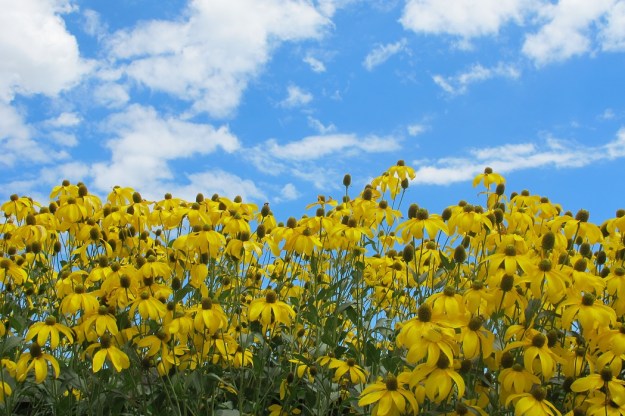
I garden so I have a lot of thinking time. And it struck me this week that the reason why good summer gardens are a rare occurrence in this country is because most New Zealanders start a garden by planting out the trees and shrubs, then the hedgings and edgings.  Herbaceous underplanting is more of an afterthought, not unlike adding cushions to a sofa. A filling in of remaining spaces.
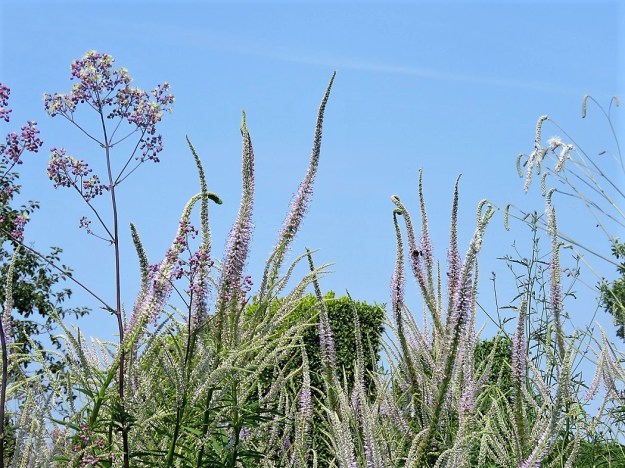
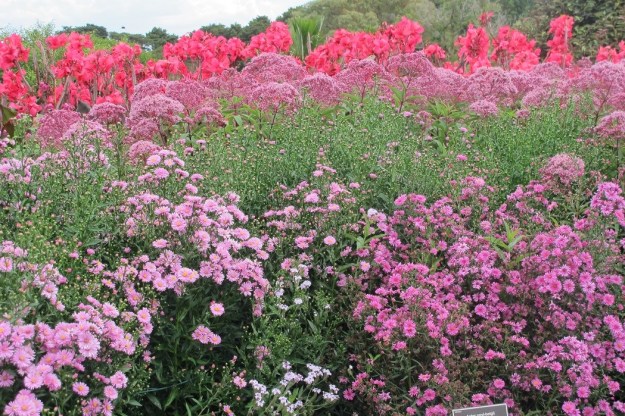
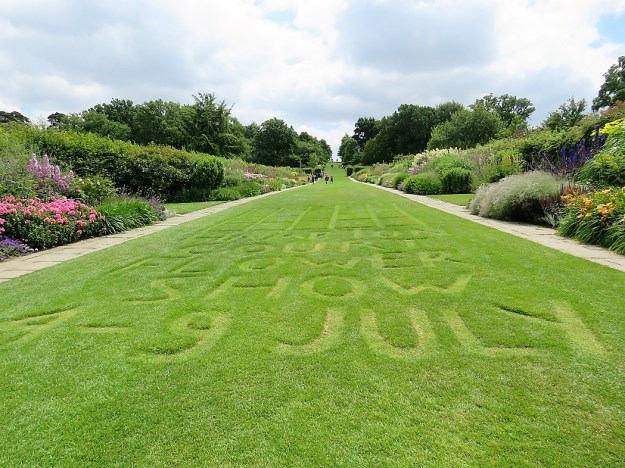
If you want a good summer garden, start with the herbaceous planting and build from there. That was my moment of clarity.

New Zealand does great spring gardens. Magnolias, flowering cherries and crab-apples, soft foliaged Japanese maples, azaleas, rhododendrons and a host of other pretty trees and shrubs grow with a lushness and froth of bloom. You would be hard pressed to find prettier spring gardens and that takes in the length of the country.

Le Jardin Plume in Normandy

Northern New Zealand also does year-round, sub-tropical gardens very well. All the lush greenery of palms, cycads, bamboos and some lesser known small tropical trees with many ferns, clivias and bromeliads – albeit often sustained by irrigation or misting units over the hotter summer months.

Good summer gardens are a scarce event in this country and I think it is because we start with the trees and shrubs. There aren’t that many woody plants that flower in summer. Hydrangeas and jacaranda do but even so-called repeat-flowering roses peak in spring and then rather stagger on from there without ever achieving that mass, new season glory again. There is a very limited selection if you want summer-flowering woody plants.

New Zealanders generally want gardens that ‘have interest’ all year round. Some gardens boast of being a garden for all seasons when in practice they are spring gardens with spots of bloom and colour at other times.

Summer at Auckland Botanic Gardens

Classic twin herbaceous borders at RHS Wisley Gardens

I have seen impressive summer herbaceous plantings at Auckland Regional Botanic Gardens but those are large-scale, public plantings which are different to home gardens. They are probably worth a visit right now if you are in the area. I have also seen a fair number of classic, twin herbaceous borders, but mostly overseas. They are more commonly classic twin mixed borders in New Zealand, where the shrubs will dominate over time. It is not the herbaceous borders that have made me do a double take of envy. It is the more contemporary herbaceous plantings with fewer rules, considerably less maintenance but more colour control that inspired both of us. We won’t know if we have succeeded here for another year or two and then the proof of sustainability is if it still looks good a decade later, but I am optimistic at the early results.

Bury Court – superb planting combinations by Piet Oudolf

More Bury Court

So far, I can say that a good summer garden needs full sun with open conditions. My plantings started with the herbaceous plants and bulbs. These are plants that like well cultivated soil so it is easy for them to spread their roots. There are some trees and shrubs, but mostly used to give definition and form to the area without intruding into the herbaceous plantings and without the potential to cast shade where shade is not wanted. It is a very different style of planting and management to the rest of the garden. Once the principles and techniques are mastered, the fun comes with plant combinations.  Our conditions are so different that we need to trial plant material and work out our own combinations rather than working from overseas plant lists and examples. But we have learned from looking at some highly skilled combinations and the difference between cobbling together plants based primarily on flower colour and the genuine flair of knowledgeable gardeners is noticeable once you get your eye in. It is the detail that is possible in private gardens that often makes a huge difference.

Wildside in Devon

That is what we have travelled overseas to look at and to reinterpret for our conditions at home.

Our blank canvas three years ago with just the foundation shrubs and trees to define what will remain open space

We be diggers here.

Rain after the drought

It is raining here which is a relief, for once. North Taranaki, where we live, is not known for droughts so over two months without significant rain was heading to critical territory. Mark was worrying about fire potential because we have chosen to leave grazing pasture long and also in the meadow with all its very dry material. Taranaki is better known for flooding than fire.

We have been lucky to have fairly gentle rain to soften the ground first. The problem with drought-hardened ground is that torrential rain just flows across it like a sheet of water, without being absorbed. It has been interesting looking at the absorption of the rain so far. Where the ground is compacted, yesterday’s rain had only soaked the top centimetre or so. But the areas of garden that are extremely well cultivated and friable have absorbed the water right down.

We are diggers here and still like to work the soil. I have always been a bit suspicious that the current craze for no-dig gardening might have more to do with people not wanting to exert themselves on the end of a spade or shovel. I am particularly dubious about those who use the death toll of worms cut by the spade as an excuse not to dig when all the while, they will sit down to a dinner of tasty steak. Chances are that it was more traumatic for the beef beast, lamb, pig or even chicken to be brought to the dining table than for the occasional worm that had its tail cut off or met its end for the digging of the garden.

The other reason I often read is that digging should be avoided because it ‘destroys the structure of the soil’. Certainly you don’t want to be bringing the substrata and clay layers to the top, but you can dig without doing that.

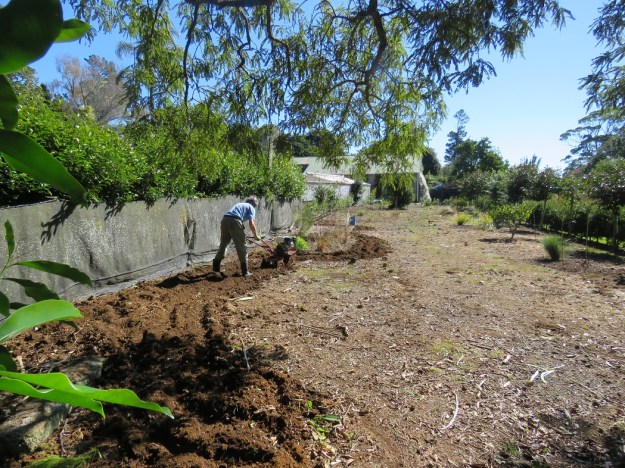
Rotary hoeing one of the new borders to break up heavily compacted ground

Mark has always dug his vegetable gardens, on the principle that vegetables need to be able to get their roots out as easily and quickly as possible in order to grow well. We have applied the same principle to the new gardens we are making. They are on ground that had been heavily compacted over the years, covered by weed mat and nursery plants for about three decades with every centimetre tramped over repeatedly by heavy-footed humans. Mark rotary hoed it for me first. I then raked and contoured the beds, digging yet again when it came to planting. We mulched some of it after planting but ran out of both compost and wood mulch so some areas missed out.

In the time since, I have gone over and over the bare surfaces with my little Wolf-Garten cultivator, scuffing off the germinating weeds. The thing about thick layers of mulch is that they suppress germination but do nothing to kill the dormant seeds that can last a very long time in the ground. I like to think that every round I do that dislodges germinating weeds is another rash of unwanted seeds dealt to. It should save time and effort in the long term. Mark has been saying in encouraging terms that the layer of loose soil on top that I am constantly cultivating acts as something of a mulch layer, protecting the deeper layers from drying out so quickly.

Left to right: my excellent Joseph Bentley border spade with its oak handle, Mark’s prized Planet Junior that he uses to cultivate the soils in his vegetable patches and the smart Wolf-Garten cultivator

The rains have also demonstrated clearly that the very well cultivated and friable areas have benefited the most with their capacity to absorb far more moisture. We will remain diggers here in areas where we are growing perennials, biennials and vegetables and some of the areas with bulbs. Established trees and shrubs do not benefit from having the ground beneath cultivated, but many other plants will reward you with increased vigour and improved performance.

Treat yourself to a decent spade, is my advice.

Earlier related posts include ‘The answer, as they say, lies in the soil’ on the importance of getting your soils right for healthy gardens and ‘Raised beds and to dig or not to dig, that is the question’ which I wrote before it even occurred to me that digging has the added benefit of enabling the ground to absorb a great deal more precipitation.

As a postscript, I googled ‘diggers’ and came up with this Wikipedia entry. “The Diggers were a group of Protestant in England, sometimes seen as forerunners of modern anarchism and also associated with agrarian socialism and Georgism.” Not that we are Protestant. Nor do we see ourselves as radicals, let alone anarchists but we have some sympathy for those early socialist principles and a belief in a more egalitarian society. Diggers we will remain.