My new weeding friend

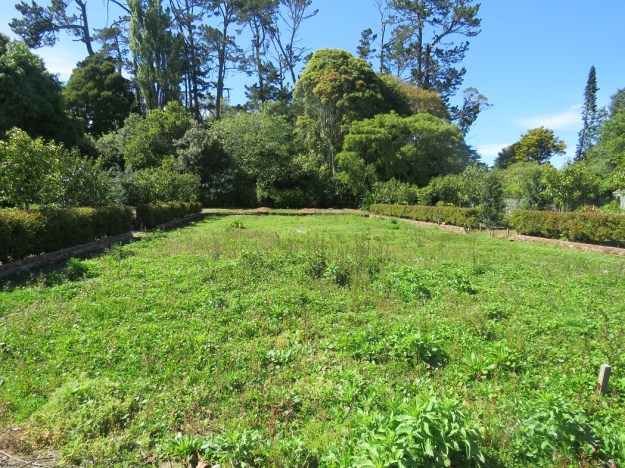
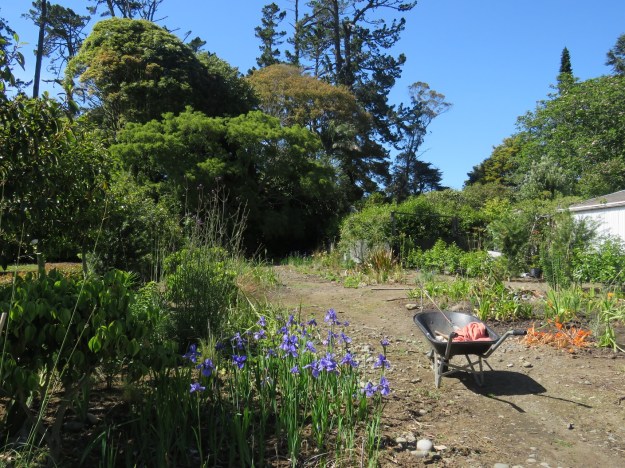
The weed growth in this new area under development was scary after a few weeks of spring

I have a new weeding implement and a very good one it is too. Meet my little Wolf-Garten Multi-Star Cultivator Weeder LBM (I wrote the full name down from an internet search). It is my new best friend.

Having been away to Australia, then coming home somewhat unwell followed by other demands on my time, the weeds in my newly planted borders were threatening to get away on me. With my trusty weeding armoury, I made short work of quite large areas. It was the little cultivator on the long handle that covered the area quickly and efficiently. Unlike a hoe, it does not cut the plant off and being very narrow, it can get in close to plants without damage. It is only 7cm at its widest point.
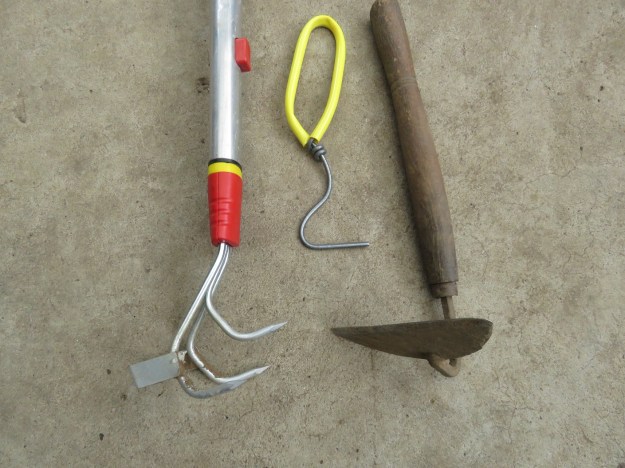
My new Wolf-Garten cultivator, the modest Wonder Weeder and my short handled hoeing implement deal to most weeding situations

One weeding tool does not suit all situations. This cultivator makes short work of scuffing up the surface and dislodging the weeds where soil is friable or there is mulch. It is no good on compacted soil. It also needs to be used before the weeds have set seed and is best on a sunny day so the dislodged weeds shrivel and dry in the sun. As long as they haven’t reached the seeding stage, the weeds do not need to be removed. It is so easy to use, saving bending and stretching, that weeding is not something to dread. A quick follow-up the next day despatched the few weeds that had escaped the first round. If you have similar conditions, buy one is my advice.

Where the plants are closer together (these were newly planted areas that I was speeding around with my cultivator), I resort to the hooked wires known in this country as Wonder Weeders (cheap as chips at under $5 when I bought another three at the garden centre last week). In the case of compacted ground with club moss, liverwort or clover, I use the short-handled implement that looks like a small Dutch hoe. You can get long handled versions of the Dutch hoe to avoid having to bend or kneel, but I am fine with the precision of my short version.


The new baby cultivator and its full-sized companion on the left and the trusty old Planet Junior to the right

Mark is a push hoe man (the Dutch hoe is pulled towards the user whereas the push hoe is pushed away from the user) but it takes some skill to be a reliable operator and it is all too easy to accidentally sever desirable plants from their roots.  Where there is more space to move, such as in his vegetable patches (known here as Mark’s allotment), he will reach for his trusty old Planet Junior that makes quick work of surface cultivation or the big granddaddy cultivator relative of my new, small version.

What about weed sprays? Mark follows the international debate and research on glyphosate (the active ingredient of Round Up) with reasonably keen interest. When Round Up hit the outdoor maintenance world in 1974, it was seen as saving the equivalent of a labour unit and it changed attitudes to weeds in the garden. Being seen to be weed-free became mandatory for “good” gardening. Mark has used a fair amount of it over the years to maintain our gardens and wider property. With the huge volume of glyphosate that has been used throughout the world over 43 years, if it was the worst thing since Paraquat, DDT and the likes, we would expect there to be more compelling evidence but it is not an open and shut case. That said, caution is always advisable and I worry about its use as a desiccant on commercial food crops.  Certainly, Mark has hugely reduced how much he uses it, which has seen us returning to some older, tried and true methods of cultivation.

I would comment that with the amount of conflicting evidence on the safety of glyphosate, we are a little concerned about what is mixed with it to give the near instant knockdown capabilities of the over the counter, ready to use spray dispensers that are widely sold. Glyphosate used to take up to three weeks in cooler weather to kill weeds and there are various plants that are resistant to it. Those ready-mixed spray cans can kill within hours. When I used to write for the newspapers, I was sent samples of two different such sprays called “Weed Weapon” with ‘breakthrough technology’. I rarely use them but they are both scarily easy to use and efficient at killing plants, even ones that I would not expect them to knock out. The combined effects of glyphosate and saflufenacil are much greater than glyphosate alone.

Compacted soil, the result of years of no surface cultivation and likely use of weed spraying for maintenance – not our garden.

In terms of garden maintenance, repeated use of weed sprays as routine control leads to soil compaction and the growth of liverwort which we find unsightly. We are guilty of judging open gardens on their visible use of weed sprays for maintenance. But then we are subscribers to the school of soil cultivation and mulching when it comes to gardening.

With the growing antipathy to chemical controls for weeds, we may need to revise the aesthetic value placed on weed-free gardens. Even my new-found cultivator friend has its limitations. But weeding a little often is probably the best way to go for most keen gardeners.


The modest tea harvest

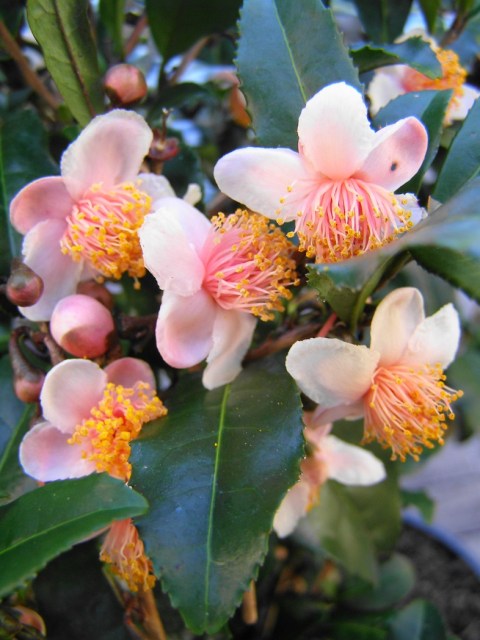
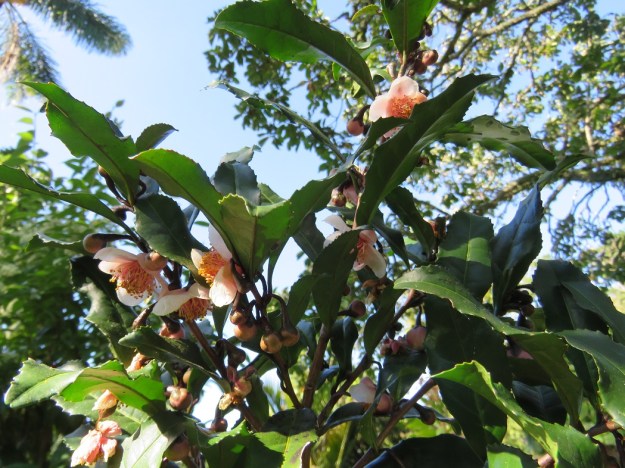
Camellia sinensis, the tea camellia, flowering at the end of March

With just one sizeable bush of the tea camellia, C. sinensis, the harvest was never going to be huge but after fiddly-faddling with a few minor efforts in recent years, I was determined to get as much as I could this year. I now have considerable respect for the tea-pickers of Sri Lanka and India but I assume one gets faster with practice. Mark tells me he has another three plants ready to be put out into the garden so we should, with more attention, be able to increase the harvest, though we are unlikely to achieve self sufficiency.

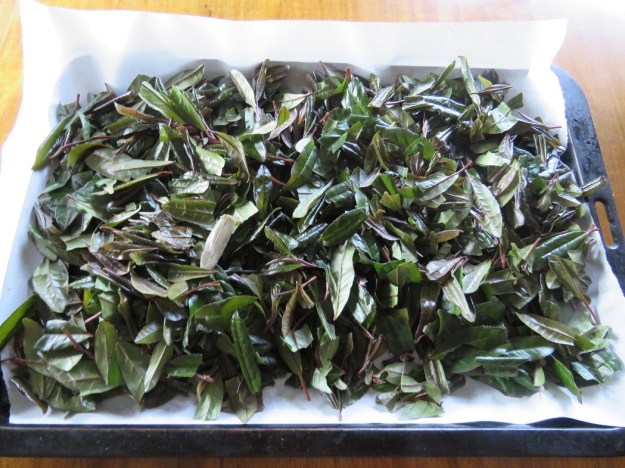
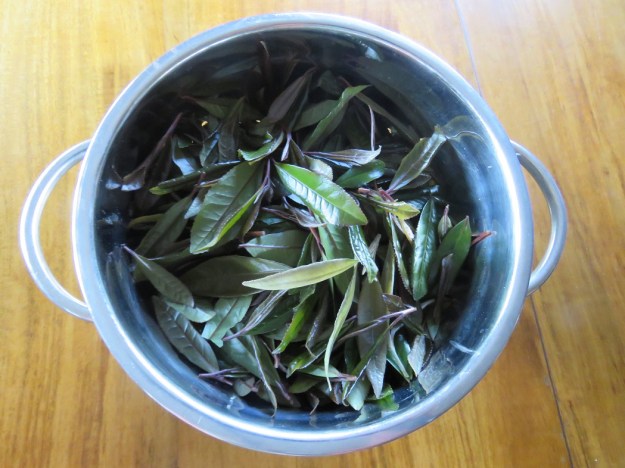
The first, small pick of tender tea tips

Harvesting is picking just the top two or sometimes three leaves from each growing tip, just as they are unfurling and still very soft and young.

The tea bag has a lot to answer for in terms of reducing the drinking of tea to the most convenient but mundane and utility level of activity. Where is the romance? Let alone the quality? Even worse are the gourmet tea bags which appear to be packaged in individual nylon bags and are therefore non-biodegradable, whatever the packet says. As our lives have become more leisured here at Tikorangi, we reinstated the old ways of making good loose-leaf tea in a teapot for the afternoon cup. Sometimes I bring T2 loose leaf tea back with me from Australia but we also have a New Zealand mailorder supplier at Tea Total and I have come to conclusion I prefer their teas. It is not as cheap as supermarket tea but for the afternoon ritual, we think the better quality and flavour is worth every cent.

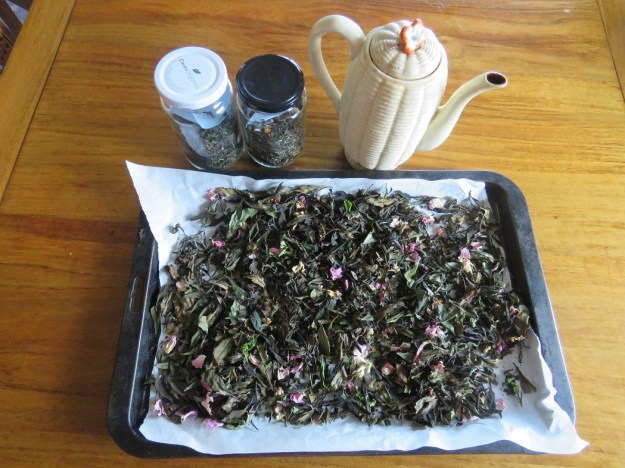
Spreading on a flat tray to lightly oxidise and dry

My home-grown tea is free. Because we like aromatic teas, I have flavoured three batches differently. The first is lemon scented – I added some of the young leaves of the lemon myrtle – Backhousia citriodora. The second batch I dried with orange blossom (proper orange, not the mock orange philadelphus) and a few fine peelings of the outer rind of an orange and rose petals. The third was lime (lime blossoms and few young leaves) with mint and rose petals.

The yield from a tray is not large once it has dried – but fresh and aromatic

We tried making straight green tea in the past, first from fresh leaves straight into the pot and the then with leaves just wilted and left overnight. The taste was perhaps just a little too subtle for our palates. Now I do a process somewhere between green and black tea – bruising the leaves and leaving them covered overnight (which starts the oxidation process). Then I sun dry them on flat tray – which can take from one to three days, depending on the strength of the sun. And voila! Fresh tea ready for the pot. With no packaging and no carbon footprint.

In answer to the question as to whether there are different camellias for different teas, I quote Wikipedia: “Camellia sinensis and its subspecies, Camellia sinensis var. assamica, are two major varieties grown today. White tea, yellow tea, green tea, oolong, pu-erh tea and black tea are all harvested from one or the other, but are processed differently to attain varying levels of oxidation.” There are different selections of the species and some will have different characteristics, but the vast majority of tea sold in the world is indeed from Camellia sinensis.

Our form of sinensis is pink flowered which is unusual. But I think I strategically placed additional flowers to make this photo showier than it is in real life.

Dudley and the new season’s avocado crop

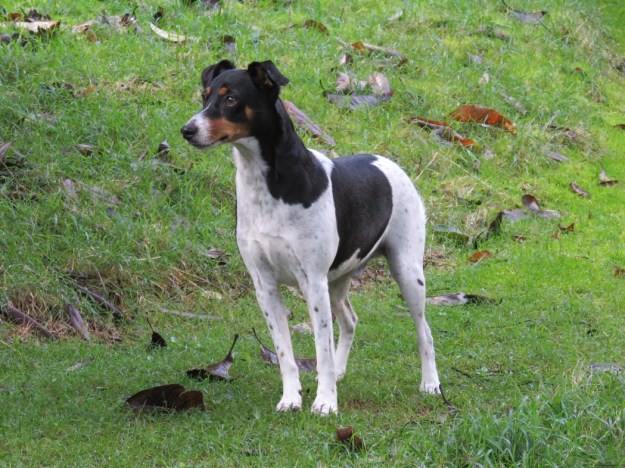
Behold our handsome Dudley. Or Dudders, to give him his cricketing name. I wrote about Dudley’s penchant for self-serve avocados two years ago in The Avocado Thief.
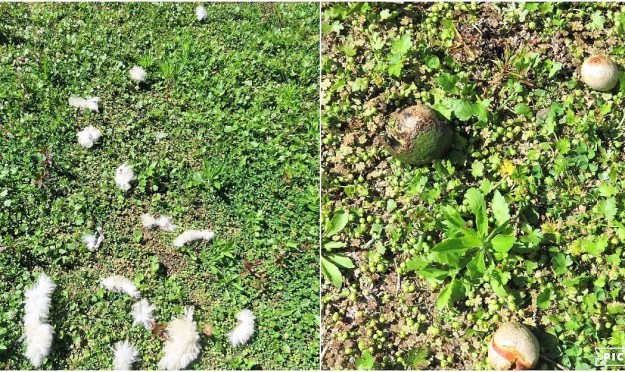
Last year the avocado pickings were very lean, bordering on non-existent, really. This year, we have a terrific crop of Fuerte avocados coming in right now and there is nothing wrong with Dudley’s memory. In the centre of a large area which we are developing into a new garden, I found his stash this morning. At this point the revolting lambs’ tails retrieved from the neighbours just across the fence outnumber the avocado stones but Dudley is working on that. Apparently he has designated this area as his outdoor dining space – not to be confused with his breakfast nook by the house where he receives his morning rations.

The evidence! Left: his stash of ageing lambs’ tails adjacent to his avocado stones on the right

Sometimes I read that one should not feed avocado to dogs as it is allegedly toxic. Dudley is a dog of many talents but he has failed to read these warnings and he has never shown any ill effects from an excess of avocado. The same cannot be said for an excess of lambs’ tails which can, at times, clog up in his gut though this does not appear to deter him for long. An excess of avocado flesh merely gives him a glossy coat. This was a townie dog that has adapted rather too well to life in the country.

Dudley’s outdoor dining area is in the middle of an area under development – loosely referred to here as the court garden because it currently resembles a tennis court in dimensions. The two year plan is for a wildflower garden. 

Clipping the michelias

Starting on the left – the annual clip

This is what it will like when done – freezing the size of the plants in time with an annual clip

We have a row of lollipop michelias at our entranceway and it is time for their annual clip. Yes, one annual clip is all they get and we are maybe three weeks late on doing them this year. I did not intend to start yesterday, having other things planned. Besides, clipping the michelias feels like a Big Job. Well, it does involve a ladder for the taller ones.

I timed myself yesterday. It takes me 30 minutes a plant to clip with secateurs and to rake up the clippings. That is not long for annual maintenance on what are significant feature plants. You could do it faster with a powered hedge trimmer or even hand clippers but you lose the precision. Besides, I don’t like using the hand clippers because each time they snap shut it jars my wrists and the residual carpel tunnel syndrome I nurse in those joints.

Aesthetically speaking, cutting with secateurs means there is no leaf damage whereas the speedier clippers or hedge trimmer will cut almost every external leaf which will then discolour on the damaged edges. It is also easy to reach in at the time and remove dead wood and do a clean-up of the interior of the ball using secateurs and the finished result is less… brutally shorn, shall I say?

Most michelias can be clipped hard, especially these hybrids of Mark’s. The two smaller ones here are an unnamed hybrid from his breeding programme while the taller ones are Fairy Magnolia Blush. I have planted two Fairy Magnolia Cream in the vehicle entranceway to the left which will, over the next few years, be trained to lollipop standards.

Michelias are magnolias, just a grouping within that wider family. That is why Michelia yunnanensis has been renamed Magnolia laevifolia by the experts. Our position of continuing to refer to them as michelias is on shaky ground botanically but we find it a useful differentiation in common parlance. It is a handy point of difference to the big leather-leafed Magnolia grandiflora types which are what most people think of when evergreen magnolias are mentioned. Our agents chose to brand Mark’s hybrids as “fairy magnolias” to mark out that difference.

Magnolia laevifolia  (aka Michelia yunnanensis) defoliating in wet, cold climate

The aforementioned species, Magnolia laevifolia, is a lovely plant in bloom but not always the best garden plant. It has a tendency to defoliate in a wet spring and we have certainly had that this year. This plant is not in our garden. I photographed it at Pukeiti. It is neither dead nor dying. Nor is it deciduous. It has defoliated in the wet and that is a characteristic of this particular species that is not to its credit. Not far along the same track is a fine specimen of Mark’s Fairy Magnolia ‘Blush’ which, we were pleased to see, shows no tendency whatever to defoliate, even in the hard growing conditions of Pukeiti Gardens.

This is what Magnolia laevifolia looks like at its best, seen here in my friend Lorri’s garden 

As a piece of advice for local gardeners, if you into clipping camellias – and we clip a few now as feature plants as well as camellia hedging – the time to do it is right now. If you leave it much longer, you will be cutting off all next year’s flower buds.

We have renamed the area of our garden we used to refer to as “the park’. It is now The Meadow

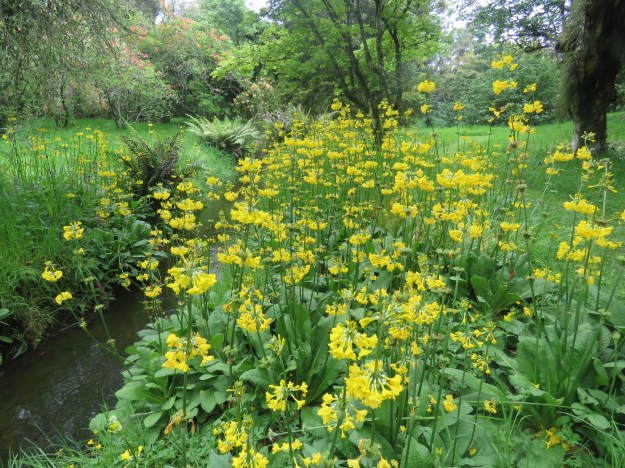
Finally, for a spot of colour, may I give you a host of golden primulas (not daffodils) in our meadow garden by the stream. It is just common old Primula helodoxa but so very pretty in its season.

Plant Collector: Malus ioensis ‘Plena’ – (Betchel Crabapple)

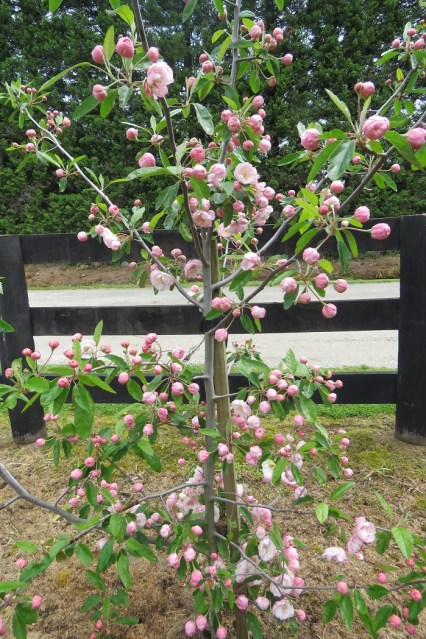
My first sighting of a juvenile plant in a Taranaki garden last spring

When I first spotted this pretty, young tree in a local garden last spring, I could not identify it but it sure was a charming sight. In Canberra a couple of weeks ago, there were SO MANY of these trees in bloom that I felt I had to track down a name. It is a flowering crabapple, a malus. The nurseries that supply Canberra are clearly making a killing on producing this cultivar (along with the pretty dogwoods). It is being used widely as a street tree on suburban road verges, it was strongly represented in the gardens at Parliament House that we visited and was featured in many, many (many) gardens.

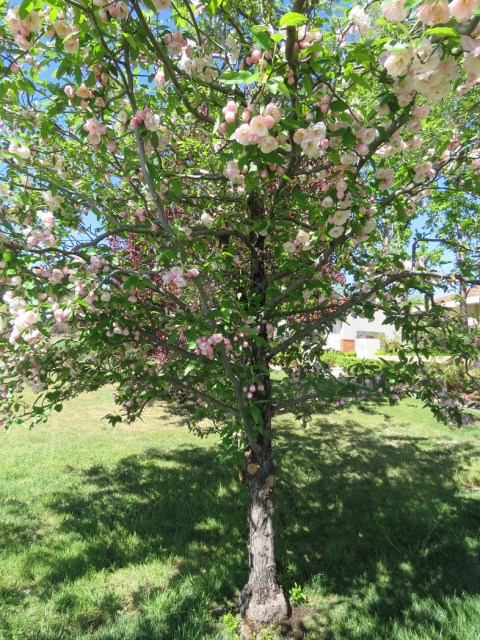
It is a pretty blossom tree though it does flower as its fresh foliage has broken dormancy, so the display is not on bare branches. Crab apples fit a similar niche to flowering cherries (prunus), though many varieties will flower a little later. Unfortunately, with ‘Plena’, you don’t get the bonus of coloured crab apples later in the season, although it can be used as a pollinator for the fruiting varieties.

Malus ioensis ‘Plena’ , not a prunus as I initially assumed

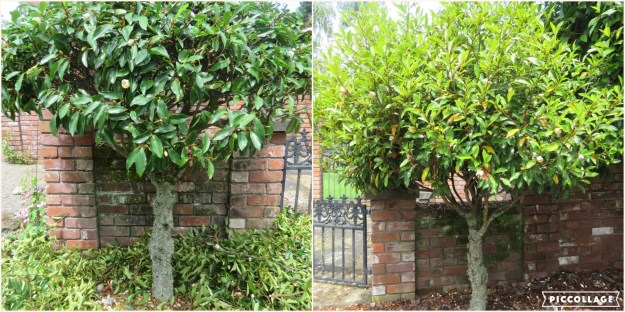
I have not looked closely at the plants in New Zealand to see if they are cutting grown or grafted. The Canberra plants were grafted, usually onto a rootstock that had an attractive, smooth pale grey bark. The problem with the plants in the Parliament House gardens (no photos allowed so I can’t show you), is that the lower grey bark of the root stock for the first metre or so was not particularly compatible with the graft so the union – where the grafted variety meets the rootstock – was already a bit lumpy and not attractive. They were not as bad as the linden shown here, but neither were the plants mature so they may well get worse. If you like your trees to last the distance over many years, just be cautious about buying plants that have been grafted as standards well above ground level. The closer the graft is to the ground, the less obvious any incompatibility will be.

It is a very pretty tree and one I expect we will see become as popular in this country as in Canberra.

A very pretty and presumably well behaved street tree in Canberra