
There are not many plants that I actively dislike but the dwarf, coloured nandina is one. You can tell I do not care for it because I gave no loving attention at all to taking this photograph of a plant on a random street frontage in town. Yet this plant is everywhere. One of those bullet-proof, easy-care plants which is alleged to have ‘year-round interest’ with its coloured foliage so a perfect fit for non gardeners who merely want plants to act as low or no-maintenance soft furnishings in the garden.
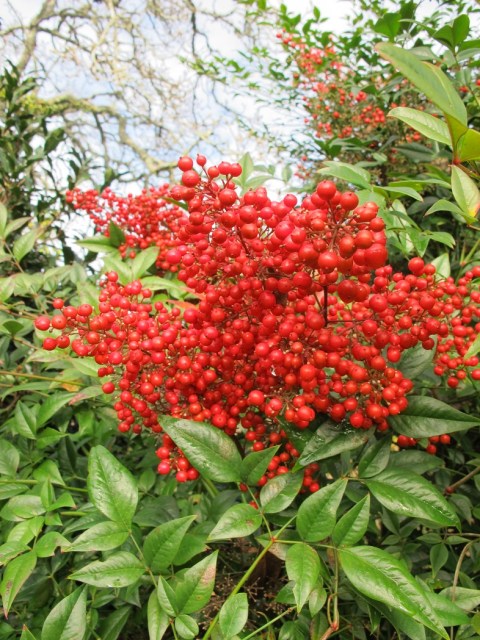
The taller version – Nandina domestica ‘Richmond’ seen here – has sufficient aesthetic merit to justify a place in the garden
Mark was as surprised as I was when I told him I had looked it up and there is only one species of nandina and that this boring little coloured mound which is rarely above knee height is the same species as the far more graceful and attractive Nandina domestica ‘Richmond’ that we grow. I can only assume that the common name of heavenly bamboo was initially applied to the more graceful, taller type of selections like ‘Richmond’. I guess, at a pinch, one could claim it has a bamboo look to it, though probably only to those who have never actually looked at the real thing. It is actually a member of the beriberidaceae family (think berberis). Apparently nandinas only berry in warmer climates and ‘Richmond’ is self-fertile so will berry without needing the pollinator that most others do. It is worth growing – easy, reliable and low maintenance yet with a grace and elegance to it, as well as seasonal interest with its berries.
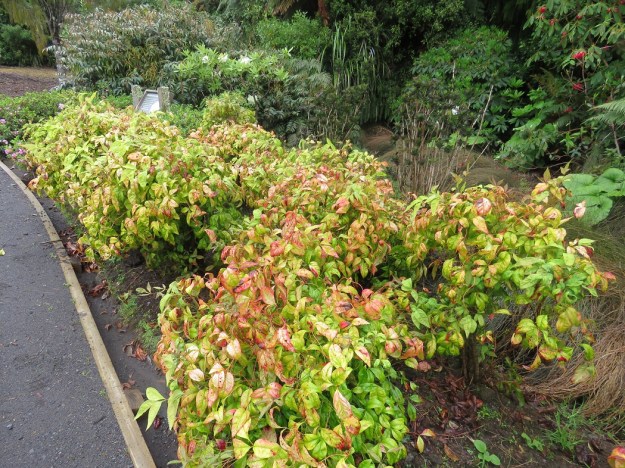
The institutional look of utilitarianism
The dwarf forms lack all of these more desirable attributes except utilitarianism. The more you have, the more utilitarian your garden will look. I have photos of a private garden which has planted a score or more of them but it is too easy to identify the place from my photos and I do not want to upset the owners. I can, however, offer you this photo of it being used in a public garden. It will not look much different in your garden at home. But it will be easy-care.
The dwarf forms seem to be available under a whole bunch of different cultivar names with some variation in leaf tones and berrying capacity. You can tell it will be a dwarf form by the descriptions of it as clumping, compact or dwarf with projected heights of 60 to 75cm. The red berries, if you get a berrying variety, will never be as showy on a 60cm mound with coloured leaves as they are on their taller sibling with its green leaves and the panicles of berries displayed prominently at eye level or above.
In the interests of disclosure, I will admit that we have one of the dwarf nandina in our garden, though not in a prominent position. Its days are numbered. Probably in single digits since I worked out how much I actively dislike it.
 Australia continues to embrace the briefest of brief swim attire for men, usually referred to as budgie smugglers. For recreational wear, New Zealand men long ago moved to the more modest baggy attire of surf shorts. I am fairly sure that only competitive swimmers and the occasional embarrassing older dad wear such brief togs in NZ these days. But then I do not think we have ever had an onion-munching prime minister who took some pride in being photographed publicly in these budgie smuggler togs. If you google Tony Abbott, you will find plenty of evidence and if you are not Australian, it is near incomprehensible.
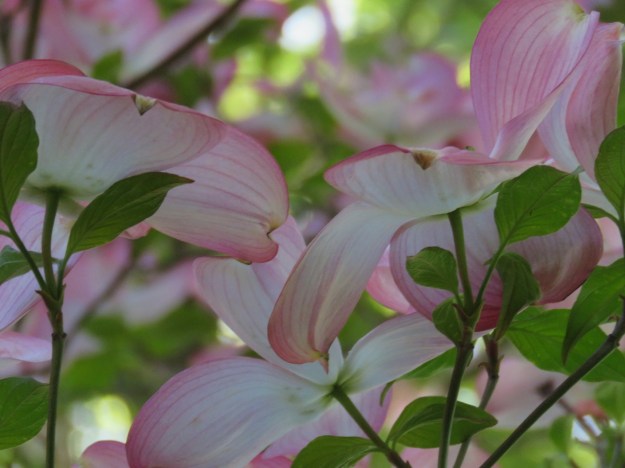
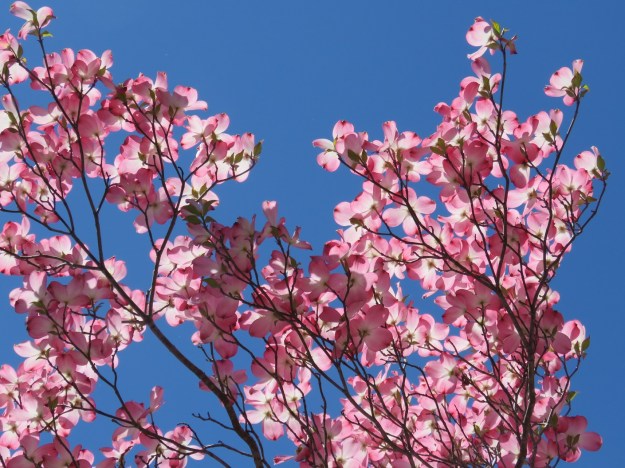
 The cornus or dogwoods were simply amazing in Canberra last week. I have never seen anything quite like them. They do not flower like that here. These trees were a mass of bloom and you could clearly get them in shades of sugar pink to apple blossom pink and or simple white. Viewed close up, they were like stylised paintings in their simplicity. Lovely bark, too.
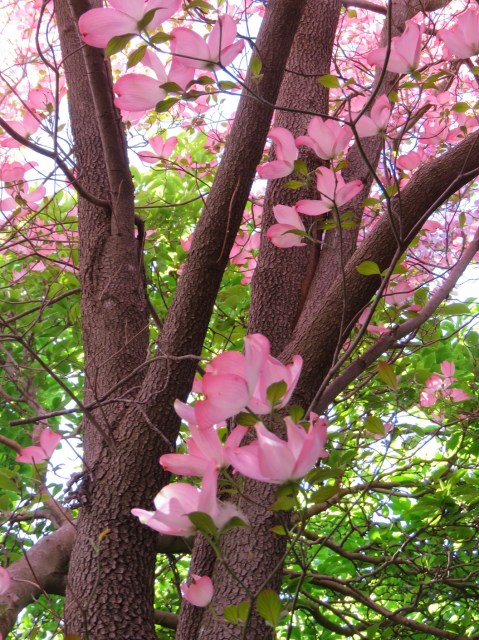 As far as I could make out, they were generally C. florida – or maybe some were hybrids in which case likely crossed with C. nuttallii in order to get bigger flowers. ‘Florida’ means full of flowers, not that it comes from the state of Florida. In fact, it hails from the more north eastern areas.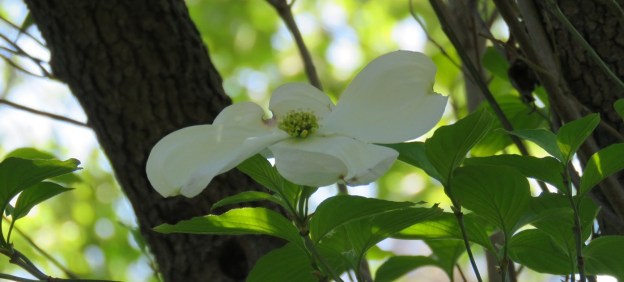
 The cornus or dogwood family is quite large. There seems some debate over how many species, but probably in excess of 50. If you take a swathe across the temperate northern hemisphere areas from China, Korea and Japan over to North America, you take in most of the areas of natural habitat.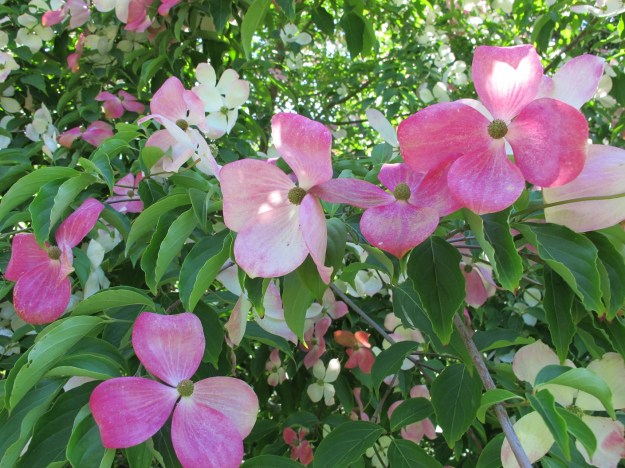

 I photographed this sign in Canberra but ringing in my ears were the cries I often hear in our local city of New Plymouth to fell trees where the roots are starting to lift the seal. It is a curious fact that as soon as this occurs, legions of people suddenly speak up for the welfare of the elderly who, in our local area at least, are allegedly incapable of coping with an uneven surface. Having travelled in Asia, Australia, Europe and the UK, I can assure you that a bit of lifting or cracking of seal is NOT seen as a reason for removing trees in those places.




 People can be so CARELESS about the environment. While in Melbourne, I went to the botanic gardens and clearly people feel it is appropriate to graffiti plants. Why would anybody think it is okay to carve names and messages into this beautiful silver agave? And in the stand of giant bamboo, I could not see any stems that had not been claimed by autographs and marks. It is a form of territory marking, like dogs, but this is not their territory to mark. I just don’t get it. I really don’t.
 Tikorangi The Jury Garden