Tulips from Floriade (as opposed to Amsterdam)

I have just returned from ten days across the Tasman. A mother’s tour of three state capitals, I describe it. Mark and I have three children all of whom are now living in different Australian cities. So to visit them involves a tour from Sydney to Canberra to Melbourne.

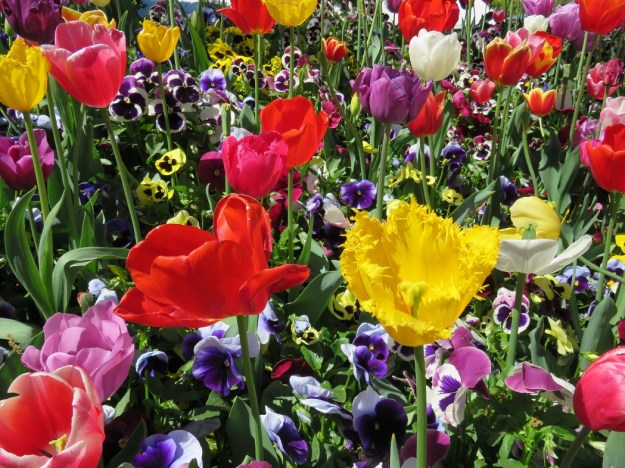
While in Canberra, Elder Daughter took me to the final day of Floriade. This is a major community and tourist event for the area with an emphasis on the tulip, backed up by annuals and the Dutch iris in support roles. It is a living flower show and is open for a whole month. The ever-handy internet tells me it involves the planting of more than a million bulbs and annuals across 8000 square metres. It is free entry which is pretty remarkable. There are a whole lot of ancillary activities – performances, cultural celebrations, traders, workshops and the like but beyond buying an icecream each, we took little notice of these.
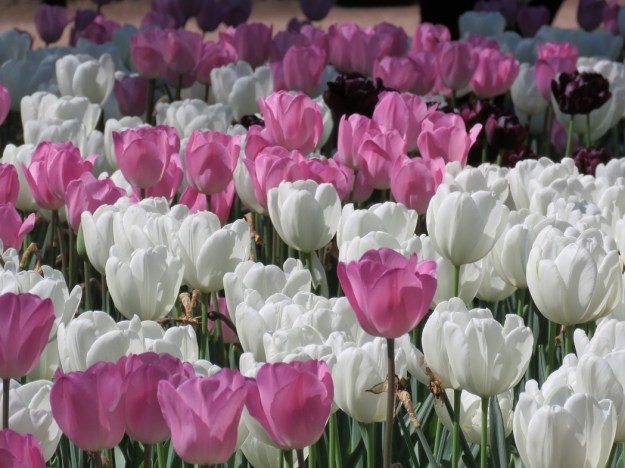
I admit I am not the world’s greatest fan of the tulip, let alone massed displays of them. They are just a little … stiff, maybe overbred for my personal taste. But I am quite happy to acknowledge that I am a minority in this opinion and that others have great fondness for the genus. Or at least for the OTT displays often created using massed bulbs of the genus. And it would take a churlish disposition to find fault with this very pretty pink and white display.

It didn’t take me long to work out that Floriade has nothing to do with gardening. It is high level, very competent horticulture. Keeping a display going for a full month requires good skills, especially given a climate which can move from a very cold winter with late frosts to temperatures that we would regard as high summer at home, all in the space of those thirty days. There are many reasons to visit, but gleaning inspiration for the home garden is not one.
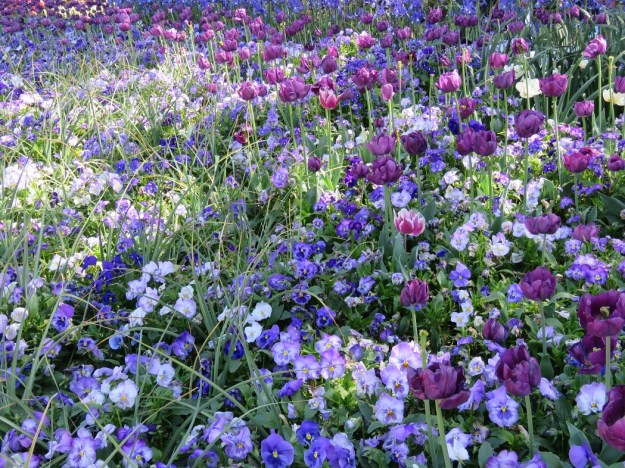
However, it is a great place to see colour theory in action – how hues of similar tones create a visual carpet of colour while certain combinations will make the colour pop. I was particularly taken by the blue bed and realised how much I respond to those shades.
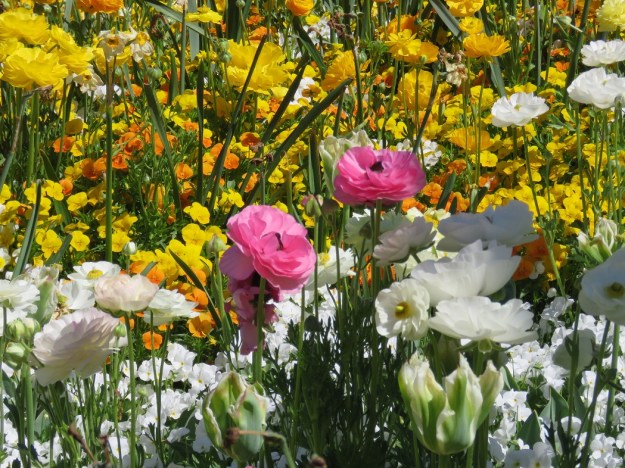
I liked the occasional incident of a colour rogue – a plant that is quite clearly the wrong colour. I liked even more that these rogues had not been rooted out for ‘spoiling’ the display. My late mother used to make large rugs by hand. She was not a perfectionist but would often say that any errors were following tradition – that perfection was seen as a challenge to either the gods or God, and that the traditional rug-makers always put at least one deliberate mistake into their work. I have no idea now whether this is true let alone which religion she was referencing – possibly Islam, given the geographic location of rug-makers? The rogue pink ranunculus made me smile and think of her.

I took this photo to try and convey the flat, anticlimactic nature of black (or very dark) flowers. Mark has always been offhand about black or indeed green flowers which he sees as novelty blooms sold on the strength of individual flowers when viewed close up, not on visual impact in the garden. And he is right. All these very, very dark flowers just looked lifeless and dull en masse. They are black pansies and dark to black tulips.

Elder Daughter is clearly our offspring. She was considering the disappointing waste of wrapping up the show when the beds are all stripped out and the bulbs and plants presumably become compost. She felt that if they could delay the exercise of reinstating this inner city parkland for a further six weeks or so, then they could sell tickets for $10 each and allow locals to come and dig up the bulbs to take home. She felt she would be photographing the bulbs she really liked so she could locate them when they were starting to go dormant. At least the flowers are all picked at the end of the show, to be delivered to hospitals and care homes around the area, I was told.

Again, I posted an album of additional Floriade photos to Facebook. For anyone who, like a Dutch friend of mine, still thinks tulips originated in the Netherlands, I wrote this piece earlier. Short version: they didn’t.
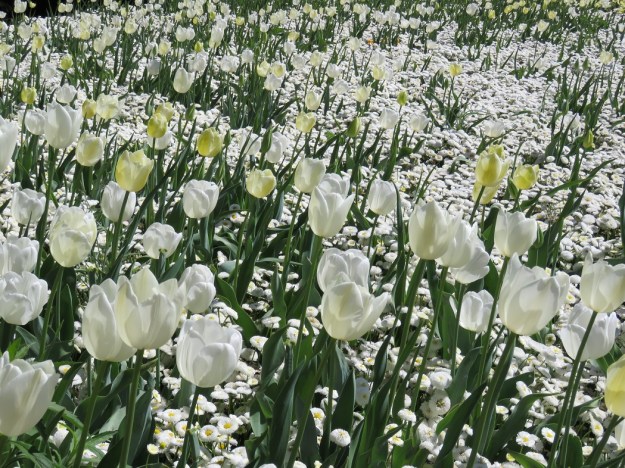
For the devotees of white
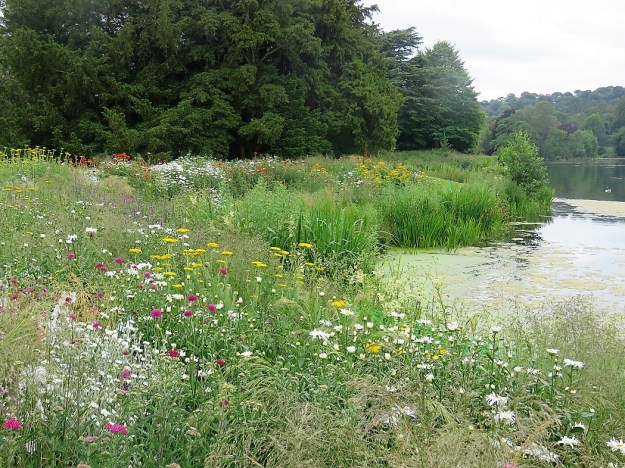
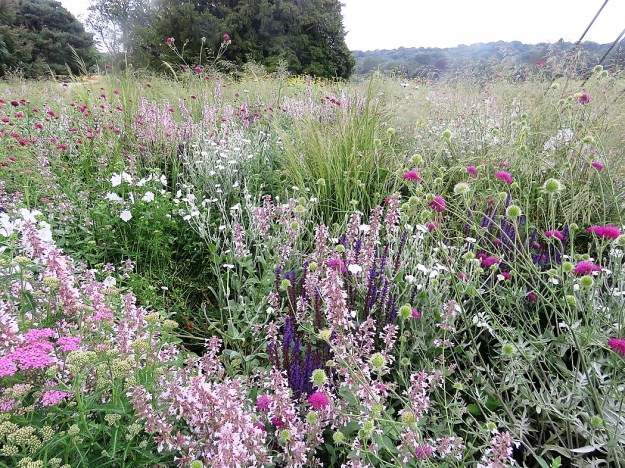
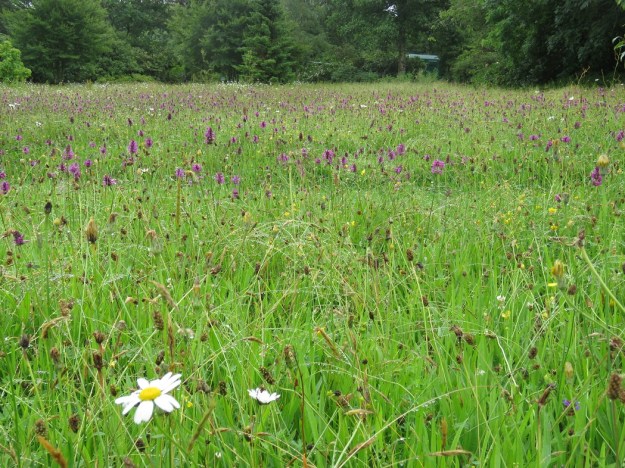
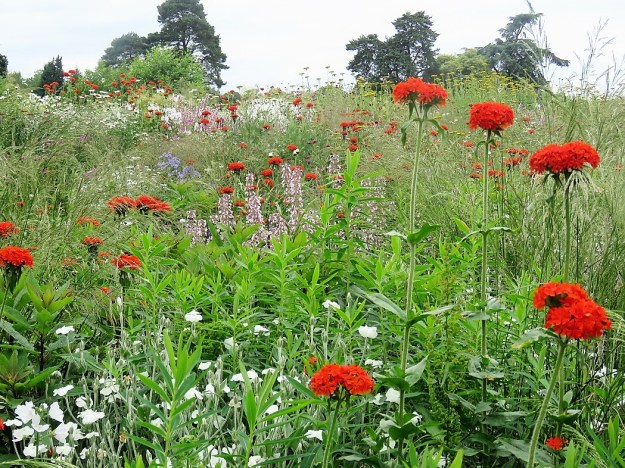
Meadow, meadow. Three meadow styles.

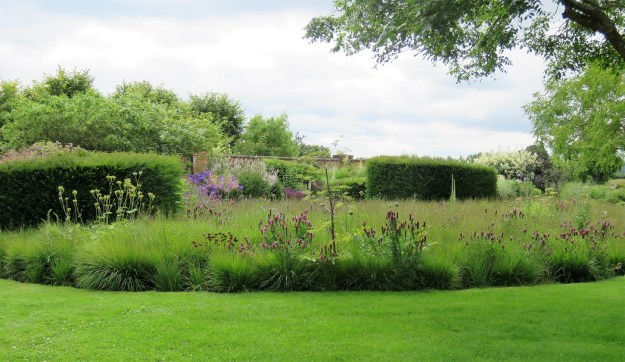
It was like an Impressionist painting but in real life – a pictorial meadow at Trentham

It is compulsory that every garden in Britain have a meadow. Well, not quite law, perhaps, but certainly lore. We have watched the rise and rise of the meadow on our trips over the past decade. The trend is also evident in many European and North American gardens though it is not a style we have embraced in New Zealand yet. For years, I thought it would not work in our fertile and lush growing conditions. It has taken several visits looking at northern gardens to better understand meadow gardening.

In this country, we do not appear to have progressed past the point where we see ‘meadows’ as dense sowings of annual flowers loosely described as ‘wildflowers’. That is plants like the red corn poppies, cornflowers and cosmos, though they are certainly not wildflowers of New Zealand. But there are different approaches to establishing a meadow.

A perennial meadow, the work of  Professor Nigel Dunnett at Trentham Gardens near Stoke on Trent

If you want to see flowery meads at their prettiest, type in ‘Pictorial Meadows’ on Google or Facebook and prepare to be blown away by the beauty. This is the commercial arm of the work that has been done though the landscape department of the University of Sheffield, spearheaded by Professors Nigel Dunnett and James Hitchmough. It is a whole subsection of the naturalistic gardening movement that is so dominant in Britain and elsewhere today, to the extent that it is now referred to as the ‘Sheffield School’. It has layers of complexity and sophistication that take it way beyond the scattering of a few random seed mixes, predicated instead on sustainable eco systems with a whole swag or research going into their seed selection.

We were delighted by the perennial meadows which were the work of Dunnett at Trentham Gardens near Stoke on Trent, just as we were entranced by the Hitchmough Missouri Meadow at Wisley in its early days. This is wildflower gardening taken to new heights altogether. Their annual meadows are glorious but it is the long term meadows that are environmentally significant. The maturing plantings around Olympic Park in London are an example of those.

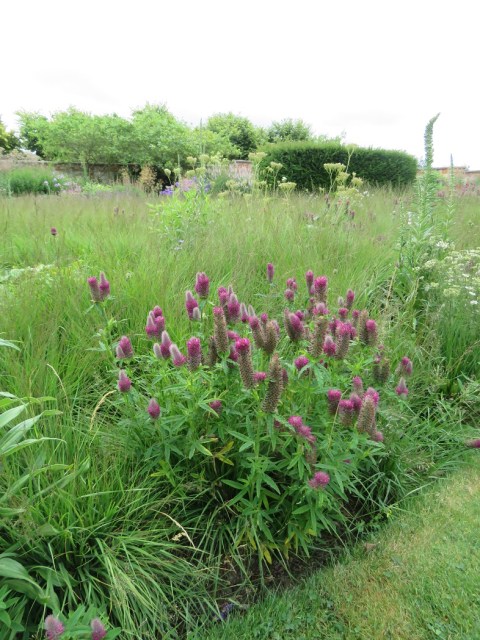
Molinia meadow at Bury Court with pink Trifolium incarnatum (Italian clover)

At the other end of the scale are tightly managed meadow gardens. The pre-eminent Dutch designer, Piet Oudolf does some these creations. Beautifully refined meadows of shimmering molinia grass with restrained use of flowering plants. Interestingly, the owner of one of these Oudolf meadows, John Coke of Bury Court, told me that it was the highest maintenance area of his garden, to keep it looking that good. There is a lesson in there somewhere but it looked charmingly simple.

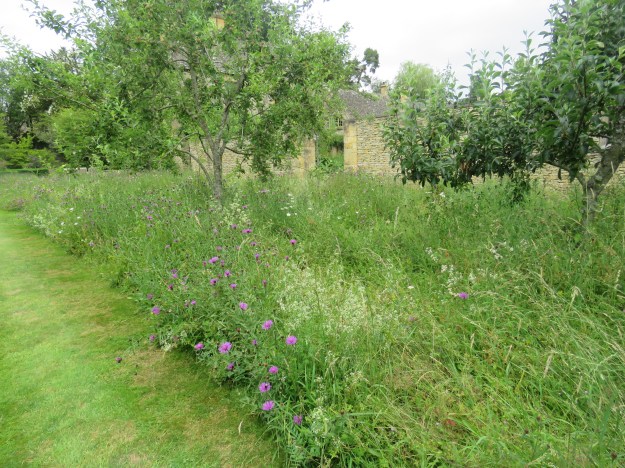
A natural orchard meadow in a private garden in the Cotswolds, designed by leading UK landscaper, Dan Pearson

Maximum brownie points are earned by those folk who encourage natural meadows in their garden. In other words, they stop regular mowing of the grass or cultivating the area and let plants naturalise.  The Royal Horticultural Society does this in large areas now. We particularly noted it at RHS Rosemoor but also in private gardens, often in an orchard area. Over time, there will be an increase in plant diversity in these meadows that evolve with minimal management. It is also the style of meadow that New Zealanders will find most problematic. For we are more likely to judge it as weedy, with rank, overgrown grass.

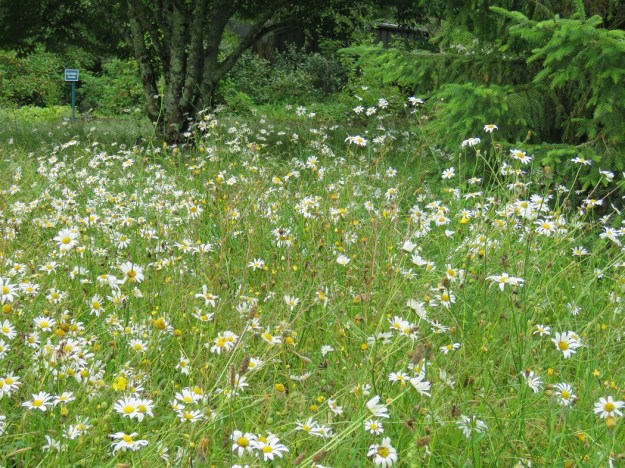
The problem is that the wildflowers in a natural meadow – be they daisies, dandelions, buttercup or clover in the initial stages – are deemed weeds here whereas they are genuine wild flowers in their home environments. We tend to apply different standards to long grass and wild areas than we apply to gardened areas and ‘proper lawn’, where imported plants are absolutely fine.

Natural meadows have been encouraged in areas which appeared to have been previously mown grass at Rosemoor

What all these meadows have in common is a concern with bio-diversity and ecologically friendly gardening, providing habitat for all manner of living organisms, insects and animals, while looking attractive at the same time. All these meadows are alive with insect life – buzzing with bees and attracting many butterflies along with a wide range of other insects.  The RHS has taken a lead in educating people on the environmental benefits of meadows. Generally, plants as close to their natural form as possible are used (so species rather than overbred hybrids).

A meadow garden is simulating the wild but modifying it to a garden setting. It has some history in English gardening and was espoused by the late Christopher Lloyd at Great Dixter. Fertility is kept low to reduce competition from overly vigorous grasses and it is usual to incorporate yellow rattle, a parasitic plant that weakens the roots of grasses. In autumn, the meadow is mown and left to lie for about ten days, allowing the seed to fall. The area is then raked to keep fertility low and left to come again in spring. There is minimal cultivation, no spraying and extremely low intervention.

Our meadow at home is progressing. In autumn, the long grass was cut with our sickle-bar mower and we had some debate about whether we could just leave the long grass in situ. But there was so much that it resembled hay and, in the end, we raked most of it up once it had dried. It may take effort at the time, but not mowing the area every few weeks certainly reduces the carbon footprint and allows greater diversity in that environment. And we love the look.

Postscript:

This is the article that led to my resignation from The New Zealand Gardener magazine – irreconcilable differences when it came to photo selection. The article will not, therefore, be published in the November issue. 

Trentham Gardens again

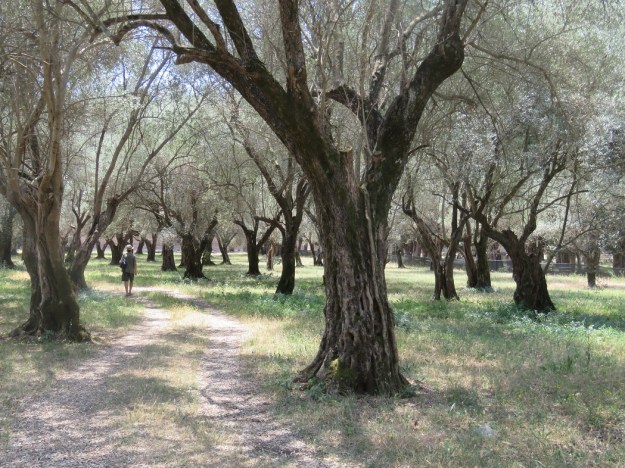
The unexpected romance of an olive grove

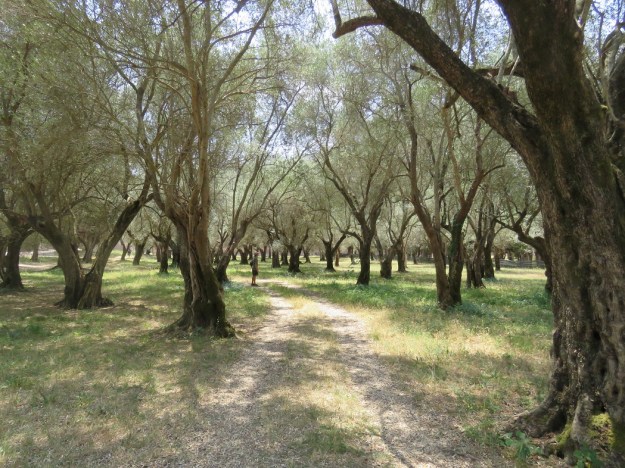
Stand back. For I have found the most impossibly romantic olive grove. It is at Villa Adriana near Tivoli, which is relatively close to Rome. Adriana is the expanse of ruins that are somewhat quaintly described as Hadrian’s Villa. At about a square kilometre in area, it would be a mistake to think of it as Hadrian’s country retreat. It is more akin to an estate that was likely on the scale of a town. It is an enormous site where there is still much archaeological excavation to take place. On the day we visited, the temperature was in the mid thirties, the place was nearly deserted and there was not a breath of wind.
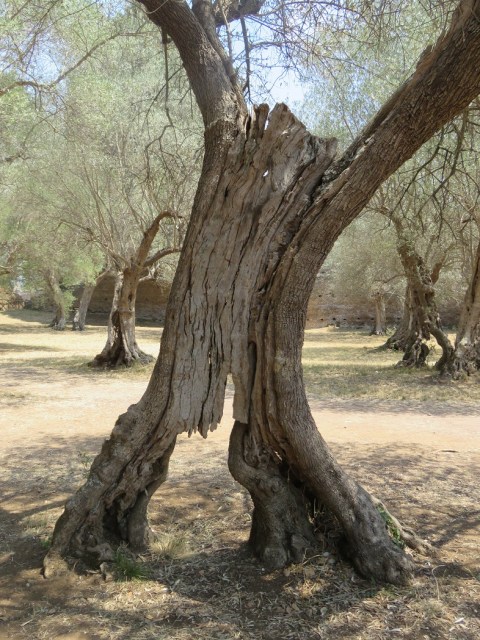
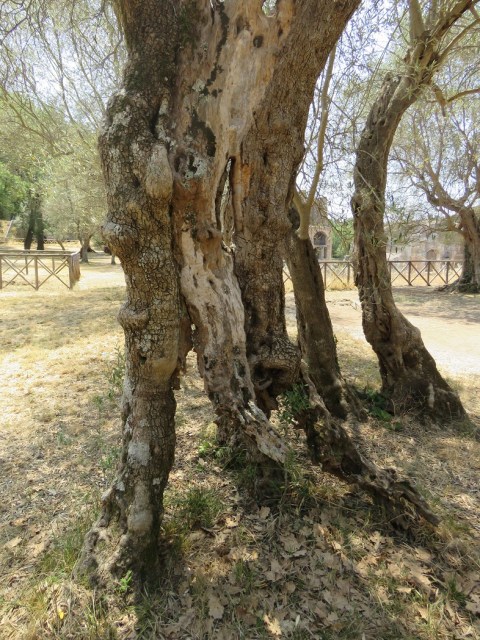
Unless you are a scholar, there are only so many ancient Roman ruins that enthral and only so many times one can ooh and aah over the wildflowers growing amongst the tumbled stones before shade and a cool beer start calling. But then we came across the olive grove.

I use olive oil; I eat olives; I can even enjoy dipping a tasty bread finger into a bowl of high quality, single origin fresh olive oil. But I have not been convinced about the romance of the olive grove before. The vast olive plantations of Spain I had seen were industrial production.

I was once told by somebody overstepping all personal boundaries that I lacked any romance in my soul. This was because I had described the mass vineyards of sauvignon blanc in Marlborough as being industrial horticulture. When my critic looked at them, I am pretty sure he saw the quaint little family vineyards of Italy whereas I saw hectares of tanalised timber and corporate investment. That searing dismissal of my finer feelings came back to mind as Mark and I wandered the Adriana olive grove. I just wanted to photograph every tree. Here was romance and antiquity in its original form.

I have no idea if it is still managed as a commercial operation but the lack of olive stones beneath would suggest that the crop is gathered. These were venerable trees clinging tenaciously to life down the centuries. I did a quick net search and found that at least some of the Adriana trees have been given monumental status.
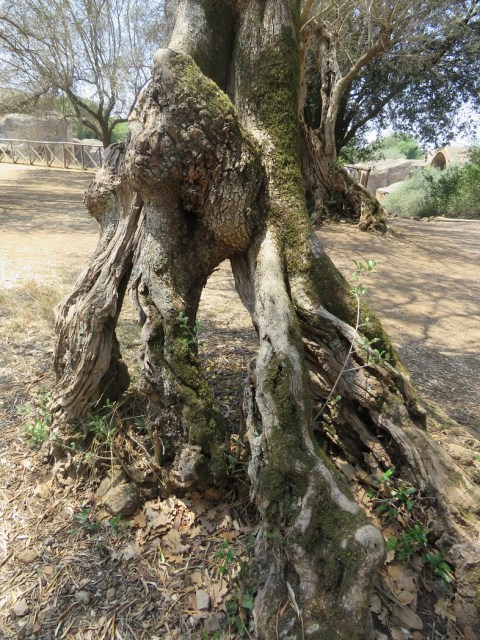
“A monumental olive trees has an aesthetic destination, since production efficiency is undermined due to the elevated costs to maintain them. Often, producers will use these secular trees as emblems of an olive oil produced from younger plants of the same variety. “These plants are icons of a territory, a heritage, a tradition, a culture,”

As I read that quote, I think it must have been translated from Italian but it captures the flavour. It continues:

“An interesting fact about dating monumental olive trees is the difficulty in calculating the age because the inner part of the origin area tends to disappear due to diseases over the centuries. The wood keeps growing laterally but is internally hollow, often making it impossible to calculate the exact age, leaving scientists to estimate using available data.”

From the Olive Oil Times

The age of some of these Adriana olives has, apparently, been calculated at around 660 years. So they don’t date back to Hadrian, just to the fourteenth century. And the hollow centres are a typical feature.

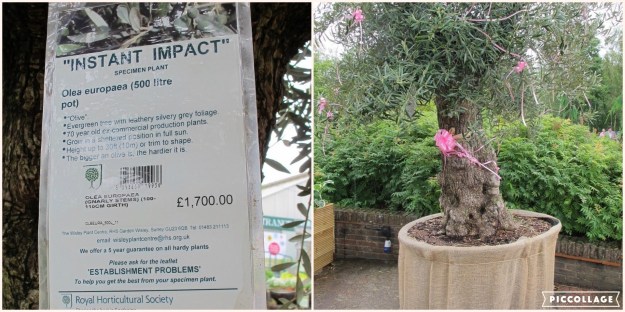
Seen in 2014 at RHS Wisley

At least the monumental status may protect these trees from the ignominy of being dug up and shipped over to Britain for sale with a huge price tag. Instant maturity for English gardeners wanting to pretend that they are living in Italy at £1700 for a relatively young plant of a mere 70 years.

Lacking the rose tinted glasses of the former colleague who thought the vineyards of Marlborough were “romantic”, it is going to take a lot to convince me that the recent olive plantations of New Zealand are anything but utility until those trees are nearing a century of age at least.

But where are the panda bears?

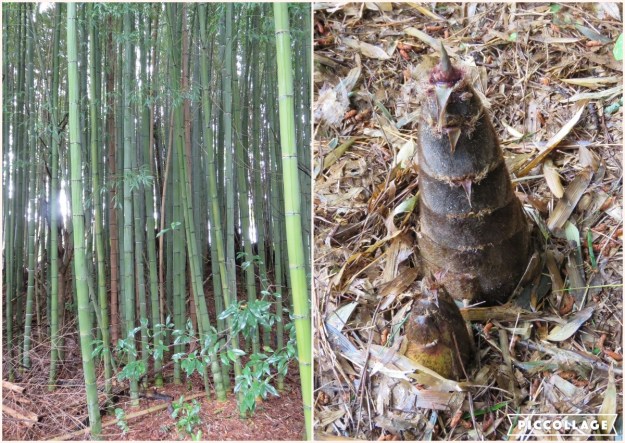
Our stands of giant bamboo are a never-ending source of disappointment to us. That is because they are enduring proof that the cargo cult does not work. The cargo cult is that school of thought that says “build it and they will come”. We often see it espoused in this tourist backwater where we live. Build a café/gondola/light rail/cruise ship terminal/tourist hub (strike out any which do not apply) and visitors will arrive. Well no panda bears have arrived here, is all I can say. I even checked that they eat Phyllostachys edulis – it is not their favourite bamboo but they will eat it.
We have one stand of giant bamboo confined on a small island in the stream where it cannot leap for freedom. The other is on a boundary and each spring we have to dig out the new shoots which pop up across the boundary fence. They grow extremely rapidly and would colonise the neighbour’s paddock if left to their own devices. This is Phyllostachys edulis and the second word is a clue – it is edible for humans as well as panda bears. There are many edible bamboo varieties – 110 out of 1575 known species. Apparently.

I tried blanching and freezing a few shoots last spring time and they stored well. Bamboo shoots are not exactly full of rich flavours and are more of a subtle and textural addition to stir-fries. My home prepared version is easily equal to tinned bamboo shoots, maybe superior because I keep them slightly crisper. This spring I am preparing more because I can see they would be a pleasant addition to salads and platters as well.

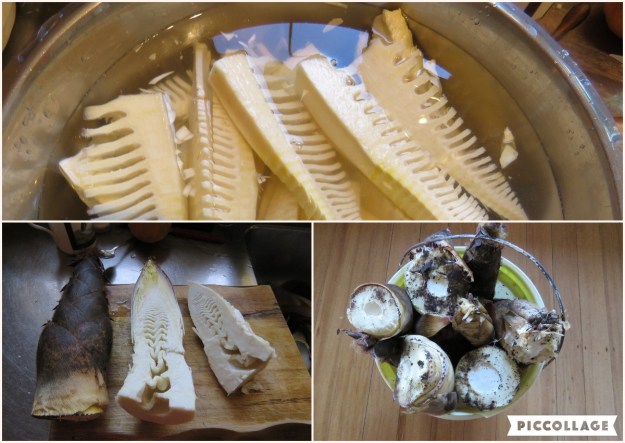
Top photo – prepared shoots waiting to be blanched. Bottom right, a bucket load of fresh shoots only yielded enough for 14 meals. Bottom left – the shoot is sliced lengthwise and then peeled.

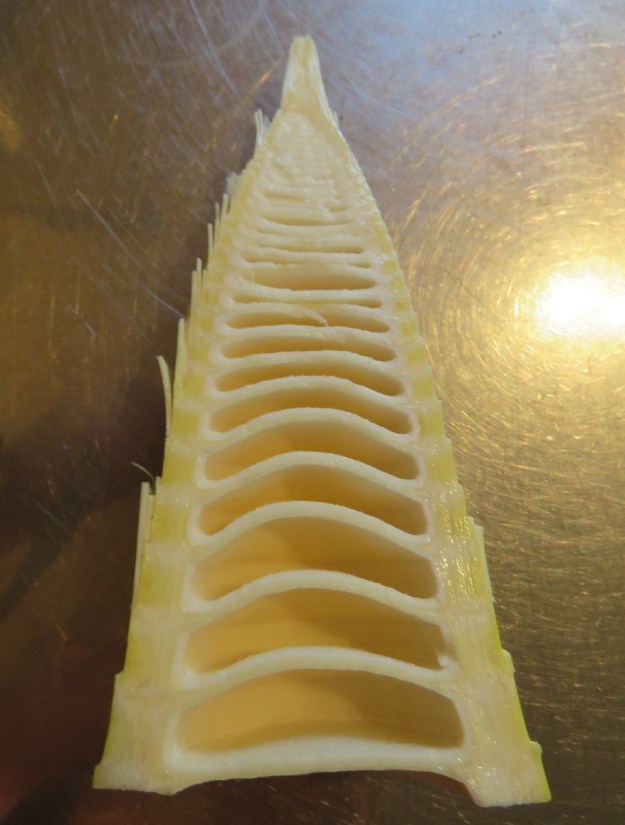
Mark brought in bucket of young shoots and it yielded 14 packages for freezing – each being more or less equivalent to a standard sized can. They are easy to prepare. I slice vertically and then peel off the outer layers until just the lattice centre remains. At this stage, as Mark said, they rather resemble a pagoda in form. I slice them into centimetre thick lengths.

The pagoda look of a fresh bamboo shoot

I checked the internet for recipes. Bamboo shoots can be bitter and are not palatable fresh and raw. But I covered them with cold water and added a tablespoon of sugar, bringing them to the boil and simmering them for about eight minutes. I then discarded that water and covered them with fresh, cold water and a couple of teaspoons of salt. They were then brought back to the boil for another couple of minutes, then cooled and packed in meal-sized quantities, adding a little of the cooking brine. They are in the freezer. That is all it took. The bamboo season is but brief and we are eating freshly freshly blanched baby shoots this evening with dinner.

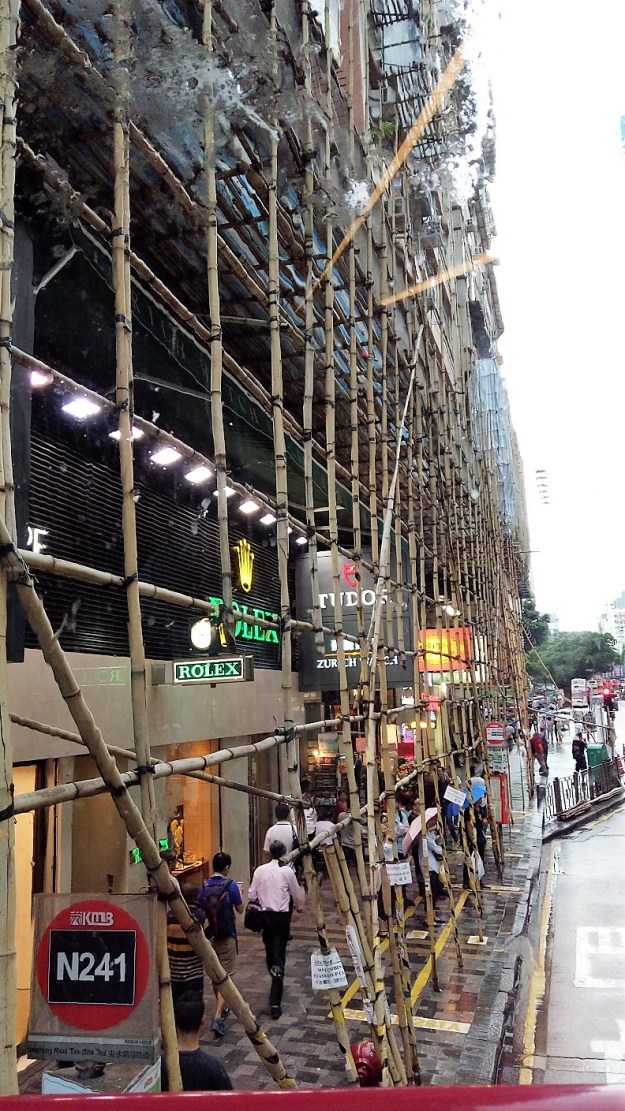
Bamboo scaffolding on a Hong Kong street

Each time we transit Hong Kong, we pause in awe to admire the bamboo scaffolding that often encases high rise buildings. It seems unlikely that Health and Safety inspectors in the western world would ever accept the use of bamboo scaffolding but it has a proven track record and would be a great deal lighter and easy to assemble and move than the heavy pipe scaffolding used in this country.

New Wave Hedging

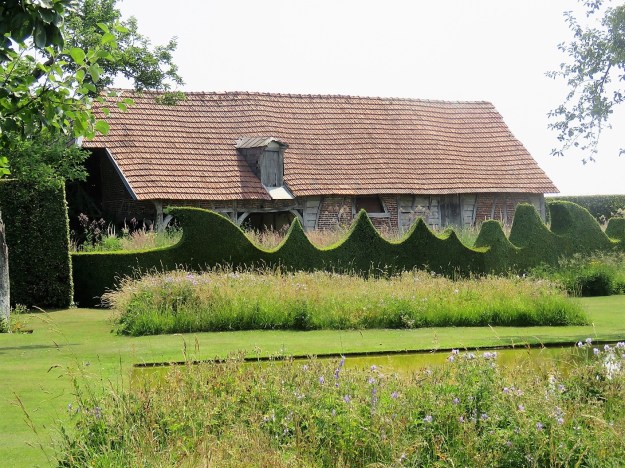
Le Jardin Plume – a modern garden near Rouen in Normandy

Green walls. Or hedges as they are usually called. We were amazed at the tightly clipped, breaking wave hedges at Le Jardin Plume in France, having never seen anything quite like it. They contain the feather garden for which the entire property is named and as such, perform both a practical and aesthetic function. On that practical level, they shelter the very large perennials which could otherwise be beaten down by summer thunderstorms and, presumably, winds sweeping across the flat landscape. And the tight clipping and distinctive form are a complete contrast to the dynamic waves of grasses and tall, slender perennials.

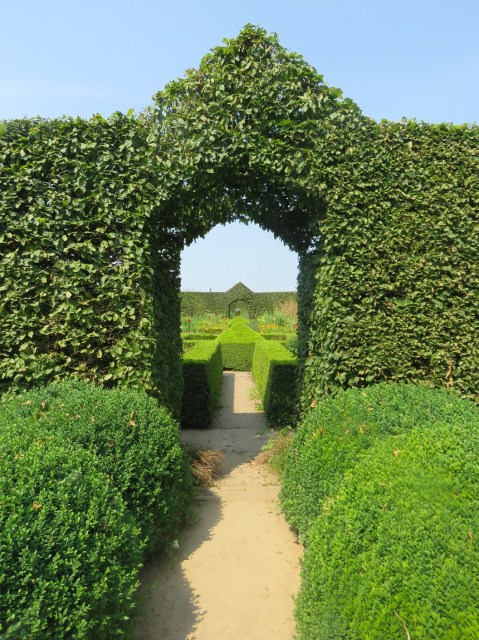
In the same garden the green walls in le jardin d’ été (the summer garden) are less unusual but still performing the dual function of both restraining and protecting extravagantly loose plantings while providing a sharp contrast in style. The hedges are the structure and form within the garden.
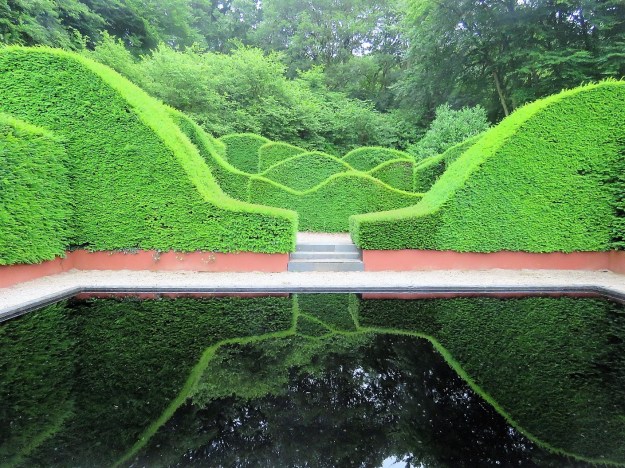
Veddw – a garden in Monmouthshire in the Welsh borderlands

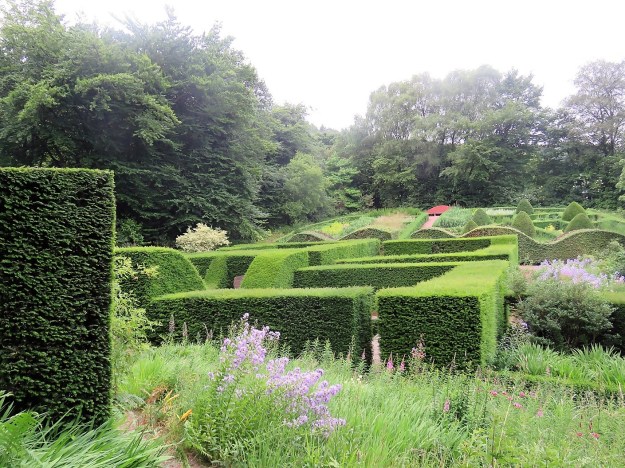
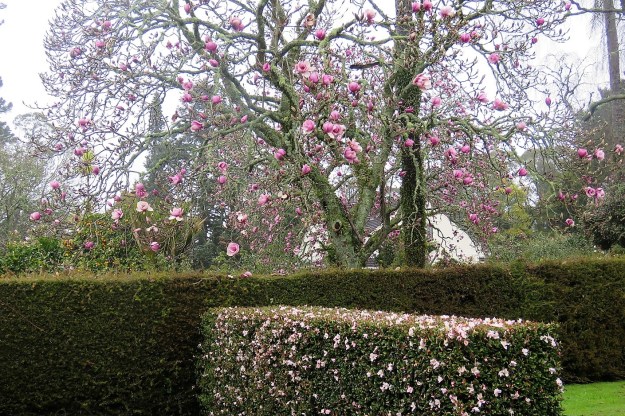
We visited another heavily hedged garden in this northern summer just passed. Veddw is in the Welsh borderlands and the owners have used hedging throughout to create the form and structure they were after. In one of the hedged enclosures, they have done a gentler take on rounded shapes,  evocative of their wider landscape of rolling hills. It is a sculptural approach where the interest lies in the shapes and reflections in the black pool, not in the plants themselves.

Veddw again. A garden defined by hedges

Most of these northern hedges are buxus, yew or beech. In New Zealand, we are generally less favourable towards beech because it is deciduous. Yew is deadly poisonous to stock and also does far better in drier climate than our high rainfall and humidity of Taranaki which tends to kill it off with root disease. Which leaves buxus, now much afflicted by the dreaded blight in many gardens.

Tikorangi – the view in September of a Fairy Blush hedge and the historic totara hedge

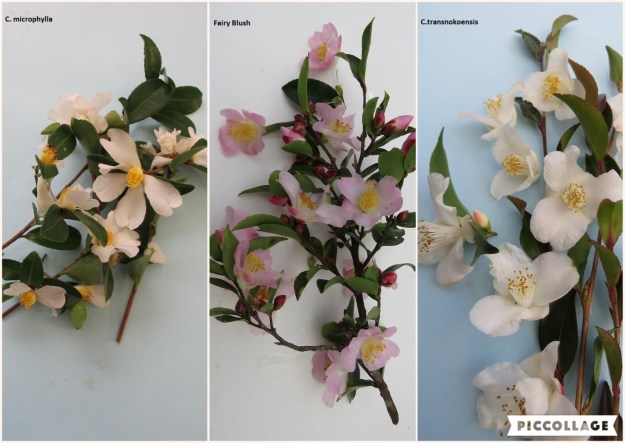
Our personal preference is for flowering hedges. Indeed, we pulled out a well-established and perfectly healthy buxus hedge to replace it with Camellia transnokoensis. It is all to do with winter blooming – the single camellia flowers provide pollen and nectar at a time when there are few other sources of this food. Our favourite camellia for clipped hedging is ‘Fairy Blush’, partly because it is our cultivar and the first camellia Mark ever named. It is also scented with the longest flowering time of any camellia we grow, coming out with the sasanquas in autumn and flowering right through to spring.

The aforementioned C. transnokoensis has a shorter flowering season but attractive dark foliage and small, pure white blooms. The third camellia we have made extensive use of for hedging is C. microphylla, even though it flowers earlier in autumn – pure white flowers again and small leaves that clip well. Both these two species set seed. If you can find them growing, you may well find seedlings germinated around their base. Or check for seed in autumn if you are a patient gardener who is willing to put a bit of effort into a free hedge.

All our hedges are flat topped affairs, lacking the panache of both Le Jardin Plume and Veddw but I am eyeing up a somewhat redundant length of buxus hedging and wondering about reshaping it to an undulating caterpillar.


I have been told that New Zealand features more hedges per average garden than most other countries. This may be to do with our being a windy country. Equally, it may be that plants are relatively cheap here and require less capital outlay than building a wall in more permanent materials. However, what may have started from pragmatic origins is a far more environmentally friendly option these days. My advice is to pick a hedging option that will only require clipping once or twice a year and if you are going to be adventurous with the plant selection, do some research first. Hedges need to be from plants that will grow back from bare wood and some less common selections like miro (instead of yew) and Magnolia laevifolia (formerly Michelia yunnanensis) can take a fair number of years before they achieve the dense appearance of a hedge.

We are pretty proud of our remaining length of totara hedge, planted around the turn of last century by Mark’s grandfather or great grandfather and kept clipped for nigh on 120 years.

First published in the September issue of NZ Gardener – my penultimate or maybe final column for this magazine.