
I am somewhat late in posting this first of a new series – month by month in the garden here, as printed in the June issue of NZ Gardener. This issue heralded some innovative changes in content for this magazine. If you haven’t looked at a copy recently, you may like to pick up a new issue.
 There is nothing like the advent of the winter months to remind us that our climate is pretty good. Where we garden, on the coastal strip of Taranaki, we share the same disturbed westerly air pattern that moderates the climate of much of the west of New Zealand. It means we don’t get particularly cold and occasional frosts are generally light. We don’t put our gardens to bed for winter and retreat indoors. In fact we have colour and bloom all twelve months of the year and June is one of our busy months for planting trees, shrubs and perennials.
Not much shouts mild climate more than bromeliads and luculia flowering as winter sets in. True, we place our tender material with a bit of shelter from trees and these are only options for coastal gardens this far south, but bromeliads in bloom are a special touch of exotica when you have to start wearing extra clothing layers. Just don’t be like the cantankerous garden visitor who sniffed, “Oh I hate bromeliads, they looks so artificial.” “Well you won’t like this bit of the garden,” I replied and left her to it.
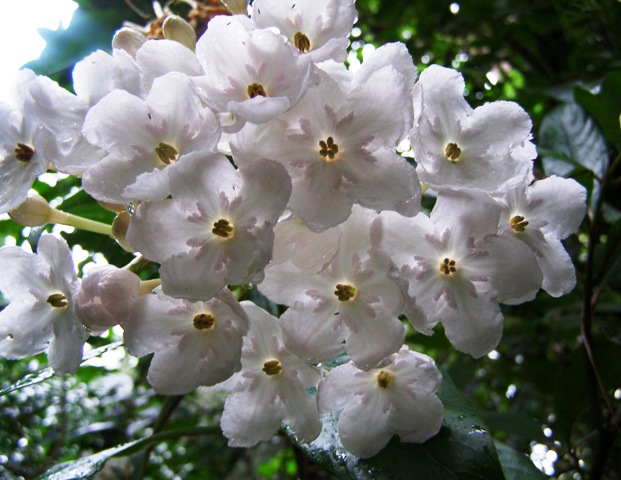
Luculia Fragrant Pearl
I love luculias, though not so much the form most readily available, Luculia gratissima ‘Early Dawn’. I find the candy pink a little harsh and it is not as fragrant as the L. pinceana forms. ‘Fragrant Cloud’ has huge heads and wonderful scent with subtler almond pink and white colouring. ‘Fragrant Pearl’ is a white pinceana selection we released but it appears to have dropped off the market now which is a pity because it is very good, with large blooms, strong perfume and a long flowering season. If you have a home propagation set-up, ideally with a bit of mist, luculias are not difficult to root from cutting. We used to try and get the cuttings in around Christmas but you can probably do it any time the fresh season’s growth has hardened sufficiently.
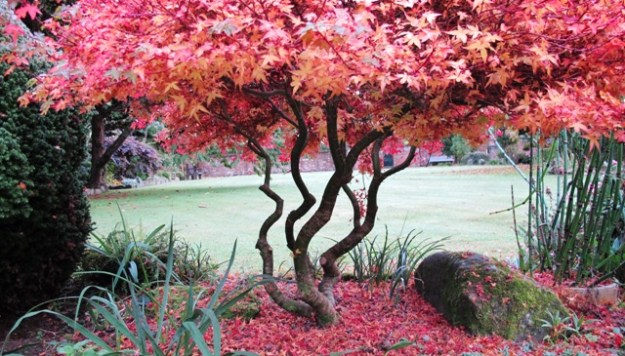
The trade-off for our milder winters is that we don’t get the sharp change in temperature that is an important trigger for glorious autumn colour. Plants that colour up well in colder, inland areas often just turn brown and drop their leaves here so we have to celebrate those that do give us small pictures of autumn glory. The Japanese maples are reliable and hang on to their blaze of colour well into winter. We will prune and shape our dwarf specimens (often sold as ‘patio maples’) once their leaves drop.
The autumn flowering sasanqua camellias are passing over but many of the species are in bloom and the early japonicas and hybrids are starting. Every year I fall in love with these early season blooms all over again. The love wanes somewhat when petal blight strikes, but the pristine purity of the first flowers is special.
June is one of the quieter months for bulbs. Nerine bowdenii is the last of that family to flower for us and takes us well into winter while Cyclamen coum forms carpets beneath larger shrubs. Mind you, it takes many years to get enough to form carpets and they won’t seed down if you garden with weed killer. July is the big month for the start of winter and early spring bulbs.
 We are off to England to look at summer gardens this month. There is much to learn from their skills with summer flowering perennials and we particularly want to look more closely at what is now called the New Perennials Movement (which might be styled ‘meadow gardening and grasses meet traditional herbaceous drifts’). We have to squash any such trips in before the glory of the magnolia season starts here next month.
First published in the June issue of New Zealand Gardener and reprinted here with their permission.


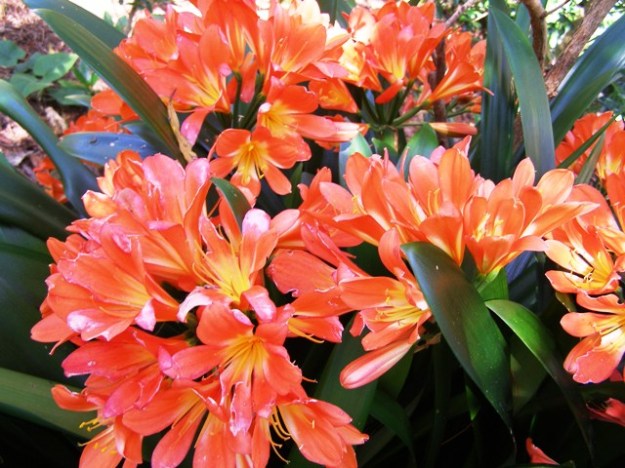 1) Clivias are wonderfully adaptable plants for mild climates. Their ability to thrive in hard conditions, even in relatively deep shade and with a regime of near total neglect makes them an obliging garden plant, once they are established. They don’t like frost but woodland conditions will protect them. The reason they are seen as expensive and choice is because they take years to reach a saleable grade, not that they are difficult. However, given time, clumps can get very large and yield many divisions for replanting.
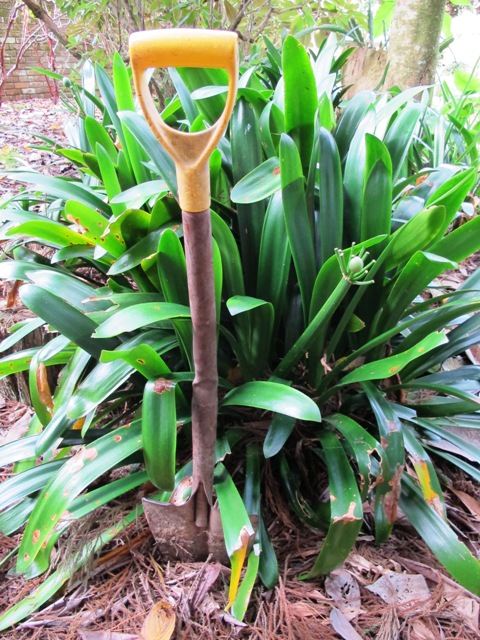 2) It doesn’t seem to matter when you divide them, though it would probably pay to avoid dry mid-summer. Like most perennials, they respond well to lifting, dividing and being replanted in ground which has been freshly dug over. The clumps can be large and heavy but this one was small enough to get out as one. Get as much of the root system with it as you can.
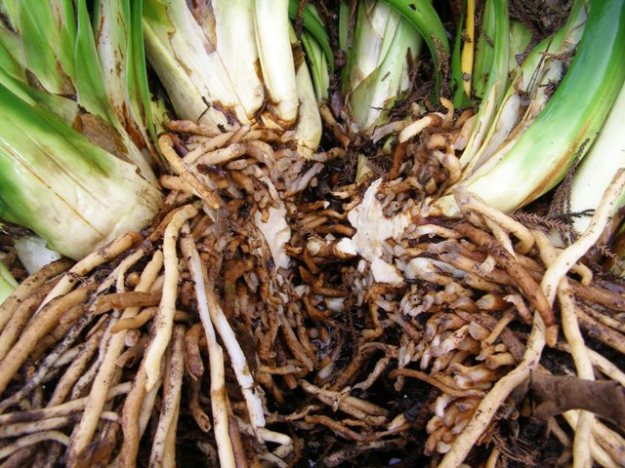 3) I hosed the clump so it was easier to see and to show what the base looks like, but this is not necessary. The fleshy base is easily cut with a garden knife or a spade. It is easier to control what you are doing with a knife and to make sure that each division has roots attached. If you try and pull them apart by hand, you are more likely to end up with a tuft of leaves and no base.
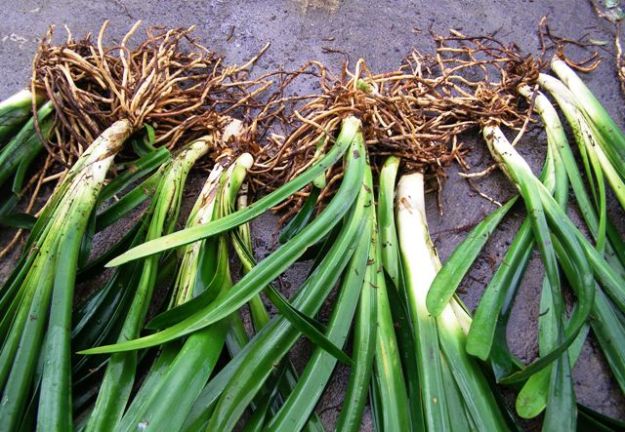 4) It pays to reduce the volume of foliage – this reduces stress on the plant which has undergone considerable disturbance and root damage. I took off about half the leaves where the root systems looked small.
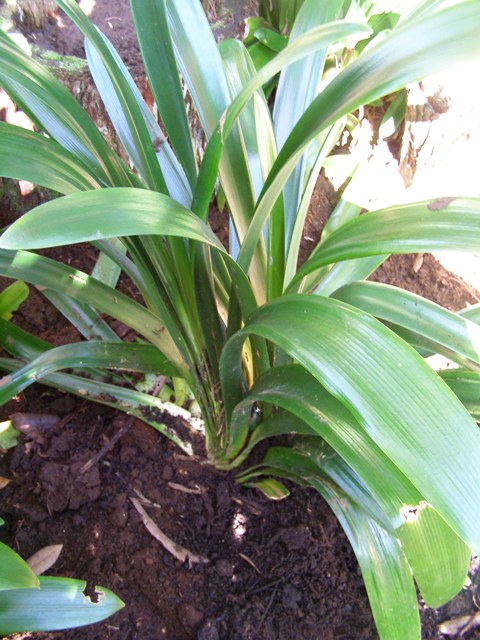 5) I dug over the area where the clump had been growing before replanting, incorporating the leaf litter that was lying around. Fertilise lightly if you wish and spread compost to enrich the soil and act as mulch.
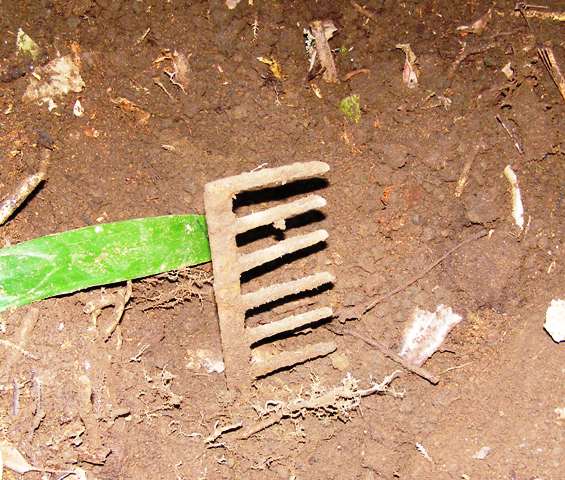 6) In digging over, I found the missing rake head from many years ago when the area was first planted. It is a bit like trowels and secateurs in the compost heap but they usually reappear within the year (albeit in just as poor condition).
