Tag Archives: Abbie Jury

Disentangling citrus

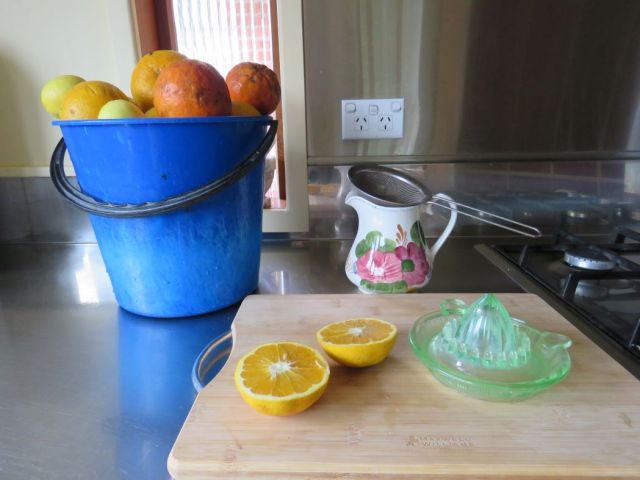
Citrus fruit have been much on my mind in this week of winter rain. That is because I have been setting myself a target of gathering a bucket of fallen fruit a day to squeeze for juice. I freeze the juice and mostly use it to make fresh jelly. I never left my childhood love of jelly behind, although these days I only make it from scratch with fresh juice and a bare minimum of sugar.

Too many windfalls on the heavily cropping Jaffa orange

We have about 25 citrus trees, many of which date back to the 1940s and 50s when Mark’s parents decided to try them in the garden as plants that are ornamental as well productive. Not for the first time, I wondered to myself whether the standard medical advice to avoid grapefruit if you are taking certain medications applied in NZ where the plants we grow as grapefruit are not actually grapefruit at all. That sent me down a very complicated path, trying to understand the citrus family.
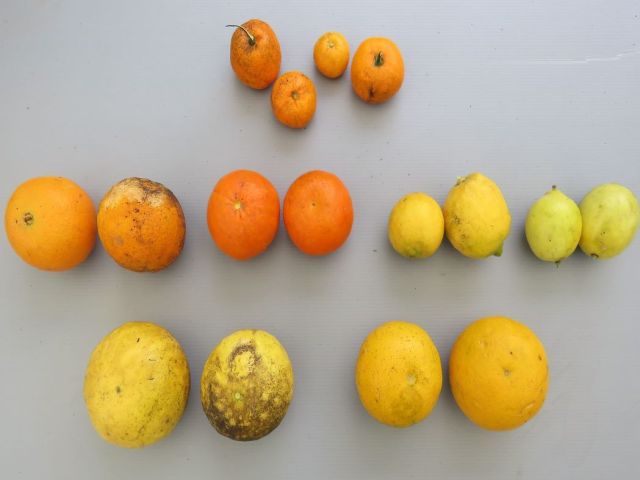
Mandarins at the top, sweet oranges, tangerine or tangelo, lemons and limes in the middle, Wheeny grapefruit and Poorman’s orange or NZ grapefruit at the bottom

When I say a very complicated path, there doesn’t even seem to be common agreement on how many citrus species there are, let alone some very loose usage of the word species. Add in groups and related plants along with new terms to describe crosses between two species which are then given their own name and shown in species format – with or without an x in front showing it is a hybrid – and it is very confusing.
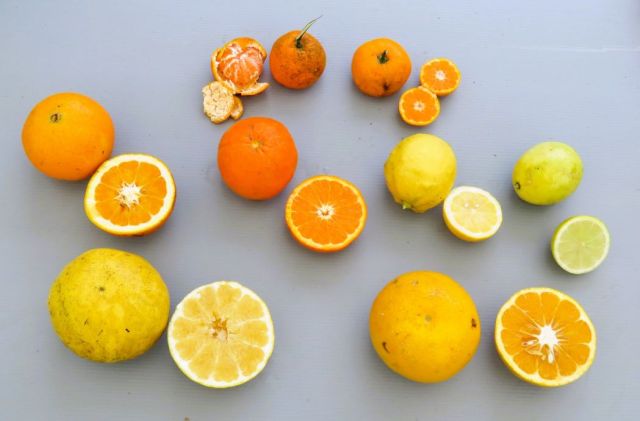
And the cut version (I will squeeze these for juice now)

Then there is the long – very long – history of distribution around the world and the evolution of unique citrus species even in New Guinea and Australia (yes, Australia has native citrus). While they originated in central and south eastern Asia, it seems that archaeological discoveries of seeds on Cyprus date its arrival to the Middle East and southern Europe back as far as 1200BC – or 1200BCE as now seems to be accepted usage – but it took another couple of thousand years before the more desirable forms reached that part of the world. The scale of time is as difficult to comprehend as the taxonomy is complicated.

Mandarins but named cultivars. Easy peel to the left, not so easy peel but possibly more delicious to the right

Pared down to bare essentials, it seems that most of our modern citrus in commercial production come from just three species in the wild: the pomelo (syn pummelo or shaddock, botanically Citrus maxima), the mandarin (Citrus reticulata) and the citron (Citrus medica).
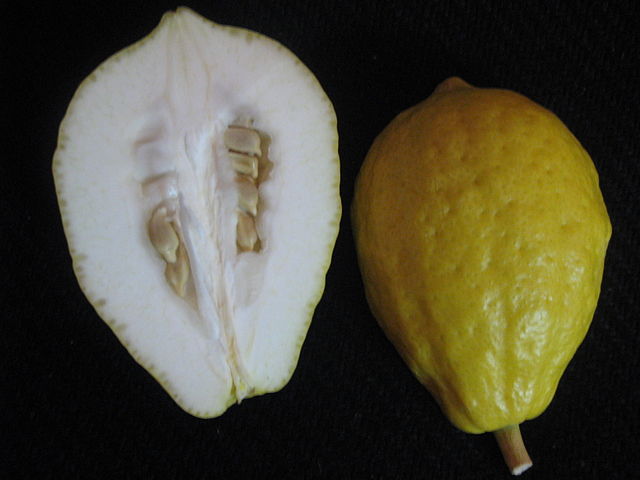
Citron, courtesy of Wiki Commons. Mostly pith with little flesh.

The outliers in relatively common usage are the kumquat which is C. japonica, the kaffir or makrut lime which is C. hystrix and the fashionable Yuzu lemon which is not a lemon but has very obscure species in its parentage, possibly with sour mandarin.

Pomelo photo from Wiki Commons

When it comes to the mainstream citrus, we don’t have a citron here although if we were growing the curious ‘Buddha’s hand’, I could have picked that because it is one example. Nor do we have a pomelo. They are very large, by citrus standards, and paler in colour. I looked in town this week to see if I could find a pomelo to add to my board but there were none for sale at this time of year – a niche item, I suspect. Mandarins we have a-plenty although these are selected and named cultivars and the ones in the wild may well have looked different.
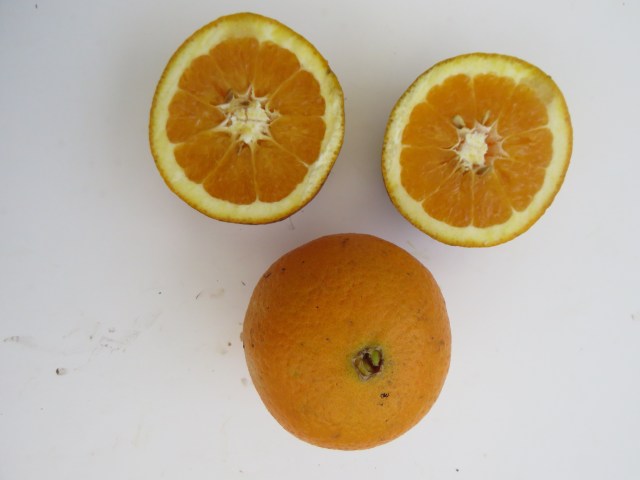
Sweet oranges, Jaffa at the top and a navel orange below

Oranges we also have in abundance here and no matter whether they are sweet table oranges or bitter marmalade oranges (Seville), they are a hybrid between pomelo and mandarin.

I remembered tangerines from my childhood and wondered what happened to them because it is many years since I have seen them. They are easy-peel and sweeter than an orange, originating from Tangiers in Morocco. It seems they are largely mandarin (C. reticulata) with a touch of pomelo.
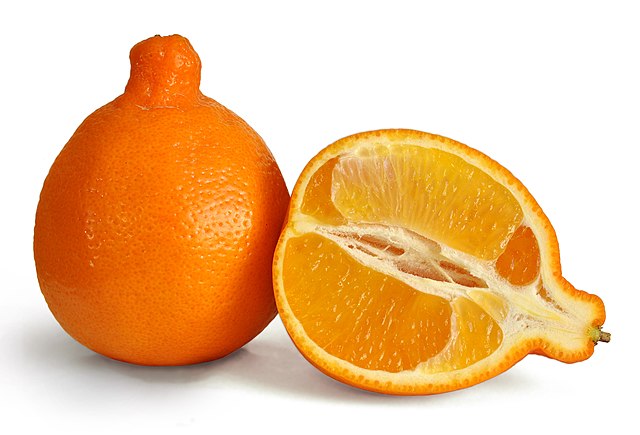
Tangelo, photo from Wiki Commons, showing the characteristic nipple at the top

I see the newer tangelo originated in Barbados which is why it is often called the Jamaican tangelo, originally marketed as Ugli fruit. I vaguely remember when the tangelo became available and I think it was regarded as an improvement. In fact, it is a tangerine (so mostly mandarin) crossed with a pomelo which would then result in a majority of pomelo genes – hence the ‘tangelo’ name. This will be why it is not as sweet.

What we have as a tangelo but I am now wondering if our trees are tangerines instead

It was also a revelation for me to read the botanic descriptions and see the photos because I am now pretty damn sure that the two trees we have as tangelos are in fact tangerines. Mark thinks they were almost certainly sold under the tangelo name which makes me wonder whether New Zealanders are largely growing tangerines, not tangelos.

We have forgotten the proper name but it is a proper lemon, probably Lisbon or Yen Ben

Lemons get complicated. They are thought to have originated from a citron crossing with a bitter orange (so originally mandarin but already splitting into sub groups). In NZ, the Lisbon lemon (first found in Australia from seed imported from Portugal – hence Lisbon) and Yen Ben, which is a Lisbon lemon selection, are the main commercial varieties of true lemon that are grown.

And then there is the Meyer lemon which is probably the main home garden variety and is not a true lemon. It is less acidic and hardier, making it more successful in our cooler climate which is extremely marginal for the more tropical citrus. Again, it is a citron crossed with a mandarin/pomelo hybrid but not the bitter orange version, rather one with more mandarin genes than pomelo. Meyer is known for the fact that it doesn’t give the same pectin content for setting jams but for general culinary use, it functions as a lemon.
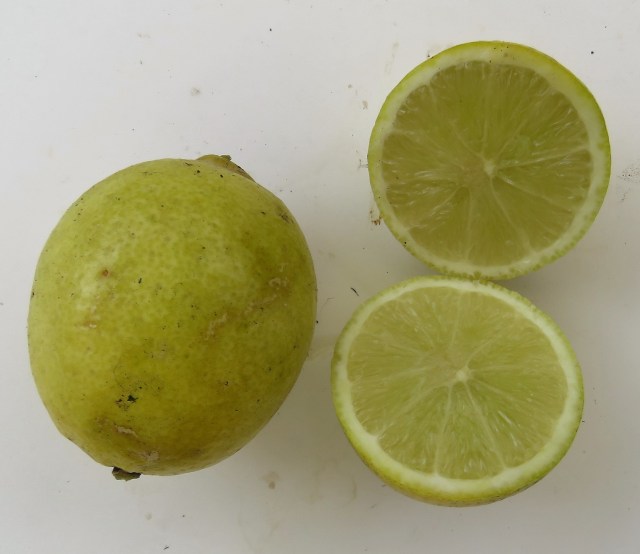
Tahitian lime

Limes get more complicated because they have a genetic line to the lesser known species that gave the key lime along with the lemon genes of citron and mandarin. We tree ripen ours and pick them when yellow rather than at the hard green stage they are usually sold as in the shops.
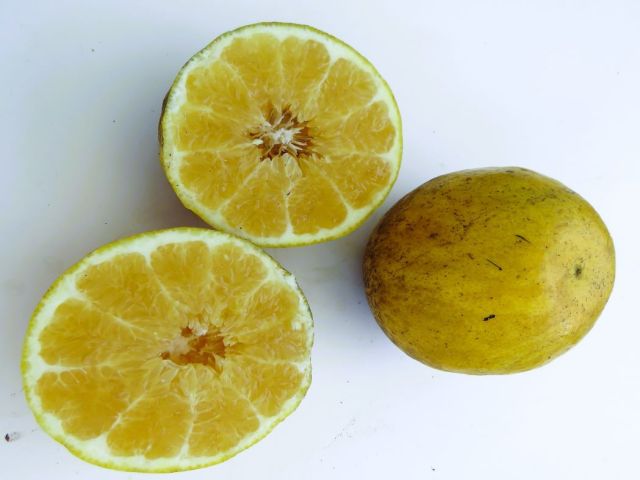
Wheeny grapefruit

The true grapefruit is the newest addition to the commercial range of citrus and is thought to have originated from a pomelo crossed with sweet orange (making pomelo the dominant genes with the addition of mandarin) in Barbados back in the early 1800s. It is one of the citrus most sensitive to colder conditions so what we call grapefruit in this country and what is generally commercially grown here are the Wheeny grapefruit and Poorman’s Orange. The Wheeny is thin-skinned and very juicy and is a chance seedling from Wheeny Creek in NSW in Australia. It is a pomelo hybrid, maybe crossed with bitter orange.
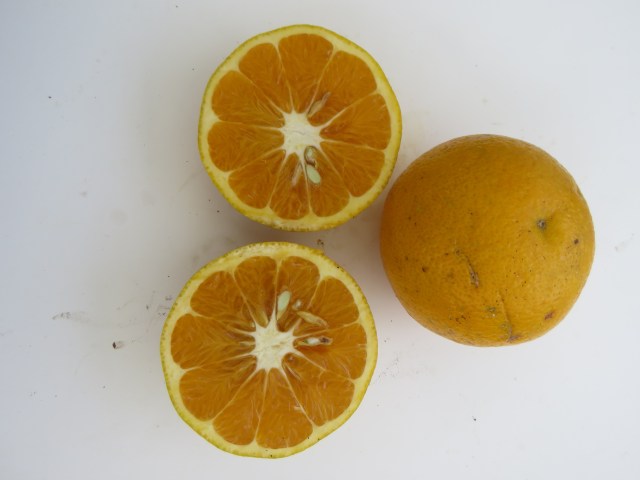
NZ grapefruit or Poorman’s Orange

The Poorman’s Orange  is often referred to internationally as the NZ grapefruit because it is grown widely here but not generally elsewhere. However, it originated in Asia, was taken to Australia and brought to NZ by Governor Grey to grow in his Kawau Island garden. It is thought to be pomelo x tangelo (so more pomelo than mandarin) and has much brighter flesh than a true grapefruit. If you have ever eaten grapefruit overseas and they were not the same as here, that is why. We don’t grow true grapefruit here.

It seems that citrus in the wild cross-pollinate readily. While many named cultivars will be the result of deliberate hybridising efforts down the centuries, it is likely they were starting with plants which had already done some mixing and mingling of their own accord. The history indicates that a fair number of types are simply selections of found plants, including hybrids and mutations.  

Back to my starting point of grapefruit interfering with some medications. I am no scientist but my understanding is that the problematic compound is furanocoumarin which is usually concentrated more in the peel than in the flesh and juice. Pomelos, citrons and the lesser-used papeda group have very high levels of this whereas the mandarins have very low levels. It seems that the rule of thumb might be that the sweeter citrus are less problematic.

The only reason I can see for singling out the grapefruit on medical advisories is that it is that it is the only one of that more bitter range that is consumed undiluted in quantity as a drink.

With the dominance of pomelo genes in the two varieties we grow as grapefruit in NZ, yes that advisory would apply equally to our fruit. Maybe keep to orange juice if you have been advised against consuming grapefruit.

Finally, three of my favourite photos. Fortunately we have plenty of fruit to share.
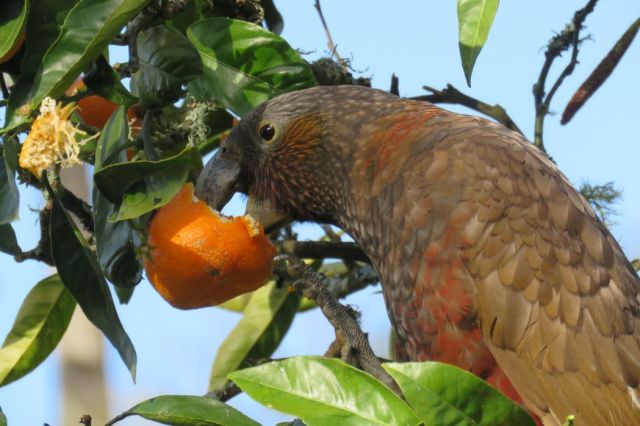
Kaka are a native parrot. They are not generally resident here but from time to time, one will stop by for a few weeks. This one ate quite a few mandarins but we were so thrilled to see it here that we were glad to share.
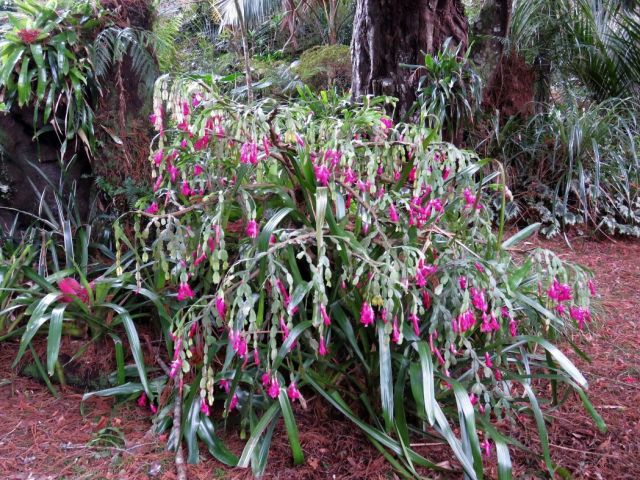
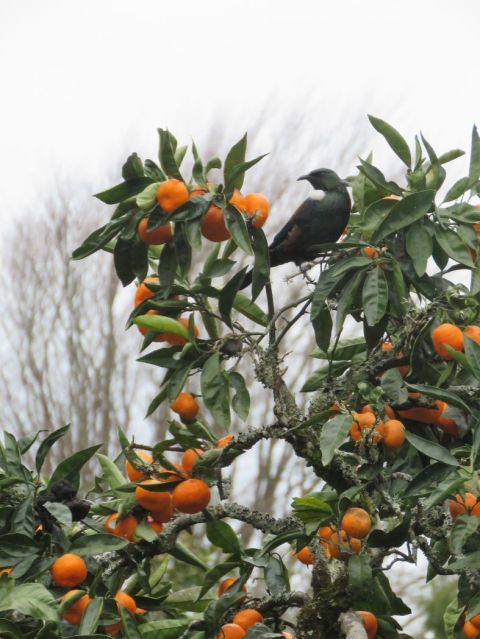
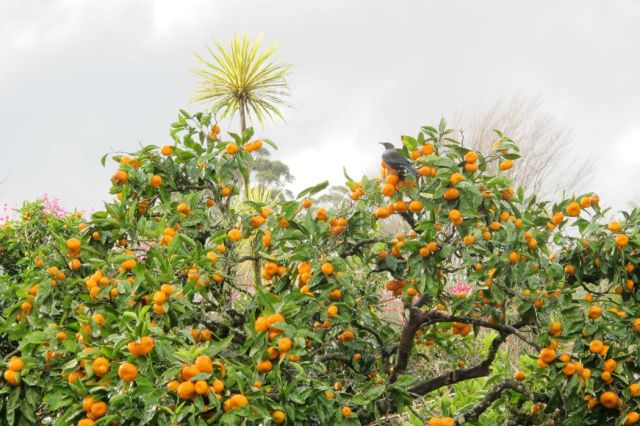
The tui are always in residence here in large numbers. Being nectar eaters, they will tuck into mandarins in winter.

The summer gardens in midwinter

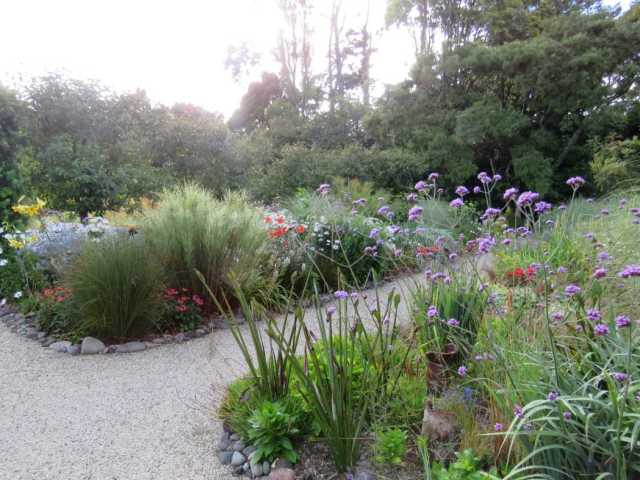
It is midwinter and I have just completed the winter clean-up round on the areas we call the summer gardens. These newest gardens have been a major project over the last decade and were inspired by the realisation that we were very green and lacking in summer flowers. In fact, we are more flowery in midwinter than we used to be in summer. The early magnolias are in bloom, including the michelias, the Prunus campanulata are opening, we have plenty of camellias and gordonias flowering along with snowdrops, snowflakes, Cyclamen coum, early narcissi, lachenalias, Hippeastrum aulicum, daphnes, hellebores, luculias, early azaleas, cymbidium orchids and more. Midwinter is not without its charms here.

Midsummer, however, used to be green, green and more green with blue and white hydrangeas but not a whole lot more. I know we are lucky to be green in midsummer as opposed to dry, brown and crispy but we are flower lovers here. Hence the summer garden project.

What do the summer gardens look like in midwinter after they have been cut down and cleaned up? Here we are.
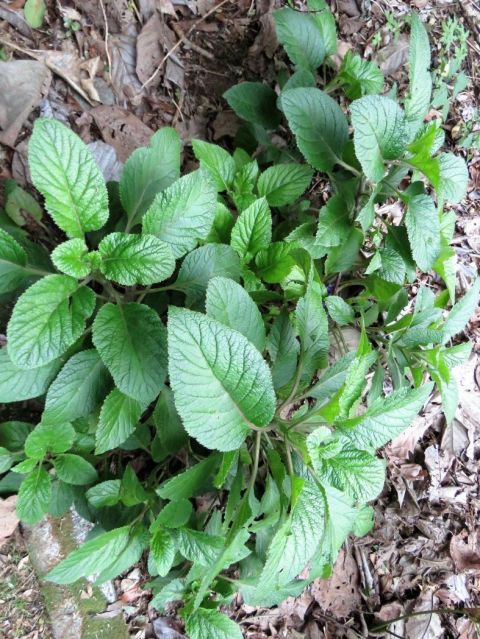
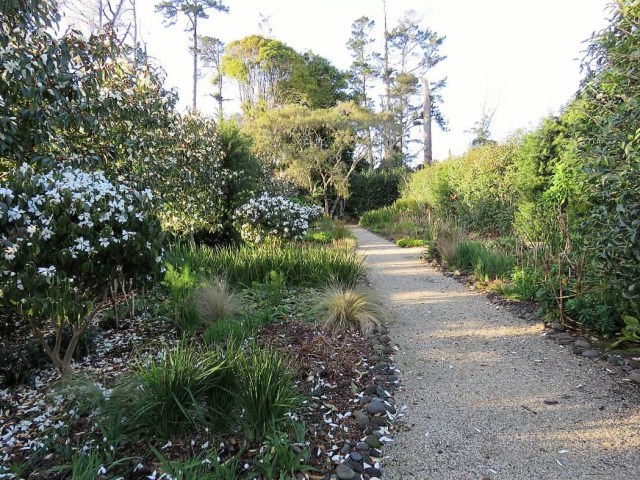
Midwinter in the borders
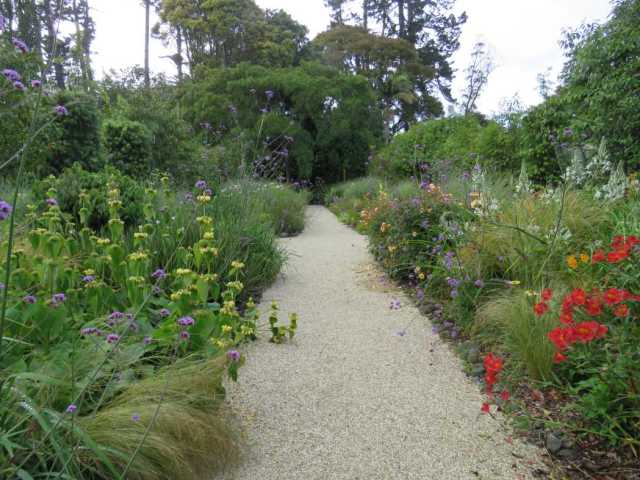
Summer in the borders
We wanted summer flowers and we got them

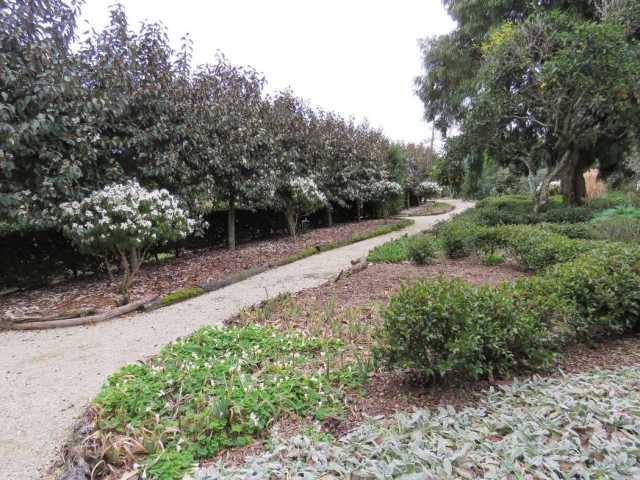
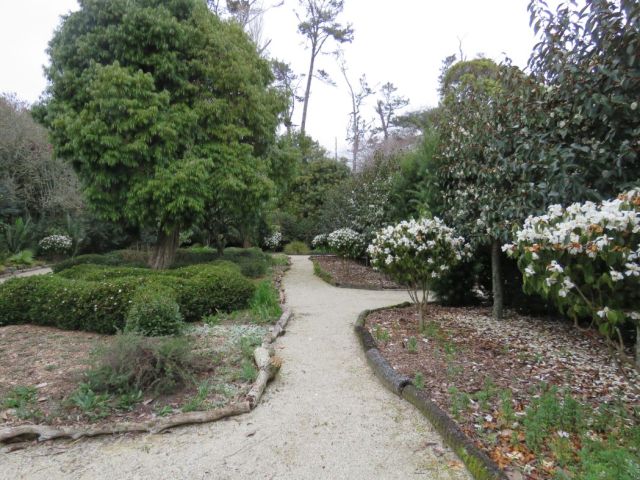
The borders are unexciting but not bare because many of the plants we use are evergreen rather than deciduous. There are just a few strelitzia, kniphofia and snowdrops in flower so far and the scene is carried by the repetition of Camellia yuhsienensis and Mark’s Fairy Magnolia White down one side. Within a few weeks, the Dutch iris should be coming into bloom and it will be onward and upward from there.

The lily border to the left and the Wave Garden in midwinter
The same scene in midsummer (but before we laid the path surface)
From the other end in midwinter
and in early summer

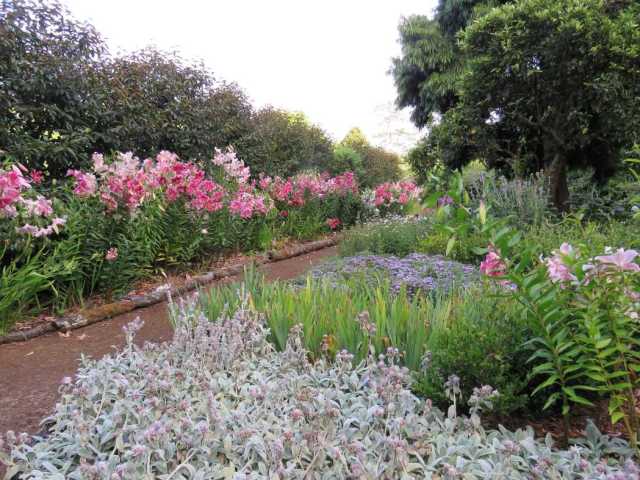
The lily border is bare but for the same camellia and michelia. The Wave Garden is all about the form of the hedges and nothing much of interest at this time of the year. I am battling the rabbits who live near the boundary of that area and lightly sprinkling blood and bone after each rain to deter them from their favoured digging spots. It works but high velocity lead from the man with the gun works better, although new dog Ralph is doing his frantic best to locate the culprits.

The Iolanthe Garden in midwinter with my alstromeria supports
Holding back the riot of foliage and flowers that I know will take over in summer
All the summer growth fills the area
There is a lot of deciduous plant material in the semi-controlled riot of summer

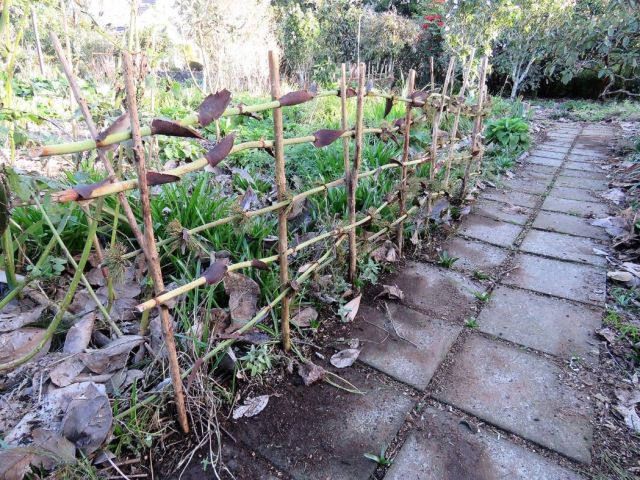
The Iolanthe Garden is probably the least appealing at this time of the year even though the leucojums, citrus trees, hellebores and a few shrubs give colour. I have been constructing supports for the alstromerias and for areas where the summer perennials flop onto the narrow paths. I hope the lengths of yew branch will last longer than bamboo stakes while the cross supports are loosely woven stems of Elegia capensis. My aim was to get structures which will work without being obvious when the plants grow and look suitably rustic.

The Court Garden in midwinter
And midsummer in the same area. It is just fuller with a few more flowers in summer and autumn,

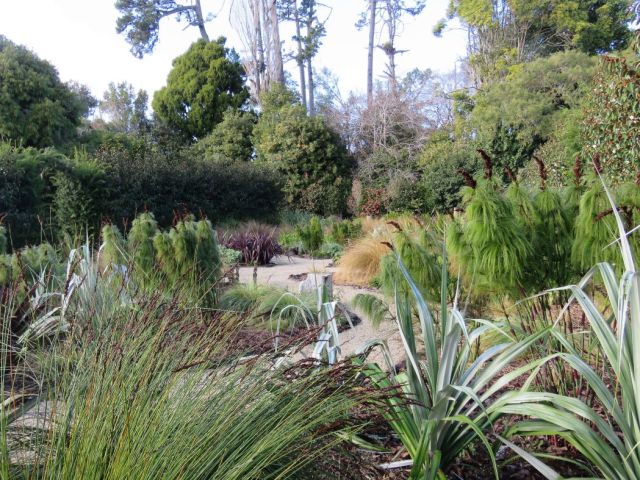
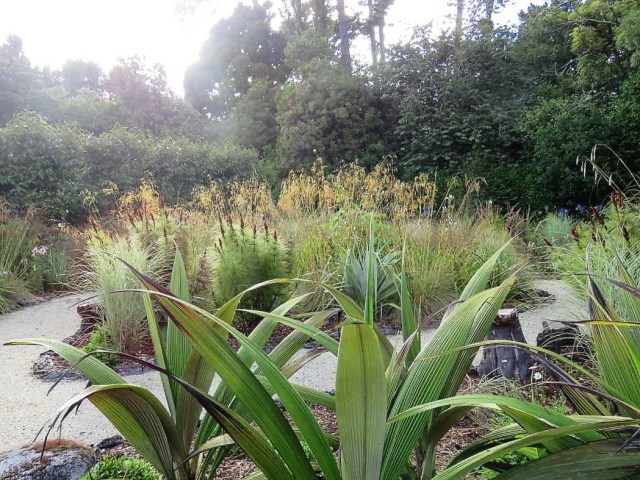
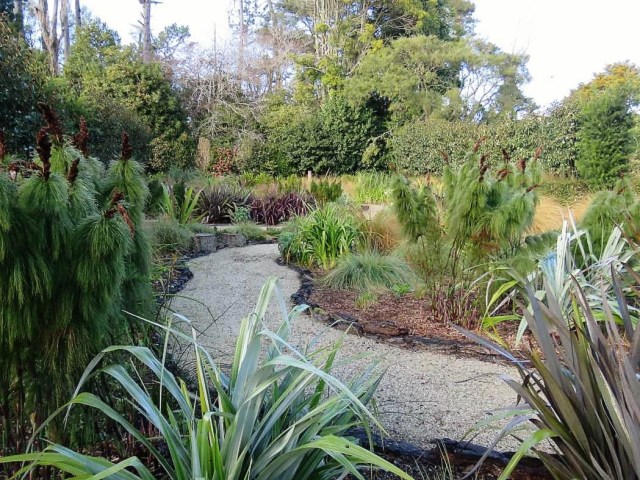
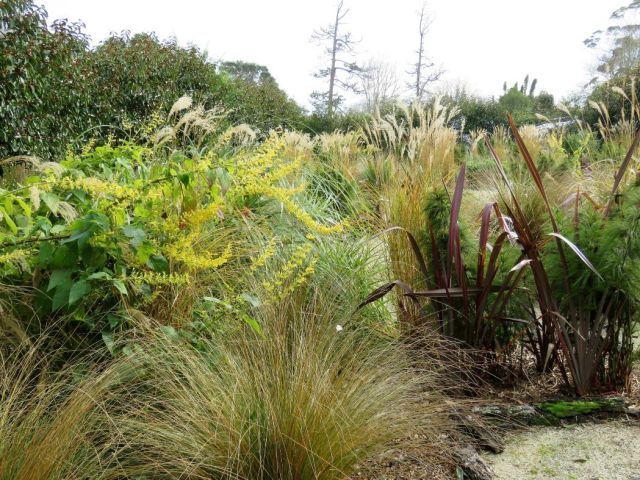
It is the Court Garden with its focus on grasses and plants with grassy or spear-like foliage that is most effective twelve months of the year. Most of the plants are evergreen which is one advantage of my decision to look to some of our handsome native grasses as backbone plants. There aren’t many flowers, but the form is strong. I am not displeased with it.

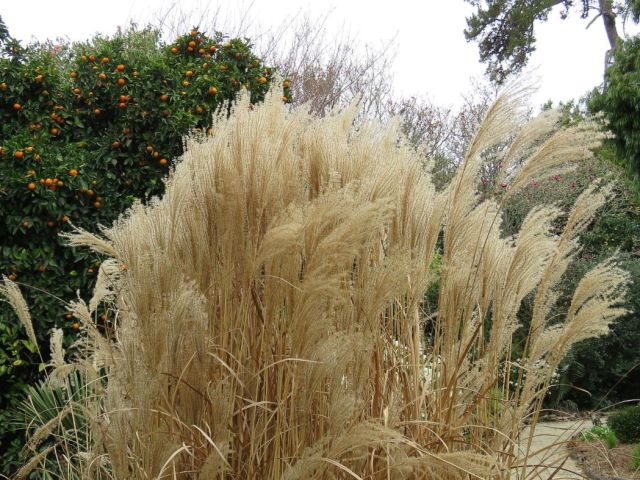
The fluffy duster effect of Miscanthus ‘Morning Light’

If we weren’t opening the garden in spring for the Centuria Taranaki Garden Festival, I would probably leave all the Miscanthus ‘Morning Light’ standing longer. Cutting it down now encourages the new growth which we want for the start of November.  Look at the fluffy duster effect of the one plant I still haven’t cut down. It is lovely, especially with the low winter light.

The Court Garden again, after its winter clean-up

Given the extremes of weather being experienced elsewhere – unprecedented heat waves in the northern hemisphere and extreme rain in the southern parts of this country, I am yet again grateful to be gardening in a temperate climate. We seem to have had the best of the weather on offer this week.
The delight is in the detail

We like a detailed garden, we do. It is not just the big views that catch our eye. Often it is the little delights – tiny, even – that focus our eyes on the close-up. It is possible to have a highly detailed garden without it descending into fussy clutter.

Here we are in midwinter and the small bulbs are bursting into flower. No, this is not early; nor is it a sign of climate change. It is on cue for an area where our winters tend to be mild and lacking in extremes. Goodness knows, we complain as much as anybody about cold weather, dreary days, rain and wind but the plants tell us that it is not as bad as we think.

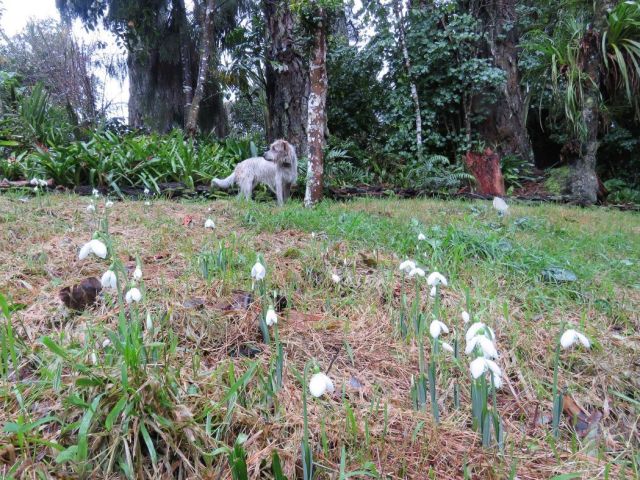
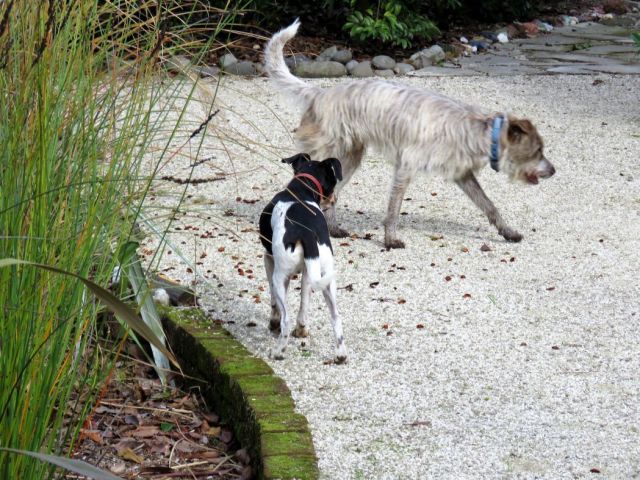
In the days when I used to write for the Waikato Times, we had a sheltie dog who quietly photo-bombed many a picture. Now we have Ralph channelling the spirit of the late Zephyr, except he is a boisterous photo bomber.

The swathes of snowdrops and dwarf narcissi that we have in areas of the park are only just showing first colour because it is colder on the south facing slopes but there are plenty out in the cultivated areas of garden that are noticeably warmer.

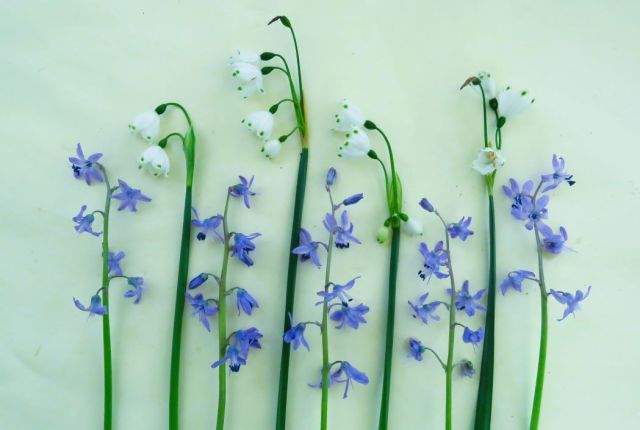
I started with the snowflakes and an obscure scilla that flowers earlier than the more common bluebells. The snowflakes – leucojums – are often taken for granted as robust survivors that are inferior to the more desirable snowdrops (galanthus). This is unfair to them because they are very different as a garden plant and under-rated, especially when we consider their extended flowering season.

I am fine with under-rating this particular scilla. Its only redeeming graces are that it is pretty to pick and it is the very first to flower. It isn’t worth garden space – far too much foliage for the number of flowers – so it has been banished to the wilder margins. We used to have a collection of species scillas – there are a lot of different species – with names like greilhuberi, hohenackeri and litardierei but I think they came to us under incorrect names even before we lost the names. I have no idea which one this is.

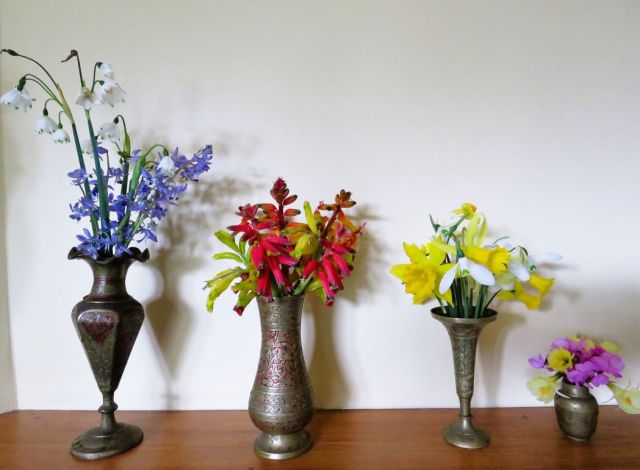
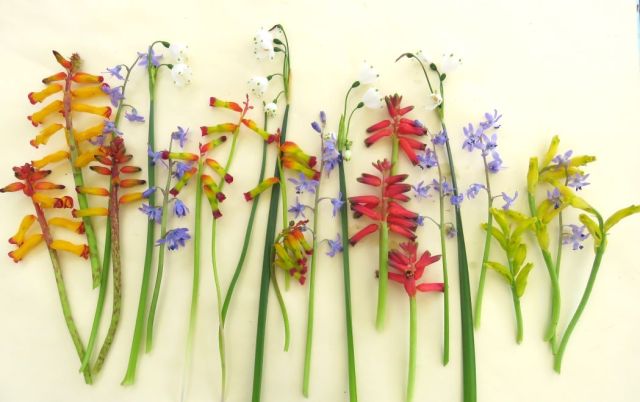
I added in the early flowering lachenalias to the flower lay. We still have an extensive lachenalia collection which flowers for us from now through to early November. Some are much easier to keep going in the garden than others but these early ones are toughies which will withstand competition and meadow conditions. The more collectable blue and lilac forms flower later. From left to right we have the most common, robust, cheerful but vulgar Lachenalia aloides (still sometimes to be found mislabelled as Lachenalia pearsonii),  the somewhat more refined Lachenalia aloides quadricolour (quad = four colours, in this case orange, yellow, green and burgundy), the red Lachenalia bulbifera and finally the yellow of Mark’s L.reflexa hybrid.

Sometimes I think I would have enjoyed being an illustrator or a graphic designer specialising in pretty florals but nothing can compare with the ephemeral charm of living flowers.

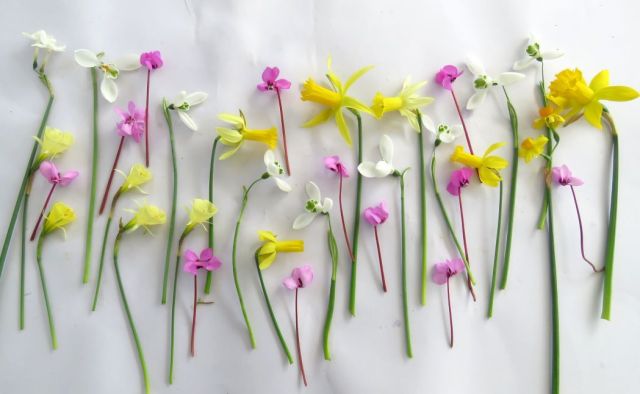
In a world where the news just seems to get more complicated and worse by the day, where things feel as though are spinning out of control, I find dainty flowers can be a welcome diversion. They don’t come any prettier than snowdrops, cyclamen and little narcissi. The snowdrops are a mix of Galanthus ‘S Arnott’ and G. nivalus which are our two mainstay varieties that perform in our area where we don’t get much winter chill, let alone snow. The cyclamen is C. coum which, according to Wikipedia, has the common name of ‘eastern sowbread’. I am not even going to ask who calls it that and why. While they might have wild sows in its native habitat around the Black Sea, the corms are so small and its rate of increase slow so it is unlikely that would ever make much of a food staple for browsing animals.

The narcissi are a mix of species and hybrids. My preference is for the cyclamineus types with their swept-back, reflex petals but the earliest jonquils in both yellow and white are deliciously fragrant and the bulbocodiums or hooped petticoats are also very charming.

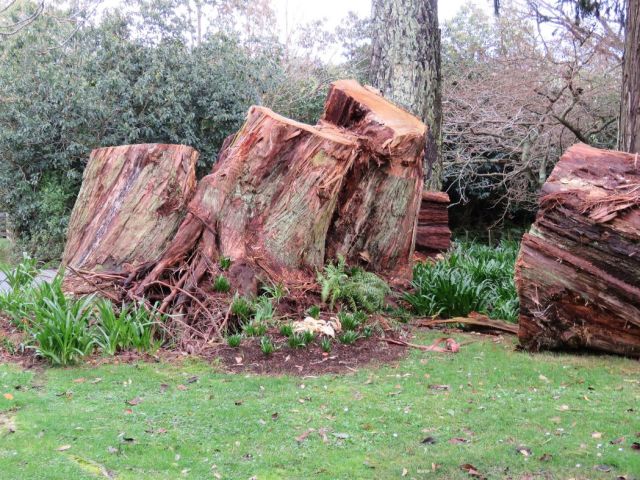
Zach has been lifting surplus bluebells to make way for more desirable snowdrops and baby daffs in the area we refer to as the hellebore border. I suggested he could rehome some of the bluebells – thugs that they are – into the area by our gate where the giant eucalypt came down in February’s Cyclone Dovi. Over the years, I had planted a fair swag of surplus bulbs around the base of the old gum.

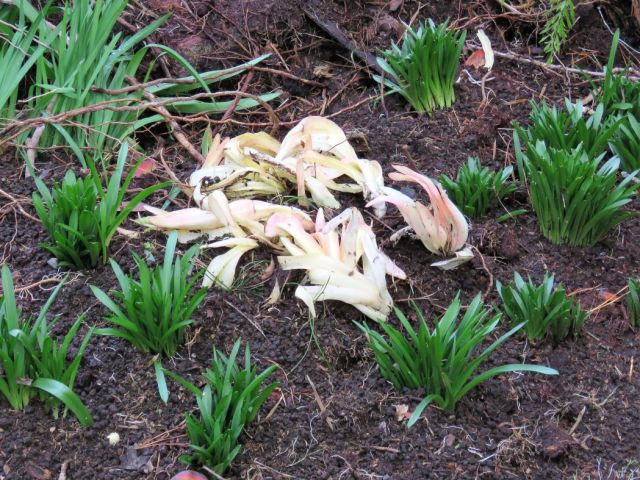
When he had finished, I couldn’t work out what the white patch was until I got up close. Buried bluebells, obviously from an earlier planting. Deep beneath the soil that had become displaced by the falling tree, some had leaves 30cm long and still not breaking the ground into the light.  I knew they were tough but that shows a high level of survival skills.

I have spent some time in the past working out the differences between the highly desirable, scented English bluebell and the dominant Spanish species and came to the conclusion that what we have are predominantly Spanish (Hyacinthoides hispanica), maybe with some Spanglish hybrids. They will not flower until mid spring.

We still have the worst of winter to get through but the earliest spring bulbs are a daily reminder that we are on the right side of the solstice already.

Finally, welcome to new subscribers who came this week after reading this recommendation from Julia Atkinson-Dunne. May you enjoy what you read and see.

Nga Puawai o Matariki or The Flowers of Matariki

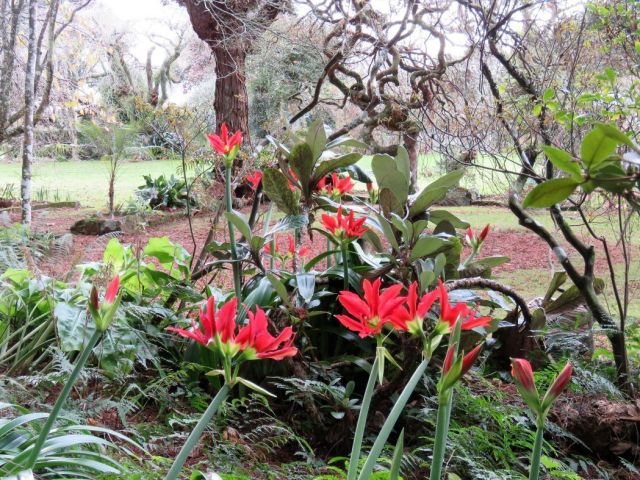
Hippeastrum aulicum

After I posted last week’s piece about Matariki – the Maori new year, the winter solstice and Magnolia campbellii, a loyal reader commented that no magnolias are opening where he lives so he went looking to see what could be his Matariki flower. He settled on Mark’s Camellia ‘Fairy Blush’ which felt like an honour to us.

I like the idea of people determining their Matariki flower. We had our first ever public holiday to mark Matariki last Friday and for many of us, it was special. Not only does it mark a point in time that is significant both spiritually and scientifically to the first people of the land here, it is the only public holiday that has a nation gazing at the stars and taking an interest in astronomy.

Friends invited us to lunch to celebrate the occasion. Home entertaining is back in these Covid times, at least for our demographic. I took a bunch of Hippeastrum aulicum and our hostess commented that she had no flowers in her garden. This wasn’t quite true. She had Alstromeria  ‘Indian Summer’ still blooming but nothing else I could see. It inspired me to come home and walk around the garden with my camera to capture some of the flowers we have in the depths of mid-winter.

A vireya rhododendron seedling

The subtropical rhododendrons are blithely unaware of the seasons, except for frost which makes them turn up their toes, and we have them in flower all year round. We have a mix of species, named hybrids and unnamed seedlings from crosses Mark has made. This is an R. hellwiggi seedling which means it is also sweetly scented.

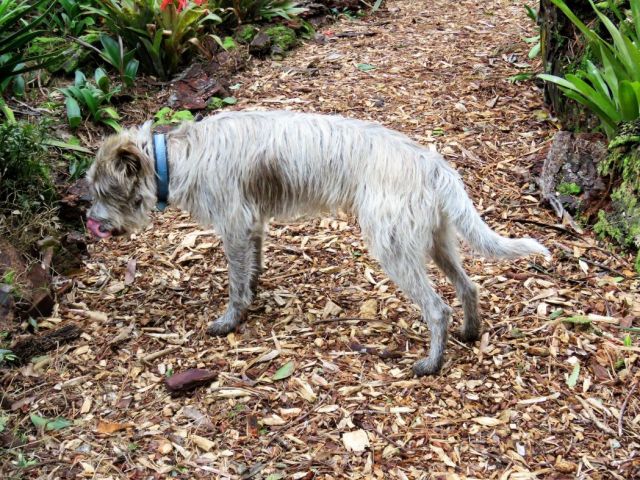
Constant companion, new dog Ralph

Everywhere I go in the garden, Ralph is at my side. He does not, alas, show any respect for the garden at all and this morning knocked off the first open flower on a dainty dwarf narcissus. We have some work to do teaching him to respect garden boundaries.

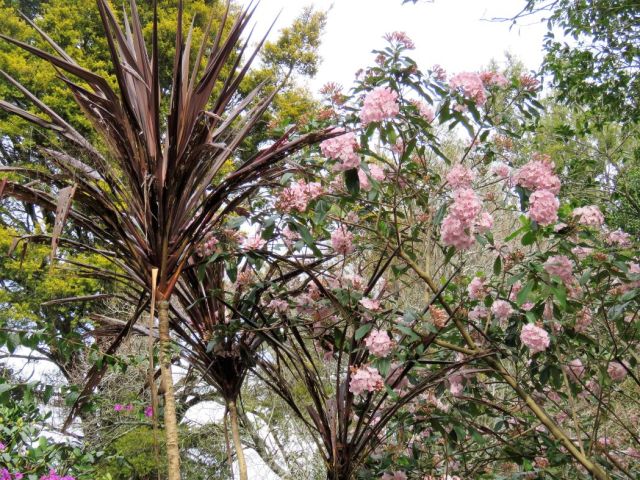
Luculia ‘Fragrant Cloud’

It is luculia season and my favourite of these is the almond pink, scented blooms of ‘Fragrant Cloud’ which has a very long flowering season but generally flops if I cut them to bring indoors. I could do without the yellow totara to the left of the scene but the red form of our native cordyline works well. This luculia is rangy, brittle and lacks any merit in its form as a shrub but all is forgiven when it flowers.

Schlumbergera or chain cactus

Right at home under the rimu trees is the schlumbergera, commonly called chain cactus. We have a few different colours but this cerise form is easily the most obliging and showiest of them. These are plants that thrive in dry shade and, despite the cactus reference, have no prickles and spines. They are also dead easy to increase by just snipping off a length and tucking into a crevice with a bit of leaf litter to root into.

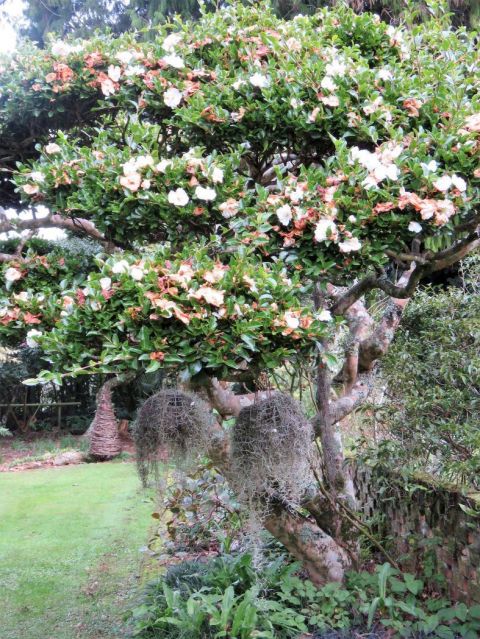
Camellia ‘Mine No Yuki’ with hanging tillandsia

It is of course camellia season and this is why I don’t love Camellia sasanqua ‘Mine No Yuki’ at this time of year. It doesn’t shed its spent flowers because the foliage is so dense and they sit around looking brown and sludgy. We only keep the plant because for the rest of the year we clip it tightly into stacked clouds and it justifies its existence for the form of the plant and healthy foliage. The flowers are a disadvantage, not a bonus as far as I am concerned.

That is a fine form of Spanish moss or tillandsia threaded on inverted, old, wire hanging baskets – a trick I learned from an Auckland gardener several years ago. His were more loved than mine but they add a detail suspended from the camellia branches.

Camellia yuhsienensis

We love Camellia yuhsienensis far more, enough to grow a fair number of them as specimen plants, particularly for winter interest in the Summer Gardens. It is meant to be strongly scented but it needs a warm day and a nose stuck right in the flowers to get much of a whiff so that is a bit hyperbolic. However, the bees love it and anything that feeds the bees in midwinter is a good thing.

Dudley and Ralph

I reached the the Summer Gardens and Dudley had risen from his retirement bed to join Ralph and me. Duds is a quiet, old dog and the arrival of Ralph has come as a bit of a shock to him but they co-exist harmoniously. Dudley has made it clear that ALL dog beds are his while Ralph has laid claim to all the dog toys and already destroyed some that had survived years of Dudley’s more gentle play.

The Court Gardens in midwinter

I was focusing on flowers that are coming out or at their peak in midwinter rather than the carryovers from autumn but I made an exception for the yellow Salvia madrensis which makes a great autumn/winter plant for frost-free areas with plenty of space and nothing delicate nearby for it to smother. It is showy but large and rangy.

Daphne Perfume Princess

I have to acknowledge Mark’s Daphne ‘Perfume Princess’. Sure, it is just a daphne but what a daphne. Vigorous, reliable, exceptionally large flowers and an exceptionally long flowering season. Very scented, of course, as daphnes should be. We had stock plants left in the nursery that I threaded through the house gardens so it is quite a dominant plant here for us at this time.

Lobelia physaloides
Look at those big, blue-purple berries on the Lobelia physaloides

Look at this lesser known NZ native – Lobelia physaloides! It is sometimes referred to as the NZ hydrangea, presumably because its lush foliage loosely resembles some of that plant family. To my shame, I missed the flowering on it but the photos on line do not show any resemblance to hydrangeas. It is the berries that are the most extraordinary feature, in both size and colour. It is another rare, endangered plant on our threatened list, mostly from loss of habitat. In the wild it is limited to our offshore, subtropical islands (Three Kings and a few others) and a few mainland spots in the far north. For the botanically inclined, there is a whole lot more information here about this interesting plant. We are very pleased to have three plants of it in the garden.

The early jonquils are promising spring

I didn’t focus on the bulbs this time. We are on the cusp of peak bulb season – the early snowdrops are opening, the first of the narcissi, lachenalias in red, yellow and orange, Cyclamen coum is at its peak. It may be midwinter but we are blessed with conditions that allow plant growth and flowering all year round.

Happy Matariki from Aotearoa.

New Year New Zealand style – Matariki

Opening right on cue with Matariki and the winter solstice, Magnolia campbellii var campbellii, albeit against a leaden, wintry sky

The winter solstice this year is this coming Tuesday, 21 June. On Wednesday, we can wake in the knowledge that we are past the shortest day of the year. The days will grow longer again, imperceptibly at first but the cumulative effect means we will start to notice soon enough.

Next Friday, on June 24 we celebrate Matariki with a public holiday for the first time. Matariki marks the rising of the Pleiades star formation and the new moon which means that traditionally it covers a longer period but it has been narrowed to the one special day on the calendar of public holidays. It is the Maori new year and it is a source of awe to me that in pre-European settlement days, Maori determined the commencement of a new year which closely corresponds with the seasonality of the European new year with its arbitrary date of January 1.

For me, Matariki is synonymous with the flowering of the campbelliis and the start of a new year of gardening

I regard Matariki as a marker in time which is relevant to our country in a way that the northern new year and Queen’s Birthday are not. Because I am not a fan of winter, the declaration of hope that the year is changing and spring is just around the corner lifts my spirits. And my spirits certainly need lifting in the current run of unrelenting leaden skies punctuated by rain.

The Powderham Street campbelliis have a lovely location beside the Huatoki Stream and can be viewed from the road above so the dominant view is looking down or at least across at eye level

On the first cold day of winter here this week – the first day that has seen me needing to wear a coat – I went to town. And yes, right on cue, the campbellii magnolias are indeed in bloom. These are the pink Quaker Mason form of M. campbellii var campbellii which is the most widely grown selection around here. I photograph and write about them every year and I am not at all sure that I have anything new add but the emotional response I have to seeing these magnificent trees coming into bloom on or near the darkest day of the year never dims.

As usual, the three trees on Powderham Street in New Plymouth by the Huatoki Stream have a fair number of blooms already open although they won’t be at their peak until mid July.

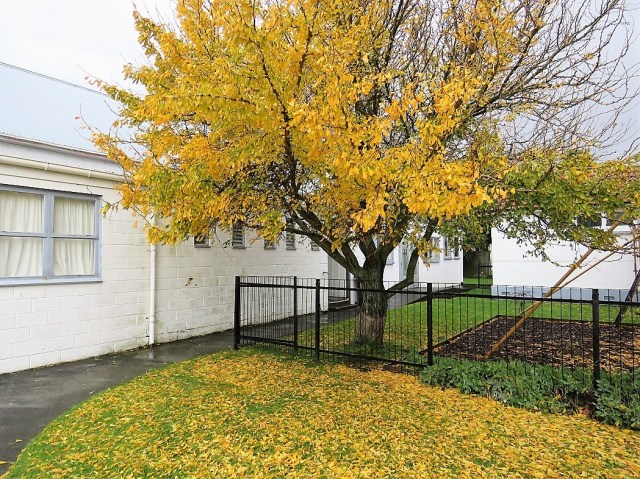
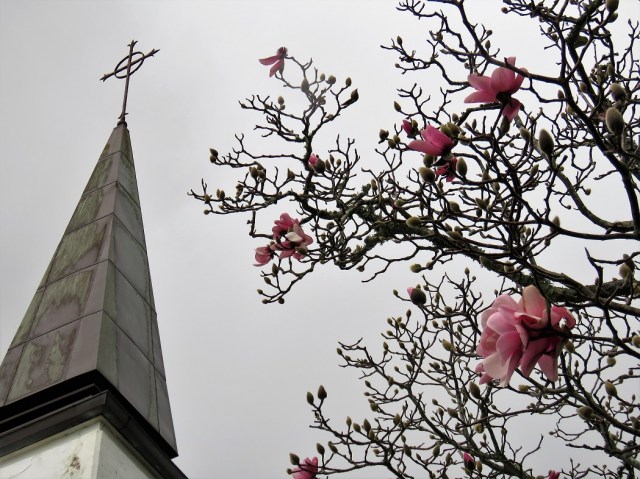
The last gasp of autumn – the golden Ginkgo biloba to the left of the church…
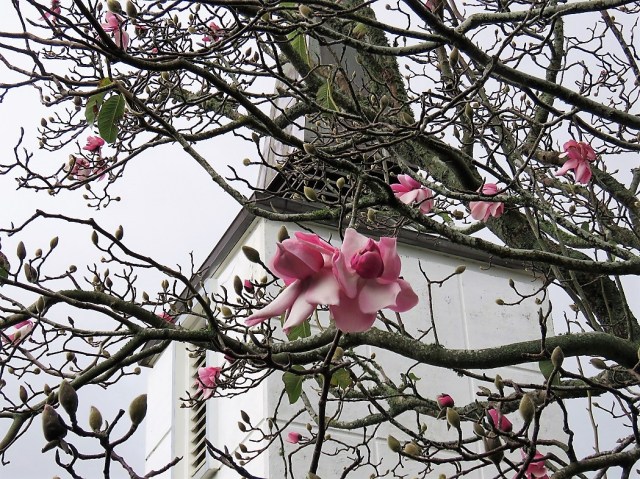
and the promise of spring with Magnolia campbellii to the right.

I think the tree in the grounds of St John the Baptist Church is Waitara is matching it for open blooms. All these trees are in sheltered positions, very close to the coast and, being urban, surrounded by large amounts of concrete and tarseal which warm the areas they are planted. I like the juxtaposition of the gingko to the left of the church in its golden raiment and the magnolia to the right opening to its pink glory. Autumn meets spring in the churchyard of Waitara.

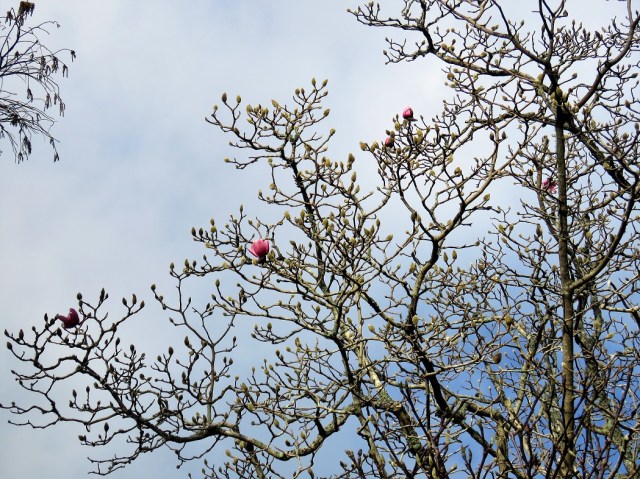
The promise of much to come on our tree of M. campbellii

Our tree in the park is always later. We are about 5km inland and our tree is in a colder position and that can make a difference of ten days or more to the blooming. But we have the first few blooms showing colour although not yet fully open, with the promise of many more to come.

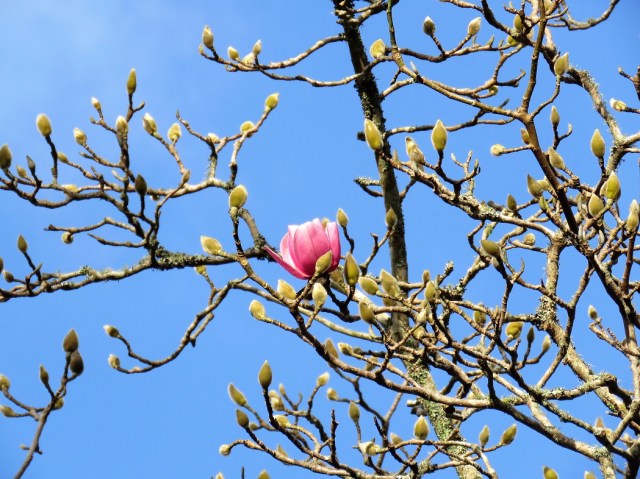
I managed to line up one of the first blooms just opening on our tree with a rare patch of blue this week

Spring is just around the corner.

The flower to the left is an immature Stenocarpus bloom. When fully open, it has long clusters of red stamens as seen just above

Unrelated, but picked up in our park, I like decayed leaf skeletons. In this case I think it is a leaf from Magnolia insignis, formerly Manglietia insignis. The curious pin-wheel item beside it is an immature flower from the Stenocarpus, probably sinuatus, or Queensland Firewheel Tree.  To be honest, our specimen of this tree is so tall and the flowers are so high up that we largely notice them only as the fallen red stamens on the leaf litter below. They are sometimes used as street trees in warmer areas both in their homeland of Australia and California and, when pruned and shaped and in a warmer climate, the flowering appears to be showier than here. I assume this flower head was blown off the tree before it could open fully. How amazing is that structure of the flower cluster?