
Is it possible to have a garden for all seasons? In our soft climate, yes, it is. But is it possible to have a garden that is at its peak for 12 months of the year? That is what many folk visualise when they think of a garden for all seasons. And the answer is no.
You can have a garden that looks more or less the same all year round. This is achieved by lots of hard structure, heavily trained and clipped plants, very little seasonal interest and constant maintenance or garden grooming. Seasonal interest (flowers, bulbs, autumn colour and suchlike) is messy and alters the tidy picture.
A reader left a comment on a recent post which included “I’m hoping that you have invented the solution to the 4 season perennial garden by then.” (Here’s looking at you, Cath). It started a train of thought along the lines of whether this is even possible and whether I had ever seen it done. If by a four-season garden, is meant incidents of colour (usually flowers), then yes, you can do it. But not massed, peak performance all year round.
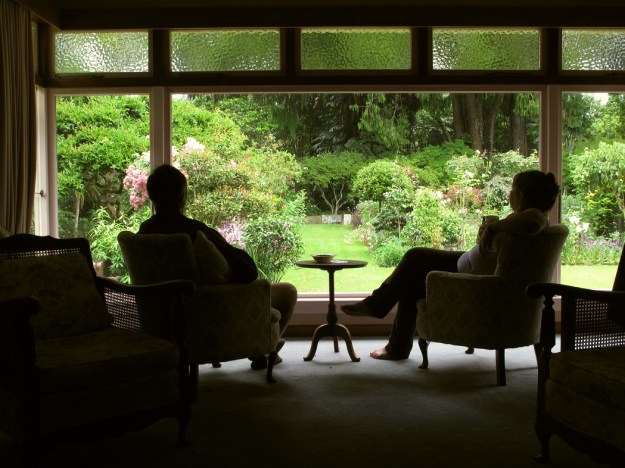
It is an old photo of us and the view out the window has recently changed. It is the border to the left of the coffee table that I have recently replanted in blocks for flowery interest
I replanted a border recently, aiming for year-round performance. About 20 metres long by just over a metre wide, it contains a few established shrubs which flower in spring and summer and I underplanted in large blocks – each at least a square metre, some larger – to get big splashes of colour through most of the year. It is a garden that we look out to from one of our favourite indoor seating positions for afternoon tea or an early evening drink. It now has a pretty blue scabiosa (dreadful name – the pincushion flower) for summer, Mark’s mother’s vintage Sweet Williams and hot pink Phlox paniculata for spring and early summer, large white flowered polyanthus for winter, blue asters for late summer and pink and white sedums for autumn. All interplanted with random bulbs I lifted from elsewhere. It doesn’t quite cover the full 12 months although it should have something showy, in bloom, for most of the year. But it is one block at a time, not the full border simultaneously.

Phlox paniculata, I think. Easy to grow, vibrant and seasonal
Elsewhere, we go more for matrix planting, rather than block planting. The new grass and perennial garden is strongly modelled on matrix principles but even so, as winter draws in, that garden is going into a rest phase. There is not much to carry it through the coldest weeks.
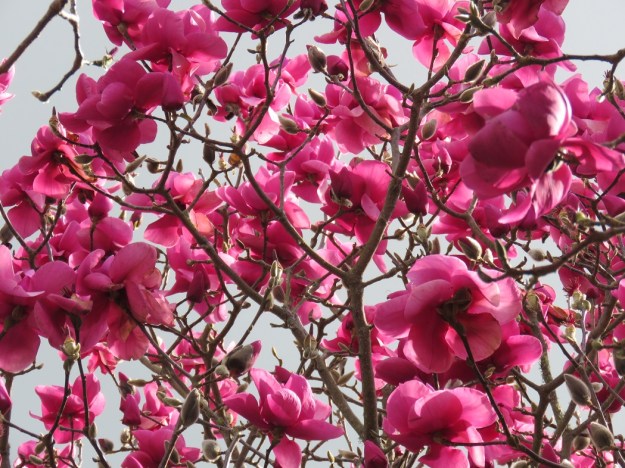
The magnolias, of which we have quite a few, do not all bloom at the same time. Nor do we want them to.
It is a conundrum. From time to time, we ponder reopening the garden for selected days through the year – snowdrop weekend, magnolias, lilies and the like. But while the snowdrops – or bluebells or lilies – have a defined and finite peak season which is relatively easy to determine, which weekend would we pick for the magnolias? They flower from July to the end of September here. No matter which date we select, some will have finished flowering and others will not have opened.
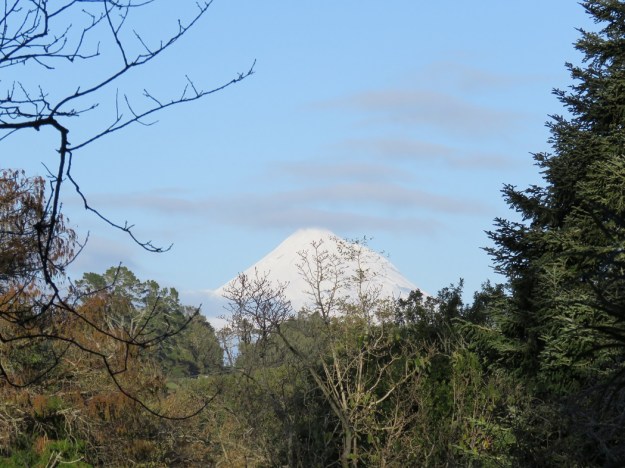
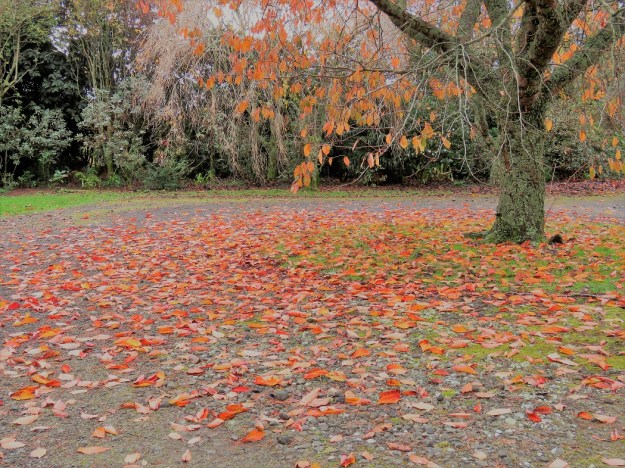
Early winter – just last week in fact. The view from our park.
I used to get so irritated by visitors at our annual festival who would go round the garden and come out saying of the rhododendrons, “It must have been gorgeous a few weeks ago,” or “There is a lot that have finished flowering, aren’t there?” I would quell my irritation and smile courteously, saying something bland along the lines of “there is always something different in bloom but yes, some have finished for the season and some are yet to open”. What they wanted was peak display when everything bloomed en masse, perfectly timed for the garden festival. This is what I saw at the Floriade tulip festival in Canberra and what, I understand, can be seen at the Butchart Gardens in Canada in their peak season of July and August. But ours is a private garden. Our rhododendrons flower from July until Christmas and what we want is something of interest every week of the year.
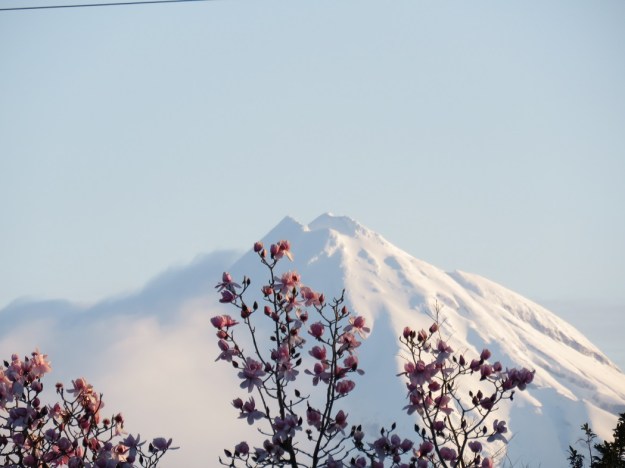
Late winter – as in August 9th.
Knowing this, we raised our eyebrows when Pukeiti Gardens, then a private trust, went to a great deal of effort to rebrand itself as “a garden for all seasons”. It seemed like an over-promise that they could never deliver. Its main focus was rhododendrons and yes, they flower from July til Christmas, but not all at once for all that time. Their location, at altitude, butting up to a national park means that winter is not a hospitable time for garden visitors – far from it – and being surrounded by evergreen, native forest means that autumn is never going to be as showy as in other places. It was – and probably still is – primarily a garden for spring and summer. Intrepid visitors outside those two seasons will still find much of interest, but not mass, seasonal display as implied by the catch line ‘a garden for all seasons’.
Large parts of the gardening world put their gardens to bed for winter and do not expect anything to happen during that rest period of chill. In our mild conditions, we have flowers in bloom all year round and actively garden for 12 months of the year. But, as I commented in my last post about vireya rhododendrons, it is a trade-off. You can have the big bang impact of peak season with mass blooming and all-round showiness, or you can have long performance of gentler display.
Do the maths. It is not even just the four seasons. Each season has its early, mid and late period. If you want year-round interest, then you have to allocate about one twelfth of the area and the plants to peak in each seasonal period. That is never going to give you the massed bangs for buck display at a single time. But it will give you garden interest all year round.
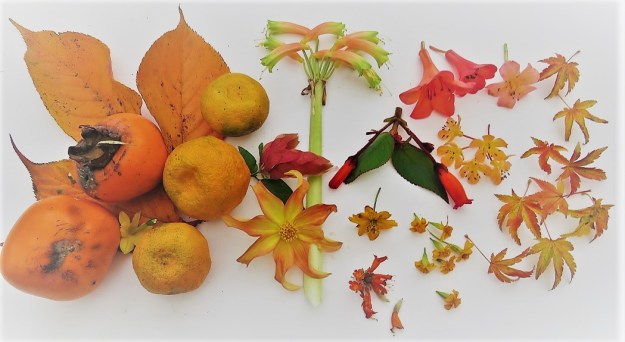
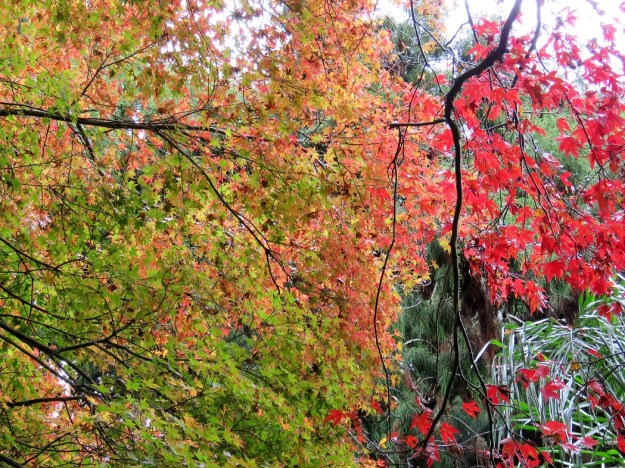
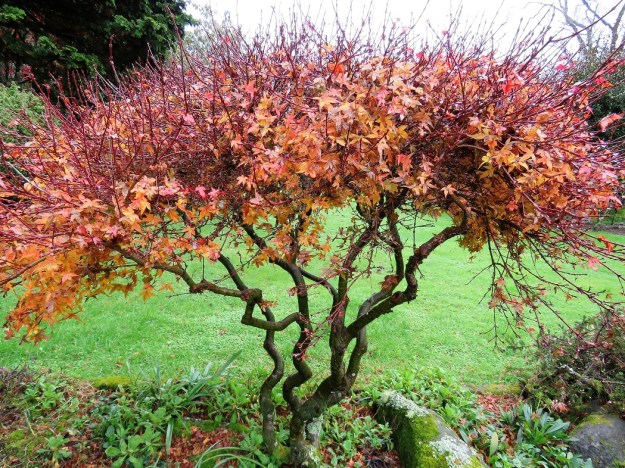
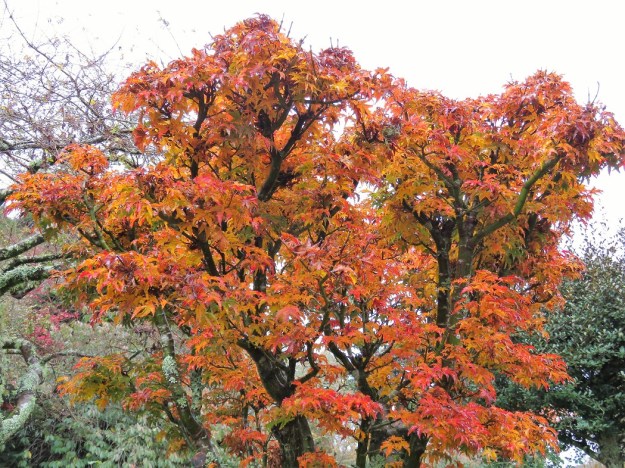 But as late autumn draws in, the orange outside is very cheering. On Monday, I thought I must get out and photograph the dwarf Japanese maple that turns its raiment from modest green to blazing orange as winter approaches.
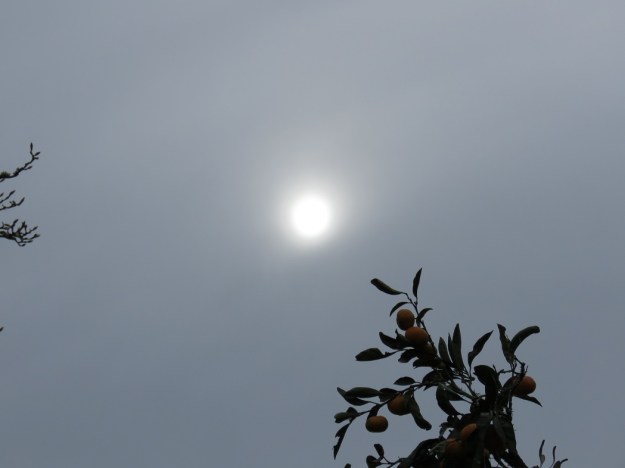 The day was grey with the sun attempting to break through, a light so unusual here that I also photographed it. I have only been to the UK once in December and I remember a similar light on the day we visited the Russell Page garden at Leeds Castle. The difference is that here, the sun did indeed come out and shine brightly – if intermittently – as the day progressed while my UK family said that was as good as it got there, closing in on the shortest day.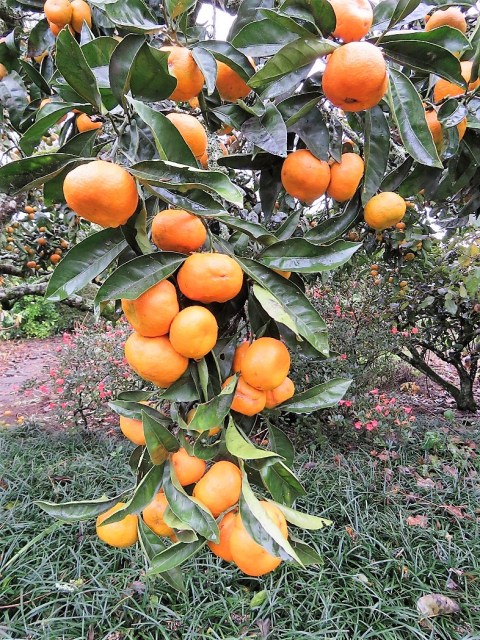
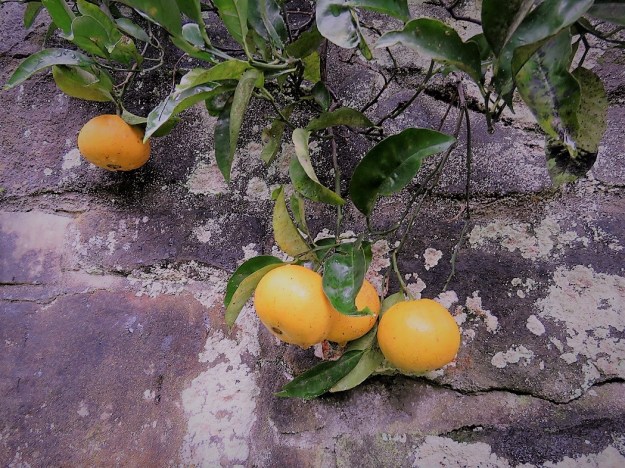 I became entirely focused on orange. Mind you, it is hard to ignore it as the citrus trees flaunt their wares. We are blessed to have a climate where we can grow citrus and also to have inherited a garden where the trees have large been included in the wider garden, rather than confined to an orchard situation. Citrus are both decorative and functional. I once wrote a fairly lengthy piece on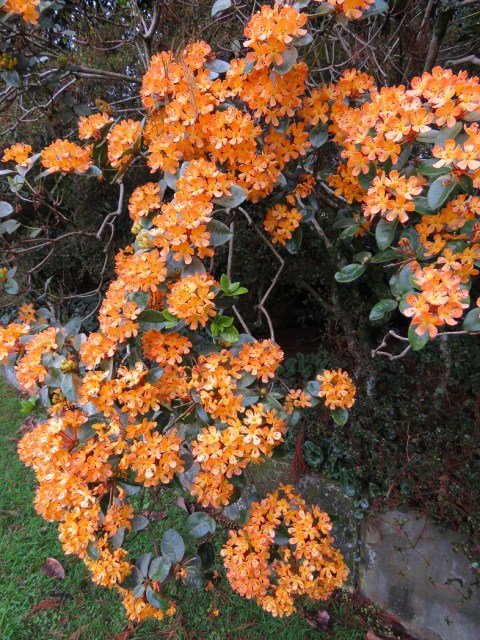





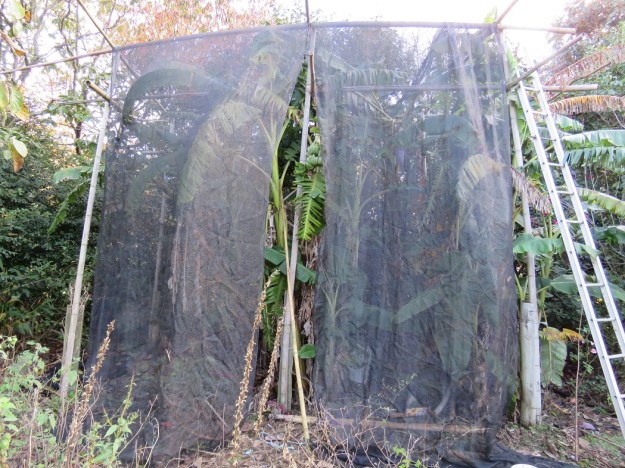
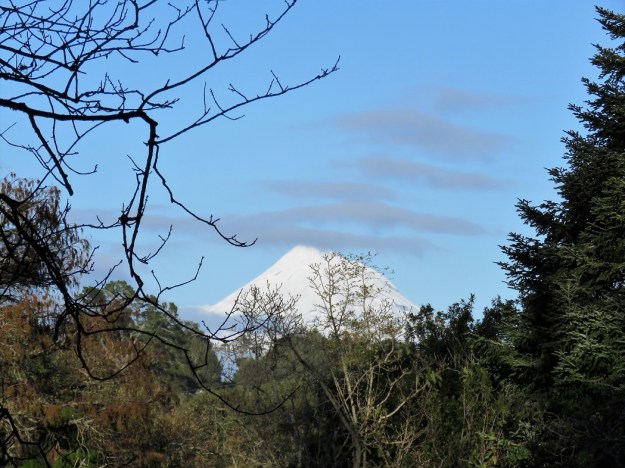 As our maunga – or Mount Taranaki to non-NZ residents – has put her full winter raiment on this week, it was a close-run race between the covering of the bananas and the first cold snap of winter. Not that we have had a frost yet.
 The ladybirds have moved inside to hibernate. They creep into the crevices of the upstairs wooden joinery which can make opening and shutting the windows challenging. I was fine with this annual event until a social media friend suggested that they looked to be the pest Harlequin ladybird which is a far grubbier and less desirable version of the charming, common ladybird. I suspect she is right, though the first reported incidence of the Harlequin ladybirds was up north in 2016 and we have had these hibernating critters for longer than that. So either they have been in the country longer than has been reported, or we have some other form of this beetle. I see there are 6000 different types of ladybirds so unravelling the different ones is beyond me. They are a bit messy, so I may flick them back out the windows with the duster.
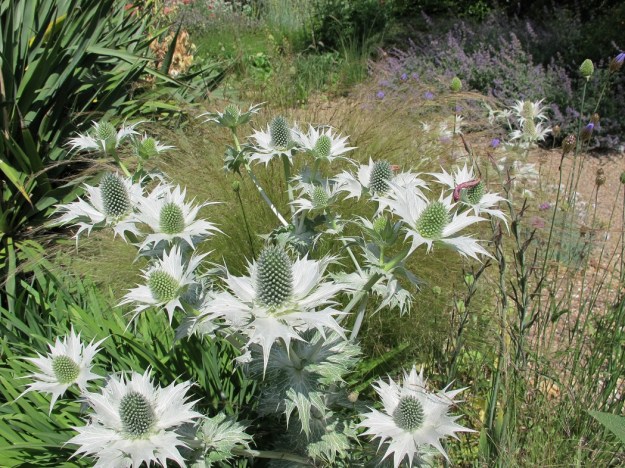 Beth Chatto dead? This should not be a surprise.
 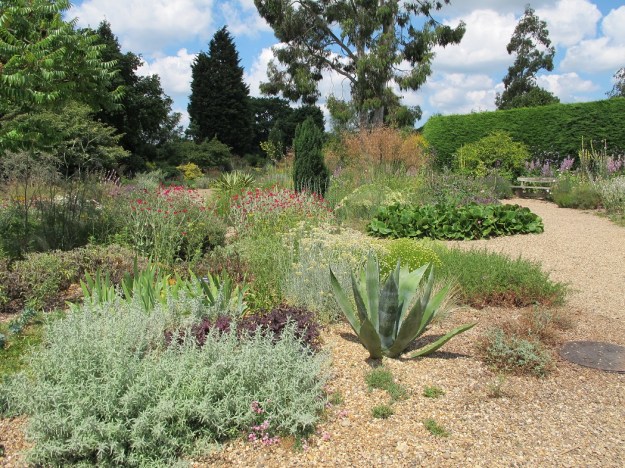 We returned to her garden with Charles in 2014 but she was too frail that day to join us. It was a bright, sunny day and I have since regretted that I did not get good enough photos of her dry garden in the glaring light.
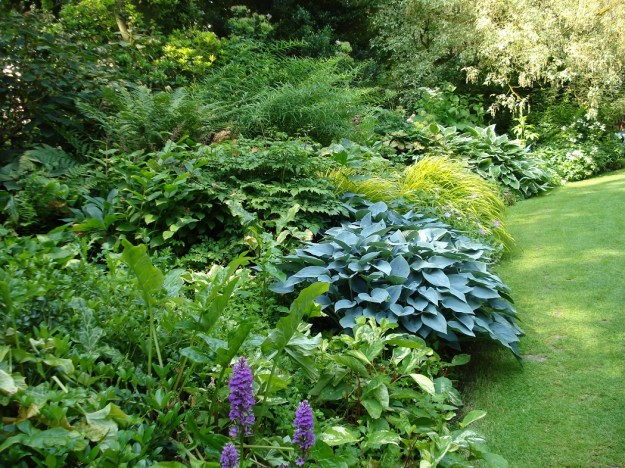 The original garden is perhaps a little dated by modern standards – rather a lot of curvy, hose-pipe borders – but always managed to the highest horticultural standards and underpinned by that knowledge of which plants will perform in those conditions and co-exist well with each other. I would love to see the woodland area in early spring when it must be magical but the UK in early spring is a bit cold for us these days. It is the dry garden that lifts a visit to another level altogether.
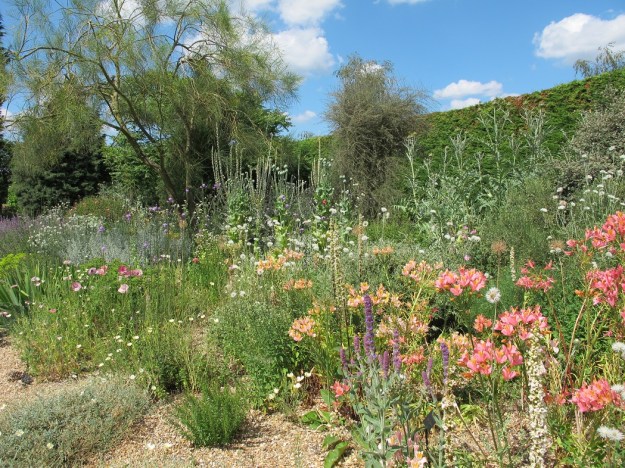 We have spent quite a bit of time making sense in our own minds of contemporary European and UK gardening trends – New Perennials (where Piet Oudolf’s work is still the gold standard), the New Naturalism, meadows, prairies, ecological gardening, matrix planting, sustainable plant communities and what we call the romantic revival or, simply, romantic gardens. And in Beth Chatto’s garden, thirty years ago, she was creating the precursor to all these modern trends in her new dry garden. In a very dry climate, nothing is irrigated in this garden built on a compacted carpark and river gravel. The skills lie in plant selection and the light-handed but deft management which allows plants to have their own space and follow their own natural inclinations. She had a rare combination of exceptional plantsmanship and top-level gardening skills.
 I did not so much appreciate her
 Tikorangi The Jury Garden