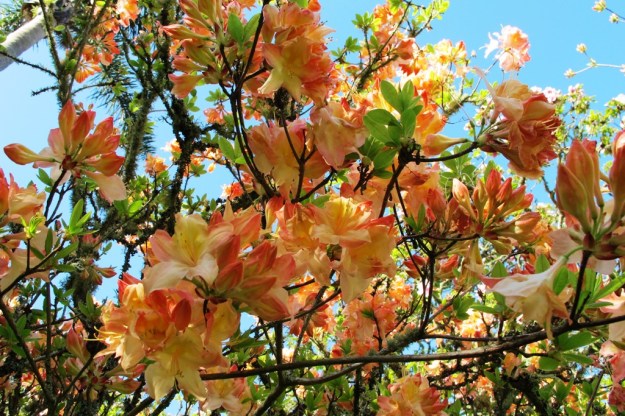
 The deciduous azaleas certainly add vibrancy to the late spring garden as we enter November. They are not all so breathtakingly unsubtle. But I guess, were a plant to think like a human, if you are going to spend 11 months of the year being pretty insignificant, you might as well make a loud statement when it is your time to star.
In a small garden, deciduous azaleas are more back-of-the-border plants than specimen glories. They lack good structure and form and their foliage is rarely remarkable. They are prone to developing mildew on the leaves as summer progresses, certainly here in the mid north and I believe it gets worse the warmer the climate. Then the leaves drop in autumn – giving autumn colour in colder climates but not here – and all winter there is just a very plain, twiggy looking shrub.
They certainly don’t fit into a heavily-styled all year round garden where structure is deemed to be more important than seasonal colour. For these are plants that shout out to be noticed in flower and ignored the rest of the year.
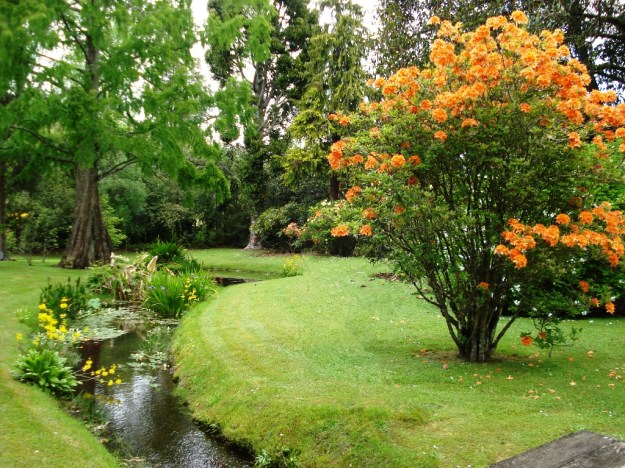 The area of our garden that we refer to as ‘the park’ was first planted in the early 1950s, in the style then promoted by the New Zealand Rhododendron Association. Plants stand in solitary splendour which gives them their own space, plenty of air movement and the ability to be viewed from all aspects. While it has changed and matured over the intervening six decades, the deciduous azaleas still thrive in this environment with minimal attention.
We find they are more tolerant of heavier, wetter soils close to the stream than their evergreen rhododendron cousins, which can’t abide wet feet. Equally, we have seen them thriving very close to the coast. And when they bloom, their vibrant colours are surrounded by plenty of green which removes the need to worry about clashes. We do not get the same intensity of yellow, orange, tangerine and plum colours with big floral display in many evergreen rhododendrons.

Many deciduous azaleas are strongly scented and this does not appear to be linked to colour as it often is in the wider rhododendron family where scented varieties are commonly in the whites and paler hues. But for those of more refined sensibilities, not all deciduous azaleas are in bright, unsubtle colours. Mark’s late father liked the softer colours and colour mixes, so we have some lovely varieties in paler apricot, almond and cream or white shades. Every year, we are delighted by the combination of a large old lilac bush that survives and flowers on despite this not being an area renowned for growing the syringia family, its many lilac plumes intermingling with a soft apricot azalea.
 Azaleas are all part of the wider rhododendron family. Evergreen ones originate from Japan while the deciduous azaleas are much more widespread in the temperate world, being found in China, Japan, Korea, southern Russia and North America. Most of what are grown now are hybrids with very mixed genetics.They are often inaccurately referred to as Ilam azaleas or azalea mollis in this country. “Mollis” refers to a particular cross deriving from A. molle and A. japonicum, originating from early plant breeders in Holland and Belgium. The Ilam azaleas came from the breeding done in Christchurch but have strong links to the Exbury azaleas, also referred to as the Knap Hill hybrids. Then there are the Ghent azaleas, which originated from that area in Belgium. Confused? It is really difficult to disentangle when in fact the most accurate description is simply to refer to them as “deciduous azaleas”.
If you are a keen and patient gardener, you can raise them from fresh seed and you will get variation in the offspring. If you want instant plants, buy them when you see them offered for sale because they are not usually available from garden centres all year round.
Denis Hughes at Blue Mountain Nurseries in Tapanui, Southland, has been breeding, selecting and selling deciduous azaleas for many years. They are grown more widely in the South Island but will flower just as freely in the north. The nursery is now in the hands of his son, Chris, and they continue to offer a mailorder service, including azaleas.
 First published in the November issue of New Zealand Gardener and reprinted here with their permission.
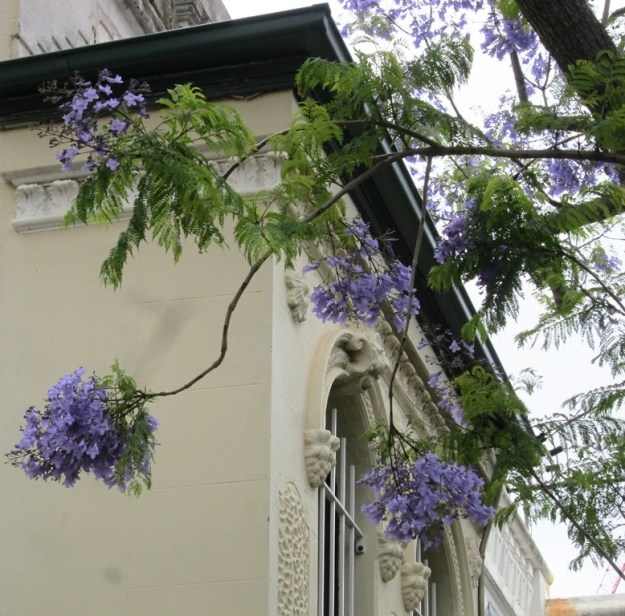 I spent the past week in Sydney, helping our second daughter move into her new apartment. This was a larger task than either she or I had anticipated so left little time for things horticultural. But oh the jacarandas were lovely, used widely as street trees and in front gardens in the eastern suburbs. Sydney is a great deal warmer than Tikorangi –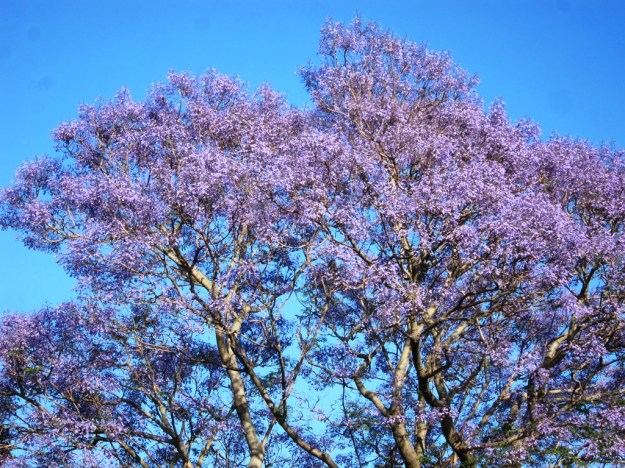
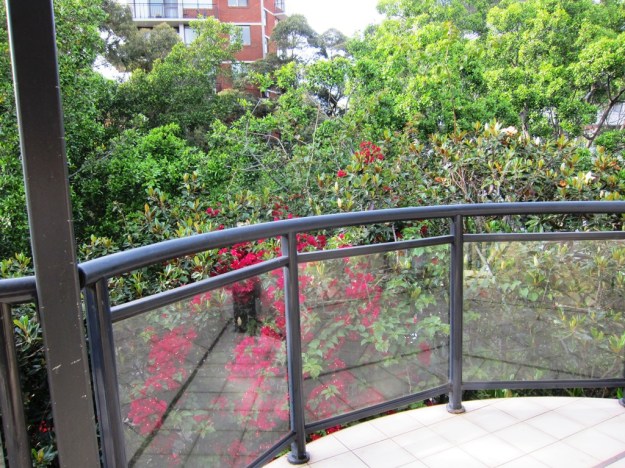 Daughter’s apartment is on the third floor. No lift. It’s not too bad – the stairs are well designed to make it easy. But I mention the third floor because that is several Magnolia Little Gems and a handsome red bougainvillea growing level with her apartment balcony. I have written about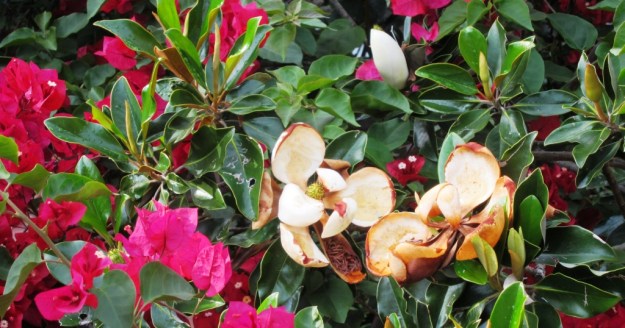
 Over the years I have seen a number of small English backyards where the only access way is via the house and thought that would be tricky. I can now say that these are eclipsed by apartments with no lift. ‘I will repot her container plants while I am here,’ I thought. Or at least the kentia palm and the tired peace lily which looked as if it was on the point of surrendering. I briefly toyed with carrying the plants down to the potting mix where there was a bit of communal garden so the mess wouldn’t matter, but decided it would be easier to carry the potting mix up and do it on the balcony. I wasn’t sure there was an outdoor tap and the rootballs needed a good soak. Logistically, it is harder than you think. Believe me. I was trying to contain the mess but even so some of the debris and the water went over the edge and I worried about alienating the lower apartment residents. The spent potting mix then had to be carried downstairs to spread. These were new challenges for me and I will look upon apartment gardeners with even greater respect. Undeterred, Daughter reclaimed her closed unit worm farm from a previous dwelling and located it discreetly at the back of the ‘landscaped’ communal area. Her kitchen scraps need to be carried downstairs anyway, so she figured she might as well keep them separate, feed the worms and use the liquid fertiliser they generate. It makes you proud to be the parent.
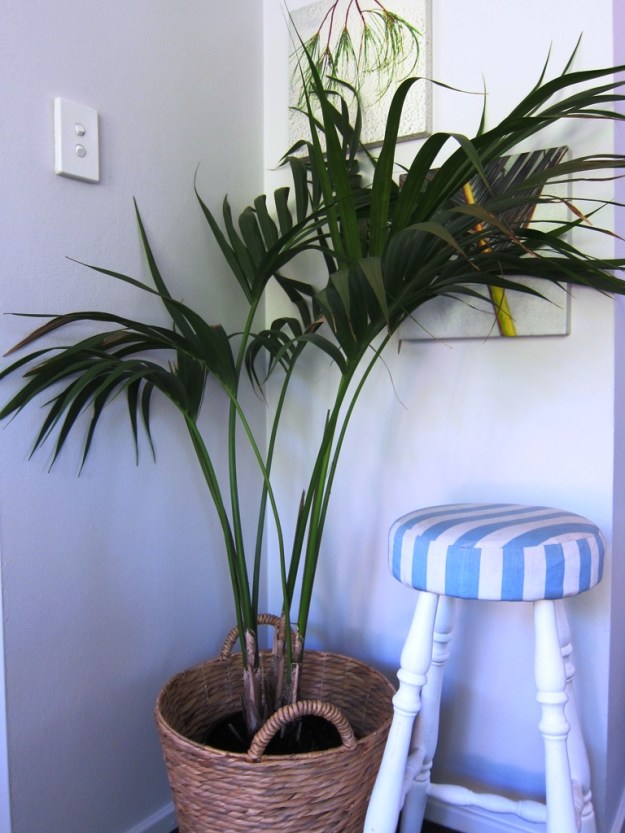 The kentia palm, I noted, is in fact three kentias (Howea forsteriana from Lord Howe Island) and there were at least five seeds sown in the original pot. That is a nursery technique to get a larger plant in a shorter space of time. Naturally I wondered about separating them but daughter needed one attractive kentia, not three smaller ones going into shock from such brutal treatment.
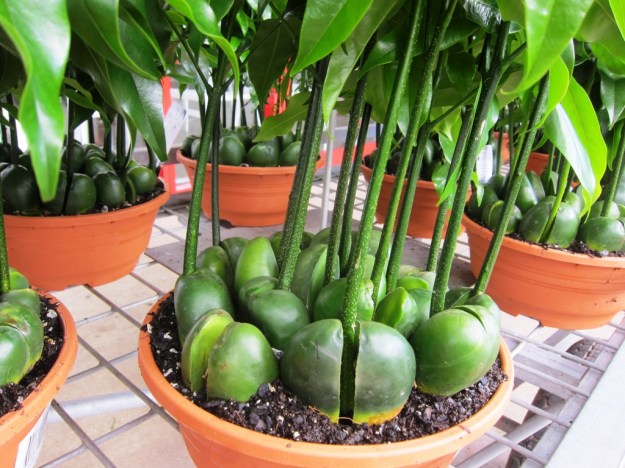 Greater love hath no mother than shopping for plastic items in Kmart but I did also get to wander through the plant section of a Bunnings store while we were doing a mission in search of home handyperson supplies. For $A26.90, you can buy a novelty houseplant of germinated “Black Bean” seeds. These are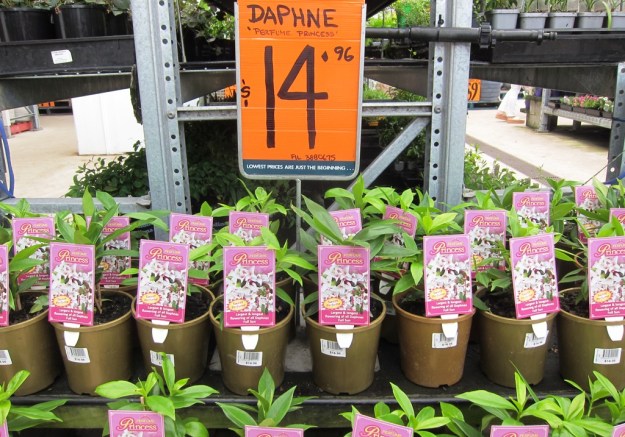
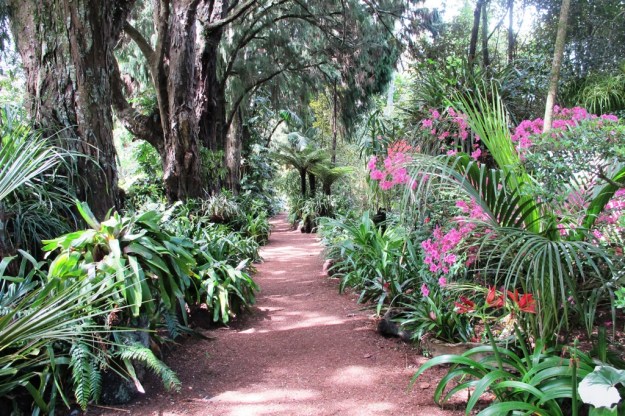

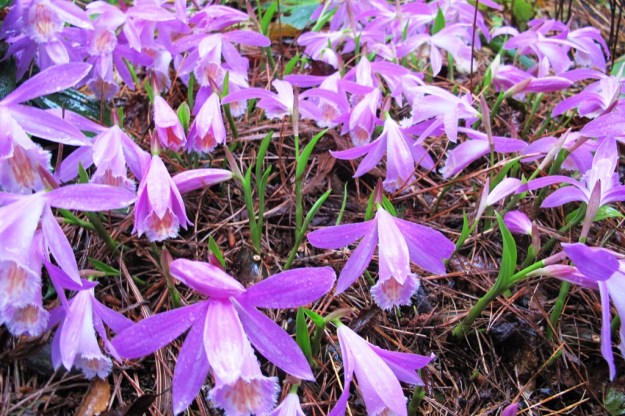
 The calanthes are ground orchids and we have big clumps now because these obliging plants can just be left to quietly increase in size. These are fully evergreen and somewhat frost tender but they are a delightful sight through spring and they combine very well with clivias, ferns and even hostas.
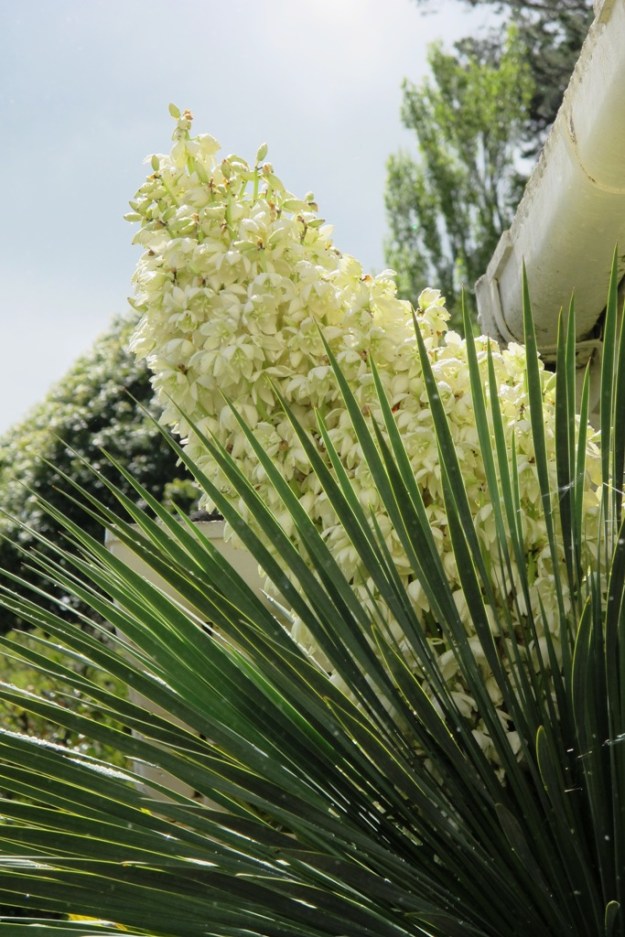
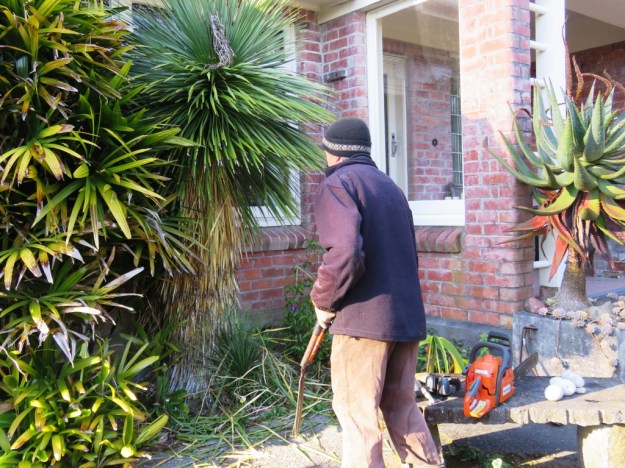 But other needs were always more urgent so the moving of the yucca had not taken place. Nor had the windows to what is our TV room been cleaned for many years. But yesterday the day came, forced by the arrival of the glaziers to install retro-fitted double glazing in our wooden window sashes. It was not an easy task. Mark had thought he could probably chainsaw the top off but the fibrous nature of the spent foliage merely jammed the chainsaw. At this point it is in two pieces. The top will be replanted on the sunny bank in the north garden where it will likely recover. The base, with a new rosette well-formed already, will be dug out and also relocated. It will, I tell you it will. I like the garden view out of the windows which is now visible again and while cleaning windows is not my favourite activity, I do like to be able to do it when necessary.
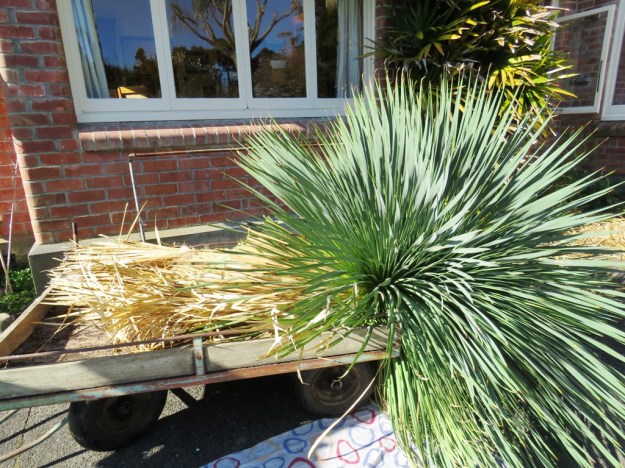 As far as we know, this is Yucca whipplei, also known as Hesperoyucca whipplei, chaparral yucca, Our Lord’s candle, Spanish bayonet, Quixote yucca or foothill yucca. So Wikipedia tells me. Apparently the most common name is Our Lord’s candle. It being native to southern America from California through to Mexico, it clearly felt right at home in the bone dry conditions of the house border beneath the eves. In the meantime, Our Lord’s candle is no long alight at our place.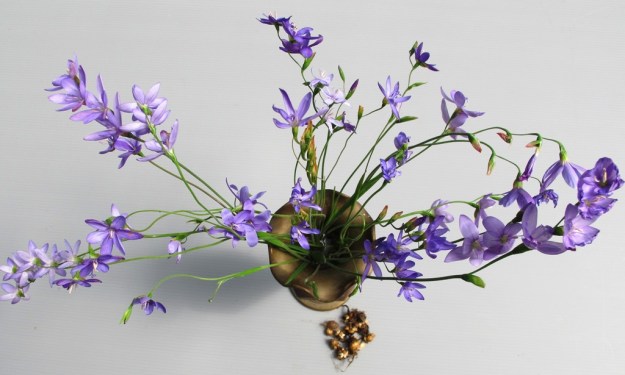
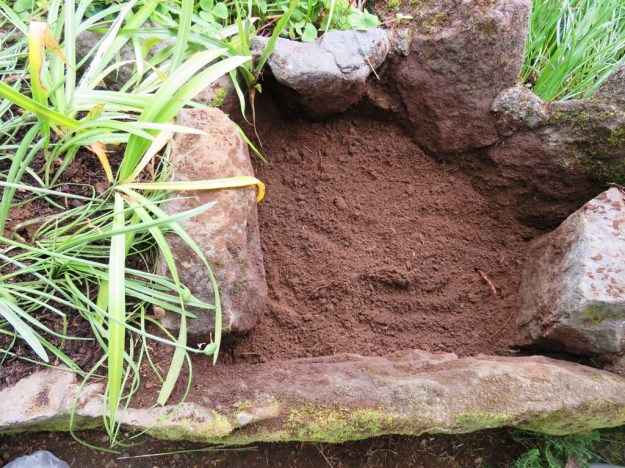
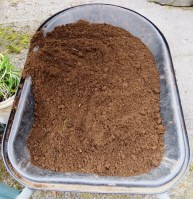 I have been forced to extreme remedial action in the rockery in the Battle of the Geissorhiza. Such a pretty weed and so dreadfully invasive. Each bulb is surrounded by many little baby bulbs that peel off as soon as you look at them, ready to grow into the future. In the worst affected pockets of rockery, I am lifting everything and washing the roots to make sure no dreaded geissorhiza bulbs are lurking in there hiding. Then I dig out all the soil and replace it with clean soil. I was surprised that one pocket generates almost a full barrow of soil. The contaminated soil is being dumped in the deepest, darkest shade where I hope nothing will germinate and if it does, as a last resort it can be sprayed. This somewhat extreme and labour intensive treatment should, I hope, get me closer to victory and the extermination of this pretty but hideously invasive bulb.

