Tag Archives: belladonnas

Our garden diary this week – from new year resolutions to lilies … to fracking (and bits in between). 09 January, 2017

Aurelian lily season has started

Aurelian lily season has started

We don’t do New Year gardening resolutions here. Much of our daily conversation revolves around gardening and environmental concerns and we know already that 2017 will see us heading further down the track of ecologically sound gardening – soft edged, romantic gardening in a more naturalistic style which adds to environmental eco-systems rather than battling with nature to keep a hard-edged, manicured garden. I am a bit worried that Mark’s growing tendency to embrace all aspects of nature may see him convert to Buddhism. I do not share his reverence for the lowly life forms like snails (he admitted he relocates these) and flies (which he liberates out the windows) but it is an extension of a gentler way of living. If we had a shared resolution, it would be to continue our efforts to tread more lightly on this land we occupy.

I did, however, decide I would discipline myself to keep garden records on a daily basis – in the old fashioned manner of a few simple notes in a diary. In days gone by, when I used to write for our local newspaper, I was contracted to provide a weekly list of advice on what to do in the garden. It often had us scrambling to follow our own advice. As a variation on that, I thought I would try a weekly post on what we have actually done in the garden. Retrospective, but recent, so to speak.

One of his vegetable patches. He calls this one his allotment.

One of his vegetable patches. He calls this one his allotment.

We arrived home from a very hot festive period in Sydney and Canberra to an unusually cool summer in Tikorangi. The lush green appearance of home struck us afresh. While I am hoping we will get some hotter days, temperatures in the low 20s Celsius are more conducive to gardening. Mark has been playing catch-up in his vegetable gardens – hoeing weeds, sowing corn (“have you sown my basil yet?” I keep asking) and thinning and tying in his tomatoes. The main daily harvests are salad vegetables and peas – I eat my daily portions of the latter raw while he prefers his lightly cooked. We consume large amounts of fresh vegetables – the Heart Foundation would nod approvingly, I feel. This is the first year he has grown daikon, the Japanese white radish. Delicious is our verdict, though each specimen is quite large for a family of two.
img_3307img_6655


The raspberries are cropping a little late this year and I do not think we will get the usual volume that I freeze for later use. The strawberries are still producing but in smaller quantities and with smaller fruit.

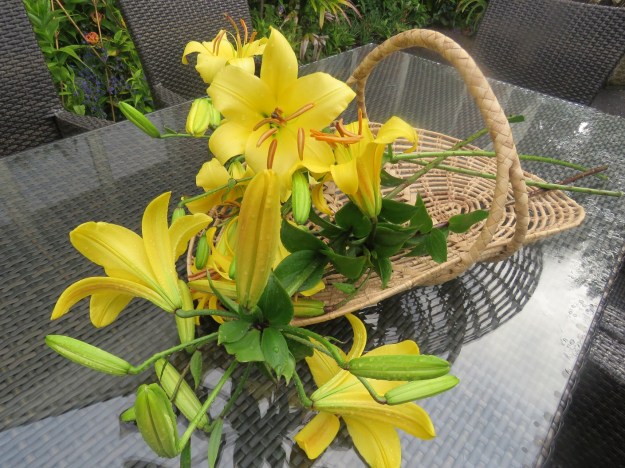
On the rainy Tuesday, Mark summer pruned the grapevines which are grown under cover. I started the summer pruning of the wisterias – leave these to their own devices at your peril. The Higo iris in the park continue to flower and bring us great pleasure (nearing two months in bloom now) but it is the lilies coming on stream now. I picked the first of the Aurelian hybrids that Mark raised. These are currently in one of the vegetable gardens, pending the move to a permanent home in a new garden but in the meantime, I can cut them all I like without spoiling the display.

The floral display in late March

The floral display in late March

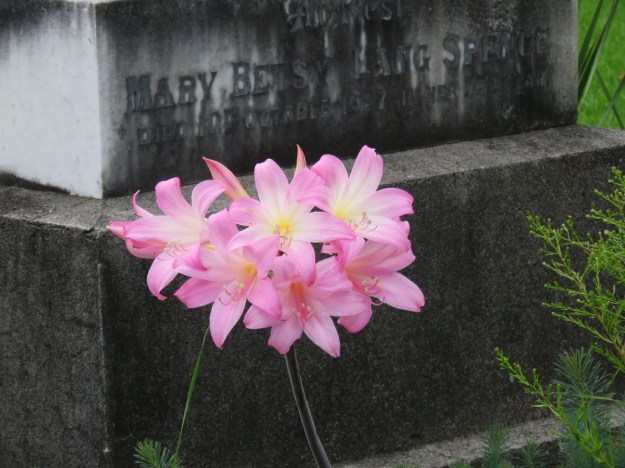
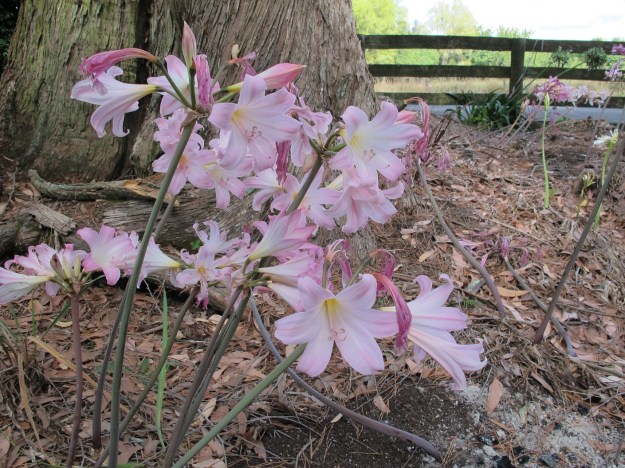
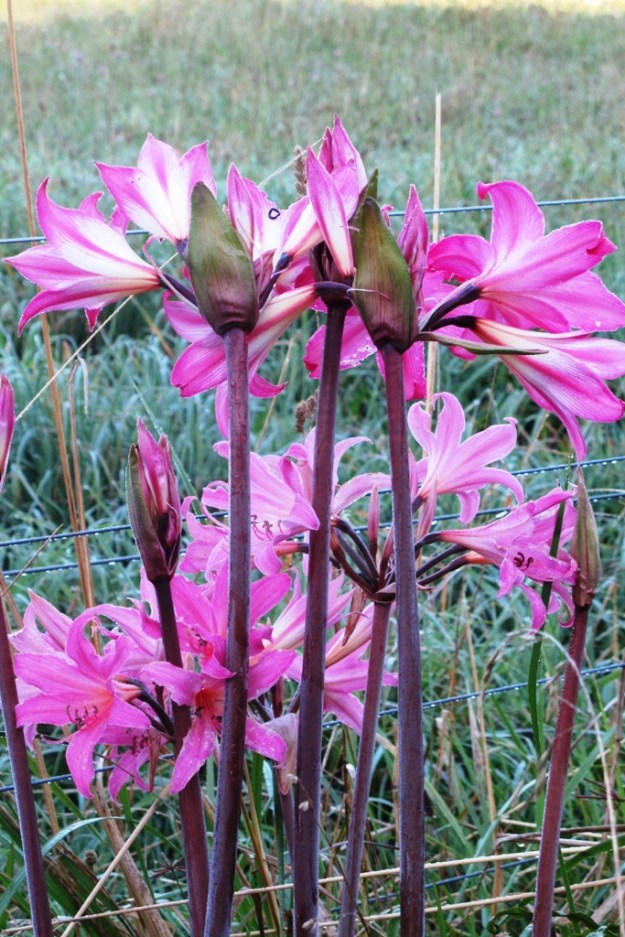
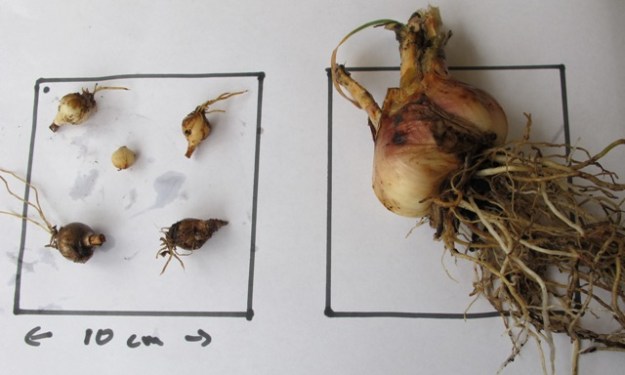
I have been lifting and replanting many of the belladonna bulbs by our main entrance. We grow these as a roadside wildflower. They are a bit strong and bullying to make a good garden plant and their flowering season is brief but they are an early autumn delight. The window of opportunity to lift and divide is narrow because they stay in growth for most of the year and I have been meaning to do this for some years. I discard all the small offshoots and bulbs. We don’t need more than we already have.

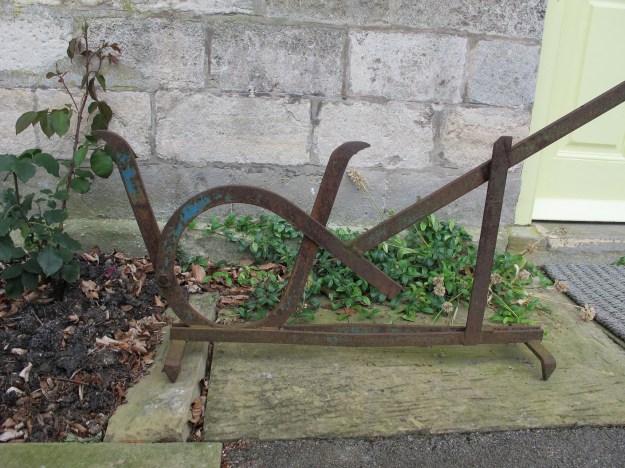
A vintage faggot binder

A vintage faggot binder

Because we have big clumps beneath a huge old eucalyptus that is one of the original trees here, replanting involves gathering up debris which we will use as fire-starters as winter. Some eucalypts shed a prodigious amount of stringy bark and twiggy growth. I want to say gathering faggots, for that is what the term used to be before the word became debased as sneering abuse. Because we lack the time-honoured faggot-binder that I photographed – enviously – in a Yorkshire garden, I stuff them in old sacks instead and stack them in the pine cone shed.

Loading out means many massive loads such as this one

Loading out means many massive loads such as this one

Finally, the omnipresent petrochemical industry. I haven’t written about this in recent times for two reasons. Firstly the pressure lifted somewhat with a decrease in activity due to low global prices for oil and gas (click on the *Petrochem* tab on the top menu bar for more information on how very bad it was at its peak). Secondly, we had to learn to live with it or it would break us, as it nearly broke me three years ago. I have learned to look inwards to our own place – circling the wagons, I call it. Others may call it practicing mindfulness. But the industry grinds inexorably on. Today, they are loading out all the equipment from the latest round of “repairs and maintenance” on Mangahewa C site. You or I may call this fracking and refracking – repeatedly – but in the parlance of this new age, we were assured that this is now called “behind pipe opportunities”. Alas I am not joking.

mhw-c

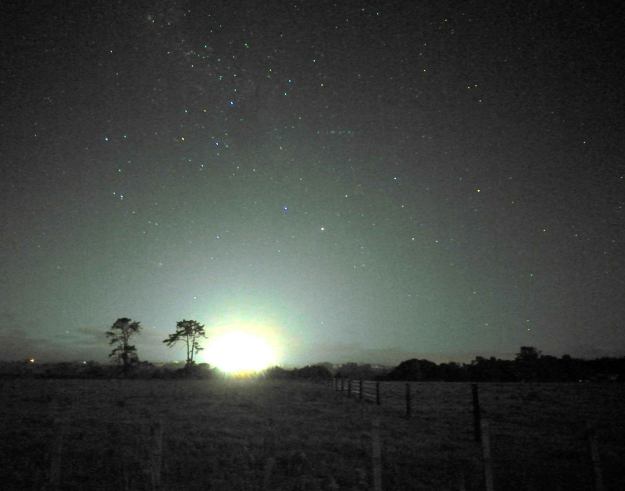
The Mangahewa C site flare last week. Photo: Fiona Clark

Fracking (to get the gas flowing again) is always followed by flaring and this wonderful image from last Saturday was captured by Fiona Clark. We live maybe 2km nearer to this site than she does so we get the benefit of the sound effects too. CO2 emissions and global warming, anyone? This is why I circle the wagons and look inwards to our own patch. The contrast could not be more extreme.

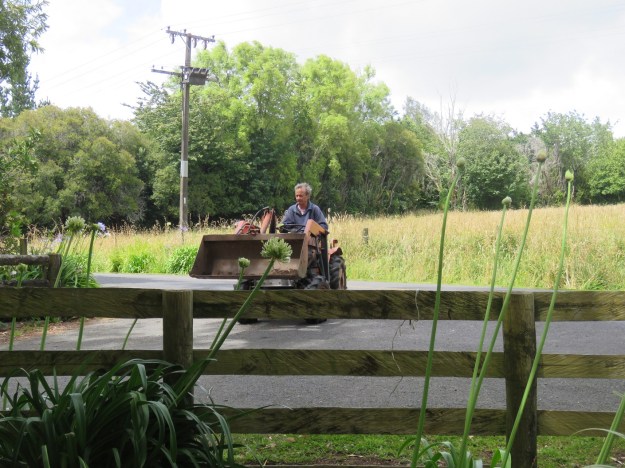
Not exactly circling the wagons - just Mark on our incredibly useful and long lived baby tractor.

Not exactly circling the wagons – just Mark on our incredibly useful and long lived baby tractor.

Tikorangi Notes: Sunday March 15, 2015 Mostly about saving native trees

Schefflera septulosa in flower

Schefflera septulosa in flower

Without the discipline of a weekly newspaper deadline, it is frankly alarming how quickly I find myself slipping out of the pattern of regular writing. I realise how focussed I was all the time on ideas and images to share, always thinking ahead. But I shall show discipline and application, dear Reader, because otherwise my ideas of writing a book will fade forever into pipe dream territory.

I shall set myself an easy task, I thought, and just rattle off a Plant Collector on Schefflera septulosa for starters. But a quick check shows that I had already done that three years ago. It is the story of my life as the years of writing rack up. What caught my eyes and ears this week was to walk beneath a plant of the aforementioned schefflera and to hear the hum of hundreds of busy honey bees. The flowers are not spectacular and I must admit that, not being the world’s most observant person, I had not noticed them before. As we do not have any beehives around us, we are delighted to see such large populations of bees in residence. It is a sign that we are managing a good ecosystem for them.

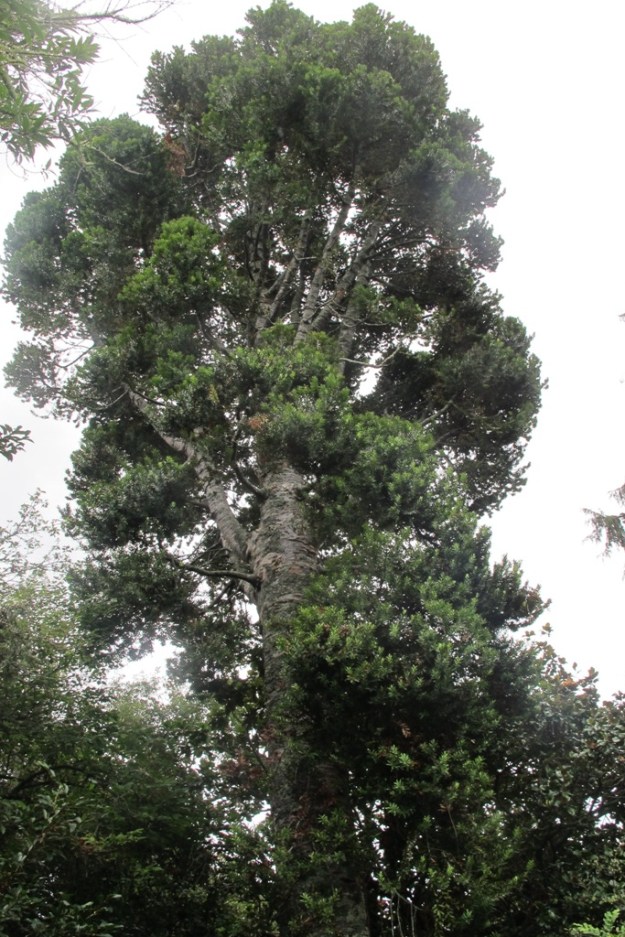
Foliage on our own kauri tree

Foliage on our own kauri tree


The felling of mature native trees in urban locations, done in the name of “modern progress” and “economic gain” is big news at the moment. Sustained protests in Auckland have seen the Western Springs pohutukawa (6 large trees) saved from the motorway widening exercise and a reprieve for a mature kauri due to be felled to make way for an outside deck on a new house in the bush-clad suburb of Titirangi. The age of the kauri was declared at 500 years and immediately challenged by those who think any environmental protest undermines economic wealth. Honestly, it becomes academic as to whether it is 200 or 500 years old, but for somebody to describe it as being a “newbie” is just ignorant. It is a significant surviving tree in a rare remnant of forest which pre-dates European settlement. I cannot think that other developed countries – particularly the UK – would countenance a developer cutting down such notable trees.
Our own kauri is but a young tree at 65 years

Our own kauri is but a young tree at 65 years

I headed down to photograph our kauri in our park. It is a juvenile at a mere 65 years old but has achieved a remarkable stature in that time because it was planted in prime conditions without competition from other plants. It would be nice to think that it may survive many generations into the future. The botanical name is Agathis australis but it is usual in New Zealand to refer to these by their Maori name of kauri.
The Waitara #Pohutukawa23

The Waitara #Pohutukawa23


In the meantime, our own battle to save 23 mature pohutukawa on the river bank in our local town continues. The local authorities are less receptive and responsive than in Auckland. Indeed, the Auckland pohutukawa team sent down their banners, bunting and yarn bombing for us to use on our Waitara 23. They survived many weeks in Auckland without mishap but a mere 24 hours in Waitara before the engineer contracted to the Regional Council saw fit to rip them down, damaging many in the process. So much for the right to peaceful, democratic protest in Taranaki. The tattered and damaged “regalia” was eventually returned and will be hung again today as a reminder to the council that this issue is not going to die a quiet death.

If you feel like adding your voice, to tell the Taranaki Regional Council that felling mature native trees is not just a local issue and that people beyond are watching, please visit our on-line email campaign and add your voice. Numbers matter and your support will be much appreciated.
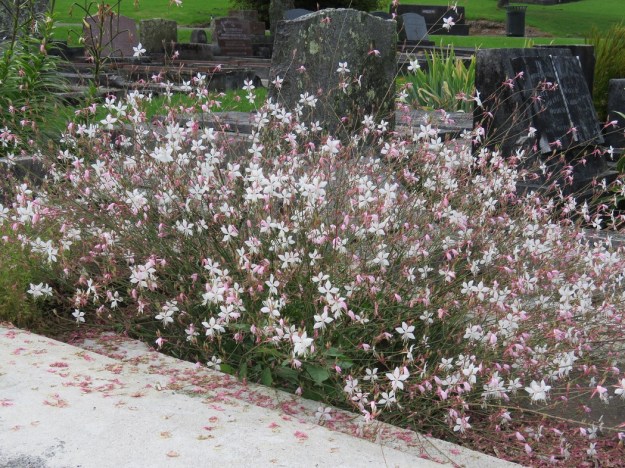
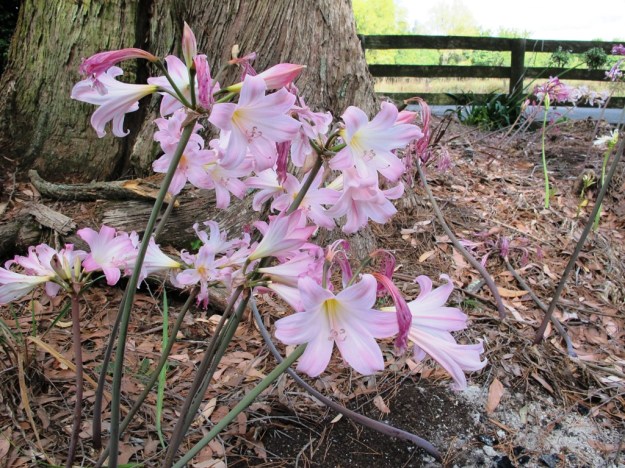
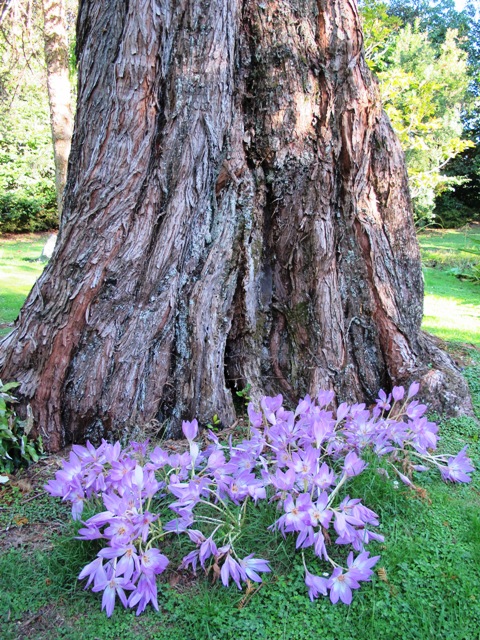
???????????????????????????????We are inching gently into autumn and the under-rated belladonnas are in bloom. I am looking at these with new respect and thinking that they may warrant bringing in from the roadside to some of the areas of naturalistic garden. I dislike the descriptor “naturalistic gardening”, which seems clumsy to my eyes, but it is more accurate than “wild gardening” which may suggest weedy chaos to some.
???????????????????????????????
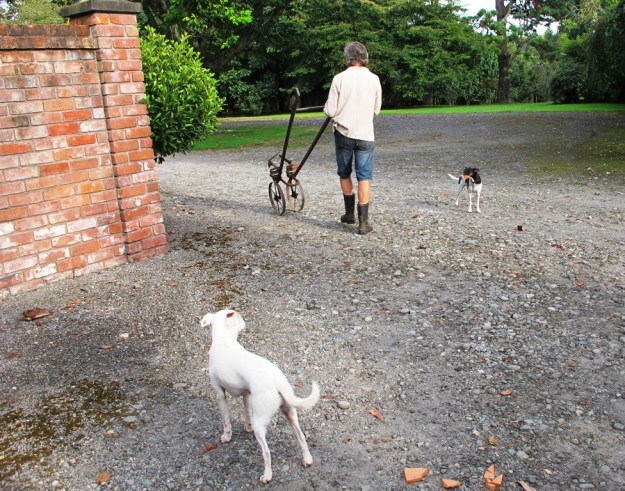
???????????????????????????????And finally, I leave you with Man, Planet Junior and Dogs this quiet Sunday morning – Mark heading over to his vegetable patch with a treasured implement from times past which he still uses on a regular basis.
Bulb meadows

Colchicums in the park

Colchicums in the park

The demise of two of our grand old pine trees a few weeks ago has necessitated a fairly large clean up. They were about 140 years old and had been on a major lean for much of that time. Clearly they passed the point of balance. But, as happens in gardens, their collapse also opened up an opportunity. Suddenly there was a nice little area which had been dense shade and more or less left to its own devices but was now light, open and clearly of potential.

“Bulbs,” I thought, “I shall plant it in a succession of bulbs to take it through the seasons.” I started with what was already there – a congested but large clump of snowdrops, a few cyclamen and some valiant pleione orchids which were battling on despite choking ground cover plants. Then I raided the nursery where we still had quite a few pots and trays of suitable bulbs, particularly dwarf narcissi of various types. By this point, I was already committed to using minis and dwarf growers which would co-exist and not choke out their growing companions.

So how many bulbs are needed to fill an area?

So how many bulbs are needed to fill an area?

    As I continue to raid suitable bulbs from wherever I could find them, I started to do the maths. We are not talking a large area here. It is maybe 10 square metres (5x 2) at the most. Do you have any idea of how many dwarf and mini bulbs are needed to fill that space? Allowing maybe 5 bulbs per 10cm square, that adds up to a massive …. 5000! Okay, so the cyclamen are not planted at that density, but many of the others are.

Had I chosen to start with larger bulbs of stronger growing varieties – full sized daffodils, bluebells, tulips, colchicums and the like – I could have planted them at maybe 10 cm spacings so would have only needed about 1000 bulbs. It is still a lot.

The lesson is that if you are besotted by bulbs, as we are, it helps to learn how to look after them so that you can increase the supply for other plantings. Having depleted the nursery of spare bulbs that are suitable for this situation, I am now taking apart beds in the rockery to thin the bulbs there and get the surplus for my new area. So far, as well as the types already mentioned, I have added rhodohypoxis, blue brodiaeas, various different lachenalias and crocus. I am aiming for mix and match in the hope that there will be something seasonal and dainty flowering in that particular section at all times of the year. It will take some tweaking over time to get it right.

Belladonnas beneath the gum tree at our entrance

Belladonnas beneath the gum tree at our entrance

    I have a mix and match of large and some invasive bulbs beneath a huge old gum tree at our entrance. Invasive bulbs are easily contained there and there is room for sometimes scruffy performers like the belladonnas to put on a good show.
Bluebells to the left and common old Lachenalia aloides in front

Bluebells to the left and common old Lachenalia aloides in front

    Elsewhere, we have tended to keep our bulb plantings separated by variety. This may be our nursery background – keeping the option open to start selling bulbs again if need be. But a big show of a single variety can be striking. We sometimes use the root zone at the base of large, specimen trees, usually on the sunny side because most bulbs enjoy light but are adapted to surviving quite harsh conditions. This gets them out of the way of the lawnmower.
Drifts of bulbs are harder to manage here

Drifts of bulbs are harder to manage here

    But really what we covet most are drifts of bulbs – informal, randomly organised rivers of seasonal colour flowing through. In harsher climates where the grass stops growing in winter (too cold) and summer (too dry), it is possible to do it in grass. But not here. Without significant management, the strong growing grasses overwhelm the bulbs and need mowing before the foliage has had a chance to carry out its function of replenishing the bulb.

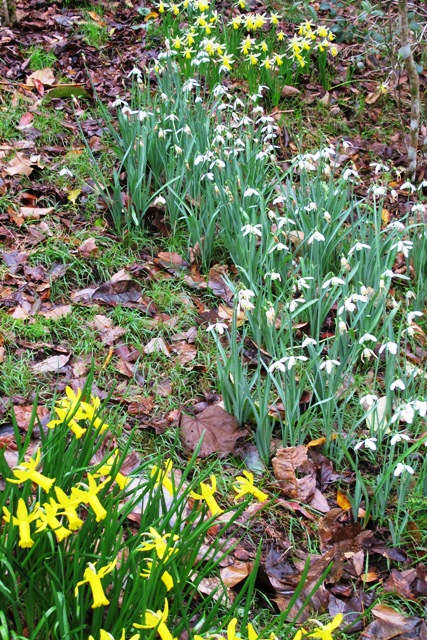
It is easier to work with bulbs which shed their foliage quickly. There are big differences in how long different types keep their leaves – anything from 4 to 6 weeks up to 11 months. Fortunately the pretty snowdrops (galanthus) are light on foliage, because what we really want over the next decade is to develop proper drifts of snowdrops. Not a few hundred. Thousands. They will be a fleeting wonder lasting a mere week or two each year. But it is the sheer frivolity of self indulgence that will spur on the snowdrop dream. At least we know which ones perform well in our climate – without snow or much winter chill – and we will just gently work on it by continually dividing and spreading the existing clumps. I am guessing the one clump of Galanthus viridapicis in my new little bulb garden yielded upwards of 300 bulbs. That is a good return.

First published in the Waikato Times and reprinted here with their permission.