Tag Archives: dwarf narcissi

Bulbs of September

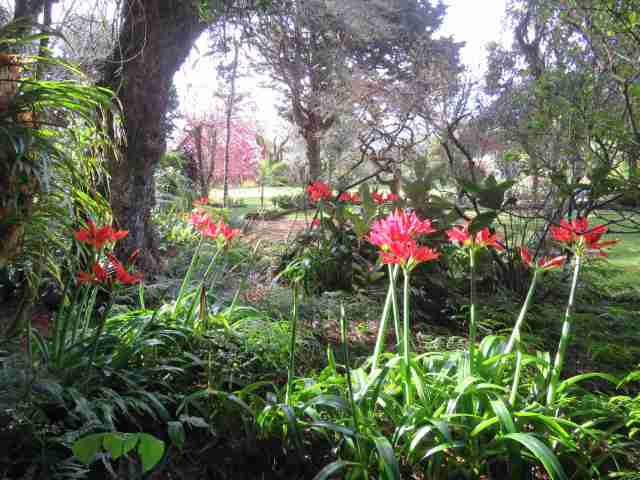
Hippeastrum aulicum – we plant it in semi shade to shaded areas because it will still flower and the dreaded narcissi fly only attack plants in sunny spots

Maybe I will do a monthly post on the bulbs in flower here during each month, I thought in August. I am pretty sure that we have bulbs, corms and tubers of one sort or another flowering twelve months of the year. But August came and went and here we are, well into September and peak spring.
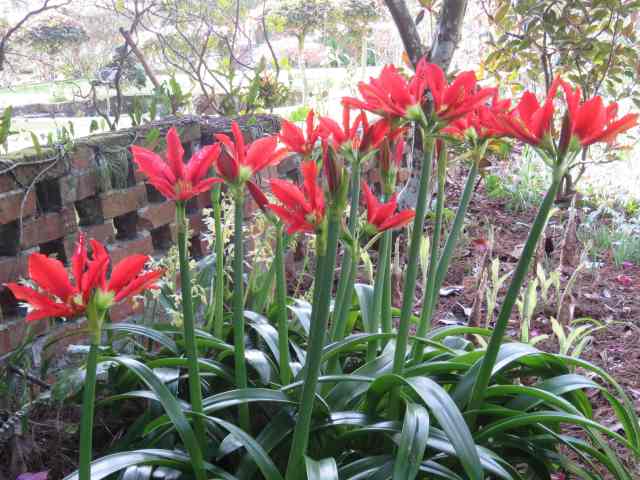
Hippeastrum aulicum

Ah well, there is always some crossover. The narcissi and the Hippeastrum aulicum both started in August and are still in full bloom. The aulicums bring us great pleasure and are a significant feature as winter breaks to spring in our garden but are probably beyond the reach of most people. It is not that they are difficult to grow but they are not widely available and, purchased individually, they will be expensive. Mark’s dad probably started from one or maybe three bulbs, as was his and now our way, and the results here have been achieved over about seventy years of quietly lifting, dividing and planting around the garden, now with many hundreds of bulbs in various locations. Not every gardener has the time, patience and willingness to achieve this, let alone the longevity of stay in one garden location.
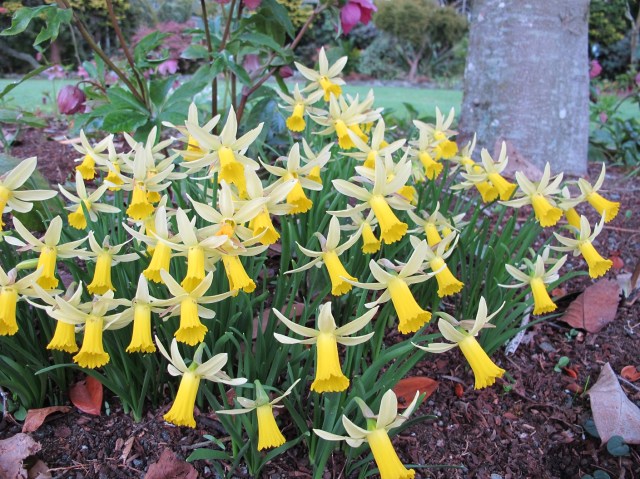
Narcissus Twilight

The narcissi are more achievable and will give a quicker result. We grow as many different types as we can, bar the modern hybrids (the King Alfred types) that are most commonly sold. They are better as cut flowers (the weight of the bloom often bends them over in the garden) and are better in places that don’t have issues with narcissi fly. We favour the earlier flowering dwarf narcissi. Growing a range of different species, named hybrids and seedlings raised here on site extends the season into many weeks from early August right through September.
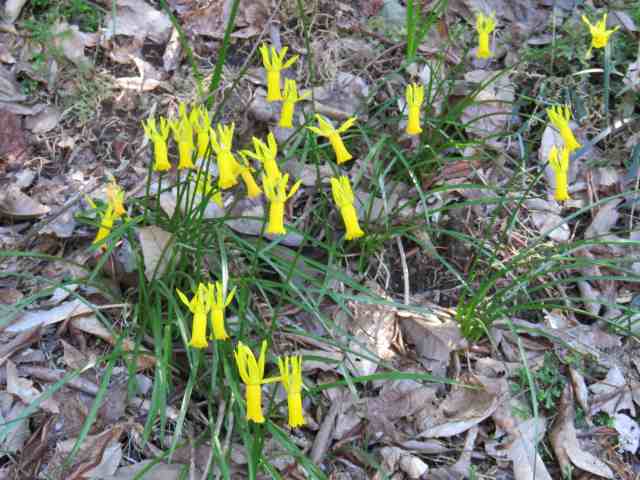
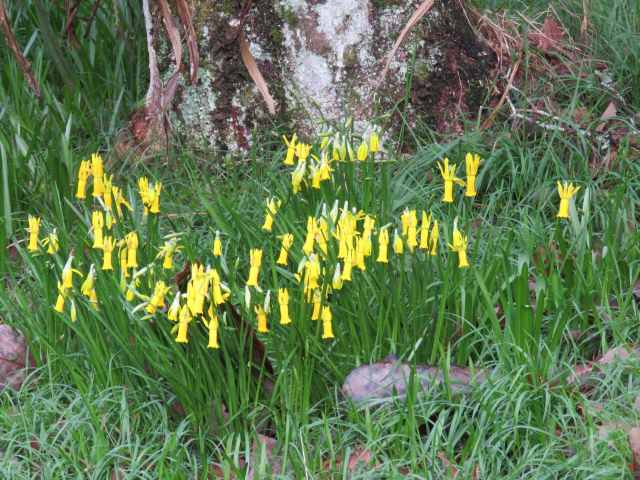
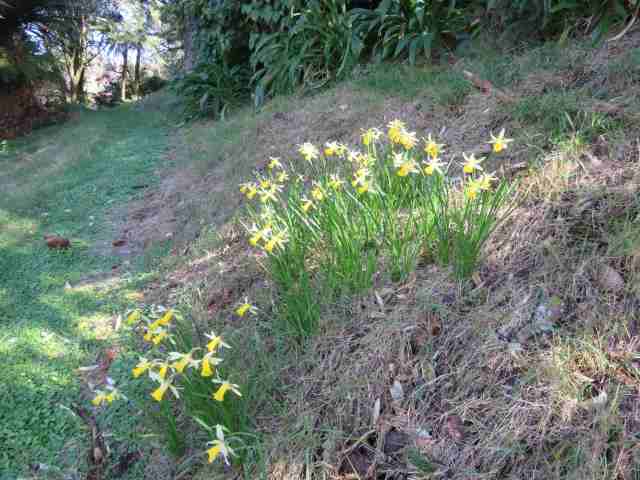
Narcissus cyclamineus seedlings growing on one of our bulb hillsides

We use narcissi everywhere really, the major consideration of sites being that they won’t get swamped by larger growing plants and that they will star as rays of sunshine in their time each year.
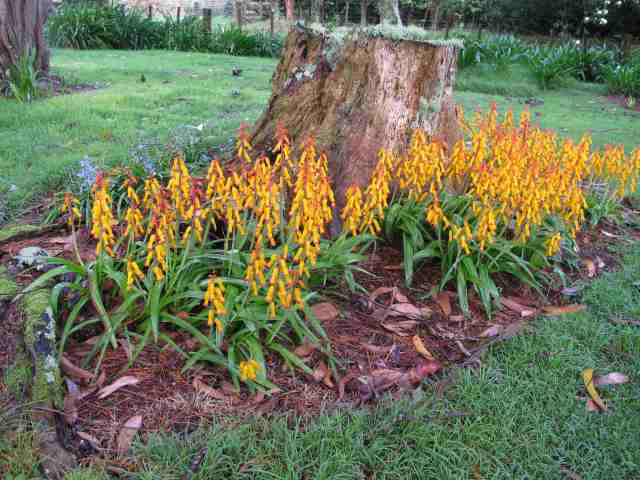
Lachenalia aloides

The lachenalias also star through spring. It is the boldest and the brightest that bloom first. Lachenalia aloides is the common form that is widely grown. Cheap and cheerful, might be the best description. Placement is everything when it comes to this bulb. I don’t like it as a garden plant but I think it is great on the margins and in wilder areas.
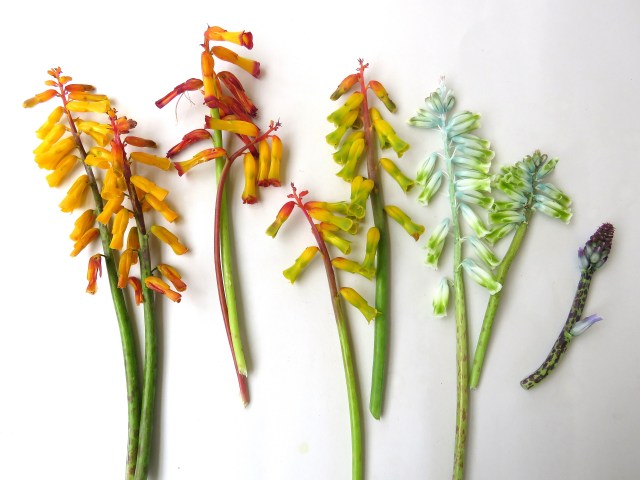
I am officially giving up on trying to understand the plant classification and nomenclature of lachenalias. Last time I looked, these were all forms of the species L. aloides. I even staged a photo to support my comment that a single species can be very variable. So we have straight aloides, quadricolor (already passing over – it is even earlier), tricolor, vanzyliae and glaucina which was barely opening a week ago. Now I look and I see they have been split. Glaucina is back with L. orchiodes, while quadricolor and vanzyliae seem to have been elevated to the status of being in species classes of their own and I have no idea where tricolor sits. They can remain a mystery for me.
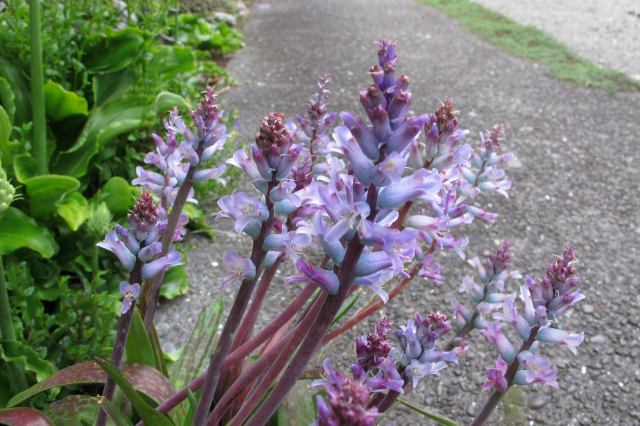
Lachenalia glaucina

From a garden perspective, I always notice that it is the orange, yellow and red lachenalias that flower first (the yellow being Mark’s reflexa hybrid, the red we have is bulbifera). The most desirable so-called blues come later. I say so-called blues because that casual grouping takes in those with the faintest blue genes that are really shades of cream, pink and lilac as much as pure blue. We have gathered every one we could find over the years and by far the most reliable is the aforementioned L. glaucina.

And without writing a book on topic, I can only continue by listing bulbs that I spotted on a perfunctory wander around the rockery and areas where we have done informal swathes of different bulbs. We find the bulbs add depth and detail which we value highly.
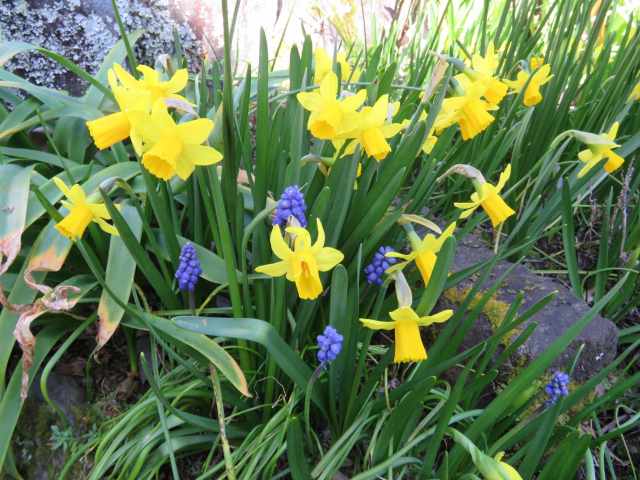
A touch of grape hyacinth is enough. Seen here with Narcissus Tete a Tete.

We are not too snooty about the common bulbs. While the snowdrops finished last month, the undervalued snowflakes (Leucojum vernum) flower on. We are thinning out both the grape hyacinths (muscari – foliage to flower ratio too high in our climate and spreads a bit too much) and bluebells (way too invasive) but not aiming for total eradication.
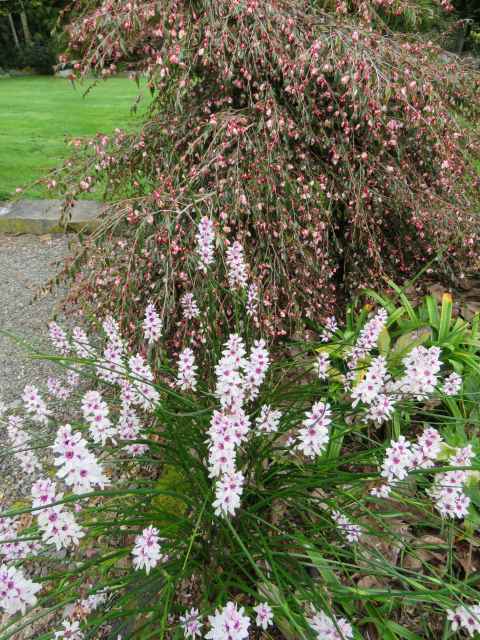
Once was dipidax, then onixotis but now, apparently a wurmbea
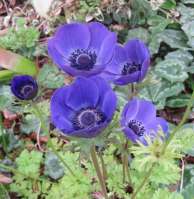
Seedling anemone

The blue anemones seed down and have quietly naturalised in the rockery without being a problem. I once planted a couple of bags of anemones and ranunculus and they all flowered the first year. From then on the ranunculus, the double anemones and all colours except blue quietly faded away but I like the simple blue and I like even more that they are self-maintaining. The Wurmbea stricta which we used to know as an onixotis and before that was a dipidax is another common bulb but one without a widely-used common name so most often greeted with words to the effect of “Is that what it’s called? My mother used to grow that – I never knew its name.” Dutch iris are another early spring option. I like my blue ones but I am not a particular fan of the family generally.
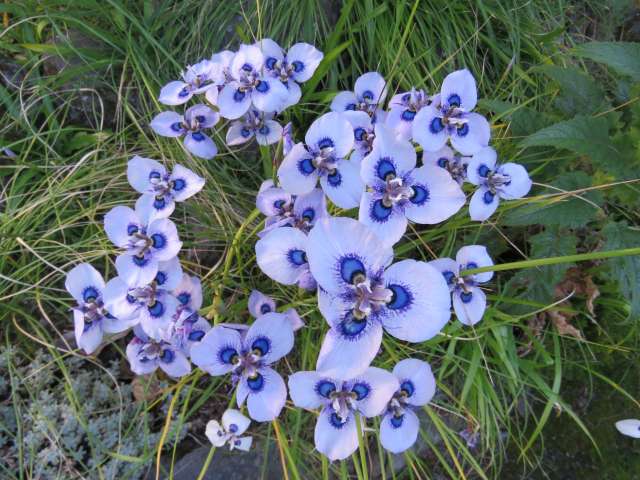
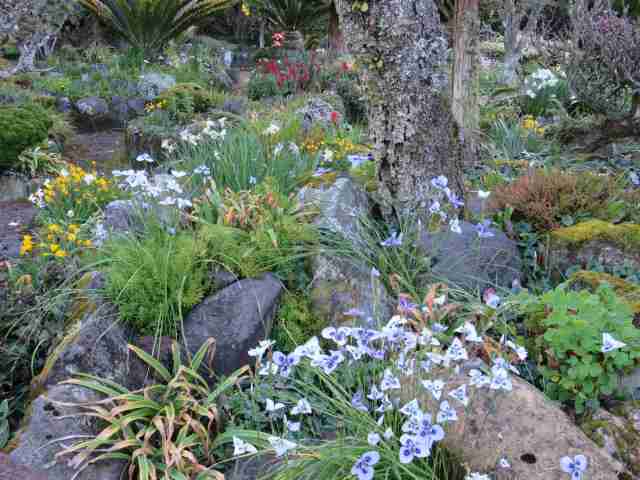
The blue moraea villosa are the most desirable but the white with blue eye are the most common

There is a large group of somewhat messy bulbs that are terrific in flower but their seasonal foliage is often dying, either just before they bloom or while they are in flower. So they are not nice, tidy, neat bulbs but they are generally showy. The Moraea villosa float like ethereal eyes of the peacock feather, moving in the breeze and they are a delight, even though I may feel irritation at their messy foliage in a few weeks’ time. The freesias (plain cream ones here), sparaxis, valotta, tritonia, Gladiolus tristis and babianas all fall into the same category and are flowering now. We grow them all, but more in the rockery for choicer ones and in meadow plantings for vigorous ones. Their foliage issues are less intrusive than in a tidy border planting.
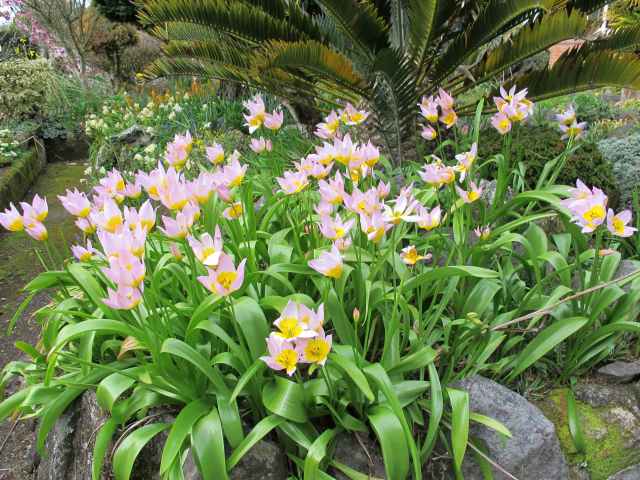
Unlike the Dutch hybrids, Tulipa saxatilis just keeps quietly increasing and returning to bloom every year

Tulips – we don’t grow the Dutch hybrids but we are enamoured with the Cretan species Tulipa saxatilis. And we have a dainty yellow species that may be a form of T. sylvestris, or it may not. Amongst Mark’s parents’ slides, there was a photo of it in the newly constructed rockery so around 1952 or so. Amusingly, seventy years on, we still have it but only in similar quantity to that in the early photo. It is clearly not going to naturalise and reproduce much here.
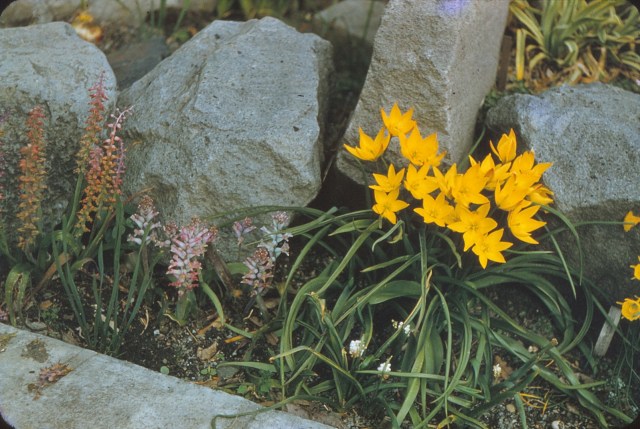
We know this is a very early photo because the rocks have not a skerrick of moss or lichen on them.
Ferraria crispa

Then there is the Ferraria crispa, the starfish iris which is only worth the space if you are fascinated by oddities and freaks. Erythroniums, dog’s tooth violets which prefer colder, drier winters, are a seven to ten day wonder with us but charming and dainty for that time and no bother for the rest of the year. Veltheimias in pink and in cream are a mainstay for us in both sun and shade, the pleione orchids are coming into flower and Hippeastrum papilio has opened its first blooms – I could go on.

Why did I start with the month that is probably the busiest of the year in the varied world of bulbs? There will be more that I have missed. If I end up having to retire to a very small town garden, there will be no roses, lavenders or easy-care mondo grass. I am pretty sure I will be growing bulbs.
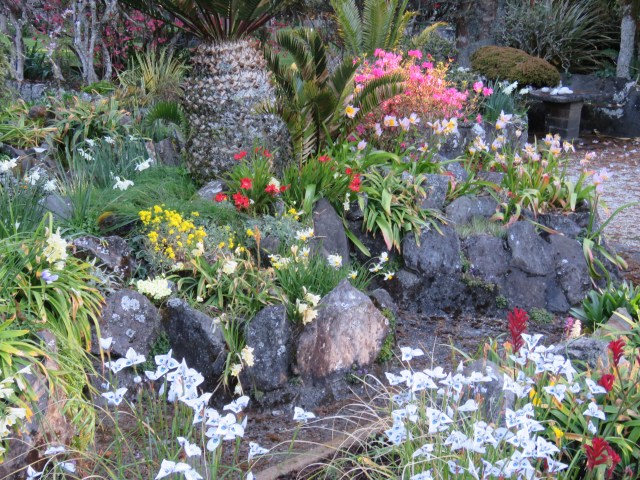
The rockery is at its busiest at this time of year

Early spring gold

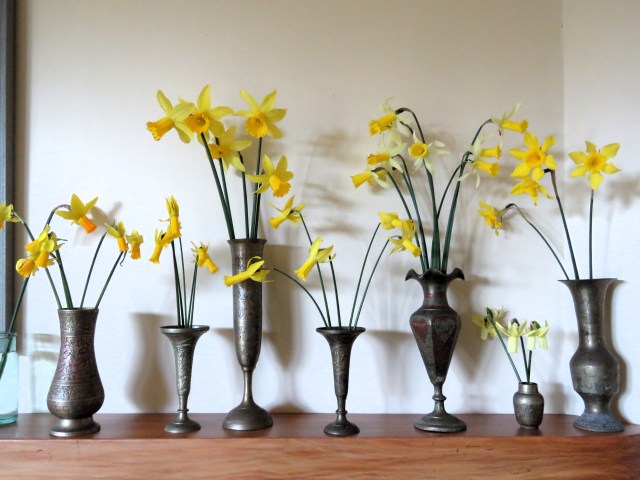
A selection of the earliest flowering narcissi – we like variety

What a delight are the dainty narcissi. I see I started photographing them in in mid July so we have had a month of pleasure so far and plenty more to come. When it comes to magnolia flowers, we lean to the bigger is better way of thinking but the narcissi are different. Small and dainty, thank you.

In the Court Garden

The big daffodils flower later and we don’t have many of those. In fact, we have none of the large-bloomed, modern hybrids which are what dominate the commercial bulb catalogues. They just don’t fit our garden style. Also, because they are later flowering, they get hammered by the narcissi fly and with their long stems and heavy heads, they flop over as garden plants in heavy spring rains.

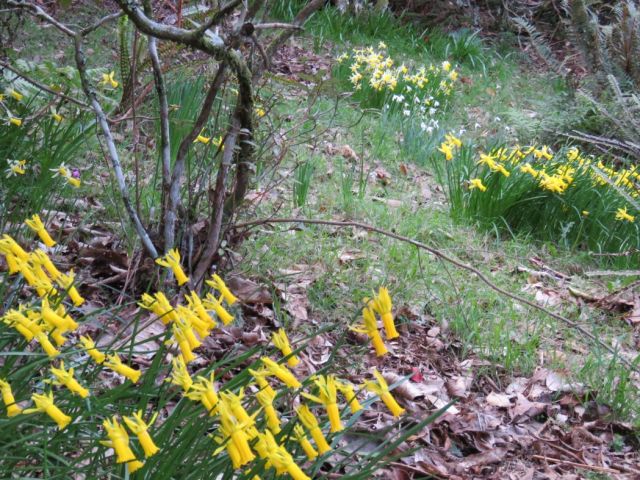
Down in the park. Those backswept petals are a feature of cyclamineus narcissi but they are by no means all as backswept as these specimens that look particularly startled.

We once went to the National Daffodil Show when, for some unknown reason, it was staged in the War Memorial Hall of our nearest small town. It was amazing but the only dwarf varieties on show took up about one square metre while the rest of the hall was packed with impressive displays of show blooms and there was a clear preference for what we sniffily refer to as ‘novelties’ but devotees would describe as ‘breeding breakthroughs’. Those split coronas (the trumpet part in the middle) that look squashed don’t do anything for me and I am unconvinced by the colour break to pastel, salmon pink. But that is a matter of personal taste and life would be dull if we all liked the same thing.

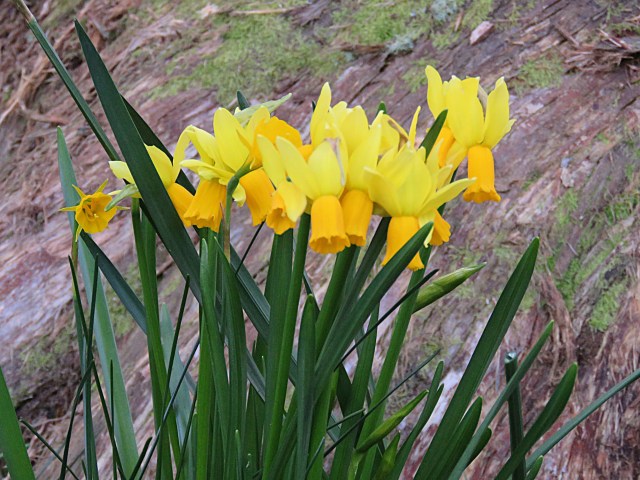
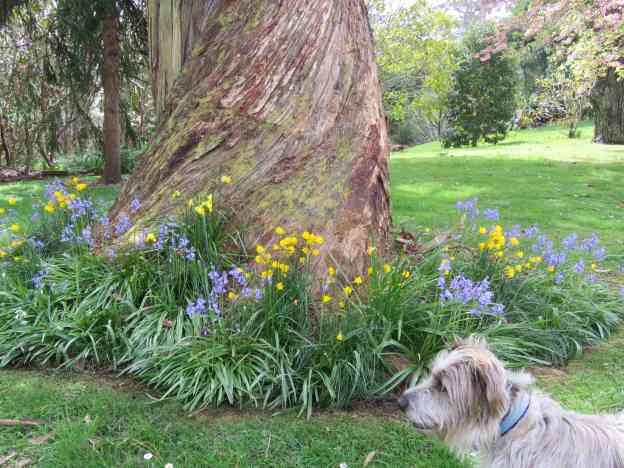
Against a tree trunk in our entrance area

Mark and his father before him gathered up all the dwarf varieties they could find at a time when there were more available than seem to be around these days. So we have a reasonable representation of named varieties like ‘Tête-à-tête’ (more commonly written as Tete a Tete, without the French accents these days), ‘Beryl’, ‘Jetfire’, bulbocodiums (hooped petticoats) in both bright yellow and lemon (Bulbocodium citrinus), ‘Thalia’ and others. But we wanted more and we wanted them sooner than we could get by lifting and dividing existing clumps, which is why both Felix and Mark started raising seed.

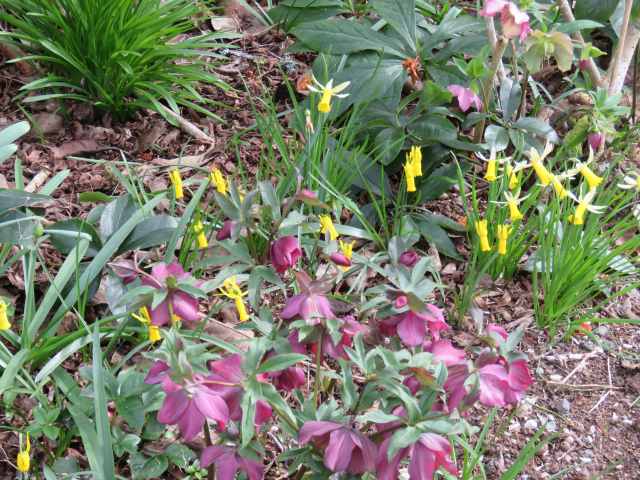
In the hellebore border beside the drive

It is the back story of our garden, really. We could not afford to garden on the scale we do if we had to buy in all the plants. A lot of what we have across most of the genus we grow are unnamed seedlings that have been raised on site. In most cases, those seedlings are the result of controlled crosses rather than random, self-sown seedlings. A controlled cross is selecting two good parents and taking the pollen from one to fertilise the other, marking the flower stem and watching until the seed is ripe enough to gather. It is quite a bit more faffing around than just collecting random seed that has set but it ensures a higher percentage of good progeny.

That is a Felix Jury hybrid which he named Twilight which may still be available in NZ. Naturalised on our bulb hillside in the park.

If you want to start in a smaller way, you can just gather seed but, with narcissi, you need to sow it in a seed tray, look after it and pot on the seedlings when they are large enough, growing them on – usually in small pots – until they are large enough to plant out. From seed to flowering size takes about three years which may seem a long time to some who are used to more instant results but we are patient gardeners here.

If you are wondering where to start, Peeping Tom is a very early season, larger variety that is fantastically reliable and prolific. It and Twilight in the preceding photo are the strongest growers and form the backbone of many of our larger plantings.

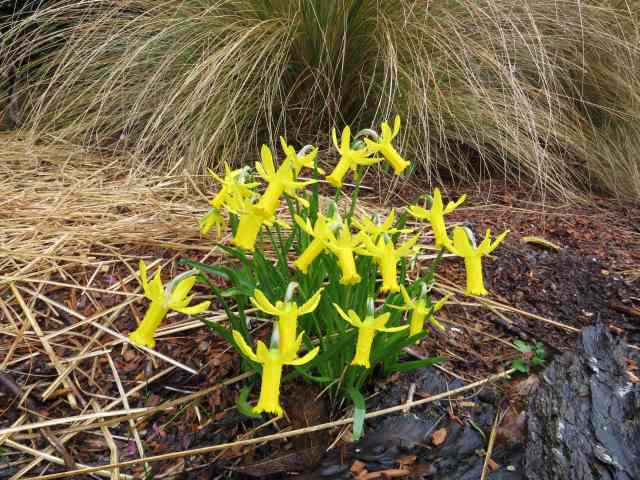
The classification of narcissi is a complicated business and there are many different species and groups. In our climate, we have most success with the cyclamineus types, often characterised by swept back petals. The other advantage of keeping to dwarfer varieties is that their foliage is smaller and finer so they die off more gracefully, rather than the spent foliage flopping down and smothering everything around them.

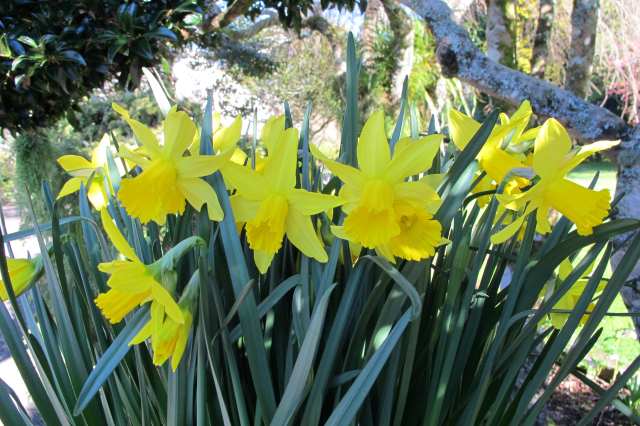
Mid August is a very pretty time for us. The early magnolias are magnificent and the dainty narcissi scattered all around the place are such a good contrast in scale, colour and detail. We have figured we can never have too many little narcissi and are continuing to spread them further afield from cultivated areas, to extending the bulb meadows and tucked in wherever we think they can grow undisturbed that they may emerge and delight during their weeks to shine their golden light in early spring.

I laughed at myself when I found this photo of Jetfire from nine years ago. I was clearly having a flight of fantasy as I photographed flowers set against our stainless steel splashback, lit by the spotlights on the rangehood.

Spring has sprung

Spring has sprung

The grass has riz

I wonder where the boides is.

I had to do a little search on that bit of doggerel from my childhood and it appears there are multiple versions – although this one is the most common – and it may or may not have originated from Ogden Nash. But here we are; spring has indeed sprung. A visiting friend last weekend got out of his car and stood, momentarily transfixed by all the bird song he could hear so that was a nice way to start a visit. We don’t need to wonder where the boides are because they are here.

With Daffodil Day officially scheduled for the last day of winter next Thursday, all I have to offer today is a host of golden narcissi, that your heart, like William Wordsworth’s, may fill with pleasure and dance with the daffodils.

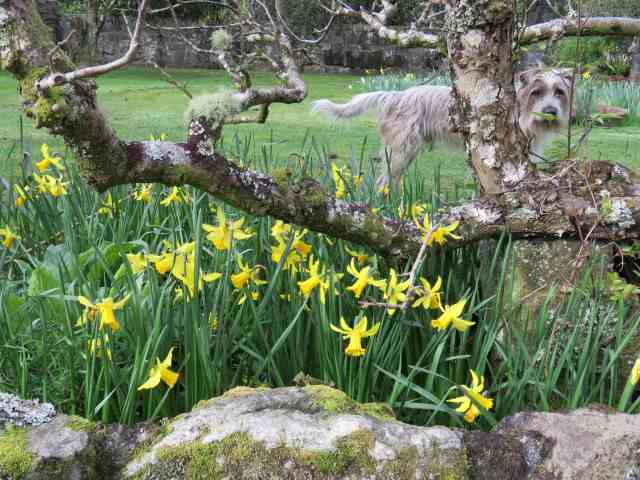
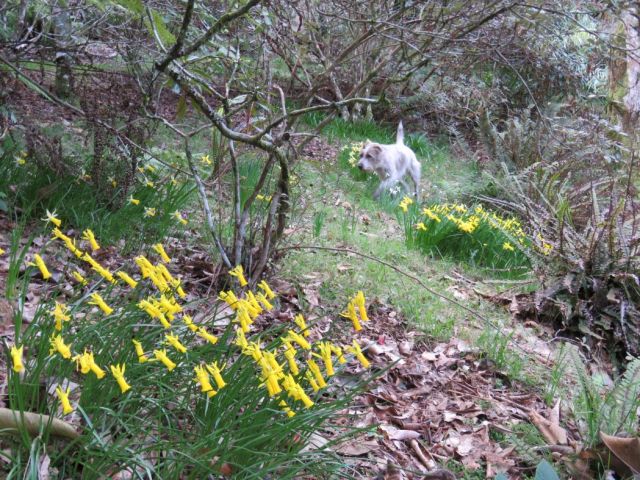
Ralph is no respecter of the garden but he does add a certain ambience to the ‘Peeping Toms’ beneath the old apple tree.

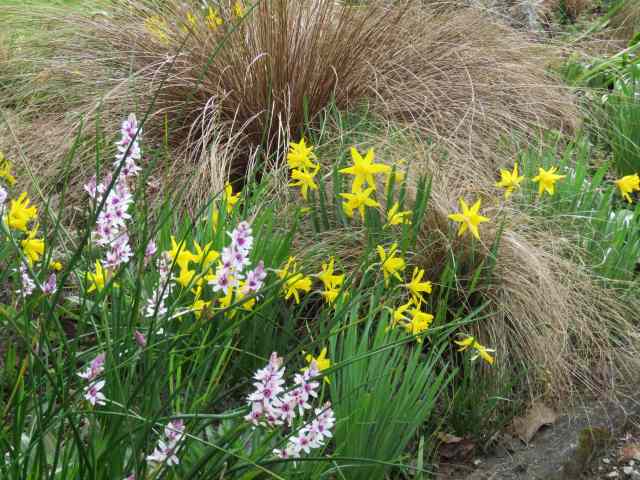
I see the pink and white Onixotis triquetra has been reclassified by some as a wurmbea but I am not sure I can cope with that; it is seen here with cyclamineus hybrids and our native brown carex grasses. We favour the early flowering dwarf narcissi and those within the cyclamineus group are hands down the best performers in our climate.

While we have many narcissi in more cultivated areas of the garden, it is the clumps that have naturalised well on the grassy banks of the park that make our hearts sing the most. There is something magical about seeing bulbs naturalised in more casual settings. This one is ‘Twilight’, a most successful cultivar bred by Mark’s dad, Felix Jury.

We favour early flowering varieties because they are pretty much over and dying down before the narcissi fly is at its most active. And we opt for the dwarfer types because we like their more delicate, somewhat refined appearance and they generally hold their heads up better. The larger the flower, the heavier it is and they are much more vulnerable to being beaten down by early spring storms.

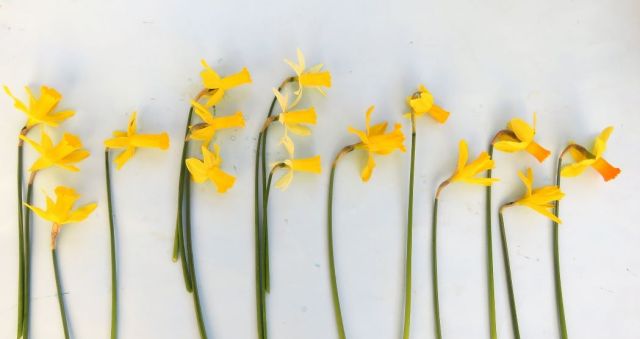
The snowdrops are all but over, the magnolias are not yet peaking. This week belongs to the golden narcissi.

Rays of golden sunshine

The narcissi tell us spring is here, irrespective of what an arbitrary calendar says.

A representation of those narcissi currently flowering

We once went to the National Daffodil Show when it was held in our local town. Alas, despite trawling through my files, I can not find the photos I took to convey the nature of the show. It was beautifully staged and moderately spectacular – in a daffodil-y sort of way. It was also an interesting insight into how those who breed and show daffodils are on a different trajectory. Bigger was undeniably better, extraordinarily long stems topped with enormous flowers, split corollas galore, a lot of different colour combinations and novelty variants. These were blooms grown to be staged as cut flowers. The little dwarf and miniature types were confined to one very small and somewhat insignificant table.

Our interest in narcissi begins and ends with them as garden plants or naturalised in a meadow situation. I cut some simply for photos yesterday. Because we over-heat our house in winter, we don’t generally cut flowers to bring inside where they immediately wilt and die. And those big show daffodils don’t make good garden plants in our conditions. The heavy heads pull them over and heavy rain and spring wind knocks the blooms about too much.

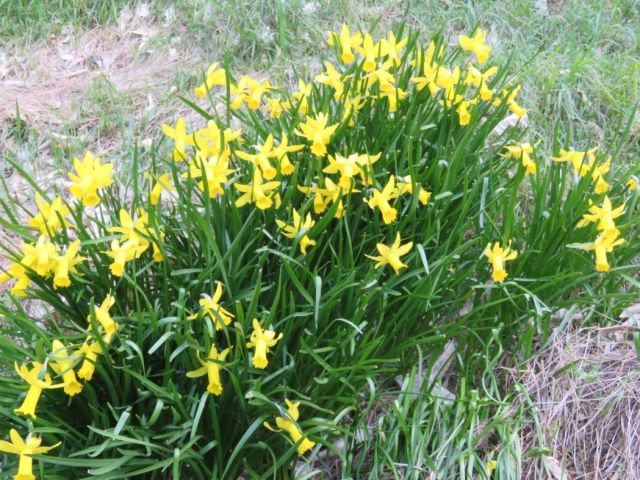
Peeping Tom at the front – reliable, tough and maybe a little too enthusiastic in its rate of increase. We do seem to have rather a lot of it.
These will be named varieties from the 1950s because they are a relic of original planting done by Felix and Mimosa when they started the garden here.

We don’t have a single big King Alfred type often favoured by people wanting to planting swathes of daffodils. Amongst other things, they flower later in the season. We prefer the early flowering types because they are largely done and dusted before the narcissi fly are on the wing.

Cyclamineus type

Our narcissi flower over a reasonable period of time and some are still to show any colour at all. While we probably have a respectable collection of named dwarf varieties (Tête-à-tête, Jetfire, x Odorus, Twilight, Beryl, Peeping Tom and others), many of those we grow are unnamed, controlled cyclamineus crosses that Mark and his father before him have done to increase numbers. It takes a lot of bulbs to naturalise around the garden and the plant budget here has never stretched to buying bulbs by the hundreds or even thousands needed to put on a good show. We could not afford to garden on the scale we do if we had to buy all the plants.

I have never unravelled the different narcissi groups in detail. We grow the hooped petticoats – N. bulbocodium – in lemon and the later flowering bright yellow but they are not my favourites. The bright yellow is showy but increases somewhat too readily, the lemon (citrinus) may need a bit more love than it gets here to flower well.

I would like to say Ralph is tiptoeing through the daffodils but I would be lying. His movements are more akin to thundering.

I love the look of Narcissus poeticus but it doesn’t love us so the best we can manage is the poeticus hybrid ‘Beryl’. We have some from the triandrus, jonquilla and tazetta groups but the reason why our collection is heavily dominated by cyclamineus types is because they are the best performers in our conditions. The ones with swept back petals are a particular delight for me.

Managed meadow! Planting on the slope gives and even better view from the path below.

It isn’t necessary to have big King Alfred types for meadow situations. I think our smaller dwarf ones are just as showy but we plant in clumps and drifts rather than scattered single bulbs and they flower before all the spring grass growth that would drown them. We need to get the timing right for mowing or strimming the meadow grass before the foliage comes through but otherwise, they are self-maintaining. And what a joy they are at this time of the year as the snowdrops of winter fade.

The bad news is that most daffodils sold commercially in this country are of the later flowering King Alfred type – big strong growers with big heads. The smaller growing ones are sometimes available in garden centres but you may have to search to find much of a range, or start raising your own from seed.

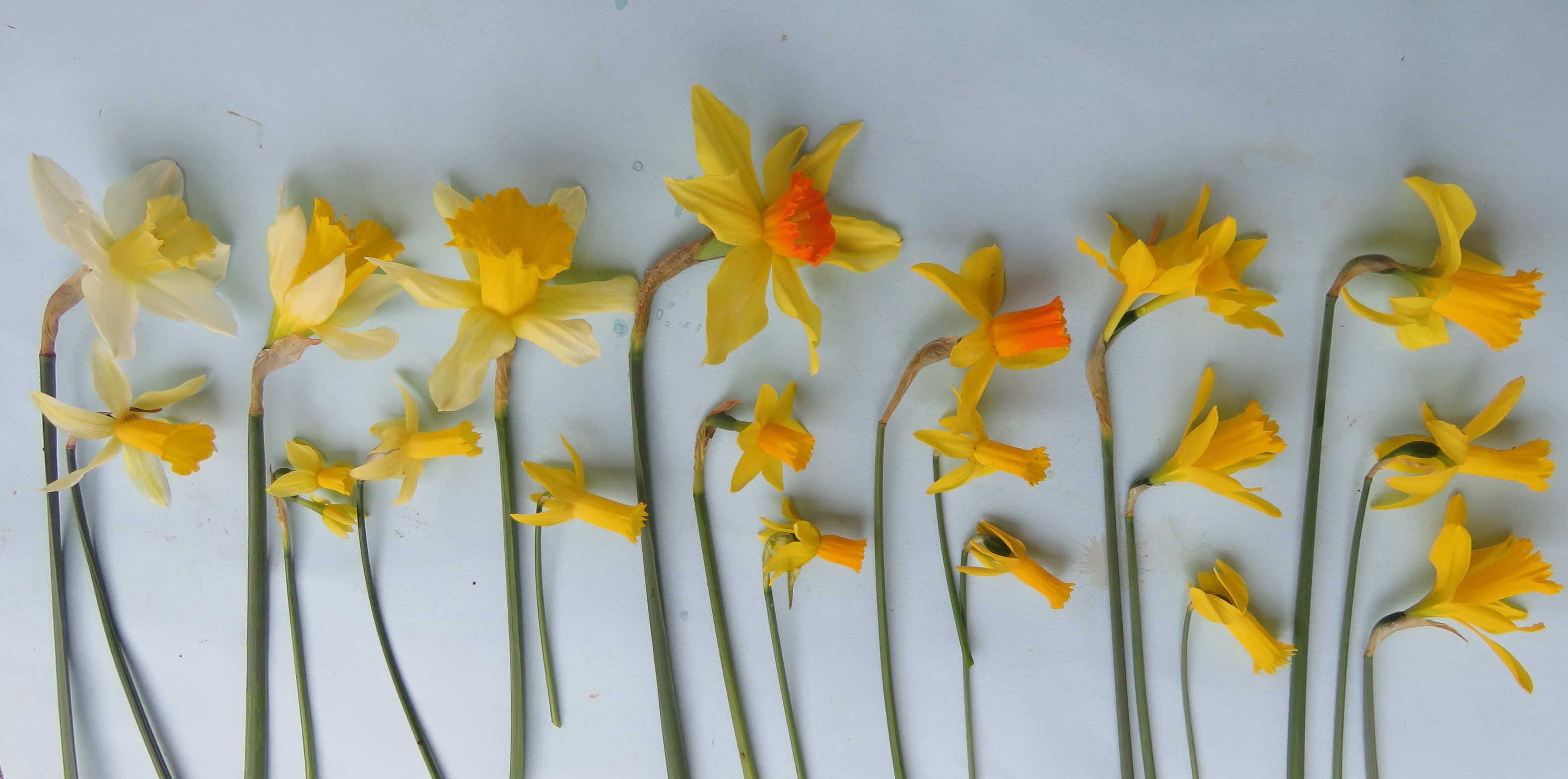
These are the largest varieties we grow. The manky first one of the left may be Narcissus pseudonarcissus double, then Silver Chimes, I don’t know what the next one is, the centre one with white petals may be the Narcissus pseudonarcissus (the wild daffodil), then Peeping Tom and Narcissus x Odorus.
Mid-sized dwarf varieties including Twilight, Twinkle, Jetfire and unnamed seedlings
And the littlies with bulbocodiums to the left

Tikorangi notes: narcissi, garden edgings and a happy plant breeder

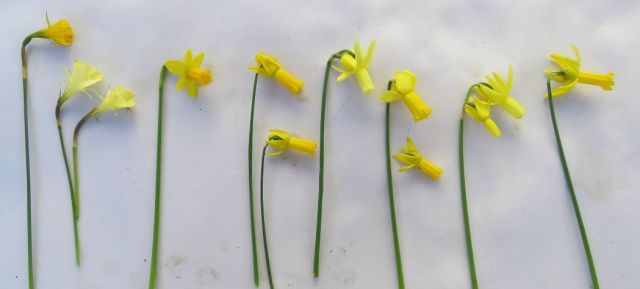
The snowdrop season is all but over already. It is charming but brief. The narcissi, however, have a longer season, at least in part because we can grow a much wider range of species and hybrids. Yesterday felt like a winter’s day – the last gasp of winter, I hope – so I headed out to pick one each of the many different varieties in flower. We don’t grow many of the larger ones at all, preferring the charm of the littlies, the dwarf ones. Bigger may be better when it comes to magnolias – at least in our eyes – but daintiness wins with the narcissi. Most of these are named varieties though Mark is also raising cyclamineus seedlings to build up numbers for planting out and to get some seedling variation within them. The cyclamineus are the ones where the petal skirt sweeps back, sometimes completely reflexed, giving them a slightly startled appearance. He was intending to plant many of these down in the park but hadn’t got around to it so offered them to me for the new grass garden.
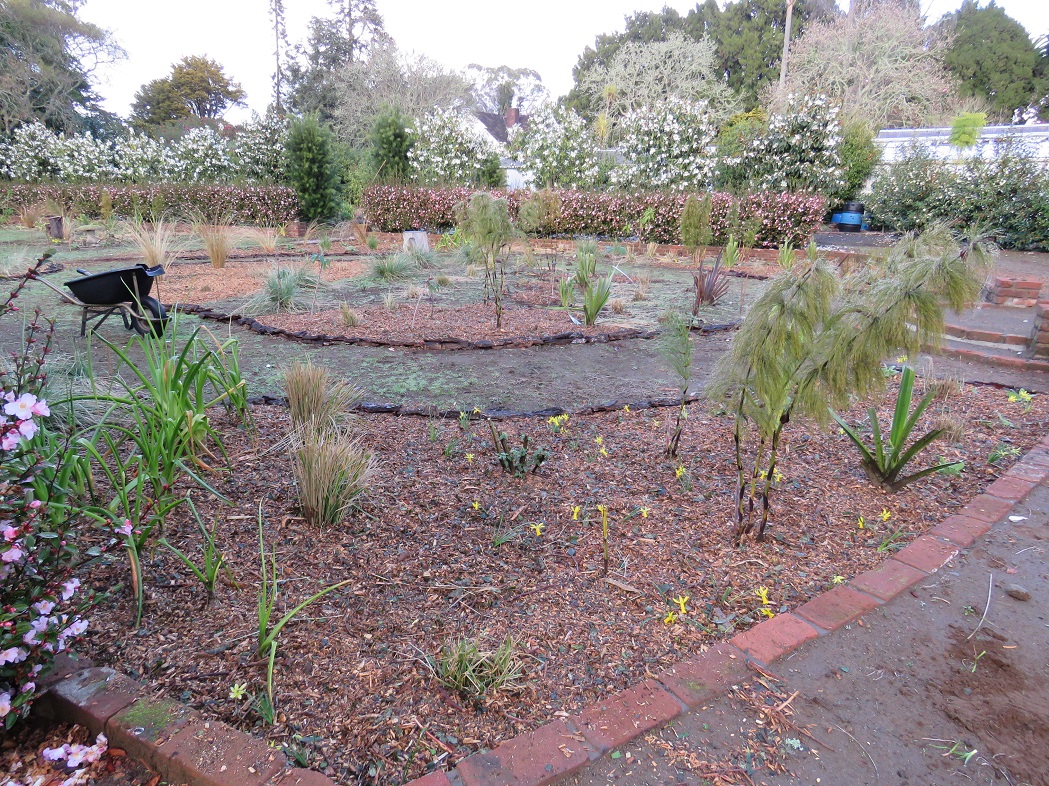
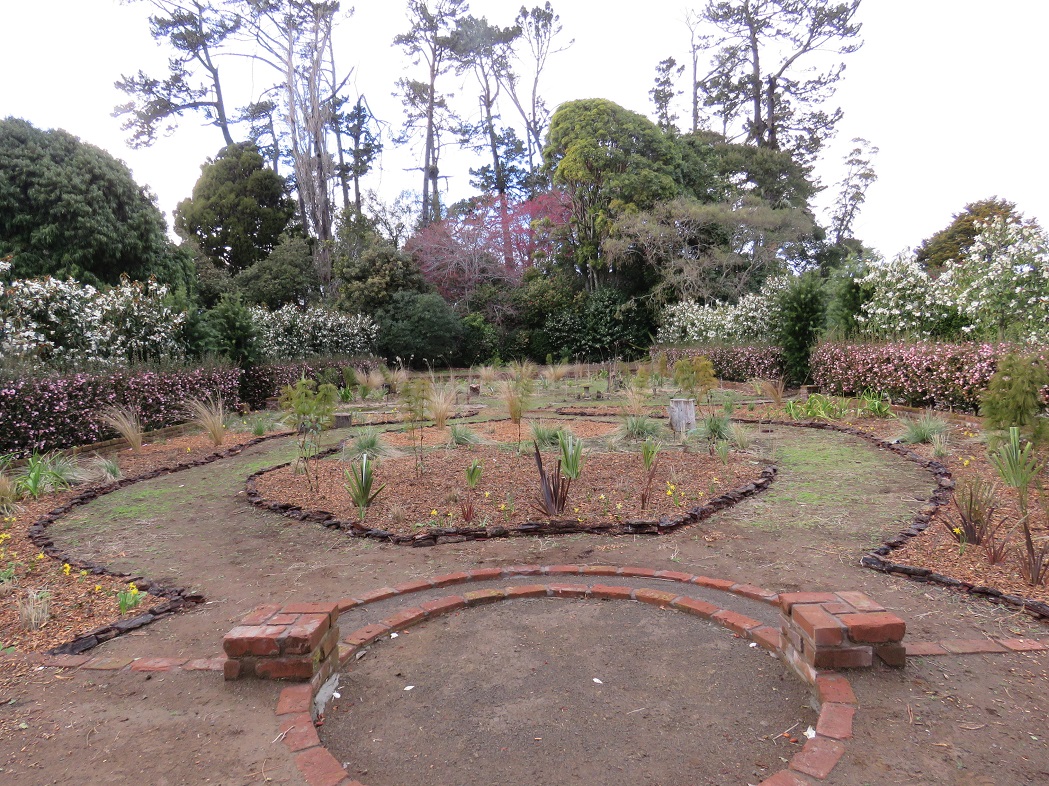
Drifting dwarf narcissi through the new grass garden. Camellia Fairy Blush hedge and Fairy Magnolia White edge the garden on both long sides. 

I have now compromised the big, bold, chunky planting in waves that is the hallmark of the new grass gardens by drifting hundreds of dainty, dwarf narcissi through them – though far enough out to escape being swamped by the large plants, for several years at least. It adds seasonal interest to an area that will not come alive again until later in spring.

Informal bark edging and bark and leaf mulch define the garden area

After much consideration as to how we wanted to complete the grass garden with regard to edging, mulch and path surfaces, we have gone for the casual, organic and local options. As soon as I started to load in the wood and leaf mulch that a local arborist delivered, I realised that the beds would need an edging to hold the mulch from spilling over. My idea of a seamless transition between bed and path was not going to work. We have pine bark to hand – left over from getting the firewood out from a fallen pine tree so I am constructing small edges out of that. It lasts for many years. The paths are still bare earth (we will probably use granulated bark on those) but as soon as I made the edgings and laid the mulch, it took on the appearance of a garden. It is a casual look but one that sits easily with us with the benefit of being low cost and, as Mark keeps saying, the use of organic materials adds carbon to the soils.

I am laying the mulch on fairly thickly – around a forefinger in depth which I measured to be about 7cm. Because it is fluffy, it will compact to less than that but if I see any weeds coming through, I can top it up.

Fairy Magnolia White – not only a beautiful flower form but a very long flowering season, beautiful velvety buds, good foliage and perfume

Mark is a quiet man, not given to blowing his own trumpet, but sometimes I hear him murmur a comment of deep contentment at a plant he has bred and named. So it was this week as we looked at the avenue of Fairy Magnolia White and Camellia Fairy Blush. “I picked White because it had a pretty flower,” he said. And it does. In a world of floppy white and cream M. doltsopa flowers, Fairy Magnolia White stands out with its beautiful star form. There were a lot of very similar sister seedlings to choose from in that cross and as a breeder, he always worries whether he picked the best one. I think he finally decided that he had indeed chosen the best which is just as well, when you think about it, because he will only ever name and release one of that cross

Camellia Fairy Blush also has a long flowering season, drops its spent flowers cleanly and clips well

Camellia Fairy Blush, planted as a hedge beneath the two avenues of Fairy Magnolia White, is also a continuing source of satisfaction and delight to us, even if it is a constant reminder of a missed commercial opportunity. It was the first camellia he ever named and sold. Back in those days, protecting a plant as our intellectual property was not even on the radar and now Fairy Blush is sold widely throughout the world and few know that it originated here and was Mark’s selection. We have even seen it branded overseas with other nursery names but we know it is ours. That is life and it is a very good camellia and continues to be a source of pride and pleasure to the breeder.

Fairy Magnolia White and a very blue spring sky