‘Just spray it on, brush it off and rinse.’
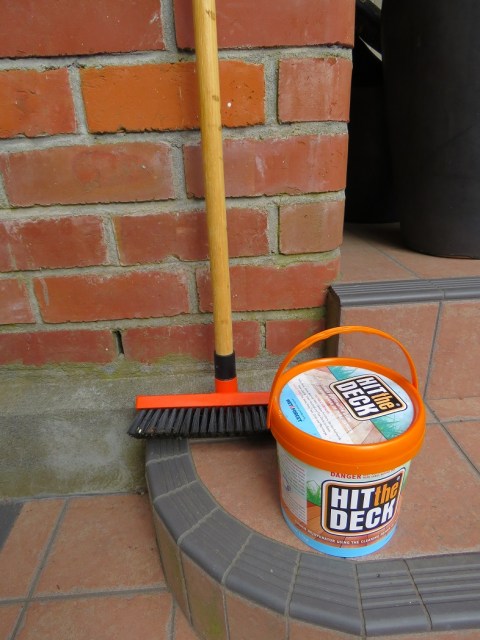
I was so discouraged by the state of swimming pool decking that I succumbed to advertising and bought some “Hit the Deck”. I can’t remember how much I paid for it but it wasn’t cheap. But the deck, the deck. We laid it maybe 18 years ago and in the time since, it has been water blasted (jet washed) once. That didn’t do the grooved non-slip surface any good. It is low grade, plantation grown, quick turnover Pinus radiata that we use in this country, tanalised to extend its life span but still a soft wood which will rough up badly with water blasting. Hence the “Hit the Deck” to deal to the blackened and slippery surface before we start swimming this summer.
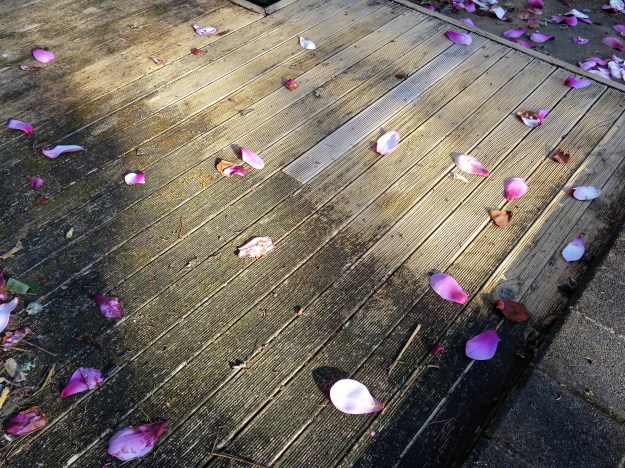
My test area
Did it work? Yes, but it wasn’t as easy as it looked in the advertisements. If you look closely at the TV advert, they are using it on flat timber, not the grooved product that is widely sold for non-slip decking. It would not just brush off with the stiff broom they sell for this purpose. I did a small test area and found that to get it off, I had to get on my hands and knees with a stiff scrubbing brush. It is not possible to get a powerful enough scrubbing motion at the end of a long handled broom. It is a reasonably large deck and I didn’t fancy doing the whole area on my hands and knees so I handed the job over to Our Lloyd and suggested he try a very light cleaning with the water blaster, so as not to rough up the surface more but to get enough pressure to spray off the mix and the accumulated mosses, moulds and lichens. That worked and it was both faster and not as back-breaking but it still isn’t an easy job that you can knock out in an hour.
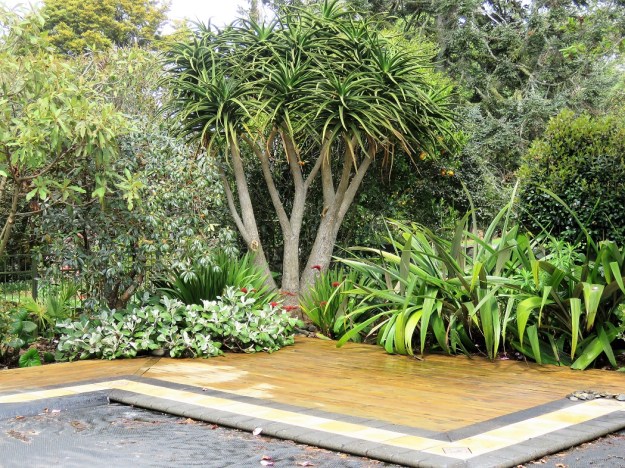
The deck looks hugely improved. Not perfect but the decking is getting on in years. So yes, the product does work.
 Somewhat belatedly, I looked at what the Hit the Deck contains. I had turned a blind eye to this when I was more worried by the slippery decking. I can report that it is sodium percarbonate. And that, Reader, is a mixture of washing soda and hydrogen peroxide. You can check its chemical properties on Wikipedia which notes: “The product is used in some eco-friendly bleaches and other cleaning products…”. So it is relatively harmless and I guess you could mix your own if you wished and I am sure that it is likely to cheaper because there are no advertising and branding costs to be factored in.
I have written about the moss-killing properties of washing soda or soda ash before. It does work, I can vouch for that.

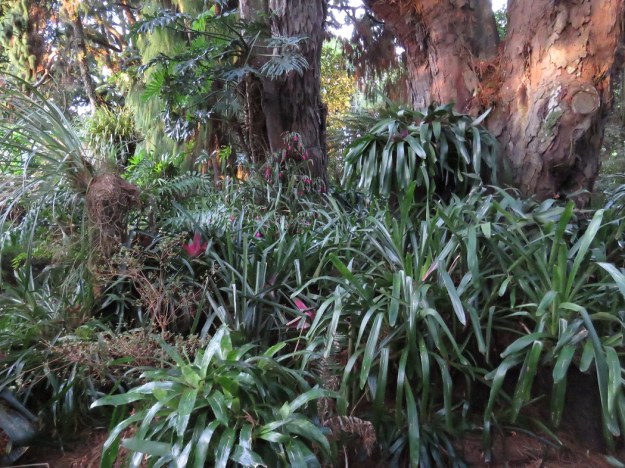
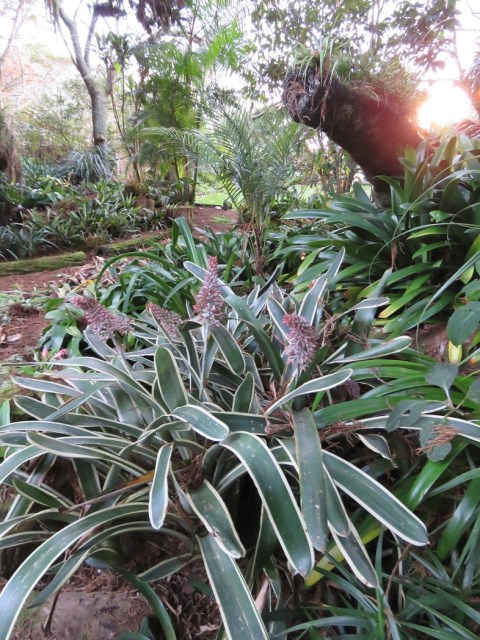 Beneath these rimu, we have what is probably the most complex planting of anywhere in our garden. Oddly, it occurred to me this week that it is the least demanding in terms of regular maintenance. This is not related to the complexity of the planting; it is to do with the fact that it is all in dry shade and also to the plant selection over time. In the last five years, we have gone through it and pulled out fallen branches and a bit of occasional debris but it has not had the loving attention to detail that I am currently giving it.


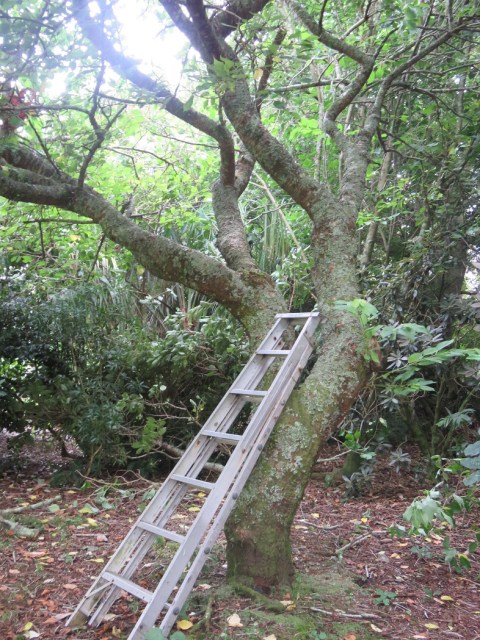 One of the most useful skills Mark learned in his twenties was how to use a chainsaw safely. Possibly even more importantly, he learned the limits of his skills with the chainsaw and when it is necessary to pay for outside specialists to come in and handle a tricky situation. This tree represented no such problem. He dropped it efficiently and our Lloyd moved in to do the clean-up. Any branches too thick to be fed through the mulcher were sawn into short lengths and moved to the firewood shed. We get through prodigious amounts of firewood in winter, all of it harvested off the property. The leafage and small branches were mulched on the spot.
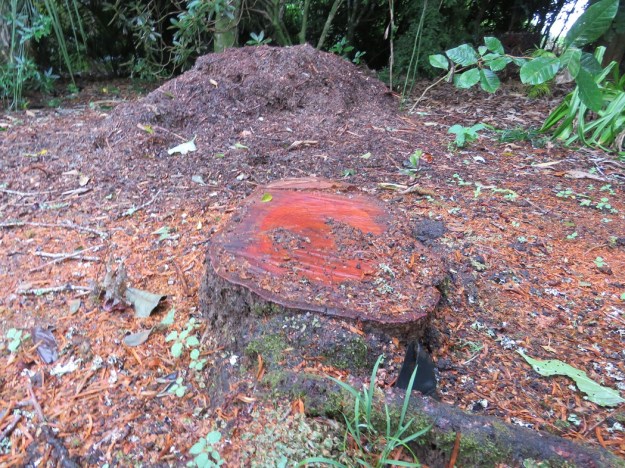 It was, as we say in New Zealand parlance, gone by lunchtime. Literally so, in this case.
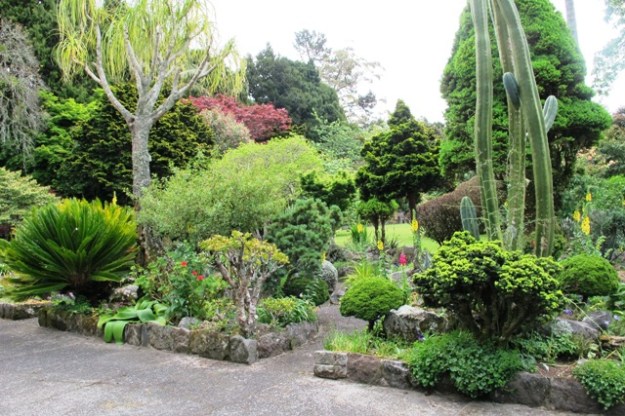
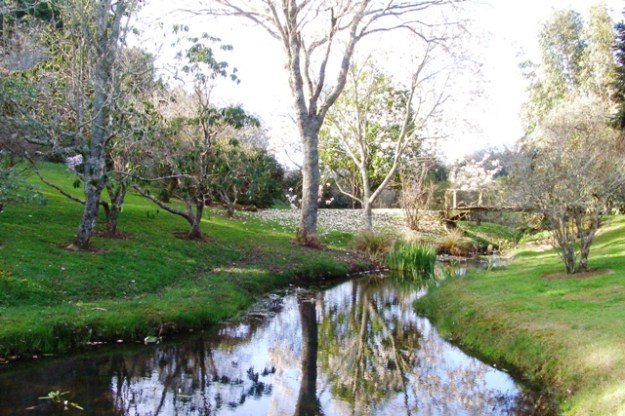

 Tikorangi The Jury Garden