Tag Archives: gardening

Early flowering camellias

First published in the Weekend Gardener and reproduced here with their permission.
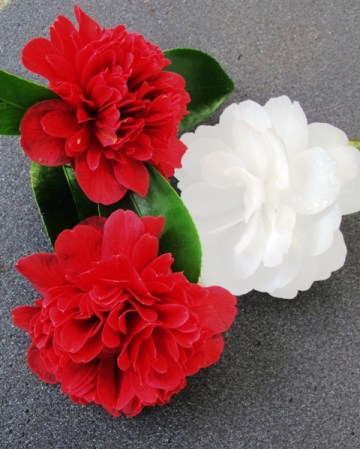
White ‘Early Pearly’ is one of the most beautiful of the sasanquas, while red ‘Takanini’ is a japonica which flowers from early to late in the season.

White ‘Early Pearly’ is one of the most beautiful of the sasanquas, while red ‘Takanini’ is a japonica which flowers from early to late in the season.

There is always something magical about the first flowers and camellias are no exception. They seem fresh and new, heralding the progression of seasons. While the main camellia season is from late winter to mid spring, the earlier varieties bring colour to the late autumn and early winter garden. Early flowers also escape the curse of camellia petal blight which affects mid and later season varieties.

Early camellias fall into three groups: the sasanquas, early flowering species and a few japonica types and hybrid camellias which have an exceptionally long flowering season, continuing from early to late.

We particularly enjoy the charming sasanqua ‘Crimson King’, seen here as a mature shrub with a graceful, arching form.

We particularly enjoy the charming sasanqua ‘Crimson King’, seen here as a mature shrub with a graceful, arching form.


Camellia sasanqua ‘Bonanza’ is a bright spot of colour on a grey day

Camellia sasanqua ‘Bonanza’ is a bright spot of colour on a grey day

The sasanqua camellias originate in Japan and are renowned for being sun tolerant, having smaller leaves and being suitable for clipping to hedges. While some are slow to get going as garden plants, over time they can make graceful, airy, large shrubs. They mass flower and most are scented, in a mossy, slightly sweet sort of way. Their blooms are softer and lack the defined form and substance of most later flowering camellia types. This is an advantage when the flowers fall and break up quickly, rather than leaving a sludge of brown at the base of the plant. While white sasanquas have been particularly popular for some years, they also come in a whole range of pinks to red tones and bi-colours. We prefer the coloured ones for a splash of winter cheer in the garden when there is not a lot else in flower.
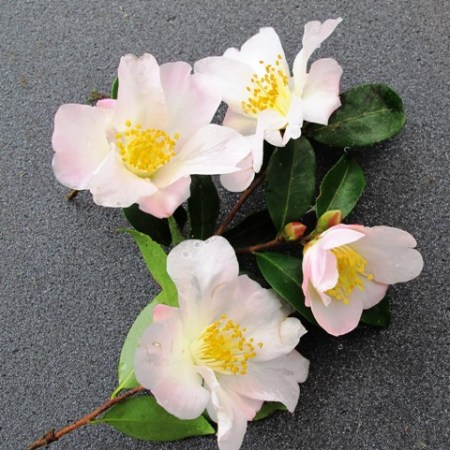
‘Fairy Blush’ is a scented hybrid with a very long flowering season.

‘Fairy Blush’ is a scented hybrid with a very long flowering season.

There are a range of early flowering species but these are unlikely to be found for sale these days. The most useful of them for us, are dainty little C. brevistyla and C. microphylla which offer potential as replacements for buxus hedging and are a great deal prettier than box when in flower.

There are some japonica and hybrid camellias which have remarkably long flowering seasons. In the reds, ‘Takanini’ flowers early, middle and late and should be readily available. Later season blooms develop an unusual purple hue. ‘Roma Red’ is a new release and not as widely available, with its formal flowers in mid red. ‘Mimosa Jury’ is a perfect formal in pretty pink and shows good weather hardiness. ‘Fairy Blush’ is a scented, small flowered pale pink and white miniature bloom with an exceptionally long season. These varieties open their first flowers with the sasanquas but continue long after they have finished and will still have flowers when the late season varieties are on show.

For perfection in a bloom, it is hard to go past the formal shape of Camellia ‘Mimosa Jury’ which has the added benefit of showing good weather tolerance without marking badly.

For perfection in a bloom, it is hard to go past the formal shape of Camellia ‘Mimosa Jury’ which has the added benefit of showing good weather tolerance without marking badly.

GROWING CAMELLIAS IN CONTAINERS
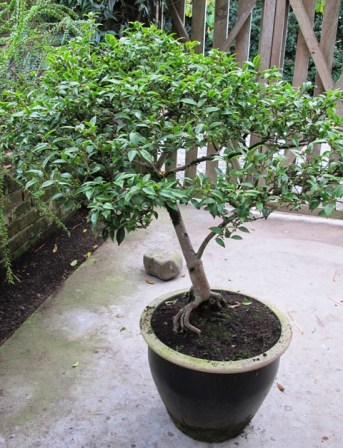
Camellia ‘Itty Bit’ is a dwarf variety that has been kept in a pot here for 20 years

Camellia ‘Itty Bit’ is a dwarf variety that has been kept in a pot here for 20 years

All camellias can be grown for a year or two in a pot but you are fighting nature if you want to keep a larger growing variety long term. Plants need repotting every two years to keep them healthy and lush. Unless you are root pruning and shaping the plant regularly, larger growing varieties will soon get too big to handle.

Do not make the mistake of thinking that small flowers mean the plant is small growing and vice versa. You are better to start with varieties with words like “compact”, “dense growth”, “dwarf”, or “slow growing” in their description. Where heights are given, pick those of 100cm or under (and remember that heights are almost always understated on plant labels).

We have had Camellia minutiflora in a succession of containers for about twelve years. We have a miniature “Itty Bit” which has been featured in a container for at least twenty years. On the other hand, it is clear that “Spring Festival” is going to be too large after only three years.

Rules of thumb are not to drown a small plant in an over large pot, to ensure that the pot has plenty of drainage holes at the base and to use a good quality potting mix with slow release fertiliser. Feed by top dressing after the first year and repot with fresh mix after two years.

WHITE SASANQUA CAMELLIAS
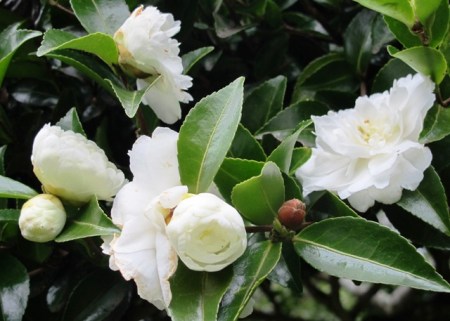
There is a range of sasanqua camellias in white. ‘Silver Dollar’ has a long flowering season and is an excellent option for a more compact hedge.

There is a range of sasanqua camellias in white. ‘Silver Dollar’ has a long flowering season and is an excellent option for a more compact hedge.

While ‘Setsugekka’ is the best known white sasanqua in this country, it is not the only one. For perfection in a sasanqua bloom, it is hard to go past ‘Early Pearly’ with its formality in that shape that resembles a water lily. It is unusual to see a formal flower in sasanquas. ‘Silver Dollar’ is a smaller, bushier growing white with a mass of pompom flowers over a long season. It makes an ideal lower hedge option, able to be clipped to about a metre high. ‘Mine No Yuki’ is a slow growing variety, though will ultimately get large if it is not clipped (ours is at least 3 metres high and spans 4 metres wide, though that is after about 50 years). ‘Weeping Maiden’ grows rapidly to give a quick result with its arching growth and masses of large, single white blooms with golden stamens.

CAMELLIA PETAL BLIGHT
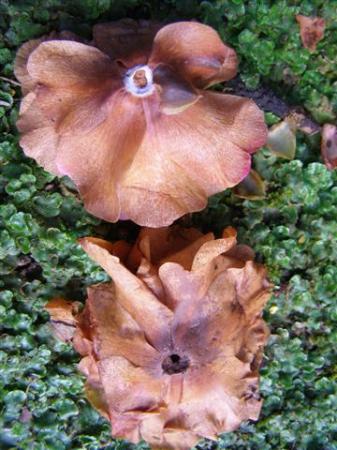
Camellia petal blight shows in the top flower as a distinctive white ring whereas the lower flower has been spoiled by botrytis.

Camellia petal blight shows in the top flower as a distinctive white ring whereas the lower flower has been spoiled by botrytis.

If you have been thinking that your mid season camellia display is not what it used to be, you will be right. Camellia petal blight has taken firm hold and cut the display to a fraction of what it used to be.

We have always had botrytis in New Zealand. It is the fungus that turns camellia flowers dark brown and mushy, especially in long periods of damp weather. Petal blight is different. It turns the flowers to a paler coloured mush, spreading through each bloom rapidly. A brown mark one day can cover most of the flower the following day. If you turn the affected bloom over and remove the calyx (the small cap holding the petals together at the end of the stem), you will see a white fluffy ring, indicating camellia petal blight. If it is dark and greyish, it is botrytis. Unfortunately, blighted flowers often hang on the bush rather than falling cleanly. Petal blight is a great deal more rampant than botrytis.

There is no cure and it will take many years before we see resistant varieties on the market. It does not usually take hold before late June or July, so the early flowering camellias can get through with their mass display unaffected.
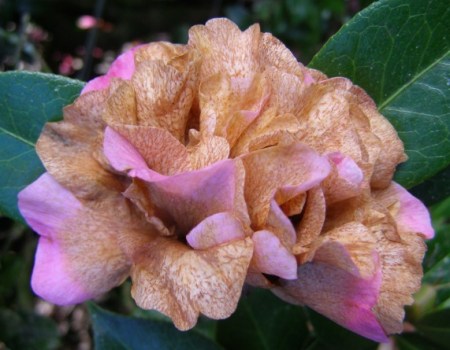
The ugly face of camellia petal blight which affects mid and later season blooms.
The ugly face of camellia petal blight which affects mid and later season blooms.

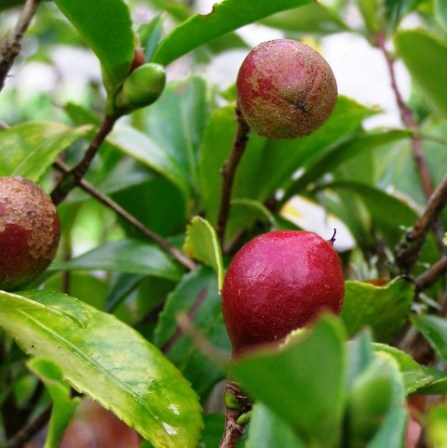
Camellia species can be grown from seed. There will be some seedling variation in the plants but they are usually close enough on appearance for hedging purposes. These are last year’s red seed pods on C. microphylla.

Camellia species can be grown from seed. There will be some seedling variation in the plants but they are usually close enough on appearance for hedging purposes. These are last year’s red seed pods on C. microphylla.

COMPACT CAMELLIA HEDGING
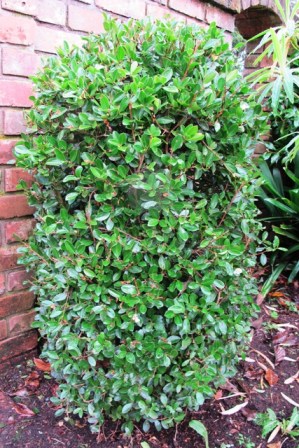
Camellia species brevistyla and microphylla offer an option as buxus hedging replacement and can be grown from seed. This plant is C. brevistyla.

Camellia species brevistyla and microphylla offer an option as buxus hedging replacement and can be grown from seed. This plant is C. brevistyla.

Simply the best camellias we have found as a potential replacement for buxus hedging are C. brevistyla and C. microphylla. These two species are very hard to tell apart and must be closely related. Their leaves are a little larger than buxus but they clip very tidily and are a good dark green. Both species have pure white single flowers very early in the season. C. brevistyla is a little slower growing and smaller but its flowering is over quickly. We have built up C. microphylla as replacement hedging for our own garden.

These species may be hard to source but if you can find a parent plant, they can be raised easily from seed. Both set seed freely. Ask at your botanic gardens. Both species were sold in the past by Camellia Haven in Papakura.

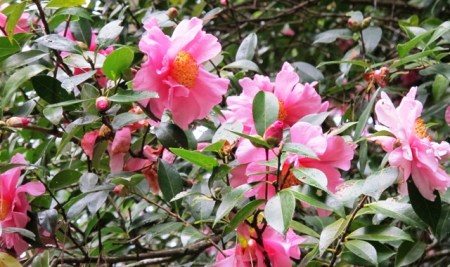
There is nothing special about the individual blooms on Camellia sasanqua ‘Showgirl’, but at the time when it flowers, there is nothing to rival its showiness.
There is nothing special about the individual blooms on Camellia sasanqua ‘Showgirl’, but at the time when it flowers, there is nothing to rival its showiness.

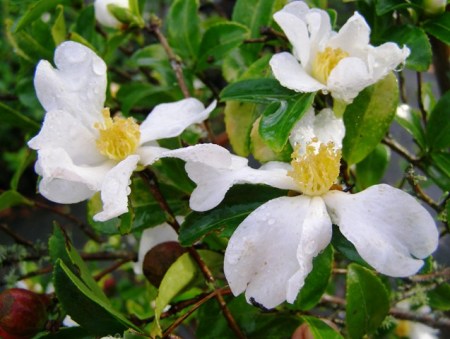
The dainty flowers on both C. microphylla and C. brevistyla are almost identical but last longer on the former, seen here.
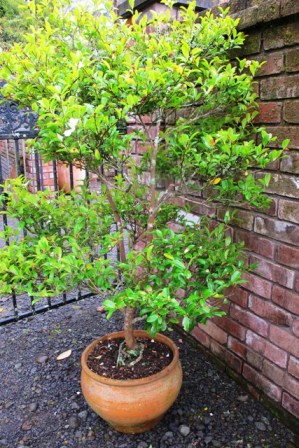
The dainty flowers on both C. microphylla and C. brevistyla are almost identical but last longer on the former, seen here.

C. microphylla has been kept clipped and shaped in containers for at least 12 years.
C. microphylla has been kept clipped and shaped in containers for at least 12 years.
In the garden this fortnight: June 21, 2012

A fortnightly series first published in the Weekend Gardener and reproduced here with their permission.

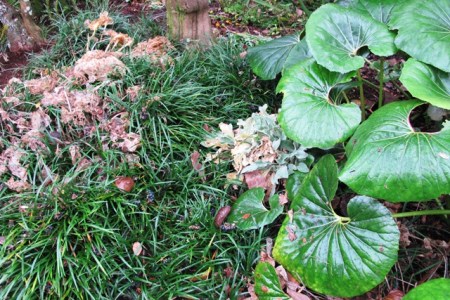
Before - too much mondo grass, not to mention superfluous hostas and Ligularia reniformis needing attention

Before – too much mondo grass, not to mention superfluous hostas and Ligularia reniformis needing attention

There are times, I admit, when the advice I give as a garden writer is from the do-as-I-say school. Digging and dividing perennials is an example – a recommended activity but not as urgent as other tasks here so rarely gets done. I am reformed, inspired by the dramatic response of plants which I lifted, divided and replanted into well dug soils last year. They romped away. I am working my way through the garden borders, lifting pretty much every perennial (but leaving Helleborus orientalis – the most common hellebore. It doesn’t appreciate being disturbed). As some have been left for well over a decade, it is a major task and takes some physical effort. It also gives the opportunity to clean up the perennial plantings to achieve a more cohesive look. Years of plugging gaps had meant that some were pretty hodge-podge in the selection of plants.

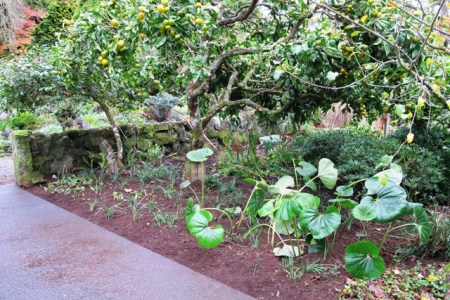
I have carted away two barrowloads of green mondo grass from just one smallish border – too much mondo. A drift of yellow polyanthus will give winter colour, interplanted with bluebells for early spring contrast. The variegated Soloman Seal (Polygonatum multiflorum var.) will give spring and summer detail, all held together by the evergreen tractor seat ligularia (L. reniformis) and the green mondo grass (Ophiopogon japonicus) – but in moderation. All of this is in the lee of a large mandarin tree, which gives wonderful orange winter colour with its abundant fruit. The fun part of gardening is deciding on different combinations for different areas but after the hard work, patience is needed before it all starts growing again.

And after - it needs to grow but it is very tidy

And after – it needs to grow but it is very tidy

TOP TASKS
1) Limit the mondo grass – both the black and green forms. It seems to have quietly spread into too many areas where it is not needed at all.
2) Get a layer of compost mulch onto the borders where I have been working. The compost will feed the plants while stopping dirt splash in rain. It is a fiddly job because it needs to be placed around in each plant by hand.
3) With only two months until spring here, the pressure is on to get winter projects done. This includes my reconstruction of the rose garden. It will make a major mess so once started, it is a case of needing to persevere until it is done. I have not been game to start yet but will run out of time unless I get moving.

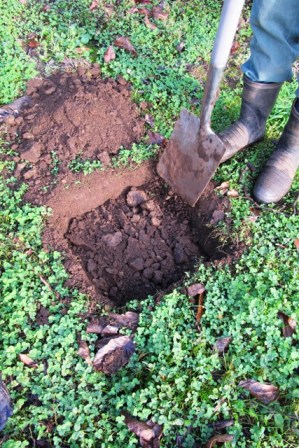
Outdoor Classroom (for absolute beginners): how to plant a tree

1) If you are planting into grass or paddock, remove the turf from the area first. The rule of thumb is to dig a hole at least twice the width of the root ball of the tree and a little deeper. Break up the clods of dirt thoroughly as you go, because you want friable, well cultivated soil so the tree can get its roots out easily. If water ponds at the bottom of the hole as you dig, look for another site. It will rot the roots. Keep the top soil to one pile and the subsoil and clay to another for when you refill the hole so the subsoil can go back in first.

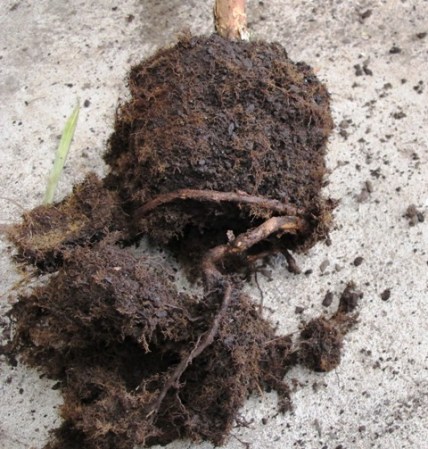
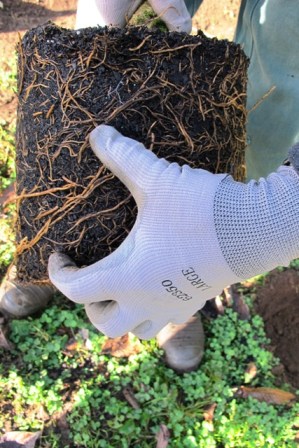
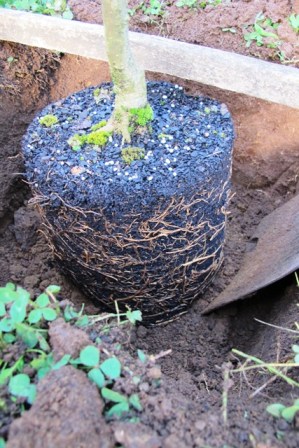
2) If the plant is in a plastic bag, cut the bag off to avoid damage. Examine the roots. The fine roots are the most important ones. If there are strong roots wound round and round the outside, these need to be cut, because they will stay in a corkscrew shape and not spread out.

3) Often there is a mass of fine roots and the plant is difficult to get out of its pot or bag. Roughen up the outside of the rootball with your hands or make several shallow cuts down the sides. However, do not try and tease all the roots out to spread them. You are far more likely to cause damage than to do any good. As long as you plant into friable soil, the plant will get its roots out on its own. However, if the roots have grown into an envelope shape at the bottom of the planter bag, these can be trimmed off.

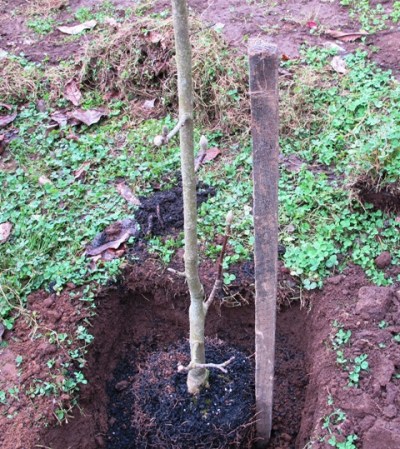
4) Getting the plant at the right level in the hole is extremely important. If it is too deep, you risk rotting the stem, too shallow and the roots will be exposed and the plant will dry out too easily. Measure with a stick and backfill the hole with compost and soil to get the level right.

5) Only stake the plant if it is necessary because of strong wind or instability. Trees grow better unstaked because the rocking movement in wind makes them form a strong tapered trunk. Staking can slow this process so never have a stake more than a third of the tree’s height. Put the stake in beside the plant before you refill the hole. Never drive a stake in close to the trunk. You are shearing off an entire section of roots.

6) Where soils are poor or heavy, layering in compost gives better soil texture. However, there is no point in adding extra fertiliser to the hole at this time of the year. Plants take up fertiliser when they are in growth so the time to feed is in spring and summer. Added in winter, it will leach out and disappear with the winter rains, giving no benefit.

7) Once the tree is in place, fill the hole with the original dirt which you have broken up to form a finely textured soil. Firm the plant and gently tread the surrounding soil but do not stomp heavily close to the stem or you risk tearing off the roots. A final layer of mulch will stop weed competition and protect the roots.

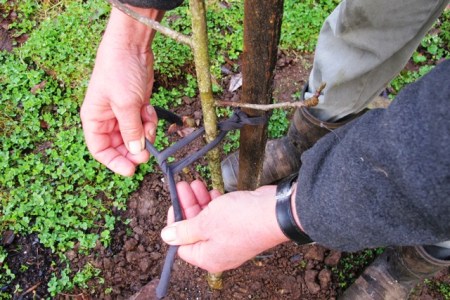
8) Where staking is necessary, always use a soft tie such as the stockinette shown here (available from garden centres) or old pantyhose. These do not cut into the bark of the tree. Cross the tie between the stake and the tree to reduce the bark rubbing on the stake. Make sure that the top tie is never more than one third the height of the tree.

The garden identity crisis

Finding the shapes within the plants, in this case a maple

Finding the shapes within the plants, in this case a maple

“People don’t know what to do with the garden when they get to year fifteen,” commented the retired gardener who was visiting us last week. “You need to do quite big things.” I grabbed a pen and paper to record his words because he is so right. We know exactly what to do with young gardens in this country, but too few know what to do as they mature and change.

The general age of crisis was set at fifteen years but that is a reflection of the rapid growth rates we have. It could be twice that in colder climates. The point is that at some stage, you wake up to the realisation that your garden is not how it used to be. The trees that you planted too closely in order to get a quick effect have now grown too large for their allotted space. Similarly, shrubs have outgrown their area and you are either madly hacking them back every year or you have stopped walking round the house on the path and have been forced sideways to avoid the dripping foliage. Your hedges seem to have grown wider than you intended and nearby plants appear to be suffering. The bulbs aren’t flowering as well as they used to. In fact a fair number seem to have disappeared altogether, as have the choicest perennials. It is the thugs that are left and even they are struggling in some areas which are now heavily shaded. The clumping perennials have become enmeshed together with bald areas showing and weeds popping up throughout which you can’t spray or pull out because they are so intertwined. The garden looks tired, lacking the freshness you remember from earlier days.

You are not alone. It is a natural part of the ageing process of the garden. In this country, most people leave the problem behind by selling up and moving on and the new owner is likely to cut it down and start again. The problem comes if you don’t want to move. That is when you need to do some quite big things.

Most people try and regain the earlier freshness and juvenility in the garden because they can’t see beyond that option. It used to be so pretty, you know. So poor plants are either slaughtered and removed, to be replaced by younger, smaller models. Or they are brutally cut off in their prime and reduced to ground level in order to “come again”. I have seen it done repeatedly.

The alternative is to learn a whole new set of skills. These are not skills that you often see demonstrated in this country because we still lack a heritage of long term gardens. First off, do not make the mistake of thinking that your garden is mature at 15 years. It isn’t. It is really just a gangly adolescent relying on your guidance to take it through to adulthood. On more than one occasion, we have had garden owners gushing that it is just wonderful having mature trees when there is not one single specimen that is older than 20 years. Fast growth we may have, but maturity in trees takes somewhat longer than that.

Leaving tree stumps to rot out in their own time is not without risk though many of us do it.

Leaving tree stumps to rot out in their own time is not without risk though many of us do it.

But it is a common fault to overplant gardens, both large and small, in the early days. At some point, you need to reassess and work out which are the key long term plants worth saving and which are expendable. You may need advice. The ones that are staying are the foundations to take the garden through to maturity. Be ruthless about the expendable plants in between. If you just cut woody plants off at ground level and leave them to rot out over time, you run the risk of opening up the whole area to armillaria (honey fungus) which starts in decaying wood but can then romp through killing healthy plants as well. Best practice is to get rid of the stump and many of the roots, especially willows, but that does not come without money or effort. Convenience and economy means that we often just take our chances.

An example of lifting and limbing over many years.

An example of lifting and limbing over many years.

Then lift and limb and let light back in. Plants need light to grow, even in shade gardens or woodland. Make tree loppers and a pruning saw your friend. But you don’t have to have the light beaming straight down from above. If you lift the lower branches and thin the plants, you allow light in sideways. It also creates views through and brings welcome changes of light and shade.

Now is the time to develop skills in shaping plants. This is not beating them into submission. It is negotiating to make the most of the plant’s best features by highlighting its good form and shape. By now you are working in an environment which has height as well as width and depth. It is a lot more fun than weeding – and on the bright side, weeds are fewer in shaded gardens.

It is just a different way of gardening and these are but the first steps. If you are floundering a little, take heart. It takes time to learn new skills (and some never do). But if you have a garden which is now in that mid adolescent phase, take a hard look because you will need to do something quite major with it sooner or later.

First published in the Waikato Times and reproduced here with their permission.

Plant Collector : Luculia gratissima “Early Dawn”

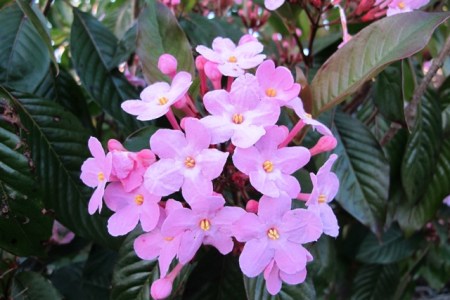
Luculia gratissima 'Early Dawn'

Luculia gratissima ‘Early Dawn’

To be honest, this is not my favourite luculia but it is the one that you are most likely to find offered for sale and it stays somewhat smaller than the other types we grow.

Do not let the fact that this winter flowering shrub hails from the Himalayas lull you into thinking it is hardy. It does not like frost at all and much more than a few degrees will cause short term damage to the foliage and possibly take out the winter blooms for the year. A heavy frost may kill it. However, you can learn a lesson from the fact that it is a forest tree in the Himalayas. If you have areas of the garden with good overhead cover from larger, evergreen trees, you may succeed with this plant, even in frosty inland areas. And it looks a great deal more attractive, in my opinion, when grown as a woodland plant.

The common practice in this country is to plant Early Dawn in full sun in the open and to keep it hard pruned and therefore more compact. It then covers itself in its rather harsh candy pink flowers (which are at least sweetly scented), shouting “Look at me! Look at me!” Its foliage develops a red tinge in cold temperatures and if an untimely frost catches it, you then have this rather unsightly, little shrub with shrivelled leaves. The plant we have in our woodland, however, is tall (2.5m), willowy, graceful and the sugar pink flower heads contrast well with all the greenery. It is a very different picture to the one we have in the open. Get it into woodland, is my advice, into ground rich in litter and humus. Then it may cheer up a bleak winter’s day.

First published in the Waikato Times and reproduced here with their permission.

For my preferred luculias, check out the white Fragrant Pearl and the pretty almond pink Fragrant Cloud (scroll down to the photo).