Tag Archives: Jury magnolias

Signs of spring

First published in Woman magazine, July 2022 edition and reprinted here with additional photographs.
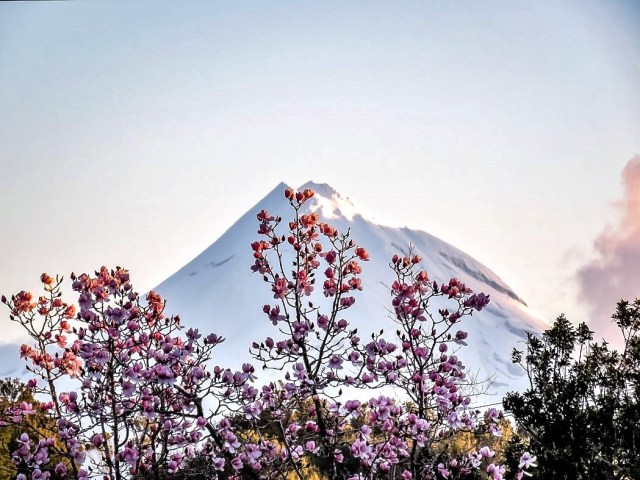
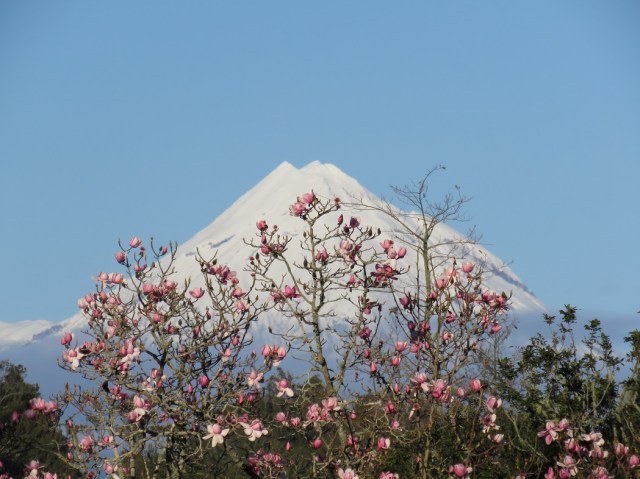
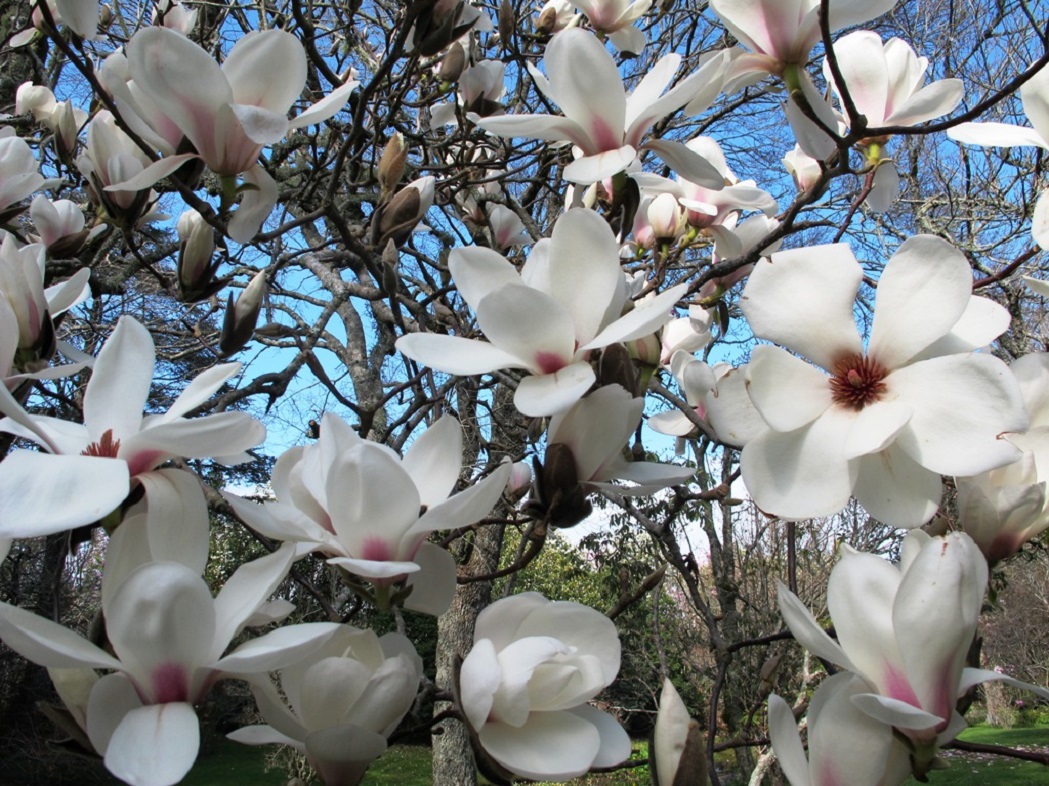
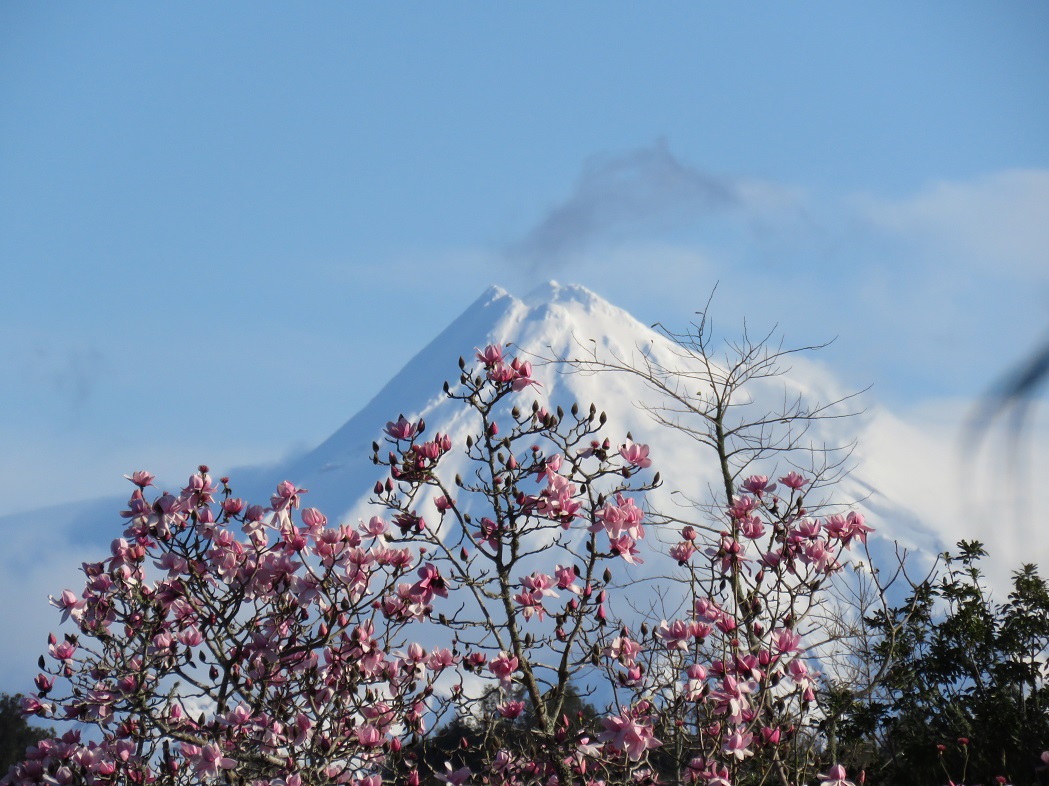
Magnolia campbellii is always the first to open a flower bud, seen here framed against the distant peak of Mount Taranaki.

I am a Jury. Ergo, I love deciduous magnolias. Why does one follow the other, you may wonder. My very late father-in-law, Felix Jury, was the creator of such varieties as Magnolia ‘Vulcan’, ‘Iolanthe’ and others and we still have the original plants here in the garden at Tikorangi. I am married to the man who created ‘Black Tulip’, ‘Felix Jury’, ‘Honey Tulip’ and ‘Burgundy Star’ with more to come soon.

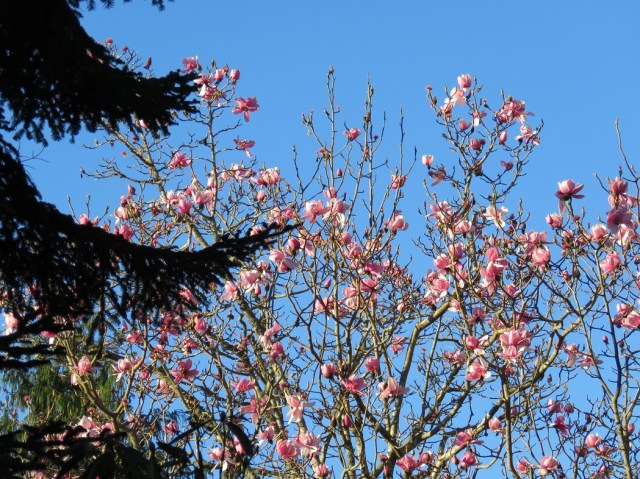
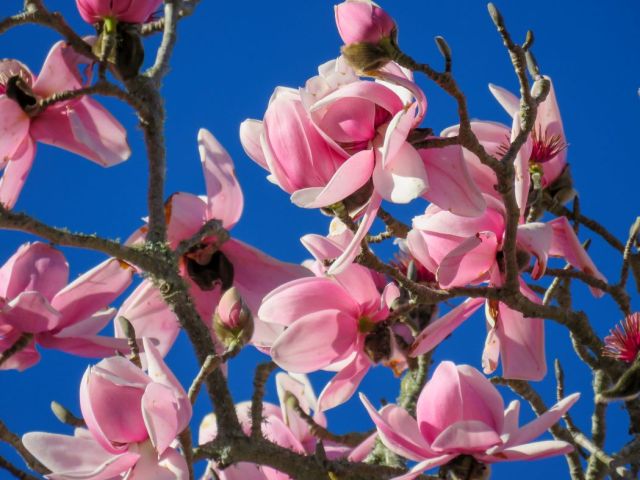
I have long declared that the first blooms on the magnolias herald the start of a new gardening year. The first one to open for us is always the pink Magnolia campbellii in our park. It is one of the earliest harbingers of spring and we usually get the first flower a few days after the winter solstice which is around June 21. 
Enter Matariki which we celebrated as a nation on June 24 this year. While we accept the Gregorian calendar dating back to 1582, that only determines the elements of time which are derived from Earth’s position in the solar system – such as the length of individual months, equinoxes and solstices. The assignment of certain dates to celebrations is an arbitrary human decision. The determination that January 1 is the start of a new year is based entirely on northern hemisphere tradition and it happens to come 9 or 10 days after the winter solstice. What I find fascinating is that Maori arrived at the same conclusion, give or take a few days. It may be six months out of step as far as the calendar goes but it is synchronised with the seasons.

Matariki is determined by the rising in the sky of the star formation generally known as the Pleiades and the start of the new lunar year. It just so happens that Matariki occurs within a few days of the winter solstice in New Zealand. It seems perfectly logical to me and of much greater relevance to my gardening year than the January 1 date.

Our pink Magnolia campbellii is not quite as predictable as the solstice dates and it doesn’t hit its peak display until well into July, but that first bloom bravely opens around the time of Matariki and is a significant seasonal marker for me. Each year, I don my woolly gloves on fine frosty mornings and head out to capture the one beautiful line of sight we have with the blooms on the bare tree and the snowy slopes of te mounga – Mount Taranaki – behind. I am using a zoom lens – te mounga is somewhere over 35km distant.

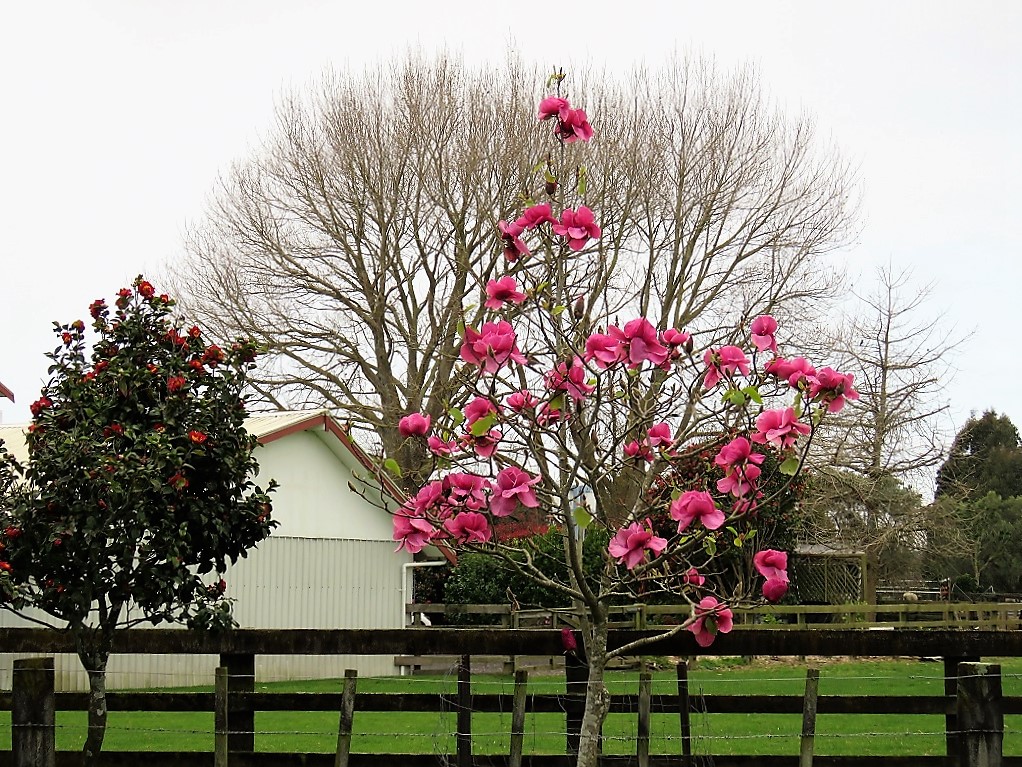
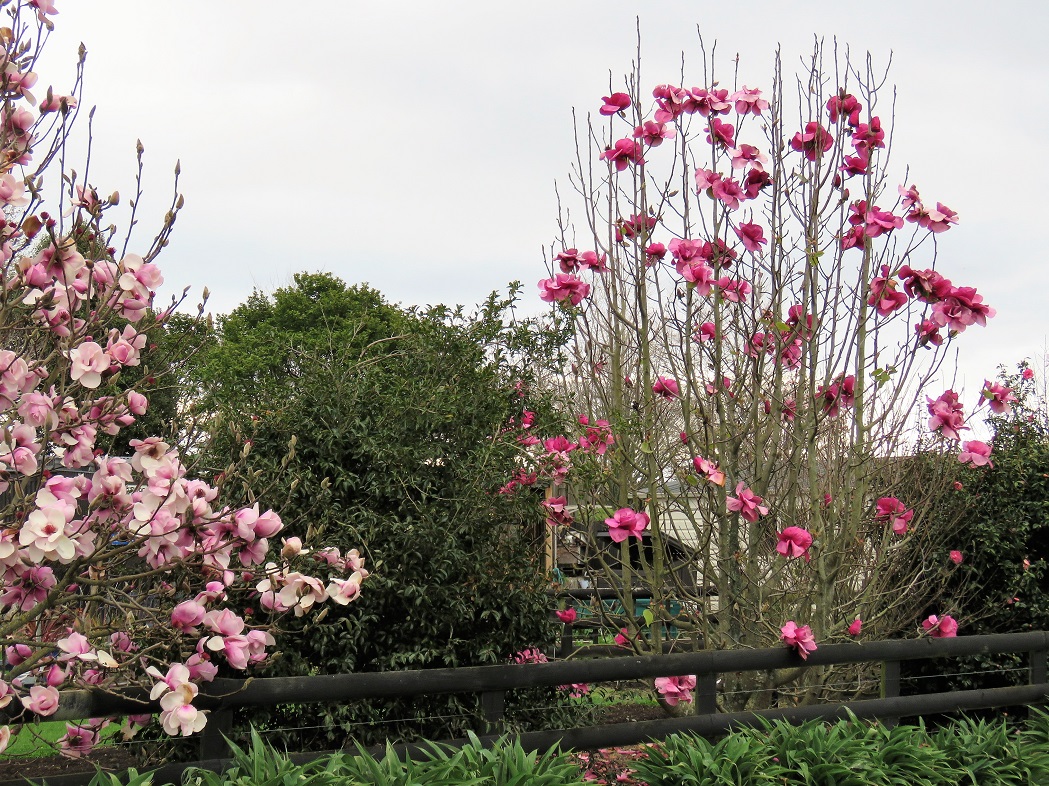
Over time, most magnolias grow into trees. From left to right are an unnamed pink seedling, Magnolia ‘Felix Jury’ and Magnolia ‘Manchu Fan’.

That magnolia was first sold in New Zealand in the latter half of the nineteenth century by a Lower Hutt nurseryman commonly referred to as Quaker Mason on account of him being a Quaker. It was also the first magnolia planted in our garden by my father-in-law, Felix Jury in the early 1950s. This pink M. campbellii is probably the most recognisable form in the country. Interestingly, that is unusual internationally. In the wild, most campbelliis are white. The pink ones are largely limited to a small area around Darjeeling in India and we should count ourselves lucky that Quaker Mason just happened to get a particularly good form of the unusual pink one to popularise here.
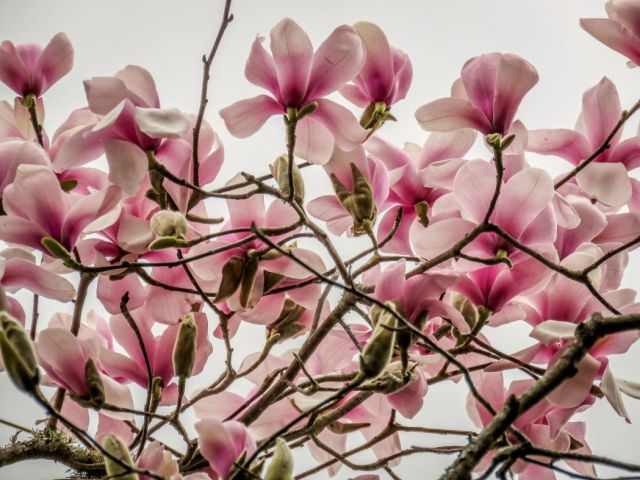
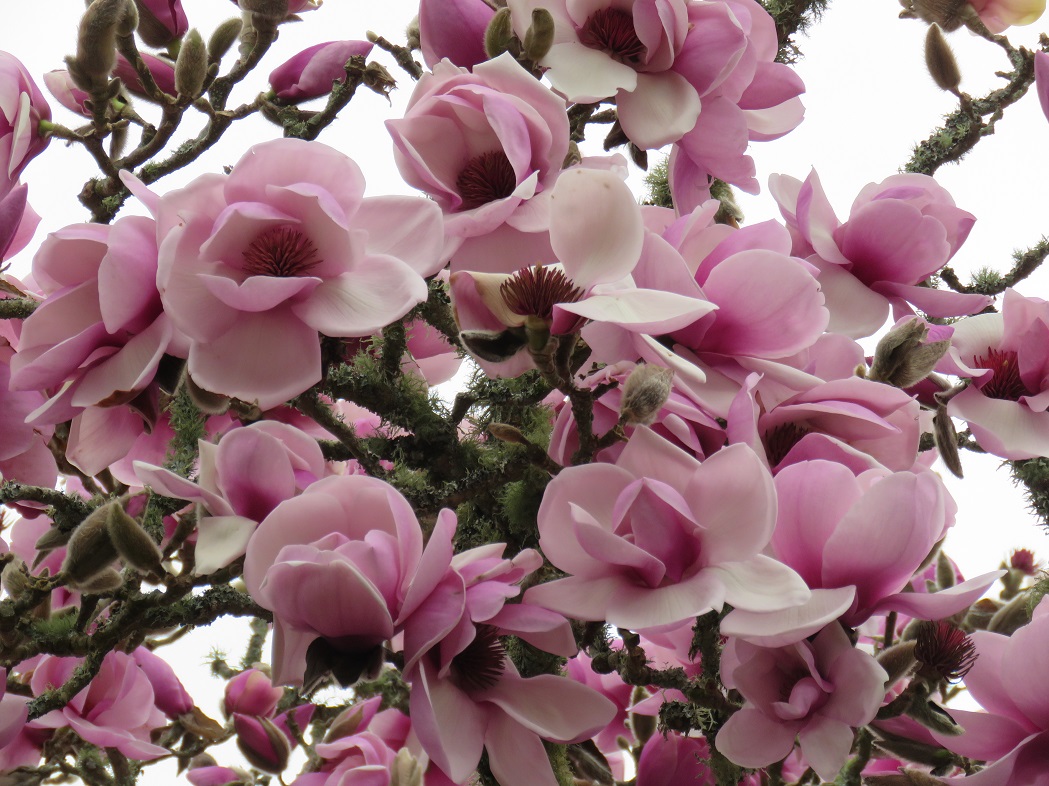
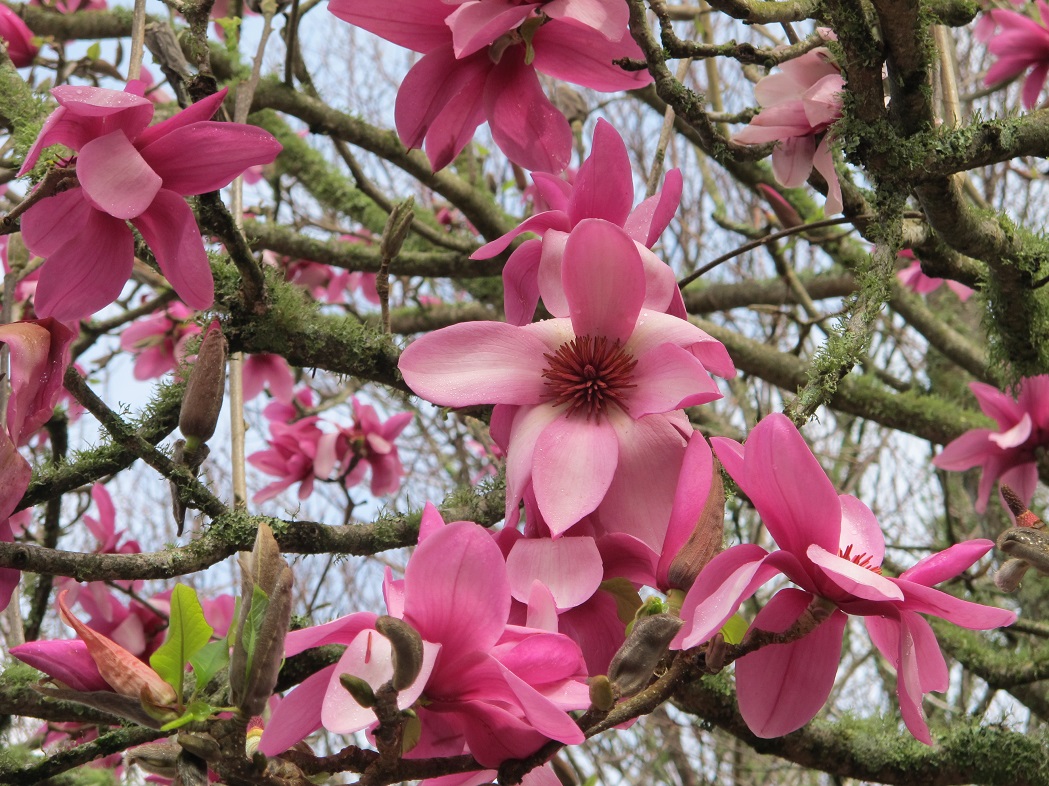
Looking up into the floral skyspaper of Magnolia sargentiana robusta

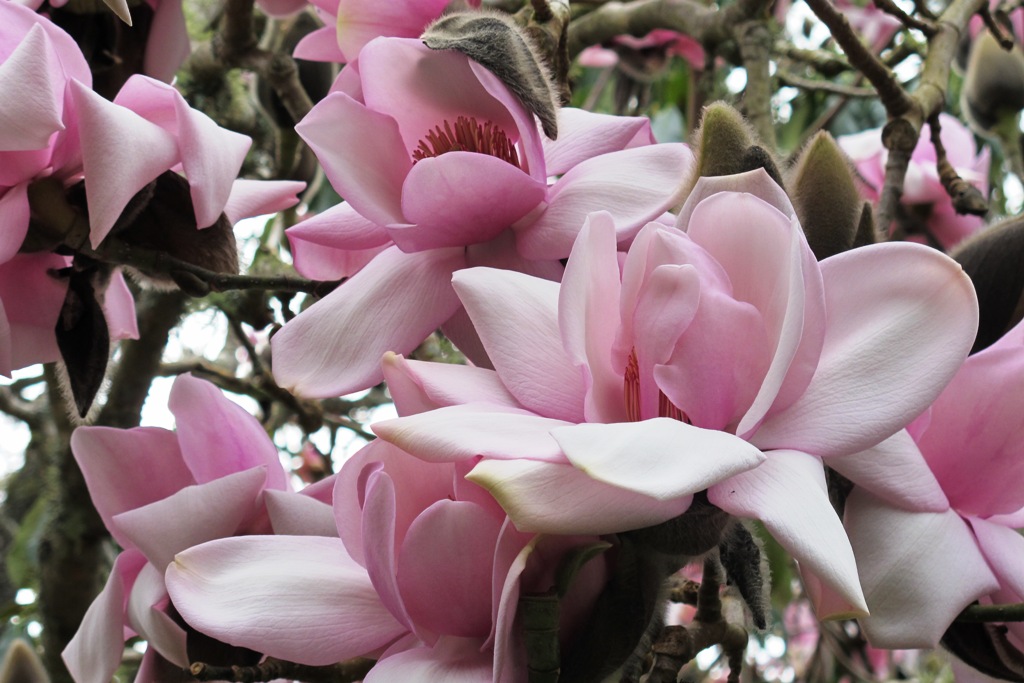
The magnolia flowering season from late June to September is a special time of year for us. We have many magnolias, both named varieties and species and unnamed hybrids from the breeding programme. This is a plant family where the larger the plants get, the bigger show they make.

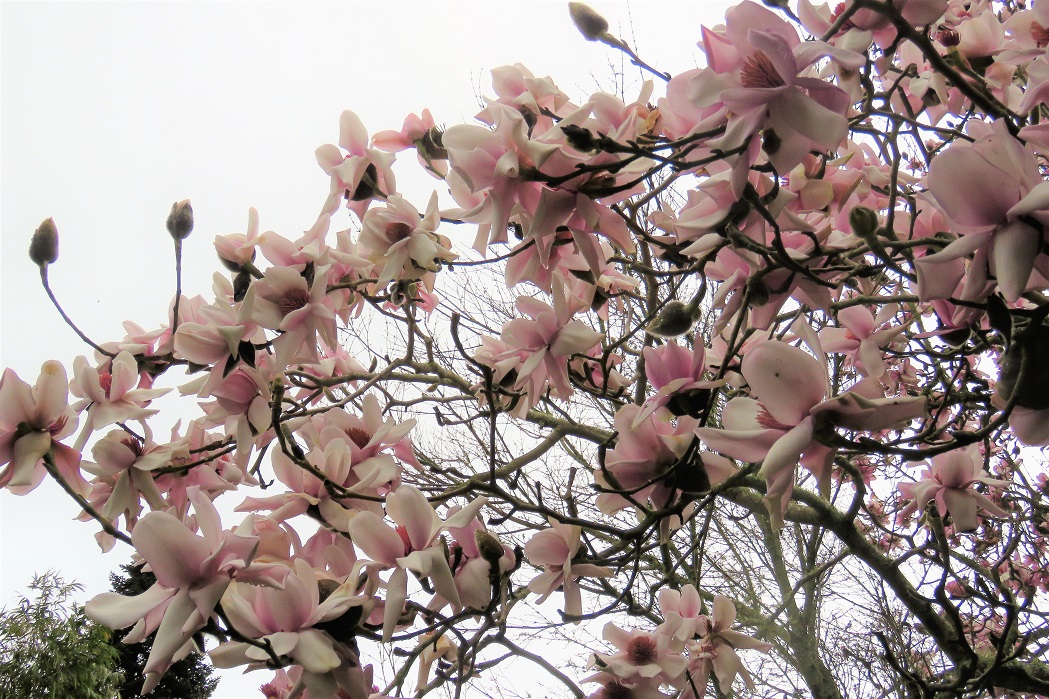
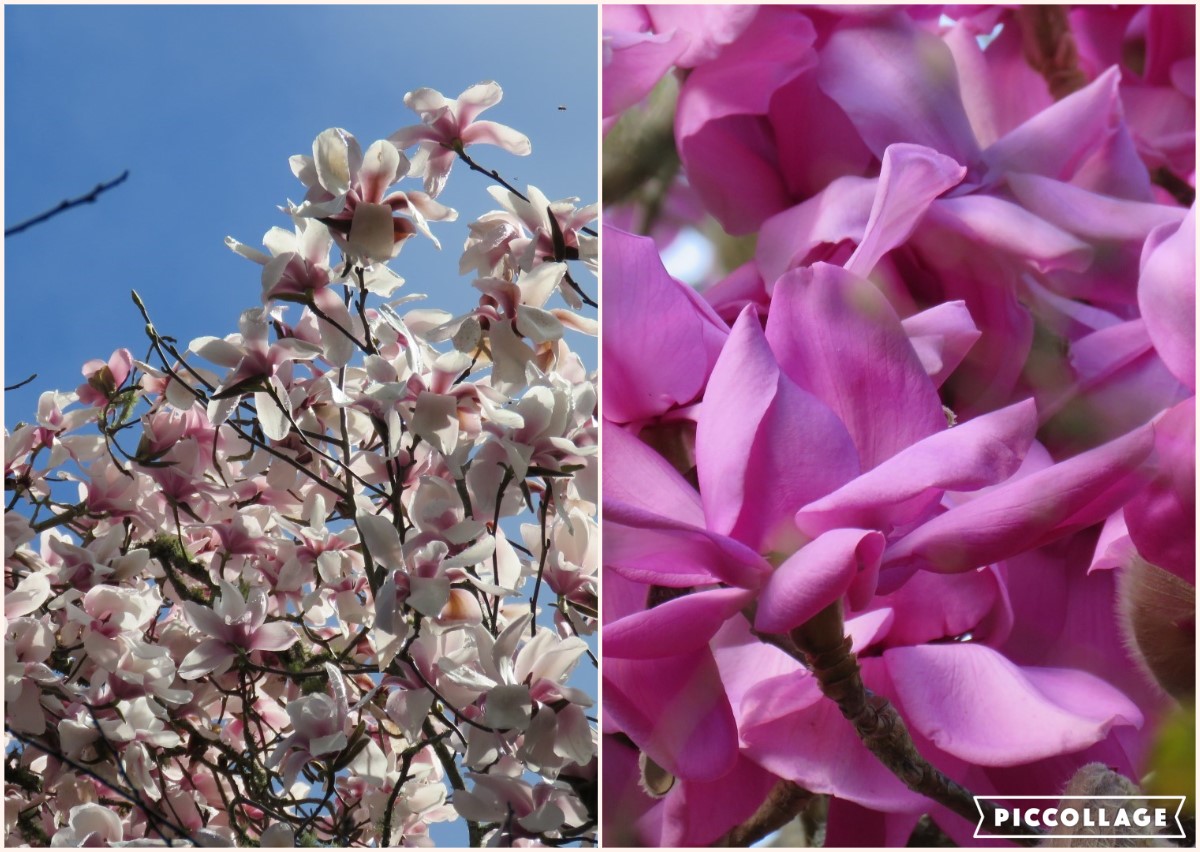
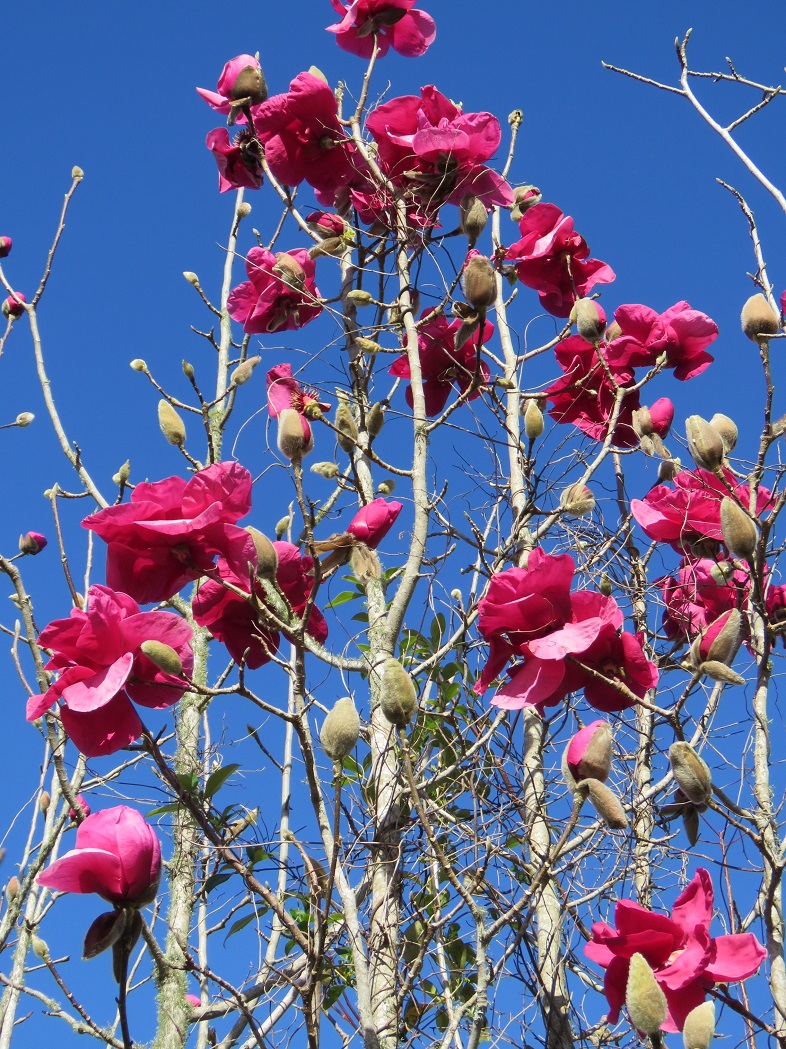
For me, the deciduous magnolias hold pride of place. That display of bare blooms on a tree with no foliage can take my breath away. Because we have large trees, I am often looking up from below and I describe it as floral skypaper.

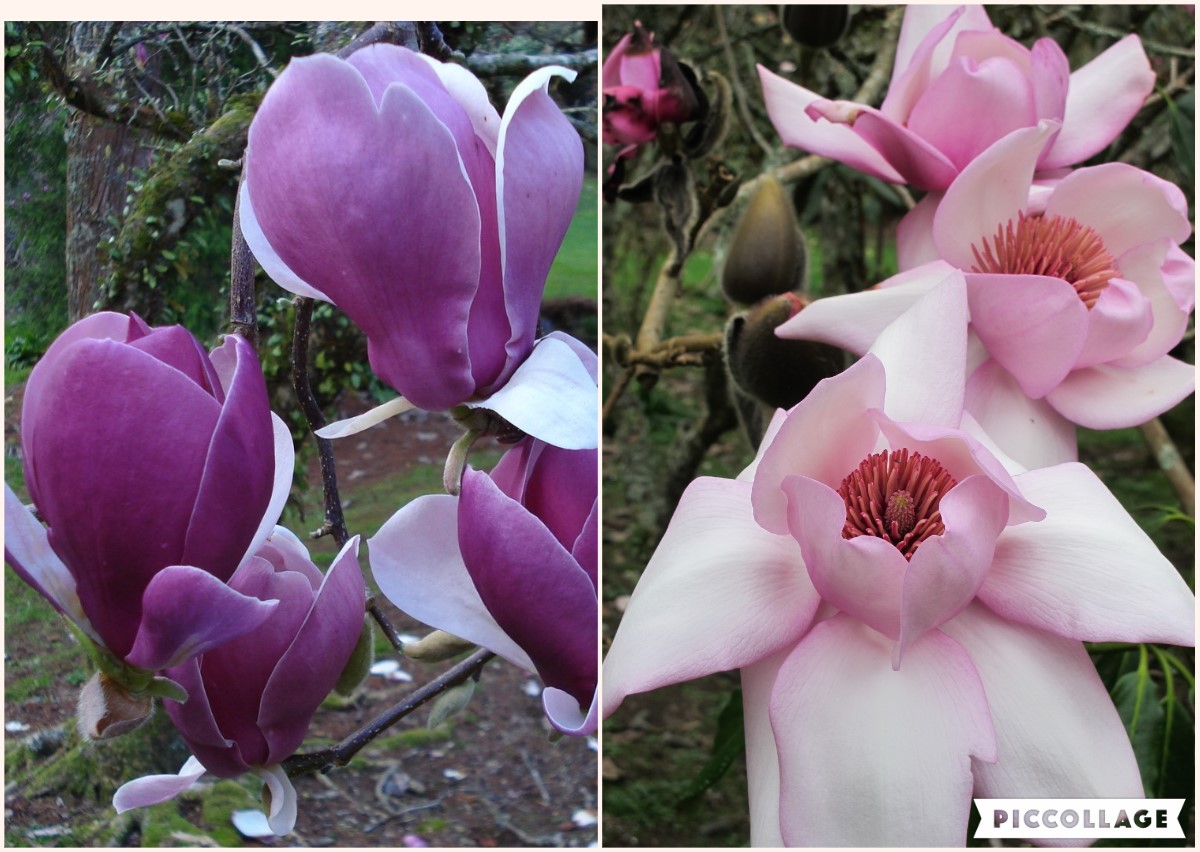
The purple petals of Magnolia campbellii var mollicomata ‘Lanarth’ forming a carpet beneath.

When I look down, I see the petal carpets on the ground and I have a great fondness for petal carpets. However, I will concede that they are not great on paths, driveways and sealed areas where the carpet can soon turn to slippery brown sludge. We will use a leaf rake or leaf blower on sealed areas but leave the petals on grass or garden.
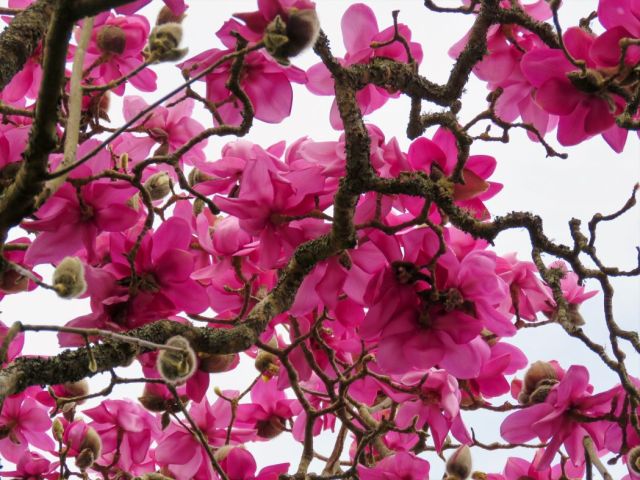
And looking up to ‘Lanarth’ against a grey wintry sky

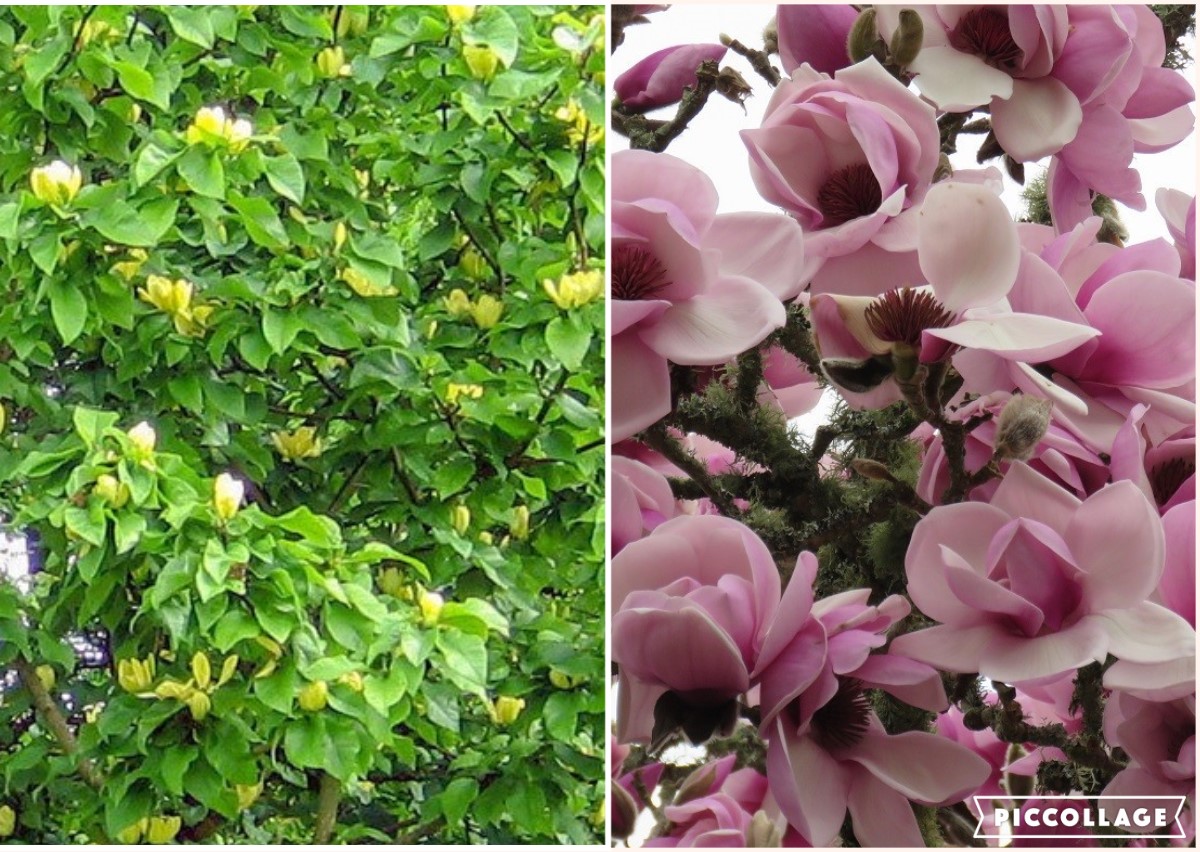
Most of the deciduous magnolias are Asiatic in origin – particularly areas of China, northern India and Nepal. The exception is the one truly yellow deciduous species – Magnolia acuminata – which is from North America. It is one of the parents of all the yellow hybrids that have become available in the last 25 years.

USA is also the homeland of the most popular evergreen magnolias which are widely grown here. These are characterised by heavy, leathery leaves and large, white flowers. I am not a fan of the evergreen grandiflora types; the ratio of flower to foliage is not high enough for my liking. I prefer the 100% flower to 0% foliage of most deciduous varieties.

Michelias, on the other hand, are all Asian in origin with many also being found in tropical areas, so into Southern China, Vietnam and Thailand. These are also evergreen but with softer, smaller leaves than the American leathery ones, a higher ratio of flowers and they are smaller growing overall. Botanically, they are magnolias but they look very different to the deciduous magnolias and they fill a different role in the garden.   
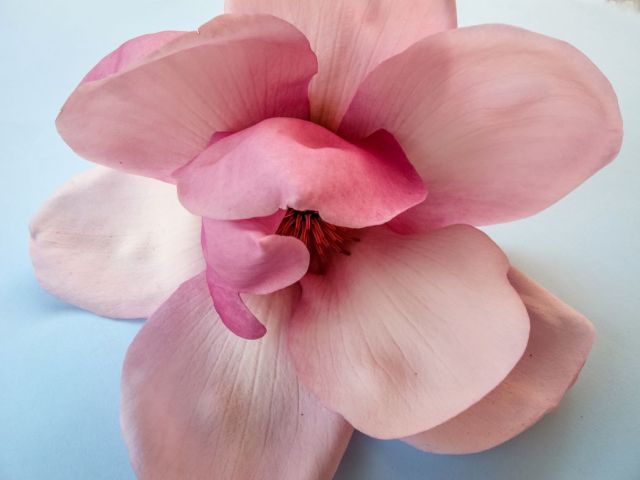
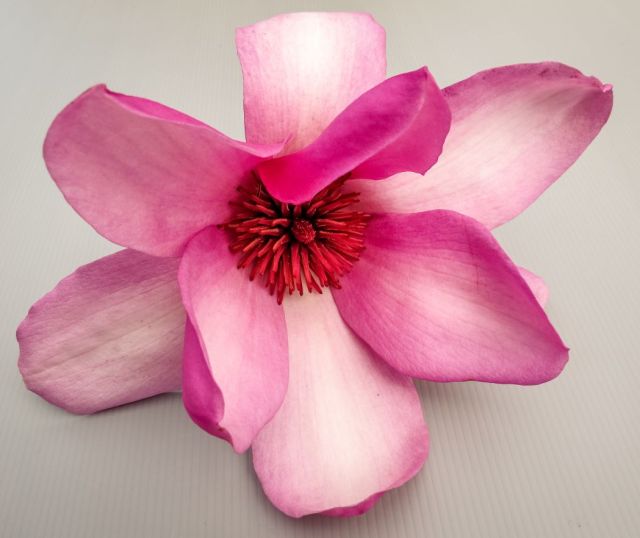
Magnolia Iolanthe in pink
Magnolia Apollo in purple
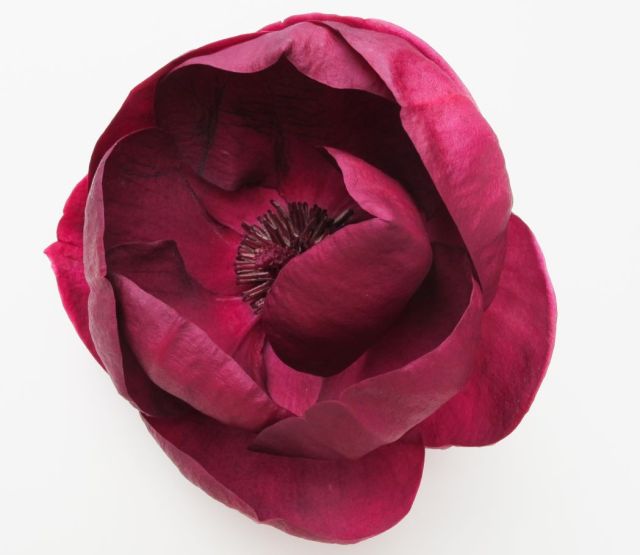
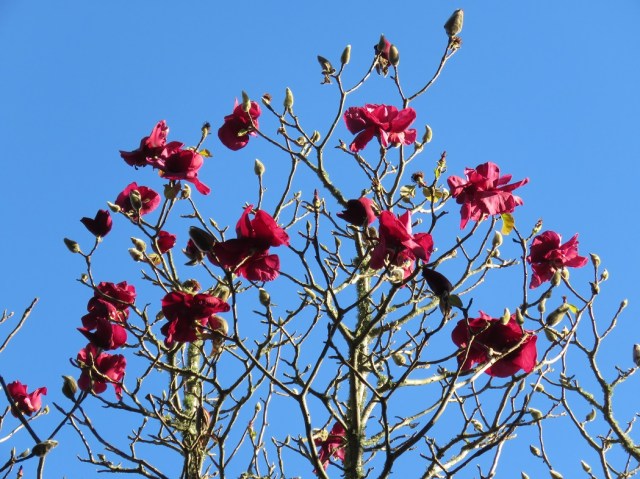
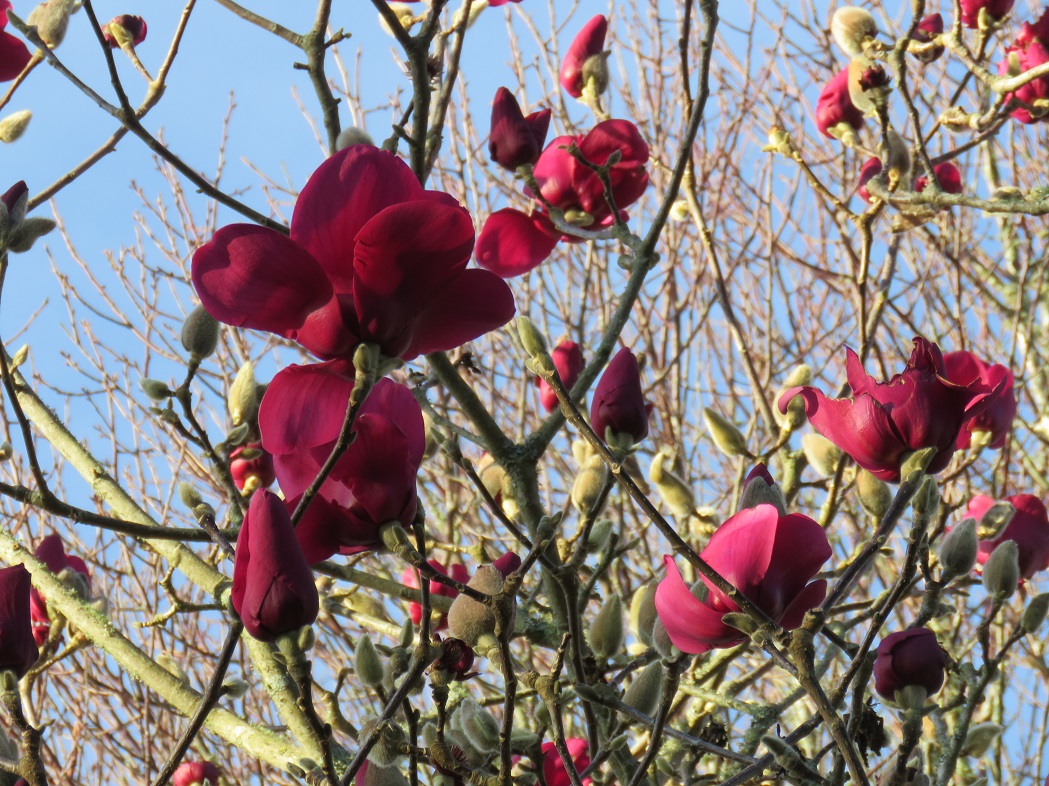
Magnolia Black Tulip in red
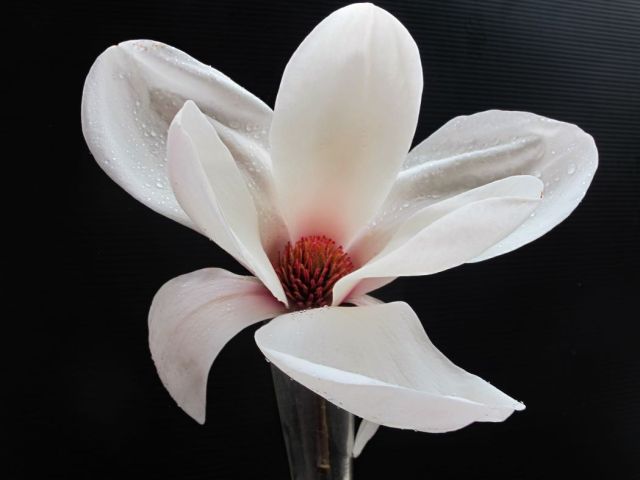
Magnolia Lotus in white
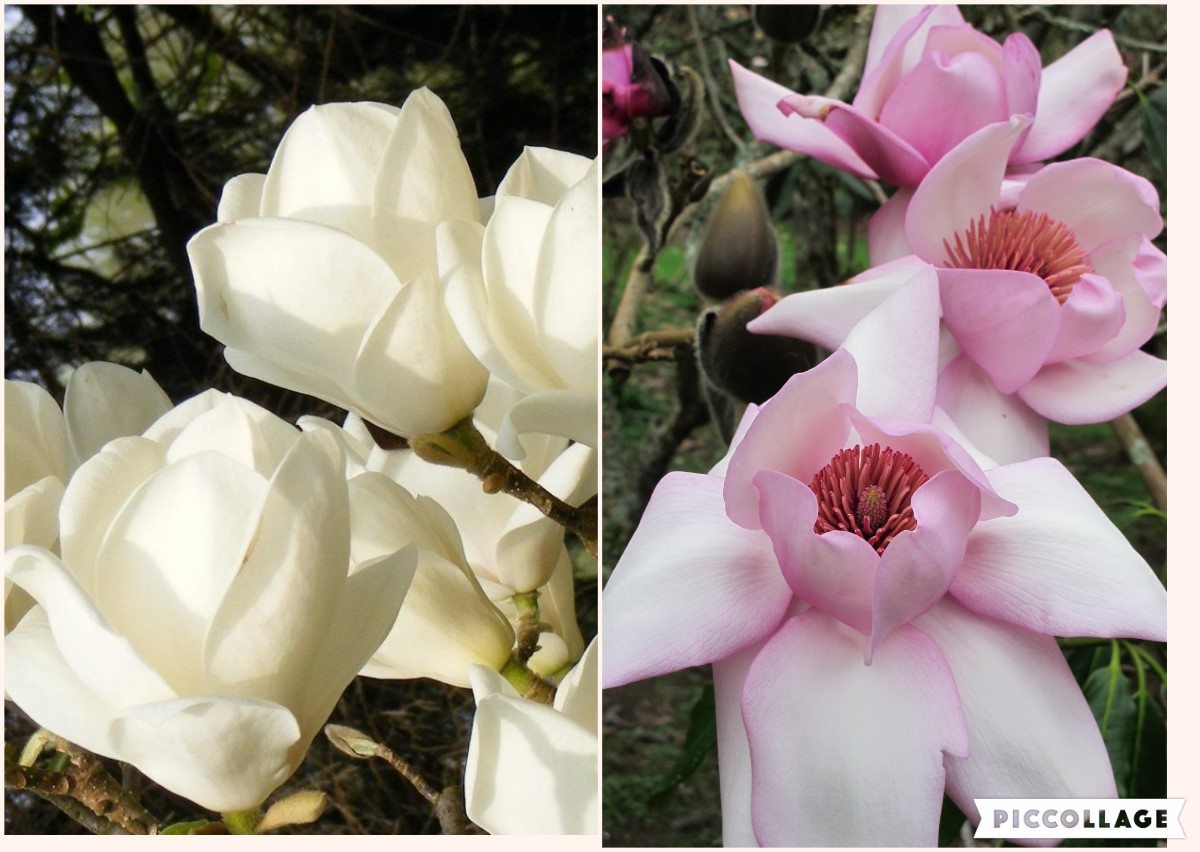
  • Deciduous magnolias come in shades of pink, purple, red, white and yellow.
  • Magnolias are ancient, evolving before bees emerged. It is thought that they were originally pollinated by beetles. Now they provide a food source for bees at a time of short supply in late winter.  
  • We get deeper, richer colouring in magnolias in New Zealand. It is likely to be related to our soils, climate and the clarity of light here. The same plant can look very different with the colour washing out, particularly in Northern Europe and the UK where winters are longer and colder and light levels lower.
  • New Zealand is recognised internationally as leading the way on breeding red magnolia hybrids, initiated by Felix Jury with ‘Vulcan’ and continued by Mark Jury, Vance Hooper and Ian Baldick.
  • No, you can not get very large blooms on a deciduous magnolia that will stay a small plant under two metres. Smaller growing varieties will have smaller blooms and the vast majority of deciduous magnolias are trees, not shrubs.
  • If you have a magnolia where the buds either drop off or fail to open properly, it is a sign  either of frost damage or pest damage by rats or possums.
  • When deciduous magnolias have new leaves that are clearly distorted on opening, it is an indication of spray drift. Lawn spray is the main culprit. If you feel you must spray your lawn, don’t do it in early spring when the leaf buds on magnolias are about to break into growth.
  • The limited range of species that were all that was available in the past could take 15 to 20 years before they set flower buds. Nowadays, you can expect magnolias to bloom within a couple of years of planting and some will even be sold with flower buds.
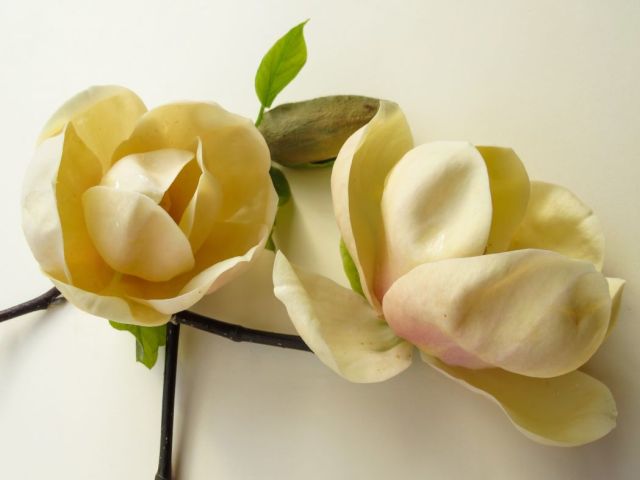
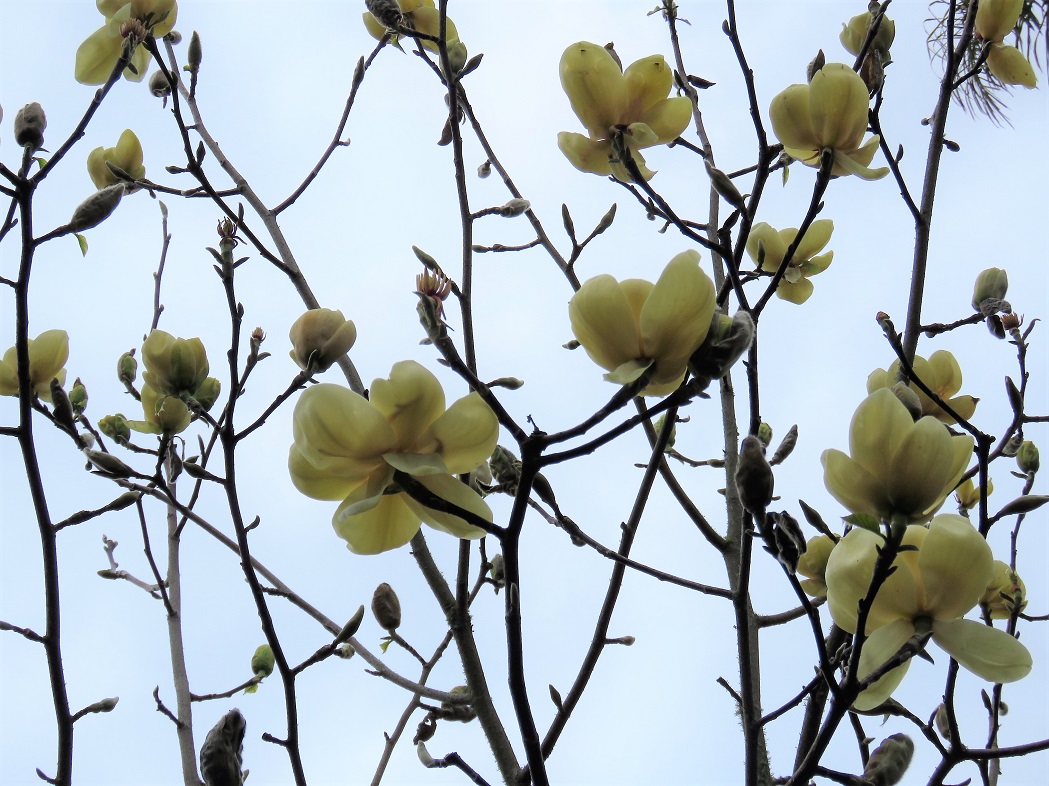
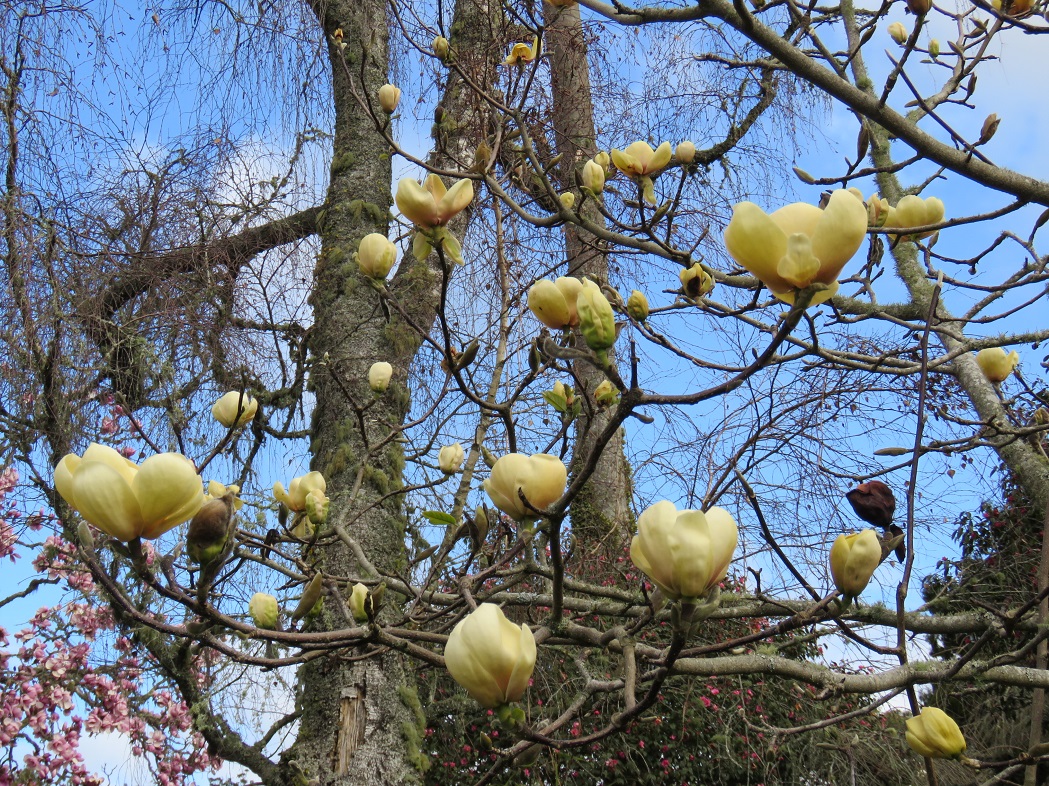
Magnolia Honey Tulip in yellow

Giving thanks for when midwinter turns to the cusp of spring

I was going to limit myself to a theme of red and yellow but te mounga (the mountain, Mount Taranaki) was looking so very beautiful, I wanted to share the glorious sight again

I have twice heard our government give a strong message to New Zealanders to get home urgently while they still can. The first time was in March last year when then deputy prime minister, Winston Peters, said it and it was certainly chilling. At the time, I wondered if he was being overly dramatic. He wasn’t. Within days, flights had slowed and then they stopped entirely for a time.

We heard the same message from our Prime Minister on Friday, this time aimed at New Zealanders in Australia. It was just as chilling. Get home in the next seven days or risk being stranded indefinitely.

And Magnolia campbellii is coming to its peak flowering

I saw a tweet come down my line from a journalist that made me laugh – in that ‘if you don’t laugh, you will cry’ sort of desperation. I went to look for it this morning to screenshot it for this post but it has gone. She must have decided it was too flippant when there are thousands of our citizens in Australia scrambling frantically to find flights and then get negative Covid tests within the required time frame. It showed two small boats with people on them and the caption read: ‘Is this our Dunkirk moment?’

Covid is not done with us yet. Even though Mark and I are Pfully Pfizered, as I say, I am deeply grateful to be in one of the very, very few countries in the world that has no Covid past the border and my gratitude for how our government has managed it so far remains strong. I just wish we didn’t have so many whingers and moaners looking for fault. Just look beyond our borders to see how bad it could have been here, too.

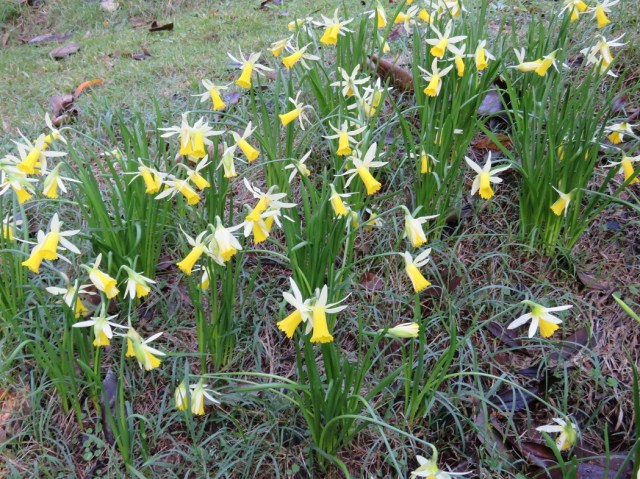
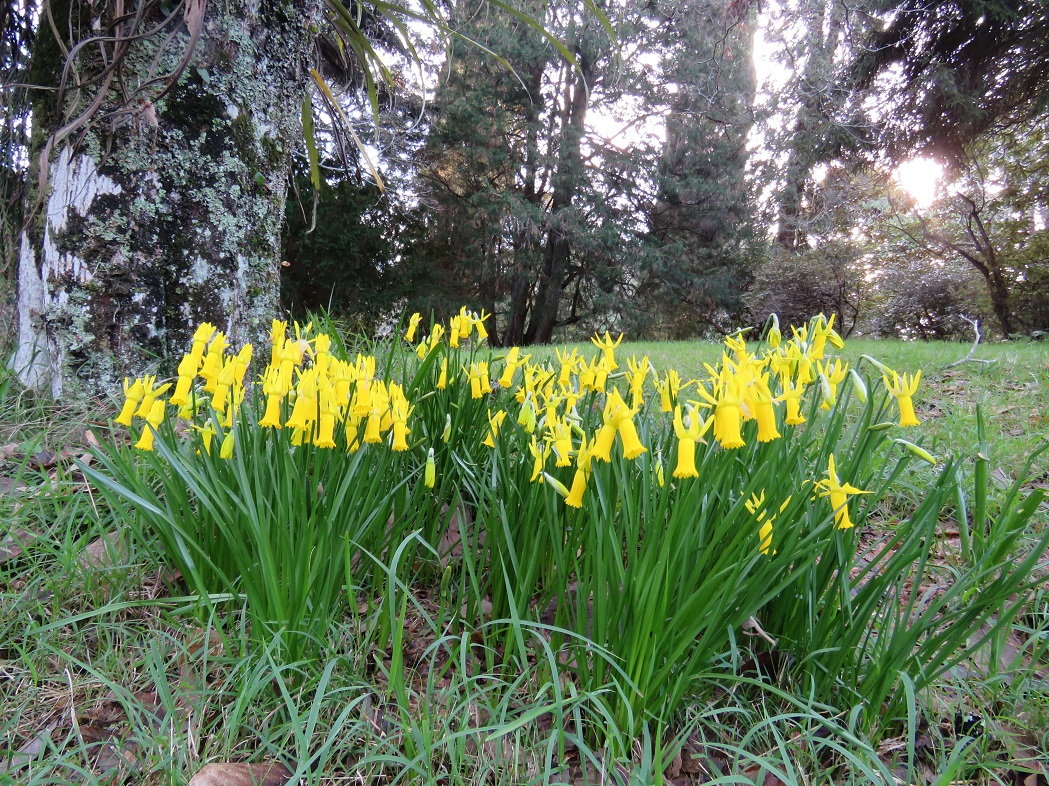
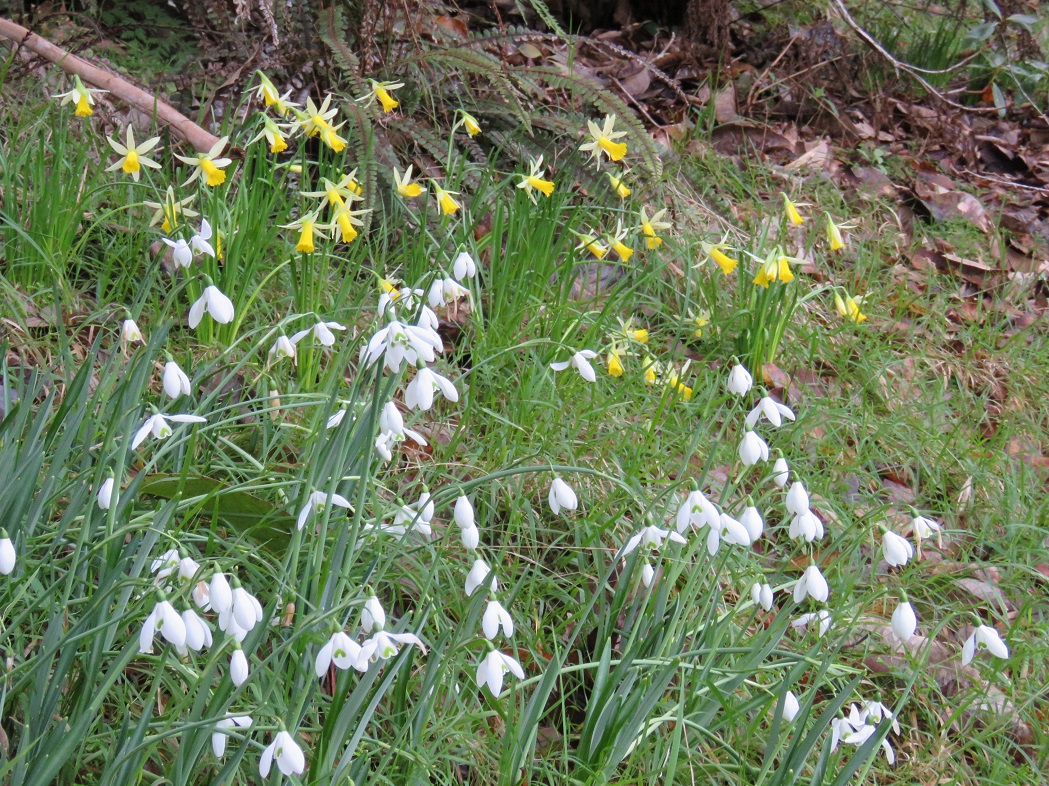
Narcissis Twilight – blooming their little hearts out down in the park

On a perfect morning like yesterday, I could not think of a better place to be. Magnolia season has started, the narcissi are coming into bloom and we are at peak snowdrop. It may still be midwinter here but we are on the cusp of spring. All I have to offer is colour. And flowers.  

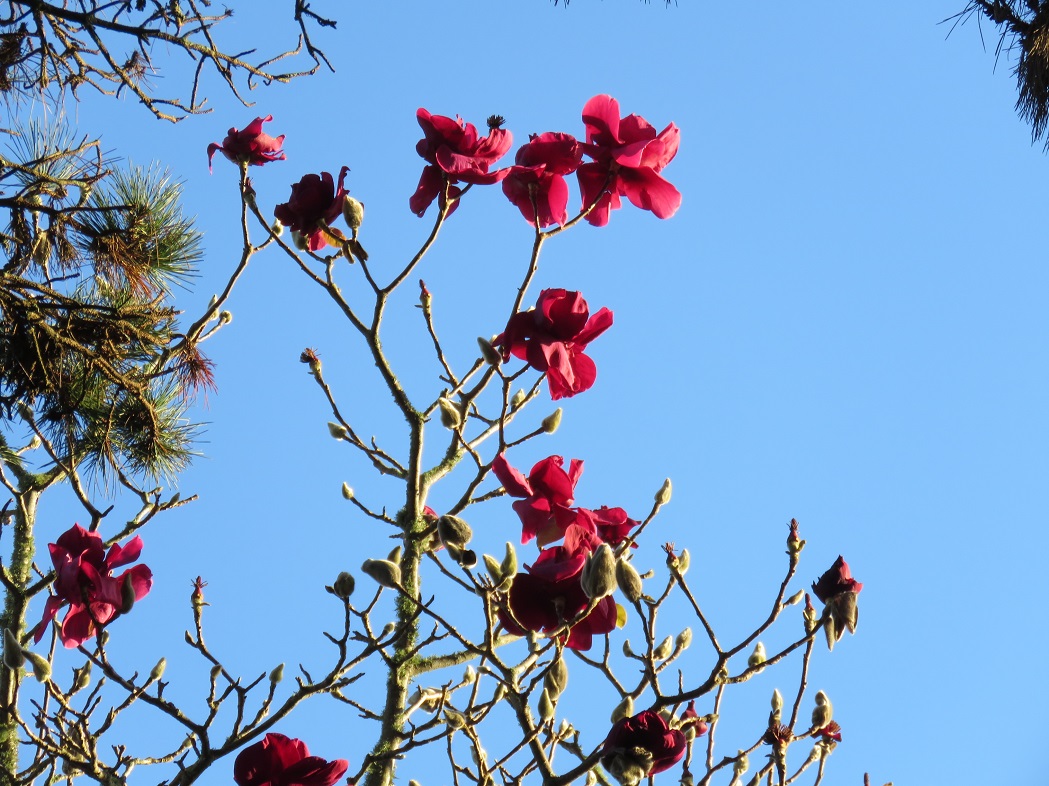
Magnolia Vulcan – where the passion for red magnolias started here
Magnolia Felix Jury followed
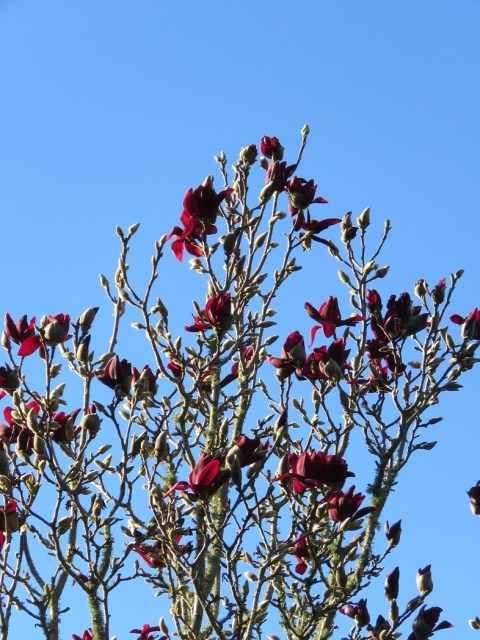
And then came Burgundy Star, shown here, and Black Tulip which is not yet showing its full colour

We always get the best red shades on the earliest blooms each season and we get the very best shades of red overall. They don’t look this colour in all climates and soils across the world.

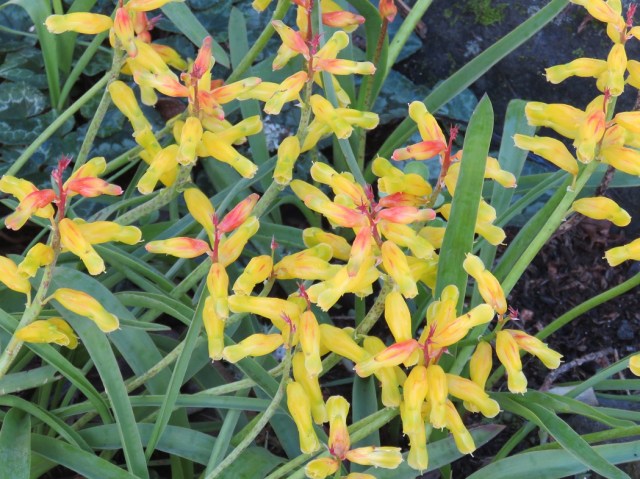
Mark’s Lachenalia reflexa hybrid

While the red magnolias dominate the early season, when it comes to lachenalias, it is the yellow and oranges as well as red that bloom first. We have to wait for later in the season to see the less vigorous but arguably more desirable blues, lilacs, pinks and whites.

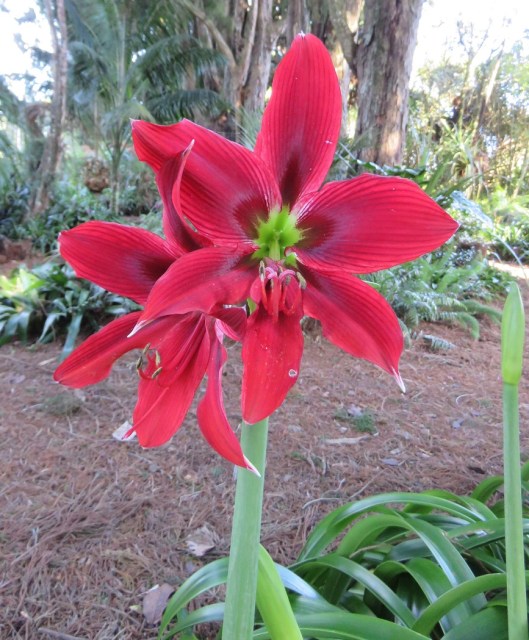
Hippeastrum aulicum

Still with the bulbs, the first hippeastrums are opening. We don’t go in for the hybrids much, preferring the evergreen species of H.aulicum and H. papilio which have settled in very happily to their permanent homes in the woodland.

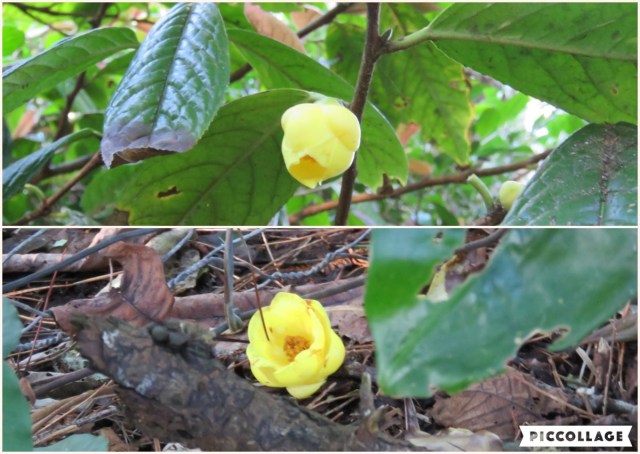
Camellia impressinveris

It is, of course, camellia season. I spent some time this week writing a piece about camellias for an overseas publication so I am a bit camellia-d out but the yellow species never fail to thrill, even if they are not as floriferous as the more usual varieties.

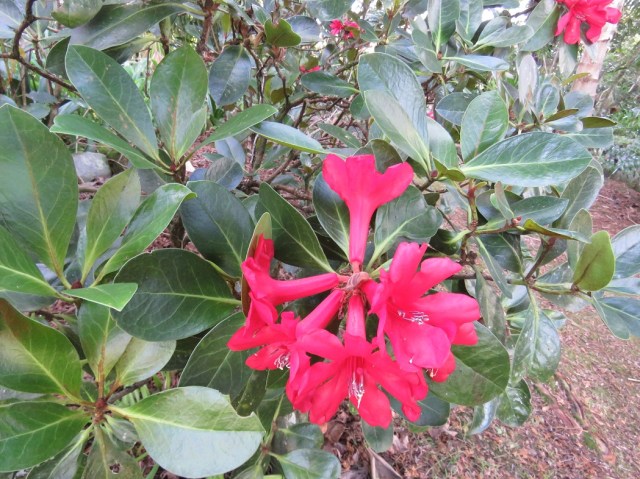
One of Mark’s seedling vireyas

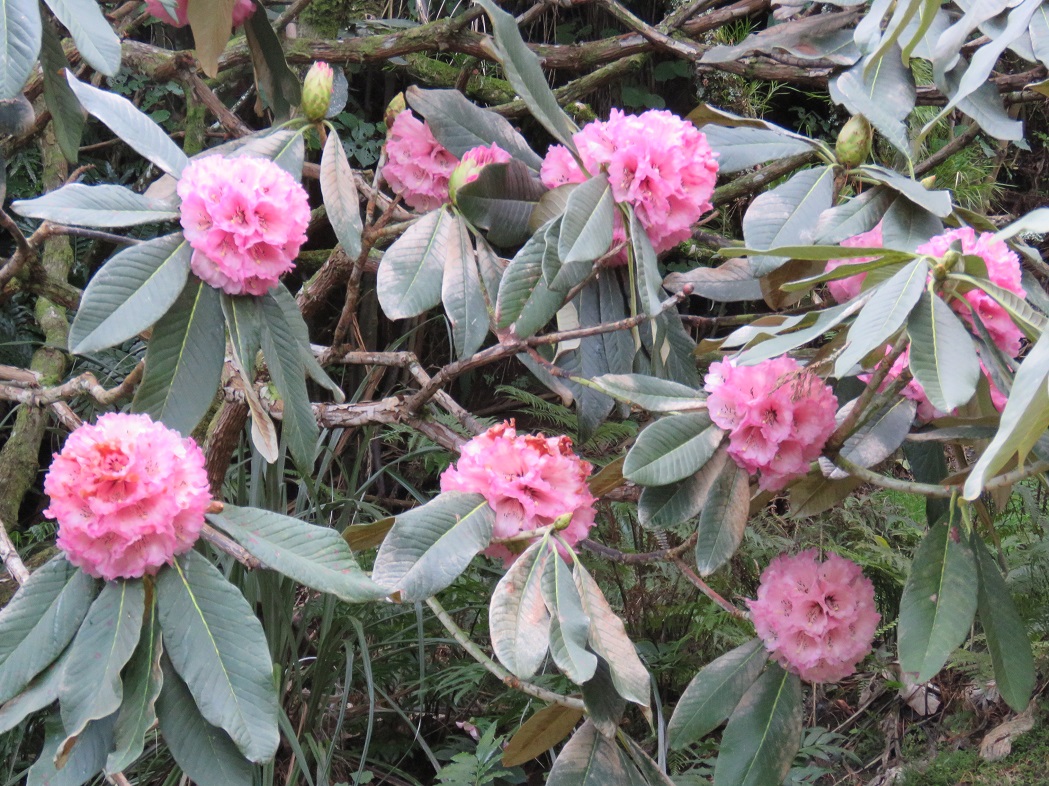
The big-leafed rhododendrons down in the park are just starting to break bud and show colour but the sub-tropical vireya rhododendrons in the upper gardens flower intermittently all year so we always have some in bloom. This a scented red which Mark raised for the garden that has never been named or put on the market.

In the chaos of the wider world, home has never looked safer or offered more solace for the soul.

When 1+1 equal more that 2. Magnolia parents and offspring.

I added a postscript to last week’s post about blind pruning camellias. After comments on that post, I added in chainsaw pruning tips (cutting back overgrown camellias to ground level or just above) and a word of caution about hygiene with cutting tools. You can find it at the end of the post if you are contemplating more extreme, less refined pruning.

Today’s post is heavy on photos. Magnolia photos to celebrate the season. I haven’t sat down before and collated images to show the parents of our named cultivars, lined up alongside their progeny. When Felix started crossing magnolias back in the early 1960s, he wanted to see if he could get the cup and saucer flower form of M. campbellii, that would flower from a younger age, on plants that would stay smaller and with more colours.

Magnolia Mark Jury  with a larger, more robust flower and longer flowering season than either of its parents.

He didn’t start with many options. There were not many different magnolias available in NZ at the time – nothing like today’s range – but he had a unique tool in his kit. That was the magnolia he named for his youngest son, Mark Jury.

Magnolia sargentiana robusta on the left, ‘Lanarth’ on the right, the parents of ‘Mark Jury’

More Mark

‘Mark Jury’ came to him from Hillier Nurseries as a seedling of ‘Lanarth’ (M.campbellii var mollicomata ‘Lanarth’, to be precise), costing 18 shillings which was quite a lot back in the 1950s. When it flowered, it was not ‘Lanarth’. Discussions with Hilliers – slow discussions by hand-written letters as was the way back then – determined that it was most likely to be a cross between ‘Lanarth’ and M. sargentiana robusta. It proved to be an important breeder parent for him.

Magnolia ‘Lennei’ alba crossed onto ‘Mark Jury’ was one of his first efforts. (For the technically minded, ‘Lennei’ is more correctly M. X soulangeana ‘Lennei’, itself a cross of M.denudata and M.liliiflora).
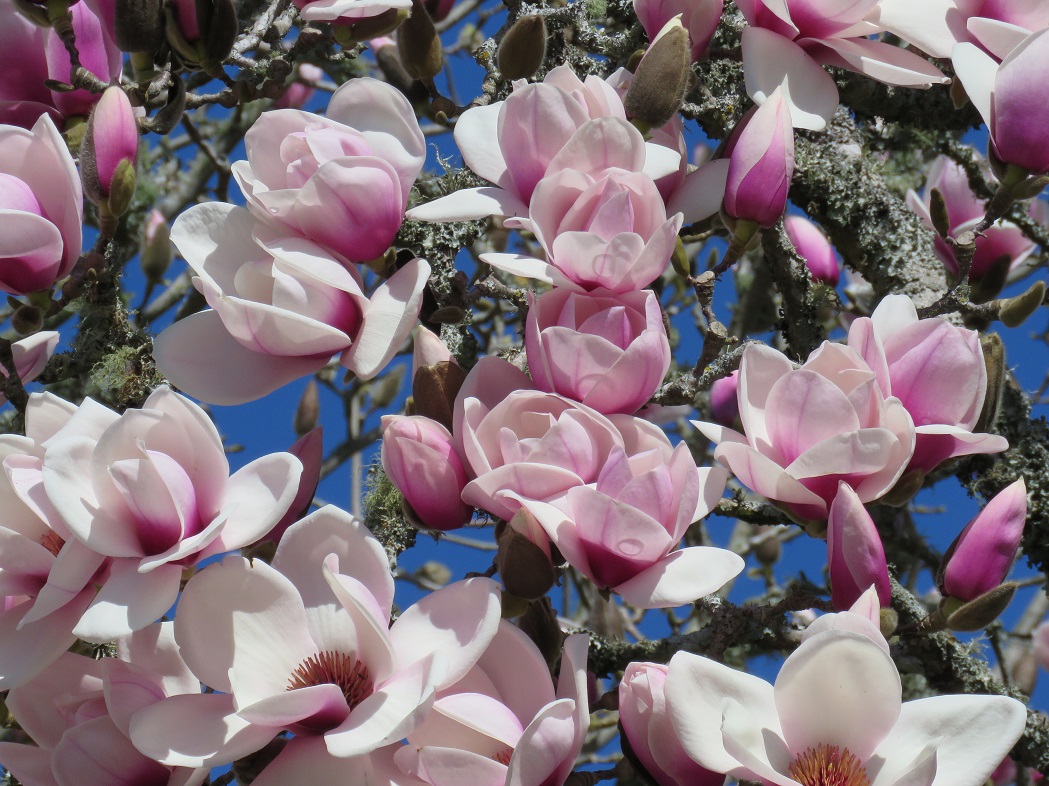
It resulted in the beautiful ‘Athene’

‘Lotus’

and ‘Milky Way’.

Swapping to the pink form of ‘Lennei’ crossed on to ‘Mark Jury’, he raised and named
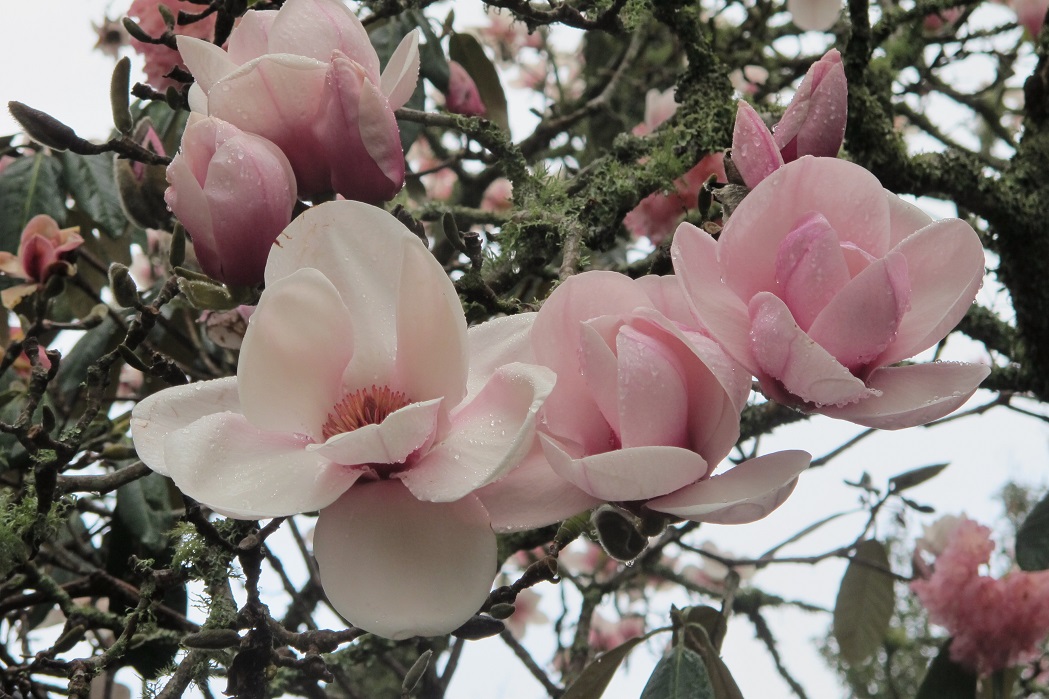
Atlas

and Iolanthe. This particular cultivar is one of the enduring stars in Felix’s collection.
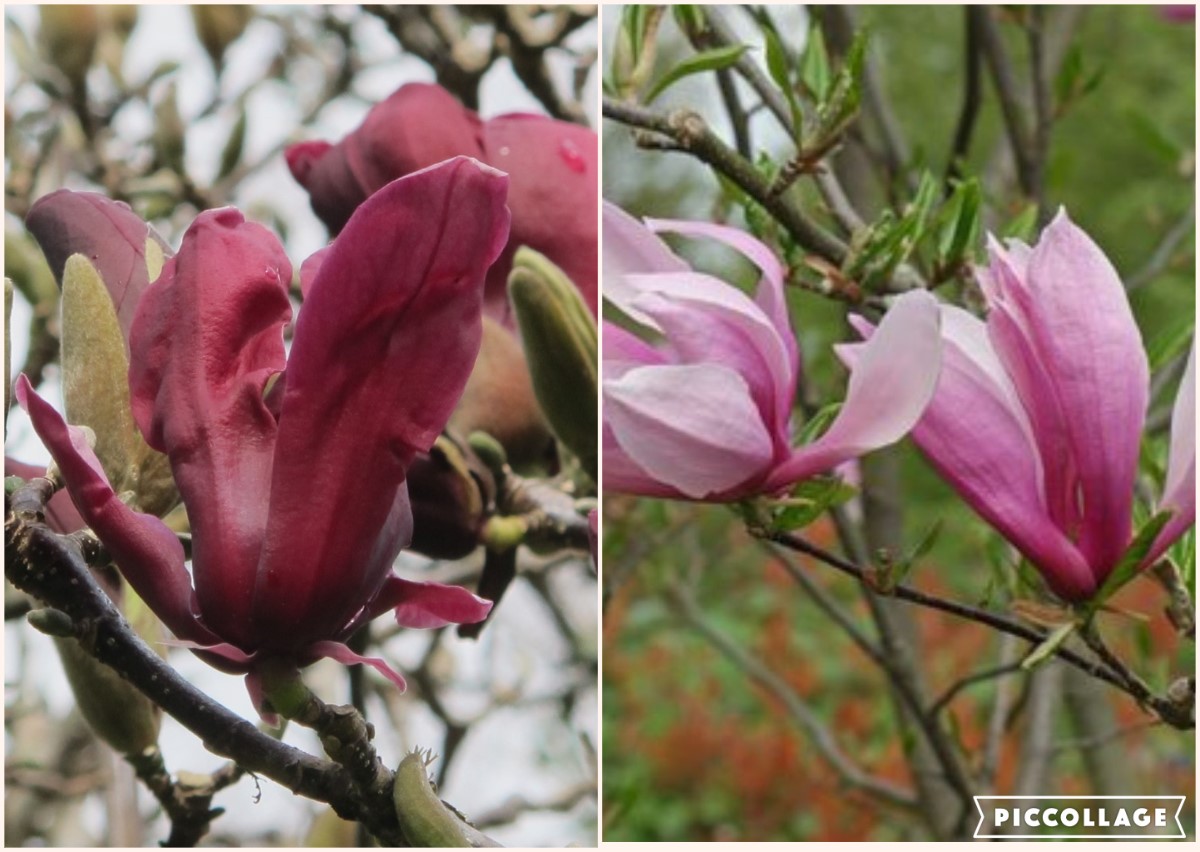
The picture on his use of M.liliiflora is not as clear. He had the dark form of M. liliiflora ‘Nigra’, a paler pink form of the same species and, it seems, a liliiflora hybrid in the garden and over time, he grew somewhat hazy in his recollections of which plant in the garden he used for which cross. One or other form of M liliiflora crossed with ‘Lanarth’ gave two notable results.
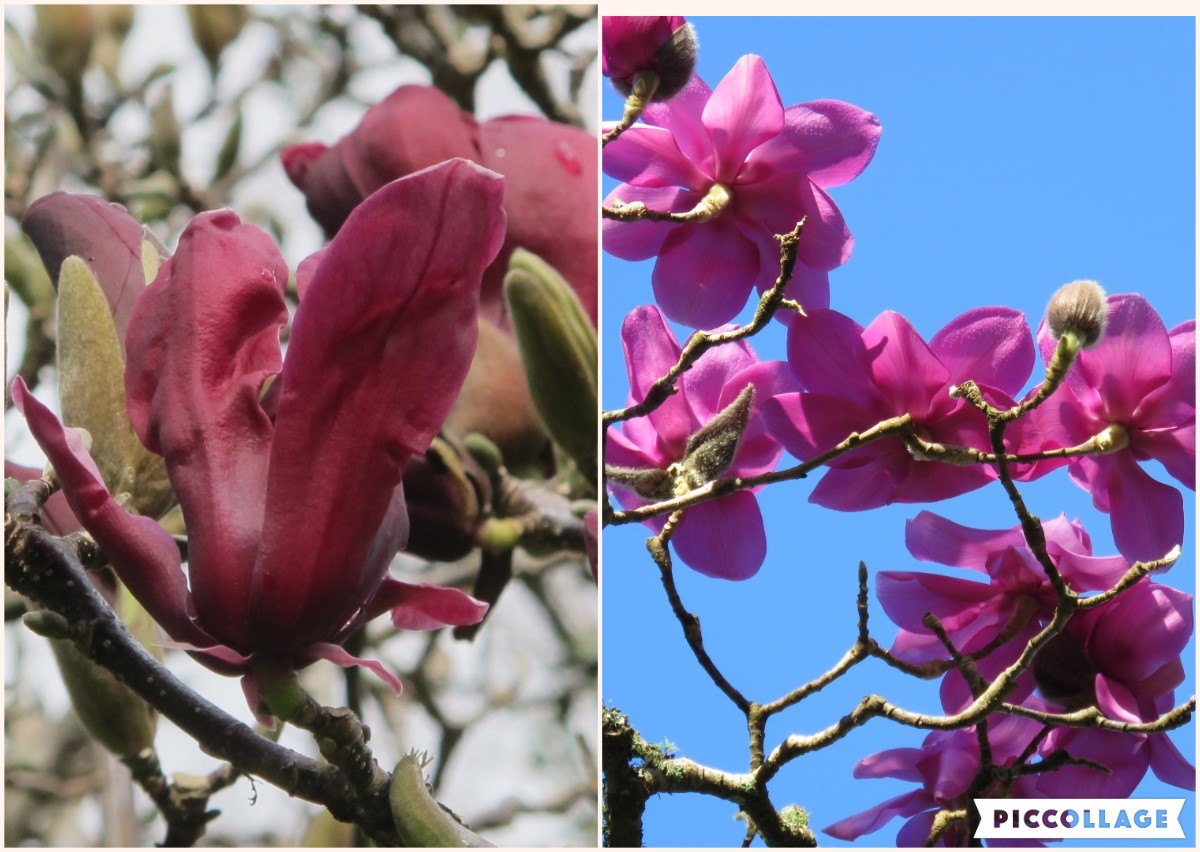
The first was ‘Apollo’.

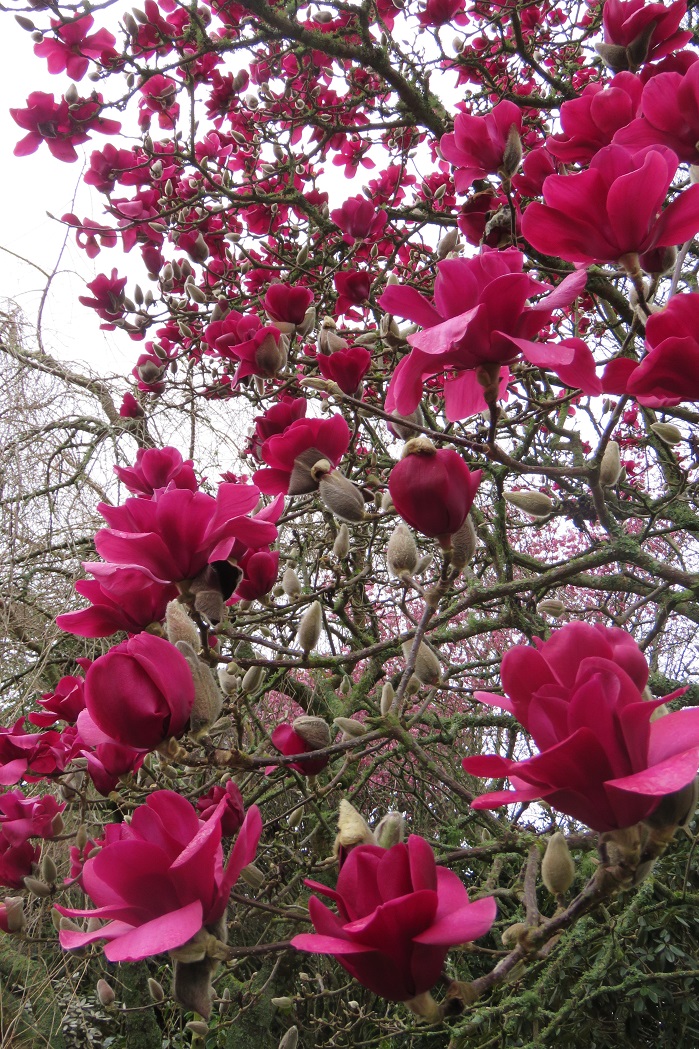
The second was the colour breakthrough in ‘Vulcan’ that paved the way for a multitude of magnolias into the future, getting to the red tones.
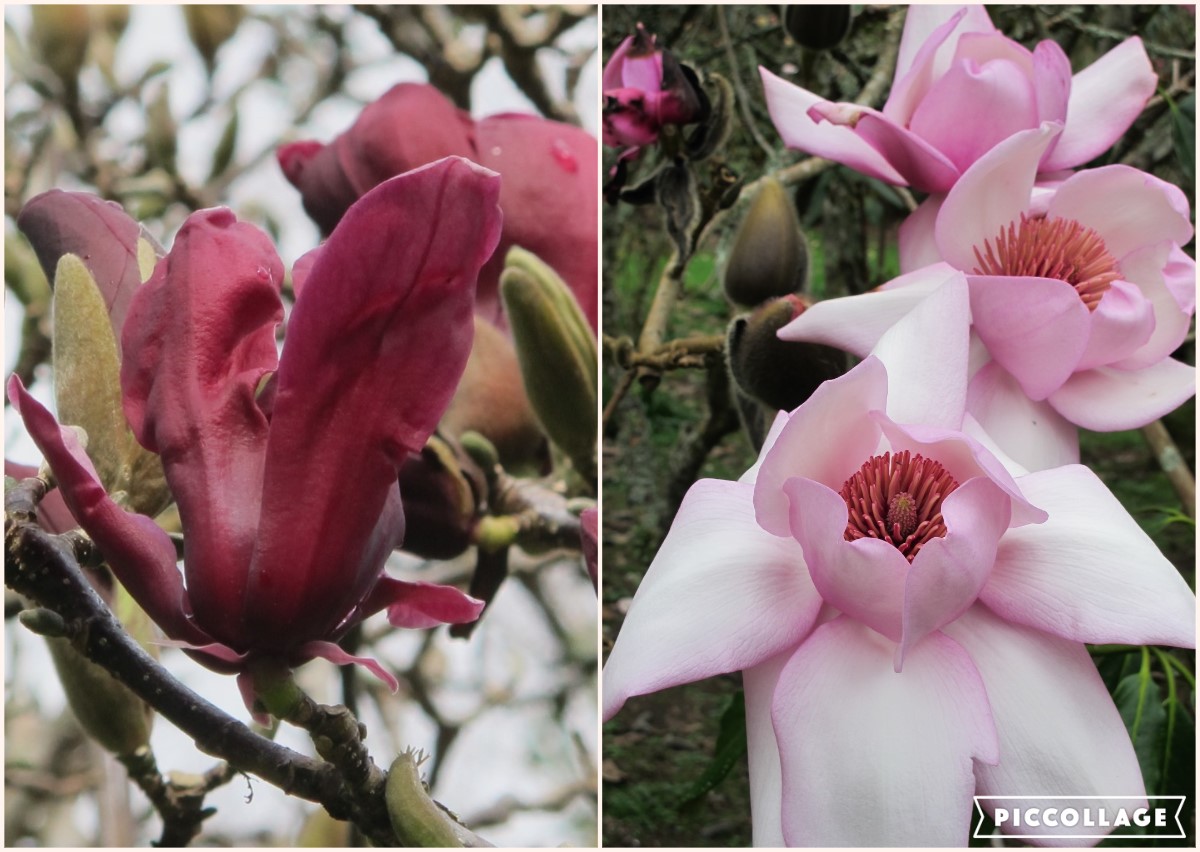
Again, an unspecified form of M.liliifora but crossed this time on his old favourite ‘Mark Jury’ resulted in one named cultivar of note.
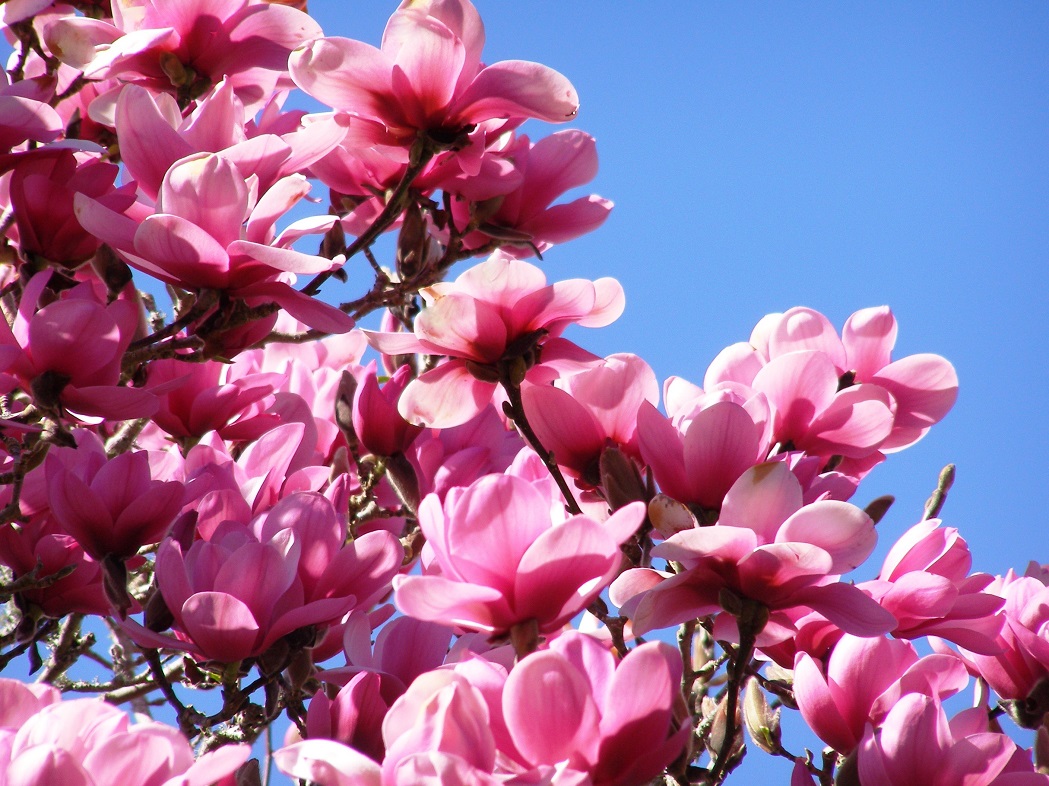
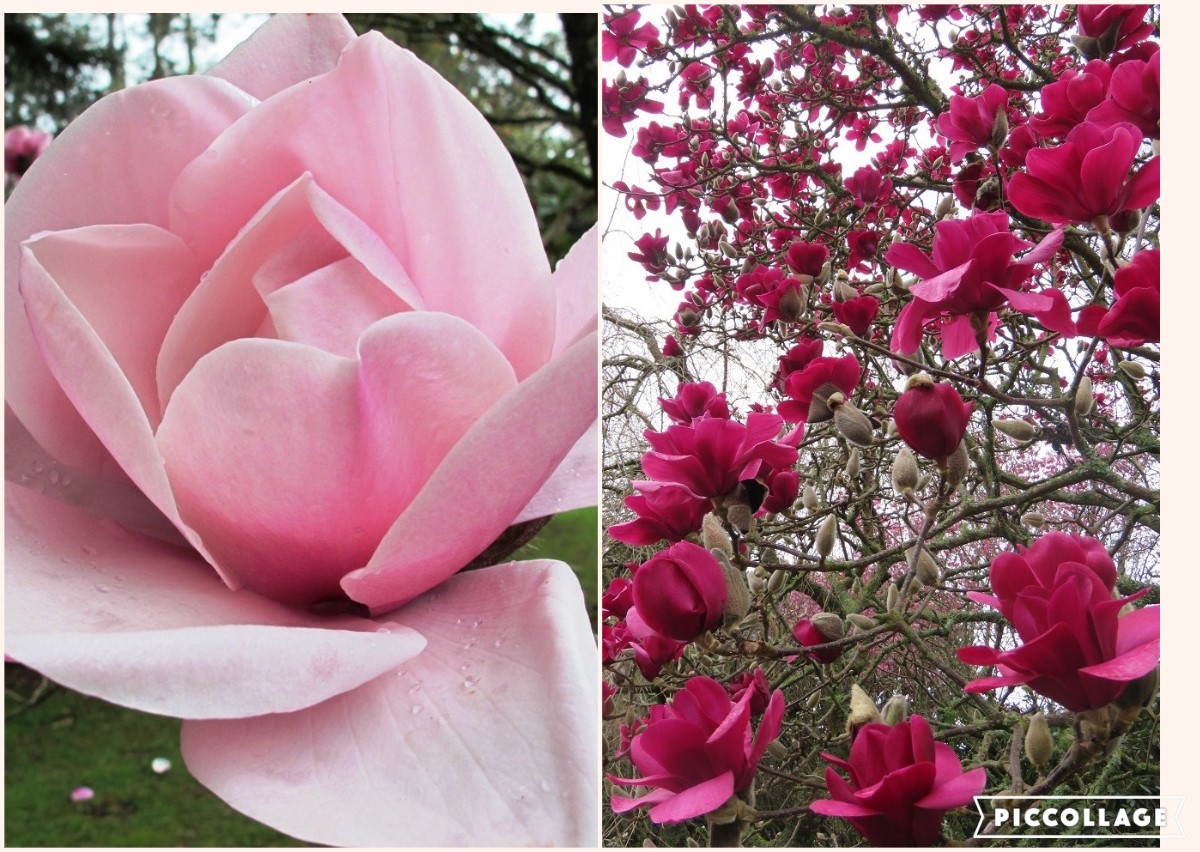
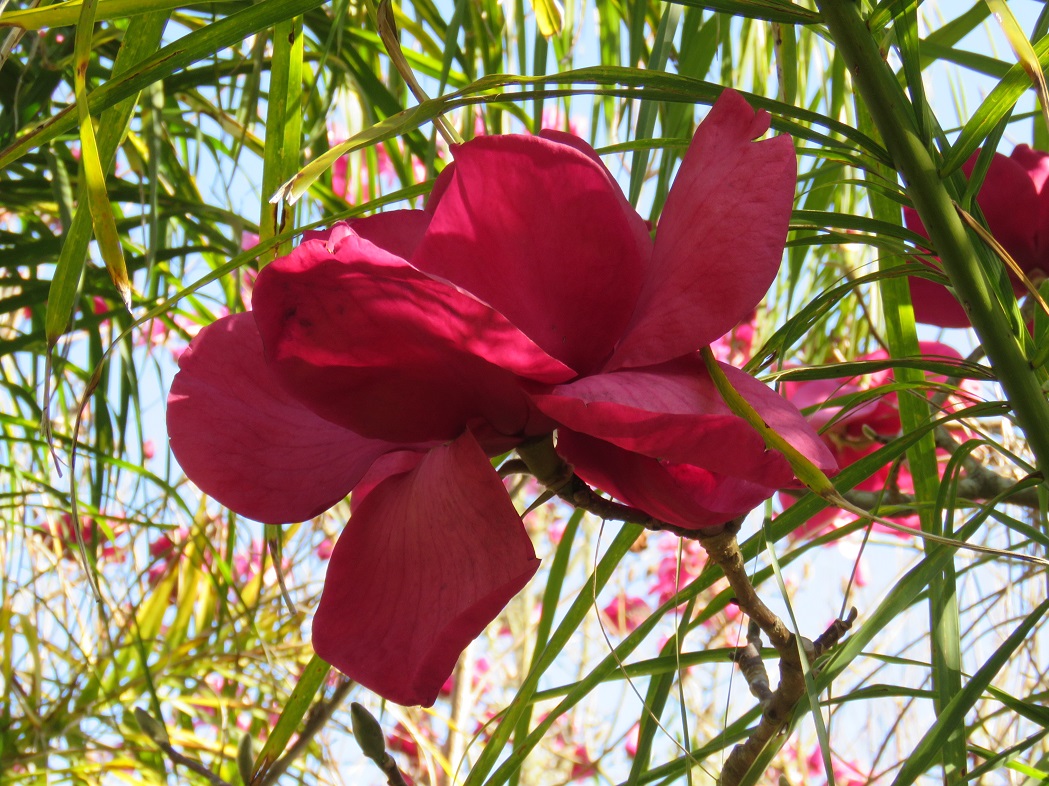
Magnolia ‘Serene’.

When Mark moved in to the next generation, starting by using Felix’s hybrids, it was his cross between ‘Atlas’ and ‘Vulcan’ that closed the circle his father started.

Magnolia ‘Felix Jury’ was what Felix had been wanting to see if he could reach and he lived long enough to see it happen. It does of course have ‘Mark Jury’ in its parentage through ‘Atlas’. To be honest, the flowers do not always look this red. I took this photo last week and we admit that it is ‘Felix’ at its most sublime.

Mark has had one notable success with his yellow crosses – ‘Yellow Bird’ with ‘Iolanthe’. ‘Yellow Bird’ is not evergreen – it just flowers at the same time as its new leaves appear in our climate and its flowers are small but a good colour. He was pleased to get a smaller growing tree that flowers on bare wood and that has been named ‘Honey Tulip.

‘Honey Tulip’ is a good stepping stone. Mark’s dream is to get the equivalent of ‘Iolanthe’ – a large cup and saucer bloom in pure yellow. Whether he has enough years left to achieve this is as yet unknown. It may fall to the next generation of hybridists to realise that vision.

Spring is in the air ♫ ♫ ♫

Mount Taranaki is an active volcano but the dark above its crater is cloud not smoke

I was prophetic. Just two weeks ago I commented that bringing in a film crew from outside the area to capture our view of Magnolia campbellii and Mount Taranaki was fraught with problems, that we could go ten days without being able to see it. In fact it was fourteen days this time – a period of cloud and intermittent rain which kept te mounga shrouded. Yesterday was fine and sunny and the cloud over the peak cleared in the afternoon. Is there a lovelier sight?

As I walked around the garden with my camera, it was clear that, midwinter or not, the plants are telling us that spring is here. Is it earlier this year than usual? We are reserving judgement; these things tend to even out over time though this winter has been relatively mild There have only been a handful of days when it has been too bad to be outside for at least a few hours.

Magnolia Vulcan – the ragged flowers to the right will have been chewed by kereru

Magnolia season is probably our showiest with the grandeur and vibrancy of blooms against the sky, complemented by drifts of snowdrops and dwarf narcissi below. Vulcan has opened its first blooms, showing the colour intensity we get here in the garden of the breeder (Felix Jury) which is rarely matched in colder climes in the northern hemisphere where it can be smaller and more of a murky purple.

Magnolia Felix Jury

So too Magnolia Felix Jury (bred by Mark) which opens red for us. It, too, tends to colour bleach in colder climates so is more a rich pink but with its magnificent size and flower form, it doesn’t seem to matter. Nobody complains about it to us and we only get rave reviews from around the world.

Hybrid cyclaminues narcissi with their swept back petals making them look perpetually astonished

With the rush of spring, comes a rising sense of urgency. This anxiety has yet to afflict Mark but I am feeling it. Opening the garden at the end of October takes planning. I have no idea what preparing a small garden for opening is like but I know a lot about preparing a large one. Timing is everything. Unlike routinely maintaining a garden – and we routinely maintain ours to a level that makes us happy – opening for a festival means having it all ready at the same time.

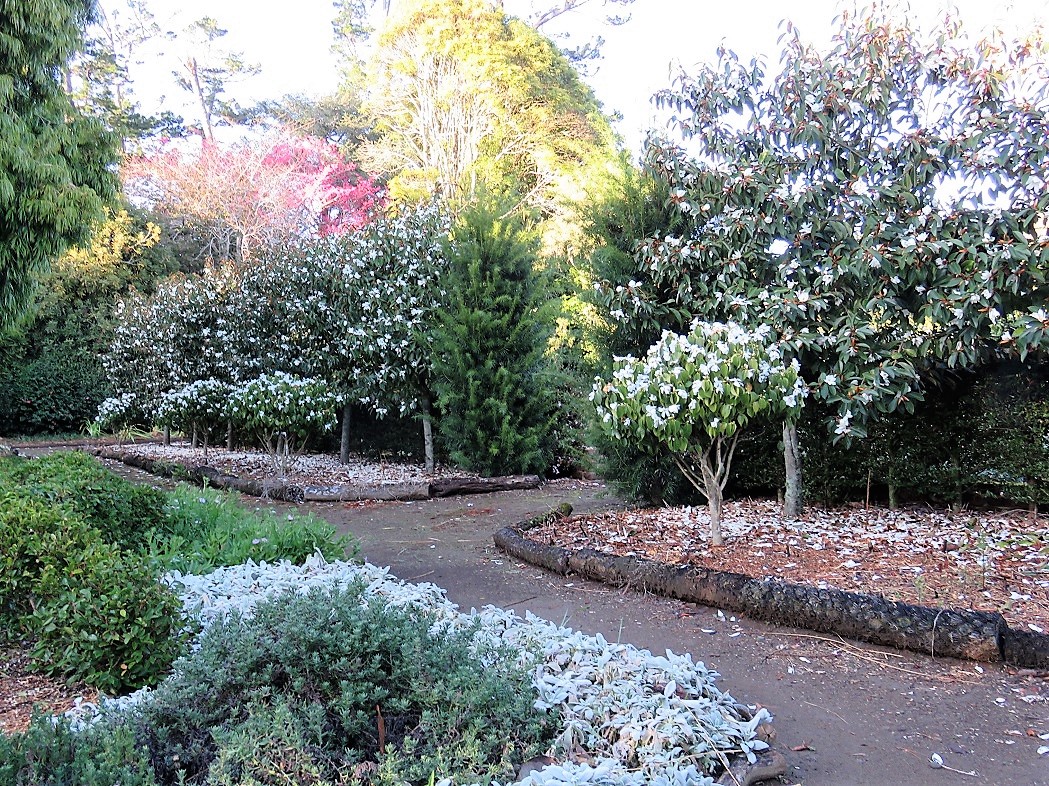
Major work includes laying a path surface in the new areas. Mark’s Fairy Magnolia White with Camellia yuhsienensis in front. The pink at the back is Prunus campanulata.

My plan is to have all major work and the first round of the entire garden completed by the end of August. That leaves about seven weeks to do the second round which is more about titivating and detail. The final week is then about cleaning public areas and doing the last-minute presentation stuff (including, believe it not, cleaning the house windows). I think we are on track but it feels like there is a lot to do. Well, there is a lot to do.

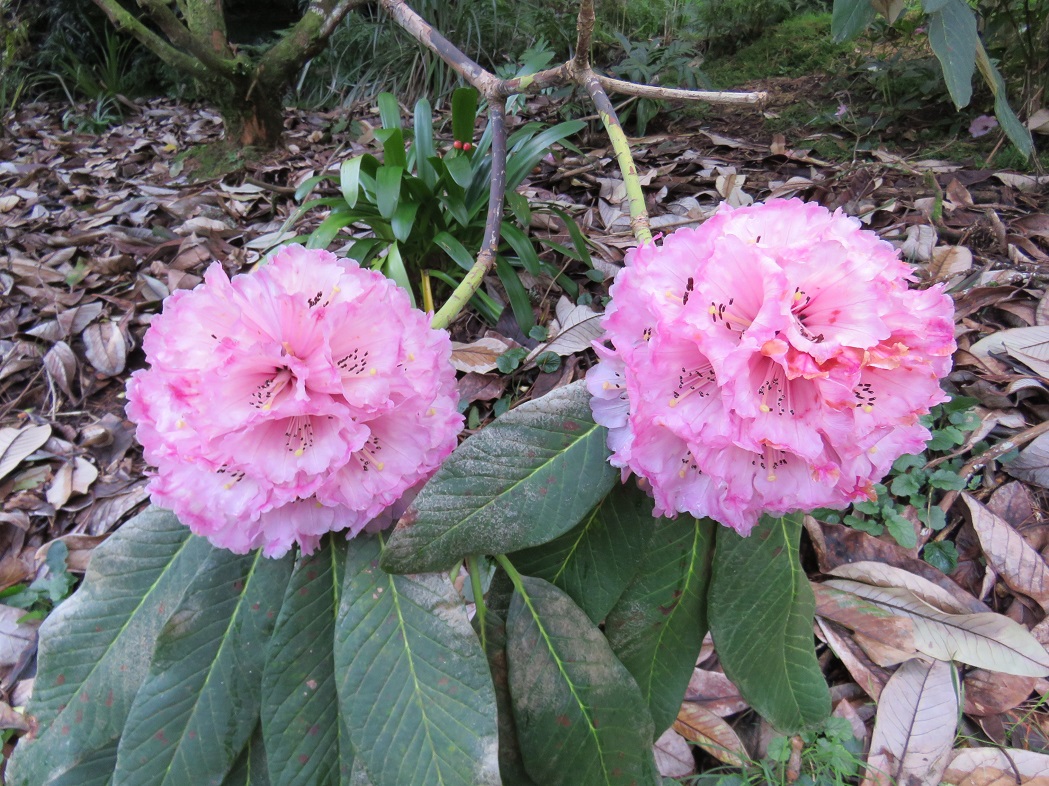
The big-leafed rhododendrons flower now, not at the beginning of November. This is Rhododendron protistum var. giganteum.

We have never targeted our plantings to the annual garden festival. I think that is more a small garden approach. Back in the days when we used to retail plants (and that is a long time ago now – over a decade) most locals who opened their gardens for the festival would only buy plants that we could assure them would flower in the prescribed ten days. They actually geared their entire garden to peak over that ten day period. Each to their own. We garden primarily to please ourselves and we like flowers and seasonal interest all year round. So there is always something of interest in bloom but also plants that have ‘passed over’, as we say, and plants that ‘yet to come’.

We are currently at peak snowdrop

There is a lot ‘coming’ right now and that brings us great pleasure, even if sharing it is done vicariously. It will look different when we open for festival – not better, not worse, just different. Probably tidier, though.

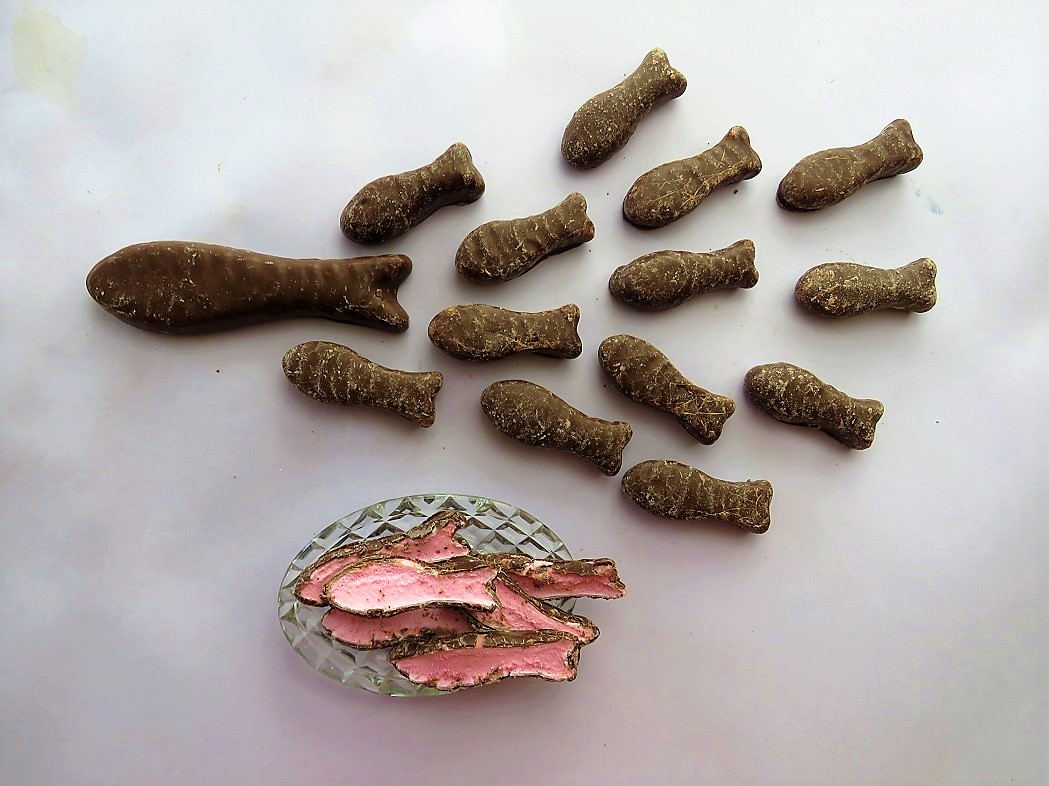
A school of chocolate fish

Finally, in my occasional series on reinterpreting New Zealand confectionary in flowers, I give you the chocolate fish. I was a bit disappointed when I cut into the fish. I am pretty sure that the marshmallow interior used to be a richer pink shade – raspberry-ish even, but I have taken some floral licence.

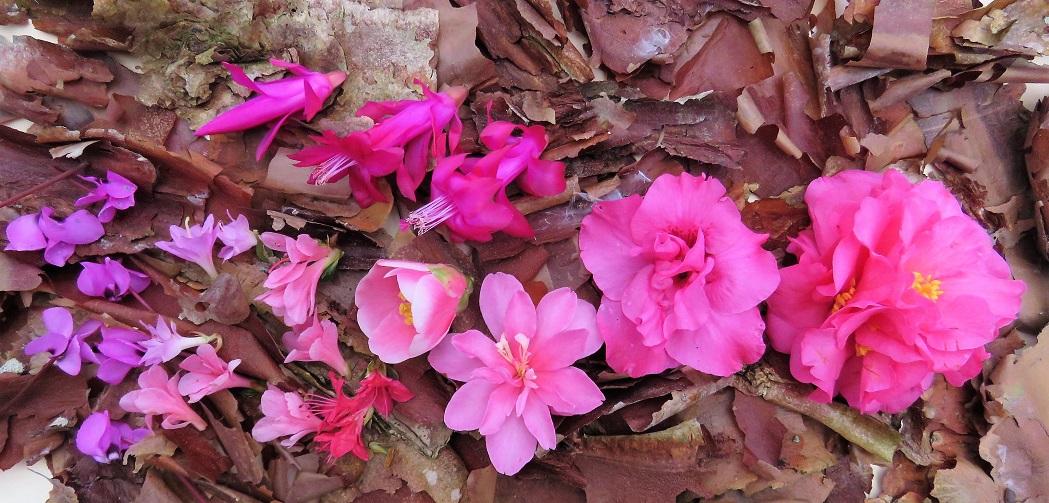
Cyclamen coum, schlumbergera, azaleas and camellias on a bed of Acer griseum bark

The magnoliafication of our local town

Our flagship magnolia, ‘Felix Jury’

Back in our nursery days, we used to send our reject plants down to be given away, sometimes sold for just a dollar or two, at a local op shop that a good friend was closely involved with. There are always reject plants that don’t make the grade to sell – usually due to being poorly shaped or sometimes over-produced –  and it seemed a good solution. Our local town of Waitara is what is often politely described as ‘lower socio economic’. There isn’t a lot of spare cash in the community and no local plant retailers so we saw it as a means of encouraging planting in an area where most people wouldn’t buy plants.

In the early days, we had more reject plants of Magnolia Felix Jury than we would have liked so quite a few of those went down to be dispersed and I quipped at the time that if only a quarter of them grew, they would make their mark. The magnoliafication of Waitara, I used to describe it.

Iolanthe to the left, Felix to to the right

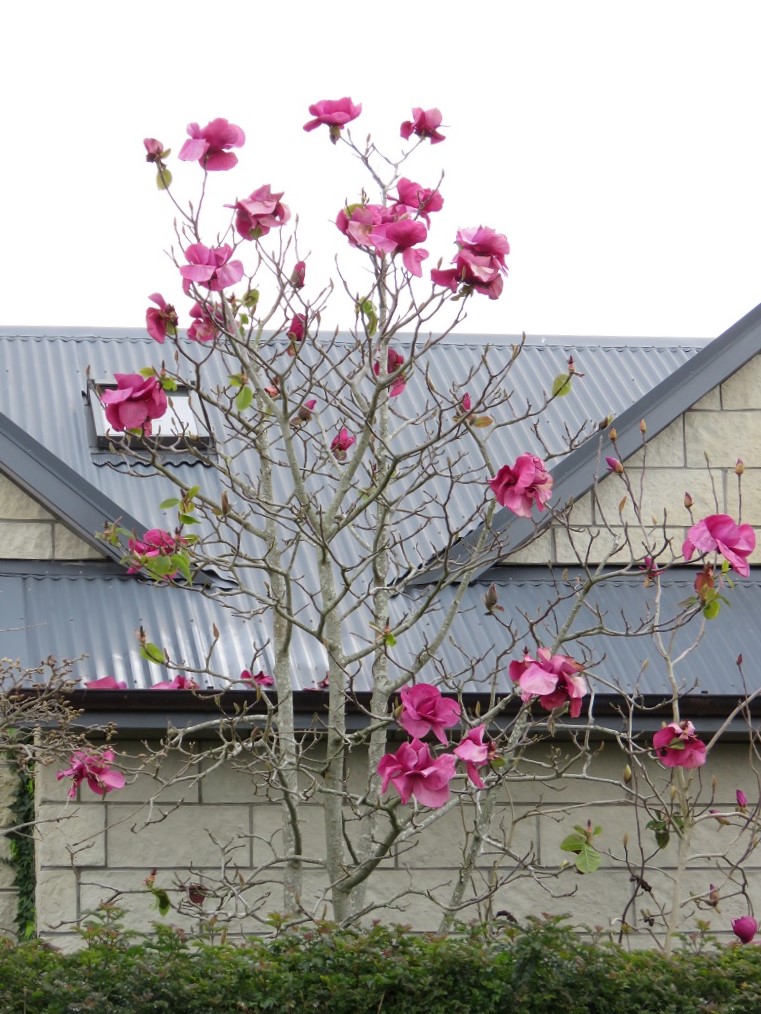
This year was the first year I have really started to notice Felix in bloom locally. It is unmistakeable with its enormous flowers so I drove down just a few streets, Felix-spotting, when I went to the supermarket yesterday. I doubt that the locals know that it was bred locally, named for a long-term resident and is now our flagship magnolia internationally but that doesn’t matter. It is just pretty spectacular and will continue to get better year on year. Magnolias are long-lived plants if they are allowed to be. I was a week too late to catch them with the best colour, but you can see what I mean.

Best colour – it fades out with age as the season progresses

We can get deeper and richer colour here than in some other parts of the world. Why? We don’t know whether soils, seasonal weather or climate affect it. All Mark is willing to say is that the stronger the plant is growing, the better the colour it achieves. I am loathe to recommend piling on the fertiliser; we never do and we don’t think it is good practice. We plant well, keep them mulched and will feed with compost if a plant needs a boost. Other gardeners like to manage feeding differently but the advice from the breeder is to get your plants established and growing well and you may find the colours are richer.

Next year, I shall get around a week or two earlier to catch the local plants in peak bloom. By then, I will have canvassed local friends to find the location of more trees.

Poor light and nearly finished, but another local Felix