Tag Archives: Jury michelias

Shaping up michelias

Written for and first published in the Royal Horticultural Society yearbook of the Rhododendron, Camellia and Magnolia Group 2025.

Over our years of experience with the michelia group of the magnolia family – en masse, so to speak – we have learned that we can treat them as we treat camellias when it comes to clipping and pruning in our climate. I italicise those last words because I hesitate to advise gardeners in more extreme conditions.
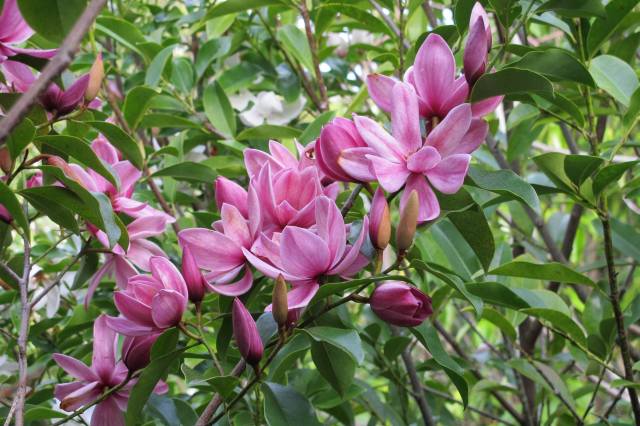
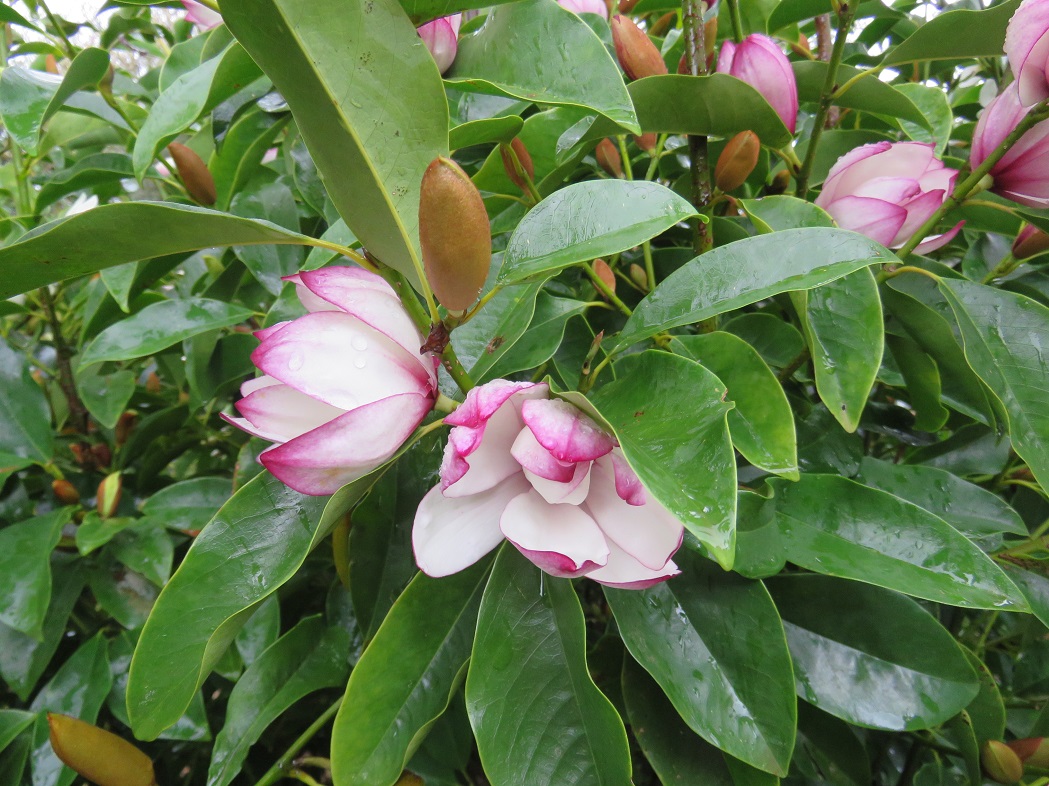
In a world where hardier michelia species are generally white or maybe cream, this is an example of Mark’s breeding programme getting more colour options into the future.

We have a very soft climate. We are never very hot and never very cold, regular rain falls all year round but our sunshine hours are high and we are on friable volcanic soils. If that sounds like gardening paradise, it probably is, as long as you can cope with the wind we get here on the west coast of the North Island of Aotearoa New Zealand.

We also have an abundance of michelias to work with, as a result of my husband, Mark Jury’s breeding programme with the genus down the past 30 years. We have never kept track of the numbers raised here but it will be in the thousands. From those, three have been released under the Fairy Magnolia™ branding; there are two more in the pipeline for release shortly and we are in the process of selecting maybe another three. That leaves many, many seedlings that have been rejected along the way, including entire crosses that he has decided are not worth pursuing. Most get cut out but some we have utilised as screen hedging and shelter belts. There is no shortage of raw material here.

I often claim that we don’t do a lot of heavy clipping and shaping; I have seen Italian gardens and compared to them we are minor players indeed. We do a lot of pruning because our garden is mature and is strong on trees and shrubs which take management down the decades. When it comes to detailed clipping and shaping, it is mostly on camellias and michelias.
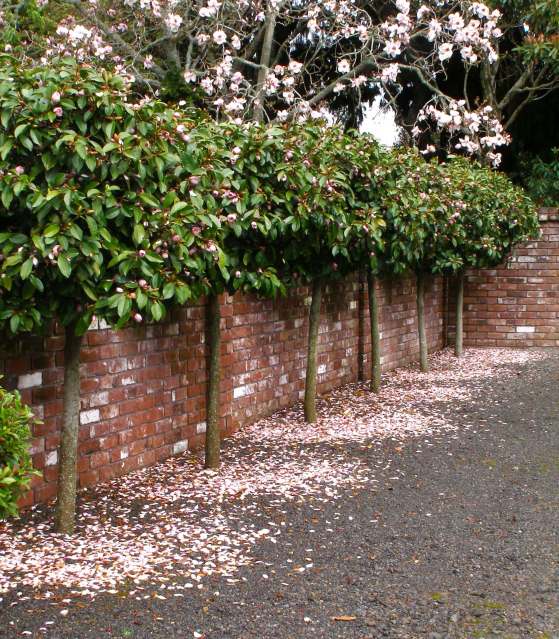
Fairy Magnolia® ‘Blush’ soon after planting, circa 2005
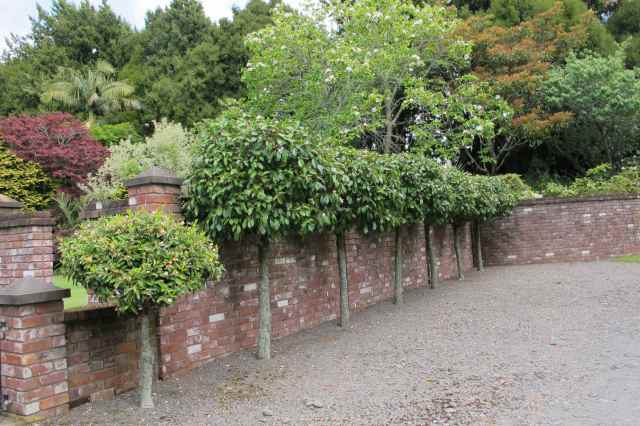
And in 2012

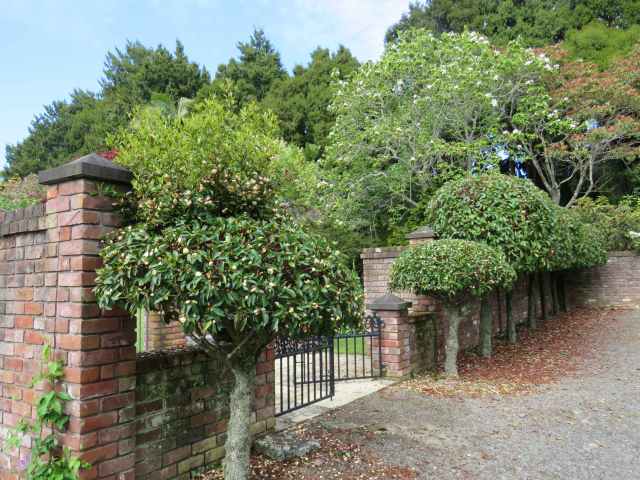
We started with Fairy Magnolia® ‘Blush’, planted twenty years ago in front of our brick wall. These were original stock plants grown in large containers in the nursery so they went into the ground with big root systems. We gave them a season to get established and then started shaping to lollipops. They have grown a little larger over the years but not hugely so. Every spring, as flowering finishes, we clip them hard, removing somewhere between 30% and 50% of their foliage.
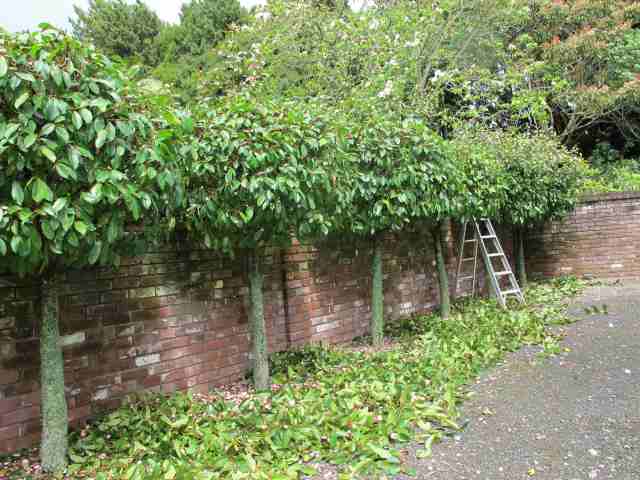
Pruning in 2013. We remove more these days to keep them to size.
More or less frozen in time by 2020. The untrimmed section on the plant in the foreground is to allow the blackbird babies in a nest time to fledge and fly. We try to avoid ornithological infanticide – a hazard of early spring pruning.

We clip for future blooms so we only clip once a year, as they finish flowering. By the end of summer, they can be a bit woolly in appearance but if we cut again then, we would be removing many of the flower buds. If you want a sharp form all year round, don’t start with plants you want to flower well, at least not michelias or camellias. We use secateurs to trim. Hedgeclippers may be faster but they cut all the external leaves, the edges of which then go an unsightly brown. There is only a day’s work in clipping this row and cleaning up.

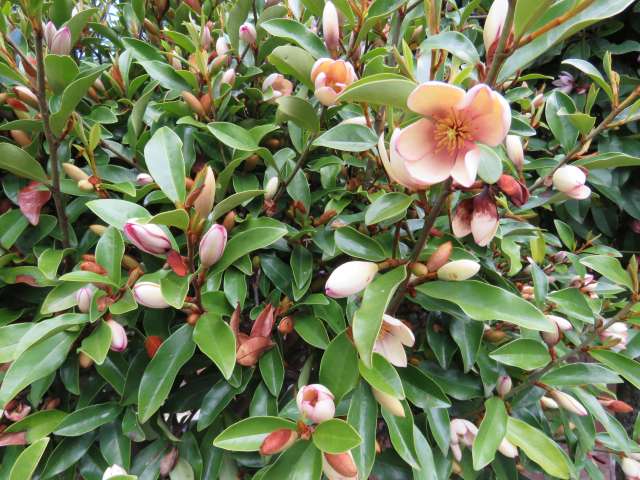
We have two smaller umbrella shapes which will now be well over 20 years old. The variety is to be released internationally this year under the name of Fairy Magnolia® Petite Peach. The photo above shows how much growth we are removing each year to keep the plants to a set size.
Fairy Magnolia® ‘Petite Peach’

If you want to create standardised lollipops, be patient. Let the plants become well established and growing strongly before you start serious shaping. You need a strong central leader to hold up the weighty head. Too often, I have seen plants in garden centres that have been *trained* to standards with a spindly trunk and all side growths removed, so it is entirely dependent on the strong stake holding it upright. You will have a higher success rate if you start with a plant which has a central leader as well as multiple side growths which you can trim but not remove entirely until later. Reduce particularly strong branches which are competing with the central leader but those side growths give the plant more strength and vigour. The leader doesn’t have to be dead straight to start with. What looks like a kink in a stem that is one to two centimetres across will have disappeared by the time it is five to ten centimetres in diameter. Don’t stake unless you have to. Long term, you want the plant to stand straight on its own and plants that are staked from the start come to depend on the stake rather than developing their own strength in the roots and stem. Once the plant has reached the height you want, then you can start serious shaping and when the central leader is strong, you remove all side growths below the top knot.
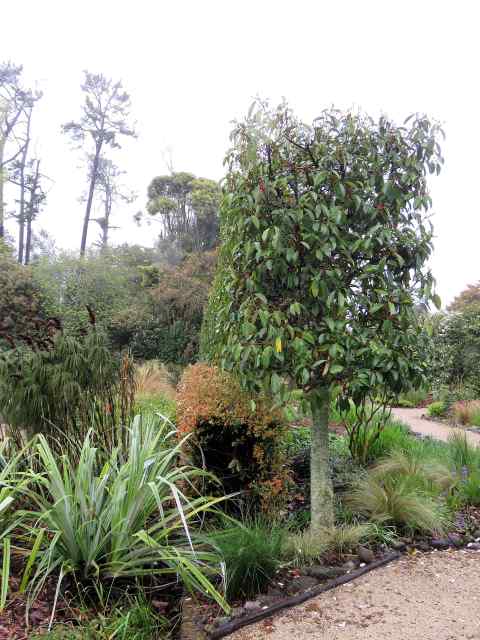
The side-on view shows the width we are keeping these plants – Fairy Magnolia® ‘White’
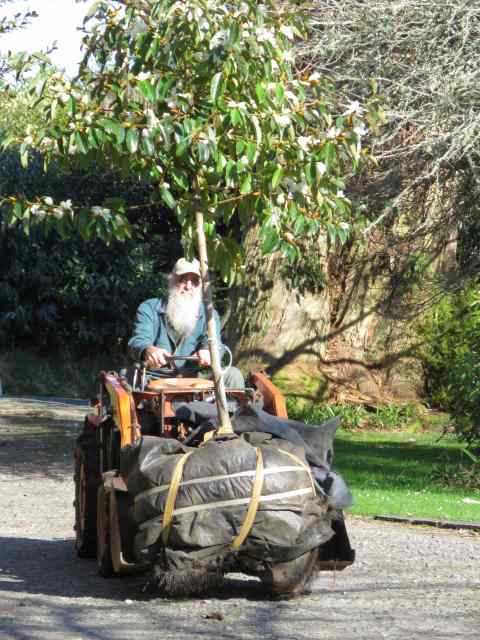
They were somewhat large plants on our very small tractor when we moved them from the open ground in 2015

Our pleached rows of Fairy Magnolia® ‘White’ have taken patience. Pleaching is basically a hedge on stilts. These came in as large plants we dug out from the field where they were growing in 2015. They have looked good and flowered well in the intervening decade but it took until last spring’s pruning for me to look at them and sigh with satisfaction. At last we had that two dimensional plane sitting above the camellia hedge below that we had envisioned from the start.
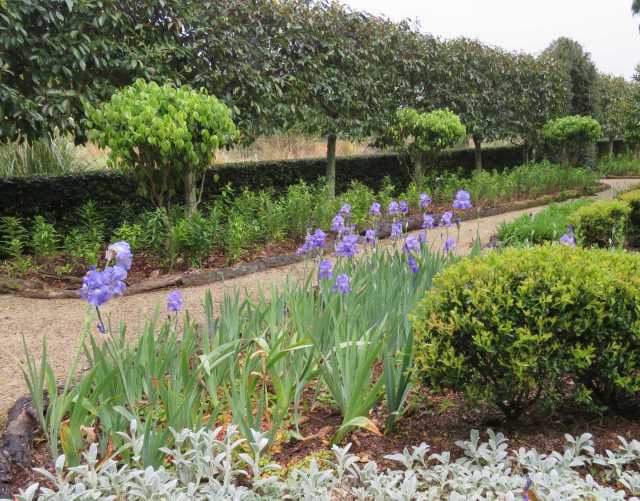
We have two matched lengths either side of a central court garden, trimmed flat down the length

Again we trim hard once a year, as flowering finishes, using secateurs and loppers to remove probably 40% of the foliage to freeze them in size and to create the form we want. They are bigger plants and surrounded by gardens, so trimming them is more challenging and slower than the aforementioned lollipops. Good ladders help. We bought both an orchard ladder and a platform ladder and I see our gardener, Zach, has both of these out when it comes time to trim the pleached rows.
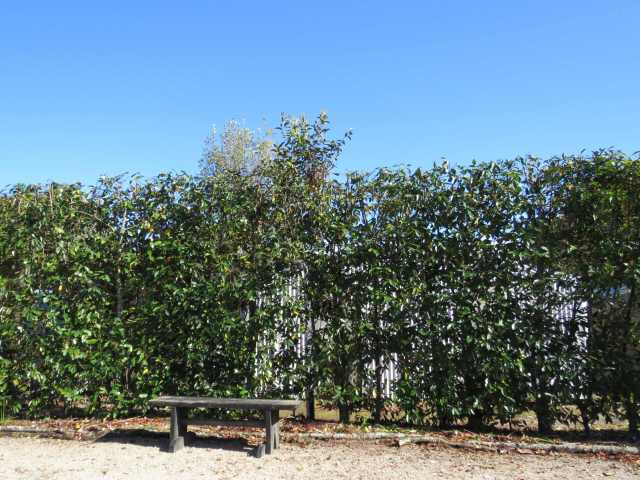

A tall hedge of michelia seedlings straight after trimming in October (above) and nine weeks later below, showing how quickly the new growth fills the gaps. The untrimmed tuft on top in the photo above is because of a bird’s nest. When we trim and prune in spring, we are mindful that it is nesting season and work around any we find.

We also use michelias as tall screening hedges kept to about three metres and these, too, get trimmed after flowering. They can look a little sparse when first done but it is only a matter of six weeks before the flush of new growth fills in the spaces.
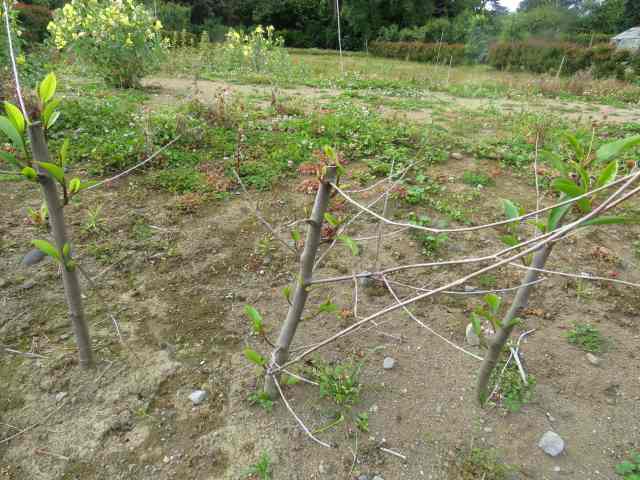
The same hedge as planted in 2017 – seedlings cut hard back to allow them to grow afresh.

About once every five years, these plants need to be picked over more thoroughly, to take out dead wood in the middle where branches have not resprouted. It saves them from getting woody and ugly over the longer term.
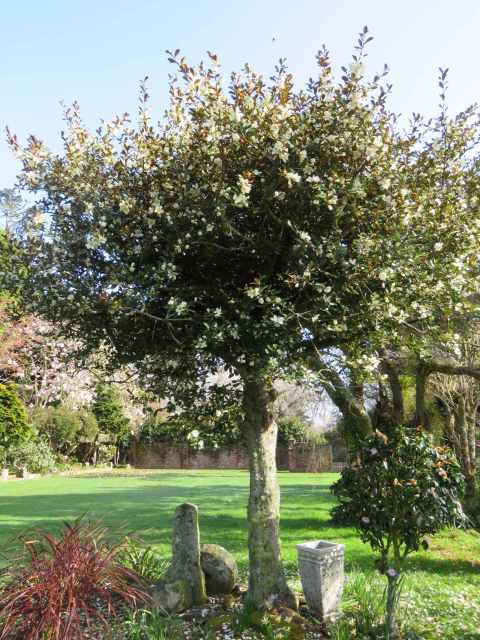
Magnolia laevifolia ‘Velvet and Cream’ was cut back hard to bare wood in 2023 but was bushy and flowering again the next season.
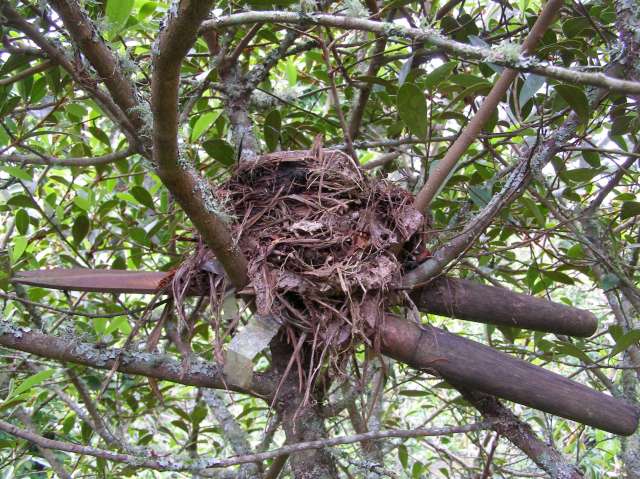
I only include this photo because it still makes me laugh. We used to trim with hedge clippers. When I found these making a handy platform for a bird’s nest in the M. laevifolia. Mark’s comment was, “Oh. So that is where I lost them.” 

Well established plants that are growing strongly can be trimmed back to bare wood, as can camellias and rhododendrons. It is a last resort when a plant has got away on us but we have done it successfully, notably on M. laevifolia. The plants may take another year or two to flower again but they will reshoot from bare wood.
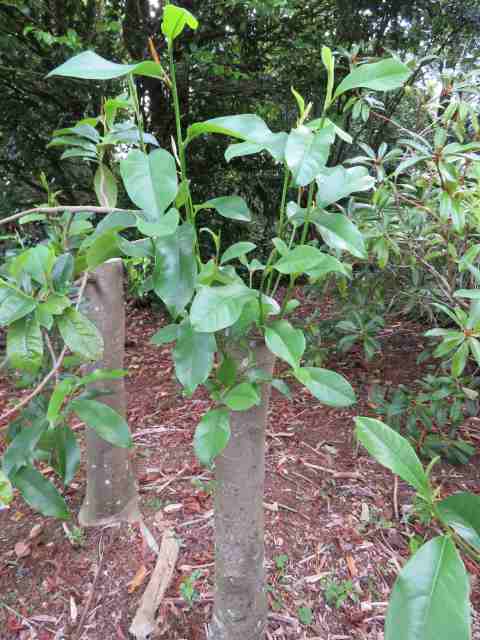
Michelias can be pollarded and respond by putting up straight shoots.

Unexpectedly, michelias also have potential as a coppiced crop, or what we refer to as a sustainable wood-lot, much as hazel is used in the UK. We found this out by chance when we were running low on winter feed for our very small number of beef cattle – more a group of cattle than a herd. Mark started trimming michelia branches as stock food (do NOT try this with rhododendrons which will kill animals) and they were perfectly happy eating the foliage. The plants which were cut to the ground, allowing us to use the trunks for firewood, responded by reshooting from the base with very straight stems.
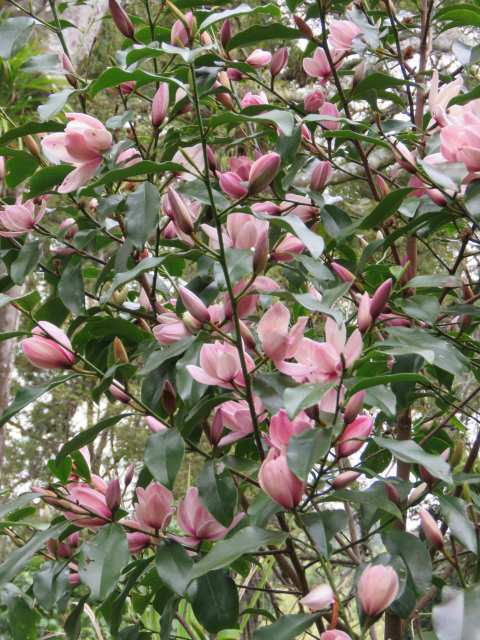
Another of Mark’s oretty seedlings

In our climate, michelias can set prodigious amounts of seed. In fact, setting too much seed is one of our most common reasons for rejecting a cultivar as unsuitable for commercial release. They are not as prolific in harder climates but if you can find one that sets seed, raising the seed is not difficult and the results are reasonably quick, by woody  tree and shrub standards. You will get seedling variation; if you want a hedge of identical plants you need to buy or propagate by cutting or grafting to get them all the same. We like the seedling variation which makes for a more interesting, though less formal, flowering hedge. If you are using seed from the same source, the variations are more likely to be subtle, not radically different. It is likely that Magnolia laevifolia will be the most common seed setter in the UK and Europe. It clips well but can be slow to get established. If you can find a hybrid that sets seed, it generally brings a degree of hybrid vigour.
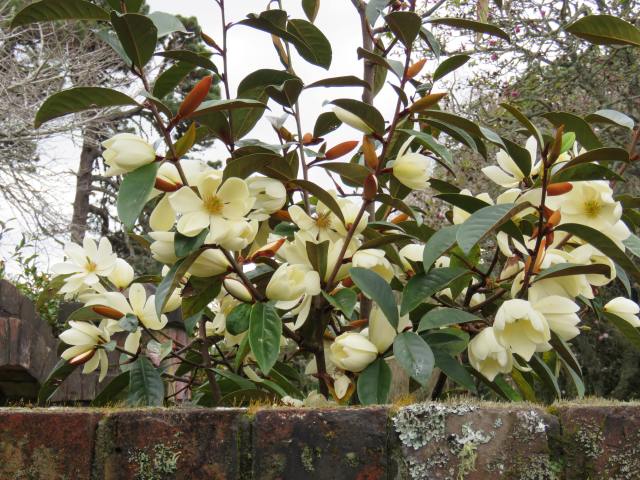
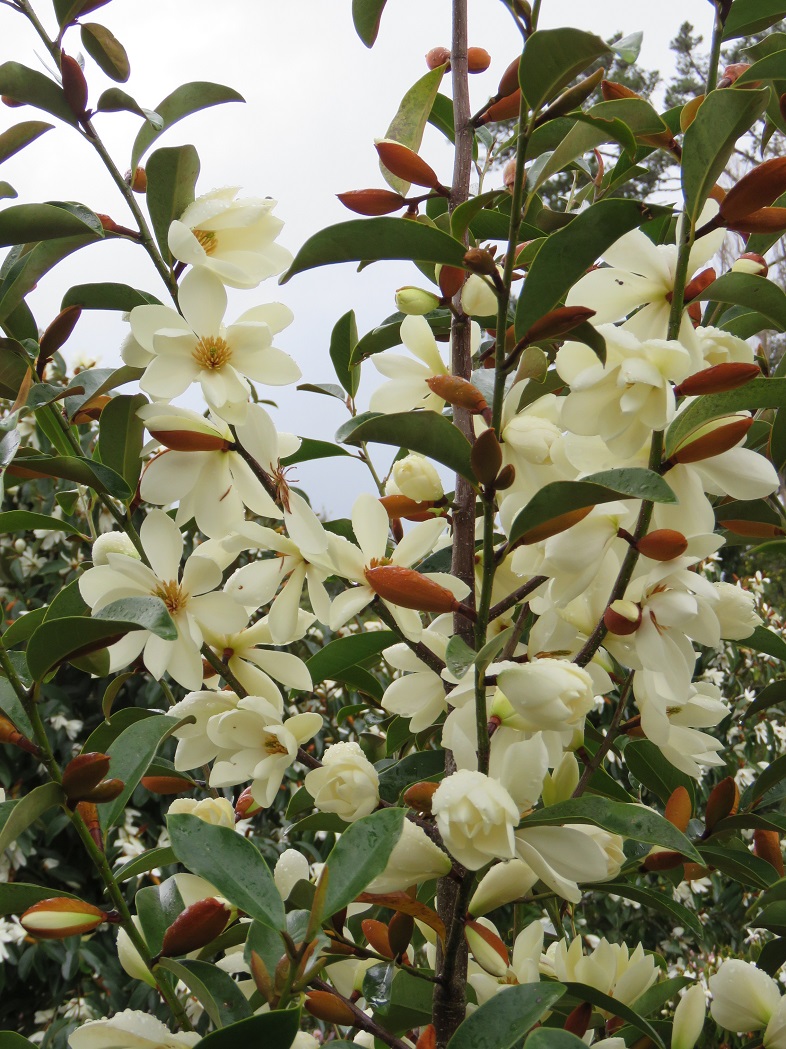
Fairy Magnolia® Cream is strongly scented

With most michelias, there is the added bonus of scent. In our humid climate, camellias are ravaged by camellia petal blight and we no longer get the mass displays on the reticulatas and japonicas. To some extent, the michelia group have filled the gap and they are rewardingly free of pests and diseases.

A note on nomenclature: Michelias have been reclassified as magnolias so all species are now listed as magnolia. The Jury hybrids are sold under the trademarked name of Fairy Magnolia®. For purposes of clarity, we continue to refer to them as michelias in common usage, to differentiate them from both deciduous magnolias and other species of evergreen magnolias, particularly M. grandiflora.
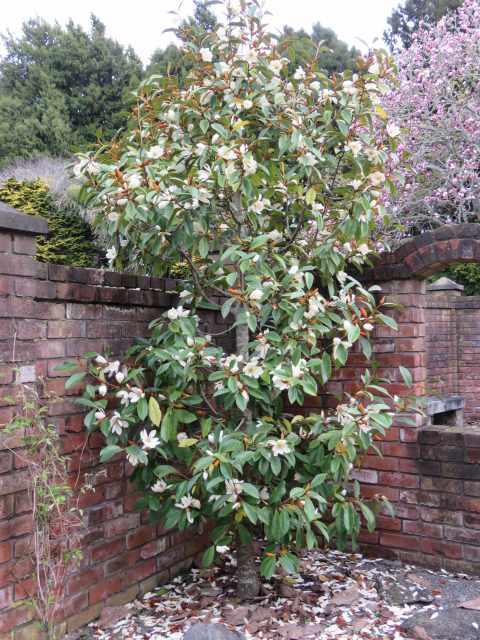
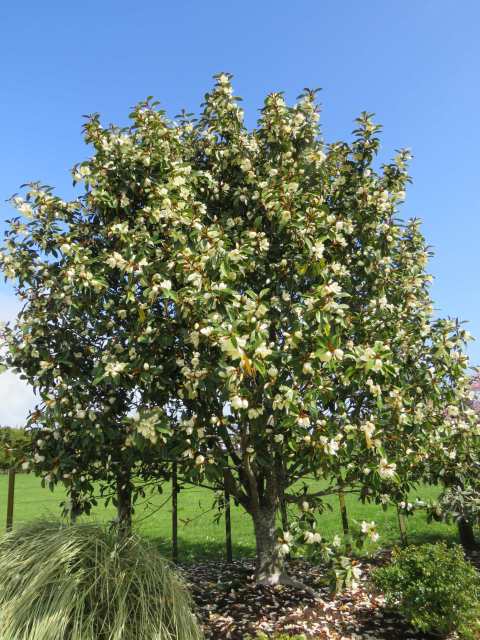
We have a matched pair of Fairy Magnolia® ‘Cream’ at our gateway which we prune to restrict each year. The photo below shows it growing as a roadside plant with no pruning. We can’t allow our gateway plants to get to that size in the space they are in so we are pruning to freeze them in size.

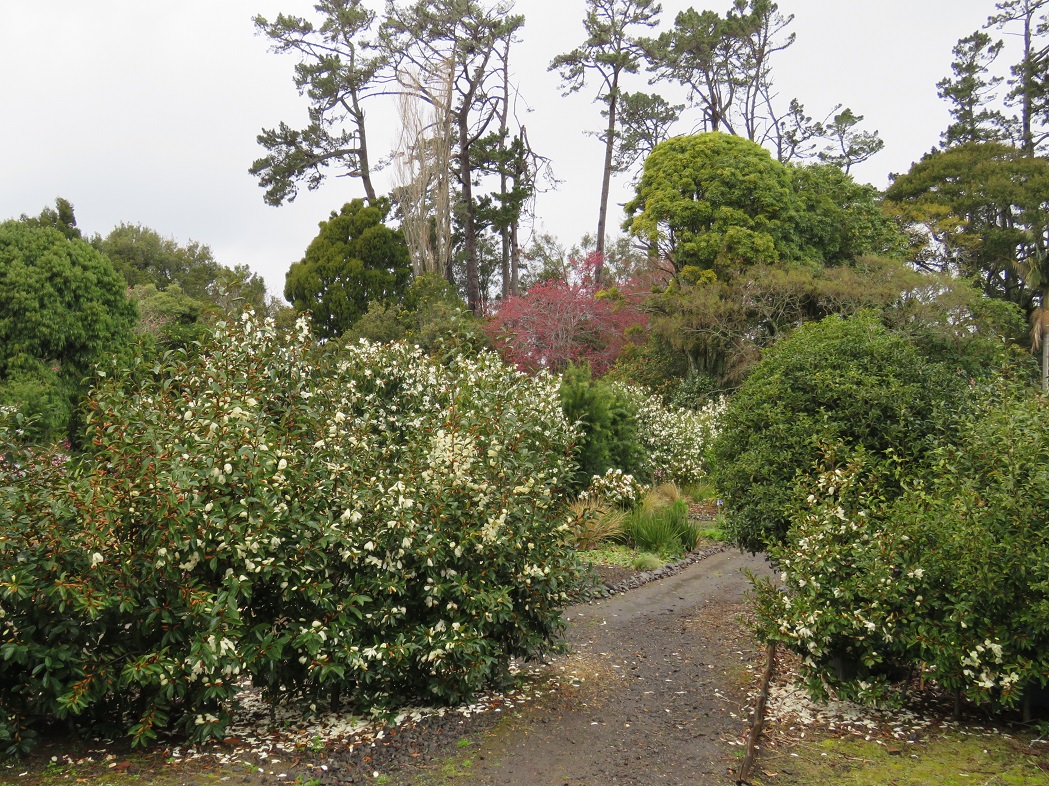
The plant breeder’s garden

“It’s very white out there,” he said

“It is very white out there,” Mark observed. We were standing in the roller door of our large shed, sheltering from another rainy squall and looking out to the new summer perennial gardens. The photo doesn’t fully convey the white experience. The row of Fairy Magnolia White, Camellia yuhsienensis and Mark’s hedges of michelia seedlings were all in view. Mark was envisaging a carpet of snowdrops at ground level as well, even though they are but a fleeting delight. I was looking at the michelia seedlings.

Mark has planted two sides of the new garden area in michelia hedges. Technically – in accurate nomenclature – these are all magnolias now but we continue to use the earlier term ‘michelia’ for the sake of clarity. When we say ‘magnolia’ here, we are almost always referring to deciduous magnolia trees so it is confusing to include the world of evergreen michelias which also feature very large in our lives at this time of the year.

Some of the seedlings are simply gorgeous but won’t be named

When planting seedlings, it means every plant will be different. For the largest length of visible hedge, he planted out one particular cross that had not come out as he hoped because very few were coloured. The nature of the parentage means that they will flower well, not grow out of control and be suited to clipping but they will never have the precision of planting a row that is all one clone – in other words, identical to each other. Mark likes seedlings for mass plantings because it adds interest to have them all similar but not identical.

Others are pretty on their day but floppy blooms don’t cut the mustard

I paced along his hedging, estimating how many individual plants there are. Getting close to 200, was the answer, planted at about 30cm spacings because we want a quick hedge that can be trimmed as required. Each individual plant in bloom is lovely on its day but some are lovelier than others. However, none will be named and put into commercial production. Mark has already named Fairy Magnolia White and Fairy Magnolia Cream and he won’t name any more white or cream ones unless there is something that is radically different or a major improvement. So these are ours to enjoy alone.

Heading into pink 

Part of a breeding breakthrough in colour but not good enough to select

At one end, there are about three different pink-toned varieties which are something of an oddity in amongst the cream and white majority. Again, he has already named Fairy Magnolia Blush in this colour range so they will just stay as a quirky aberration in the hedge at flowering time. We are okay with quirks.

Hardy michelias are basically white or cream. While there are new tropical species still being discovered and some of those show more colour, Mark has no interest in trying to breed with them, even if we could get them into the country to work with. Most of the michelias are not overly hardy at the best of times and he has been trying to get hardier selections (will they grow well and flower consistently in places like the UK, is one of his measures) without introducing more tropical genes. But he has managed to get as far as pinks, purples and primrose yellow by ever more complex crosses using the material he has available.

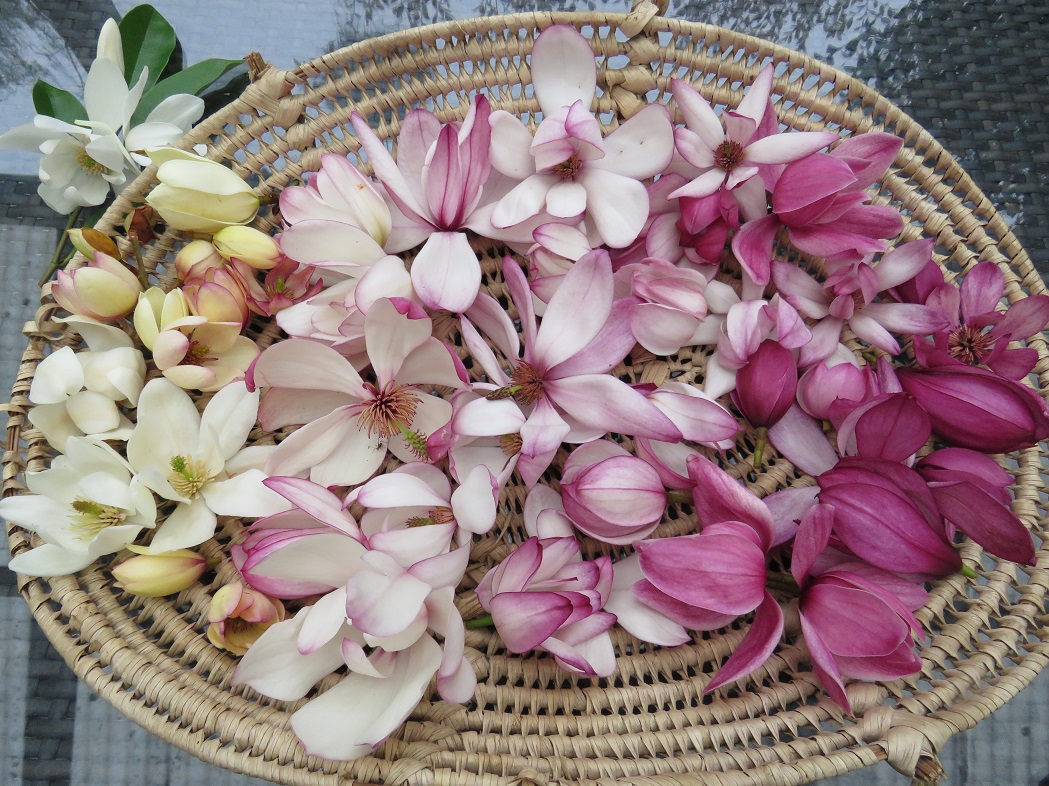
From white through to pinks and purples with a few heading into pale yellow –  blooms from the breeding programme

I see it was four years ago that I set out to pick a representation of single blooms from his seedlings to show the range in colour, flower size and shape that he has reached in what is predominantly a white or cream plant genus. While he has continued to flower more since, this photo remains a fair summary. We have selected three new ones that are currently in propagation and performance trials for probable release but there is a whole lot more to selecting a plant than the just flowers. My lips are sealed as to what makes these three worth singling out until we are further down the track of commercial trials.

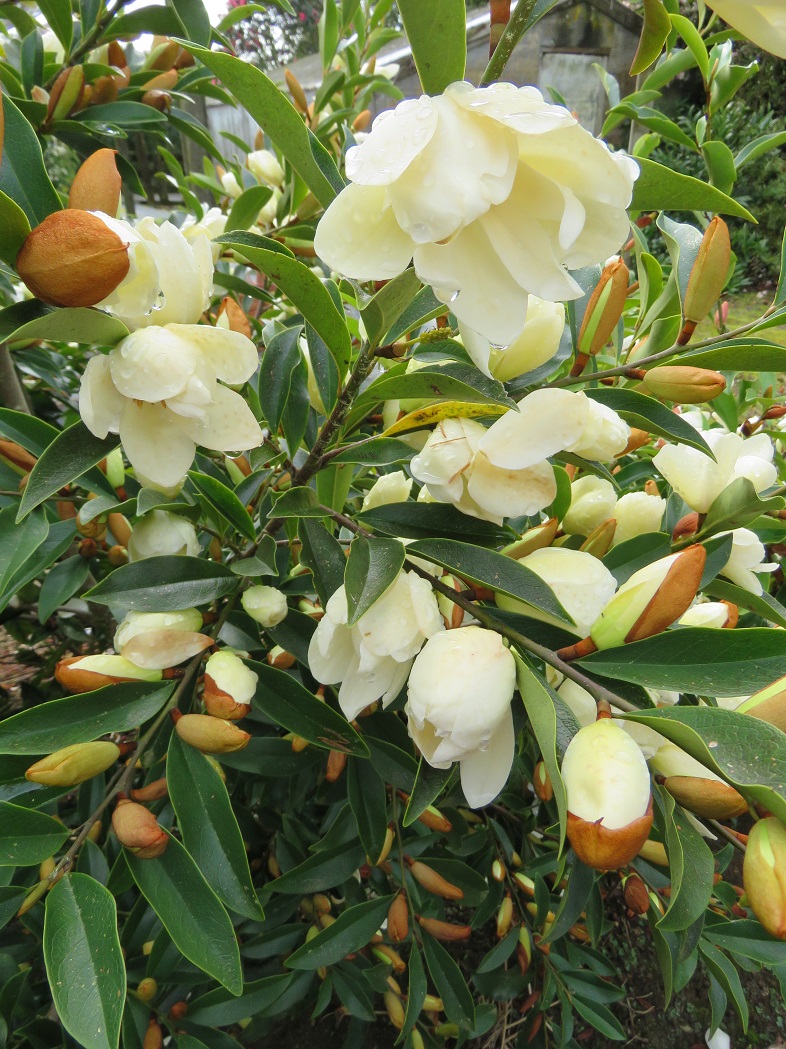
Fairy Magnolia Cream just coming into flower

In case you are interested in what goes into selecting a plant (or you want to name something you have found), off the top of my head, the checklist includes the following:

  • Is it either distinctively different or a major improvement to similar plants already on the market? (This is arguably the single most important criterion).
  • Are there plenty of flowers? How long is the flowering season (some can be a short flash in the pan)? Does it flower consistently well every year?
  • Are the blooms reasonably weather hardy?
  • If it is scented genus, are the flowers fragrant?
  • Do the blooms age gracefully and fall cleanly?
  • Is the foliage as good as the flowers?
  • Is the foliage in proportion to the flowers?
  • Where do the leaf buds open from? In the case of michelias, does it just set leaf buds on the tips (in which case it will look leggy and bare very soon) or does it set leaf buds right down the stem.
  • Does it ever defoliate in a wet spring (a feature of Magnolia laevifolia formerly known as Michelia yunnanensis)?
  • What is its performance like as a garden plant , not just grown in a container? It takes several years to make this assessment. In the longer term, will it stay a garden-friendly size? Does it take pruning, trimming or clipping well?
  • What is its international potential? How is it likely to perform in more extreme climates?

Only then do the propagation trials start. There is no point at all in selecting a plant that is difficult to propagate, where the percentage of cuttings that do not set roots is too high, where plants *whiff off* – Mark’s phrase meaning die – during production, or where very particular propagation and growing techniques are required for success – growers just do not want to put the time and expense into growing plants that are unreliable or too picky.

New releases used to be the life blood of our mailorder business. Some selections stood the test of time, others not so much. At least all the magnolias have proven to be worthwhile. It is the vireya rhododendron selections and a few of the camellias that have fallen off the Jury plant wagon. These days, we get a new plant through the initial selection and then we hand it over to our agents to manage through final trials and then getting it to market.

It is a long path to getting a new cultivar onto the market. But in the process, we get a lot of unique plant material to use in our own garden.

Magnolia doltsopa syn Michelia doltsopa – a selection released as ‘Rusty” by nurseryman, Peter Cave. Pretty flowers but showing typical floppy tendencies of this species and the original plant in our park is massive.

An abundance of spring bloom

IMG_5588Starting with a small brag photo: michelias used to be white, in the main. At least the hardier varieties are generally white. Sure the tropical M. champaca is orange and M. alba is creamy yellow, but they have not shown compatibility with the hardier varieties and don’t have enough virtues to warrant using them as breeder parents. I did a little round-up of Mark’s current seedlings that we have flowering here. It has taken him 20 years of work to get to this colour range and there is a long way to go yet. A good garden plant is much more than just an interesting bloom. There are a huge number of variables when it comes to selecting a new variety for commercial release. But even I was impressed by the range of colour, flower shape and flower size that he has achieved in this line up.
IMG_5502
I see I optimistically posted in August on the early blooming lachenalias. I may at the time have thought there would be two or three posts charting the lachenalia season, but we are now entering the final stage so I thought I had better do a round up. From left to right we have arbuthnotiae, pallida, contaminata, orchioides var glaucina (2) and the attractive end one we have as rosea. I missed several varieties during the mid season, but one reason I missed them is that they are not fantastic performers in our conditions.
IMG_5434Glaucina is our stand-out blue, and we once gathered as many different blues as we could. It is variable in colour and somewhat frost tender, but it does at least stay within the blue spectrum (some of the other alleged blues faded out to cream or very pastelle mauve) and it increases well for us.
Lachenalia contaminata with the rockery behind

Lachenalia contaminata with the rockery behind

L. contaminata is one of the last in the season to bloom, very easy to naturalise, scented, feeds the bees (I have personally observed this) and generally under-rated.

Earlier season L. aloides and aloides quadricolor

Earlier season L. aloides and aloides quadricolor

L. aloides tricolor

L. aloides tricolor


L. aloides var. vanzyliae

L. aloides var. vanzyliae

L. aloides is pretty interesting as a species. I mentioned aloides quadricolor and the common form in New Zealand which may be aloides bicolor in my earlier post. Aloides tricolor then comes in much later, predominantly green but with enough red and yellow to make it visible. When these three forms of the species are so easy and reliable for us, why oh why is the most striking L. aloides var. vanzyliae so very difficult? It is a mystery to me and it was a bit of a surprise I managed to catch the small patch (which does not get any larger) when it was in flower.

Quite how I achieved this stylish, albeit over exposed image, I am not sure.

Quite how I achieved this stylish, albeit over exposed image, I am not sure.

IMG_5533
We are big fans of the Australian dendrobium orchids and they are at their peak right now in the woodland areas of our garden. I did a little round up of the different ones in the garden and was surprised to find the range was somewhat greater than I had thought. Somehow we do not think of Australia having such pretty and delicate wildflowers.
IMG_5547
Tomorrow, if the rain continues, I shall return with… clivias. Big, bright and bold.