
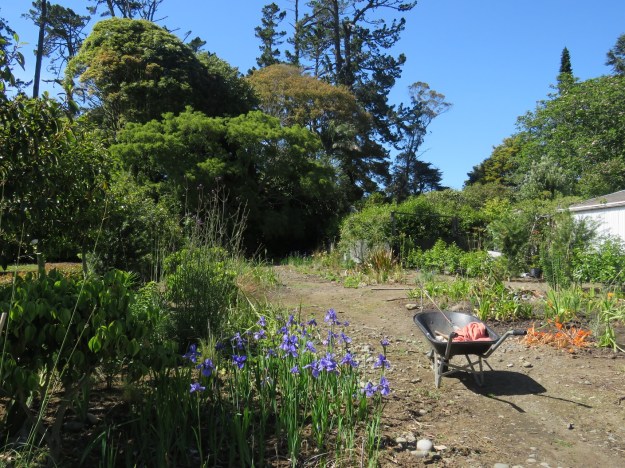
The weed growth in this new area under development was scary after a few weeks of spring
I have a new weeding implement and a very good one it is too. Meet my little Wolf-Garten Multi-Star Cultivator Weeder LBM (I wrote the full name down from an internet search). It is my new best friend.
Having been away to Australia, then coming home somewhat unwell followed by other demands on my time, the weeds in my newly planted borders were threatening to get away on me. With my trusty weeding armoury, I made short work of quite large areas. It was the little cultivator on the long handle that covered the area quickly and efficiently. Unlike a hoe, it does not cut the plant off and being very narrow, it can get in close to plants without damage. It is only 7cm at its widest point.
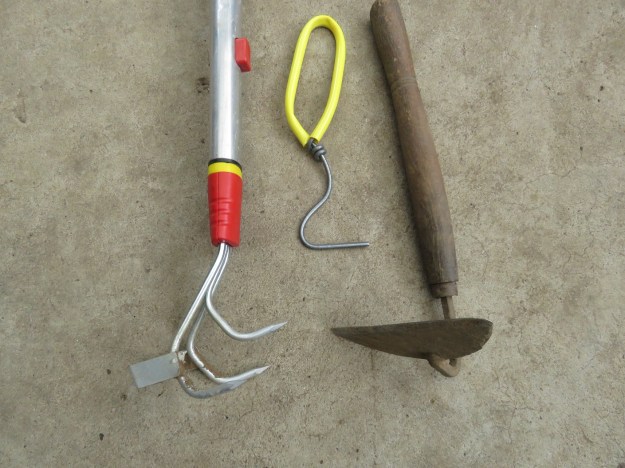
My new Wolf-Garten cultivator, the modest Wonder Weeder and my short handled hoeing implement deal to most weeding situations
One weeding tool does not suit all situations. This cultivator makes short work of scuffing up the surface and dislodging the weeds where soil is friable or there is mulch. It is no good on compacted soil. It also needs to be used before the weeds have set seed and is best on a sunny day so the dislodged weeds shrivel and dry in the sun. As long as they haven’t reached the seeding stage, the weeds do not need to be removed. It is so easy to use, saving bending and stretching, that weeding is not something to dread. A quick follow-up the next day despatched the few weeds that had escaped the first round. If you have similar conditions, buy one is my advice.
Where the plants are closer together (these were newly planted areas that I was speeding around with my cultivator), I resort to the hooked wires known in this country as Wonder Weeders (cheap as chips at under $5 when I bought another three at the garden centre last week). In the case of compacted ground with club moss, liverwort or clover, I use the short-handled implement that looks like a small Dutch hoe. You can get long handled versions of the Dutch hoe to avoid having to bend or kneel, but I am fine with the precision of my short version.

The new baby cultivator and its full-sized companion on the left and the trusty old Planet Junior to the right
Mark is a push hoe man (the Dutch hoe is pulled towards the user whereas the push hoe is pushed away from the user) but it takes some skill to be a reliable operator and it is all too easy to accidentally sever desirable plants from their roots. Where there is more space to move, such as in his vegetable patches (known here as Mark’s allotment), he will reach for his trusty old Planet Junior that makes quick work of surface cultivation or the big granddaddy cultivator relative of my new, small version.
What about weed sprays? Mark follows the international debate and research on glyphosate (the active ingredient of Round Up) with reasonably keen interest. When Round Up hit the outdoor maintenance world in 1974, it was seen as saving the equivalent of a labour unit and it changed attitudes to weeds in the garden. Being seen to be weed-free became mandatory for “good” gardening. Mark has used a fair amount of it over the years to maintain our gardens and wider property. With the huge volume of glyphosate that has been used throughout the world over 43 years, if it was the worst thing since Paraquat, DDT and the likes, we would expect there to be more compelling evidence but it is not an open and shut case. That said, caution is always advisable and I worry about its use as a desiccant on commercial food crops. Certainly, Mark has hugely reduced how much he uses it, which has seen us returning to some older, tried and true methods of cultivation.
I would comment that with the amount of conflicting evidence on the safety of glyphosate, we are a little concerned about what is mixed with it to give the near instant knockdown capabilities of the over the counter, ready to use spray dispensers that are widely sold. Glyphosate used to take up to three weeks in cooler weather to kill weeds and there are various plants that are resistant to it. Those ready-mixed spray cans can kill within hours. When I used to write for the newspapers, I was sent samples of two different such sprays called “Weed Weapon” with ‘breakthrough technology’. I rarely use them but they are both scarily easy to use and efficient at killing plants, even ones that I would not expect them to knock out. The combined effects of glyphosate and saflufenacil are much greater than glyphosate alone.

Compacted soil, the result of years of no surface cultivation and likely use of weed spraying for maintenance – not our garden.
In terms of garden maintenance, repeated use of weed sprays as routine control leads to soil compaction and the growth of liverwort which we find unsightly. We are guilty of judging open gardens on their visible use of weed sprays for maintenance. But then we are subscribers to the school of soil cultivation and mulching when it comes to gardening.
With the growing antipathy to chemical controls for weeds, we may need to revise the aesthetic value placed on weed-free gardens. Even my new-found cultivator friend has its limitations. But weeding a little often is probably the best way to go for most keen gardeners.

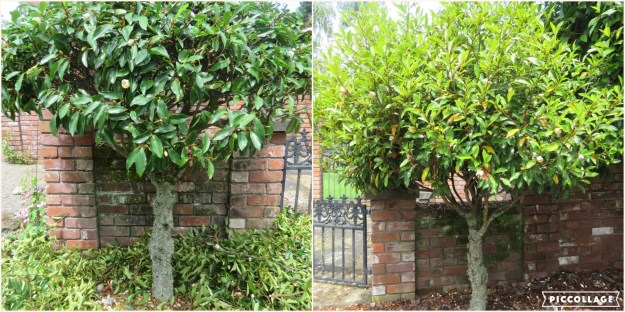 Aesthetically speaking, cutting with secateurs means there is no leaf damage whereas the speedier clippers or hedge trimmer will cut almost every external leaf which will then discolour on the damaged edges. It is also easy to reach in at the time and remove dead wood and do a clean-up of the interior of the ball using secateurs and the finished result is less… brutally shorn, shall I say?


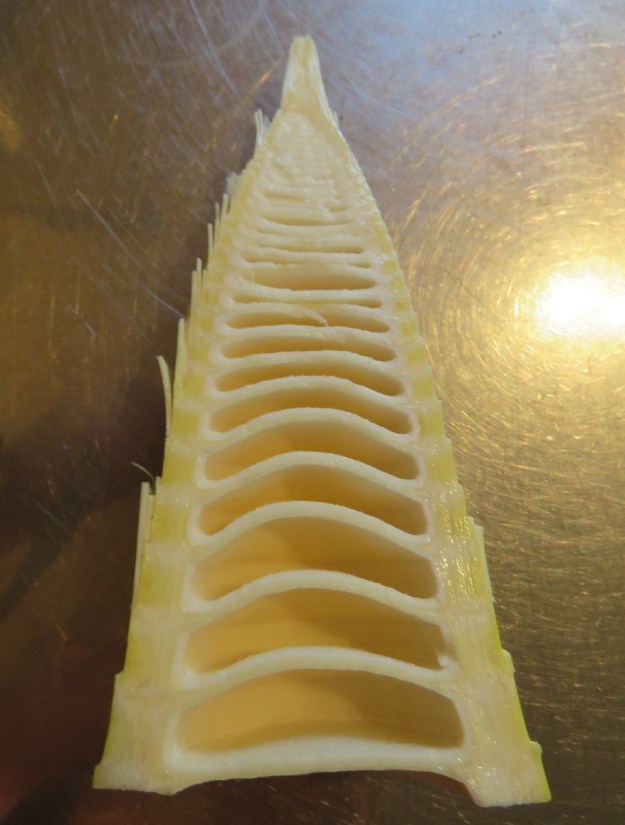
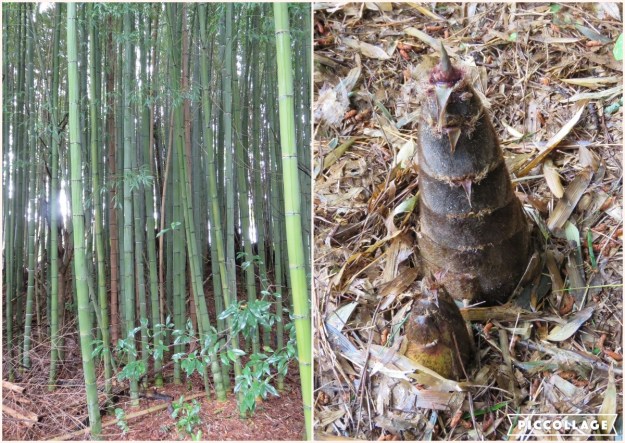 Our stands of giant bamboo are a never-ending source of disappointment to us. That is because they are enduring proof that the cargo cult does not work. The cargo cult is that school of thought that says “build it and they will come”. We often see it espoused in this tourist backwater where we live. Build a café/gondola/light rail/cruise ship terminal/tourist hub (strike out any which do not apply) and visitors will arrive. Well no panda bears have arrived here, is all I can say. I even checked that they eat Phyllostachys edulis – it is not their favourite bamboo but they will eat it.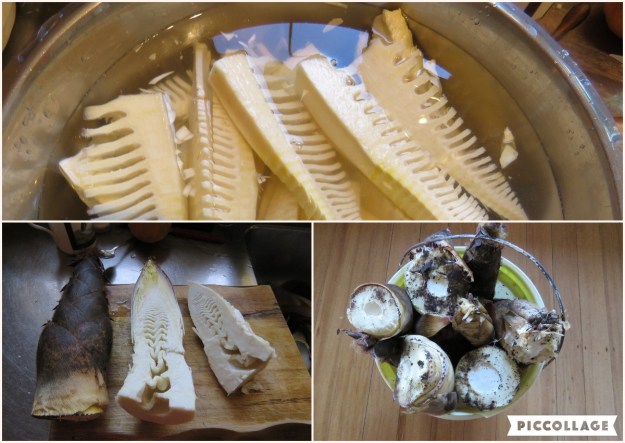

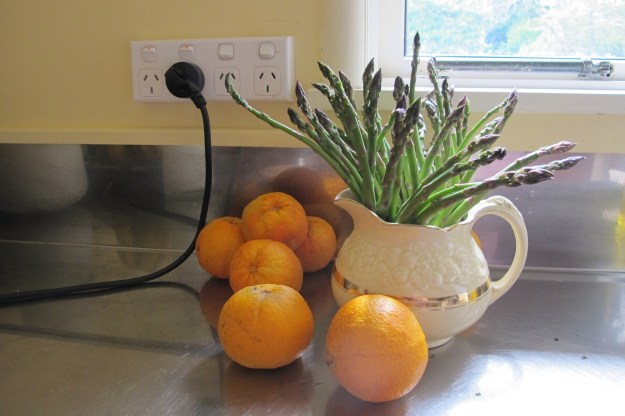
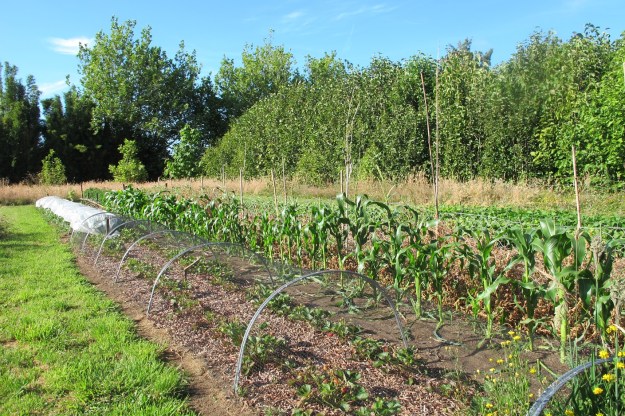
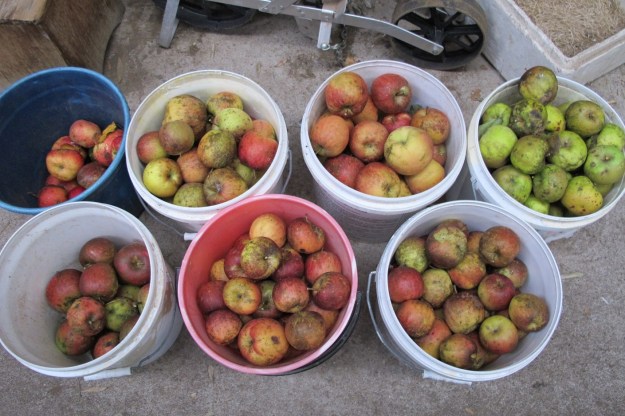
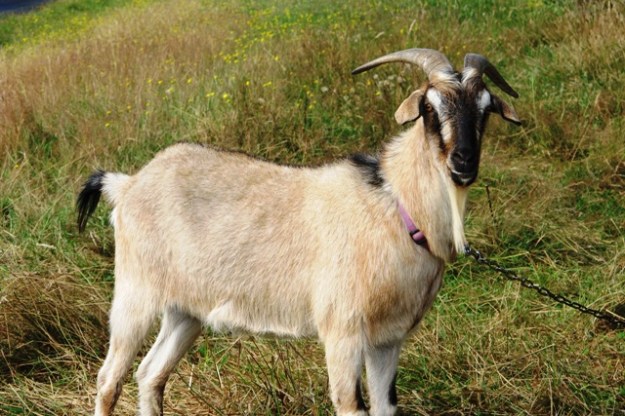 All this was eclipsed, I must say, by the gentleman from down south somewhere who took it one step further on social media. There was, he asserted, no reason for hunger in New Zealand when people could grow their own food and head out to the country to kill a wild goat for meat. I do not think he meant a tethered goat like this handsome fellow from up the road. I also suspect he did not get out much and maybe thought it was still 1950 when jolly practical young fellows could head out with the gun and shoot a rabbit or goat for the pot, all the while speaking with a fridge and freezer full of meat already paid for, packaged and ready for his wife to cook for dinner that night. Bah humbug.

 Tikorangi The Jury Garden