
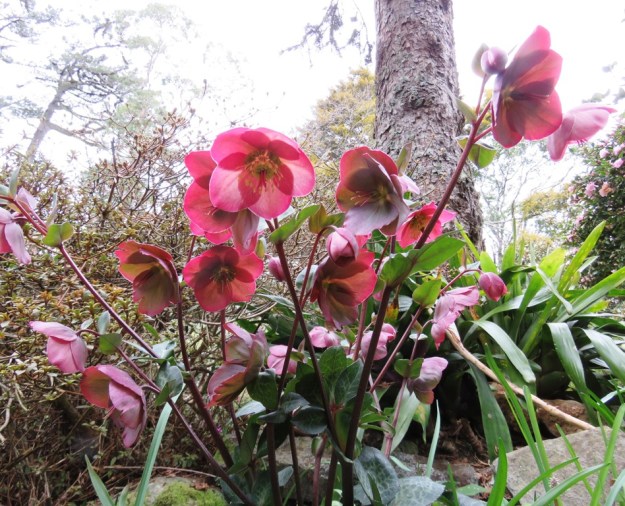
Hellebore Anna’s Pink
In the garden, I have been slogging my way along the hellebore border removing pretty well all the old plants and replacing them with Mark’s hybrids which he has been cultivating in the nursery. I mentioned how much the border has gone back in an earlier post. What is interesting is how many clumps I am digging up which have only one or two leaves but below ground is a chunky mat of dormant eyes. I say dormant, not blind, because it appears that if these were divided up and put into good conditions, most eyes would sprout into a fresh plant. It must be what happens to hellebores over time and this border has not had a major rework in 30 years.

A multitude of dormant growing points on hellebores with only a leaf or two showing above
I watched a debate on a UK gardening site about whether hellebore seedlings are worth saving and, as an aside, references to never digging and dividing anything. Hmmm… all I can say from our experience is that self-sown Helleborus orientalis seedlings are not worth keeping. There are huge numbers of them, for these are promiscuous plants, and the vast majority will revert to murky colours. I am deadheading as I replant and will continue to deadhead hellebores because we don’t want the seedlings. The chances of a brilliant self-sown seedling are remote whereas controlled crosses are hugely more successful. Mark has been working to get strains which hold their flowers up high and are sometimes outward facing which obviously improves the display.
As an aside, it appears that the new releases from the UK – Anna’s Red and Anna’s Pink – are both sterile which is to their credit. Not only do the blooms last longer, but this eliminates the need to deadhead and weed out seedlings. They are worth buying.
When it comes to digging and dividing perennials, I would comment that you can only get so far if you refuse to dig and divide. Over time the thugs take over and eventually you get to a point where even they start to go back. Feeding alone is not enough. It is the below ground root competition that takes its toll. You can go a decade or two without digging and dividing anything, depending on the plants you are using, but the treasures are likely to have given up the ghost by then. There will come a time when you will look around and think “this used to look so much better”. We think about ten years is all we can expect of the hellebore border before it will need major work again but an easy-care nine years is good.
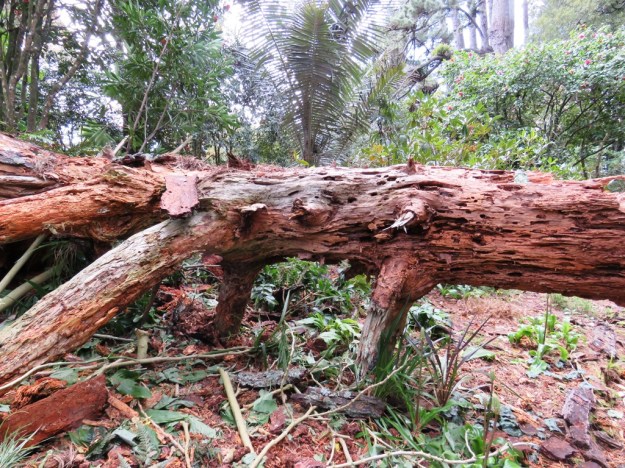 The latest natural garden feature arrived last week as the dead Pinus radiata we refer to as Glenys’s tree snapped off, fortunately leaving the lower few metres intact so we hope Glenys the Gecko will remain in residence. As is our practice, we will clean up the paths and damage but leave the body of the trunk in situ and garden around it.
 I am pretty sure that the next tree in the row is developing a bigger lean and will likely fall sooner rather than later, but Mark is unconvinced. I like to remind him that I was right last time and those were smaller, younger trees. This leaning tower of Pinus radiata is probably 45 metres tall so we have to wait for nature to take its course.
 We went to the North Island daffodil show last Saturday. There is a larger album of photos posted on our Garden Facebook page. There is no denying that our personal tastes lie with the less celebrated dwarf and miniature varieties which I have been systematically photographing this season. We are all about garden varieties, not show blooms. But like any genus of show blooms, the breeding directions are unveiled in a major display – lots of split coronas, colour combinations and pinks still coming through.
I decided we should be sourcing the dwarf hybrid named ‘Rapture’, the white N. cantabricus (which looks very similar to a bulbocodium) and I really would like some N. poeticus even if we have to go to poeticus hybrids. But, I was as much delighted by the whole event. The stalls! The competitions! I think these were the result of the involvement of the local branch of the horticultural society. Truly, I did not realise that the craft of crocheting edges to pictorial tea towels is not only alive and well, but also a competitive activity.
 Nothing to do with gardening, but I still have a strong mental image of an acquaintance many years ago, earnestly crocheting aqua coloured edges to white face cloths. “I think it is nice for guests to have special face cloths,” she said with a high degree of self-satisfaction. I looked around her home – a large and cavernous turn-of-last-century villa which had been cut in pieces and relocated but not restored. The walls were scrim, the facilities and decor still more or less original. It was truly grim. And I thought to myself, you poor woman. You think guests won’t notice the surrounds if they have new face cloths? It was all so evocative of Kurtz in Joseph Conrad’s ‘Heart of Darkness’, where the rituals of civilisation are all that keeps the chaotic universe at bay and without those, what is left is “the horror, the horror”. It had the makings of a short story, but instead I became a garden writer.
Next Tikorangi Notes may bring you an insight into the lost art of waxing camellias which, I have only recently found, is not a lost art at all but almost certainly sits alongside pictorial tea towels with hand crocheted edges.
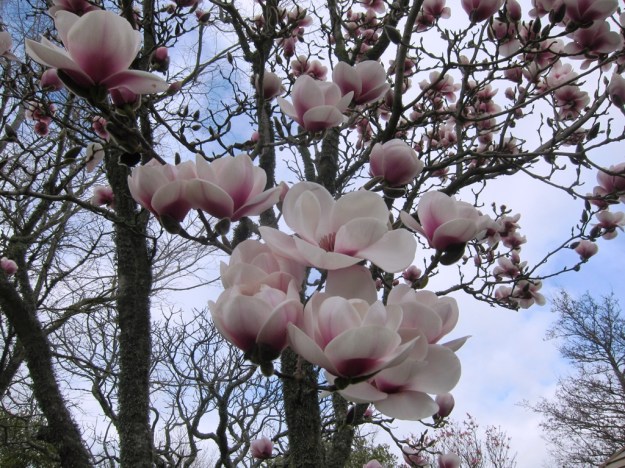
And because we are at Peak Magnolia, here is Milky Way
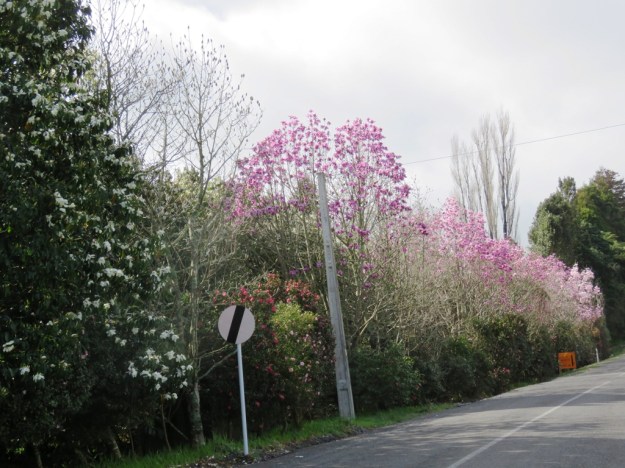

 Generally speaking, people talk to us about our boundaries full of flower and scent because they really like them. Indeed we often hear vehicles slowing down to get a better view at this time of year.

 Sunday was wet and gloomy so I picked hellebores to photograph indoors. And what a wonderful subject for photography they are. All I did was collect one representative bloom from a number of plants. This was more illustrative in intention than artistic endeavour.

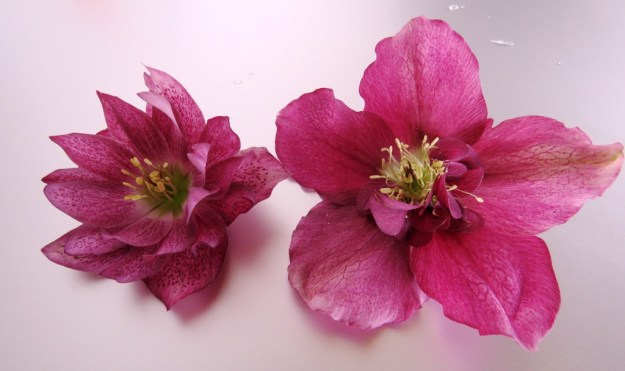 Mark has been raising hellebores in the nursery, in preparation for the upgrade. And he is interested in whether he can get better performing selections for our conditions. Generally, hellebores like a colder climate and the best ones we have seen are in areas with much more winter chill. The very dark flowered ones with bluish tones – referred to as slate – are not exactly booming here. Similarly, the doubles that we, and every other keen gardener at the time, rushed to purchase don’t seem to get much larger and showier than they were when we bought them over a decade ago. Mark’s seedlings may perform better though the wonderfully large pink with petaloids is probably blown up by nursery conditions. In the garden, the flowers may scale down.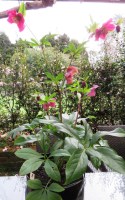
 We have worked out that the desirable dark colours display far better as garden plants with the contrast of white flowers alongside. We will also banish all the murky ones to the compost heap. While clean pastel pink and green can be a charming combination, in hellebores these often lean to muted shades which are frankly of no merit. We also want plants that will fade gracefully and not to that dirty greenish brown which does not lift the soul.
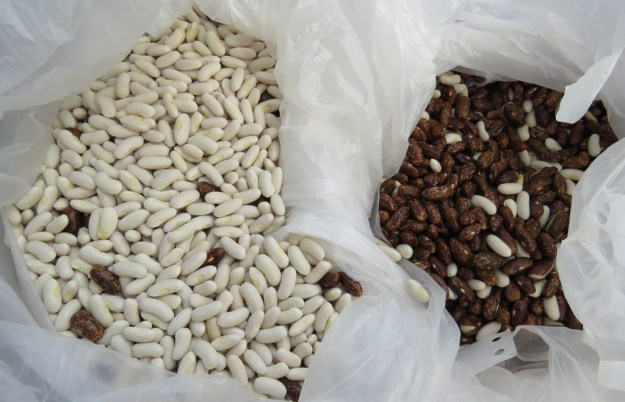
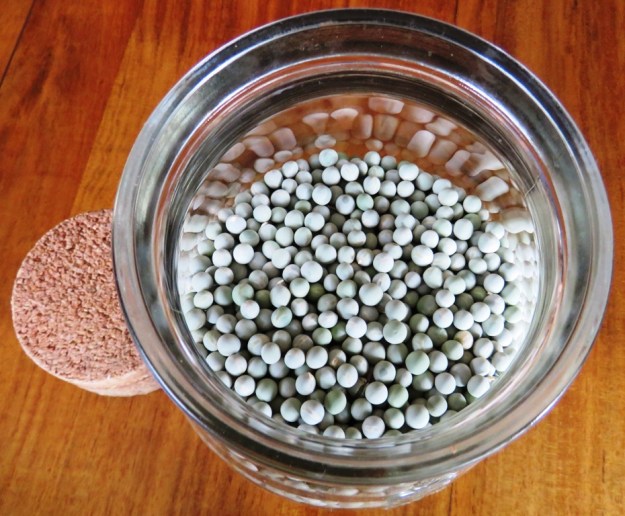
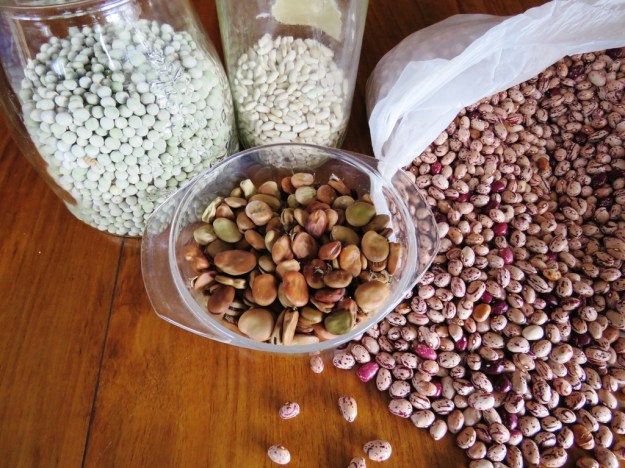 The bean mountain started modestly enough. It was just the surplus from the summer crops that Mark didn’t want to waste a few years ago. Dried beans had not featured large in our diet. Homemade hummus yes, but always with bought chickpeas. At least I started with dried peas and not the instant tinned version. Beyond that, we had never really moved on from the trendy mixed bean salads of the late 1970s. But the beans started to mount up at a faster rate than we were eating them.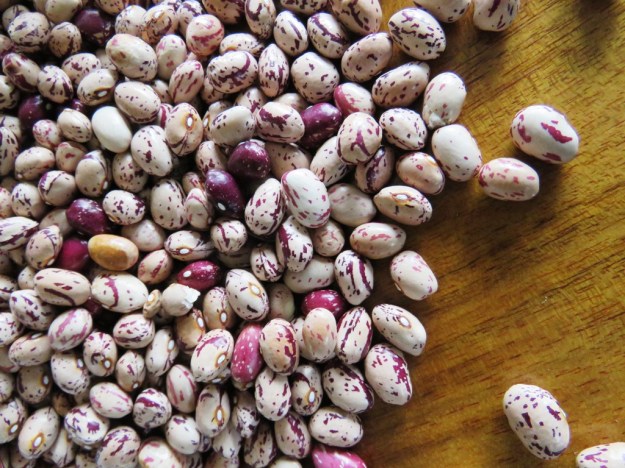
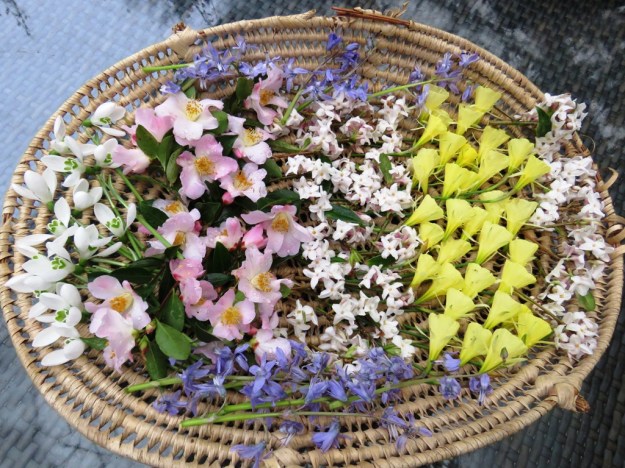
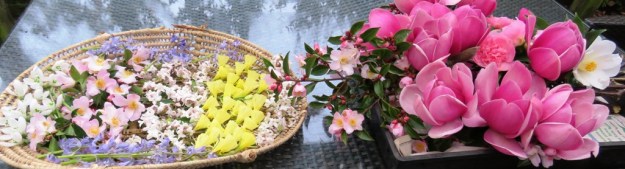 That was a comment in a eulogy at the funeral we attended today. We seem to be making a habit of these in the last month or so. On this occasion, it was to remember a lovely lady, and I use the word ‘lady’ advisedly. She had led a life of ninety years filled with kindness and care. The mother of one of Mark’s oldest friends, she had been a particularly strong influence in his teen years so we were really pleased when the family accepted our offer to do the flowers for the coffin. It is not that we have any floral art inclinations – though Mark can cobble together a bouquet with some simple flair when need be. It is more a case that to celebrate a life – and a keen gardening and flowery life at that – with seasonal blooms that have been picked for remembrance is much more personal than going for a standard florist’s package.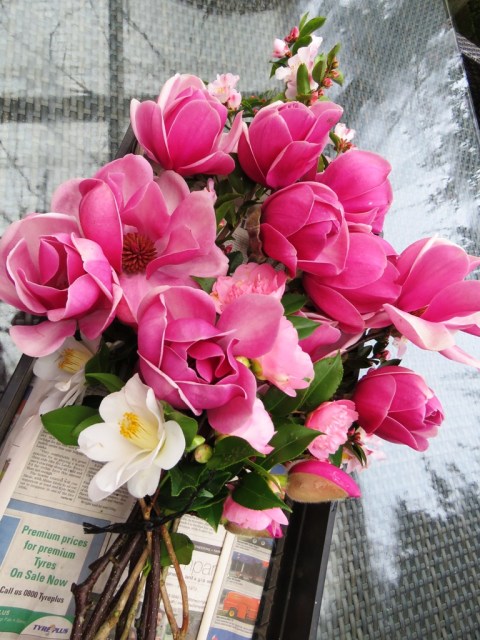

 Tikorangi The Jury Garden