
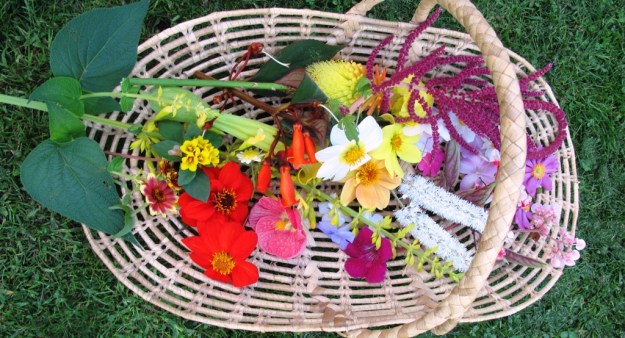
 It is indubitably autumnal, but no sign of the leaves colouring or dropping yet as we gently drift into the cooler seasons. I shall do a survey of the plants that take us through autumn, I thought, and headed out to the garden with snips and a basket.
We love flowers – lots of flowers. Simple blooms, common varieties, oddities and curiosities, anything and most things (though not everything) across the colour spectrum. Some gardeners, presumably of more refined sensibilities, prefer to be restrained and to preach the value of form and foliage. We are happy to value form and foliage but we want the added appeal of flowery fluff softening the austerity.
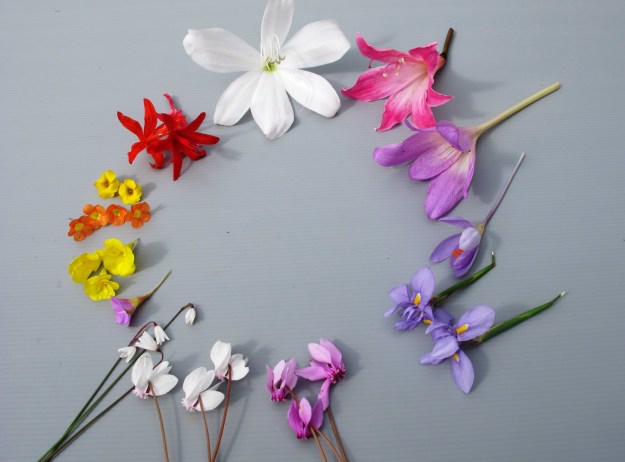 Despite that slight sense of mournful decay that can characterise the autumnal garden, there was so much flying the flag for flowers that I had to group them. It is still early for the autumn bulbs. There is a whole lot more to come but the nine in bloom at least indicate that not all bulbs belong to spring. Starting with the white flower at the top of the photo, going clockwise, these are: Crinum moorei, belladonna, Colchicum autumnale, one of the autumn crocus (could be C. serotinus), Moraea polystachya which is an unsung star amongst the autumn bulbs, Cyclamen hederafolium both pink and white, the dainty little Leucojum autumnale, the earliest of the oxalis (hirta, luteola, massoniana and lobata) and the first of the nerines that will become the rockery stars over the next few weeks.
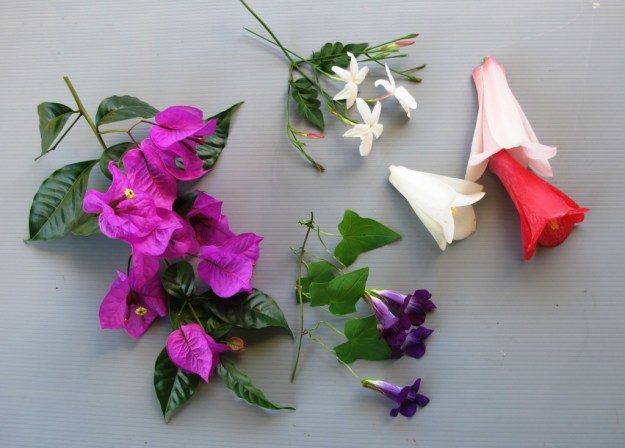 Climbers can be a little bothersome to place. Too many are strangling, invasive things, smothering their host as they scramble to the top, or, like the Rhodochiton atrosanguineus, seeding down in perpetuity. Others are such retiring little dainties that they can be difficult to keep going. Flowering for us at the moment are the bougainvillea (very much in the rampant camp) and one of the more garden-friendly jasmines at the top but we have lost track of which one it is. It has good fragrance, flowers pretty much all the time and is strong growing – bordering on rampant – but not as aggressive as the weedy jasmines. It is planted on the corner of the bedroom once inhabited by our daughter of the same name. Immediately below, the purple flower like a mini streptocarpus is on a soft vine, but its name escapes us at the moment. Well, I have never known it and Mark thinks he raised it from commercial seed but has yet to recall what it is. To the right are the lapagerias – Chilean bell flowers – with their wonderfully long blooming season and obliging habits. Sure it can take several – many, even – years to get a vine established but once there, these are rewarding plants for the shaded side of the house.
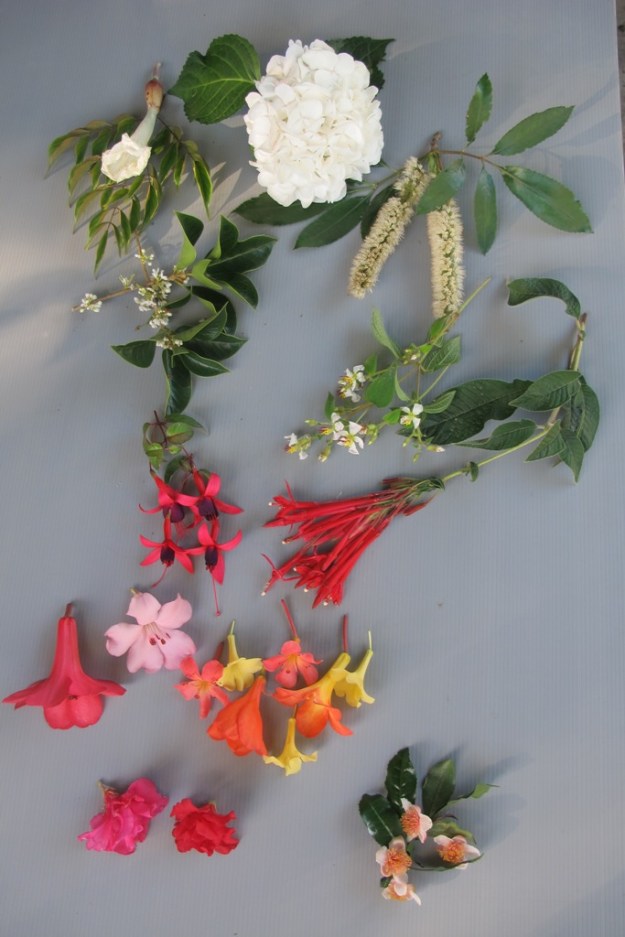 The flowering shrubs and trees are not so numerous at this time of the year. Top row left, we have Radermachera sinica (more on this below), Hydrangea Immaculata which is still at peak rather than that fading over to dusky spent flowerheads, next row down is the fragrant osmanthus (though not sure which one) and the so-called African butter knife plant or Cunonia capensis. Then comes the white flowered tibouchina which seeds down far too freely here but does compensate by flowering pretty much all the time in semi woodland conditions. Fuchsias are not a strong point for us, but the one on the left has been here forever it seems, surviving even falling over, splitting apart and drought. The one on the right is the attractive but dangerously weedy Fuchsia boliviana. Second row from the bottom is a sampling of vireya rhododendrons – have enough of these around the place and there are always some in flower, 52 weeks of the year. In the bottom row are the first of the evergreen azaleas embarking on their marathon blooming from early autumn right through to mid spring and the first camellia.
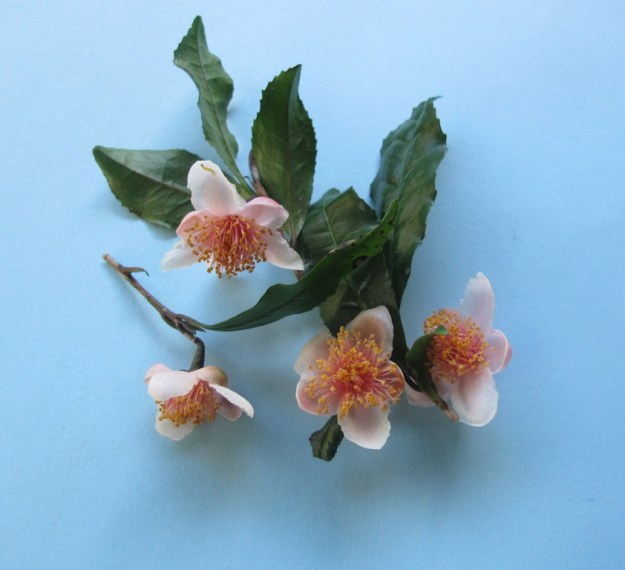 Camellia sinensis will no doubt be of interest to some. It is always the first to flower though with such insignificant blooms that they are easy to miss. This is the tea camellia, and yes, sometimes we do harvest the young leaves to make green tea. White flowered tea camellias are more common and we have a plant somewhere – in the “plant out” area, I think, waiting to get out of its pot.
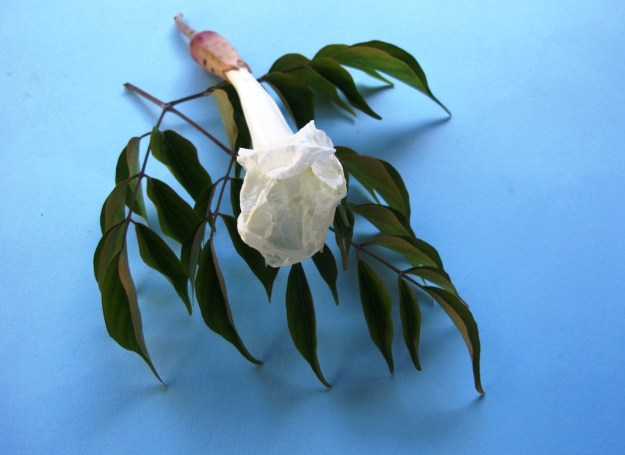 I was pretty thrilled by the Radermachera sinica when Mark alerted me to it in bloom. It has a divine and heady fragrance. The trouble is that it is sub tropical to tropical so treated as a house plant in the temperate world. But it is a tree and ours is shooting skywards. Besides, we don’t do houseplants so we are yet to decide what to do with this plant besides enjoying its current flowering.
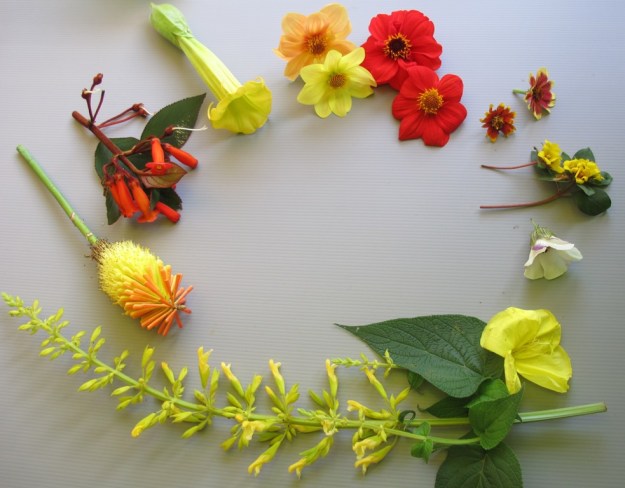 Finally there are the perennials and annuals still in full bloom. In brief in the yellow tones, we start with a damn big yellow salvia at the base and head around clockwise: kniphofia species, one of the gesneriad family whose name we have currently forgotten but which makes an excellent woodland plant, datura, dahlias, simple little autumn zinnias (none of the over-bred, bushy, compact, modern hybrid bedding plants), a handy yellow ground cover which flowers for a very long time and whose name will come back to us at some point, Hibiscus trionum and the common wildflower oenothera which is remarkably rewarding when it comes to blooming on and on.
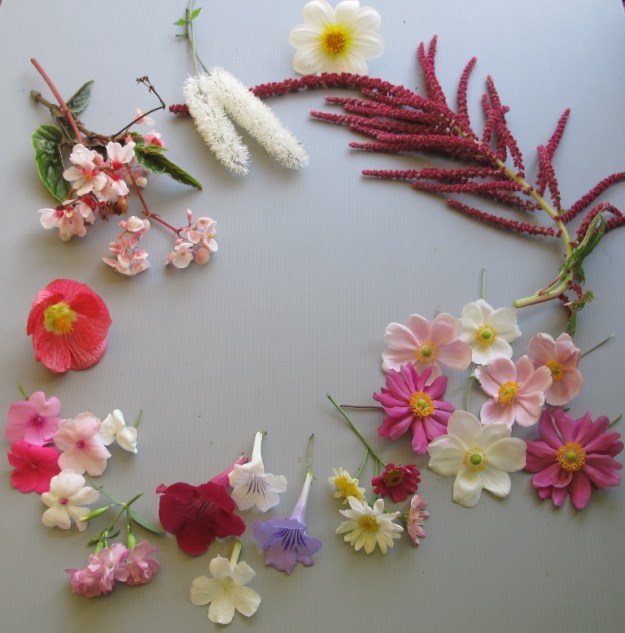 In the pinks and whites, we start at the top with the under-sung white plumes of Actaea racemosa (syn Cimcifuga racemosa) whose fairy candles light up a woodland area, a simple dahlia seedling, the annual Amaranthus caudatus which is self sown, the lovely wind anemones, assorted daisies, streptocarpus (bit of one-upmanship here – we use these as permanent bedding plants in frost-free locations), one of the saponarias, a really old, self-maintaining strain of impatiens that has naturalised in our woodland, a self-seeded abutilon which should have been amongst the shrubs and some rather large and resilient begonias.
While others may find that buxus balls and refined plantings soothe their souls and give order to their lives, we like vibrancy to gladden our hearts. Besides, with flowers we get butterflies, bees and birds to enrich the scene further and we take delight in gardening to sustain a lively eco-system. That said, I gathered these flowers across a few acres, not from a few square metres in a back garden. I might feel differently with a more limited area. In the current situation, I can satisfy any need for more restrained style indoors.
Postscript: Many of these plants have more detailed articles from earlier writing. Rather than clutter up the post with multiple links, if you want to know more about most, type the plant name in the search engine box on the right of the screen.
 First published in March issue of New Zealand Gardener magazine and reprinted here with their permission.


 We are inching gently into autumn and the
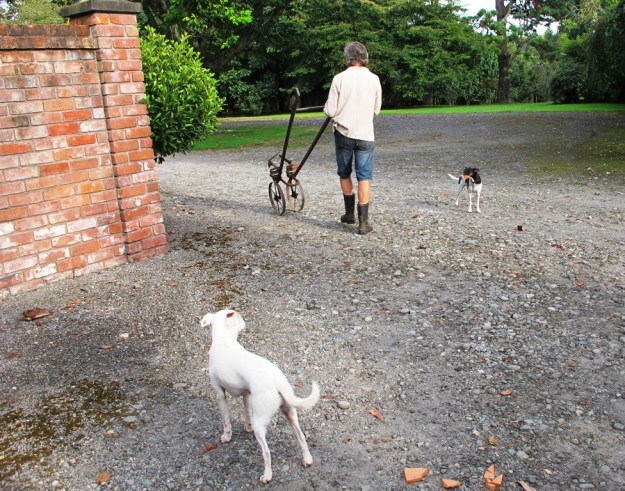 And finally, I leave you with Man, Planet Junior and Dogs this quiet Sunday morning – Mark heading over to his vegetable patch with a treasured implement from times past which he still uses on a regular basis.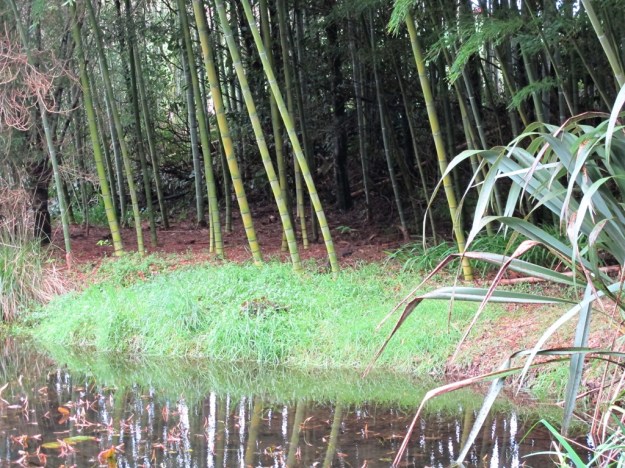
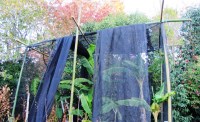
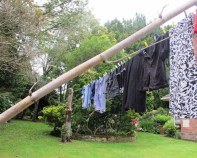 ot sufficiently inspiring to ensure that they became a dietary staple. It is, however, a useful source of very long and remarkably stable poles. One is a prop for the washing line. Mark uses it to build shelter frames for his bananas and even to make super long handles for the rake he uses to clean out our ponds. Inspired by our awe of bamboo scaffolding in Hong Kong, seen on high-rise buildings, he threatens to construct our own scaffolding but I think it is all talk.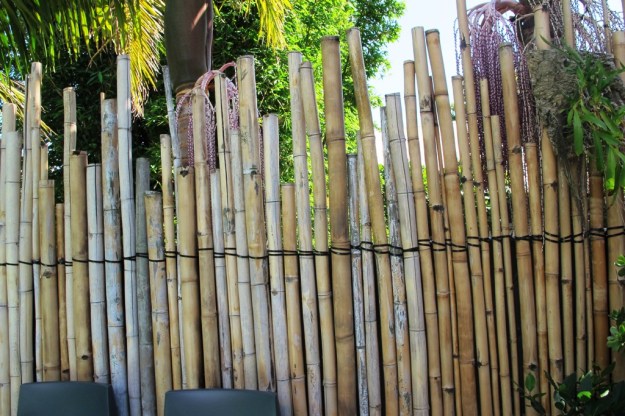
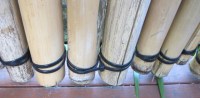

 Also seen at Heroic was this crafted bamboo gate in a Mount Eden garden, which was beautifully executed and appropriate to the restrained, immaculately maintained sub-tropical back garden. This is located in the heart of a densely populated urban area but the garden gives no hint of that. The gate has clearly been coated, presumably both to prolong its life but also to stop the weathering process and preserve the smart, new appearance. Sealing the bamboo will also stop the growth of lichens.
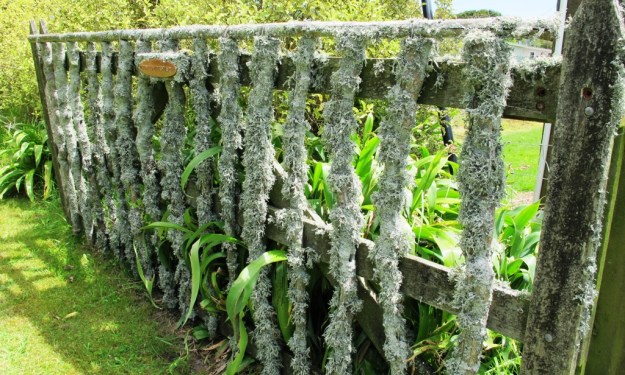 At the other end of the sophistication scale, I photographed these two bamboo gates in an Okato garden last spring. These have been added on to existing gate frames in a garden where many different bamboos are grown, and then left to weather over many years. You can see the high humidity environment and clean atmosphere in our coastal Taranaki that encourages such abundant lichen growth. As long as the bamboo is kept off the ground, it can last a surprisingly long time.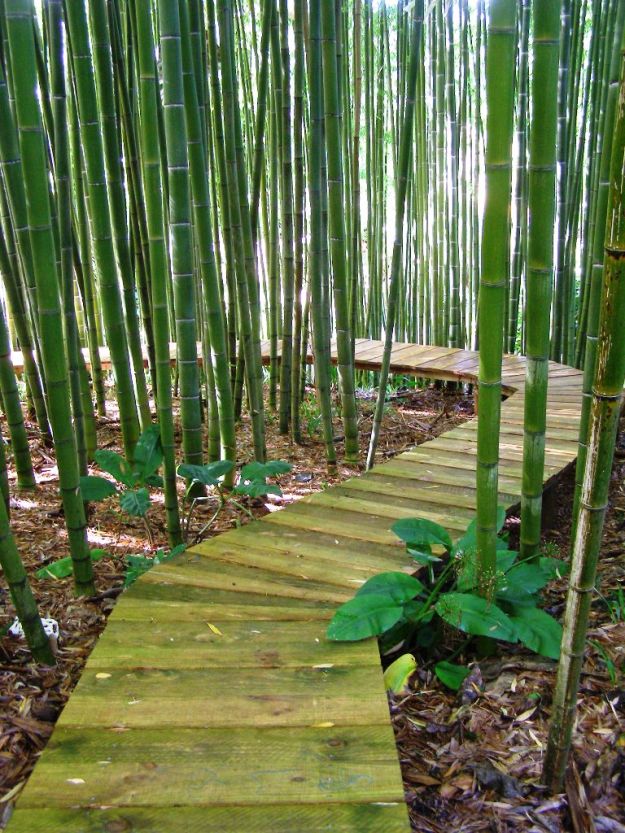
 In the garden it is still all about lilies. Big, blowsy, over the top auratum lilies. I am not picking the ones in the garden but in a small area of Mark’s new vegetable garden is a congested block of his seedling auratums, raised in anticipation of our new summer garden. There I can pick by the armful and oh, how I love these extravagant blooms. Auratums are a strong argument for the vigilant border control we have in this country. We do not, repeat NOT, need the lily beetle here. It is a nasty critter that takes up residence on auratum lilies and covers itself in its own excrement. We have seen it in the UK where it is an unwelcome arrival which has all but destroyed the auratum display in some areas.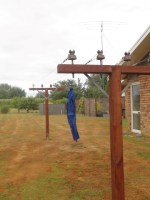

 Following my final photo feature for the Waikato Times on the topic of
 Tikorangi The Jury Garden